Category Archives: Action/Adventure

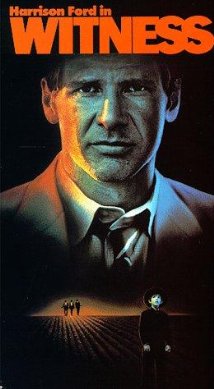
Witness (1985), directed by Peter Weir

Witness posterRecently I had a conversation with a recent immigrant to Israel and he told me he never picks up ultra-religious men who are hitching a ride. He feels they are lazy, exploitative of community funds, and are disloyal to the state of Israel. In sum, they are takers and not givers and should be less influential in the Israel political scene. Therefore, he does not want to reward them by giving them free rides. I told him that I do pick up such hitchhikers because I really don’t know them well and do not want the actions of a few to permeate my consciousness and cause me to view all the ultra-religious as takers.

Stereotyping those who are unfamiliar to us is the subtext of Witness, a police thriller which utilizes the Amish culture of Pennsylvania as a backdrop for its story. Rachel Lapp, a young Amish widow traveling by train with her 8-year-old son Samuel to visit her sister, stops at the Philadelphia station. Here Samuel wanders into the men’s room, where behind closed doors, he witnesses a brutal murder. Captain John Book is assigned to the case; and at the police station, Samuel identifies one of the killers as a narcotics officer who was involved in a drug raid in which the drugs mysteriously disappeared.

As events unfold, we learn that Book’s superior officer was behind the robbery of the contraband, and Book is now targeted by his sinister boss for execution. A gunfight leaves Book wounded and he flees to Amish country with Rachel and Samuel who are now in mortal danger.

Collapsing from loss of blood, Book stays with Amish until he gradually heals. Rachel and Book develop an affection for one another during his recuperation period and Book’s view of the Amish changes. They are no longer strange and backward, but people whose uncomplicated, wholesome perspective on life impresses Book as honest and purposeful. Book and Rachel both know that, coming from two different worlds, their relationship is a non-starter; but that does not stop them from caring for one another and seeing the world from the other’s vantage point.

Eventually, the corrupt police officers locate Book and travel to Amish country to kill him, and it is the Amish tradition of non-violence that figures prominently in the film’s denouement. Book is traveling into town by horse and buggy when his party is accosted by local bullies, who stereotypically regard the Amish as weak and out of touch with modernity. They pick a fight with Book’s group, not realizing that Book is not Amish. Book, incensed at their brazenness, decides to retaliate by breaking the nose of one of the bullies, an action totally out of character for the Amish. This leads to a police report which finds its way to his corrupt superiors, giving them Book’s location, the scene of a tense and bloody climax.

Jewish tradition tells us everyone is created in the image of God and, therefore, has infinite value. Being different does not mean being less worthy or less important. The Talmud states that baseless hatred was the cause of the destruction of the Second Temple. The great medieval scholar Moshe ibn Ezra said “Love blinds us to faults; hatred to virtues.” When we view others who are different from us in a negative light without even knowing them, we do not appreciate the good that is often within them. The Ethics of the Fathers further tells us that “hated of people removes a man from the world.” Witness reminds us that beneath the strange clothing of a religious sect, there may be values worth emulating. When we view the unusual looking stranger as a friend, we open up ourselves to growing intellectually and emotionally.
Purchase this movie from Amazon.com.

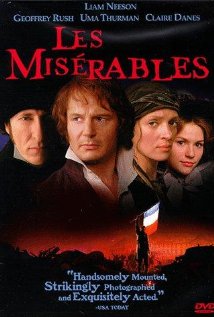
Les Miserables (1998), directed by Bille August

les miserables poster 1996 filmA friend of mine who gives parenting workshops recently counseled a parent whose teenage son was giving her lots of grief. She told her that she should give her child oodles of care and love. The parent retorted: “But what if that doesn’t work,” to which my friend replied, “Then give him a double dose of care and love.”

I thought of this interchange as I watched the 1998 version of Les Miserables, an accurate but abridged cinematic rendition of Victor Hugo’s classic novel. The well-known plot centers around Jean Valjean, a starving pauper, who is given a prison term of nineteen years for stealing a loaf of bread. When finally released on parole, he cannot find a place to lodge.  Facing continual rejection because of his criminal past, he thinks that he will have to resort to a life of crime to survive. Fortunately, he finds refuge for the night at the home of Bishop Myriel who feeds him and offers him shelter. However, Jean responds to this kindness by stealing the bishop’s silverware.  The next day Jean is caught and brought back to the bishop by the police. In a surprising gesture, Bishop Myriel tells the police that Jean is an old friend to whom he has given the silverware and he also gives Jean silver candlesticks as a further demonstration of his friendship. It is truly a double dose of love.

When the authorities depart, the bishop tells Jean that he will become a new man the next day, no longer a criminal but a person of genuine worth. Jean is overwhelmed with his kindness and resolves to change. The next scene takes place nine years later. Jean is now a wealthy businessman and mayor of the town, a man who clearly has repented and is now a new man.

The story of Jean Valjean is an epic narrative of repentance. Not only does he become an upstanding citizen, he also does charitable works that benefit the underprivileged and poor as well. His rehabilitation begins, however, when one man – the bishop—shows confidence in Jean, when he sees Jean for what he can be and not for what he was. Looking towards the future, the bishop showers Jean with respect, with kindness, and treats him as an equal and friend. He then encourages him to become a new man with a new destiny.

Jewish tradition describes Aaron, the brother of Moses, in similar terms. Aaron loved peace and pursued peace, says the Talmud, and did whatever he could to make people feel good about themselves. He even went out of his way, says the Midrash, to connect with people on the margins, the outsiders,  and to befriend people of less than reputable character, all of which he did because he understood that it is easier for people to do good when they possess self-esteem, when they see themselves as people of worth and integrity. This was Aaron’s specialty: to make people feel important and valued. He was so good at this that when he passed away, the Midrash informs us that the people mourned for him more than for Moses. The character of the bishop reminds us of Aaron, the man of the people who, in his own quiet way, challenged people to become the best that they could be.

Two valuable life lessons emerge from Les Miserables. Firstly, that it is possible to change, to repent and begin life anew. Secondly, to motivate people to repent, we must show them that we believe in them, that we believe in their basic goodness and their infinite value, which transcends any mistakes they may have made. Jean Valjean’s personal odyssey is a living testament to these psychological truths.

Purchase this movie on Amazon.com.

The Batman Trilogy (2005-2012) directed by Christopher Nolan

dark knight rises posterWhen I was principal of Yeshiva High School of Atlanta, I had a conversation with a board member who was a Holocaust survivor about the Holocaust Museum that was being built in Washington, D.C. He shared with me his feeling that it was not a wise use of community funds which could be better utilized to support Jewish day school education. I empathized with him since part of my job was to raise money for the school and I, too, felt that more community money should be directed towards Jewish education.

A couple of years ago, I had the opportunity to speak to my friend again and he shared with me his change of heart about the Holocaust Museum. Now he felt glad that the Museum was here to teach many subsequent generations about the Holocaust. He never envisioned years ago that there would be Holocaust deniers and that anti-Semitism would be alive and well in the world after the atrocities of the Holocaust. Never could he have imagined leaders of so-called civilized nations calling for the annihilation of the Jewish state. The world had changed and it was not for the better. Evil was a potent force in the 21st century, and the Holocaust Museum was an important agent of moral education challenging the perpetrators of evil.

The conversation brought back memories of my own innocent childhood in Mt. Vernon, New York, when everyone thought, post World War II, post- Holocaust, that the world was now enlightened, that there would be war no more, and that our collective human future was bright. 9/11 brought all that optimistic thinking to an abrupt halt.

The Batman trilogy of films deals metaphorically with how we come to terms with this new world where evil is real and ubiquitous. The reality of evil in these narratives undercuts our assumptions about the basic goodness of man and leaves us on edge.

The Dark Knight and The Dark Knight Rises present two villains who are the personifications of evil: the Joker and Bane. The Joker represents the chaotic nature of evil; Bane represents the committed terrorist, for whom death and destruction are liberating events. Bruce Wayne, aka Batman, begins with a conventional understanding of the Joker’s criminal mind. He tells his butler, Alfred: “Criminals aren’t complicated. I just have to figure out what he’s after.” Alfred wisely responds: “You don’t fully understand. Some men aren’t looking for anything logical, like money. They can’t be bought, bullied, reasoned, or negotiated with. Some men just want to watch the world burn.” Bruce is ambivalent about how to deal with the Joker and Bane, and it takes him a long time to understand how vicious they are and how he must change his preconceptions about the nature of evil people.

This perhaps can give us some understanding about the Biblical approach to unfettered evil, such as we find in Amalek, the arch-enemy of the Jews who attacked the old and weak as they were leaving Egypt. The Bible tells us to eradicate this evil and for the compassionate Jew, this is a hard business. On Passover at the Seder, we are bidden to spill out drops of wine from our cup when we recount the ten plagues because our cup of joy is never full when others have suffered. Even when justice triumphs, we feel for the victim who suffers. The Ethics of the Fathers also cautions us not to rejoice over the fall of the wicked even though he is deserving of punishment. Moreover, the Talmud recounts the story of Beruriah, the wife of Rabbi Meir, who, when her husband wanted to harm bullies who were constantly harassing him, exhorted him to pray that these sinners repent, not to pray that they die.

The Batman trilogy is a brainy thriller. It asks us to leave our simplistic notions of good and evil at the door and to recognize that in our new and dangerous world, we cannot ignore evil. To be naïve in the face of absolute terror and evil places us at great risk.

Purchase these movies on Amazon.com.

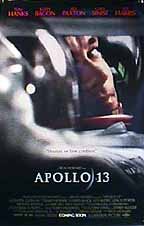
Apollo 13 (1995), directed by Ron Howard

Apollo 13 posterIn reflecting on my career as a high school principal, I recall many board meetings where a few board members would panic if the enrollment did not go up every year. That statistic alone was the acid test, and  a low enrollment number on any given year would be the catalyst for extensive discussions about what was wrong with the school and what we needed to do to fix it.

Fortunately, most board members took the long view and saw the inherent complexity and difficulty of establishing a Jewish day high school in a city that never had one. Thankfully, they supported me over the years in building Yeshiva High School of Atlanta, now known as Yeshiva Atlanta.

Panic in the face of adversity is not a good response, and I was reminded of this truth as I watched Apollo 13, a classic film about one of America’s early space flights in 1969. “Life is not a straight line,” a friend once told me when I was dealing with a lot of things that were going wrong. The key is to stay focused at moments of crisis. Rather than lose one’s cool, concentrate on how to solve the problem.

The tag line for the film is ‘Houston, we have a problem,” and they do have a serious problem. After months of preparation, the crew led by Commander Jim Lovell and assisted by Fred Haise and Ken Mattingly, is scheduled to fly to the moon. Two days before the launch, Mattingly is compelled to withdraw from the mission because he has been exposed to measles and he has never had them before.  The possibility that he could become ill during a crucial part of the flight disqualifies him; and Jack Swigert, an astronaut who has been out of the loop for many weeks, is asked to fill in for Mattingly. Lovell decides to accept the substitute rather than wait for another turn to fly to the moon.

The problem is compounded once the astronauts leave earth.  While in flight, Jack Swigert performs the routine procedure of stirring the oxygen tanks, and the oxygen tanks explode causing a mechanical failure. Now the mission is not to land on the moon, but to get home safely.

The two characters who stay focused and don’t lose their cool are Jim Lovell and Flight Director Gene Kranz at Mission Control in Houston. Aiding them is Ken Mattingly who simulates what is going on in the space capsule in order to give the Apollo crew the best advice to stay alive. These three men, very bright and who fully identify with the Apollo crew, think creatively to come up with solutions that will enable the men to re-enter earth’s atmosphere and arrive home safely.

The Bible is filled with examples of people who, when faced with negativity and bad karma, rise above the problem and find a way to succeed. Joseph, son of Jacob, is one role model. According to a Midrash, he is left in a snake-filled pit by his brothers. He then is sold as a slave in Egypt, and later finds himself in prison where he languishes for a number of years. During all that time, he does not give up and surrender to his environment. Instead, he finds a way to survive and eventually he is catapulted to the position of viceroy of Egypt. He does not look at the present dark moment as forever. Rather he sees beyond it. He knows he has a mission, and in his own quiet and deliberate way works to actualize a bright future.

Apollo 13 affirms that same message. When things go awry, do not collapse. Instead, analyze the situation and develop a strategy for success.

Purchase this movie from Amazon.com.

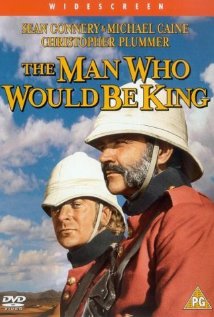
The Man Who Would Be King (1975), directed by John Huston

Man who would be king posterI once had a brilliant teacher in college who I admired greatly because of his intellect and his charismatic personality, marveling at his encyclopedic knowledge of text and human nature. One incident, however, changed my perception of him. He verbally assaulted a student who disagreed with him. The professor, full of himself, assumed that his way of perceiving things was the only way, and the student implicitly was stupid.

In truth, the student was devastated by the teacher’s remarks, and afterwards confided in me that he, too, looked up to the teacher but was totally unnerved by his comments. To ease his emotional pain, I told my friend that the teacher may have been under unusual stress and that is why he responded so harshly to him. But, inwardly, I was troubled by the entire interchange.

Subsequently I discovered that the teacher, brilliant as he was, actually believed the press releases that praised him. He lacked humility, thinking that he deserved all the accolades that were heaped upon him. Several years later, he lost his position at the college and labored for the rest of his life in academic obscurity.

This human trait of believing you are more than what you are is at the core of The Man Who Would be King, the story of two British sergeants, Peachy Carnehan and Danny Dravot, who travel to a remote mountain village in Afghanistan to seek their fortunes. Arriving in Kafiristan, a land plagued by marauding bands, they offer their services to the local population whose homes are continually attacked. Serving as military advisors and soldiers, they lead the locals to victory over the enemy.

In one of the battles, an arrow strikes Danny in the chest, but he does not die. The natives do not realize that the arrow has lodged in a leather ammunition belt beneath his shirt. They simply see Danny as a divinity, impervious to death.

Soon after, they are invited to the holy city of Sikandergul, where the chief high priest sets up a test to determine whether Danny is a man or a god by seeing whether or not he bleeds. An archer shoots an arrow at Danny, who flinches. When the people seize him, thinking he is a fraud, they discover that Danny is wearing a Masonic jewel, whose symbol the priest recognizes is the symbol of Alexander the Great, who passed through the country many years before. That linkage convinces the holy men that Danny is a direct descendant of Alexander, and they lead Peachy and Danny to the storeroom where Alexander’s riches are stored, a formidable treasure which now belongs to Danny as king.

Peachy now wants to leave as soon as possible, taking with him as much treasure as possible. Danny, however, does not want to go. He enjoys being king, and even wants to take a wife to insure that his descendants will rule after him and foster Kafiristan’s continued stability. That desire to maintain his position as king proves to be his undoing.

Jewish tradition praises the humble person. Moses, the humblest of all men according to the Bible, wants neither recognition nor power. Moreover, the Talmud tells us to be wary of overreaching. If you grab too much, say our Sages, you will acquire nothing. This lesson Danny does not learn until it is too late.

The Man Who Would Be King is a rousing adventure story, but it is also a cautionary tale about the dangers of arrogance and not being content with what one already possesses.

Purchase this movie from Amazon.com.

Unstoppable (2010), directed by Tony Scott

Unstoppable posterMany years ago, I asked a friend to mail a $10,000 check for me. He mailed it from the post office, but neglected to send it by registered mail as I requested because the line at the post office was long and he did not want to wait. Unfortunately, the check was lost and it took months before the situation was resolved. The check never was found, and no real harm was done, but the incident reminded me how one simple error in judgment can lead to an avalanche of problems.

An errant check is not the problem in Unstoppable; rather it is an errant train that can unleash a cargo of toxic chemicals if it is not stopped. The problem originates with a lazy railroad worker, Dewey, who decides not to connect the air hose to the rest of a long train, thereby removing the air brakes that are critical to stopping the train. Compounding his mistake, he leaves the locomotive cab when he sees that the train is lined up to go on the wrong track and runs to manually switch the track. Unfortunately, the train’s control levers move on their own accelerating its speed, and Dewey cannot reboard the train in time. Now the train is unmanned and moving very quickly towards populated areas.

Two heroes emerge to deal with this crisis: Will Colson and Frank Barnes. Colson is a young newly minted conductor, and Frank Barnes is an engineer who has been working with the railroad for 28 years. Together, they use the physical strength of youth and the wisdom of advanced years to devise strategies to stop the train, even at great personal risk. Both men, knowing that their lives are in danger, want to connect with family. Will, who is estranged from his wife, wants to speak with her but is fearful of being rejected by her. He doesn’t call but his thoughts turn to his wife and child, whom he may never see again. Frank, a widower, phones his daughters to tell them he loves them. It is a 9/11 kind of call, full of love and uncertainty about the future.

Jewish tradition emphasizes how important it is to obey the rules, especially in problematic or dangerous times. The Bible informs us that even the king is not to veer from the commandment; for if he does, his kingdom will not endure. Rashi, an 11th century Bible commentator, explains that Saul lost his kingship because he did not follow the instruction of the prophet Samuel. Samuel had told him to wait seven days for him to arrive before offering a sacrifice. Saul does not wait for the prophet to arrive and, as a result, loses his kingship. The commentators opine that Saul did not realize the importance of his position and how careful he had to be to perform his obligations correctly.

Neither does Dewey in Unstoppable. Dewey takes his work responsibilities casually, and people pay a price for his unprofessional conduct. He makes the mistake of a lifetime, jeopardizing the lives of many innocents. In a coda at the end of the film, we learn that Dewey no longer works for the railroad but now is employed in the fast food industry.

Unstoppable reminds us to take our professional responsibilities seriously. No matter how mundane our jobs may be, we are required to give it our best effort for our sake and for the sake of all those who depend upon us. We lead a different kind of life when we realize that every action of ours has a reaction in the lives of others.

Purchase this movie from Amazon.com.

127 Hours (2010), directed by Danny Boyle

127-hours-posterMy wife and I enjoy visiting America’s national parks and going for short hikes. I am a bit impulsive on the trails and am ready to start walking at almost any trailhead. My wife is more methodical. She wants to know if the trail is a loop, how long the hike will take, and whether we have enough water to sustain us for the duration of the hike. As I get older, I realize the wisdom in her words, and now I plan carefully for such adventures to insure that I do not put myself at risk.  I thought of my own hiking experiences in the Canyonlands in Utah as I watched 127 Hours, the true story of Aron Ralston, an extreme sportsman who finds himself trapped in an isolated canyon in Utah after a boulder falls on his arm.

The story begins on Friday, April 25, 2003, when Aron is preparing for a day of hiking in Utah’s Canyonlands National Park. Excited about his upcoming adventure, he is careless about his preparation. A clever camera shot of his hand trying to find stuff in a closet reveals that he forgets to take his trusty Swiss knife with him, a fact that will have consequences later on.

Once into his hike, Aron climbs over and through narrow stone passageways, and then tragedy strikes. He dislodges a large boulder, which crushes his right arm against the canyon wall. He calls for help, but no one can hear him. He is in a remote section of the park with no one nearby. Moreover, he has told no one where he was going that day, and his situation soon turns desperate. Realizing that his fate is in his hands only, he begins a video diary with his portable camera and starts to ration his water and food.

As his strength ebbs away, he understands that the sole way to survive is to amputate his arm, a near impossible task with a dull-bladed knife on a multi-tool device. With each passing hour, Aron gets groggier, and thinks about his friends, his family and his uncertain future. Finally, he accepts the reality of his situation and methodically plans to amputate his arm with the crude devices he has available. It is both wrenching and riveting to watch his ordeal.

The ordeal changes Aron. Instead of being the independent adventurer responsible only for himself, he now understands that he needs others. His tortured cry for help at the end of his trial is a recognition that living for oneself is ultimately a lonely existence.

On another level, Aron’s ordeal reminds us of the importance of properly preparing for a dangerous trip, letting people know of your whereabouts, and evaluating the inherent risk before attempting a perilous task. Furthermore, it reminds us to think about the definition of an acceptable risk when it comes to engaging in problematic behavior which may lead to loss of life.

Jewish law is prescriptive regarding the notion of acceptable risk. The Bible says “you shall guard your souls,” which means that we should not do anything that jeopardizes our health and safety. The Talmud even instructs us not to walk next to an unstable or shaky wall. Furthermore, if we build a house, we have to insure that it is safe. If it has a roof that people can traverse, the roof must have a fence. If we own a dog that bites people, we have to make sure that the dogs are in a secure location so that guests to our home are free of danger. Recent codes of Jewish law forbid smoking under the same guideline. Smoking is hazardous to your health and, therefore, is considered an unacceptable risk.

127 Hours is a gripping narrative of survival. Embedded within the story are many life lessons. It encourages us to celebrate and enjoy life, to value the presence of significant others in our lives, and not to be careless and place ourselves in unnecessary danger.

Purchase this movie from Amazon.com.

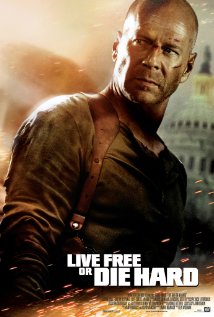
Live Free or Die Hard (2007), directed by Len Wiseman

mv5bndqxmde1otg4nv5bml5banbnxkftztcwmtmzotqzmw-_v1_sy317_cr00214317_The computer teacher, the techie, is often the most powerful member of the teaching staff in a high school. He controls the keys to the kingdom of the Internet. He can enable teachers and students to enter the portals of Google, Wikipedia, and a variety of social networks. He can expand their worlds.

As a school principal for many years, I observed the transformation of the school office via computer applications. Instead of two or three secretaries, we eventually needed only one. Instead of dictating speeches and correspondence through a Dictaphone machine, we now wrote and corrected our own material using Microsoft Word. Furthermore, we mostly used the more convenient and speedy electronic mail rather than snail mail, which was slower and used so much paper. Currently, when I have to inform my parents and students in Israel of school news and changes in class schedules and syllabi, we use email and social media outlets, not letters or phone calls.

The computer guru, in truth, can be a beacon of light bringing wisdom and enlightenment to the world, but he can also be a sinister force for evil if he uses the computer to lord over others and take advantage of them. In truth, the computer can be a powerful means to control and shape politics and economics in a destructive way. Such is the premise of Live Free or Die Hard, part of the Die Hard series of movies starring Bruce Willis. In it, a computer genius, Thomas Gabriel, designs a plan to create worldwide chaos so that he can profit from the ensuing panic and destruction. Can he be stopped in time is the classic question in this formulaic but exceptional action-packed thriller. Gabriel begins by sabotaging the nation’s infrastructure. Traffic signals malfunction, trains and planes come to a halt, the stock market closes, and the financial systems of the nation are breached. He then launches a plan to take out the nation’s power grid. Gabriel is able to do this because, as a former national security director responsible for building the security systems, he knows the systems inside and out, including all its vulnerabilities.

Why is he so hell-bent on causing so much human damage through computer manipulations?  The back story informs us that many years earlier he attempted to interrupt a Joint Chief of Staffs meeting to share his professional expertise and to point out weaknesses in the nation’s security system using only his laptop. At the time, he was rebuked and publically humiliated. As a result, he now wants to show all those who mocked him that he truly does have the power to control events and they do not. He wants money and he wants revenge.

Watching this film reminded me of the many people I have observed in positions of power. The best of such people work selflessly for the community with no personal agenda. The worst see the possession of power as an opportunity for payback, to control, and to intimidate. It can be very scary for one who falls within their orbit.

The Talmud tells us in many places that the possession of power brings with it responsibilities. The classic example is King David. He does not seek kingship. Rather it is thrust upon him, and he struggles to leave a positive legacy. He is not perfect, but he tries to be loyal to God and beneficent to his subjects. All he wants is for his people to actualize their spiritual potential, to be all they can be. David understands that power may corrupt, and that it is wise to temper power with an abiding sense of community responsibility. Power is neutral. It is our job to harness it for good.

Purchase this movie from Amazon.com.

3:10 to Yuma (2007), directed by James Mangold

Three ten to Yuma posterI recently taught a poem entitled “Those Winter Sundays” by Robert Hayden to my eleventh grade English class. The poem is about the relationship between fathers and sons, how a son finally understands how much his father did for him as he raised him from boy to man. He remembers how hard his father worked to maintain his household and “no one ever thanked him.” He acknowledges that he was unaware of his father’s love for him, which was expressed in taking care of the daily needs of his family: “ What did I know, what did I know of love’s austere and lonely offices?”

These lines resonate in many films that show the complex relationship between fathers and sons, many of which reveal the son not appreciating his father until the father has passed away.

3:10 to Yuma is the story of Dan Evans, a poor rancher and veteran of the Civil War, who is struggling to keep his land in the face of people who want to take it away from him and sell it to the railroad at exorbitant profit. When two men set his barn on fire, he resolves to make things right; but his son, William, has little hope that his father can do this. When Dan tells his son that he will understand when he walks in his shoes, his son bitterly responds, “I ain’t never walking in your shoes.” He sees his father as weak and incapable of fixing anything. He does not see inner courage, only outer trembling.

Dan is pained by his son’s low estimation of him and will do anything to be a hero in his eyes, even escort Ben Wade, a notorious bank robber and murderer, to federal court in Yuma where he will probably be hanged. For a payment of $200 from the railroad company, a huge sum in those days, he puts his life on the line to save his farm and to redeem himself and his family. He wants his son to know that he was the one who brought Ben Wade to Yuma for trial when nobody else would, a feat that would impress and draw the admiration of his son. Against near impossible odds, he gets Ben Wade to the train to Yuma but with tragic consequences.

The Bible tells us that the commandment of honoring parents is rewarded with long life. A parent of a student I teach recently complained to me about his teenage son who almost never speaks to him. My friend said:  “I wish he was an adult already. Then we could talk to one another normally.” He also told me that even though he often told his son that he loved him, his son never told him “I love you, Dad.” He had no doubt that his son loved him but he wanted his son to have long life; it weighed on his mind that his son didn’t seem to understand how meaningful it would be if he would be more forthcoming with expressions of parental appreciation and affection.  To the father, expressing love verbally was a way to honor parents and for his son to receive the reward of long life. He was perplexed that his son was not taking advantage of this spiritual opportunity. Moreover, my friend was fearful that he would no longer be living in this world when his son finally wanted to verbally express his love.

3:10 to Yuma has a lot to say about father-son relationships. It reminds us of how much a father wants to be a good role model for his son, and how satisfying it can be to a parent when children express appreciation and love. A parent-child dynamic may be rooted in love, but the roots have to be watered for that love to flourish.

Purchase this movie from Amazon.com.

The African Queen (1951), directed by John Huston

African Queen posterI serve as a volunteer matchmaker on an international internet site, and as a volunteer I can choose which age group on which to focus. Although I try to be helpful to people of all ages, I especially like to work with the over-40 crowd. This is a challenging group since I find that the over-40 group is perceived very negatively as consisting of people who are confused, commitment-phobic, who have unrealistic expectations about a marriage partner, and who possess a streak of selfishness. While there may be a grain of truth in such a stereotype, I have found that, in most cases, these people have simply not found their destined one yet. And so I research the site and try to find a suitable match, and sometimes I happily succeed.

The idea that love begins after 40 is given cinematic reality in the classic film, The African Queen, starring a mature Humphrey Bogart, who plays Charlie Allnut, and Katherine Hepburn, who plays Rose, a Christian missionary. Charlie Allnut delivers mail and supplies to a remote African village while World War I rages in Europe.  When a contingent of German soldiers arrives at the village and sets it afire, Rose’s brother, also a missionary, becomes despondent and commits suicide. Charlie volunteers to take Rose, his surviving sister, to safety, and so begins their dangerous journey on Charlie’s boat The African Queen.

Charlie and Rose come from different worlds, but destiny has thrown them together. What begins as an adversarial relationship eventually morphs into love as they share perilous adventures together. Surviving treacherous rapids and the gunfire of German troops, they bond through shared adversity.

What emerges from their mutual trials is the revelation that Charlie and Rose share a common humanity, an innate honesty, and a positive attitude towards life. They are vastly different from their public personas. Charlie is not the proverbial drunken sailor; nor is Rose the conventional missionary.

Also noteworthy is their honest self-appraisal. Rose and Charlie have no illusions about one another. They do not long for a younger love. They live in the moment and want every minute to count. This approach to life is captured exquisitely in the final scene of the film in which Charlie asks a German ship captain to marry Rose and him when they are about to be hung for spying. The captain concludes the ceremony and declares: “By the authority vested in me by Kaiser William II, I pronounce you man and wife. Proceed with the execution.” What happens next defies description. Suffice it to say, the loving couple lives happily ever after.

What makes for a match in Jewish tradition? The Talmud tells us that making a match is like splitting the Red Sea, a miracle of major proportions. As a matchmaker, I can never predict why two people ultimately will connect emotionally. I just make a calculated guess and leave the rest up to God. The African Queen provides several examples of Providence taking over to produce positive results. Rain comes to free a boat entangled in a swamp. Makeshift torpedoes hit a target without being launched by a human being. All demonstrate that we can only do our best; but to be successful, God has to intervene.

Finally, what underpins my volunteer work is the belief that what binds a couple together is not just physical attraction. There has to be an intellectual connection as well. Moreover, there has to be a feeling of a shared spiritual destiny. Therefore, on the client’s profile page, I pay close attention to self-descriptions more than to dimensions of height and weight. Proverbs teaches us that “beauty is vain.” It passes and then we are left with who we really are.

Purchase this movie from Amazon.com.