Category Archives: Action/Adventure

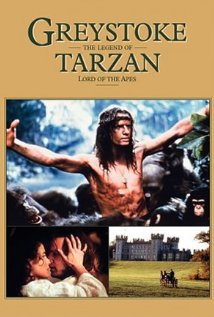
Greystoke: The Legend of Tarzan, Lord of the Apes (1984), directed by Hugh Hudson

greystoke poster When I was a student at Yeshiva University many years ago, there was a rabbinical student that was blind. Because of his disability, I was not at ease in his presence. I did not know how to connect to him and so I said nothing. Gradually, however, I noticed that some senior students and my teachers spoke to him easily, with warmth and genuine friendship, engaging him on a wide variety of topics. They, by example, showed me that I had to leave my preconceptions at the door, and relate to the disabled as regular people, and not treat them as social oddities.

This memory resurfaced as I watched Greystoke: The Legend of Tarzan, Lord of the Apes, a reimagining of the classic Tarzan myth but based primarily on the original source, Edgar Rice Burrough’s novel. The narrative begins in Scotland in 1885 where the newly married John Clayton of the affluent House of Greystoke is departing for a sea voyage to Africa with his pregnant wife, Alice.

Off the coast of Africa, the ship is caught in a storm and sinks, leaving John and his wife stranded in the jungle. They set up living quarters as best they can, and Alice bears a son. Soon after, she falls ill and dies, and John dies in a confrontation with a violent gorilla. The surviving baby, reared by a clan of apes, grows up thinking that it is an ape, emulating all their behaviors.

Many years later, Phillippe D’Arnot, a member of an English hunting party discovers the boy, Tarzan, and brings him back to Greystoke, the family estate, where he is reunited with his grandfather. The young man’s adjustment to his new home is not simple as depicted in a formal dinner scene in which Tarzan, now known as Johnnie, piles large amounts of food on his plate, is reluctant to return his plate to the waiter, and drinks his soup directly from the dish.

What is instructive and illuminating is the response of Johnnie’s grandfather to this bizarre behavior. He puts aside his soup spoon and also drinks his soup directly from the bowl. He understands immediately how strange Johnnie’s behavior appears to the rest of those dining and wants to provide a different paradigm of how to deal with someone who is different. Johnnie is not the other; he is one of us. Johnnie may not have a typical disability, but it is a social disability and the guests need to accept the “otherness” of the other, and make him feel at ease.

A similar story is recounted about Rabbi Yisrael Salanter, a great teacher of Jewish ethics and character development. When a dinner guest felt embarrassed because he spilled wine on the table, Rabbi Salanter spilled his own wine glass, claiming the table was not steady; therefore, the guest should not feel uncomfortable at his own faux pas.

The Torah does provide a general approach for relating to people with disabilities. First and foremost is the Biblical notion that we are all created in God’s image. This means that everyone, even those who are mentally challenged, deaf, or blind, have to be treated with respect because they all reflect an aspect of the divine. Moreover, understanding that we are all in God’s image implies that we accept the inherent diversity amongst all men, and we should do our utmost to connect to everyone, not only those who look and think like us. For example, the Sages rule that a blind man can be called to make a blessing over the Torah in the synagogue just like a sighted person even though the blind man cannot read the text. The goal is participation and integration into the community.

Greystoke, which deals with the odyssey of one man’s journey from the wild terrain of Africa to the civilized world of Scotland, is not a story of how to relate to people with disabilities. It is essentially a gripping tale of adventure that considers specifically whether Johnnie Clayton, aka Tarzan, can transition from the jungle to civilization. Can he survive all the emotional and psychological trauma that he faces in managing the dissonance between such disparate worlds?

The film presents no easy answers; but, along the way, considers the question of how we treat those who are different from us. Do we regard them as curiosities or do we welcome them into the family of man?
Purchase this movie from Amazon.com.

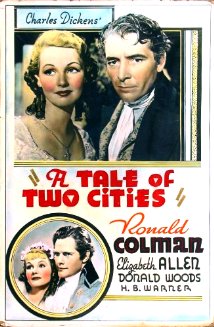
A Tale of Two Cities (1935), directed by Jack Conway

tale of two cities posterI recently had dinner with a friend who shared with me his disappointment that his son at age 37 was still unmarried and was leading a life contrary to the values with which he had been raised. I told him that his son is still on a journey. It is not yet complete and his son may yet fulfill his hopes and dreams. The important thing was never to give up for the future is unknown. Past mistakes don’t always predict tomorrow’s consequences.

A Tale of Two Cities is a story of one man’s personal redemption from sinner to saint. The Talmud tractate of Avodah Zarah (10b) observes that there are people who can earn their portion in Olam Haba, the world-to-come, in one hour, suggesting that an entire life of sin can be overcome by repenting in the final moments of one’s life. This basically is the narrative arc of the life of Sidney Carton, the hero of A Tale of Two Cities.

The film opens on the eve of the French Revolution when Lucy Manette travels to France from England to rescue her aging father, who has been a prisoner in the Bastille for many years. During the trip, she meets Charles Darney, a French aristocrat, who is sympathetic to the plight of the downtrodden French citizens.

Charles, however, is the nephew of the Marquis de St. Evremonde, an aristocrat with little regard for the wellbeing of the poor. Aware of Charles’ favorable view of the poor, the Marquis frames his nephew for treason, recognizing that Charles is a potential danger to the French aristocratic establishment because of his heretical views. The case against Darney fails, however, because of the clever defense of Sydney Carton, an attorney who drinks to excess and has led a dissolute life.

When Lucie thanks Carton for his efforts, he falls in love with her; however, he inwardly understands that her love for Darney transcends any emotional attachment to him. After Darney and Lucie marry, move to England, and have a daughter, Sydney continues to remain a loyal friend of the family.

A crisis arises when Darney is tricked into returning to France during the Reign of Terror in order to defend a friend who has been unjustly accused of sympathy for the now deposed aristocracy. In a trial full of passion and anger but bereft of logic, he is sentenced to death by guillotine because of his familial connection to the Evremondes, who are symbols of tyranny.

Carton understands the danger and devises a plan to save Darnay from the guillotine. The plan hinges on Carton switching places with Darnay, who is incarcerated in prison awaiting execution. It becomes clear that Carton is willing to sacrifice himself to save those he loves.

As the image of the guillotine fills the screen, we hear Carton uttering his last thoughts: “It’s a far, far better thing I do than I have ever done. It’s a far, far better rest I go to than I have ever known.”

Carton’s final words reflect his changed worldview. For him, life is no longer a journey, but rather a destination. He has said farewell to his wasted past and enters the next world personally redeemed.

In some ways, the last moments of his life parallel the story of Samson, the judge who, although basically a good man, led a licentious life. Recognizing his faults, Samson decides at the end of his life to sacrifice himself so that others can survive. Sidney Carton’s final moments follow this example of repentance.

Purchase this movie from Amazon.com.

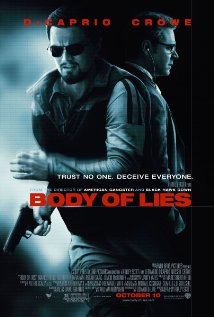
Body of Lies (2008), directed by Ridley Scott

body of lies posterAs I write this review, the world is in chaos. There is civil war in Syria, ISIS is spreading terror throughout the world, the governments of Libya and Yemen are in a downward spiral, Iraq is fighting a war against jihadists, Iran is on the verge of becoming a nuclear threshold state, and the United States is no longer viewed by its historic allies as a nation that can be trusted.

A few years ago, I would never have dreamed of such a doomsday scenario. But, lo and behold, it is here and we are living the impossible dream. I share this with the reader because so much of what is happening today is alluded to in the opening minutes of the political thriller Body of Lies, a prescient story of men caught in the web of secret intelligence communities that will stop at nothing to achieve their aims.

I learned something new about the way terrorists operate from Body of Lies. Ed Hoffman, a CIA supervisor, observes that terrorists generally avoid taking advantage of technology. They do not use cell phones and computers to transmit information; they prefer to speak face to face with people and through written messages that can be destroyed easily. In the final analysis, what counts is intelligence provided by humans in the field, not necessarily computer generated information. Roger Ferris is Ed Hoffman’s man in the field, who provides him with all kinds of useful data about the bad guys. He sees things up close, subjectively, while Ed sees things from a distance, objectively.

The story opens as Ferris is searching for Al-Saleem, an Al Quaida terrorist who is orchestrating a series of suicide bombings across England and Europe. Ferris’ travels take him to a number of middle-eastern countries, including Jordan where he forms an uneasy alliance with Hani Salaam, the head of Jordanian intelligence.

Amidst many clandestine attacks and counterattacks, Ferris comes up with a plan to make contact with Al-Saleem, through staging a terrorist attack that will encourage Al-Saleem to be in touch with the terrorist entity that caused the attack. In order to do this, Ferris sets up a straw man, Omar Sadiki, an innocent architect, for whom he creates a computer profile that makes it appear as if Sadiki were the head of a terrorist cell.

The ruse works but with tragic consequences. The more Ferris labors to get valuable information that can save innocent lives, the more moral compromises he has to make in the short run; and many innocent people die in the service of the long term goal of eradicating terrorists. Ed Hoffman reminds Ferris more than once that in the world of terrorism and counterterrorism, no one is innocent. Located thousands of miles away from the morally abhorrent actions, he looks at the big picture, making decisions based only upon dispassionate calculations. For Ferris, however, every decision is personal.

Jewish tradition is mindful of the distinction between experiencing things first-hand and experiencing them from a distance. While viewing a situation from the balcony, we miss seeing the total picture. We need to be on the ground floor as well to see the complex reality.

The Sages who composed the text of the Hagadah, the text that is read at the Passover Seder, encouraged simulated first-hand experiences at the Seder table when Jews yearly recount the Egyptian slavery experience. The Seder meal is filled with tangible reminders of bondage. We are to eat simple unleavened bread and bitter herbs. The Hagadah explicitly tells us to experience the evening as if you personally went out of Egypt. It should not be a mere recital of words; rather the Seder should be a visceral reimagining of the Exodus experience.

Body of Lies reminds us that to understand the complexity of the fragmented world around us, we need to see events from two perspectives, that of the outsider and insider. Only then can we appreciate the wisdom it takes to make good decisions in a morally confusing universe.

Purchase this movie from Amazon.com.

Lone Survivor (2013), directed by Peter Berg

lone survivor posterHospitality is a big deal in Jewish law and lore. Abraham is the model of the gracious host. In the midst of a painful recuperation from circumcision, he waited outside of his tent on a hot day to welcome any passing strangers to his home where he provided them with lodging and a sumptuous feast. The Midrash says that he even interrupted his prayer to God to take care of guests. Hospitality to strangers plays a key role in the intense and violent war film Lone Survivor.

In Afghanistan, a four-man cohort of Navy SEALS, consisting of Michael Murphy, Marcus Luttrell, Matthew Axelson, and Danny Dietz, is tasked with capturing or killing a Taliban leader responsible for the deaths of over twenty Marines. The SEALS are inserted into a mountainous region and proceed to their rendezvous point. But there is a problem. They are discovered by an elderly shepherd and two young goat herders.

The men evaluate their options, which include killing the shepherds and thus preserving their mission or releasing them and aborting the mission, knowing it has been compromised. A brief but heated discussion ensues. Luttrell argues to release them: “Under the rules of engagement, we can’t touch them,” to which Axelson responds: “I understand. And I don’t care. I care about you. I care about you. I care about you.” Finally, they decide to release them and abort the mission; but, soon after, Taliban forces ambush them with terrible consequences.

Although the SEALS inflict many casualties, they are outnumbered. Moreover, because of technical problems, they cannot contact their home base to arrange an extraction, making their situation even more desperate. One by one, they succumb to injuries, but Luttrell finds temporary refuge in a local Pashton village. One of the villagers, rejecting the brutality of the Taliban, takes Luttrell into his home and sends a messenger to a nearby American air base to report Luttrell’s location. In the interim, the Taliban arrive preparing to execute Luttrell; but the villagers intervene, preventing them from killing him. What saves Luttrell’s life is the moral code of the local Afghan population, which prides itself on protecting the stranger once he enters their home.

Jewish tradition has much to say about how we should treat the stranger and how we bear responsibility for his safety. The residents of Sodom were the polar opposites of Abraham. Instead of warmly welcoming the stranger, they did everything they could to take advantage of him. The Talmud states that if the guest bed was too short, they would cut off the stranger’s legs. If the bed was too long, they would stretch him so that his body would fit. This evil approach to hospitality led to the destruction of the Sodom.

Another Biblical source relating to our treatment of the stranger is the law of the eglah arufah, the decapitated calf, which was slaughtered when an unidentified corpse was discovered outside the city limits. If that happened, the elders of the city had to convene a meeting to determine whose responsibility it should have been to take care of this stranger. There is an element of communal guilt for permitting someone to go unprotected from the city. Therefore, an atoning ritual was performed on behalf of the closest city to which the body was found. Again, the recurrent theme is to take care of the vulnerable stranger.

Lone Survivor is a riveting movie about a group of courageous soldiers who made a decision to put their lives on the line to preserve morality in a war where the enemy had no such scruples. Thankfully, Marcus Luttrell survived to tell the story, which not only depicts the brutality of war, but portrays the uncommon kindness of people who, despite potential harm, stepped forward to help the defenseless stranger.

Purchase this movie from Amazon.com.

Warrior (2012), directed by Gavin O’Conner

warrior posterAs a parent, I sometimes wonder if I did my best in rearing my kids. Is there anything I should have done that I did not do? Thank G-d, I do feel I did my best, but parenting is not a cookie cutter activity and in hindsight I think of things that I might have done differently. The reality is that I was a different parent for each one of my children. I was growing older and some of my children had a different version of my younger self. I had more experience by the time I was parenting my younger children, but I may have had less quality time with them because my professional demands were increasing. More things were going on in my life and that may have affected my parenting style.

Parenting is the subtext of Warrior, a gritty and violent story about a mixed martial arts competition which culminates in a fight between two brothers, Tommy and Brendan, whose father was not there for them in their formative years. Both brothers are angry young men, but one has learned how to forgive and one has not.

Tommy Riordan, an ex-Marine, visits his father, Paddy Conlon, a recovering alcoholic who now has made religion a part of his life. Still angry at his father for his abusive behavior towards his mother many years ago, he has no interest in reconciliation. However, it turns out that he needs his father to train him for a mixed martial arts tournament named Sparta, which has a prize purse of $5,000,000. Tommy wants to win so he can give the money to the family of his Marine buddy who died in a friendly fire incident in Iraq.

Meanwhile, Brendan Conlon, Tommy’s older brother, is having challenges of his own. A high school physics teacher and former martial arts fighter, he can’t make ends meet after refinancing his home mortgage to pay for the open-heart surgery of his daughter. Faced with the possible loss of his home, he decides to re-enter his former profession as a mixed martial arts fighter to increase his income. When his friend, Frank, a fighting coach, loses his primary fighter for the Sparta competition, Brendan asks Frank to use him as a replacement.

When Brendan arrives at the tournament, he sees that Tommy is entered as well. As this grueling contest of skill and strength progresses, Tommy and Brendan win their respective matches bringing them to an inevitable showdown against one another. Their shared animosity for their father is the glue that binds them together, but Brendon’s forgiving nature allows him to move beyond feeling intense anger for his father. Tommy, however, is a loner with no wife and family and he stews with hatred.

In the early part of my professional career, I served as a synagogue rabbi. Part of my job was to perform funerals, and I was often witness to scenes of family reconciliation at times of emotional stress. The mortality of a parent, the aging of a parent, or the serious illness of a parent made the family more sensitive to one another, more willing to let old irritants and old arguments fall by the wayside in order to be at peace with parent and siblings. When a parent is on the verge of leaving this world, family bonds reassert themselves.

Jewish history reminds us not to let the sins or shortcomings of the past determine our future. After the sin of the Golden Calf, the close relationship between God and the Jewish people, comparable to the relationship between parent and child, was torn asunder. But the holiday of Yom Kipper teaches us that the break does not have to be permanent. There is a time for healing no matter what the mistake. Warrior reminds us that families sometimes fracture, but family ties don’t break. In moments of despair and anger, exercising both courage and humility can re-establish love and connection.

Purchase this movie from Amazon.com.

Aliens (1986), directed by James Cameron

aliens posterWhen I was in ninth grade, I went to a Jewish day high school on the outskirts of Harlem. One evening, my friend Max and I went to a jazz concert featuring the celebrated xylophonist Terry Gibbs. Returning to the dorm late at night, we were accosted by a group of unsavory teenagers, one of whom was on roller skates. They wanted our money. One, in particular, threatened me with a brass ring that he provocatively thrust in my face. I was petrified, but my friend Max was not. Apparently he had been in similar situations before, and he suddenly grabbed hold of the fellow on roller skates and threw him to the ground. Then Max shouted, “run,” and we ran close to a four-minute mile back to our dorm. Max knew how to confront fear; I did not.

Aliens is all about confronting fear. Ripley, the only survivor of a space mission that discovered a hostile alien species, is serendipitously found after drifting in space in a hypersleep for 57 years. Because of her experience with the aliens, she is recruited to be an advisor on an expedition to find out why the colony that settled on the space station where the aliens were discovered has ceased transmitting to earth. At first, she refuses the request, but her continuous nightmares motivate her to join the mission with the goal of destroying the aliens. In this way, she hopes to find inner peace.

Her cohorts on the mission are a group of tough but arrogant Marines. They are so full of themselves and their weaponry that they do not pay much attention to Ripley’s warnings. Soon, however, they come in direct contact with the hostile aliens and a life and death battle with them rages. After a number of Marines, including the commanding officer, are killed or wounded, Ripley has to take charge of the spaceship and the mission. The situation continues to deteriorate as the Marines are confronted by an enemy vastly superior to them in strength and number. Furthermore, in the midst of all the fireworks, their transport back to the mother ship is damaged, leaving them with a limited supply of weapons and ammunition.

The situation is desperate and calls for innovative thinking. Some team members want to give up, but Ripley insists upon trying to survive in spite of the superior strength of the hostiles. She is fearful but she does not allow fear to paralyze her.

Judaism acknowledges the reality of fear in our lives. When the Jews were about to enter the holy land, they decided to send spies to check out the feasibility of conquering the land. Ten of the twelve spies saw not the good of the land, but rather the imposing giants who lived there. In comparison, they saw themselves as grasshoppers, ill-equipped to vanquish them. Attempting to battle them would only bring loss of life and disaster to the people as a whole.

However, two spies saw the same things but came to opposite conclusions. They also feared the giants living there, but they were imbued with a deep faith.

Judaism’s approach to life-threatening situations is not to ignore the reality of a danger, but rather to do one’s best to overcome the threat and to trust that God will be with you to carry you to victory. Facing the challenge, seeing it as an opportunity for growth, can transform fear into courage. Thus, the impending disaster can be changed into a divinely-ordained victory.

Aliens reminds us that in the midst of crisis are the harbingers of redemption and safety. Ripley, when confronted with almost certain death, overcomes her fear and finds a way to assert life over death to insure the survival of subsequent generations.

Purchase this movie from Amazon.com.

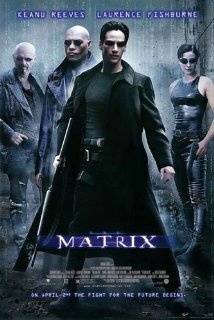
The Matrix (1999), directed by Andy and Lana Wachowski

MV5BMTkxNDYxOTA4M15BMl5BanBnXkFtZTgwNTk0NzQxMTE@._V1_SX214_AL_When I was an undergraduate student taking an introductory Philosophy course, I had an “aha” moment when I read Plato’s myth of the cave which describes a man living in a cave, thinking it is the real world until light streams in from above, at which time he realizes that what he has been experiencing is not the real world but an illusion. The real world is, in truth, somewhere else. It is this kind of subliminal narrative that forms the emotional and intellectual core of The Matrix, a thought-provoking, action-packed thriller about a human rebellion against a world controlled by machines.

Thomas Anderson, a computer programming guru, is also known as “Neo,” a computer hacker with an unsavory clientele for which he provides all sorts of illegal substances. One evening he is contacted by Trinity, another computer whiz, who apprises him of Morpheus, a mysterious man who can tell Neo the meaning of “the Matrix,” an entity that Neo frequently encounters online. Neo is interested in meeting him, but three robot-like men are determined not to have the meeting take place.

In spite of obstacles, and there are many, Neo and Morpheus meet, after which Neo’s life is forever changed. Offered a red pill by Morpheus, Neo takes it, and the pill enables him to see the world in a totally unconventional way. He embarks on a psychic journey, which convinces him to join Morpheus in his quest to overthrow the mechanical forces of conformity and rigidity that are presently controlling the world.

Morpheus tells Neo that in the 21st century, there was a war between human beings and the intelligent machines they created. Eventually the machines won and trapped the humans in an artificial world, the Matrix, in which humans exist in a simulated environment. This keeps them compliant slaves to materiality, without the freedom to question and to think on their own. Morpheus seeks to rebel against this universe of conformity by hacking into the Matrix and recruiting enslaved humans to rebel against the machines.

The rebels’ profound understanding of the artificial reality of the Matrix allows them the bend the laws of the physical world, giving them superhuman powers that are choreographed with visceral energy on the screen. We learn that Neo is recruited specifically because Morpheus sees him as “the One” to save the world from the corrupt machines, and he is trained to do battle with their human-like representations. The movie’s dense plot almost requires a second viewing in order to comprehend the complexity of the conflict between the men and the machines.

The essential question that the film poses is what is the nature of reality. Plato’s cave metaphor suggests we are living in a world of illusion and we have to exit the cave if we are to live a full and honest life. The matrix represents this world of illusion, and the rebels want to live a real, not artificial, life.

Jewish tradition encourages us to dream, to have illusions, but we must have our feet firmly planted in the real world. The patriarch Jacob dreamt of a ladder reaching to the heavens, but the ladder was rooted in the earth. Moreover, our Sages encourage us to contemplate other planes of existence, such as the heavenly World-to Come, which gives us spiritual pleasure. Nonetheless, they remind us that it is in this world, the nitty-gritty everyday world, the world that the rebels want to revive, that we express our humanity through the crucible of real life experiences. It is here that we truly accomplish our life’s mission and fulfill our personal destinies.

Free choice makes us human and reflects the divinity within us. The Matrix suggests that for humans to fulfill their potential as human beings, they must be able to freely choose life over death, light over darkness.

Purchase this movie from Amazon.com.

The Incredible Shrinking Man (1957), directed by Jack Arnold

incredible shrinking manIn 1957 I was enrolled as a boarding student in a Jewish high school on the edge of Harlem in New York City. The father of a fellow student, visiting from out-of-town, invited me to join him and his son for dinner at a downtown restaurant. The dorm counselor was nowhere to be found, so I could not ask anyone for permission to leave campus. I decided to join them anyway and began to think of an excuse to give the dorm counselor in case he rebuked me. The Incredible Shrinking Man had just opened and the perfect excuse came to mind. I will tell him that I went to the local movie theater to see this film about a man who shrunk in size. It seemed like an easy plot to summarize and so I would not be penalized for traveling outside of the local neighborhood. And that is what transpired. The excuse, weak as it was, worked.

Little did I realize when I actually saw the movie several months later that it was much more than a film about a man who shrinks in size; rather it was a profound meditation on the ultimate meaning of life. Watching this black and white science fiction movie 57 years after it first appeared, I genuinely admired not only its special effects, which were progressive for its time, but also its thoughtful commentary about man’s place in the universe. Let me elaborate.

Scott Carey, on vacation with his wife Louise on his brother’s boat, sees a strange fog, which is really a radioactive mist, glide over the boat leaving a wet sheen on his body. Six months later, Scott senses that his clothes are becoming loose on him and that he is losing weight. The sudden weight loss prompts him to visit his physician, who assures him that nothing is wrong. However, a subsequent examination does confirm that Scott is, in fact, losing vital chemical elements and is actually shrinking in size. In an unsettling scene, husband and wife discuss the implications of this malady for their marriage. At the end of the conversation, Scott’s wedding ring falls off because of his shrinking finger size.

As time passes, Scott continues to shrink to the size of a child. Since Scott is no longer able to work, they have mounting bills. As a result, Scott sells his story to the press, who treat Scott as freakish pop phenomenon. Louise tries her best to be optimistic and encourages Scott not to lose hope. However, after many tests, the doctors conclude that there is no remedy and Scott runs out of the house in despair.

In his wanderings, he meets a dwarf, Clarice Bruce, who tells him that being small does not mean life is over and devoid of happiness. The message is uplifting for Scott, who embraces her perspective on life until one day he sees that he is shrinking again and is even shorter than Clarice.

We next see Scott, only a few inches tall, living in a doll’s house. When his wife Louise leaves to go shopping, she inadvertently leaves the door open allowing a cat to enter the house. This creates a life or death situation for Scott, who runs for his life to avoid the clutches of the cat. He accidently falls into the basement after the cat scratches him. Louise, finding a piece of Scott’s clothing with blood, presumes that Scott is now dead.

Scott slowly regains consciousness, and begins to search for food in a hostile environment where a common spider becomes his arch-adversary. The life and death fight between them is intense, and Scott emerges from it wiser and more accepting of his place in the cosmos as he gazes at the stars above. His final words are both haunting and uplifting: “To God, there is no zero. I still exist.”

Scott’s malady can be viewed as a metaphor for any life-altering illness. News of such an event is often frightening and potentially depressing. Therefore, it is noteworthy that Scott, now a speck in the infinite universe, draws comfort from the knowledge that in God’s eyes he still counts. In Jewish tradition, man is composed of body and spirit. While the body is subject to the vicissitudes of nature, the spirit is not. The Incredible Shrinking Man is a clarion call reminding men of their infinite value, even when faced with imminent mortality.

Purchase this movie from Amazon.com.

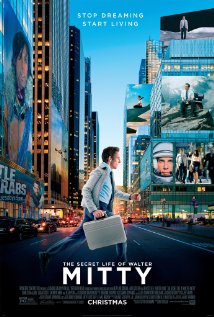
The Secret Life of Walter Mitty (2013), directed by Ben Stiller

secret life of walter mitty posterThe Secret Life of Walter Mitty is a film with two essential messages, and I had to think a long time before choosing which aspect of the movie I wanted to write about. One message is to live life to the max. Make every day a masterpiece by participating in life, not just observing it. Another message is to value the work of every day because ultimately greatness comes through hard work, perseverance, and a daily dedication to perfection. I chose to amplify that message for this review.

Walter Mitty works for Life magazine and is in charge of cataloging its large storehouse of photo negatives, a seemingly boring job in which Walter takes pride, knowing that he is working with great photographers whose pictures are potentially life-transforming to the viewer. We learn that in the past Walter had an adventurous streak, but when his father died at a young age, Walter was forced to abandon his dreams and get a job to support his family. Therein lies the emotional core of the film. Walter lives a very mundane outward existence, but lives an imaginative inner life, daydreaming of scenarios in which he imagines that he is a man of decision and action. Hence, the title of the film, The Secret Life of Walter Mitty.

Mitty for many years has worked with famed photojournalist Sean O’Connell, and Sean sends him negatives of his latest works including a photo that he thinks will be fitting for Life’s final print edition before it re-emerges as a strictly online publication. But there is a problem. The negative is missing from the contact sheet he sent Walter and Sean cannot be found to clarify the whereabouts of the missing negative. Walter then embarks on a real-life adventure trying to locate Sean. His travels take him to Greenland and Iceland, with a series of hair-raising and hilarious encounters.

An air of mystery surrounds both Sean and the missing negative. It becomes clear that Sean, an idiosyncratic artist, values individualism, but he also values the contribution of the little guys in the company who work ceaselessly to see that his work is seen as he sees it: a thing of beauty and meaning that transcends the moment.

The Ethics of the Fathers reminds us that “every man has his hour.” The artist may be in the limelight but those who work laboriously behind the scenes also deserve recognition for their contributions. Both have their hour in the sun. Moreover, in Judaism there is the notion that every person has his unique mission in the world. When Jacob on his deathbed gives his blessing to each of his twelve sons, the blessing reflects the unique personality of each one. They are parts of one united family, but they fulfill their destinies in their own special ways. A classic example is the symbiotic relationship between the brothers Yisachar and Zebulon. Yisachar is charged with devoting his life to the study and teaching of Torah; Zebulon is charged with providing the financial support which underpins that holy work. Both are necessary for the ultimate destiny of the Jewish nation to be secured.

The Secret Life of Walter Mitty is a paean to the average man who labors diligently in his job each and every day. The public accolades may never come to him, but this does not devalue the work that is being done. In his own special way, his contribution behind the scenes may be more important than the one for whom he works. Let us praise the quiet ones who abide by the unwritten rules of excellence.

Purchase this movie from Amazon.com.

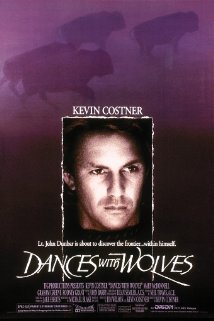
Dances With Wolves (1990), directed by Kevin Costner

dances with wolves posterEvery once in a while, movies can instantly transport you to another place and another time in an instant of cinematic magic. There is a scene at the beginning of Dances With Wolves that does that for me.

The Civil War is raging and there is stalemate between the Union and the Confederate armies, positioned on opposite sides of a field. Lieutenant John J. Dunbar, whose leg is badly injured, realizes that his leg will be amputated, and so he attempts to end his life nobly by riding his horse in front of the Confederate lines where he will be an easy target. Contrary to his expectation, they shoot at him but do not hit him. It is a poetic scene of transcendent beauty as he rides his horse with his arms flying outwards facing possible death.

Dunbar’s brave act rallies the Union troops who storm the Confederate line of defense. His heroism gets the attention of a general who dispatches his personal surgeon to tend to Dunbar and save his leg. As a reward for his service, he is given Cisco, the horse that he rode in battle, and his choice of a new post. Dunbar chooses to serve on the barren frontier, and so begins his odyssey of personal discovery far away from the fields of war.

Dunbar’s new post is desolate, but he relishes the beauty and quiet of his new home. He begins to repair it and waits for reinforcements to arrive. In truth, his whereabouts are unknown, and in time he is discovered by a tribe of Sioux Indians who are camped nearby. He forms a friendship with Kicking Bird, the tribe’s medicine man, and gradually gains acceptance by the Indians who appreciate his help in finding buffalo for them to hunt for food and clothing.

As I watched the film, which is epic in visual proportion and in theme, I thought about what it takes to become part of a new society. If you want to be welcome, you have to go out of your way to meet people, to share in their pain and in their joy, and you have to learn their language. Realizing that his life of isolation is going nowhere, Dunbar decides to leave his post to get to know the Indians. He does not wait for them to come to him. Once in their environment, he accepts the Indians’ initial suspicion of him, and tries sincerely to understand their way of life. It is only when he masters their language that he becomes fully integrated with them.

Reflecting on my own experience as a new immigrant, Dunbar’s journey provides a good model of adjustment to a new world. I recall an Israeli telling me when I first arrived to introduce myself to my neighbors. Don’t be reclusive and stay home or only associate with Anglos. Such a path is insular and will not connect you with Israeli society. Rabbi Ezra Bick, quoting the great medieval sage Maimonides, observes that the person who separates himself from the community, no matter how great his personal qualities, has cut himself off from the “fullness of the image of God,” for it is only within the community that man can realize his true spiritual potential. Maimonides writes: “One who divorces himself from the ways of the community, even though he has not transgressed transgressions, but is only separated from the congregation of Israel, and does not perform good deeds together with them nor enter into their troubles nor fast on their fast-days, but goes about his way as one of the people of the earth, and as though he were not one of them – he has no portion in the World-to-Come.”

Dances With Wolves implicitly reminds us that it is only within the community that we can truly actualize our potential. John Dunbar understands this when he identifies with the Sioux tribe that has embraced him. Together with others, he finds himself.

Purchase this movie from Amazon.com.