Category Archives: Comedy

Infinitely Polar Bear (2014), directed by Maya Forbes

infinitely-polar-bear-posterAs a child with a Downs Syndrome sister, I recall in the 1950s families with Downs Syndrome children often kept their kids in the proverbial closet. My mother and father thought differently. They felt Carol, their daughter, needed to be visible in the community and that the community should provide the resources for such kids to develop their potential to the fullest extent possible. That’s why my mother fought for the establishment for a school in Westchester County for the mentally retarded and, when Carol was older, for the establishment of a retarded children’s workshop in White Plains so that Carol could feel and be productive in her mature years.

Not all parents felt the same way. Some wanted to hide the disability, for they were uncomfortable saying they had a retarded child. I know of one specific instance where the parents decided not to take the child home from the hospital, consigning the baby to life in an institution.

Infinitely Polar Bear does not deal with mental retardation, but rather with a manic-depressive father and the family’s attempt to live a normal life, which is challenged every day by the erratic and outlandish behavior of the father.

It is Boston in the late 1970s. Cameron Stuart suffers from manic depression, sometimes referred to as bipolar disorder. The film begins with him being fired from his job and going into rehabilitation in a hospital setting. To manage the situation financially, his wife Maggie and their two young girls move into a small apartment while she does her best to support the family.

As Cameron’s mental health stabilizes, Maggie applies to graduate school for an M.B.A. so she can earn more money and send her girls to private school. Fortuitously, Columbia University grants her a scholarship. To attend, she asks Cameron to take care of their kids for 18 months, the time she needs to complete the degree, after which they can reunite as a family. Cameron agrees, but has his doubts about whether he can fulfill the mission.

Living with their father is a constant source of embarrassment for the girls. They love him dearly, but Cameron’s bizarre behavior tests them. He occasionally abandons them during the night, is overly friendly with neighbors whom he hardly knows, and begins many home improvement projects that are never finished, leaving the house in disarray. To complicate matters, Cameron does not take the meds needed to keep him calm, and the home life of the family is shattered with frequent emotional outbursts.

Infinitely Polar Bear raises the question of how much a child should tolerate the abusive behavior of a parent. The Talmud in the Tractate of Kiddushin (31a) is instructive. A story is recounted in which a prominent man wearing expensive garments was seated among Roman officials. His mother forced her way into the gathering and tore his garment, hit him on the head, and spat in front of him. In spite of this, he did not embarrass her. Another sage states that if the mother threw his wallet into the sea, the child should remain passive and not embarrass his parent.

Implicit in this Talmudic narrative is the notion that honoring parents does not depend on what parents did for you or whether they were good to you. Rather the commandment to honor parents is simply because they gave you life. As a result, you need to be nice to them even if they are not nice to you.

Dr. Benzion Sorotzkin, a clinical psychologist, considers the extent to which a child should honor a parent who is abusive. He makes a distinction between a parent who is mentally competent and one who is deranged. In the former, there is more latitude for the child to respond to abuse; in the latter case, there is less. When a parent, for example, has bipolar disorder or Alzheimer’s, the child is faced with a great challenge to keep his composure in the face of behavior that might otherwise be condemned.

Infinitely Polar Bear reminds us of the challenge of being respectful to parents even when they do not behave as parents. It also indicates that an abiding love for parents can often overcome the worst of parental provocations.
Purchase this movie from Amazon.com.

Elvis and Nixon (2016), directed by Liza Johnson

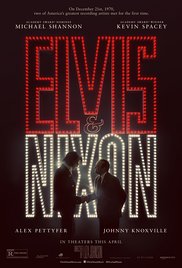
elvis-and-nixonAs a young teenager in Mt. Vernon, New York, I was an avid fan of Elvis Presley. I awaited the release of each new single and purchased the albums as they became available. I even combed my hair like Elvis and grew sideburns like him. I thought to look like him was cool; as a result, many of my fellow high school students viewed me as an enigma, not knowing if I was a sweet Jewish kid or a rock and roller ready to rumble.
Although I outgrew my fascination with Elvis as I matured, I still liked his music. I made a pilgrimage to Graceland, his famous Memphis home, during a Torah Umesorah Jewish educator’s convention in that city in the late 70s and then revisited it as an adult in the 1990s.

A friend of mine who knew of my early admiration of Elvis bought me a postcard depicting Elvis in Talis and Tefilin in front of the Western Wall with the caption “I saw Elvis Aaron Presley at the Western Wall.” So it was with great interest that I watched Elvis and Nixon, a fanciful recreation of a meeting between the “King,” Elvis, and President Nixon, which was immortalized in an iconic photo of the two, a photo that is the most requested picture in the National Archives.

The film opens on a December morning in 1970 when Elvis shows up at the White House requesting a meeting with President Nixon. The authorities at the gatehouse do not know what to make of his request. After a number of meetings with various White House aides, we learn that Elvis wants an audience with the President to let him know of his abiding concern for the youth of the country that is being seduced by the drug culture. Elvis wants to go undercover as a federal agent-at-large to infiltrate the drug gangs and bring them to justice. He also wants an official badge certifying his unique position within the law enforcement agency. He truly feels he has more access to the criminal element than an average Federal narcotics agent.

The bureaucracy of government does not know how to deal with Elvis’s request and Nixon has no interest in meeting him. All seems lost until one of Elvis’ traveling buddies, Jerry Schilling, is reminded of the power of Elvis on his female fans, the daughter of the president being no exception. With promises to her for an Elvis autograph and a photo of Elvis with her father, the White House staffers convince the President to meet with Elvis. The meeting goes well and lasts longer than anticipated. They part as friends and the iconic picture is taken.

What is gleaned from this comedy are some serious notions about fame, fortune, ego, and the desire to be admired and liked. Both Nixon and Elvis are famous, both came from poor backgrounds, and both are self-absorbed, thinking that the world revolves around them.

Jewish tradition encourages a totally opposite view of life, a life founded on humility. The giants of Jewish history were imbued with humility. Moses is known in the Bible as the most humble of all men (Numbers 12:3). Abraham saw himself as only “dust and ashes (Genesis 18:27). King Saul always wanted to avoid the limelight.

Moreover, there is a Hasidic story of a man who came to a holy and righteous man to ask for advice on how he should view fame. “All my life,” he said, “I have tried to follow the advice of the rabbis that one who runs away from fame will find that fame pursues him, and yet while I run away from fame, fame never seems to pursue me.” The holy man answered: “The trouble is that while you do run away from fame, you are always looking over your shoulder to see if fame is chasing after you.”

Watching Elvis and Nixon reminds us of the empty nature of fame. No matter how much you pursue it, it eludes you because of its essential evanescent nature. A special moment can be captured in a photo, but the real business of life transcends the ephemeral nature of fame.

Purchase this movie from Amazon.com.

Hail, Caesar (2016), directed by Ethan and Joel Coen

hail-caesar-posterAs a high school principal, I often found myself multitasking. Professionally, I was teaching, administrating, and trying to raise money to pay salaries. Personally, I was trying to be an exemplary father and husband.

A constant challenge was to set priorities, to distinguish between the urgent from the truly important. It was not always easy to see the difference when I was dealing with an important educational issue and a salary deadline was only days away.

Seeing Eddie Mannix, the central character in Hail, Caesar, who is charged with fixing many crises in the Hollywood entertainment industry, reminded me of the many times I had to juggle many tasks at one time, each requiring a slightly different skill set and each demanding time and attention.

Hail, Caesar takes place in Hollywood during the 1950s. Eddie is charged with protecting the reputations of studio stars. Moreover, he works to solve sensitive issues related to movies that are in production or about to be produced. For example, in a Biblical epic about Christ, he consults with a Catholic priest, a Protestant clergyman, and a rabbi to insure there will be nothing that will offend any religious sensibility. Concurrently, he is working with Western cowboy star Hobie Doyle who is brought in by studio heads to star in a British comedy of manners. Here the problem is how to enable Hobie to drop his Southern drawl in favor of a British accent.

Things become more dicey when movie star Baird Whitlock, the actor playing the Roman Autolycus in the Biblical epic about Christ, is kidnapped by a group of communist screenwriters who feel that the major studios have abused them and taken advantage of them. They want Baird to champion their cause.

Baird’s abduction forces the movie to change its shooting schedule until he is found. Meanwhile, newspaper gossip columnists sense there is a story behind his disappearance and they go to Eddie to get answers. As Eddie finesses his way in giving information to the columnists, he receives word that the kidnappers are demanding a $100,000 ransom. In the midst of all this turmoil, a major corporation recruits Eddie to become a fixer for them.

Jewish law and tradition does not deal specifically with multi-tasking, but does consider two related topics: kavannah or intention, and hesech hadaat, distraction. Kavannah relates to the ability to concentrate, to focus on a present task. For example, when one is praying, one is supposed to focus on the words as he attempts to connect to the Creator. In the Talmud, there is a discussion whether we fulfill a ritual act if, in fact, we are unfocused when we do so. Many of the Sages rule that if one is unfocused during prayer, he has to recite the prayer over again.

Distraction also is a factor in multitasking. If your intention wanders during the ritual act, the act may have to be repeated. For example, Jews are required to ritually wash their hands before eating bread and then say a blessing. If there is conversation between the washing of the hands and the blessings, it is considered an interruption and one has to wash his hands a second time. Everything depends on one’s ability to concentrate no matter what the distraction.

Eddie Mannix is a master of positive multitasking. He succeeds in juggling many jobs at one time because he can shift his entire focus from one topic to another. He does not think about two things at the same time. Rather he moves from concentrating on one subject to concentrating fully on another subject in a matter of seconds. He knows that a wandering mind, an easily distracted person, is a liability to himself and others. Eddie Mannix reminds us that success comes to those who maintain focus in the midst of chaos.

Purchase this movie from Amazon.com.

The Parent Trap (1998), directed by Nancy Meyers

parent-trap-posterDivorce is often painful for husband and wife, but most certainly for children. It is an emotional upheaval, leaving many damaged souls in its wake. As a synagogue rabbi for a number of years, I generally encouraged people contemplating divorce to stay married, but they usually came to me after the die for divorce was cast.

I also served as a legal witness in many Jewish divorce proceedings. Invariably, they were sad events. A wedding that had started out with so much promise now came to a tragic conclusion. A relationship that began in love ended with acrimony. I recall divorce proceedings where neither spouse wanted to talk to the other, so bitter was their parting.

The Parent Trap is a domestic fantasy that starts with two people who are already divorced. The opening titles reveal a loving relationship between Nick Parker and Elizabeth James that begins on an ocean liner cruise. The story continues eleven years later at a camp in Maine, where we meet two girls, Hallie and Annie, who look exactly like each other. They discover they are actually twins, and their divorced parents have never told them about the existence of the other. Nick has raised Hallie in Napa Valley where he grows vintage wines and Elizabeth raises Annie in London as she builds a career as a successful wedding gown designer.

After Hallie and Annie discover that they are twins, they devise a plan to meet the parent they never knew. Each girl teaches the other to impersonate her, and they switch places at the end of their camp stay. Hallie travels to London and Annie to Napa Valley.

Their ruse works for a while, but eventually Nick and Elizabeth became aware of the elaborate charade orchestrated by their twin daughters. This leads them to rethinking their divorce, which occurred so many years ago, and what prompted the split. How this family conundrum is resolved is the stuff of romantic fantasy.

The Bible says that through marriage, man and woman become “one flesh.” The commentators say this means that each person in a marriage is like an actual limb of the other. Just as a person does not get upset at his limb when he has a pain in his arm or leg, so too should a person not be upset when a spouse occasionally causes him pain. That occasional discomfort is part of marriage, an arrangement that grows and becomes stronger in the crucible of life’s ups and downs.

A central Jewish concept is Shalom Bayit, peace in the home. When spouses get along with one another, God’s presence is felt in the home. Divorce is permissible in Jewish law, but it is a last resort. The Talmud (Sanhedrin 22a) tells us that when divorce occurs, the Temple altar metaphorically weeps as if to mourn the emotional tragedy of a marriage torn asunder.

The Parent Trap is a light entertainment with important messages. Firstly, when there is disagreement between husband and wife, one should act quickly to resolve issues and not allow them to fester. “Never go to bed angry” was a wise piece of advice I heard many years ago that has proved valuable during many years of marriage. The longer one waits to resolve a problem, the more difficult it is to resolve. Secondly, one should focus on the positives in a relationship and overlook the negatives as much as possible, especially when the welfare of children is at stake.

Nick and Elizabeth finally understand, after years of miscommunication, that there is more that binds them together than divides them. Their story reminds us to think twice before severing the ties that bind.

Purchase this movie from Amazon.com.

The Purple Rose of Cairo (1985), directed by Woody Allen

purple rose of cairoFrom my early childhood, I was an avid moviegoer. My mother took me regularly; and when I grew older, I continued to go frequently. Movies captivated me because they transported me to faraway places and to exciting adventures. I lived in a small town and movies were my ticket to Neverland. Although I enjoyed movies, I generally did not think of them as accurate descriptions of the real world. They were fantasies, pleasing entertainments, and that was it.
As an adult, I occasionally met people who were addicted to movies. For example, one of my former high school students had trouble separating fantasy from reality. He always assumed there would be the proverbial Hollywood ending to his scholastic endeavors no matter how little he prepared for class. Unfortunately for him, he never achieved his academic potential and remained a mediocre student throughout his high school and college careers. Movies distracted him, preventing him from doing the real work that is required for success in life.

In The Purple Rose of Cairo, there is a different take on moviegoing. Cecelia, a struggling waitress during the depression years of the 1930s, goes to the movies weekly to escape her abusive and unappreciative husband and finds cathartic release by watching what transpires on the screen. She is totally mesmerized by the world of celluloid, which enables her to survive her drab everyday life. But she still understands that what is on the screen is fiction, not real life.

Things take a confusing turn when Tom Baxter, a character in The Purple Rose of Cairo, a movie within a movie, steps out of the screen and convinces Cecelia to run off with him. He openly tells her: “I don’t get hurt or bleed, hair doesn’t muss; it’s one of the advantages of being imaginary.”

The two fall in love, but Cecelia is still skeptical. After all, Tom, by stepping out of the film, has left the other characters stranded. The movie cannot continue when all the players are not there. The action comes to an abrupt halt while the producer tries to find a solution before other characters walk out of the film as well and cause financial losses to the studio.

The producer enlists the real-life actor, Gil Shepherd, to help him convince the fictional Tom Baxter to return to the film. In the process, he meets Cecilia who enchants him. He also wants to marry her and Celia has to choose between the real Tom Baxter (Gil Shepherd), and his fictionalized counterpart. For a while, she is confused as she tells her friend: “I just met a wonderful new man. He’s fictional but you can’t have everything.”

The ability to separate fact from fiction is the mark of a mature sensibility. Children often confuse the two; but adults, generally speaking, can distinguish between them. Rachel Gordon in an insightful article on the power of the imagination in the world of Hollywood observes that here “ the fine edge between imagination and reality becomes hazy and indistinct. Indeed, this very fuzziness between real life and their fantasy worlds is the reason why, behind the scenes, many of Hollywood’s greatest stars suffer from the world’s most appalling psychological plagues.“ It is not good when one has difficulty separating fact from fiction, reality from fantasy, dreams from what happens in real life.

The classic example in Jewish tradition of sensibly combining imagination with reality is the image of Jacob’s ladder. It points heavenward suggesting infinite possibilities, but the ladder is firmly planted on the ground. It is good to dream. It can motivate one to accomplish great things. Dreaming can also help a person get through a dismal present reality.

In the final analysis, one lives in the real world and that is where we must endure the “slings and arrows of outrageous fortune.” Cecelia in The Purple Rose of Cairo ultimately understands the lesson of Jacob’s ladder and is able to distinguish between reality and fantasy. Moreover, she intuits that fantasy can help us cope with a painful present.

Purchase this movie from Amazon.com.

The Hundred-Foot Journey (2014), directed by Lasse Hallstrom

hundred foot journeySome people are passionate about food; others eat simply to be nourished, lacking interest in food preparation and presentation. I remember watching one of my Torah teachers eating a piece of gefilte fish almost every day for lunch in the Yeshiva. He ate at his desk in the study hall and did not want to waste a moment in walking to a nearby restaurant.

I also vividly recall spending a Friday night meal with the two heads of the Yeshiva I attended in ninth grade. I accompanied them on a fund-raising outing to the Five Towns where they attempted to storm local pulpits and appeal for money to sustain the Yeshiva in difficult financial times. On Friday night, our main course consisted of hard-boiled eggs, but that did not dampen the rabbis’ enthusiasm for the holy Sabbath. They sang sacred melodies until the wee hours of the morning. In contrast, in The Hundred-Foot Journey, money does not limit the ability of people to eat fine food, and all the characters are students and worshippers at the shrine of good cuisine.

Because of political turmoil and danger to life in Mumbai, India, Hassan Kadam and his family move to France where they hope to open a restaurant similar to one they owned in Mumbai. When their van breaks down, they are forced to rely on the kindness of strangers and one kind stranger does appear. She is Marguerite, a young woman who volunteers to take them to a local car mechanic and who also serves them platters of scrumptious and attractive food. The Kadam family is impressed both with her generosity and with her cooking.

While waiting for the repair, Papa Kadam wanders around the town and discovers an abandoned restaurant for sale. He sees the purchase of the restaurant as somehow divinely ordained, a message from his deceased wife that his car did not break down in this village for no reason, but rather to enable him to find a suitable location for his restaurant. Against family objections, he buys the property and the family works diligently to transform the decrepit property into Maison Mumbai, a food emporium specializing in Indian cuisine.

All is not fine, however, when Madame Malory, the owner of a award-winning restaurant across the street, about 100 feet away, sees Maison Mumbai as a serious competitor encroaching on her business. Meanwhile, Hassan, a gifted chef, strikes up a friendship with Marguerite who he discovers is the sous chef at the competing restaurant. She shares with him her passion and love for cooking food.

War breaks out between Papa Kadam and Madame Malory when Madame Malory asks to see the menu of Maison Mumbai, and then proceeds to go the market and purchase all the ingredients that Papa needs to cook his food. Papa retaliates by doing the same thing to Madame Malory, and so the hostilities continue.

Tempers boil until someone torches Maison Mumbai. Then Madame Malory, feeling guilty for encouraging a negative attitude towards her competitor, tries to expiate her sin by helping to fix the damaged restaurant. Papa and Madame become friends and Hassan becomes the bridge of their reconciliation.

Clearly recognizing Hassan’s amazing talents as a chef, they both encourage him to go to Paris where he will fine tune and broaden his cooking repertoire in the world-class restaurants of the city. Hassan, however, is conflicted during his sojourn in Paris. Does he truly want to be in the rarefied ambiance of one of the great culinary cities of the world, or does he want to be with Marguerite in his adopted hometown in rural France? Wherein lies his destiny?

Food preparation and presentation is at the heart of The Hundred-Foot Journey, but the film suggests that there are more important things that motivate people. It is good to appreciate passionately the sundry varieties of food that God has given us, but it is more important to passionately value our human connections, which endure beyond mealtime.

For the Jew, the Sabbath is the day that celebrates the enjoyment of food. The Sabbath table is supposed to be beautiful and enjoyable because it marks the Sabbath as a day different from the rest of the week. During the week, the emphasis is on the nourishment value of food. The Jerusalem Talmud states: “The world can live without wine, but it cannot live without water; the world can live without peppers, but it cannot live without salt.” The comment is a reminder of the value of simple fare that enables us to live. We should eat to live and not live to eat.

Purchase this movie from Amazon.com.

Charlie and the Chocolate Factory (2005), directed by Tim Burton

charlie and the chocolate factoryMy parents were people of modest means. Moreover, they always considered the needs of their children before their own. I never felt deprived as a child even though I lived in a low-income neighborhood and did not go on fancy vacations to Disneyworld. Life was joyous because my parents, by example, found joy in the everyday, in spending time with their children, in working as volunteers on behalf of the local synagogue, and in regularly visiting our extended family and friends. I do not recall ever envying other kids because I was satisfied with my lot in life. I remember that my favorite Bar Mitzvah gift was a simple basketball given to me by my friends Kenny and Marilyn Beeman.


Being happy with one’s lot in life is the dramatic crux of Charlie and the Chocolate Factory. Willy Wonka owns the biggest, most successful chocolate factory in the world. One day he realizes that he is getting old and that he needs to plan for someone else to take over the company. He devises a plan to reveal the secret of his chocolate recipes to five lucky kids who will be invited to visit inside Wonka’s chocolate factory. Wonka will then choose one of the kids to be the heir to his chocolate kingdom. The five fortunate children are those who find golden tickets inside Wonka chocolate bars.

The winners of the tickets include Augustus Gloop, a gluttonous young man who cannot stop eating. Veruca Salt, a very spoiled young girl who demands and receives whatever she wants from her parents, Violet Beauregard, an extremely competitive girl who always thinks she will win any kind of competition, Mike Teevee, who is hooked on violent TV games, and, lastly, Charlie Bucket, a modest, poor boy from a loving family.

The factory tour is filled with surprises and Willy Wonka’s special inventions. When the kids interact with them, there are consequences that remove them from the competition. The only one left is Charlie Bucket, who refuses the prize of factory ownership when it entails living in the factory and leaving his family. Charlie admires Willy Wonka; but does not want to lead his kind of life, a disconnected life that was largely shaped by his dysfunctional relationship with his father. For Charlie, family is everything.

I recently read an autobiographical sketch of a Torah teacher of mine written when he was in his seventies. Much of what he wrote echoes Charlie’s take on what are the truly important things in life. He writes: “I grew up in a home wherein chocolate was very, very much a treat. This was a moral issue: we should have necessities, but we should not have so many luxuries.” The emphasis is on cherishing values, not things.

Charlie, accustomed to living humbly, does not feel he is missing anything. This coincides with the maxim of our Sages who say that the wealthy person is the one that is satisfied with his lot, who does not live for more acquisitions. Moreover, my teacher wrote: “If I had to point to a single success, I think, without a doubt, it is my family.” Charlie Bucket shares this perspective. He recognizes that Willy Wonka, the king of the chocolate kingdom who possesses all the accouterments of wealth one could ask for, is a lonely person alienated from family and friends in the real world. Charlie’s happiness, in contrast, is rooted in family connections with parents and grandparents who love him dearly. It is this kind of unconditional family love that gives Charlie a wisdom and contentment far beyond his years. It is worthy of emulation.

Purchase this movie from Amazon.com.

Horton Hears a Who! (2008), directed by Jimmy Hayward and Steve Martino

Horton Hears a Who posterA friend of mine believes in the efficacy of conventional medicine. No matter what ails him, he refuses to consider holistic medical practices. He recently was having severe leg pain and I suggested that he consider acupuncture or chiropractic. He rejected both approaches categorically and continued to suffer, looking forward to his appointment with an orthopedic physician.

I was not certain that alternate therapies would work for my friend’s leg problem, but I was disturbed that he ruled them out without seriously considering the possibility that they might help. This dogmatic approach to problem solving is reflected in Horton Hears a Who, in which members of society reject the possibility of seeing things from another’s perspective.

This is the narrative crux of Horton Hears a Who, an animated version of the famous Dr. Seuss story of Horton, an elephant who hears voices of little creatures that no one else can hear. Everyone in the jungle of Nool dismisses these small voices, but Horton does not. He sees things differently, shifts his paradigm, and takes these voices seriously. He understands that it is possible to see things from another vantage point.

Horton discovers that the small voices are the voices of the residents of Who-ville, microscopic beings living on a speck of dust. A Who-ville scientist, Dr. Larue, tells the Mayor that Who-ville is in danger of extinction unless Horton finds a safer home for its citizens. And so begins Horton’s journey to Mt. Nool to provide safe haven for the residents of Who-ville. Along the way, he is harassed by many, especially the Sour Kangaroo, who feel Horton is out of his mind and hallucinating. Moreover, they feel his insistence on the reality of a microscopic Who-ville is dangerous educationally for it suggests to the children the existence of an alternate reality different from their own. Horton perseveres, however, repeating his motto “A person is a person, no matter how small.” In other words, opinions can have merit even if they express a minority view.

As Horton travels to Mt. Nool, he encounters life-threatening dangers. He almost falls off a bamboo bridge into a roaring river and he is attacked by a ferocious buzzard named Vlad, who almost kills him. In spite of these challenges and a hostile population that regards him as a liar and rebel, Horton continues to work on behalf of the citizens of Who-ville, whose perspective counts and who are relevant in spite of their miniscule dimensions.

Things come to a crisis because no one but Horton actually hears the citizens of Who-ville. But then the Mayor encourages everyone to shout “we are here” in the hope of letting the outside world know of their existence. In spite of their diminutive size, they still exist and want to live, albeit in their tiny universe.

In Jewish tradition, debate is good. The Talmud is filled with arguments expressing alternate points of view. Jewish law is decided by the majority of the Sages, but the minority view is still valued and preserved in the text. Why is this so? The Bible tells us that everyone is created in God’s image. This does not refer to a physical image, but rather to matters of the mind and spirit. Just as God is unique, so too is every human being. There is respect for differences and there is no expectation that everyone will think alike or look alike.

That is the essential message of Horton Hears a Who. Horton lives in his own world, but does not deny the reality of other worlds. He may talk to himself but he hears the voices of others. It is good to fit in and be normal, but it is also good to listen to others, to understand that your perceptions of reality are not the exclusive ones. Listening to others, understanding their worlds makes you a more sensitive and complete human being.

Purchase this movie from Amazon.com.

The Nutty Professor (1963), directed by Jerry Lewis

nutty professor posterIn high school, I was not a very serious student, so it was unsettling for me when I entered Yeshiva University as a freshman and found myself in a class with very bright students who masterfully controlled the ebb and flow of class discussion. Because of my low opinion of my own academic background, I rarely raised my hand when I had a question and rarely contributed to class discussion. It was a case of low self-esteem that had ripple effects. Because I thought little of my own intellect, some of my professors thought the same of me. Because of my non-participation, they thought I was not capable of adding to the discussion, and so they didn’t call on me. It took me a couple of years to overcome this feeling of intellectual inferiority; but when I did, things changed for me and in my teachers’ evaluation of me as well.

Self-esteem is what The Nutty Professor is all about. Professor Julius Kelp is a shy, socially inept teacher, whose classroom experiments often end in disaster. When a bully humiliates him, he is motivated to join a fitness club in the hopes of overcoming his lack of style and poise. It does not work. However, in the recesses of his chemistry lab, he is able to concoct a potion that transforms him, albeit for a short time, into the suave lady’s man known as Buddy Love.

As Buddy Love, he has the confidence to pursue a relationship with Stella Purdy, an attractive student of his. Stella is repelled by Buddy’s arrogance but finds him attractive in a strange sort of way, suspecting that beneath his pompous and crude persona rests a person of genuine worth.

Complications ensue when the mystery concoction wears off at inopportune times, leaving Julius conflicted and confused. Eventually Julius comes to the realization that he has to be himself in order to become a whole human being.

Accepting himself as he is, he finally declares: “ I don’t want to be something that I’m not. I didn’t like being someone else. You might as well like yourself. Just think about all the time you’re going to have to spend with you. And if you don’t think too much of yourself, how do you expect others to?” It is a simple statement, but full of wisdom as Julius embarks on a new stage of his life with Stella, who now sees him as a genuine and likeable human being.

Self-esteem is a major focus of the works of Rabbi Abraham Twerski, a psychiatrist specializing in problems of addiction. He defines self-esteem as “a true and accurate awareness of one’s skills, capabilities and limitations.” If the awareness is not rooted in reality, then one is living a delusion. Twerski believes that a great many psychological problems are due to low self-esteem in which a person devalues himself. He possesses a negative self-image, which leads him to accomplish little and feel downcast most of the time.

A positive self-image grows where a person feels he has value. The Bible tells man he is created in God’s image, which implicitly means he has value. God does not command us to succeed in everything we do; rather He simply wants us to live a life of godliness as prescribed by the commandments in the Bible.

The Jewish institution of the minyan, the required ten men needed for public prayer, drives this point home. Nine great wise men cannot enable public prayer. You need a tenth, and how much wisdom he possesses is not part of the equation. Everyone counts. No matter how low on the status scale, you are still capable of making things happen, of enabling the community to thrive. The Nutty Professor reminds us to be ourselves, to understand that everyone matters, and to continually nurture our self-esteem.

Purchase this movie from Amazon.com.

Nebraska (2013), directed by Alexander Payne

nebraskaHow do you honor a parent? Frankly, I did not know until I was in college at Yeshiva University. My Torah learning career began late and my notion of honoring parents was vague. But once I studied the laws pertaining to honoring parents in the Bible, the Talmud, and Codes of Jewish law, honoring parents took on very specific meaning. It meant, for example, standing up when they entered a room, not openly contradicting them, serving them dinner first, taking care of them when they could not take care of themselves, providing them with food, clothing, and shelter.

Once I learned this, I began to understand how derelict I had been as a teenager, and I resolved to do better as an adult. Watching Nebraska reminded me of how inwardly comforting it is to be able to give respect and attention to a parent, especially when you know that a parent’s days are numbered. My parents have not been in this world for a long time, but I often think how nice it would be if I could speak with them, embrace them, and share with them the milestones of my life’s journey.

Nebraska begins with an image of an old man walking along a snow-covered road in Billings, Montana. He seems to be wandering aimlessly and a policeman picks him up and takes him to the police station. We learn that Woody Grant has decided to walk to Lincoln, Nebraska to collect a million dollars he thinks he has won in a mail-order sweepstakes. His son, David, greets him at the police station and brings him home.

It becomes clear that Woody is generally perceived by both family and friends as shiftless and incapable of taking care of himself. Even his wife feels he should be placed in a nursing home. David, however, has a different take on things. He sees his dad in search of mission, something to demonstrate that his life has meaning and that he still possesses value as a human being in spite of his advanced years.

Woody leaves the house again, and David tries to point out the futility of his quest in light of the obvious scam of the bogus sweepstakes. Woody remains determined and asks his son to drive him to Nebraska so that he can claim his winnings. David surprisingly agrees.

The trip is picaresque and uneventful at the same time. Despite a stop at Mt. Rushmore, Woody and David don’t talk much, but things happen that bring them closer together. Woody falls down and has to be brought to a hospital emergency room. He loses his false teeth and father and son have to search at night near railroad tracks to find them. They pay a visit to relatives they have not seen in a decade. David tries to ask his father for his input on his recent breakup with his girlfriend, but Woody offers little advice.

When word gets out that Woody has “won” a million dollars, old friends and relatives come out of the woodwork to remind Woody of old debts and former kindnesses to him and his family that need to be repaid. The local newspaper even takes his photo for an upcoming article. Sprinkled throughout these adventures are images and voices of people whom Woody knew in his youth. They paint a picture of a kind man with a trusting nature, who never could say no when asked for a favor and who served his country in the Korean War, very much unlike the laconic and ravaged old man we see today.

Nebraska is a thoughtful film that is awash in the images of life in mid-America and the ebb and flow of growing older. It is filled with memories, those of the past and those that are presently being formed. Their trip reveals an unspoken love that exists in spite of few words spoken. David, for all his outward simplicity, is a keen observer of life. He does not want to have any regrets about doing his best to make his father’s last years meaningful. Whenever his father falls, he is there to pick him up, no matter how inconvenient or unpleasant the task. In his consistent devotion to both the physical and emotional needs of his father, he is modeling what it means to honor a parent.

Purchase this movie from Amazon.com.