Category Archives: Crime

Frozen River (2008), directed by Courtney Hunt

frozen river posterIn Joseph Telushkin’s masterful biography of the Lubavitcher Rebbe, he cites an incident in which the Rebbe gives advice to a young woman going through a difficult time in her life when she feels no one understands her emotional pain. He counsels her with an anecdote about motherhood: “When you will grow up and marry and, God willing, have a child, the nature of things are that in the first year…a child begins to teethe and teething is a painful process and the child cries as a result. And the mother feels the pain as if it were her own.” The Rebbe then tells her that this is the way he feels her pain, and that comment enters the girl’s mind and heart.

When we speak about fully identifying with the pain of others, the mother’s love for the child is paradigmatic. This is evident in the case of three mothers who experience crises with their children in the emotionally tense drama Frozen River.

The setting is upstate New York, near the Mohawk Reservation and the Canadian border. Ray Eddy works in a discount store struggling to raise two sons after her husband, a gambling addict, has absconded with all of her savings. In her search for him, she meets Lila Littlewolf, a Mohawk indian who works in a bingo parlor. Although initially mistrustful of each other, they eventually forge an alliance because of their common need for money to provide for their children. Together they transport illegal immigrants over the border from Canada into the United States, crossing the frozen St. Lawrence River, a very dangerous trip that brings them the sizable sum of $1200 per crossing.

On one of their forays to bring illegals into the States, they transport a Pakistani couple who insist on bringing a package with them in the trunk of the car. Unbeknownst to them, Ray leaves the package behind, fearful that it might contain explosives. Once at their destination, they learn that the package contained the baby of the Pakistani woman, who is distraught at losing her child. Ray and Lila do not hesitate trying to recover the baby even though it is pitch black and cold. Ray and Lila are both mothers, and they need no convincing to retrace their route and attempt to locate the baby. Thankfully, the baby is still alive and they happily return it to its mother.

The experience unnerves Ray and Lila, but economic necessity drives them to continue making illegal runs, risking discovery and incarceration by the authorities. Their motivation: to create a better situation for their respective children. A mother’s unconditional love trumps everything.

Rabbi Joseph Soloveitchik, one of the great Torah sages of the twentieth century, poetically describes motherhood: “The nine months of pregnancy, with all its attendant biological and psychological changes, the birth of the child with pain and suffering, the nursing of the baby and, later, the caretaking of and attending to the youngster–all form part of the motherhood experience.” For the mother “the image of the baby, the memory of an infant held in her arms, the picture of herself playing, laughing, embracing, nursing, cleaning, and so forth, never vanishes. She always looks upon her child as upon a baby who needs her help and company, and whom she has to protect and shield.” Rabbi Soloveitchik continues: “The mother can never forget the biological fact that her child was once a part of her, that she gave him her blood and that she brought him into the world with suffering and pain. When she says ‘my baby,’ she means to say: Once we were one body. I gave you life.”

In Jewish tradition, God is sometimes referred to by a feminine descriptive, Shechina, to accentuate the similarity of God’s love to a mother’s love. It is this kind of profound sensibility that animates Ray, Lila, and the Pakistani woman, the mothers in Frozen River. It is a film that reminds us of the overwhelming power of motherly love and how it inevitably asserts itself in the midst of crisis.
Purchase this movie from Amazon.com.

Mississippi Burning (1988), directed by Alan Parker

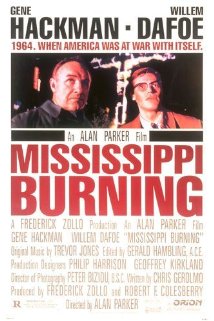
mississippi burning posterA recent newspaper reported that a prominent publisher of maps deleted Israel from maps sold to schools in some middle-eastern countries. Indirectly, schools who use the maps teach that Israel does not exist, and that Jews are usurpers of the land with no legitimate claims. It was another reminder that children can be educated to hate. Sadly, if you want to demonize Jews, there are unlimited ways to do this; the textbooks in many Arab schools and the Arab media promote a vision of the Jew that is easy to detest. I thought of this as I watched a scene in Mississippi Burning, a powerful film about racial tensions in the South, which focuses on the killing of three civil rights workers in the 1960s. In one scene, a Ku Klux Klan leader brands Negroes, Jews, and Catholics as un-American and as minorities who are destroying the fabric of American life and its morality as well. The camera pans on faces of adults and children who are listening attentively to his speech. They are innocent faces, but they are being taught to hate.

The story opens in 1964, when three civil rights workers are killed. At first it is a missing persons case, but the FBI sends two agents, Rupert Anderson, played by Gene Hackman, and Alan Ward, played by Willem Dafoe, to Jessup County, Mississippi, to investigate the details of their disappearance. The townspeople are reluctant to talk to them and getting the truth becomes difficult. A culture of hate is ingrained in the community. Moreover, the more the FBI invests its manpower and time to solve the mystery, the more dangerous life becomes for the community’s black residents.

Finally, the agents get information that leads them to the location of the bodies, and Anderson, using unorthodox methods, is able to ferret out who murdered them. The tense dynamic between Anderson, who is willing to break the law to get necessary information, and Ward, who wants to do things by the book, reveals the difficulty of ascertaining truth in a world where tradition trumps objective truth.

Judaism teaches that all men are created in God’s image and possess infinite value. Therefore, everyone deserves respect regardless of color or creed. It is noteworthy that in the Bible Jews are instructed not to hate the Egyptians, even though it was the Egyptians who enslaved them. The commentators point out that the Egyptians initially provided a place of refuge for the Jews during a time of severe famine. Moreover, it was the daughter of Pharaoh who saved Moses. The commandment not to hate the Egyptian essentially tells us not to carry past animosity with us. To be a free man, you have to let go of hate and not allow it to dominate who you are today.

It is instructive to note that when Miriam, Moses’s sister, criticized Moses for marrying a Cushite woman, a woman with dark skin, she was punished with leprosy. Furthermore, the Song of Songs, written by King Solomon, states “ I am black but beautiful.” A different color does not connote inferiority.

Mississippi Burning on one level is a superb crime thriller, in which we follow the dogged pursuit of the law towards apprehending the murderers of three innocent young men, whose only crime was to work for the civil rights and liberties of all Americans. On another level, it is a cautionary tale about what happens when people blindly accept narratives of hate about others and make them the operative principles for managing relationships with those who are different from them.

Purchase this movie from Amazon.com.

A Few Good Men (1992), directed by Rob Reiner

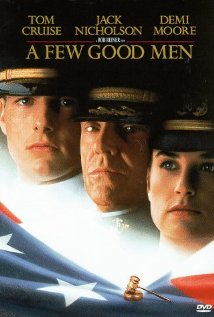
a few good men posterA Few Good Men is an outstanding courtroom drama with a complex agenda. On one level, it tells the story of two Marines who assault another Marine, resulting in his death. What were their motives? Did they attack him because someone higher up in the chain of command ordered them to do so? Most important, is a Marine expected to follow an order even when it goes against his moral sensibilities? Indeed, these are heavy questions; and the answer in part lies with what kind of conduct is expected of a Marine. He is a soldier fighting to protect his country, a noble cause. But in the process, he may lose his moral rudder and begin to devalue the life of others. There are no easy answers; and the film, in general, presents a balanced view of a very complicated topic.

On another level, A Few Good Men considers the question of whether people are willing to listen to the truth when it contradicts the very way they live.

Several years ago, a good friend of mine lost his job and wanted to borrow some money from me to use as a bridge until he found another job. I gave him the loan, but inwardly felt uncomfortable. I knew that my friend was a dreamer, not rooted to reality. He had moved from job to job, always in search of the perfect position, but he never found it. Moreover, he had a reputation for being wasteful with his money and, in fact, had no savings after being employed for fifteen years. I debated in my own mind whether I was an “enabler,” indirectly encouraging my friend to continue with his irresponsible and self-destructive ways. I wanted to tell him the truth, but I was not sure he could hear what I had to say and so I remained silent.

A memorable scene in the movie – ask anyone who has seen it –addresses this very issue. In a courtroom confrontation between Tom Cruise, the defense attorney for the accused soldiers, and Jack Nicholson, the general who gave the questionable command, General Jessup describes the sacred duty of a Marine to defend his country. This depends upon following orders, orders that at times place the Marine on a slippery moral slope but which must be carried out nonetheless. This is Jessup’s truth, which guides him as a military man devoted to defending the country. When skillfully provoked by the defense attorney, however, he loses his composure and shouts to the courtroom: “You can’t handle the truth.” Handling the truth means accepting complexity, realizing that in the pursuit of a noble cause, there may be collateral damage which may be unwelcome but necessary. Tom Cruise may have won the case, but Jack Nicholson’s assessment of his military reality is not to be dismissed.

Watching A Few Good Men reminded me of the difficulty all of us have in hearing the truth. To hear the truth, we must be willing to accept discomposure, complexity, and the reality that truth can be painful even as it enables us to grow. The Torah tells us that we have an obligation to reprove people, to tell them the truth about their character inadequacies so that they can improve. But the commentators make an interesting point based on the unusual language of the Biblical imperative: “you shall surely reprove.” In Hebrew this is expressed by a doubling of the verb for “reprove.” The double term indicates that we should only give reproof if the recipient will listen. Sometimes it is wiser not to reprove if the listener is not ready to hear it.

Purchase this movie from Amazon.com.

The Pursuit of Happyness (2006), directed by Gabriele Muccino

pursuit of happyness posterThere was a time in my life when I was in a very poor cash position. I went to relatives and friends and asked for help, and they all assisted me. I told all of them that I would repay their loans and in a couple of years I did. A few people forgave the loan but most did not, but I was happy to pay them back now that my financial situation had improved. It is no fun to be heavily in debt, and I identified easily with the emotional stress of Chris Gardner in The Pursuit of Happyness, an inspirational film about a man with very bad financial luck who manages to turn his life around because of sheer hard work and unswerving commitment to a goal.

The story begins in 1981 in San Francisco where salesman Chris Gardner purchases a large number of portable bone-density scanners to sell to doctors. But there is a problem. The machines are very expensive and do not reveal much more than standard x-ray machines. The result: few machines are sold and Chris goes into deep debt. The financial stress causes a rift between Chris and his wife. Eventually, as their economic situation deteriorates more and more, his wife Linda wants out of the marriage. Chris insists on keeping their 5-year old son with him in spite of his wife’s pleas. The fact that Chris’s own father walked out on him is a memory tape that haunts Chris, and he does not want to follow in his father’s footsteps when it comes to his own son.

In the course of trying to sell his scanners, he by chance meets Jay Twistle, a manager for the stock brokerage firm of Dean Witter Reynolds. Fascinated by the glamour of the job of stock broker, he applies for an internship at the company. In a serendipitous cab ride that he shares with Twistle, Chris impresses him with his facility for solving a Rubik’s Cube puzzle and Twistle accepts Chris for the internship.

As Chris tries his best to turn the internship into a real job with pay, he encounters a surfeit of impediments. Police arrest him for unpaid parking tickets. His bank account is garnished by the IRS for unpaid income tax. He is evicted from his home because of overdue rent, forcing him and his son to sleep in the subway for a short time and then to live in a facility for the homeless.

Because of these pressures, Chris is forced to utilize every available free moment to make phone contacts and set up sales calls for stock purchases. He even defies protocol by seeking out high value customers even though he is an intern. Moreover, he does not want to reveal his disadvantaged situation to anyone at the firm for fear it will jeopardize his chances for the coveted paid position at Dean Witter.

King Solomon in his classic Proverbs tells us that “seven times the righteous will fall, yet they will rise again.” It is a message of hope in the face of adversity, to stay focused even when things fall apart. We all have friends who, when faced with possible failure in reaching their professional goals, give up hope. For example, I know of many young, promising teachers who leave education because of their initial difficulties in the field. I also know some who weather the storm and leave meaningful legacies in their respective institutions.

Chris Gardner in The Pursuit of Happyness comprehends the value of perseverance in the face of adversity. His story inspires us to be steadfast even in the face of enormous obstacles.

 Purchase this movie from Amazon.com.

City by the Sea (2002), directed by Michael Caton-Jones

city by the sea posterParenting is complicated, especially when it comes to divorce. Many years ago, a friend who went through a stressful divorce, described the toll it took on the relationship between him and his children. His wife, in order to strengthen her own parental identity, created an environment in which the kids had to take sides. His wife manipulated the situation by bad mouthing her husband and limiting his contact with the kids. Eventually, the kids rejected their father in spite of the children’s natural instinct to be loved by both parents.

The professionals tell us that this is the worst outcome of divorce. They urge parents to keep their personal agenda away from the children as much as possible because kids need to maintain healthy and solid relationships with both parents. It was tragic to witness my friend being demonized in the eyes of his kids.

That was not the end of the story. It has been documented that as a result of parental alienation, kids often develop low self-esteem, depression, distrust people, and sometimes fall into substance abuse. Self-hatred also may result because the child may feel unloved by the alienated parent. All these consequences occurred in the children of my friend. Overall, it was a sad and deeply troubling narrative.

City by the Sea, a crime drama, tells the story of Joey LaMarca, a policeman’s son, who is the victim of parent alienation. His father and mother split acrimoniously and Joey’s descent into the world of drugs was part of the fallout. In a drug deal gone bad, Joey without premeditation kills a drug dealer. This sets in motion two parallel forces searching for Joey: the police who see Joey as a prime suspect, and the partner of the dead drug dealer who wants to kill Joey to preserve the invincible aura surrounding his drug operation.

Vincent, Joey’s dad, is conflicted. He has been out of Joey’s life for years. On the one hand, he wants to help him. On the other, he feels duty bound as a law enforcement officer to treat his son as he would treat any other offender. Things come to a boil when Spyder, the drug dealer who is looking for Joey, murders Vincent’s partner. Joey calls his father to tell him that he did not kill the policeman, and Vincent believes him. This creates the foundation of a new relationship between father and son, who for the first time express their affection one another in a direct way, without interference from outsiders.

In Jewish tradition the father-son dialogue is founded on mutual trust and a belief in the essential goodness of the other. In the Ethics of the Fathers, our Sages point out the kindness of the Creator not only in creating man, but in letting man know that he is a “child of God.” When one feels that he is God’s child, it is an emotional game-changer. When Vincent finally expresses his belief in Joey’s innocence, this sets the stage for reconciliation and love.

In Judaism, the transference of wisdom from one generation to the next does not occur through the mere reading of holy text. Rather, it is personal. It is embedded in the conversations between father and son that are steeped in morality and love. In City by theSea, Vincent LaMarca finally understands that his relationship with his son can be saved only when he communicates to him from the heart, when he freely expresses his parenting mistakes, and embarks on a course of lifetime connection with his son.

Purchase this movie from Amazon.com.

Limitless (2011), directed by Neil Burger

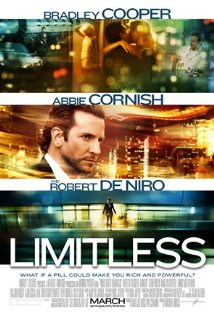
limitless posterI began to study Talmud seriously when I entered Yeshiva University, which had just started a program for college students who did not attend Jewish day schools. It was a challenging subject and at first I had very mixed success. My Talmud teacher summed it up when he wrote on my evaluation the following remarks: “Earnest and studious, has been plodding along with unusual diligence and, as a result, has made fine progress especially in his ability to master texts. Analytic grasp is still weak, tends to repeat some ideas mechanically without fully understanding them. But on the whole has made highly encouraging progress.” Frustrated by my difficulty analyzing such complex material, I thought it would be wonderful to be able to take a pill and suddenly become an analytical savant. I did not do this, but Eddie Morra in the intense drama Limitless does.

Eddie Morra is a writer with writer’s block. He has a contract with a literary agent but cannot summon the intellectual energy to write his book. His life is falling apart financially. His girlfriend rejects him, and he is threatened with eviction from his apartment. Things change, however, when he meets his ex-brother-in-law Vernon, who offers him a new brain drug that will get him out of his lethargy. Eddie takes it, feeling things can’t get any worse, and experiences an intellectual epiphany. He sees everything with brilliant clarity and now is able to write freely. Immediately, he cranks out several hundred pages with ease and impresses his agent.

Eddie returns to Vernon, wanting more of the drug, which is called NZT48. Finding Vernon dead, he searches his apartment for the drug and finds cash and a large stash of NZT48. Overwhelmed with his new-found abilities, Eddie takes the pill regularly and quickly amasses huge amounts of money as a day trader on the stock market based on his uncanny ability to predict the success of many companies on the exchange.

His success in the market leads to a meeting with Carl Van Loon, a major player in the corporate merger world, who senses that Eddie can be a valuable member of his negotiating team in an upcoming merger deal. Meanwhile, Eddie’s supply of NZT48 is dwindling, and Eddie is having relapses which stymie his smooth presentations to Van Loon. How Eddie tries to be sharp when his supernatural analytic skills are growing dull is the plot conceit that drives the story forward.

There is a mesmerizing conversation between Eddie and Van Loon, which highlights the different paths these men have walked to arrive at their current positions in life. Eddie’s path is serendipitous: Carl’s is deliberate. When Eddie informs Carl that he is looking to be on his own, Carl reminds him: “I mean you do know you’re a freak? Your deductive powers are a gift from God or chance or a straight shot of sperm or whatever or whoever wrote your life-script. A gift, not earned. You do not know what I know because you have not earned those powers. You’re careless with those powers, you flaunt them and you throw them around like a brat with his trust-fund. You haven’t had to climb up all the greasy little rungs. You haven’t been bored blind at the fundraisers. You haven’t done the time. You think you can leap over all in a single bound. You haven’t had to bribe or charm or threat your way to a seat at that table. You don’t know how to assess your competition because you haven’t competed.” It is a classic case of the callow wisdom of youth pitted against the sage wisdom and experience of age.

There is an insightful comment about the perennial conflict between youth and age found in The Ethics of the Fathers. The Sages write: “He who learns from young men is like one who eats unripe grapes and drinks new wine from the winepress. He who learns from old men is like one who eats ripe grapes and drinks aged wine.” Clearly, Jewish tradition favors the learning from old men who combine the wisdom of life experience with intellectual power. Limitless showcases the smarts of youth and the acumen of age, and lets the audience see the virtues and faults of both.

Purchase this movie from Amazon.com.


A Perfect World (1993), directed by Clint Eastwood

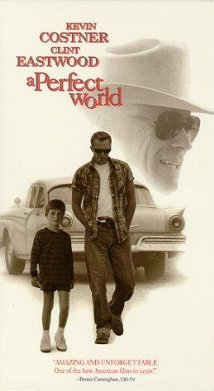
perfect world posterA story to share about my father. When I was 12 years old, I attended a religious camp in the Catskill Mountains in New York. On visiting day, my parents came up to see me. It was the first time I went to a sleepaway camp and my parents and I were looking forward to the meeting. During the visit, a rabbi approached my father and asked him to travel over two hours to pick up Rabbi Aharon Kotler, the founder of the esteemed Lakewood Yeshiva who would come to the camp to address the campers. My father readily accepted the mission; but when he arrived at the destination, he was told that someone else had picked up the rabbi. This was way before cell phones so there was no way to contact my father to cancel the mission. I remember distinctly that my father did not utter one word of complaint. He just did what he felt was right and did not complain when things did not go as planned. His response implicitly taught me that when given a task, your job is to do it with the realization that you are not in control of the outcome. Only God is. Jewish law reflects this approach when it tells us that we receive a reward for traveling to synagogue, even if we discover when we arrive there that there is no quorum for communal prayer.

Another story. My father, after many years of driving used cars, finally bought a new car. Soon after the purchase, I borrowed it and drove carelessly down a street where a garbage truck was making a stop. Instead of waiting patiently for the truck to move, I accelerated and scraped the side of the car, ruining the exterior. When I returned home, my dad simply asked me if I was okay. There was not a word of criticism about my thoughtless driving. I felt guilty for what I had done and incredibly stupid, but I realized that my father trusted me to grasp the folly of my foolish behavior without any reminder from him. I learned from him that sometimes you can learn more from what a parent does not say than from what he says.

All these recollections are a preamble to the subject matter of A Perfect World, a film in which the nature of fatherhood is explored. It is a story about two sons who see the world differently because neither has a father to teach him how to be successful in life.

The narrative unfolds in Texas in 1963 when two convicts, Butch Haynes and Jerry Pugh, escape from a state penitentiary and kidnap eight-year old Phillip Perry to use as a hostage against pursuing police. During the course of their flight, Butch, who himself was an abused child, becomes a protector of Phillip and relates to him as a father, offering insights and life lessons that forge a friendship between the two. Butch becomes the surrogate father that Phillip never had.

On the run with Butch, Phillip, only eight years old, experiences an independence that is exhilarating and frightening at the same time. He shoplifts a Casper the Friendly Ghost costume, yet feels incredibly guilty for breaking the moral code that he has learned from his mother. In the course of their picaresque journey, Phillip confronts moral ambiguities for the first time, and begins to make moral choices.

What does being a father mean? As a father myself, I know it means more than a biological connection. It implies a teaching task as well. The Bible states this clearly when it says “You shall teach your children.” Fatherhood means more than paying the bills for your child. It also means guiding your children, teaching them to make wise decisions so they can navigate life successfully. A Perfect World reminds us of the profound influence of fathers on children, who mentor by example as well as by explicit instruction.

 Purchase this movie from Amazon.com.

Minority Report (2002), directed by Steven Spielberg

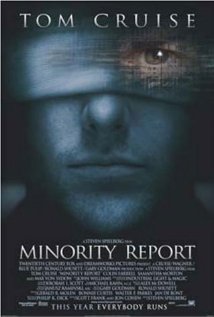
minority report posterSeveral years ago, I went to a wedding of a friend in the Midwest. There I met a number of teachers who taught in the local day school. One introduced himself and reminded me that he was once a student at Yeshiva High School of Atlanta and had actually dormed at my home for half a year. I did not immediately recognize him, but when he told me his name, a flood of memories rushed through my head. I remembered that he came from a small Southern town and that his parents wanted him to take advantage of high school Jewish education and so they enrolled him at my school. Although he did well academically, he never subscribed to the ethos of the school and regularly challenged authority. Upon graduation, I felt sure that he would abandon whatever Judaism he possessed.

But my prediction was all wrong. At some point, he was “born again” and blossomed as a student of Torah. Never would I have guessed that he would eventually make his career Jewish education. The entire encounter reminded me that one snapshot in time is not a reliable indicator of one’s future success or failure. The future is ultimately unknowable.

Minority Report, a dark and very tense science fiction thriller, suggests the opposite, that you actually can know the future of person and can even intervene to prevent him from committing a crime. In the year 2054, there is a “PreCrime” program that is operational in the nation’s capital In Washington, D.C.  John Anderton and his team of “PreCrime” police officers are able to act on information obtained from “precogs,” three mutated humans who can see into the future. They can predict the time and date of the crime, the culprit, and the intended victim. Once this is known, the data is forwarded to the police who proactively intervene to prevent the crime.
Because the country is poised to take the program nationally, the United States Justice Department sends its own investigator, Danny Witwer, to evaluate the program. Danny discovers some internal inconsistencies in the program and determines that PreCrime is flawed and subject to human manipulation. At first he sees John Anderton as the prime suspect, but eventually his attention turns elsewhere as he doggedly pursues his leads. The film raises the provocative question of whether one should take action against people you view as criminals, even if they have yet to commit the crime.

Interestingly, the Bible speaks of a pre-crime scenario in which capital punishment theoretically is meted out to one who will commit a crime in the future even though in the present he may be guiltless. This is the instance of the “wayward and rebellious son” who is brought to the court by his parents for capital punishment. Although his behavior at present is gluttonous and he is guilty of thievery, he has not yet murdered anyone. Yet the Bible prescribes the death penalty.

The Talmud, however, in the final analysis is inconclusive on this matter, stating that the case of the “wayward and rebellious son” never actually occurred and, indeed, will never happen. Then why, ask the Sages, do we have the law on the books?  One answer is that the passage teaches us lessons about parenting and serves as a warning to children to listen to parents and to voices of authority in general. Minority Report, which explores the notion of pre-crime punishment, concludes that no one can truly know the future; and, therefore, we can only respond to infractions in the here and now, not future ones. This, indeed, affirms the Torah value of judging people as they are now, not as the villains they may become.

Purchase this movie from Amazon.com.

Ransom (1996), directed by Ron Howard

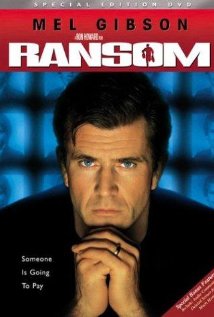
ransom posterOne of my sons once ran away from home. I do not recall what precipitated it, but I do remember the panic that my wife and I felt when we could not locate him. We searched the house, called neighbors, and offered a prayer. After an agonizing hour, we finally did find him in the backyard, and we both breathed a great sigh of relief.

I recalled that very stressful day as I watched the opening scenes of Ransom, a tense thriller about the kidnapping of a young boy. The moment when parents discover their child is missing is gut-wrenching; and while parents may utter comforting words to one another at a time of crisis, inwardly they fear the worst.

Tom Mullen, a successful owner of a new and growing airline, has his admirers and his critics, some of whom are jealous of his wealth and social standing. He is an obvious target for unsavory types who want his money; and on the day of a student science fair in Central Park in New York, they kidnap his son as he wanders through the crowds.

Soon the kidnappers call and demand a ransom of two million dollars and tell the Mullens not to involve the police or FBI. Here is their dilemma. What is the best way to insure that their son returns home safe and sound? The Mullens decide to inform the FBI, but they are prepared to deliver the ransom to the kidnappers. Agent Lonnie Hawkins approves of Tom’s approach to getting back his son, mentioning to him that from a statistical perspective the odds of getting him back alive are increased if he simply pays the ransom.

However, after one bungled attempt to pay the kidnappers, Tom has an epiphany about the kidnappers, and concludes that his son will not return alive even if the ransom is paid. Tom then does something surprising. He goes on TV and announces that he will not pay the ransom but will instead offer a bounty of two million dollars for information leading to the death or arrest of the kidnapper.

In the Talmud there is direction for coming to a decision in a complicated situation where the outcome is unclear. The Talmud tells us that when there is a choice between a doubt and a certainty, choose the certainty, or at least the solution that from a statistical perspective is more likely to achieve the desired results. Of course, one Talmudic aphorism does not wisdom make and the intelligent person considers other pieces of wisdom as well.

The Ethics of the Fathers encourages us to be deliberate in judgment. We should not rush to rash decisions. Moreover, the Sages tell us not to act as a judge alone if at all possible. Try to glean the opinions of others to make better decisions. At the end of the day, making life and death decisions requires great knowledge and wide life experience and it cannot be reduced to one set of givens or another. Life’s tests are often complex and there are no easy answers.

Ransom offers one idiosyncratic approach to a terrible dilemma, but there are a wide range of possible responses to a life and death scenario. Only hindsight will reveal if one has made the perfect decision in a situation fraught with peril. For the present, our Sages recommend that we gather knowledge, consult with others, look at our options, weigh them carefully, and consider who the players are. With the best input, the outcomes will be acceptable even though they may not be perfect.

Purchase this movie from Amazon.com.

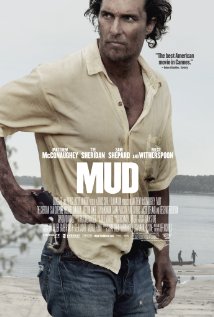
Mud (2012), directed by Jeff Nichols

mud posterWhen I was 14 years old, I dated seriously. I had a girlfriend and I thought I was going to marry her. In those innocent years, thoughts of sexual intimacy were not in my head. My emotions were clear and pure. Linda Sue was the girl I would marry. My fantasy came crashing down, however, when I travelled by subway from Mt. Vernon to the Bronx where she lived to surprise her. There I found her wooing another boy. I was speechless, devastated, and felt betrayed. Tears streamed down my cheeks as I made the lonely return trip to my home.

In hindsight, I can only thank God for not answering my prayers about Linda Sue. Indeed, she was a sweet and pretty girl, but I was clueless about what real love is at that tender age. Moreover, my own identity was as yet unformed. I did not know who I was let alone knew who Linda Sue was. That fateful day, my illusions about love began to give way to reality and a wiser view of what lasting relationships are all about.

Mud on one level is a film about a criminal on the run. But on a deeper level, it is a wise film about coping with life once our illusions are shattered.

The story opens as two teenage boys, Ellis and Neckbone, arrive at a small island in the Mississippi River. There they hope to acquire a boat stuck high in a tree, but they are frightened when they discover that someone is actually living in the boat. The occupant is Mud, a personable fellow who engages them in conversation, but who, in fact, is a fugitive on the run for murder.

Mud wants to reunite with his girlfriend Juniper and then leave town as soon as possible. To accomplish this, he enlists the aid of the two boys, who convey messages from him to Juniper about Mud’s intentions to meet her. The boys do not reveal Mud’s hiding place either to parents or police. They like him and, therefore, they trust him.

As this narrative is unfolding, there is a parallel plot involving Ellis and his parents, who are headed towards divorce. This is an unsettling reality that leaves Ellis emotionally confused. His house may be sold and his parents who once were in love are now out of love, something which Ellis cannot comprehend. Moreover, Ellis thinks he is in love with May Pearl, a high school girl several years older than him; and when she rejects his overtures in front of her friends, he is mortified.

In the midst of his own psychological turmoil, he is enthralled with Mud’s passionate devotion to Juniper, which motivates him to facilitate their reunion, naively thinking that love will conquer all. Ellis steals machine parts and other junkyard supplies to help Mud repair the boat stuck in the trees so that Mud can escape his pursuers.

Things, however, do not work out as planned and Ellis discovers that in the real world, one has to accommodate to the changing nature of human relationships. Separation and divorce may signal tragedy, but not necessarily the end of loving connections.

Jewish tradition frowns upon marital separation and divorce. Marriage is considered a holy bond, and divorce has many negative connotations. The Talmud actually says “even God sheds tears when someone divorces his wife.” Sometimes, however, divorce is necessary for a variety of reasons. The aftermath of such a tragedy does not have to be negative. It can mean a new, more fulfilling destiny for many, and a second chance at a successful life. Both Mud and Ellis, each at vastly different points in life and facing very different challenges, finally understand that separation can ultimately be good and allow people to re-emerge from darkness into light.

Purchase this movie from Amazon.com.