 On rare occasions, I have been confronted with having to make a decision knowing that if I decide one way, I will hurt someone I care about; and if I decide differently, I will hurt someone else. Either way, I will wind up alienating a friend.
I recall that about 15 years ago, I was faced with such a dilemma and I decided to consult an older man with great knowledge of Torah and a deep understanding of human nature. He gave me a good perspective on my situation, enabling me to live with my decision without the burden of guilt. I continued to call him for advice until one fateful evening when I called his home, only to find out that his wife and family were in the midst of the week of mourning for my friend and mentor who had died only a few days before.
In the days that followed, I reflected on the time spent consulting with him. Although I could no longer speak with him, I learned much from the wisdom he shared with me, and I attempted to incorporate his perspectives in the way I viewed my own quandaries. Senior wisdom is priceless and I tried my utmost to take advantage of it whenever I could not come up with a satisfactory resolution to a problem. Such is what happens in All the Pretty Horses when John Grady Cole finds himself burdened by guilt by making good decisions that, regrettably, did not turn out well. Ultimately, he turns to a senior to put his own problems into perspective.
The year is 1949. John Grady Cole, a young cowboy raised in the wide-open spaces of a Texas ranch, is forced to find new means of employment when his grandfather dies and his heirs sell the property that was in his family for many years.
Together with his friend Lacey Rawlins, they journey south of the border to Mexico to find work. Along the way, they meet Jimmy Blevins, a savvy but unpredictable teenager, who wants to ride with them. Later they find employment with a wealthy rancher who needs help managing his exceptional prize horses. John and Lacey enjoy their work, but things get complicated when John falls in live with Alejandra, the rancher’s daughter.
Things change dramatically when both John and Lacey are arrested by the Mexican police. In jail, they again meet Blevins who is incarcerated for horse stealing and murder, and they learn that they are viewed as his accomplices. John and Lacey are sent to prison where they are surrounded by cutthroat prisoners who threaten their lives. They languish there until Alejandra’s aunt arranges to free them on condition that John never sees Alejandra again.
When John returns to Texas, he is arrested for horse stealing and appears in court to explain his side of the story. Surprisingly, the judge believes John and tells him that he is free to go. Never having encountered such fair play before, John visits the judge at his home, perhaps seeing him as a wise man and father figure. He confesses that he killed a man in prison and did not do enough to save his friend Blevins from being murdered.
The judge listens patiently and gently tells John that he could not have done anything to avoid those tragedies. Moreover, what John should do now is simply move on with his life, knowing that those tragic moments will be sorted out over time. The judge understands that John needs to share these secrets to assuage feelings of guilt. The judge intuits the wisdom of Ethics of the Fathers, which states that a person should not consider himself evil. When a person lacks self-esteem and views himself as a bad person, he may become emotionally paralyzed and give up trying to improve.
All the Pretty Horses depicts a rite of passage for a young man trying to make sense out of a life filled with contradictions. What enables him to survive is senior wisdom coupled with an abiding belief in God, which animates him every day. This sentiment is openly articulated by John at the film’s close: “I believe that God does watch over us, if he didn’t, I don’t see how we could get through each day.”
 In the 1960s, when I was an undergraduate student at Yeshiva University, one of my good friends told me about a student group that traveled once a week to the home of Rabbi Avigdor Miller, a celebrated Torah scholar and ethicist. Once there, the revered rabbi would speak for about ten to fifteen minutes about a particular character trait and then give the students an assignment that would help us integrate that character trait into our daily lives.
 Terrorism is very much a part of the world’s landscape at this point in history. Terrorist attacks occur not only in Israel, but in the United States, France, and Belgium among other countries. The world is a scary place, and many are trying to figure out what is the intellectual and emotional appeal of this aberrant behavior, which destabilizes the world. The Dancer Upstairs is a quiet, thoughtful, and tense film that gives us some understanding of the philosophical and practical motives that drive terrorists in the modern world.
 From my early childhood, I was an avid moviegoer. My mother took me regularly; and when I grew older, I continued to go frequently. Movies captivated me because they transported me to faraway places and to exciting adventures. I lived in a small town and movies were my ticket to Neverland. Although I enjoyed movies, I generally did not think of them as accurate descriptions of the real world. They were fantasies, pleasing entertainments, and that was it.
 I began my doctoral studies in English in Atlanta in 1972. It was intended to be a 5-year program, but it took much longer because I was busy with earning a living and rearing a young family. I finally received my PhD in 1984, twelve years after I started.
 The Ethics of the Fathers tells us that one hour repenting and doing good deeds in this world is better than life in the world-to-come. Why? The Sages explain: we can only exercise our free will while we are alive. Therefore, we can choose to do good deeds only when we are alive. Doing good deeds is our mission on earth, so everything we do or don’t do influences our eternal destiny. That is why life in this world is so precious.
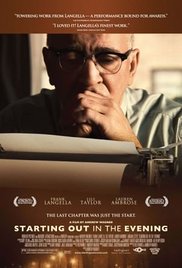 In the late 1960s, I was a graduate student in English at Hunter College, a division of the City University of New York. I read literary critics like Irving Howe and Lionel Trilling, and breathed in the air of the New York intellectual scene.
 Growing up in the 50s and 60s, dating for marriage was a very straightforward process. You met, dated for several months, and then came the moment of truth. Do you propose marriage or move on to dating someone else?
 I live in Israel where I often read about the moral dilemmas faced by the Israel Defense Forces as they fight terror that threatens the fabric of daily life. There are no simple answers to these complex questions. I reflected on this reality as I watched Sicario, a tense and unsettling look on law enforcement in America as it tries to control illegal drug trafficking in Mexico, a drug trade that infiltrates the southern border of the United States.
 I once heard a quotation that was reputed to be first said by Eddie Cantor, a celebrated comedian in the late 40s and 50s, which was “It takes twenty years to become an overnight sensation.” It was a piece of wisdom that caught my attention many years ago and that remains with me today. It is advice that I share with young people trying to make a mark in the world and who encounter setbacks, but I also tell myself and other seniors the same piece of advice. Let me explain why recently I have this adage on my mind.
 Kosher Movies