Category Archives: Drama

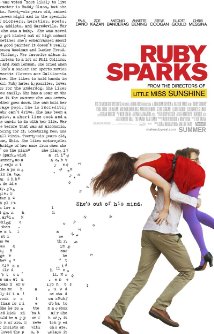
Ruby Sparks (2012), directed by Jonathan Dayton and Valerie Faris

ruuby sparks imageI know some single men who are very self-absorbed. They are successful professionals but cannot seem to take their female relationships to the next level: marriage. They see the world through their own eyes and the older they get, the more rigid they become, increasingly unwilling to understand that women also have needs, which do not always revolve around men. For example, a 50 year-old friend has finally decided to get married because he wants children. He assumes that a 35 year old woman will want to marry him and have kids. He does not comprehend that a 35 year old woman generally is not interested in a 50 year old guy, yet he persists in his quest to find a young bride.

I thought of this unrealistic mindset of my friend as I watched Ruby Sparks, a clever, funny, profanity-laden, and very insightful film about relationships in which the male partner always sees things from his perspective and fails to understand the needs of significant others in his life.

Calvin Weir-Fields, a young J.D. Salinger, has writer’s block after his first wildly successful novel. Visits to his therapist are helpful, but his inability to write persists, until something amazing happens. A girl, about whom he has been dreaming, becomes a real person and he falls in love with her. Improbable as it may seem, they date, dance together, and get to know one another as lovers and friends.

The conceit that informs the movie is that Calvin can control Ruby by writing about her. She is both real and a figment of his imagination. It takes a while for him to process this conundrum, but he does when other real people such as his brother and his parents are able to actually see her and talk to her. There is no rational explanation for what happens, but the film manages to say some wise things about relationships between men and women.

Consider these interchanges in the story. When Calvin, a loner, confides to Ruby that she is all he needs, Ruby responds “That’s a lot of pressure.” When Calvin feels depressed after Ruby leaves him for short time, he retires to his study and types that Ruby is miserable.  Sure enough, she immediately phones to tell him how much she misses him. When Ruby desires to stay close to Calvin and physically cling to him, barely allowing him to breathe, Calvin again goes to his typewriter and types that Ruby is “filled with effervescent joy.” This makes Ruby perpetually bubbly and unresponsive to the nuances in Calvin’s behavior.

The relationship reaches a dramatic crescendo when Calvin exerts his power to control Ruby in an almost diabolical way, mercilessly informing her of his power to control her. It is an extraordinary scene pitting the controlling male against the defenseless female. How this problem is ultimately resolved is the stuff of fancy, but along the way we glean wisdom about what the relationship of a man and woman should be.

Jewish tradition has much to say about the relationship between men and woman. Every Friday night, the traditional Jew sings an ode to the “woman of valor” described in King Solomon’s Book of Proverbs. She is independent, wise, and the key to passing down tradition to her children. In a Talmud class, a student once asked the teacher: “How can I get my wife to treat me as a king?” The answer from the teacher: “Treat your wife like a queen and she will treat you as a king.” The answer reveals the mutual respect that husband and wife should have towards one another. The issue is not one of control. Rather the relationship should be characterized by each partner giving to the other. The goal of marriage is not to control or change the other; rather it is to lovingly accept the divinity within each other so that there will be mutual respect for one another’s uniqueness.
Purchase this movie from Amazon.com.

Minority Report (2002), directed by Steven Spielberg

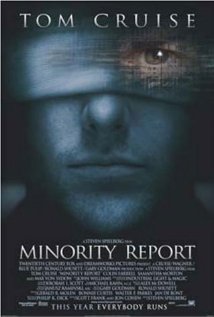
minority report posterSeveral years ago, I went to a wedding of a friend in the Midwest. There I met a number of teachers who taught in the local day school. One introduced himself and reminded me that he was once a student at Yeshiva High School of Atlanta and had actually dormed at my home for half a year. I did not immediately recognize him, but when he told me his name, a flood of memories rushed through my head. I remembered that he came from a small Southern town and that his parents wanted him to take advantage of high school Jewish education and so they enrolled him at my school. Although he did well academically, he never subscribed to the ethos of the school and regularly challenged authority. Upon graduation, I felt sure that he would abandon whatever Judaism he possessed.

But my prediction was all wrong. At some point, he was “born again” and blossomed as a student of Torah. Never would I have guessed that he would eventually make his career Jewish education. The entire encounter reminded me that one snapshot in time is not a reliable indicator of one’s future success or failure. The future is ultimately unknowable.

Minority Report, a dark and very tense science fiction thriller, suggests the opposite, that you actually can know the future of person and can even intervene to prevent him from committing a crime. In the year 2054, there is a “PreCrime” program that is operational in the nation’s capital In Washington, D.C.  John Anderton and his team of “PreCrime” police officers are able to act on information obtained from “precogs,” three mutated humans who can see into the future. They can predict the time and date of the crime, the culprit, and the intended victim. Once this is known, the data is forwarded to the police who proactively intervene to prevent the crime.
Because the country is poised to take the program nationally, the United States Justice Department sends its own investigator, Danny Witwer, to evaluate the program. Danny discovers some internal inconsistencies in the program and determines that PreCrime is flawed and subject to human manipulation. At first he sees John Anderton as the prime suspect, but eventually his attention turns elsewhere as he doggedly pursues his leads. The film raises the provocative question of whether one should take action against people you view as criminals, even if they have yet to commit the crime.

Interestingly, the Bible speaks of a pre-crime scenario in which capital punishment theoretically is meted out to one who will commit a crime in the future even though in the present he may be guiltless. This is the instance of the “wayward and rebellious son” who is brought to the court by his parents for capital punishment. Although his behavior at present is gluttonous and he is guilty of thievery, he has not yet murdered anyone. Yet the Bible prescribes the death penalty.

The Talmud, however, in the final analysis is inconclusive on this matter, stating that the case of the “wayward and rebellious son” never actually occurred and, indeed, will never happen. Then why, ask the Sages, do we have the law on the books?  One answer is that the passage teaches us lessons about parenting and serves as a warning to children to listen to parents and to voices of authority in general. Minority Report, which explores the notion of pre-crime punishment, concludes that no one can truly know the future; and, therefore, we can only respond to infractions in the here and now, not future ones. This, indeed, affirms the Torah value of judging people as they are now, not as the villains they may become.

Purchase this movie from Amazon.com.

The Hunger Games (2012), directed by Gary Ross

hunger games posterIn the high school English class I teach, we often read the celebrated short story “The Lottery” by Shirley Jackson. It is about a yearly ritual in a small town which everyone comes to watch. The surprise ending reveals that the ritual is the stoning of one of the town’s residents that is chosen by lottery. The class discussion considers how society often has rituals or practices that are immoral but still persist because of long standing customs or traditions. No one present really understands why they still exist. The story resurfaced in my mind as I watched The Hunger Games, the grim narrative of a nation that every year sacrifices a cohort of young people as part of its national ritual of consecration and rededication to its founding ideology.

The country of Panem, created from a post-apocalyptic North America, is made up of a rich governmental region surrounded by 12 districts less wealthy than the Capital. To commemorate its history, which is obliquely referenced in the movie, the government sponsors a yearly competition in which each of the 12 districts, through a lottery, must submit a boy and girl between the ages of 12 and 18 to the Hunger Games. Here the contestants, or “tributes” as they are known, fight to the death until there is only one survivor.

Things become very tense when 16 year-old Katniss Everdeen volunteers to take the place of her younger sister Primrose, who is selected to participate in the Games. The Games are televised nationally, evoking the kind of Olympic sports coverage that we see in the media today. Katness trains diligently and creatively, evoking the attention and praise of sponsors who will provide her with extra survival tools such as matches, knives, and medicine should she need them. The contests, brutal and unpredictable in execution, test Katness’s skill, intelligence, and courage. However, it is ultimately an act of personal rebellion that places her in a precarious situation in spite of her fighting prowess. Katness implicitly questions the legitimacy of the ritual that requires so many sacrifices; to the state, her controversial act of protest makes her a threat to the nation’s stability.

Judaism has many customs and rituals, but they are not arbitrary. They all have Biblical roots in Divine commands. Jews are even cautioned in the Bible not to add to existing laws, for the addition of laws or customs may ultimately water down or corrupt the original decree or custom.

I recall as a child going to the synagogue for the afternoon prayer service and finding a man praying while wearing a raincoat in the heat of the summer. When someone asked him to remove the coat, he loudly protested saying it was his tradition to always wear a long raincoat while praying and he refused the request. It was really weird and I couldn’t understand his rationale.  As I grew up, I began to understand that smart people sometimes hang on to old customs, not because it is the right thing to do but because that is what they have been doing for many, many years. Habit has replaced reason, potentially undermining the very divine foundations of the law.

The Hunger Games is a cautionary tale reminding us to examine our traditions and customs and to consider their true origins. We are wise when we do not blindly observe ancient customs, especially when it may lead to loss of life and when it contradicts common sense. Common sense should not be uncommon when it comes to the pursuit of truth.

Purchase this movie from Amazon.com.

Fill the Void (2012), directed by Rama Burshtein

fill the void posterAs a young teenager who went to public school, romance to me was an emotional and physical response to a pretty girl. I did not think much about the mental component of a relationship. The ideal date in my juvenile mind was to go see a great movie, then to an ice cream parlor where we would talk about “things we had in common,” and end the evening with a goodnight kiss. The kiss was a sure indicator that she liked me and that I could call her again. If someone had asked me what were the “things we had in common,” I would have been hard pressed to articulate a coherent answer.

As I evolved in my religious growth, I began to realize how shallow was my high school understanding of romance and love. I remember how my inner light bulb turned on when I was studying Isaac’s courtship of Rebecca as described in the Bible, which focused on finding a kind girl of good character. Achieving a romantic epiphany of love came only after marriage, as the Bible states “Isaac brought her into his mother’s tent, and he took Rebecca and she became his wife, and then he loved her.”

Fill the Void is a love story but without the heat of a physical relationship. Shira Mendelman, an 18-year-old religious girl living in Tel Aviv, is looking forward to an arranged marriage with a young man to whom she is attracted. However, tragedy strikes when Shira’s older sister Esther  dies in childbirth, leaving a son, Mordechai, who is tended to by Shira in the aftermath of this family crisis.

When Yochai, Esther’s husband, is approached to marry a girl from Belgium, Shira’s mother suggests that he marry Shira instead. This will allow the baby to remain close to her grandmother and provide the best situation for the child. Yochai and Shira first reject the suggestion, but as time goes on they begin to consider the possibility.

Obstacles intervene and the possible match is terminated when the family rabbi senses that Shira is not emotionally committed to Yochai. The rabbi will not bless the match unless Shira genuinely  desires it. Shira, in truth, has free choice and does not have to marry someone unless she wants to. The resolution of this dilemma provides a window into a world where physical love is real, but is only one facet of a complicated life decision.

The Orthodox world in which Shira lives is bound by many rules. Yet within that world, there is room for free choice and for the manifestation of love before marriage albeit without physical expression. This love, however, is no less potent. Shira is a sensitive soul who weighs the wishes of her mother, the needs of her deceased sister’s child,  and her own desire to determine her own destiny as she navigates the complex emotional landscape in front of her. Her needs are important, but they are not the only needs to consider. Her decision-making process is very mature and thoughtful.

Judaism values physical love between husband and wife. It is a rock upon which true love is built and nurtured after matrimony. But there is no Tristan and Isolde narrative in Jewish tradition. Indeed, Judaism views with suspicion the undisciplined sexual drive. However, there are many Jewish sources that extol the power of physical love, most notably the Song of Songs written by King David which, in graphic terms, describes the passion of two lovers as they manage a tumultuous relationship. Moreover, the Hebrew term for sexual intimacy in marriage is yadah, to know. Adam knew Eve says the Bible, because intimacy implies a profound knowledge of one’s spouse both emotionally and intellectually.

Reason does and should inform the heart. Fill the Void reminds us that love is more than a physical encounter, but one that involves the mind and heart as well.

Purchase this movie from Amazon.com.

Butch Cassidy and the Sundance Kid (1969), directed by George Roy Hill

butch cassidy posterIn Israel I teach a class that is preparing for the Bagrut, the national matriculation examination. One requirement of the test is to pass an oral test in the English language. The topic of the conversation between student and examiner is a brief research paper that the student submits to the tester a week before the exam. To make the assignment simple, I gave the following topic to the class because it is easy to do and provides a fertile topic for discussion: “Influential Films of the 20th and 21st Centuries.” I suggested that one of my students choose Butch Cassidy and the Sundance Kid.

As a kid growing up, I was a fan of the Western movie. Typically, the good guys were better looking than the bad guys and they wore white hats rather than black ones. It was easy to identify who was on the side of right. My conventional approach to Western heroes, however, was turned upside down after viewing Butch Cassidy. For the first time, I was rooting for the outlaws. The two stars were popular movie stars, Paul Newman and Robert Redford, and their relaxed and affable demeanor won me over.

The motive of the outlaws seems rational. They don’t want to hurt anybody. They just want to earn a decent living and Butch and Sundance feel unsuited for farming or ranching. When Butch hears how much money is being paid to capture or kill them, he wonders why E.H. Harriman, the owner of the robbed Union Pacific train, doesn’t just pay him not to rob the train. It would be more cost effective from his perspective.

Their life of crime continues until they are overtaken by a posse of lawmen led by Joe Lefors, who has a reputation for always capturing or killing his targets. Butch and Sundance elude him by traveling to Bolivia, a place where they feel immune from capture and a place rife with banks easy to rob. Their attempts to rob banks here, however, hit a snag since neither Butch nor Sundance knows Spanish. To remedy this, they spend hours learning the specialized vocabulary that is needed to rob a bank and soon achieve enough language proficiency to resume their nefarious ways. Regrettably, the law catches up with them even here.

For a short time, they try to “go straight,” and obtain work as payroll guards on a dangerous route often plagued by greedy bandits. When they are accosted by them, they kill the bandits. Realizing that they are unsuited for honest work, they return to their old ways. Eventually the Bolivian authorities catch up with them and Butch and Sundance die in a blaze of glory. It is a freeze frame shot that is iconic and memorable.

Jewish tradition in no way supports a criminal life style. Butch and Sundance, as ingratiating as they are, still are outlaws breaking the law and putting the lives of many in danger. It is noteworthy that one of the arch-villains of Jewish history is named Laban, which in Hebrew means white. Laban was the deceiver of the patriarch Jacob and caused him all kinds of grief. We even recall Laban’s name on the night of the Passover seder when we recount the idolatrous beginnings of the Jewish nation. One of the Biblical commentators suggests that his name is no accident. Rather, it deliberately calls attention to the fact that bad people often operate under a guise of legitimacy, of whiteness. Laban’s name, therefore, reminds us that we should not make judgments based on outward impressions, but rather on inner character and on a person’s performance of good deeds.

Butch Cassidy and the Sundance Kid is iconic and influential in the sense that it paved the way for subsequent anti-heroes in movies, characters with whom we could identify but whose morals and motives were suspect. Indirectly, the film tells us that we have to be wary of role models whose actions do not mirror their likeable personas.

Purchase this movie from Amazon.com.

Silver Linings Playbook (2012), directed by David O. Russell

silver linings playbookBeing a father has been and is one of the greatest gifts that I have been granted. Being called Abba/Dad/Father is more important and more gratifying than any other title I could possess. The appellation connects me with the cosmos, making me a messenger of past generations and a messenger of the future through my children.

Fatherhood is not simple. It presents challenges. As I have gotten older, I realize that I have been a different father for each of my kids. Proverbs tells us that we should raise a child according to his uniqueness, and I have tried to be nuanced in using my parenting tool box. It is not a cookie cutter activity, reflecting the reality that just as I have evolved as a human being throughout the years, my children also have evolved from childhood to adulthood, and they are still works in progress.

Jewish tradition tells me that I am my child’s primary teacher, although I can delegate that responsibility to teachers and schools. But the buck stops with me. Which is why parenting can be both joyous and stressful. Having acquired a plethora of life experiences, I want to share them with my children and save them from making mistakes. The reality is, however, that kids often want to test the waters themselves. When a parent wants to be prescriptive, kids may see that as meddlesome, implicitly suggesting that the child cannot make the right call on his own.

This complex father-son relationship is depicted in Silver Linings Playbook, a profanity-laced but genuine look at a family dynamic under stress. The films opens as Pat Solitano, who has bipolar disorder, is released from a mental health facility into the care of his parents. His wife, Nikki , has gone to the courts to have a restraining order placed on Pat because of his proclivity to violence. His father, Pat Sr., has lost his job and now wants to open a restaurant from his earnings as a bookmaker. In spite of this climate of negativity, Pat is determined to reconcile with his wife and find employment, always looking at things positively, looking for the silver lining beyond the present clouds.

It is clear that Pat is still not finished with his therapy; but the court, through a plea bargaining arrangement, has reduced the time that Pat is institutionalized. Refusing to take his meds, he is an accident waiting to happen, responding way out of proportion to life’s inevitable challenges. In one symptomatic scene, he wakes up his parents in the middle of the night asking if they know where his wedding video is. It is hilarious and sad at the same time.

Pat’s life begins to turn around when he meets Tiffany, a young widow who also has lost her job and shares a number of neuroses with Pat. It is a tumultuous relationship, but one that forces Pat to look at himself honestly and to begin to adjust to his new reality.

As his relationship with Tiffany deepens, his father does not understand the nature of their connection and how it is providing the necessary therapy for Pat’s recovery. His Dad only wants to spend time with his son to improve his rapport with him, but he does not know how to do it other than to watch football games together. In a powerful scene between father and son, Dad, with tears in eyes, wonders whether he did enough as a parent. Did he favor Pat’s brother? Did he give Pat enough love? Pat for once does not interrupt his father. He listens without comment, and then hugs him. It is an epiphany of love as they embrace and resolve to be closer in the days and weeks ahead.

Silver Linings Playbook is a serious meditation on human relationships. When these relationships are tested in the crucible of life experience, we sometimes realize that the best way to communicate is not through words, but through the language of the heart.

Purchase this movie from Amazon.com.

Bhaag Milkha Bhaag (2013), directed by Rakeysh Omprakash Mehra

Bhaag Milkha Bhaag posterIn my class of eighth graders, we read a story entitled ‘A Retrieved Reformation” by the celebrated short story writer O. Henry. It is about Jimmy Valentine, a career safe cracker who resolves to become an honest man after his release from prison. The students discussed Jimmy’s reformation making references to the seminal concept of repentance in Jewish law, even citing the semi-holiday of the Second Passover, which was observed by those who were legitimately prevented from observing the first. Bhaag Milkha Bhaag is an archetypal story of second chances, but set within the tumultuous landscape of Indian and Pakistani politics in the late 1940s.

The film opens in the 1960 Olympic Games in Rome, where Milkha, representing India, loses his race because of a backward glance down the final stretch of the race. Thus begins a flashback to Milkha’s own tortuous past in which he and his parents were separated because of a politically-motivated land division between India and Pakistan, leaving his parent’s property in a no man’s land between the two countries. Left alone, Milkha joins a local gang and steals in order to survive. This life of a brigand continues until, as a young man, he meets Biro, a beautiful Indian woman. He then resolves to turn over a new leaf in life and emerge an honest man, respected by Biro, his beloved, and by all men as well. She promises to wait for him until he transforms himself from thief to a respected man of position in society. Unfortunately while he is gone, Biro’s father marries off his daughter, against her will, to someone else, and Milkha’s dreams are shattered when he returns a few years later to ask her to marry him.

Time passes and Milkha ultimately finds himself in the Indian military.  It is there that his running skills are noticed and developed. Proverbs tells us the righteous fall many times, but they invariably rise again to meet the next challenge. This is the journey of Milkha who does not make excuses for failure, but rather admits his mistakes and resolves to try harder at his next effort.

An especially effective scene is one that takes place in the aftermath of a racing loss. He determines that he needs to be stronger and so runs over rough terrain with weights on his legs pulling a tire behind him. Indeed, Milkha travels a long and hard road to running success under the eye of watchful and caring coaches, and to eventual redemption as a human being. The end is truly uplifting. He is finally able to transcend his past and redefine himself as a person of worth.

Bhaag Milkha Bhaag is a vibrant narrative of a world class athlete who overcomes many obstacles to become a champion. What separates it from similar stories is the wildly colorful way it indirectly celebrates the Indian way of life, which depicts the reality of both the joy and sadness of living a full life, and making the most of the gifts God has given us.

The movie is close to three hours long but is never boring. We see Milkha as a child relating lovingly to his parents and sister, observing violence perpetrated on loved ones in his native community, witnessing horrific tragedies, and we see him staring death in the face. We also see him as an adult wooing a beautiful girl, dancing and singing with his fellow soldiers, and winning races that bring him fame and adulation. Such is life as seen from the perspective of maturity. It is filled with agonies and ecstasies, sadness and joy, mistakes and mid-course corrections as we struggle to survive and triumph in a complicated world.

Purchase this movie from Amazon.com.

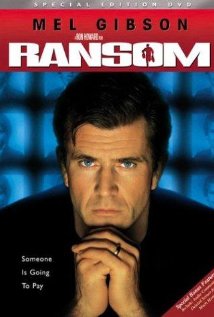
Ransom (1996), directed by Ron Howard

ransom posterOne of my sons once ran away from home. I do not recall what precipitated it, but I do remember the panic that my wife and I felt when we could not locate him. We searched the house, called neighbors, and offered a prayer. After an agonizing hour, we finally did find him in the backyard, and we both breathed a great sigh of relief.

I recalled that very stressful day as I watched the opening scenes of Ransom, a tense thriller about the kidnapping of a young boy. The moment when parents discover their child is missing is gut-wrenching; and while parents may utter comforting words to one another at a time of crisis, inwardly they fear the worst.

Tom Mullen, a successful owner of a new and growing airline, has his admirers and his critics, some of whom are jealous of his wealth and social standing. He is an obvious target for unsavory types who want his money; and on the day of a student science fair in Central Park in New York, they kidnap his son as he wanders through the crowds.

Soon the kidnappers call and demand a ransom of two million dollars and tell the Mullens not to involve the police or FBI. Here is their dilemma. What is the best way to insure that their son returns home safe and sound? The Mullens decide to inform the FBI, but they are prepared to deliver the ransom to the kidnappers. Agent Lonnie Hawkins approves of Tom’s approach to getting back his son, mentioning to him that from a statistical perspective the odds of getting him back alive are increased if he simply pays the ransom.

However, after one bungled attempt to pay the kidnappers, Tom has an epiphany about the kidnappers, and concludes that his son will not return alive even if the ransom is paid. Tom then does something surprising. He goes on TV and announces that he will not pay the ransom but will instead offer a bounty of two million dollars for information leading to the death or arrest of the kidnapper.

In the Talmud there is direction for coming to a decision in a complicated situation where the outcome is unclear. The Talmud tells us that when there is a choice between a doubt and a certainty, choose the certainty, or at least the solution that from a statistical perspective is more likely to achieve the desired results. Of course, one Talmudic aphorism does not wisdom make and the intelligent person considers other pieces of wisdom as well.

The Ethics of the Fathers encourages us to be deliberate in judgment. We should not rush to rash decisions. Moreover, the Sages tell us not to act as a judge alone if at all possible. Try to glean the opinions of others to make better decisions. At the end of the day, making life and death decisions requires great knowledge and wide life experience and it cannot be reduced to one set of givens or another. Life’s tests are often complex and there are no easy answers.

Ransom offers one idiosyncratic approach to a terrible dilemma, but there are a wide range of possible responses to a life and death scenario. Only hindsight will reveal if one has made the perfect decision in a situation fraught with peril. For the present, our Sages recommend that we gather knowledge, consult with others, look at our options, weigh them carefully, and consider who the players are. With the best input, the outcomes will be acceptable even though they may not be perfect.

Purchase this movie from Amazon.com.

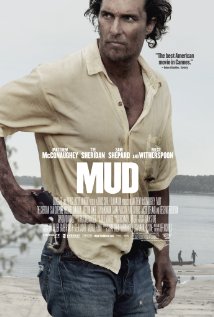
Mud (2012), directed by Jeff Nichols

mud posterWhen I was 14 years old, I dated seriously. I had a girlfriend and I thought I was going to marry her. In those innocent years, thoughts of sexual intimacy were not in my head. My emotions were clear and pure. Linda Sue was the girl I would marry. My fantasy came crashing down, however, when I travelled by subway from Mt. Vernon to the Bronx where she lived to surprise her. There I found her wooing another boy. I was speechless, devastated, and felt betrayed. Tears streamed down my cheeks as I made the lonely return trip to my home.

In hindsight, I can only thank God for not answering my prayers about Linda Sue. Indeed, she was a sweet and pretty girl, but I was clueless about what real love is at that tender age. Moreover, my own identity was as yet unformed. I did not know who I was let alone knew who Linda Sue was. That fateful day, my illusions about love began to give way to reality and a wiser view of what lasting relationships are all about.

Mud on one level is a film about a criminal on the run. But on a deeper level, it is a wise film about coping with life once our illusions are shattered.

The story opens as two teenage boys, Ellis and Neckbone, arrive at a small island in the Mississippi River. There they hope to acquire a boat stuck high in a tree, but they are frightened when they discover that someone is actually living in the boat. The occupant is Mud, a personable fellow who engages them in conversation, but who, in fact, is a fugitive on the run for murder.

Mud wants to reunite with his girlfriend Juniper and then leave town as soon as possible. To accomplish this, he enlists the aid of the two boys, who convey messages from him to Juniper about Mud’s intentions to meet her. The boys do not reveal Mud’s hiding place either to parents or police. They like him and, therefore, they trust him.

As this narrative is unfolding, there is a parallel plot involving Ellis and his parents, who are headed towards divorce. This is an unsettling reality that leaves Ellis emotionally confused. His house may be sold and his parents who once were in love are now out of love, something which Ellis cannot comprehend. Moreover, Ellis thinks he is in love with May Pearl, a high school girl several years older than him; and when she rejects his overtures in front of her friends, he is mortified.

In the midst of his own psychological turmoil, he is enthralled with Mud’s passionate devotion to Juniper, which motivates him to facilitate their reunion, naively thinking that love will conquer all. Ellis steals machine parts and other junkyard supplies to help Mud repair the boat stuck in the trees so that Mud can escape his pursuers.

Things, however, do not work out as planned and Ellis discovers that in the real world, one has to accommodate to the changing nature of human relationships. Separation and divorce may signal tragedy, but not necessarily the end of loving connections.

Jewish tradition frowns upon marital separation and divorce. Marriage is considered a holy bond, and divorce has many negative connotations. The Talmud actually says “even God sheds tears when someone divorces his wife.” Sometimes, however, divorce is necessary for a variety of reasons. The aftermath of such a tragedy does not have to be negative. It can mean a new, more fulfilling destiny for many, and a second chance at a successful life. Both Mud and Ellis, each at vastly different points in life and facing very different challenges, finally understand that separation can ultimately be good and allow people to re-emerge from darkness into light.

Purchase this movie from Amazon.com.

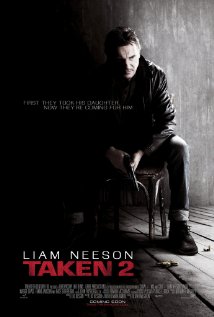
Taken 2 (2012), directed by Olivier Megaton

taken 2 posterI was recently eating at a restaurant with friends when one of them pointed out to me that my eyes were riveted on the big picture window behind him and not on him. He felt I was not paying attention to him. I apologized for my wandering eyes and asked for his forgiveness. I was grateful to him for rebuking me. I realized that having a conversation with someone does not just mean being in the same room with someone and talking. For anything meaningful to happen, I have to be engaged emotionally with what my friend is saying. I have to be aware not just of words, but of nuances in speech, in gestures that accompany words, and in body language as well. These critical issues of active listening and being aware of one’s surroundings are crucial in the action thriller Taken 2.

Brian Mills, an ex CIA agent invites his ex-wife, Lenore, and daughter, Kim, to spend some time with him in Istanbul. Unbeknownst to him, he is being targeted by group of Albanian terrorists who want to revenge the death of family members who were killed by Brian in past operations.

Once in Istanbul, he and his wife are taken by the terrorists and Kim is his only lifeline to rescue. In a tension-filled scene, he gives Kim instructions that are critical to saving his life and the life of his wife. Kim must go to his hotel room, find his suitcase, remove the gun and several hand grenades from inside the suitcase, and then throw the hand grenades in designated areas free of human traffic. All this is done so that Brian can track his whereabouts by listening carefully to the sound of the explosives. The louder the sound, the closer is Kim and rescue. Kim listens to her father with great concentration because she knows his life depends on it.

As I watched this violent, farfetched but entertaining yarn, I thought of how critical it is to pay attention when listening to others. Brian is an experienced CIA agent. He knows how to listen and how to be aware to all sensory information. When he first is seized and blindfolded in a car, he can sense his location because of the various street noises that he hears and because he can measure distances by measuring his travel time from one destination to the next. He listens with his mind as well as with his ears. He is not just passively noting noises; he is paying attention and this is much different from merely hearing sounds.

In Jewish law, there is much debate about the difference between merely hearing something and paying attention to what you hear. The laws pertaining to the proper performance of prayers is where much of this discussion takes place. Is simply reciting prayers sufficient or must you be mentally engaged with the words as well? According to some authorities, if one simply hears the words but does not pay attention to their specific meaning, he has to repeat his prayers since words without thought are meaningless.

Merely mouthing words without intellectual or emotional investment, without eye contact, is valueless. If we want to communicate important feelings, if we want to learn subjects deeply, if we want to connect with other human beings in a serious way, we have to be good listeners. We cannot simply nod our heads when someone is talking to us. We have to actively listen and take in what the other person is saying. Without listening attentively to others, we miss what they say and fail to deepen our relationship with our friends, our neighbors, and loved ones. When we pay attention and not merely listen, we enrich our lives and the lives of others.

Purchase this movie from Amazon.com.