Category Archives: Movie review

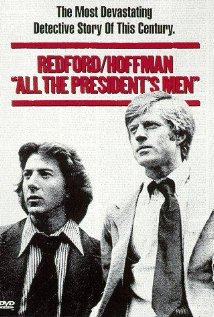
All the President’s Men (1976), directed by Alan J. Pakula

All the President's Men posterEvery day I pray that I will have a sense that God is always in front of me, that He is always in the room. It helps me control my thoughts, my actions, and my speech. When things irritate me, I think long and hard as to whether I want to respond to a provocation or to an unkind word. In general, I do not regret being silent, but I do regret a hurtful word that I may have uttered to someone, even when my intentions were noble.

I was reminded of the power of words as I watched the gripping political thriller All the President’s Men, which portrays in detail the intense investigative newspaper work of Bob Woodward and Carl Bernstein as they painstakingly researched the Watergate burglary, which eventually led to the resignation of President Richard Nixon.

Woodward and Bernstein seem like two Talmud study partners who continually probe each other to ascertain the truth. Each questions the other, and is unafraid of challenging or criticizing his friend. Their frank criticism of each other is not personal, but rather a sign that each one trusts the other to be honest and not to advance any personal agenda. Their shared mission, to discover what the Watergate burglary was all about, makes their egos subservient to the greater purpose of their work. It is this understanding of their common goal which is at the heart of their friendship and their search for truth.

They analyze and debate the significance of the words of everyone they interview. What do the words mean on a superficial level? What do the words imply? What does a response of silence indicate? There is a fascinating scene when Carl Bernstein needs to confirm the truth of an article that is about to appear in the morning newspaper. No one wants to be quoted, so Bernstein comes up with the following proposal as he talks to his contact on the phone: “if what I say is true, then I will count to ten, and if you do not hang up, I will assume my article is true. If it is not true, then you hang up before I reach the number ten, and I will assume that what I wrote is false.” Here, interestingly, everything hangs on what is not being said.

Ben Bradlee, editor of The Washington Post, the paper that employs Woodward and Bernstein, is also extremely sensitive about words and continually reminds the ambitious reporters that he cannot agree to print something in his paper unless they get confirmation of more of their facts. The paper cannot besmirch someone’s reputation based upon hearsay evidence or theorizing about what might have happened.

In the world of Jewish jurisprudence, the laws of slander and the gravity of hurting someone with words is the topic of many volumes written by sages of the past and present. These laws are carefully codified because of the essential concern that, as the Psalmist writes, “life and death are in the power of the tongue;” for one negative comment about a person might ruin his life professionally or personally. As a rabbi and school principal, I have been tested many times when people ask me for recommendations about people I know. It may be a recommendation for a job, for acceptance to an academic institution, or for a marriage partner. My general approach is to say what needs to be said without embellishment, for words are like arrows. Once uttered, they cannot be retrieved.

As we speak to the people around us, it is wise to weigh our words so that we do not hurt anyone inadvertently and to insure that our words will always be in the service of society and sanctity.

Purchase this movie fro Amazon.com.

Searching for Sugar Man (2012), directed by Malik Bendjelloul

searching for sugar man posterI have a friend who is a serious artist, and creates beautiful renditions of nature scenes. In fact, he recently had an exhibit at a well known New York gallery. He often debates within himself whether he should do more to promote his art or whether he should just create and leave the rest to God’s intervention. In the inspiring documentary, Searching for Sugar Man, Rodriguez, a Detroit folksinger, resolves the question of how much an artist should promote his work by disappearing into the woodwork and letting fate determine his destiny.

Sixto Rodriguez’s story is fascinating and wondrous. He recorded two albums in the 1970s, Cold Fact and Coming from Reality, that sold only a few copies. Singing and writing songs in the style of Bob Dylan, Rodriguez impressed early impresarios with his smooth blend of thoughtful lyrics and catchy melodies, and they thought he was the genuine article who would be famous. However, as Rodriguez himself says, the music business is unpredictable and no one can predict with accuracy who will succeed and who will not.

In spite of not making musical waves in America, his albums serendipitously reached South Africa and there Rodriguez became a musical icon comparable to Elvis Presley. His music became the national anthem of the anti-apartheid movement. His lyrics, in particular, were liberating and inspiring to the Afrikaner protest musicians of the 1980s. Ironically, Rodriguez was totally unaware of this and was living the blue collar life of a construction laborer in Detroit. Sadly, he never received any of the royalties for the 500,000 albums he sold.

Rumors abounded about him in South Africa. Some said he committed suicide publicly by lighting himself on fire; others said he shot himself or died of a drug overdose. No one really knew him. But two of his fans decided to investigate what really happened to Rodriguez. They began looking for clues to his roots in the lyrics of his songs. Eventually, the cities mentioned in his songs led them to find Rodriguez’s origins at Motown Records in Detroit, the birthplace of many successful rock stars.

The eureka moment arrived when the fans discovered that Rodriguez was still alive and living the simple life of a day laborer in Detroit with his daughters. This revelation motivated his South African fans to arrange a concert tour in South Africa in the 1990s where he played to thousands of fans of all ages, many of whom knew his songs by heart. Reports of his successful shows reached his friends in Detroit who could not believe that their quiet and unassuming friend was a real rock star with a massive following.

The coda at the end of films informs us that even when Rodriguez made money at his South African performances, he gave it all away to family and friends. For him, it was enough to share his music with his adoring fans. He did not seek fame; rather he sought human connection with his admirers. He wanted fan and artist to symbiotically commune through the language of lyric and song.

The Ethics of the Fathers, a classic of Jewish wisdom literature, tells us that when man seeks fame and recognition, they will elude him. Rodriguez, by living an unadorned life away from the bright lights of celebrity and by eschewing materialism, provides a thoughtful model for us to emulate in our acquisitive age. Our Sages tells us that the truly rich man is the man who is content with what he already has. Searching for Sugar Man reminds us that it is who we are that give us our identity, not what we possess.

Purchase this movie from Amazon.com.

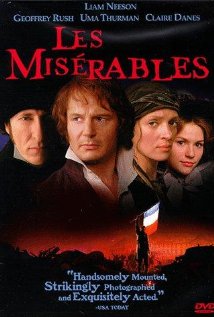
Les Miserables (1998), directed by Bille August

les miserables poster 1996 filmA friend of mine who gives parenting workshops recently counseled a parent whose teenage son was giving her lots of grief. She told her that she should give her child oodles of care and love. The parent retorted: “But what if that doesn’t work,” to which my friend replied, “Then give him a double dose of care and love.”

I thought of this interchange as I watched the 1998 version of Les Miserables, an accurate but abridged cinematic rendition of Victor Hugo’s classic novel. The well-known plot centers around Jean Valjean, a starving pauper, who is given a prison term of nineteen years for stealing a loaf of bread. When finally released on parole, he cannot find a place to lodge.  Facing continual rejection because of his criminal past, he thinks that he will have to resort to a life of crime to survive. Fortunately, he finds refuge for the night at the home of Bishop Myriel who feeds him and offers him shelter. However, Jean responds to this kindness by stealing the bishop’s silverware.  The next day Jean is caught and brought back to the bishop by the police. In a surprising gesture, Bishop Myriel tells the police that Jean is an old friend to whom he has given the silverware and he also gives Jean silver candlesticks as a further demonstration of his friendship. It is truly a double dose of love.

When the authorities depart, the bishop tells Jean that he will become a new man the next day, no longer a criminal but a person of genuine worth. Jean is overwhelmed with his kindness and resolves to change. The next scene takes place nine years later. Jean is now a wealthy businessman and mayor of the town, a man who clearly has repented and is now a new man.

The story of Jean Valjean is an epic narrative of repentance. Not only does he become an upstanding citizen, he also does charitable works that benefit the underprivileged and poor as well. His rehabilitation begins, however, when one man – the bishop—shows confidence in Jean, when he sees Jean for what he can be and not for what he was. Looking towards the future, the bishop showers Jean with respect, with kindness, and treats him as an equal and friend. He then encourages him to become a new man with a new destiny.

Jewish tradition describes Aaron, the brother of Moses, in similar terms. Aaron loved peace and pursued peace, says the Talmud, and did whatever he could to make people feel good about themselves. He even went out of his way, says the Midrash, to connect with people on the margins, the outsiders,  and to befriend people of less than reputable character, all of which he did because he understood that it is easier for people to do good when they possess self-esteem, when they see themselves as people of worth and integrity. This was Aaron’s specialty: to make people feel important and valued. He was so good at this that when he passed away, the Midrash informs us that the people mourned for him more than for Moses. The character of the bishop reminds us of Aaron, the man of the people who, in his own quiet way, challenged people to become the best that they could be.

Two valuable life lessons emerge from Les Miserables. Firstly, that it is possible to change, to repent and begin life anew. Secondly, to motivate people to repent, we must show them that we believe in them, that we believe in their basic goodness and their infinite value, which transcends any mistakes they may have made. Jean Valjean’s personal odyssey is a living testament to these psychological truths.

Purchase this movie on Amazon.com.

Big (1988), directed by Penny Marshall

Big posterFor many years I would take my ninth and tenth grade classes on a week-long trip to Washington, D.C. and New York City. Once someone asked me if I ever got bored seeing the same sights year in and year out, and I responded that I did not. Why? Because every time I go on the trip I see the same places, but with the eyes and excitement of a student who has never been there before. Washington and New York become the Grand Canyon every time we make the journey.

The ability to experience the same thing over and over again and yet to feel as if one is seeing it for the first time is a poetic sensibility. This is the core theme of Big, a comedy that makes a serious comment about being an adult but seeing the world from the perspective of a child. Wordsworth writes about it in his poetry when he says that “the child is the father of man.” I explain to my students that this means that as we grow older, we should still maintain a childlike appreciation of nature. This is the message of his classic poem “I wandered lonely as a cloud,” in which an old man experiences the joys of nature as he walks through the woods and discovers a field of flowers dancing in the radiant sun.

Twelve year old Josh Baskin wants very much to be older, to be big. He cannot get the attention of a girl he likes and he is turned away from an amusement park ride because he is too short. In frustration, he makes a wish in front of a mysterious fortune telling machine and, lo and behold, it is granted.

The next day, he wakes up as an adult. Scared at first, he does not know what to do. Even his mother sees him as a stranger who has kidnapped her beloved son. Until he can figure out a way to get back to his normal life, Josh decides to enter the adult world temporarily. Fortunately, he finds a job at a toy manufacturing company, and his childlike understanding of what toys would appeal to children makes him a marketing genius to the owner of the company. Within days, Josh is promoted to a senior position, and soon finds himself the object of adoration by many of the company’s employees, including an attractive female executive, which makes life very complicated for him.

How Josh handles being an adult when he is really only a child makes for many comic situations. But behind the humor, Josh is still only a child who misses his mother and he yearns to return to his previous life. Big captures the ambivalence in Josh’s feelings, and gives us a window into the good things that can happen if we can keep our childlike perspectives alive even as we grow older.

Jewish tradition tells us that we need to keep our youthful perspectives on life as we age. On a daily basis, the prayer book reminds us that God renews the world every day, and that is the way we should see nature every day. Moreover, the traditional Jew states a blessing when he sees an ocean once in thirty days, when he hears thunder and sees lightening, when he bites into a piece of food. Nothing is taken for granted. There is even a blessing after visiting the bathroom, in which he recognizes the marvel of how the body works. Josh Baskin’s story is a fairy tale, but its message resonates in real life: stay young on the inside as we grow old on the outside.

Purchase this movie from Amazon.com.

The Batman Trilogy (2005-2012) directed by Christopher Nolan

dark knight rises posterWhen I was principal of Yeshiva High School of Atlanta, I had a conversation with a board member who was a Holocaust survivor about the Holocaust Museum that was being built in Washington, D.C. He shared with me his feeling that it was not a wise use of community funds which could be better utilized to support Jewish day school education. I empathized with him since part of my job was to raise money for the school and I, too, felt that more community money should be directed towards Jewish education.

A couple of years ago, I had the opportunity to speak to my friend again and he shared with me his change of heart about the Holocaust Museum. Now he felt glad that the Museum was here to teach many subsequent generations about the Holocaust. He never envisioned years ago that there would be Holocaust deniers and that anti-Semitism would be alive and well in the world after the atrocities of the Holocaust. Never could he have imagined leaders of so-called civilized nations calling for the annihilation of the Jewish state. The world had changed and it was not for the better. Evil was a potent force in the 21st century, and the Holocaust Museum was an important agent of moral education challenging the perpetrators of evil.

The conversation brought back memories of my own innocent childhood in Mt. Vernon, New York, when everyone thought, post World War II, post- Holocaust, that the world was now enlightened, that there would be war no more, and that our collective human future was bright. 9/11 brought all that optimistic thinking to an abrupt halt.

The Batman trilogy of films deals metaphorically with how we come to terms with this new world where evil is real and ubiquitous. The reality of evil in these narratives undercuts our assumptions about the basic goodness of man and leaves us on edge.

The Dark Knight and The Dark Knight Rises present two villains who are the personifications of evil: the Joker and Bane. The Joker represents the chaotic nature of evil; Bane represents the committed terrorist, for whom death and destruction are liberating events. Bruce Wayne, aka Batman, begins with a conventional understanding of the Joker’s criminal mind. He tells his butler, Alfred: “Criminals aren’t complicated. I just have to figure out what he’s after.” Alfred wisely responds: “You don’t fully understand. Some men aren’t looking for anything logical, like money. They can’t be bought, bullied, reasoned, or negotiated with. Some men just want to watch the world burn.” Bruce is ambivalent about how to deal with the Joker and Bane, and it takes him a long time to understand how vicious they are and how he must change his preconceptions about the nature of evil people.

This perhaps can give us some understanding about the Biblical approach to unfettered evil, such as we find in Amalek, the arch-enemy of the Jews who attacked the old and weak as they were leaving Egypt. The Bible tells us to eradicate this evil and for the compassionate Jew, this is a hard business. On Passover at the Seder, we are bidden to spill out drops of wine from our cup when we recount the ten plagues because our cup of joy is never full when others have suffered. Even when justice triumphs, we feel for the victim who suffers. The Ethics of the Fathers also cautions us not to rejoice over the fall of the wicked even though he is deserving of punishment. Moreover, the Talmud recounts the story of Beruriah, the wife of Rabbi Meir, who, when her husband wanted to harm bullies who were constantly harassing him, exhorted him to pray that these sinners repent, not to pray that they die.

The Batman trilogy is a brainy thriller. It asks us to leave our simplistic notions of good and evil at the door and to recognize that in our new and dangerous world, we cannot ignore evil. To be naïve in the face of absolute terror and evil places us at great risk.

Purchase these movies on Amazon.com.

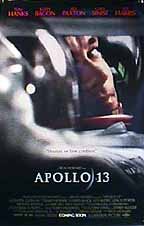
Apollo 13 (1995), directed by Ron Howard

Apollo 13 posterIn reflecting on my career as a high school principal, I recall many board meetings where a few board members would panic if the enrollment did not go up every year. That statistic alone was the acid test, and  a low enrollment number on any given year would be the catalyst for extensive discussions about what was wrong with the school and what we needed to do to fix it.

Fortunately, most board members took the long view and saw the inherent complexity and difficulty of establishing a Jewish day high school in a city that never had one. Thankfully, they supported me over the years in building Yeshiva High School of Atlanta, now known as Yeshiva Atlanta.

Panic in the face of adversity is not a good response, and I was reminded of this truth as I watched Apollo 13, a classic film about one of America’s early space flights in 1969. “Life is not a straight line,” a friend once told me when I was dealing with a lot of things that were going wrong. The key is to stay focused at moments of crisis. Rather than lose one’s cool, concentrate on how to solve the problem.

The tag line for the film is ‘Houston, we have a problem,” and they do have a serious problem. After months of preparation, the crew led by Commander Jim Lovell and assisted by Fred Haise and Ken Mattingly, is scheduled to fly to the moon. Two days before the launch, Mattingly is compelled to withdraw from the mission because he has been exposed to measles and he has never had them before.  The possibility that he could become ill during a crucial part of the flight disqualifies him; and Jack Swigert, an astronaut who has been out of the loop for many weeks, is asked to fill in for Mattingly. Lovell decides to accept the substitute rather than wait for another turn to fly to the moon.

The problem is compounded once the astronauts leave earth.  While in flight, Jack Swigert performs the routine procedure of stirring the oxygen tanks, and the oxygen tanks explode causing a mechanical failure. Now the mission is not to land on the moon, but to get home safely.

The two characters who stay focused and don’t lose their cool are Jim Lovell and Flight Director Gene Kranz at Mission Control in Houston. Aiding them is Ken Mattingly who simulates what is going on in the space capsule in order to give the Apollo crew the best advice to stay alive. These three men, very bright and who fully identify with the Apollo crew, think creatively to come up with solutions that will enable the men to re-enter earth’s atmosphere and arrive home safely.

The Bible is filled with examples of people who, when faced with negativity and bad karma, rise above the problem and find a way to succeed. Joseph, son of Jacob, is one role model. According to a Midrash, he is left in a snake-filled pit by his brothers. He then is sold as a slave in Egypt, and later finds himself in prison where he languishes for a number of years. During all that time, he does not give up and surrender to his environment. Instead, he finds a way to survive and eventually he is catapulted to the position of viceroy of Egypt. He does not look at the present dark moment as forever. Rather he sees beyond it. He knows he has a mission, and in his own quiet and deliberate way works to actualize a bright future.

Apollo 13 affirms that same message. When things go awry, do not collapse. Instead, analyze the situation and develop a strategy for success.

Purchase this movie from Amazon.com.

The Man Who Would Be King (1975), directed by John Huston

Man who would be king posterI once had a brilliant teacher in college who I admired greatly because of his intellect and his charismatic personality, marveling at his encyclopedic knowledge of text and human nature. One incident, however, changed my perception of him. He verbally assaulted a student who disagreed with him. The professor, full of himself, assumed that his way of perceiving things was the only way, and the student implicitly was stupid.

In truth, the student was devastated by the teacher’s remarks, and afterwards confided in me that he, too, looked up to the teacher but was totally unnerved by his comments. To ease his emotional pain, I told my friend that the teacher may have been under unusual stress and that is why he responded so harshly to him. But, inwardly, I was troubled by the entire interchange.

Subsequently I discovered that the teacher, brilliant as he was, actually believed the press releases that praised him. He lacked humility, thinking that he deserved all the accolades that were heaped upon him. Several years later, he lost his position at the college and labored for the rest of his life in academic obscurity.

This human trait of believing you are more than what you are is at the core of The Man Who Would be King, the story of two British sergeants, Peachy Carnehan and Danny Dravot, who travel to a remote mountain village in Afghanistan to seek their fortunes. Arriving in Kafiristan, a land plagued by marauding bands, they offer their services to the local population whose homes are continually attacked. Serving as military advisors and soldiers, they lead the locals to victory over the enemy.

In one of the battles, an arrow strikes Danny in the chest, but he does not die. The natives do not realize that the arrow has lodged in a leather ammunition belt beneath his shirt. They simply see Danny as a divinity, impervious to death.

Soon after, they are invited to the holy city of Sikandergul, where the chief high priest sets up a test to determine whether Danny is a man or a god by seeing whether or not he bleeds. An archer shoots an arrow at Danny, who flinches. When the people seize him, thinking he is a fraud, they discover that Danny is wearing a Masonic jewel, whose symbol the priest recognizes is the symbol of Alexander the Great, who passed through the country many years before. That linkage convinces the holy men that Danny is a direct descendant of Alexander, and they lead Peachy and Danny to the storeroom where Alexander’s riches are stored, a formidable treasure which now belongs to Danny as king.

Peachy now wants to leave as soon as possible, taking with him as much treasure as possible. Danny, however, does not want to go. He enjoys being king, and even wants to take a wife to insure that his descendants will rule after him and foster Kafiristan’s continued stability. That desire to maintain his position as king proves to be his undoing.

Jewish tradition praises the humble person. Moses, the humblest of all men according to the Bible, wants neither recognition nor power. Moreover, the Talmud tells us to be wary of overreaching. If you grab too much, say our Sages, you will acquire nothing. This lesson Danny does not learn until it is too late.

The Man Who Would Be King is a rousing adventure story, but it is also a cautionary tale about the dangers of arrogance and not being content with what one already possesses.

Purchase this movie from Amazon.com.

Argo (2112), directed by Ben Affleck

Argo posterMany years ago, I wanted to make myself more accessible to my students as principal of my school.  At the time, I taught one or two literature classes but I wanted to feel connected to more of the students. The question: how to do this in an unobtrusive but effective way?

I took my cue from Frank Boyden, the late, revered headmaster of Deerfield Academy, a prestigious private high school in New England. Boyden moved his office to the school hallway. He did not wait for students to come to him. Instead, he was visible at every class change and used these face-to-face encounters to engage students in conversation about how the school day was going, about their plans for later in the day, about life in general. Boyden thought out of the box to come up with the right solution, and his educational strategies made Deerfield one of the most successful high schools in the United States.

Argo is all about thinking out of the box, about finding a solution to a problem that defies conventional analysis. It is November 4, 1979, and militants have taken over the US embassy as payback for the United States giving refuge to the recently deposed Shah. We learn that six Americans have found refuge in the home of the Canadian ambassador. The challenge: how to extract them from Iran without being discovered?  Tony Mendez, an extraction expert at the CIA, has to devise a rescue plan in a matter of days. The out-of-the- box solution: create a fictitious movie company that wants to shoot a science fiction fantasy using Iranian locations, and then smuggle the Americans out of Iran on regular commercial aircraft under the guise of being movie professionals exploring location possibilities. The idea is preposterous; but it is the best option among a range of other bad choices, and so the ruse begins.

Mendez contacts John Chambers, a Hollywood make-up artist, who has previously worked for the CIA, who in turn connects him with film producer Lester Siegel. Together they establish a phony film company, publicize their preliminary work on the film, and successfully create the illusion of developing Argo, a science-fiction fantasy similar to Star Wars, to lend verisimilitude to their efforts. Meanwhile, the escapees inside the ambassador’s residence are growing frantic at the possibility their hiding place will be revealed at any moment and they will be executed. Argo is realistic, tense, and ultimately cathartic as it details the nerve-wracking and precise maneuvers that the trapped hostages will use to find their way to freedom.

Jewish tradition also encourages thinking out of the box. Looking at Talmudic discussions and arguments gives us a window into the creative thinking of the intellectual giants who populate the pages of this magnum opus. It is a place where we can observe firsthand the development of higher order thinking skills. Ethics of the Fathers, a centerpiece of Jewish wisdom, describes the intellect of a number of great Talmudic sages. It praises the serious student, who retains everything he learns, and it also lauds the one whose mind is a bubbling stream growing stronger and stronger each day, the master of innovation who can always come up with a new perspective on an age-old problem. Conventional wisdom is good, the Talmud suggests, but creativity also has its proper place in Jewish learning.

Argo reminds us that whenever we are faced with what we perceive to be an insurmountable problem, we should not give up and reconcile ourselves to abandoning our mission or goals. On the contrary, this is the time to use our mental potential to create new and innovative paradigms for success.

Purchase this movie from Amazon.com.

The Iron Lady (2011), directed by Phyllida Lloyd

Iron lady posterWhen I was first married, I attended Sabbath services at the rabbinic school where I studied. Present at the services were many of the rabbis who taught me during the week. I recall very vividly one occasion when the young child of one of the rabbis grossly misbehaved. He began to hit his father and used unbecoming language. In spite of the child’s appalling behavior, his father did not hit him or rebuke him publically.  He did not shout at him nor scold him nor physically grab him.

At the time, I wondered whether the father was teaching his son by example how to show restraint and how to control emotions or whether the kid was in control of the situation and mocking his father. To this day, I don’t know the answer. All I saw was one snapshot in time, from which no conclusions could be drawn. However, a recollection of the incident reminded me of how complicated it is to be the child of a celebrity or prominent leader in the community.

It can be a blessing or a curse. Consider for a moment the children of Margaret Thatcher as depicted in The Iron Lady, an exceptional film about a young civic- minded girl who rises in political power to become Britain’s prime minister.

The film opens when Margaret Thatcher is past her prime, now a frail and elderly widow functioning in the present but often swept back to the past through imaginary conversations with her dead husband Denis. She has much of which to be proud. Restoring England’s financial power in the face of great economic challenges, navigating the volatile relationship between Ireland and England, successfully managing the Falklands War are all high points of a long and illustrious political career. She also is a wise woman who enjoys sharing insights about life.  One particular speech encapsulates her lifelong wisdom: “Watch your thoughts for they become words. Watch your words for they become actions. Watch your actions for they become habits. Watch your habits, for they become your character. And watch your character, for it becomes your destiny! What we think we become.”

But there is a dark side. Her family pays a price for her rise to power and for the maintenance of that power.

Margaret Thatcher had twins, a boy and a girl, who have a lukewarm relationship with their mother. They are dutiful children, respectful, yet distant emotionally. There is love between mother and daughter but the connection is strained. Her son Mark lives in South Africa and is not always available even by telephone. At one point in the movie, Margaret watches a DVD of her little children playing on the beach, but it is only a hazy memory of a warm and loving time long since gone. Even her devoted husband is ambivalent about the price the family has had to pay for Margaret’s dedication to serving England.

Children of people in leadership roles do not travel a simple road. The eyes of the community are upon them. Sometimes it is fine and the children rise to the community’s and parent’s expectation. Sometimes they do not. It is instructive to note that there is little in the Bible said about the son of the greatest Jewish leader Moses. His son, Gershon, is a footnote in Jewish history, suggesting that Moses paid a personal price for his leadership of the children of Israel. Gershon never rises to a position of leadership or prominence. He remains average in spite of the fact that he was Moses’ son.  Instead, Joshua, Moses’s trusted student, assumes the mantle of leadership once Moses is gone.

The Sages tell us that it is good to work on behalf of the community, and blessings will accrue to you because of that valuable work. But clearly, the Sages also warn us about the potential negative effects of community involvement. Every one of us has to make a careful calculation of the costs and benefits of such holy labor.

Purchase this movie from Amazon.com.

Unstoppable (2010), directed by Tony Scott

Unstoppable posterMany years ago, I asked a friend to mail a $10,000 check for me. He mailed it from the post office, but neglected to send it by registered mail as I requested because the line at the post office was long and he did not want to wait. Unfortunately, the check was lost and it took months before the situation was resolved. The check never was found, and no real harm was done, but the incident reminded me how one simple error in judgment can lead to an avalanche of problems.

An errant check is not the problem in Unstoppable; rather it is an errant train that can unleash a cargo of toxic chemicals if it is not stopped. The problem originates with a lazy railroad worker, Dewey, who decides not to connect the air hose to the rest of a long train, thereby removing the air brakes that are critical to stopping the train. Compounding his mistake, he leaves the locomotive cab when he sees that the train is lined up to go on the wrong track and runs to manually switch the track. Unfortunately, the train’s control levers move on their own accelerating its speed, and Dewey cannot reboard the train in time. Now the train is unmanned and moving very quickly towards populated areas.

Two heroes emerge to deal with this crisis: Will Colson and Frank Barnes. Colson is a young newly minted conductor, and Frank Barnes is an engineer who has been working with the railroad for 28 years. Together, they use the physical strength of youth and the wisdom of advanced years to devise strategies to stop the train, even at great personal risk. Both men, knowing that their lives are in danger, want to connect with family. Will, who is estranged from his wife, wants to speak with her but is fearful of being rejected by her. He doesn’t call but his thoughts turn to his wife and child, whom he may never see again. Frank, a widower, phones his daughters to tell them he loves them. It is a 9/11 kind of call, full of love and uncertainty about the future.

Jewish tradition emphasizes how important it is to obey the rules, especially in problematic or dangerous times. The Bible informs us that even the king is not to veer from the commandment; for if he does, his kingdom will not endure. Rashi, an 11th century Bible commentator, explains that Saul lost his kingship because he did not follow the instruction of the prophet Samuel. Samuel had told him to wait seven days for him to arrive before offering a sacrifice. Saul does not wait for the prophet to arrive and, as a result, loses his kingship. The commentators opine that Saul did not realize the importance of his position and how careful he had to be to perform his obligations correctly.

Neither does Dewey in Unstoppable. Dewey takes his work responsibilities casually, and people pay a price for his unprofessional conduct. He makes the mistake of a lifetime, jeopardizing the lives of many innocents. In a coda at the end of the film, we learn that Dewey no longer works for the railroad but now is employed in the fast food industry.

Unstoppable reminds us to take our professional responsibilities seriously. No matter how mundane our jobs may be, we are required to give it our best effort for our sake and for the sake of all those who depend upon us. We lead a different kind of life when we realize that every action of ours has a reaction in the lives of others.

Purchase this movie from Amazon.com.