Category Archives: Movie review

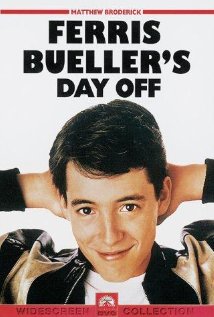
Ferris Beuller’s Day Off (1986), directed by John Hughes

I remember the meeting well. A teacher discovered a student who had plagiarized a paper and gave him a failing grade. The father of the student demanded a meeting with me, the teacher, and his son. He opened the meeting with a line I will never forget: “My son never lies.” The teacher, a woman with a sterling reputation for excellent teaching, exemplary character, and an abiding concern for the welfare of her pupils, was stunned by the implicit assertion that she either had lied in making the accusation or made a terrible mistake in evaluating the student’s work.

Having worked with students for many decades, I, like most teachers, always assume the best of students. But when confronted with incontrovertible evidence of cheating, I accept the reality that students, even good ones, occasionally may do dishonest things. The teacher in question broke down in tears from the baseless accusation. I, of course, defended and supported her. Several months later, the father apologetically confided in me that his relationship with his son was very rocky, and he felt a need at our meeting to be publically supportive of his son even if he had doubts about the veracity of his statements.

This kind of misguided, naïve parenting is at the heart of Ferris Beuller’s Day Off, a comic but true perspective on teenage life in the 80s that still resonates today. The plot, such as there is one, revolves around high school senior Ferris, who decides to cut school on a beautiful spring day and enjoy the day in downtown Chicago. He enlists his girlfriend Sloane and his buddy Cameron to join him on his self-declared vacation day.

The day begins with a lie as Ferris fakes an illness to his fawning and naïve parents, who believe everything he says. It is clear that they are preoccupied with their own lives; parenting to them is a diversion, not a mission. Cameron’s dad is never seen in the film. We only see his polished Ferrari, glistening in the family’s hillside garage. It is an emblem of parental neglect and a reminder of his parents’ total preoccupation with material things. In fact, almost all the adults in the movie are out of touch with children. Whether it be parents, teachers, administrators, all are self-absorbed and only peripherally aware of the children with whom they interact.

Two insights emerge from Ferris. First, parents need to be present in the lives of their children. They need to spend quality time with them and not be so preoccupied with business that they are clueless about what makes their child tick. Second, Ferris’s visit with his friends to the Chicago Art Museum suggests that kids need more than mastery of rote knowledge to succeed as human beings. Ferris, Sloane, and Cameron engage the modern art they view with creativity and wonder. The classroom is boring, but the museum, which houses a major collection of abstract art, unleashes a creativity that speaks to their curious and active teenage minds.

Proverbs tells us “to educate a child according to his personality.” This means that it is the job of parents to know their children well and to provide opportunities for them to develop their own unique talents. The patriarch Isaac, according to some Biblical commentators, erred in educating his children Jacob and Esau with the same parenting tool box. He failed to recognize that each one required a different parenting approach, one that recognized their different personalities and intellectual and spiritual inclinations. It may be easy to do more of the same when it comes to parenting, but it may be wiser to do something different that takes into account the way each child learns.

Purchase this movie from Amazon.com.

On Golden Pond (1981), directed by Mark Rydell

As a youngster, I often found it hard to see how older people can be in love in the conventional romantic sense. After all, physically they were often overweight, had sagging skin, and possessed grey or no hair, hardly the attributes I would consider beautiful. But when I myself got older and also began to manifest those same characteristics, I realized that seniors could be deeply in love, and physical attributes were not important. Love transcends the physical in happily married couples. In time, I understood the wisdom of King Solomon in Proverbs who, in praising the woman of the house, reminds us that “outward grace is deceitful and beauty is vain,” and that the basis of enduring love is a shared life vision based upon a common spiritual destiny, not the smoothness of one’s skin or the size of a waistline.

This is one essential message of On Golden Pond, a story of a loving couple in the twilight of life.  Norman and Ethel Thayer, masterly played with great honesty and sensitivity by Henry Fonda and Katherine Hepburn, return to their summer home on Golden Pond. Norman is beginning to lose his memory and in a tense and disturbing moment runs back to his cottage without finishing the errand on which Ethel sent him. He confesses to her: “You know why I came back so fast? I got to the end of our lane. I couldn’t remember where the old town road was. There was nothing familiar. Not one damn tree. Scared me half to death. That’s why I came running back here to you. So I could see your pretty face and I could feel safe and that I was still me.”

Spouses married for many years view love in ways that are impossible for newlyweds to understand. The ebbs and flows of life, the sharing of joys and sadness, bring loving couples closer together. Each represents a safe harbor to the other, a place of refuge from a world that is shutting down around them, when mortality is not an abstract concept, but an ever-approaching reality. This deep connection only develops over time, and does not come about instantaneously.

Another message of On Golden Pond relates to Norman’s relationship with this daughter Chelsea, from whom he has been estranged for many years. Chelsea calls Norman by his first name, which underlines the emotional distance between them. She returns to the summer cottage to celebrate her father’s 80th birthday, but she still carries baggage with her. She remembers all the times her father was absorbed in his own pursuits, and not present for her emotionally.

Her mother finally rebukes her: “Don’t you think that everyone looks back on their childhood with a certain amount of bitterness and regret about something. You’re a big girl now. Aren’t you tired of it all? It doesn’t have to ruin your life.” This is a valuable life lesson:  get rid of old, unpleasant memory tapes; look with fresh, unbiased eyes at your old relationships and begin anew.

Chelsea eventually does this and, after many years, calls her father “Dad,” not by his first name, suggesting that she is now prepared for a new relationship with her father.

In Jewish law, a child is forbidden to call a parent by his first name. This implicitly instructs the child to be constantly aware of a parent as someone who is a source of authority, guidance, and love, not just another buddy. On Golden Pond reminds us to revisit our parental relationships, repair them if needed,  and create new memories that will bind together generations in the future.

Purchase this movie from Amazon.com.

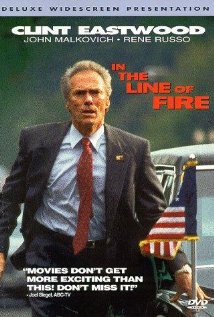
In the Line of Fire (1993), directed by Wolfgang Petersen

When I was going through a number of professional challenges many years ago, I questioned the motives of those who were undermining my position as Head of School. I aired my feelings in front of a small group of people, and I regretted it soon after. My critical comments did not improve things; in fact, they made me feel smaller. I had spoken about somebody negatively and it gnawed at me. The full realization of what I had done hit me many years later. The person to whom I attributed these base motives was no longer living in the city and our professional paths were totally different. In time, I forgot about my offensive remark; but, strangely, about 20 years later, as I was reciting the confessional of Yom Kippur, my offensive behavior of many years ago surfaced in my mind. I resolved to see if I could locate the person I maligned and ask for his forgiveness. Fortunately, I was able to contact him and ask for his forgiveness, which he readily granted. As often occurs, he did not even remember the incident which had been haunting me and was gracious towards me throughout the conversation.

My motive in finding him was to do teshuva, to repent. In Jewish tradition this means to stop the offensive behavior, ask for forgiveness from the injured party, and resolve not to commit the sin again. The ideal setting for teshuva would require you to be in exactly the same place as before, and choose to do the right thing. Instead of succumbing to ego and personal hurt, you would respond differently and not make the ethical mistake that you did in the past. If the exact same situation did not present itself, then you would still follow essentially the same protocol of repentance.

In the Line of Fire is an action thriller; but at its core, it is a narrative of repentance. Frank Harrigan, a veteran Secret Service agent, is haunted by his failure to protect President Kennedy from assassination. He continually relives the incident in his mind and questions whether he did his best to guard the president from Oswald’s fatal bullet. Did he not protect him adequately because he feared for his own life? He wonders: “I don’t know why I didn’t react. If only I reacted, I could have taken that shot. That would have been alright with me.” Here lies the crux of the film: Frank is given an opportunity to protect another president from a threat to his life, and to redeem himself. He has a chance to do teshuva, to repent, in the ideal sense by facing the same challenge, but now he can make the right decision that will enable him to emerge whole again.

Things, however, are different now. He is older and wiser but physically he is weaker. He pants and sweats as he runs after the killer, and we wonder whether he possesses the physical stamina to protect the president. The climax of the film takes place in a large hotel where the president is scheduled to speak. Frank has to locate the killer and neutralize him or stand between him and the president and take the bullet intended for the president.

In the Yom Kippur liturgy, we ask for forgiveness for the sin we might not have remembered. Frank Harrigan’s story reminds us to remember the mistakes of the past, and to try to find a way to correct them even many years later. Confronting the past in this way allows us the freedom to move forward, knowing that we have done our best. The ghosts of the past will then no longer haunt us.

Purchase this movie from Amazon.com


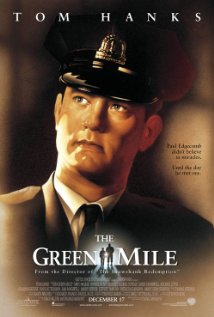
The Green Mile (1999), directed by Frank Darabont

Over the years that I have been a school principal, I have observed many different supervisory – management styles. The majority of my colleagues are sensitive souls; they are fair-minded, thoughtful, and not quick to rebuke a teacher. Uppermost in their minds is doing what is in the best interest of the students, not in acquiring more power or prestige for themselves. I regrettably recall one exception.

Very uncomfortably, I watched a principal observe a class and then submit his written report to the teacher later in the day. The teacher was given no opportunity to respond. The report was overwhelming negative, severely affecting the teacher’s self-perception, so much so that the teacher shortly thereafter left the field to begin a career in computers. Postcript: the principal a few years later was fired and did not last more than a year or two in subsequent positions. He who gave rebuke to others was now the victim of negative reviews himself. What goes around comes around.

The Green Mile provides an example of a person who aims to hurt others both emotionally and physically: Percy Wetmore. His comeuppance, after a number of shocking cruelties to prisoners waiting on Death Row, is greeted with cathartic satisfaction when it finally arrives.

The Green Mile is not Percy’s story, however. It is the story of Paul Edgecomb, a Louisiana prison guard in the 1930’s and inmate John Coffey, a huge black man incarcerated for the murder of two little girls. Paul is surprised when he discovers that, in spite of his enormous size, John belies an innate meekness, communicating with the simplicity of a child afraid of the dark. The story is told in flashback, as Paul recounts his experiences to another resident of the retirement home in which he lives.

What emerges from the narrative is the stark difference between how Percy treats the prisoners and how Paul treats them. Knowing that they are all scheduled for execution by electric chair, Paul treats them humanely knowing that it is better for the prison system and for the prisoner if the condemned man can retain his equanimity in the face of certain death. In spite of their alleged crime, Paul recognizes their essential humanity.

Examples abound of his sensitivity to the men who have to walk the “green mile,” a green patch of linoleum leading to the execution site. He allows a prisoner to keep a pet mouse, he gives one man a gift of his wife’s corn bread, and arranges to show the Fred Astaire film Top Hat to a condemned man who has never before seen a movie.

In contrast to this humane behavior is the cruelty committed by Percy, who in one of his many sadistic moments, deliberately does not wet the sponge that is to be placed on the head of the condemned man as the electric plate is tightened before the release of electric current to his body. It is a grisly scene, which accentuates the stark contrast between Paul and Percy.

Proverbs tell us that when our enemy falls, we should not rejoice, lest God be displeased and He turn His wrath to us. Moreover, our Sages advise us not to see someone at the time of his degradation. The point of these instructions is to be sensitive to people in distress. We do not in any way excuse criminal behavior, but we do not gloat over their punishment. It may be necessary, but it is not joyful.

The Green Mile is a movie that has a lot to say about life, about how we treat others, and how we need to recognize and appreciate the humanity of all men.

Purchase this movie from Amazon.com.

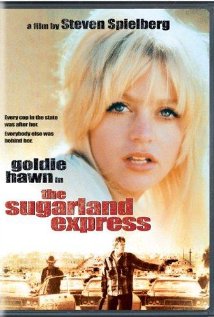
The Sugarland Express (1974), directed by Steven Spielberg

When I was in ninth grade, my friend Sammy, a self-proclaimed songwriter, very seriously attempted to start a musical group. I was invited to join because I had a reasonably good voice, was an aficionado of rock and roll, and had Elvis sideburns and lots of hair, which made me a very cool persona back then. Our group of four vocalists practiced for a couple of months and then Sammy told us that an agent was coming to audition us. We sang and had visions of stardom. The audition was brief; after one song, the agent told us in polite but clear words that we were not up to professional standards. Sammy was devastated because the project was his baby. For me, the rejection simply meant I now could move on to other things that interested me. I was not invested in the fantasy so I could easily move back to reality.

I was reminded of this teenage memory as I watched The Sugarland Express, which tells the story of two adults who think like kids, and build a future around a fantasy that will not materialize. Lou Jean, mother of baby Langston, had been in prison for committing petty crimes. The state welfare agency has awarded custody of her child to foster parents in Sugarland, Texas. Her husband, Clovis, presently in prison also for petty crimes, is scheduled to be released in four months. Lou Jean, now out of jail, is desperate and compels Clovis to break out of prison before his scheduled release to help reunite her with her baby in Sugarland. She has a one-track mind and refuses to see the complex reality that awaits her. Buoyed by initial success through taking a state trooper hostage, she naively assumes that she will be able to take back her baby.

The journey to Sugarland is filled with humorous and dangerous detours and Lou Jean and Clovis become folk heroes along the way. Captain Tanner, the law enforcement officer in charge of the pursuit, sees them as misguided kids, and encourages them to surrender and release their hostage before bad things happen. But their inability to separate fantasy from reality prevents them from seeing the truth.

Being positive and optimistic does not guarantee success. Outcomes are often determined by other factors. Although optimism in the face of troubles is a Jewish mode of thinking, optimism is usually grounded in some reality. Jacob’s ladder is directed toward the heavens, but the ladder is firmly planted on the ground. The Sages clearly tells us not to rely on miracles. It is wonderful if they come, but it is not part of an intelligent strategy. Certainly we should pray for positive outcomes, but we cannot depend on prayers alone, nor should we be devastated if our prayers are not answered. We cannot presume to see things from the aspect of eternity and sometimes our requests, however sincere, are denied.

King Solomon observes that foolishness results from a youthful, short-sighted approach to life, an approach which presumes that just because we make the effort, the desired result will follow. Proverbs somberly states that a person who wanders from the intelligent way will ultimately rest in the congregation of the dead. This is the kind of sobering wisdom Captain Tanner tries to impart to Lou Jean, who insists on believing in her alternate reality. The Sugarland Express reminds us of the possible pitfalls of single mindedness, and to always consider the real obstacles in front of us.

Purchase this movie from Amazon.com.


The Boxer (1997), directed by Jim Sheridan


Many, many years ago, when I was in junior high school, I met Dolly, a sweet and very personable girl with whom I enjoyed spending time. She went to a different school and one day I invited her to visit my school, an institution in which I took great pride. Those were innocent years, and nothing seemed nefarious about my asking a girl that I knew to tour my school. In truth, the tour was excellent except for one small problem. A school janitor saw me in the building after hours with her and reported me to the principal to make him aware of my inappropriate behavior. The visit was innocent, but the next day I was summoned to the principal’s office where he lectured me about the appearance of impropriety. It was a speech that had a lasting impact and today I am grateful for it. I learned early on to be sensitive to how my actions might appear to others.

The appearance of impropriety is the catalyst for much of what happens in The Boxer, the story of Danny Flynn, a former Irish prizefighter who comes home to Belfast after serving 14 years in prison. There he reconnects with Maggie, an old girlfriend, now married to an imprisoned IRA man. A paramount value amongst the IRA is that wives remain loyal to their husbands even when they are sent to prison for long terms. The IRA fighters view with disdain the slightest impropriety. They know that if an IRA member were to feel that incarceration would lead to the breakup of his marriage as well as prison, it would become increasingly difficult to recruit members. Furthermore, for many it would be too high a price to pay for their rebellion against the English.

Against this background, Danny meets with Maggie, his old flame. They originally intended to marry, but life intervened. Danny went to prison as a convicted terrorist and Maggie reluctantly moved on, eventually marrying and having a child.

Their love for one another persists, however, in spite of the long separation. Seeing each other after so many years rekindles long suppressed feelings of love, and they reveal their innermost thoughts to one another. Their private talks, however, soon become public knowledge, and their destinies are changed. Once others become aware of their surreptitious encounters, nothing can remain the same.

In truth, nothing immoral occurs between them. They confess their mutual love, but do not consummate it any way, respecting the unwritten code of the IRA. However, the specter of adultery looms large. Eventually it becomes the excuse for Danny’s enemies to torpedo Danny’s plans to live in peace and open a non-sectarian boxing club, in which both Catholics and Protestants can participate. Violence erupts leaving innocents murdered and maimed. The future of peace between the Irish and English is jeopardized. Moreover, the suggestion of inappropriate behavior between Danny and Maggie motivates Liam, Maggie’s son, to burn down the town gymnasium where the boxers train.

Judaism has much to say about marit ayin/the appearance of impropriety. For example, the Torah tells us that if a woman is alone with a man other than her husband, the appearance of impropriety might trigger a crisis of trust between spouses, which might lead to the dissolution of the marriage.

The appearance of impropriety plays out in many life situations. Judaism encourages us to be sensitive to how our behavior looks to others. We may technically be innocent of crime, but our actions may give a different impression. It is wise at times to see our behavior through the eyes of others.

Purchase this movie from Amazon.com.

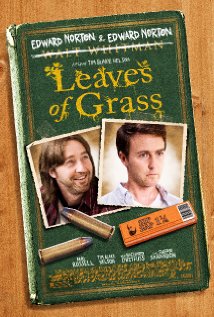
Leaves of Grass (2010), directed by Tim Blake Nelson

There was a time when “college dropout” was a pejorative term, but no more. Think Bill Gates or Steve Jobs. But as a teenager in the 50s, conventional wisdom was that getting a college degree was a prerequisite for success in life. Now many years later, I have a different perspective. While there is much to say about the positives of college, there are also negatives. I understand that it is a potentially corrupting environment, that it is filled with its own intellectual biases, and that the possession of a college degree does not guarantee success in life.

All this floated through my mind as I watched Leaves of Grass, the story of two twin brothers, one a Classics professor at Brown University, the other the grower of high grade marijuana in an elaborate and sophisticated hydroponics warehouse. Two bright children, same parents, yet radically different approaches to life. Consider Jacob and Esau in broad brushstrokes.

In the opening scene, Bill Kincaid is lecturing about the perfect world of the Greek philosophers, but he concludes by noting that, in spite of their desire for perfection, they and we still live in an imperfect world. All the brains in the world do not necessarily create a happy or moral universe. The Talmud echoes this when it states that the good deed is superior to the study of holy text. Good actions supersede intellectual accomplishments.

The plot thickens when Brady Kincaid tricks his twin brother into returning to their hometown. His motive: to use him as his double to create an airtight alibi for his own nefarious plans. Complications ensue, and the unpredictability of life asserts itself in a series of surprising, improbable, and violent  events, which on a deeper level reflect the dissonance between the academic world of theory and the real world in which we live.

To underscore this tension between theory and reality, Brady describes his view of God to his friend Bolger. He explains that man and God operate on two parallel lines, always following one another but never intersecting. In the end, man’s quest for God is neither linear nor necessarily satisfying.

This conflict is highlighted when Bill meets Janet, a poet and high school English teacher. Enamored with her, he shares his approach to life, which is grounded in the academic virtues of study, order, and reason. She confides to Bill that she entertained the possibility of teaching college students but found them too close-minded, just the opposite of what our own conventional wisdom would say, and contrary to Bill’s perception of college students. For Bill, this is a cathartic insight as he tries to navigate both his and Brady’s world.

These philosophical understandings are mirrored in the Ethics of the Fathers, a revered piece of Jewish wisdom literature, which says that it is not in the power of man to understand the inscrutable universe, to explain, for example, the peace of the wicked or the suffering of the righteous. Finite man cannot comprehend the infinite God. All he can do is to follow the parallel line of God, as it were, and do one’s best in an imperfect universe.

This philosophical reconciliation with man’s imperfection is signaled by the closing image of Bill and Janet, relaxing on beach chairs and holding hands in the rain. Rain which frightened him as a child now is both calming and restorative. Bill now experientially knows that life does not always provide answers, and that our human task is to persevere in the face of ambiguity.

Purchase this movie from Amazon.com.

First Blood (1982), directed by Ted Kotcheff

As a senior at Yeshiva University in the 60s, I solicited ads for the annual yearbook. Since I had recently purchased a Volkswagen, I asked the dealership for an ad, and they readily agreed. I sent in the ad with the check, and a few days later received a letter from the yearbook editor informing me that he had to return the check and could not include the ad. Why? Because there were many Holocaust survivors who would be upset that Yeshiva University would run an advertisement for a German company.

The incident was eye-opening. I simply was getting an ad, but in the eyes of others who had suffered at the hands of the Germans, my innocent act was perceived as ignorant and insensitive. I quickly became aware that there was a vast gap between my perception of Germany and others who had been victims of German cruelty. Someone who has suffered and endured unspeakable horrors responds differently than someone who has not.  The tourist sees tragedy one way, the resident another. For the resident, it is real, not theoretical.

Those different perceptions inform First Blood, the movie that introduced John Rambo to film audiences. His story begins after the Vietnam War as he journeys to the American Northwest in search of an Army buddy. His unscrubbed appearance makes him look like a drifter and he is arrested by the local sheriff as a vagrant, who judges only by appearances. The long-term effects of the Vietnam War are not on the sheriff’s radar screen. To him, it is ancient history. But to Rambo, it is not.  At the jail he is harassed and brutalized. The sight of a razor about to shave him while he is being restrained evokes a memory of his torture at the hands of the North Vietnamese. He responds by bolting from his captors and escaping to the mountains on a stolen motorcycle. Only later does the sheriff learn that Rambo is a former Green Beret, an elite Special Forces soldier, who was awarded the Medal of Honor.

What makes First Blood special is its portrayal of the aftermath of war, the emotional scars that remain on a person after the battles are over. In a touching scene in which Rambo shares his pain with his former commander, he agonizingly laments about the dissonance between now and then: “Back there I could fly a gunship, I could drive a tank, I was in charge of million dollar equipment, back here I can’t even hold a job parking cars!” He cries over the loss of a close friend who was blown up by shoe-shine box that was wired with explosives: “The box blew his body all over the place. There were pieces of him all over me. I couldn’t find his legs.” These experiences remain with Rambo long after the guns have been silenced. The memories are part of his DNA for the rest of his life.

Three lessons clearly emerge from Rambo’s trial by ordeal. First, the experience of war is a game-changer in the psyche of man. It leaves wounds that are not always visible, but nonetheless inform a person’s behavior and thinking. We need to understand this when relating to people who have endured such adversity. Second, never judge a person by appearances alone, the way the sheriff judged Rambo. Jewish wisdom literature reminds us: do not look at the bottle but at what is inside of it. Third, judge every man favorably, say our Sages. When we assume the best about others, our own lives will be enriched.

Purchase this movie from Amazon.com.

Contagion (2011), directed by Steven Soderbergh

Do you remember where you were on 9/11? I do. I was principal of Columbus Torah Academy and was called to the office to see what was unfolding on TV. It was a horrific sight, hitherto unimaginable. I called an assembly and spoke to the students about evil in the world and about how good ultimately triumphs because God is in charge. Therefore, know that in spite of the current tragedy, we will endure and live to a better day. In the interim, we need to pray for the victims and do whatever we can to help our fellow citizens in distress.

It is this kind of cataclysmic event that Contagion describes, but in this case it is an unknown, deadly virus that kills millions of people. Contagion is not a horror movie. Rather, it works as a thriller, which imagines in a very logical way the consequences of a virus infection that has no known cure. Although the movie is populated with A-list actors, the main character is the disease. All the players unassumingly portray human responses to crisis. Many respond with fear. Some, such as an unscrupulous blogger, see the crisis as a way to make money by suggesting that the government is conspiring with the drug companies to make a financial killing. Fortunately, some respond with altruism.

Examples of altruism punctuate Contagion. A dying woman offers her blanket to another patient shivering from cold. A doctor injects herself with a trial vaccine to test whether it will be effective with humans. Another doctor gives the preventive vaccine to a neighbor’s son rather than use it himself. A scientist who abandons protocol to find a stable version of the virus does not try to make a profit by selling his research to a drug company. Instead, he shares his findings with the Center for Disease Control in Atlanta, the agency best equipped to develop a vaccine to halt the spread of the virus. These vignettes recall the Jewish value of showing kindness to others, and not using crisis for personal advantage.

The Ethics of the Fathers teaches that the world depends on acts of loving kindness. From where is this derived? From God Himself, who clothed Adam and Eve even after they sinned, and who buried Moses at the end of his life.  Moreover, the patriarch Abraham personifies kindness. Even when he is in pain suffering the aftereffects of circumcision, he greets total strangers and welcomes them into his tent. Furthermore, when he seeks a wife for his son Isaac, the litmus test is whether the prospective bride will manifest compassion for weary animals in addition to his emissaries. Rebecca seals her destiny when she brings water for the camels as well as for the tired travelers.

It is comforting to feel that at moments of crisis, good people will step forward to help. Not everyone will be motivated by selfishness. There is a touching coda at the end of Contagion that indicates a hopeful future. Mitch, husband of Beth, the first victim, is privately perusing photos of his wife in his upstairs bedroom. He breaks down in tears, and then hears his teenage daughter calling him. He comes down, sees her dancing with her boyfriend as they prepare to go to Prom Night. He smiles as he realizes that his daughter is alive with a bright future ahead.

This also is a Jewish sensibility: to go beyond mourning and to see continuity. The traditional Jewish mourning food is the egg, totally round and without an opening, without a mouth. Our Sages tell us that this is a metaphor for mourning, a time when we cannot articulate our pain. But the egg is round, and this symbolizes the reality that life moves on beyond tragedy, and that a cycle of renewal can begin even after great loss. This is a valuable life lesson for all of us.

Purchase this movie from Amazon.com.

Boiler Room, (2000), directed by Ben Younger

My wife and I have bought a few homes in our lives. Each purchase probably represented the largest purchase we made until that point in our lives, and the down payment represented much of our savings. However, we, like many others, bit the bullet and made the purchase on the assumption that our income would eventually enable us to pay the mortgage. Sometimes we made money on the sale of the house and sometimes we lost money. Over the years we have become philosophical about ups and downs in money matters. We cannot control the housing market and, in the final analysis, God is in charge and whatever happens is for the best even if we don’t always see it in the short term. Nonetheless, the purchase of a home can be a stressful moment in the life of a family.

Nowhere is this more evident than in an excruciatingly painful scene in Boiler Room, a coarse, profanity-laden look at the world of young stock brokers who cold call customers with promises of big returns on their investments. One call goes to Harry Reynard, a family man who gives $50,000, his entire savings for a house, to Seth Davis in return for what is essentially worthless stock. We watch in agony as Seth lies to his client in order to make the sale. Harry buys the dream and loses his money and family in the process. It is a gut-wrenching scene to watch.

Boiler Room, based on real-life accounts of stockbrokers, is very disturbing. Young men are schooled in how to lie to clients in order to make big profits for themselves. There is a culture of conspicuous consumption at the firm. Successful brokers buy expensive cars, the latest techie gadgets, and have neither heart nor soul. They make a pact with the devil and revel in it at the unsuspecting client’s expense.

Seth Davis, the narrator of the story, is the son of a judge, and even though his relationship with his father is turbulent, he understands the ethical problems with his new job. He is torn between financial success and moral responsibility. Ultimately, it is the relationship with his father that moves him to try to make things financially right for Harry, his desperate client, and ethically right for himself.

Boiler Room reminds us of the perils of living a life where the only goal is the acquisition of more and more things. People become objects to exploit, not good friends and neighbors. The Ethics of the Fathers tell us that the truly rich man is the one who is content with his lot, who does not spend night and day trying to amass wealth. Wealth in Judaism is a means, not the end goal. Wealth enables us to help the needy, to welcome guests to our table, and to support community institutions and worthy causes of all types. Wealth is to be shared, not hoarded. The Book of Ecclesiastes states: “the lover of money will never be satisfied with money; a lover of abundance has no wheat.” The acquisition of worldly goods is ultimately futile. Only good deeds accompany a man to the grave.

There is another lesson in Boiler Room. Harry purchases the worthless stock without consulting his wife. Our Sages tell us, in reference to a quandary of Abraham, that he should consult with his wife Sarah. The spouse who loves you and has your best interest at heart should not be ignored when making major decisions in life. It is important to “listen to her voice” as the Sages say. A pow-wow with a loved one reinforces peace in the home.

Purchase this movie from Amazon.com.