Category Archives: Movie review

The Last Samurai (2003), directed by Edward Zwick

I have been living in Israel for a year and a half and have taken two trips back to the States. On my first trip, I brought a long list of things to buy to bring back to Israel. On the second trip, the list of things to bring back was brief and non-descript. I realized that by living in Israel I was becoming less interested in material things, getting used to a lifestyle of living with less, and arriving at a place philosophically where I truly felt that less is more.

This way of life is celebrated in the rousing and violent adventure The Last Samurai, which depicts in a symbolic sense the struggle between modernity and tradition. Tom Cruise is Nathan Algren, a Union soldier in the post Civil War period, who is haunted by the ghosts of his past indiscriminate killings. He is recruited by the Japanese government to help quash a Samurai insurrection that threatens the economic well being of the New Japan, which is promoting increased trade and dialogue with the West. Algren accepts the job, but in an early and bloody confrontation with the Samurai he is captured and brought to their mountain village. There, Katsumoto, the leader of the Samurai, engages him intellectually and emotionally. In this remote and picturesque setting, Algren soon finds himself enamored by the simple lifestyle of the Samurai, who live by a rich code of ethics supported by close ties of friendship and family.

Hallmarks of the Samurai way of life are self-discipline, devotion to a set of moral principles, and striving for perfection in whatever they do. Algren senses the spirituality of the Samurai and learns how to focus his mind so that he feels “life in every breath.” In many ways, the Samurai values echo the Jewish notions of living by a higher law and striving for spiritual perfection. Before the climactic battle scene, there is a scene of prayer suggesting that success in battle depends on one’s spiritual state. This is very much a Jewish sensibility. In these heightened moments of awareness right before battle, when life is so precarious, there is thoughtfulness about what really matters in life. Tradition is paramount. Katsumoto articulates this in a dialogue with the financial entrepreneurs who want to remove the archaic Samurai from the contemporary political landscape. The money men see them as a relic of the past, preventing Japan from entering the modern industrial age. Katsumoto tells them that the Samurai cannot forget who they are or where they come from. For him the sacred traditions animate and give meaning to the present.

When Algren, at the movie’s denouement, informs the young emperor of Japan of Katsumoto’s death, the young monarch wants to know how he died. Algren perceptively and wisely responds: “I will tell you how he lived.” His answer reminded me of the Jewish imperative to live by the commandments and not die by them. Following the eternal principles and traditions of the Torah gives meaning to one’s daily existence, imbuing each day with a sense of transcendent purpose. Both the Samurai and the Jew understand that although life can be filled with peaks and valleys, with joy and pain, leading a life of the spirit can give meaning to the entirety of one’s journey on earth. The film closes with speculation that Algren returns to the Samurai mountain village where he first met Katsumoto to begin a new life of spiritual integrity. He has discovered that progress is not always a good thing and that, spiritually speaking, less is often more.

Purchase this book from Amazon.com.

A Cry in the Dark (1988), directed by Fred Schepisi

At conventions of educators, school principals often share their personal “war stories” with colleagues either to unburden themselves, to gain insight into a problem, or perhaps to find a remedy for a difficult professional situation that threatens to hurt them or their school. I remember vividly one principal’s narrative about a parent who wanted so much to remove the principal from his position that he spread a rumor that he had fired one of the beloved veteran administrators of the school. Another principal confided in me that he was falsely accused of being lax in enforcing the school’s no-tolerance drug policy. In both cases, the accusations were false; but, nevertheless, the rumors damaged the reputation of two outstanding professionals in Jewish education. I considered myself very blessed to be in Atlanta as a school principal for many years where the lay community supported the professional leadership of the school even when I occasionally made unpopular decisions. Hearing the narratives of my colleagues reminded me of the terrible harm that slander and gossip can do.

It is the power of slander that is the topic of A Cry in the Dark starring Meryl Streep as Lindy Chamberlain. The movie is based on a true story of an Australian murder trial of a mother accused of killing her own daughter. The body is never found, but a bias against a woman who is seen as cold and unfeeling by her peers creates a mob hysteria that destroys her reputation. Our tradition tells us that every person is presumed to be an upright individual unless proven otherwise. The Torah commands us in many places not to be a talebearer, not to embarrass someone, to always give someone the benefit of the doubt. Yet this is difficult to do when the object of our comments is someone whom we dislike. The fact is, however, that this is precisely the time when we have to overcome our instincts to judge someone unfairly. This is the time when we have to withhold judgment until we have all the facts.

The destructive effects of prejudice are grippingly dramatized in a pivotal scene in which Lindy, exhausted from the trauma of losing a child and then being suspected of murdering it, gives testimony in a courtroom in a cold, dispassionate way. The jurors see her as an insensitive mother who might, indeed, have murdered her own child. As the prosecutor relentlessly cross-examines her, the interrogation is intercut with scenes of ordinary people in the street commenting on her guilt, offering interpretations of why she did it, and feeding the publicity frenzy. As one watches  the montage of images, one gets a real sense of the emotional pain Lindy is suffering when giving evidence of her dead child’s death by a dingo, a wild dog, before a mistrusting audience of jurors and lay people who have come to watch the spectacle with detached amusement.

A Cry in the Dark on a literal level refers to the cry of a baby in the night. On a thematic level, it refers to the cry for compassion and understanding in a world that is often insensitive to the emotional pain of other people, where the public desire to know trumps sensitivity to other human beings. The obvious message: death and life are in the power of tongue, so we have to very careful about what we say about other people. Speech distinguishes man from animal; it is a gift that should not be abused.


Purchase this movie on Amazon.com.

Frequency (2000), directed by Gregory Hoblit

From time to time, whenever I reflect on the milestone moments in my life, I think how special it would have been if my parents had been alive to share them with me. My decision to become a Jewish day school principal, a career that occupied the bulk of my professional life, was made after they died; and I never was able to share with them the peak moments of that experience. Moreover, they did not see all of their grandchildren. They never attended their weddings, nor were they able to bond with grandchildren as I am blessed to do now.

I thought of this as I watched Frequency, a crime thriller with a resonating subtext of a father-son relationship that spans the years. The plot is not easy to summarize. It deals with a supernatural phenomenon that allows a dead firefighter father to communicate with his son 30 years after the father has died in a tragic fire trying to rescue someone. They speak via short-wave radio and their communication creates the possibility of changing their family history.

The film opens with beautiful scenes of a family reveling in their close connections. We see a loving husband, an adoring son, and friendly neighbors. We see a father teaching a son how to ride a bicycle, which is the quintessential metaphor for a parent giving a child the ability to be independent. The love between them is evident. Against this background, father and son open up a conversation many years later after the father is dead. It is improbable, but once father and son accept the veracity of this seemingly impossible dialogue between two different time periods, they are overwhelmed with the opportunity to catch up with one another. The father asks the son what his job is, does he have a wife, does he have children; and then the conversation moves to the arena of sports, a topic which intensely bonded parent and child. The son reveals to the father how an injury prevented him from becoming a major league baseball player, that he is now a policeman and not a fireman like his father.

What touches the viewer is the palpable love between father and son. They have tears in their eyes as they sign off from one another with heartfelt “I love you”s. Father tells son “You have the voice of an angel.” Son tells father: “You have to be more careful because I don’t want to lose you again.” They are living in alternate realities but love spans the generations.

When something of note happened in my life, I always wanted to share it with my parents. I knew it meant something to them if I achieved something in life; and their acknowledgement of my accomplishment meant a great deal to me. I knew they loved me unconditionally and were there for me whether I would succeed or fail; but I wanted very much to share my successes with them. Parents are invested in the well being of their children. A parent, by Jewish law, has an obligation to help his child navigate life. A parent wants to be a parent and guide his children; and when there is love and openness, this guidance can occur.

Frequency reminds us that this parent-child relationship is at the core of family life, and it is to be treasured. When there is dialogue, there is love and there is hope.


Purchase this movie from Amazon.com.

We Were Soldiers (2002), directed by Randall Wallace

As a child growing up, one of my most vivid memories was that of my father, of blessed memory, showing me pictures of himself dressed in his Navy uniform in World War I. Coming to the United States as a young teenager fleeing the pogroms of Russia, he felt a great debt of gratitude to America and enlisted in the Navy. That time in the Navy was very special for him, and I remember him often marching in the local Memorial Day parade which honored the men of the Armed Forces. This love for America made us a very patriotic family. The thought of purchasing a foreign car was an anathema. We would buy only American.

As a recent oleh in Israel, I have again become very conscious of the military. I see soldiers daily and I feel safer in their presence and appreciate and value their holy work of defending the land. On the Sabbath, I notice a few worshippers in the synagogue carrying weapons, reminding me of the terrorist uncertainty that is part of the landscape in Israel. I also observe congregants who disappear for weeks at a time and then resurface at the daily minyan. This is because they are on active reserve duty, which requires them to separate from their families in order to protect the country.

All these thoughts came to mind as I watched We Were Soldiers, the story of one of the first major battles of the Vietnam war. It is a violent movie, with graphic scenes of warfare. However, there are aspects to We Were Soldiers that transcend the gory content. It is a film about disparate men becoming a family unit, protecting one another in times of extraordinary danger and crisis.

Two vignettes that do not take place on the battlefield convey a powerful message about the emotional bonds that are created between people when they face a common threat. As I watched these scenes, I thought of Gilad Shalit for whom we all prayed and I thought of the other soldiers who are still missing for many years and for whom we still pray.

On the eve of their departure from Ft. Benning, Georgia, to Vietnam, Colonel Hal Moore, played by Mel Gibson, addresses his men in a stirring and memorable speech: “We’re moving into the valley of the shadow of death. I can’t promise you that I will bring you all home. But this I swear before Almighty God, that when we go into battle, I will be the first to set foot on the field and I will be the last to step off and I will leave no one behind. Dead or alive, we will all come home together.”

This is a prelude to a soundless pre-dawn departure in which the men bid farewell to their wives and children and then assemble in the darkness waiting for transport to Vietnam. It is a quiet moment filled with apprehension and uncertainty, and we can feel the emotional stress of the soldiers and especially their loved ones as they take leave of one another to face an uncertain future.

As I reflected on the film, I felt reverence for those soldiers, both in America and Israel, who put their lives on the line for us. They teach us a valuable life lesson: all of humanity is interconnected. We are created in God’s image, and we are all part of the family of mankind. Family members care for one another, sacrifice for one another, and feel responsible for one another. At times of crisis, no family member, no one, should be left behind because, in the divine scheme of things, we all will come home together.

Purchase this movie from Amazon.com.

Bella (2006), directed by Alejandro Monteverde

I recently spent a Shabbat in Jerusalem at the Bar Mitzvah of a friend’s son. My friends had converted to Judaism a number of years ago, and now their youngest son was celebrating his Bar Mitzvah at the Kotel. During the course of this joyous weekend, we reminisced about their spiritual journey, which began in earnest in a restaurant in Prague. There they met my son Ezra who struck up a conversation with them and showed them one of the famous synagogues in the city. Ezra put them in touch with me in Denver many months later where they enrolled at a Denver Jewish day school at which I was principal. The journey continued with a move to Rochester, New York, where they officially converted to Judaism and were re-married according to Jewish law. As we talked over dinner in Jerusalem, the wife reminded me that their journey began in a little conversation in Prague which changed the lives of the family forever. One moment in a life can have everlasting ripple effects.

“One moment can change your life forever” is the advertising mantra for Bella, and it proves to be true in the case of Jose, a star soccer player, who on the day of his contract signing experiences a life-changing moment. Infused with the excitement of playing professional soccer, he loses his concentration while driving his car and causes a horrible accident. The terrible effects of this tragedy haunt him as he struggles to come to terms with the consequences of his actions. Near the beginning of the film, one of the characters says, “If you want to make God laugh, tell Him your plans.” This adage of an old grandmother highlights one of the essential messages of the movie; namely, that we are not in full control of our destinies, and it is foolish to think that we are. One day can change everything.

Jose works as the chief chef in a restaurant owed by his adopted brother. He is a master chef; but when he sees his brother treat Nina, a waitress, callously, he leaves the kitchen to console Nina after she has been fired. We find out that Nina is pregnant, and morning sickness has caused her lateness. As Jose and Nina walk the streets of New York together, they meet a blind street vendor with a sign behind his stand which reads: “God closed my eyes. Now I can see.” This sets the stage for each of the main characters to undergo a spiritual transformation, which brings with it a new understanding of life and its adversities.

The street sign with its message of hope provides the spiritual subtext of Bella. Jose and Nina both have experienced hard times; yet Jose, especially, tries to use his tragic past to build a hopeful future for himself and Nina. Jose is a man of faith who comes from a family of faith. They say grace before eating and are mindful of the presence of God in their lives. They celebrate life together and are joyful in relationship with friends. Their wisdom and energy are infectious, and Nina basks in their warm presence.

Through a day’s quiet conversation between Jose and Nina, Nina overcomes her aversion towards carrying her baby to term, and decides to accept motherhood. To Jose, this represents an affirmation of life. Jose values people and values life; and his goal is affirm life not only by encouraging Nina to have her child, but also by reprimanding his brother when he treats his employees cavalierly. He berates his brother for only being concerned about business, and not caring enough about the people who work for him. “It’s all about you,” he shouts when he wants to brother to think about his workers.

There is much to admire in Bella. It is about being sensitive to the trials and tribulations of others. It is also about repentance. How do we atone for a grave sin? How can we get forgiveness from someone who is no longer alive? Do we have to atone for a sin that we committed inadvertently? All these questions are discussed in the codes of Jewish law, and the dilemmas that Jose faces can be viewed in the classic context of Jewish repentance literature. Moreover, the film demonstrates the value of family as a positive force to help one overcome challenges in life. A loving and supportive family is critical to Jose’s ability to cope with personal tragedy. Other people might choose illicit drugs to escape a painful reality, but Jose is not part of that culture.

Above all, Bella presents not only a story of personal tragedy and redemption, but also a story of one act of kindness that is transformational in the life of one person, Nina. The Ethics of the Fathers reinforces the importance of kindness when it tells us that it is one of the three pillars upon which the world is based (Avot 1:2). Kindness is an eternal attribute of the Jewish people, and this seminal life lesson of kindness is embedded in the gentle and thoughtful narrative of Bella.

Purchase this movie from Amazon.com.

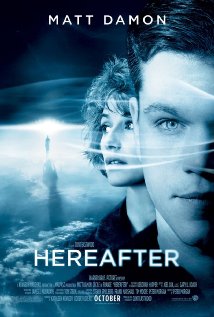
Hereafter (2010), directed by Clint Eastwood

My son-in-law served in the Marines during the Gulf War. Sent to Kuwait, he was probably the only Orthodox Jew serving there. When he returned safe and sound, thank God, I had several discussions with him about the most important thing he learned from his military experience. He told me it was unforgettable and he valued it because it gave him an intense appreciation of every moment of life. He became more attuned to the presence of Godliness in the world, more attentive to the everyday miracles of life. It is this awareness of the preciousness of every moment of life that is at the core of Hereafter, a film that has something to say about the afterlife, but has more to say about how we lead our lives. Do we pay attention to our life experiences or do we simply go through life on auto-pilot?

Hereafter tells three stories of emotional crisis. One is about a woman who survives a tsunami after having a near-death experience. Another is about a young boy, Marcus, who loses his twin brother, Jason, and another about a man who has a childhood illness leading to a near death experience, which leaves him with the ability to communicate with the dead. The stories originate in different locations, Paris, London, and San Francisco; but they all converge in London at the story’s end where all the main characters have arrived, suggesting perhaps that a hidden divine hand is guiding their respective fates.

In Hereafter, things happen which can easily be explained as natural events, but which can also be explained as supernatural. It depends on how you view life. Is it ordinary or extraordinary? As if to punctuate this juxtaposition, George Lonegan, the psychic played by Matt Damon, goes to sleep each night listening to audiotapes of the novels of Charles Dickens. His depiction of everyday Victorian life emotionally grounds George who is haunted by his psychic gift that prevents him from leading a conventional life. The scene depicts the normal human ambivalence between perceiving the world as the unfolding of natural processes and perceiving the world as a constant revelation of the miraculous.

Another scene portrays this dissonance between natural and supernatural perceptions of the world. The surviving brother, Marcus, seeks to communicate with his dead brother. On one day he goes to the underground London train station to travel to someone who he thinks can help him with his task. As the train enters the platform, his hat, which belonged to his dead brother, falls off his head. He struggles to retrieve it as it is trampled by passers-by. When he finally reclaims it, he misses his train. Seconds later, there is an explosion on the departing train and Marcus miraculously escapes death. Was it a coincidence, what is God intervening, was it his dead brother protecting him? The answer is ambiguous but the question is not, for it presupposes a willingness to see the world without preconceptions of why things happen.

Often, there is often a sign over the ark in traditional synagogues on which is inscribed the classic line from King David’s Psalms:  “God is always before me.” It is a passage that resonates with me. It reminds me never to take things for granted. It reminds me to pay attention to life, to see God’s handiwork always in front of me. Focusing on the maxim, I am reminded to look for God’s hidden hand behind everyday events. What are His messages? Am I listening? Am I paying attention?


Purchase this movie from Amazon.com.

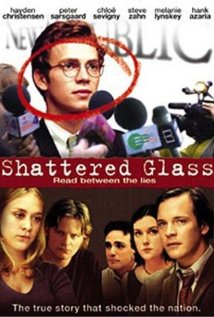
Shattered Glass (2003), directed by Billy Ray

As a high school student in A.B. Davis High School in Mount Vernon, New York, I took two years of Spanish. Much of the second year was taken up with the complexities of the subjunctive tense, about which I never could gain mastery. As a result, my marks over four consecutive marking periods were 50, 55, 60, 65, until I took the New York Regents at the end of the year. The Regents Exam was the state- mandated exam that separated the men from the boys. If you passed the Regents with a good grade, the meant that you really knew your stuff. In the days leading up to the Regents, our teacher gave us periodic exams, which I usually failed. During one of the exams, I looked up from my desk and saw perhaps the brightest student in the class use a cheat sheet. While I struggled to pass, he took a short cut to success. His report card was filled with “A”s while mine had “F”s.  I imagined a scary future: will he be doing this in medical school as well ?

But then the Regents came and I got in the 90s because there were no subjunctive tense questions on the exam. The teacher thought I cheated but couldn’t prove it so he had to give me an “A” for the last report card period. The whole experience reminded me that honesty ultimately pays, if not immediately, then in the long run. Honesty is  the heart of the matter in Shattered Glass.

Shattered Glass is a story ostensibly about journalism and its commitment to truthful reportage.  An early scene in the film depicts Stephen Glass, a successful journalist, sharing his wisdom with an avid group of high school students who may aspire to be writers one day. Glass’s presentation is warm, infectious, and devoid of egotism. He writes for The New Republic, the “in-flight magazine of Air Force One,” and tells his young fans that when you write for such an influential magazine, “your work gets read by people that matter.” Surely this is a heady job, but he cautions the students that reporters have to be responsible for what they write and there is more to the job than simply getting your own name into print. Journalism ultimately is about the pursuit of truth, and that is what makes it important.

All this is preamble for an account of deception and lies. As the movie unfolds, we see Stephen fabricating story after story in a working environment where fact-checking is critical. Because he is an entertaining presence at staff meetings, he ingratiates himself with his fellow employees, who are unsuspecting of his ethics. When an internet magazine uncovers the deception, Stephen’s imaginary world falls apart. He has spun a web of lies from which he cannot extricate himself, and he begins blaming others instead of accepting responsibility for his actions.

Shattered Glass is a powerful morality lesson depicting what transpires when we lack integrity, when there is no respect for truth. The Ethics of the Fathers tells us that one of the pillars upon which the world stands is truth (Avot 1:18). Without that essential element, societies cannot exist. The film also presents the consequences of losing a good name: loss of job, loss of credibility. Our Sages remind us that one’s good name is the most important possession we have. Rabbi Shimon says: “There are three crowns—the crown of Torah, the crown of priesthood, and the crown of kingship, but the crown of a good name surpasses them all (Avot 4:17).” Furthermore, we see how the pursuit of fame is ephemeral. The more one pursues it, the more it eludes him. Countless statements in the Talmud reinforce this notion: “He who seeks fame loses his reputation (Avot 1:13);” “A desire for honor removes a man from the world (Avot 4:28);” “Do not desire honor (Avot 6:5).” Finally, the Talmud explicitly tells us that we should always attribute the source when we quote another’s statement: “Whoever reports a saying in the name of its originator brings deliverance to the world, as it says, And Esther told the king in the name of Mordechai (Megillah 15a).

Finally Shattered Glass provides an example of the adage in The Ethics of the Fathers that tells us “Whoever desecrates the Name of Heaven in secret, they will exact punishment from him in public (Avot 4:5).” Stephen Glass is a liar, a distorter of truth in order to promote his own image. In the end, his deception is revealed in a public way, not only in the news media but in the film that is cleverly titled Shattered Glass.

Purchase this movie from Amazon.com.

Inception (2010), directed by Christopher Nolan

In my volunteer work for an international Jewish matchmaking site, I work with many dreamers. The people who dream the most are single men over 50 who want to marry girls under 35 because they would like to have children. On the surface, the dream makes sense, but the reality proves otherwise. Most girls in their thirties do not want to marry men in their fifties. And the dream gets scarier with advancing years. Men in their late 50s and even men over 60 cling to the dream while life is slipping away. It is very sad, because the dream prevents them from dealing with reality. I sometimes suggest to my “clients” that they should at some point reconcile themselves to the reality of just having companionship into their senior years rather than cling to an impossible dream that, in the final analysis, will leave them isolated and alone as mature adults. G-d tells us that “it is not good for man to be alone.” Companionship, even without the possibility of having kids, is superior to being by oneself. Our tradition tells us that a shared life refines a person. Being married compels one to think of another, not just of oneself, and that paradigm is Torah-based. The Torah tells us to “love your neighbor as yourself,” and the penultimate neighbor is one’s spouse. Therefore, it is good occasionally to dream but it also good to live in the real world.

To dream excessively is dangerous for it can make you lose touch with reality. This is the crux of Inception, a wildly imaginative thriller that deals with dreams and their consequences.

The story line of Inception is almost impossible to summarize. In simple terms, it involves a plot to plant a dream in someone’s mind in order to change an oncoming reality. In the course of the film, reality and dream are constantly intertwined, so you have to pay close attention to determine which parts of the narrative are real and which are projections of the subconscious. It is this confusion which is at the core of the relationship between Dom Cobb and his wife Mol. Dom is involved in corporate sabotage, extracting valuable secrets from vulnerable subjects who are dreaming. He is so expert at this that he introduces his wife into the world of dreams, with terrible consequences. Mol loses touch with reality because of her deep and extended exposure to the dream state of awareness, and their life together is transformed from a dream into a nightmare.

The only salvation for Dom is to return home to reality, a reality which requires him to leave his idealized mate in her world of fantasy. In a wrenching climactic scene, Mol asks Dom to remain with her in her dream world: “You said you dreamt that we would grow old together.” Dom responds that they did grow old together in their dream world. An image of intertwined hands of an elderly couple walking together exquisitely expresses this idea. He then confesses to her: “I miss you more than I can bear. But I have to let you go.” He understands that as painful as it may be, he must leave the dream world in order to enter reality and survive.

This willingness to accept reality even though it is not ideal reflects a mature outlook on life. We all need to dream, but the dream has to be tempered by a true comprehension of the real world around us. This perhaps is emblematic of the dream of Jacob’s ladder. Alone in the wilderness at night, Jacob had a dream of angels going up and down a ladder; but the ladder, which soared into the heavens, had its feet firmly planted on the ground.

Purchase this movie from Amazon.com.

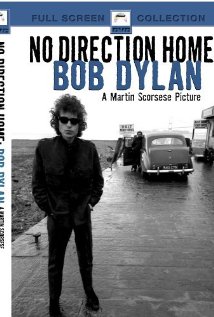
No Direction Home: Bob Dylan (2005), directed by Martin Scorsese

A few years ago, I was visiting my daughter in Lakewood, New Jersey, home of the renowned Lakewood Yeshiva, when I noticed a peculiar item in the local newspaper. Bob Dylan, scheduled to appear at a baseball stadium in Lakewood as part of a tour with Willie Nelson and John Mellencamp, was accosted by a 24-year old policeman who arrested him for vagrancy. It seems that a resident had called the police and stated that a man was wandering around a low-income neighborhood looking at houses. When asked for his identification, he said “Bob Dylan,” but the police officer at the scene did not recognize the name. Dylan was apparently walking around looking at houses passing away the time before that evening’s show. The officers then asked Dylan, 68, to return with them to the hotel where the performers were staying, and there the tour staff vouched for him.

As a teenager, I grew up in the shadow of the great Elvis Presley, so Bob Dylan was never one of my musical icons. But as I grew older and my musical tastes became more eclectic, I began to pay attention to his music, especially his early material, which is why I was drawn to No Direction Home: Bob Dylan, a fascinating documentary about Dylan’s genesis as a musical icon in America. As I watched the narrative develop with early footage of his career interspersed with a present-day interview, I made several observations. Dylan was a very curious and bright young man, totally disconnected from his home town mid-western environment. It was when he came to New York City that he flowered musically, for here he met other poetic and musical originals who shared his quest for artistic growth. He was awed by their talent and integrity. Over time, however, he truly saw himself as a “one-of-a-kind” artist, who didn’t need to answer to anyone. Other people’s opinions did not matter to him. What was important was to be honest with himself. He confesses that his early lyrics made him a hero to the civil rights and anti-war movement, but these political movements did not drive his art. His art was driven by his musical instincts. In fact, the movie includes footage of him being booed by the audience for performing electric rather than acoustic material. But he didn’t care what the audience thought. He listened to the sound of his own drummer. Moreover, he finds it absurd that celebrities are even asked their political opinions since they know nothing about such matters. For him, silence makes more sense than dangling political conversations that go nowhere.

Which brings me to a Torah perspective that is embedded in this movie. Our Sages tell us that one of the pillars upon which the world is based is emet, truth or honesty. Whether one agrees with Dylan or not, one certainly will admit that this film portrays him as an honest person in an industry full of pomposity and posturing. Moreover, his story reminds us that fame is illusive the more one pursues it. Dylan did not pursue fame in a conscious way; he pursued music and its varied expressions and fame came to him. This is what our Sages clearly tell us in the Ethics of the Fathers: “he who seeks fame loses it (Avot 1:13).The implicit message is to focus on being the best you can be and rewards will eventually come.

As I reflected on the movie, I began to appreciate more and more Dylan’s musical genius and his uncompromising integrity. At the end of the day, I understand why the police officer probably did not recognize him. The policeman was born many years after Dylan dominated the musical landscape and Dylan himself did nothing to promote his artistry other than write and sing songs. He did not rely on a publicist; rather it was his music that spoke for him.  In this sense, we can learn from this musical master. Perhaps if we are true to ourselves and do not look for recognition, we can make our best contribution to the world and notoriety will come to us. Furthermore, by rejoicing in our own uniqueness, we can celebrate the special gifts of others who collectively enrich the artistic environment.


Purchase this movie from Amazon.com.

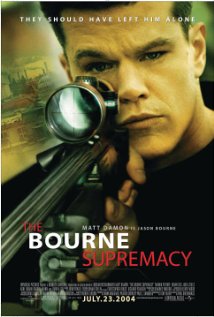
The Bourne Supremacy (2004), directed by Paul Greengrass

Confessing is cathartic. Every Yom Kippur in our home, I confess my shortcomings to my wife and my children. I apologize to them for raising my voice to them, for being unnecessarily critical of them, for not always understanding their personal challenges. I feel better after I do this because it helps me renew my spirit and become, I hope, a better person in the coming year. Yom Kippur, after all, is a day of forgiveness when God forgives us for our sins. But our Sages emphasize that God does not forgive us unless we first make amends for the sins committed against our fellow man. Confessing our mistakes and apologizing to our loved ones brings us closer to them and closer to God who desires our contrition, especially at this time of year. Such a personal admission acknowledges that we are imperfect yet sends a signal that we desire to improve ourselves and our relationships. It is noteworthy that a confessional scene in The Bourne Supremacy humanizes the hero in a way that connects him to all of us who have made regrettable mistakes in life and want to become better.

The Bourne Supremacy, the second in the trilogy of Bourne movies, is a great action movie; but what sets it apart is not only the superbly choreographed action sequences, but the humanity of its hero, Jason Bourne, a man searching to discover his lost identity. We believe his confusion. We believe that, in spite of his job as a professional assassin, he is essentially a good man. His humanity is exquisitely captured in a touching scene towards the close of the film in which Jason Bourne contacts the daughter of a Russian diplomat and his wife whom Bourne has assassinated. He shows up at her apartment unannounced and in a soft voice informs her that, contrary to what she thought, her mother did not kill her father and did not kill herself. He confesses in slow, carefully deliberate language: “I killed them. I killed her. That was my job. But it was my first time. Your father was supposed to be alone, but then your mother came out of nowhere and I had to change my plan. It changes things, that knowledge, doesn’t it? What you love gets taken from you. You want to know the truth. I’m sorry.” The confession purges Bourne of some of his guilt. He cannot retrieve the past but he has come to terms with it by admitting his crime to the child who was a survivor.

Moreover, confession works in more than one direction. It is cathartic for the one who confesses, for he is changed by speaking the words that indict him. Additionally, it changes the reality of the one to whom the confession is addressed. Acknowledging the words of a penitent can alter the life of the one who was hurt as well. The truth that Bourne reveals to the daughter of his victims frees her from a past filled with guilt, deception, and lies.

It is a brief scene but its impact is powerful. No longer is the film just a robust and entertaining thriller. It is also a commentary on the human cost of leading a violent life, even when the violence is for the just cause of protecting a nation.  Good people can sometimes do very bad things. This vignette reminds us that we can sometimes be cruel inadvertently. Thoughtlessly, we can hurt those we love most. The Bourne Identity reminds us that confession of our sins to those we care about can open a door to our own self-renewal and, just as important, it can allow others to move on with their lives, free of the negative baggage of the past.

Purchase this movie from Amazon.com.