Category Archives: Science Fiction

The Matrix (1999), directed by Andy and Lana Wachowski

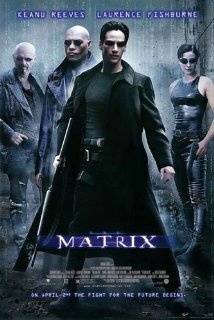
MV5BMTkxNDYxOTA4M15BMl5BanBnXkFtZTgwNTk0NzQxMTE@._V1_SX214_AL_When I was an undergraduate student taking an introductory Philosophy course, I had an “aha” moment when I read Plato’s myth of the cave which describes a man living in a cave, thinking it is the real world until light streams in from above, at which time he realizes that what he has been experiencing is not the real world but an illusion. The real world is, in truth, somewhere else. It is this kind of subliminal narrative that forms the emotional and intellectual core of The Matrix, a thought-provoking, action-packed thriller about a human rebellion against a world controlled by machines.

Thomas Anderson, a computer programming guru, is also known as “Neo,” a computer hacker with an unsavory clientele for which he provides all sorts of illegal substances. One evening he is contacted by Trinity, another computer whiz, who apprises him of Morpheus, a mysterious man who can tell Neo the meaning of “the Matrix,” an entity that Neo frequently encounters online. Neo is interested in meeting him, but three robot-like men are determined not to have the meeting take place.

In spite of obstacles, and there are many, Neo and Morpheus meet, after which Neo’s life is forever changed. Offered a red pill by Morpheus, Neo takes it, and the pill enables him to see the world in a totally unconventional way. He embarks on a psychic journey, which convinces him to join Morpheus in his quest to overthrow the mechanical forces of conformity and rigidity that are presently controlling the world.

Morpheus tells Neo that in the 21st century, there was a war between human beings and the intelligent machines they created. Eventually the machines won and trapped the humans in an artificial world, the Matrix, in which humans exist in a simulated environment. This keeps them compliant slaves to materiality, without the freedom to question and to think on their own. Morpheus seeks to rebel against this universe of conformity by hacking into the Matrix and recruiting enslaved humans to rebel against the machines.

The rebels’ profound understanding of the artificial reality of the Matrix allows them the bend the laws of the physical world, giving them superhuman powers that are choreographed with visceral energy on the screen. We learn that Neo is recruited specifically because Morpheus sees him as “the One” to save the world from the corrupt machines, and he is trained to do battle with their human-like representations. The movie’s dense plot almost requires a second viewing in order to comprehend the complexity of the conflict between the men and the machines.

The essential question that the film poses is what is the nature of reality. Plato’s cave metaphor suggests we are living in a world of illusion and we have to exit the cave if we are to live a full and honest life. The matrix represents this world of illusion, and the rebels want to live a real, not artificial, life.

Jewish tradition encourages us to dream, to have illusions, but we must have our feet firmly planted in the real world. The patriarch Jacob dreamt of a ladder reaching to the heavens, but the ladder was rooted in the earth. Moreover, our Sages encourage us to contemplate other planes of existence, such as the heavenly World-to Come, which gives us spiritual pleasure. Nonetheless, they remind us that it is in this world, the nitty-gritty everyday world, the world that the rebels want to revive, that we express our humanity through the crucible of real life experiences. It is here that we truly accomplish our life’s mission and fulfill our personal destinies.

Free choice makes us human and reflects the divinity within us. The Matrix suggests that for humans to fulfill their potential as human beings, they must be able to freely choose life over death, light over darkness.

Purchase this movie from Amazon.com.

The Incredible Shrinking Man (1957), directed by Jack Arnold

incredible shrinking manIn 1957 I was enrolled as a boarding student in a Jewish high school on the edge of Harlem in New York City. The father of a fellow student, visiting from out-of-town, invited me to join him and his son for dinner at a downtown restaurant. The dorm counselor was nowhere to be found, so I could not ask anyone for permission to leave campus. I decided to join them anyway and began to think of an excuse to give the dorm counselor in case he rebuked me. The Incredible Shrinking Man had just opened and the perfect excuse came to mind. I will tell him that I went to the local movie theater to see this film about a man who shrunk in size. It seemed like an easy plot to summarize and so I would not be penalized for traveling outside of the local neighborhood. And that is what transpired. The excuse, weak as it was, worked.

Little did I realize when I actually saw the movie several months later that it was much more than a film about a man who shrinks in size; rather it was a profound meditation on the ultimate meaning of life. Watching this black and white science fiction movie 57 years after it first appeared, I genuinely admired not only its special effects, which were progressive for its time, but also its thoughtful commentary about man’s place in the universe. Let me elaborate.

Scott Carey, on vacation with his wife Louise on his brother’s boat, sees a strange fog, which is really a radioactive mist, glide over the boat leaving a wet sheen on his body. Six months later, Scott senses that his clothes are becoming loose on him and that he is losing weight. The sudden weight loss prompts him to visit his physician, who assures him that nothing is wrong. However, a subsequent examination does confirm that Scott is, in fact, losing vital chemical elements and is actually shrinking in size. In an unsettling scene, husband and wife discuss the implications of this malady for their marriage. At the end of the conversation, Scott’s wedding ring falls off because of his shrinking finger size.

As time passes, Scott continues to shrink to the size of a child. Since Scott is no longer able to work, they have mounting bills. As a result, Scott sells his story to the press, who treat Scott as freakish pop phenomenon. Louise tries her best to be optimistic and encourages Scott not to lose hope. However, after many tests, the doctors conclude that there is no remedy and Scott runs out of the house in despair.

In his wanderings, he meets a dwarf, Clarice Bruce, who tells him that being small does not mean life is over and devoid of happiness. The message is uplifting for Scott, who embraces her perspective on life until one day he sees that he is shrinking again and is even shorter than Clarice.

We next see Scott, only a few inches tall, living in a doll’s house. When his wife Louise leaves to go shopping, she inadvertently leaves the door open allowing a cat to enter the house. This creates a life or death situation for Scott, who runs for his life to avoid the clutches of the cat. He accidently falls into the basement after the cat scratches him. Louise, finding a piece of Scott’s clothing with blood, presumes that Scott is now dead.

Scott slowly regains consciousness, and begins to search for food in a hostile environment where a common spider becomes his arch-adversary. The life and death fight between them is intense, and Scott emerges from it wiser and more accepting of his place in the cosmos as he gazes at the stars above. His final words are both haunting and uplifting: “To God, there is no zero. I still exist.”

Scott’s malady can be viewed as a metaphor for any life-altering illness. News of such an event is often frightening and potentially depressing. Therefore, it is noteworthy that Scott, now a speck in the infinite universe, draws comfort from the knowledge that in God’s eyes he still counts. In Jewish tradition, man is composed of body and spirit. While the body is subject to the vicissitudes of nature, the spirit is not. The Incredible Shrinking Man is a clarion call reminding men of their infinite value, even when faced with imminent mortality.

Purchase this movie from Amazon.com.

Limitless (2011), directed by Neil Burger

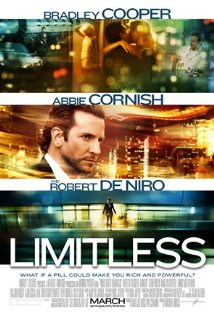
limitless posterI began to study Talmud seriously when I entered Yeshiva University, which had just started a program for college students who did not attend Jewish day schools. It was a challenging subject and at first I had very mixed success. My Talmud teacher summed it up when he wrote on my evaluation the following remarks: “Earnest and studious, has been plodding along with unusual diligence and, as a result, has made fine progress especially in his ability to master texts. Analytic grasp is still weak, tends to repeat some ideas mechanically without fully understanding them. But on the whole has made highly encouraging progress.” Frustrated by my difficulty analyzing such complex material, I thought it would be wonderful to be able to take a pill and suddenly become an analytical savant. I did not do this, but Eddie Morra in the intense drama Limitless does.

Eddie Morra is a writer with writer’s block. He has a contract with a literary agent but cannot summon the intellectual energy to write his book. His life is falling apart financially. His girlfriend rejects him, and he is threatened with eviction from his apartment. Things change, however, when he meets his ex-brother-in-law Vernon, who offers him a new brain drug that will get him out of his lethargy. Eddie takes it, feeling things can’t get any worse, and experiences an intellectual epiphany. He sees everything with brilliant clarity and now is able to write freely. Immediately, he cranks out several hundred pages with ease and impresses his agent.

Eddie returns to Vernon, wanting more of the drug, which is called NZT48. Finding Vernon dead, he searches his apartment for the drug and finds cash and a large stash of NZT48. Overwhelmed with his new-found abilities, Eddie takes the pill regularly and quickly amasses huge amounts of money as a day trader on the stock market based on his uncanny ability to predict the success of many companies on the exchange.

His success in the market leads to a meeting with Carl Van Loon, a major player in the corporate merger world, who senses that Eddie can be a valuable member of his negotiating team in an upcoming merger deal. Meanwhile, Eddie’s supply of NZT48 is dwindling, and Eddie is having relapses which stymie his smooth presentations to Van Loon. How Eddie tries to be sharp when his supernatural analytic skills are growing dull is the plot conceit that drives the story forward.

There is a mesmerizing conversation between Eddie and Van Loon, which highlights the different paths these men have walked to arrive at their current positions in life. Eddie’s path is serendipitous: Carl’s is deliberate. When Eddie informs Carl that he is looking to be on his own, Carl reminds him: “I mean you do know you’re a freak? Your deductive powers are a gift from God or chance or a straight shot of sperm or whatever or whoever wrote your life-script. A gift, not earned. You do not know what I know because you have not earned those powers. You’re careless with those powers, you flaunt them and you throw them around like a brat with his trust-fund. You haven’t had to climb up all the greasy little rungs. You haven’t been bored blind at the fundraisers. You haven’t done the time. You think you can leap over all in a single bound. You haven’t had to bribe or charm or threat your way to a seat at that table. You don’t know how to assess your competition because you haven’t competed.” It is a classic case of the callow wisdom of youth pitted against the sage wisdom and experience of age.

There is an insightful comment about the perennial conflict between youth and age found in The Ethics of the Fathers. The Sages write: “He who learns from young men is like one who eats unripe grapes and drinks new wine from the winepress. He who learns from old men is like one who eats ripe grapes and drinks aged wine.” Clearly, Jewish tradition favors the learning from old men who combine the wisdom of life experience with intellectual power. Limitless showcases the smarts of youth and the acumen of age, and lets the audience see the virtues and faults of both.

Purchase this movie from Amazon.com.


Forever Young (1992), directed by Steve Miner

forever young posterFailure to make decisions is a decision itself. Let me share a silly story from my early childhood. My mother took me to see a Bob Hope comedy. Near the beginning of the movie, I asked if I could go out and buy some candy, and my mother said yes. I had trouble making up my mind and when I returned to the movie, I found that it was at the same scene when I exited. I was gone for over an hour and I missed the entire movie.

Indecision is the catalyst of what transpires in Forever Young, a romance with a science-fiction twist. Daniel McCormick, an air force test pilot, has trouble making up his mind. He wants to ask his girlfriend, Helen, to marry him; but he cannot summon the courage to pop the question. While he debates within himself, fate intervenes and Daniel loses the opportunity to ask Helen to be his wife. His indecision is fatal. He misses his entire life with Helen.

Daniel’s story begins in 1939 when he is courting his beloved Helen. After a brief encounter at a local diner, Helen is involved in an accident, which leaves her in a long-lasting coma. The doctors think she will never recover; so after six months, Daniel volunteers for a cryonic freezing experiment in which he will be placed in suspended animation for a year. Thus, he will be spared the pain of witnessing Helen’s death.

He wakes up 53 years later to a new world with voice mail and planes that he only dreamt about many years earlier. Daniel attempts to find his old friend, Finley, who initiated the freezing experiment. He learns that he has died, but his daughter gives Daniel her father’s journals, which detail her father’s experiment and indicate that, once unfrozen, the aging process will kick in at an accelerated rate.

Things get tense when Daniel sees his body aging quickly and, at the same time, discovers that Helen is still alive. It is a race against time to find her before he succumbs to his inexorable aging process. Love, however, conquers all in this romantic fantasy, and it is gratifying to watch what transpires when Daniel and Helen, lovers from their youth, now reunite as seniors recognizing the deep soul connection that bound them together so many years ago.

As a teenager, I once heard a joke that kept me laughing for many days afterward. Here’s the joke: a man asked someone if he was a man of decision. The answer: “Well, yes and no.” The assumption behind the punch line was that while people outwardly want to be decisive, inwardly they often equivocate and don’t make up their minds.

Judaism discourages indecision. The rabbis of the Talmud grow to great lengths to get clarity, to pursue truth, to find the answers to difficult questions. They encourage clear decision-making, and often devise a calculus to arrive at a decision. For example, when faced with questions of Torah law, the Sages instruct us to choose the more stringent path; when faced with questions of Rabbinic law, they instruct us to take the more lenient position. To remain in a state of doubt when decisions need to be made is fraught with peril, for doubt will surely lead to inaction, equivocation, bad life choices, and a host of missed opportunities in life.

If one is still unsure about what decision to make, our Sages recommend speaking to someone older and wiser and getting his perspective on a situation. Judaism accepts the notion of a hierarchy of intellect and holiness. Once you identify the holy man of wisdom who represents the values in which you believe, you then ask him your query. Whatever the answer, you can feel confident that you are making the best decision possible since you have consulted the best and the brightest of men.

Forever Young is a stark reminder of the negative consequences of not being able to make a decision, and encourages us make the most of time we are allotted on this earth.

 Purchase this movie from Amazon.com.


Ruby Sparks (2012), directed by Jonathan Dayton and Valerie Faris

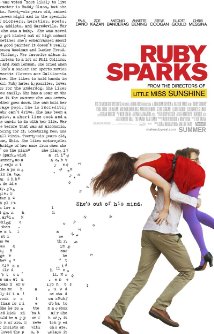
ruuby sparks imageI know some single men who are very self-absorbed. They are successful professionals but cannot seem to take their female relationships to the next level: marriage. They see the world through their own eyes and the older they get, the more rigid they become, increasingly unwilling to understand that women also have needs, which do not always revolve around men. For example, a 50 year-old friend has finally decided to get married because he wants children. He assumes that a 35 year old woman will want to marry him and have kids. He does not comprehend that a 35 year old woman generally is not interested in a 50 year old guy, yet he persists in his quest to find a young bride.

I thought of this unrealistic mindset of my friend as I watched Ruby Sparks, a clever, funny, profanity-laden, and very insightful film about relationships in which the male partner always sees things from his perspective and fails to understand the needs of significant others in his life.

Calvin Weir-Fields, a young J.D. Salinger, has writer’s block after his first wildly successful novel. Visits to his therapist are helpful, but his inability to write persists, until something amazing happens. A girl, about whom he has been dreaming, becomes a real person and he falls in love with her. Improbable as it may seem, they date, dance together, and get to know one another as lovers and friends.

The conceit that informs the movie is that Calvin can control Ruby by writing about her. She is both real and a figment of his imagination. It takes a while for him to process this conundrum, but he does when other real people such as his brother and his parents are able to actually see her and talk to her. There is no rational explanation for what happens, but the film manages to say some wise things about relationships between men and women.

Consider these interchanges in the story. When Calvin, a loner, confides to Ruby that she is all he needs, Ruby responds “That’s a lot of pressure.” When Calvin feels depressed after Ruby leaves him for short time, he retires to his study and types that Ruby is miserable.  Sure enough, she immediately phones to tell him how much she misses him. When Ruby desires to stay close to Calvin and physically cling to him, barely allowing him to breathe, Calvin again goes to his typewriter and types that Ruby is “filled with effervescent joy.” This makes Ruby perpetually bubbly and unresponsive to the nuances in Calvin’s behavior.

The relationship reaches a dramatic crescendo when Calvin exerts his power to control Ruby in an almost diabolical way, mercilessly informing her of his power to control her. It is an extraordinary scene pitting the controlling male against the defenseless female. How this problem is ultimately resolved is the stuff of fancy, but along the way we glean wisdom about what the relationship of a man and woman should be.

Jewish tradition has much to say about the relationship between men and woman. Every Friday night, the traditional Jew sings an ode to the “woman of valor” described in King Solomon’s Book of Proverbs. She is independent, wise, and the key to passing down tradition to her children. In a Talmud class, a student once asked the teacher: “How can I get my wife to treat me as a king?” The answer from the teacher: “Treat your wife like a queen and she will treat you as a king.” The answer reveals the mutual respect that husband and wife should have towards one another. The issue is not one of control. Rather the relationship should be characterized by each partner giving to the other. The goal of marriage is not to control or change the other; rather it is to lovingly accept the divinity within each other so that there will be mutual respect for one another’s uniqueness.

Purchase this movie from Amazon.com.

Minority Report (2002), directed by Steven Spielberg

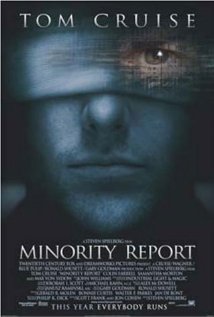
minority report posterSeveral years ago, I went to a wedding of a friend in the Midwest. There I met a number of teachers who taught in the local day school. One introduced himself and reminded me that he was once a student at Yeshiva High School of Atlanta and had actually dormed at my home for half a year. I did not immediately recognize him, but when he told me his name, a flood of memories rushed through my head. I remembered that he came from a small Southern town and that his parents wanted him to take advantage of high school Jewish education and so they enrolled him at my school. Although he did well academically, he never subscribed to the ethos of the school and regularly challenged authority. Upon graduation, I felt sure that he would abandon whatever Judaism he possessed.

But my prediction was all wrong. At some point, he was “born again” and blossomed as a student of Torah. Never would I have guessed that he would eventually make his career Jewish education. The entire encounter reminded me that one snapshot in time is not a reliable indicator of one’s future success or failure. The future is ultimately unknowable.

Minority Report, a dark and very tense science fiction thriller, suggests the opposite, that you actually can know the future of person and can even intervene to prevent him from committing a crime. In the year 2054, there is a “PreCrime” program that is operational in the nation’s capital In Washington, D.C.  John Anderton and his team of “PreCrime” police officers are able to act on information obtained from “precogs,” three mutated humans who can see into the future. They can predict the time and date of the crime, the culprit, and the intended victim. Once this is known, the data is forwarded to the police who proactively intervene to prevent the crime.
Because the country is poised to take the program nationally, the United States Justice Department sends its own investigator, Danny Witwer, to evaluate the program. Danny discovers some internal inconsistencies in the program and determines that PreCrime is flawed and subject to human manipulation. At first he sees John Anderton as the prime suspect, but eventually his attention turns elsewhere as he doggedly pursues his leads. The film raises the provocative question of whether one should take action against people you view as criminals, even if they have yet to commit the crime.

Interestingly, the Bible speaks of a pre-crime scenario in which capital punishment theoretically is meted out to one who will commit a crime in the future even though in the present he may be guiltless. This is the instance of the “wayward and rebellious son” who is brought to the court by his parents for capital punishment. Although his behavior at present is gluttonous and he is guilty of thievery, he has not yet murdered anyone. Yet the Bible prescribes the death penalty.

The Talmud, however, in the final analysis is inconclusive on this matter, stating that the case of the “wayward and rebellious son” never actually occurred and, indeed, will never happen. Then why, ask the Sages, do we have the law on the books?  One answer is that the passage teaches us lessons about parenting and serves as a warning to children to listen to parents and to voices of authority in general. Minority Report, which explores the notion of pre-crime punishment, concludes that no one can truly know the future; and, therefore, we can only respond to infractions in the here and now, not future ones. This, indeed, affirms the Torah value of judging people as they are now, not as the villains they may become.

Purchase this movie from Amazon.com.

The Hunger Games (2012), directed by Gary Ross

hunger games posterIn the high school English class I teach, we often read the celebrated short story “The Lottery” by Shirley Jackson. It is about a yearly ritual in a small town which everyone comes to watch. The surprise ending reveals that the ritual is the stoning of one of the town’s residents that is chosen by lottery. The class discussion considers how society often has rituals or practices that are immoral but still persist because of long standing customs or traditions. No one present really understands why they still exist. The story resurfaced in my mind as I watched The Hunger Games, the grim narrative of a nation that every year sacrifices a cohort of young people as part of its national ritual of consecration and rededication to its founding ideology.

The country of Panem, created from a post-apocalyptic North America, is made up of a rich governmental region surrounded by 12 districts less wealthy than the Capital. To commemorate its history, which is obliquely referenced in the movie, the government sponsors a yearly competition in which each of the 12 districts, through a lottery, must submit a boy and girl between the ages of 12 and 18 to the Hunger Games. Here the contestants, or “tributes” as they are known, fight to the death until there is only one survivor.

Things become very tense when 16 year-old Katniss Everdeen volunteers to take the place of her younger sister Primrose, who is selected to participate in the Games. The Games are televised nationally, evoking the kind of Olympic sports coverage that we see in the media today. Katness trains diligently and creatively, evoking the attention and praise of sponsors who will provide her with extra survival tools such as matches, knives, and medicine should she need them. The contests, brutal and unpredictable in execution, test Katness’s skill, intelligence, and courage. However, it is ultimately an act of personal rebellion that places her in a precarious situation in spite of her fighting prowess. Katness implicitly questions the legitimacy of the ritual that requires so many sacrifices; to the state, her controversial act of protest makes her a threat to the nation’s stability.

Judaism has many customs and rituals, but they are not arbitrary. They all have Biblical roots in Divine commands. Jews are even cautioned in the Bible not to add to existing laws, for the addition of laws or customs may ultimately water down or corrupt the original decree or custom.

I recall as a child going to the synagogue for the afternoon prayer service and finding a man praying while wearing a raincoat in the heat of the summer. When someone asked him to remove the coat, he loudly protested saying it was his tradition to always wear a long raincoat while praying and he refused the request. It was really weird and I couldn’t understand his rationale.  As I grew up, I began to understand that smart people sometimes hang on to old customs, not because it is the right thing to do but because that is what they have been doing for many, many years. Habit has replaced reason, potentially undermining the very divine foundations of the law.

The Hunger Games is a cautionary tale reminding us to examine our traditions and customs and to consider their true origins. We are wise when we do not blindly observe ancient customs, especially when it may lead to loss of life and when it contradicts common sense. Common sense should not be uncommon when it comes to the pursuit of truth.

Purchase this movie from Amazon.com.

Back to the Future (1985), directed by Robert Zemeckis

back to the future poster Time is relentless. Rational people understand that you cannot turn back the clock. Sometimes, however, there are moments in your youth when you summon up the strength or courage to do things that actually help you better navigate the future. Which is why I look back fondly at my foot race with John King in the sixth grade.

My neighborhood had changed because low income housing was built nearby and now my school’s population changed. Instead of attending a school with affluent, college-bound kids, I attended a school with many low achievers and discipline problems. Like many kids, I rose to the level of expectation of my teachers, who now viewed me as mediocre, instead of the academic star I was in my mother’s eyes. My self-esteem plummeted, even in gym class where I was overshadowed by some genuinely gifted athletes.

So it was a special day for me when I was pitted against John King, one of the tough and cool kids who smoked cigarettes in junior high school, in a 220 yard dash in my PE class. I was nervous, but on that day I was very fast and won the race. Winning did remarkable things for my self-esteem. I was who I was, but now I felt I could seriously compete against anyone in my school. I might not win every race, but I thought of myself as a potential winner and it did marvelous things for my ego.

That kind of personality transformation is at the heart of Back to the Future, an escapist fantasy of time travel, in which Marty McFly travels 30 years into the past and orchestrates the encounter in which his parents, George, a shy, bookish teenager, and Lorraine, meet and fall in love. Marty discovers that if his father becomes more assertive, Marty can alter his destiny and that of his parents as well.

The film opens in the home-laboratory of Dr. Emmett Brown, an eccentric scientist who prides himself on creating inventions, one of which is a time machine whose exterior is a DeLorean automobile. Through a series of improbable events, Marty jumps in the car to flee Libyan assassins and accidently is catapulted back to 1955, and that is when the adventure begins.

Marty meets his parents before they got married and realizes that unless he intervenes in their lives, they will not marry and he never will be born. The problem is that George McFly, Marty’s dad, is extremely introverted and devoid of self-esteem. He simply lacks the courage to ask Lorraine, Marty’s future mother, out on a date. Moreover, he is subject to the constant bullying of Biff Tannen, who often threatens him with violence. To complicate things, Marty’s mother as a teenager is infatuated with Marty rather than her destined husband, George. How everything is sorted out and how George and Lorraine finally meet and fall in love is the narrative arc of the film. In the end, we see that decisions and actions made as a youth can have profound implications for the rest of one’s life, especially in the life of George McFly.

Time is an eternal value in Jewish tradition, encapsulated in the maxim of The Ethics of the Fathers: “if not now, then when?” Everyday should be filled with achievement and spiritual growth, not procrastination. Furthermore, the Sages say that one should think that each day is potentially one’s last day. Therefore, one should think about how to conduct oneself every day of one’s life. Back to the Future reminds us that how we act today can influence our tomorrows. Therefore, let us be wise and make the decisions today that will enable us to have a successful future.

Purchase this movie from Amazon.com.

Gravity (2013), directed by Alfonso Cuaron

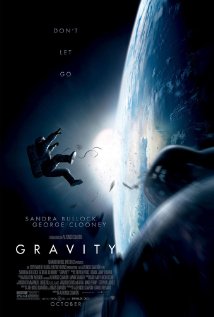
Gravity posterOver the course of my rabbinic career, I have seen people face enormous challenges physically and emotionally. Some are overwhelmed and life stops for them. Others are resilient and somehow find the strength to continue and even rebuild a shattered life. I remember many years ago when I received a call telling me that the son of a new synagogue member had tragically died in a farming accident as he was riding a tractor. The boy’s father was a Holocaust survivor and I stood in awe of him and his wife who kept their faith in the face of incomprehensible tragedy. Several years later, another major misfortune befell the family and I could not understand how the father weathered the storm of tragedy that assaulted him.

How we cope with an avalanche of ill fortune is the subject of Gravity, a tense and engrossing film about an accident that occurs in outer space, how the astronauts’ bad luck multiplies, and how they psychologically deal with the reality of their impending mortality.

Dr. Ryan Stone, Mission Specialist, is on her maiden space shuttle voyage with veteran astronaut Matt Kowalski, who is in charge of the expedition. During a spacewalk procedure, they receive news that space debris is headed their way and they must abort their mission. Abruptly, they lose communication with Mission Control, but they continue to transmit information in the hope of someone hearing them. Suddenly space debris hits them, causing Stone to tumble through space. Happily, Kowalski recovers her, after which they both try to return to the space shuttle, only to discover it unusable. This sets the stage for a survivalist drama as more and more problems occur, making it more difficult for them to return safely to earth.

In the course of their ordeal, they discuss Stone’s life on earth and the accidental death of her daughter. As their situation becomes more desperate, questions about the meaning of life surface. Faced with her possible death within hours, Ryan laments that no one will mourn for her and no one will pray for her soul. Her articulation of her emotional isolation illuminates the sadness of her life since losing her beloved daughter. She may have gotten over the heavy sadness of losing a child by keeping busy with her scientific work; but deep within her psyche, the pain remains for she has not emotionally come to terms with her tragic loss.

Whether she and Kowalski survive their ordeal makes for a tension-filled narrative that touches on themes of faith and resilience in the face of catastrophe. The outer-space setting makes these quandaries all the more stark and unsettling, for no one is present to view their frightening ordeal.

Judaism has much to say about how we should deal with tragedy in our lives. When we hear tragic news such as the death of a loved one, the Jew responds with a blessing: “Blessed are You, God, King of the Universe, Arbiter of Truth.” Death, of course, is not a happy event, but the true believer knows that God in His infinite wisdom always does what is good. While we may not rejoice in the face of tragedy, we do not succumb to despair for we know that, from the aspect of eternity, everything makes sense. Moreover, when the Jew says Kaddish, the Mourner’s Prayer during the year after the death of a close relative, the words he recites are words of praise to an all-powerful God. They are not words of anger or reproach because the Jew inwardly comprehends that even tragedy is part of the Divine plan. To fight it is impossible; therefore, the proper response to tragedy is to feel the initial pain and then to move forward knowing that our own life’s mission is not over even when we can no longer share it with a loved one.

Gravity reminds us of the uncertainty and danger inherent in living, but it also reminds us that crisis can be the catalyst of new understandings about ourselves and the world around us.

Purchase this movie from Amazon.com.

District 9 (2009), directed by Neill Blomkamp

district 9A number of years ago, one of my children asked me whether he should get involved with a major national organization and assume a position of leadership within it. He felt that such involvement would be good professionally because it would enable him to connect with many of the movers and shapers in the community. I advised him not to do so since I felt he had other important priorities in his life.  Being an officer would take up much time that might better be put to use in other endeavors. Moreover, I shared with him the famous Mishna from The Ethics of the Fathers, which instructs man not to get close with those in power for they will not be with you when times are tough. You cannot rely on them for support, even when your position on an issue is morally correct.

This is what informs the opening scenes of District 9, an adrenalin-filled action film that depicts in visceral detail the painful consequences for one man who innocently becomes part of the power elite as it deals with how to treat a space ship of aliens that mysteriously finds itself lost in the sky above Johannesburg, South Africa. The occupants of the stranded ship eventually are given refuge in a government-funded camp, where at first they are treated with respect and curiosity, but eventually are despised and shunned by the locals as sources of civil chaos and disease.

The agency charged with transferring this alien population of 1.8 million to a new location is Multi-National United (MNU), a private company whose true interest is not the aliens but the sophisticated weaponry which they possess. The weapons can only be used by the aliens because of their unique skeletal structure, and MNU wants to adapt this weaponry for human use.

When MNU begins this transfer, they give an administrative post to Wikus van der Merwe, son-in-law of one of the principals in the company, whose life is governed by the profit motive. Wikus, in contrast, is a gentle man who simply wants to do the right thing: to follow the rules of his superiors at work and to help the aliens. At first he relishes his new position, but he soon learns that supervising the transfer of so many aliens brings with it great personal risk. He is contaminated by a mysterious black fluid that he mishandles and within hours begins to morph into a “prawn,” the name given to the alien beings.

The metamorphosis at first affects his arm, which now is able to fire the alien weapons. MNU takes Wikus into custody and performs experiments on him to determine if they can use his DNA to figure out a way for humans to take advantage of the aliens’ advanced weaponry. With the permission of his father-in-law, one of the power elite, they decide to harvest his organs so they can have the best chance of replicating Wikus’ DNA and allow other humans to take advantage of the aliens’ weapon technology. As they attempt to harvest his organs, Wikus breaks free and flees to District 9, the slum where the prawns are living. It is here that he can blend in and search for a way to return to a normal life.

Wikis pays a steep price because of his involvement with the power elite. It changes him physically and destroys his marriage. District 9 reminds us that although there is glamour and notoriety when one is part of the inner circle of people who set policy and control outcomes, there are also grave risks. Jewish tradition shuns striving for glory and honor. Fame is transient and eludes the one who seeks it. When faced with such a temptation, our Sages caution us to stay focused on our own life’s mission, not those of others who are willing to sacrifice others to keep their own political positions strong.

Purchase this movie from Amazon.com.