Category Archives: Science Fiction

World War Z (2013) directed by Marc Foster

world war z posterAs a child, my mother took me to see the movie Phantom of the Opera starring Claude Rains. There is a scary scene when a bottle of acid is thrown disfiguring a man forever. For many months afterward, I had nightmares. From that time on, seeing horror movies of any kind did not appeal to me and I rarely saw one. So it was with some reluctance that I went to see World War Z, a thriller about a zombie apocalypse threatening to take over the world.

The film opens with images of a happy family about to spend time together renewing and strengthening family ties. As they drive through stalled downtown Philadelphia traffic, however, the unexpected happens. A former UN employee, Gerry Lane, and his family are attacked by hordes of zombies along with countless others. The Lanes escape to a deserted apartment, where they are extracted by a helicopter sent by Gerry’s former UN colleague. They are then taken to a US Naval ship, where militarily analysts and scientific personnel are trying to determine the scope of this worldwide plague.

Dr. Andrew Fassbach, a virologist, is sent to a military base in South Korea to investigate the source of the virus along with Gerry, a veteran UN investigator, who is charged with facilitating the work of Dr. Fassbach. But then tragedy strikes. Fassbach is killed when he accidently discharges his gun amidst a zombie attack, and the investigating team is left without a scientist who can analyze the remains of those who have been killed by the zombies. At this moment, all seems lost. How can the problem be solved if there is no one to define the problem?

The Ethics of the Fathers says that in a place where there is no man, we have to step up to the plate and be the man. This is what Gerry does. When Fassbach dies, Gerry does not abort the mission. He does not make excuses. He understands what is at stake and continues on his search to investigate the source of the plague.

His search takes him from Korea to Jerusalem where he picks up more evidence and some helpful wisdom. Gerry learns that the Israelis had an early indication of the zombie menace and were able to use a barrier wall against terrorists as a barricade against zombie penetration. A local guru tells him that the Israelis took the zombie threat seriously and did not dismiss it because of their “tenth man” theory. This theory, based upon the experience of having miscalculated the strength and strategy of the enemy in a number of military situations, says that whenever everyone is in agreement about a potential threat, we suppose that a “tenth man” sees things differently. Moreover, we presume that the alternate view is correct and we investigate it. Solving a problem becomes similar to an exercise in Talmudic logic in which all possibilities are explored.

Ultimately, Gerry finds a path towards recovery, but it is not a panacea. As he observes the positive signs of human initiatives to end the zombie invasion, he wisely says: “This isn’t the end, not even close.” However, his comment reveals a determined optimism in the face of what seemed to be total apocalypse. This ability to focus on the positive in a desperate situation is what carries him forward to another day.

The Ethics of the Fathers tells us that it is not our job to complete the task, but rather simply to begin. This is especially true if that task seems overwhelming. Rather, all we need to do is put forth our best effort since the final result is in God’s hands.

Gerry does not solve the zombie problem, but he initiates a path towards a solution. That is sometimes the best we can do in difficult situations. Begin the process and leave the outcome to God.

Purchase this movie from Amazon.com.

War of the Worlds (2005), directed by Steven Spielberg

war of the worlds posterDuring the Cuban Missile Crisis of the 1960s, I was taking a philosophy course at Yeshiva University. Students felt that there was real possibility of a nuclear holocaust, and my malaise was deepened when my Philosophy professor ended his Thursday class by saying “See you on Monday if there will be a Monday.”  I remember asking one of my Judaic studies teachers what would happen to the Jewish people in such a doomsday scenario. He told me that the Jews might suffer as well as the rest of humanity; but that there would always be a remnant of the people left, for God’s covenant with the Jews was eternal and the Jews would never totally disappear from the world. The only appropriate action we could take now was to do good deeds and pray for peace.

These memories percolated in my mind as I watched War of the Worlds, a story of what might happen if a malevolent extra-terrestrial force were to target the earth for destruction. The film opens as Ray Ferrier, a divorced dad, picks up his children, Robbie and Rachel, from his ex-wife who is going on a weekend vacation with her husband.

Ray has a very small parenting tool box; and while he enjoys spending time with his kids, he has little idea of who they are and what makes them tick. His parenting skills are tested when calamity strikes. Soon after they arrive at his Bayonne, New Jersey home, unseasonably strong winds and lightning set the stage for a Martian invasion of the earth.  Martian tripod-killing machines emerge from the bowels of the earth and incinerate everything around them. Ray, in a panic, flees to Boston with his children in one of the only remaining working vehicles, hoping to find sanctuary in the home of his former in-laws where their mother is staying.

Scenes of death and destruction traumatize Rachel; and when they find temporary refuge in a deserted building, she asks her father to sing her a lullaby so she can sleep. Ray doesn’t remember any lullaby, but he manages to sing a song that calms her. Ray realizes that in times of crisis, family comes first. The safety of loved ones trumps all other considerations.

Jewish tradition fosters a similar mind set. It is the family that is the bedrock of stability that enables one to endure the storms of adversity. The Bible emphasizes that when the Jews went down into the iron furnace of Egyptian slavery, they went down as families; for it is within the family unit that people can find safe haven and it is within the family where lifelong values are nurtured.

There is a well established family custom that Jewish parents bless their children regularly. Some do it once a year on Yom Kippur, the holiest day of the year; others do it every Friday night. It was my own custom to do it once a year, but in recent years I wished I had done it weekly. To look into your child’s eyes once a week, to utter a blessing to your son and daughter, and then to hug and kiss them seems an exquisite pleasure for a parent. Why do it only once a year? Kids leave the home when they grow up, but the memory of an embrace, of a heart to heart moment of love, leaves a bank account of affection that that can draw interest for many years.

My children and I live in different communities now but my children often call me on Friday to ask for by blessing. I cannot hug them from Israel, but I can tell them I love them and that means a lot to me and them.

War of the Worlds reminds us that in times of crisis, family comes first. It is wise to nurture family ties with our young children so that we and they can enjoy the warmth and constancy of our mutual love as we and our children grow older together.

Purchase this movie from Amazon.com.

Real Steel (2011), directed by Shawn Levy

Real Steel posterAs part of the matriculation requirement for Israeli high school students, they have to do a project upon which their oral examination is based. Since my students enjoy cinema, I gave them the topic of “Influential Movies of the 20th and 21st Centuries.” One student selected the film Real Steel, which describes a future time when human boxing is outlawed as too dangerous and robot fights are substituted. I asked the student why the film was influential, and he responded that it was influential for him because the story of a boy and his father that is the subtext of Real Steel gave him an insight into his own relationship with his father and how it might be improved.

Charlie, a former boxer and now manager of a robot boxer, is an absentee father when Max’s  mother dies. Instead of assuming responsibility for Max, he requests $100,000 in return for signing over custody to Max’s aunt. But there is a hitch. Max’s aunt and her husband have to go away for a month before they can take Max into their home, so they ask Charlie to take care of him until they return. The month turns into an unforgettable road trip for Max as he accompanies his father through the entrepreneurial world of robot boxing. Charlie buys used robots, repairs them, and then uses them in fights in order to win prize money. Sometimes his robots win, but most of the time they lose and eventually Charlie goes broke.

All seems lost until Max serendipitously finds a buried robot named Atom. They reboot Atom and set to work restoring its fighting functions. Although built as a machine to spar with other robots, Max and Charlie teach Atom how to take the offensive and fight against other mechanically superior machines.

Gradually Charlie and Max find unofficial fights for Atom. Max uses the winnings of matches to buy spare parts and fix Atom, and Charlie begins to pay off his old debts. Eventually, Atom’s prowess is recognized by professional promoters and he is offered prestigious matches in the Worldwide Robot Boxing Association. Soon the ultimate match is scheduled between Atom and Zeus, the undefeated champion of robot boxing. The bruising fight is the climax of the film, with the outcome unclear until the last moment.

The heart of Real Steel is not the robot gadgetry; rather it is the story of a dysfunctional relationship between a father and a son, and how that relationship is made whole again. Reconciliation begins when father and son stop finding fault with one another, when they begin to accept one another’s imperfections, and when they share a common goal. The shared goal of repairing Atom and preparing him for his fights unites father and son and rids them of old memory tapes of past indiscretions.

As a parent, it is natural to find fault with a child. I often want to correct my children, but I try to be guided by the Biblical model of how to give correction. I first ask myself if this is the right time and place?  Can I criticize the behavior and not my child? Is my child ready to listen to me, or do I first need to build more trust so that my words will be accepted more readily?

The Bible tells us that criticism is good. We grow when we are able to listen to reproof and make midcourse corrections in the way we live. However, we have to be very careful when we criticize. The language in the Bible for this commandment is “you shall surely reprove.” Our Sages inform us that the Hebrew phrase for reprove is repeated to emphasize that reproof should only be given when someone is ready to listen. Simply criticizing goes nowhere. Charlie and Max finally understand this, which allows them to focus on the future and enrich their relationship. Real Steel does not just refer to robots. It refers to the strong bond between father and son that endures despite the mistakes that we make as fathers and sons.

Purchase this movie from Amazon.com.

Chronicle (2012), directed by Josh Trank

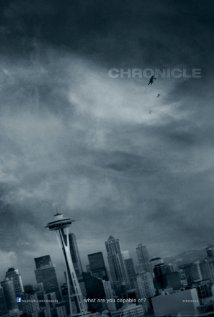
Chronicle posterThe unexpected violence at Newtown, Connecticut, sparked much controversy about legislating tougher gun control laws. Moreover, there has been much discussion about mental illness and the role it plays in these nightmare scenarios where children are murdered by a depressed or belligerent teenager. How can we identify the loner, the mentally unbalanced person, before he acts out his violent fantasies?

Chronicle does not answer any questions, but as a former high school principal for many years, I can tell you that the alienation and loneliness of Seattle high-school teenager Andrew Detmer depicted in this dark, disturbing, and profanity-laden film ring true. I recall vividly a student in my school who always was absorbed in her own world, who had very little meaningful connection to her peers, and who generally seemed depressed. About five years after she graduated, I read in the newspaper that she had been murdered. I never learned the details, but her tragic end was not surprising to me. She was the victim, not the perpetrator, but her social isolation set the stage for a turbulent future.

In Chronicle, we can actually trace the evolution of a high school loner into a full-fledged murderer. To those who interact with him in a pleasant way, Andrew is a decent guy; but under the quiet façade is an angry young man poised to do terrible things.

To combat loneliness, Andrew buys an expensive camera and takes it everywhere to record his life. He is obsessed with filming his day to day existence, which is very unhappy. His mother is dying of cancer, his father yells at him and beats him, and the kids at school bully him. Using the video camera enables him to distance himself from the sordid life he is actually living and allows him to create his own reality.

The crux of the film details the encounter of Andrew and his friends Matt and Steve with a strange substance that gives all of them telekinetic powers. At first, the use of these special gifts is a game, but they soon realize that it is a gift that can be used for good or bad, to create or destroy, to help or to harm.

Over time, Andrew becomes more isolated from everyone and hostile to those who make fun of him. Away from friends and family, he begins to see himself as an “apex predator,” someone who feels no guilt for using his power to inflict pain on those who hurt him. His isolation grows and he ultimately decides to steal and physically to hurt other people to accomplish his personal goals, which to him are reasonable and just. As Andrew’s power grows, he uses it more to advance his own personal agenda, and people feel his wrath.

The Talmud instructs us not to separate from the community. The community is the anchor to normality and connects us to concerns other than our own. Moreover, the community elevates us and enables us to achieve higher levels of spiritual transcendence and holiness. That’s why Jews pray preferably pray in a quorum of ten because ten in Jewish tradition represents the community. Separation from it creates risks for all. Andrew’s aberrant behavior reminds us of this.

Linkage to community perhaps is the antidote to the loneliness that fosters disconnectedness and, in a worst case scenario, destructive behavior. The violence at Newtown should make us think about the idea and reality of community. Do we do enough to welcome the stranger, to make the loner feel accepted as part of a larger community? Do we bring the loner into the family of man or do we let him struggle as he defines himself as an outsider? Jewish tradition tells us that there is more that binds us than divides us. We are all created in God’s image, and there is no fixed image of a godly person. In truth, it is the divinity within every man that connects us all, regardless of how we look or present ourselves to others. If we understand this, then we can make the outsider an insider.


Purchase this movie from Amazon.com.

Alien (1979), directed by Ridley Scott

In my career as a school principal, parents from time to time would ask me to break a school rule when their child was in trouble. In one case, the parent told me that enforcement of a particular rule would turn off his child from Judaism and I would be responsible for his son’s lack of faith. Such a comment weighed heavily on me. Moreover, in my early years, I wanted to be liked, and enforcement of the rule would make me unpopular with a few parents. Fortunately, a mentor of mine reminded me that my goal in my professional life should not be to be liked but to be respected. He impressed upon me that whenever I make an exception for one student, I have to make it for all students. There is no such thing as a private deal when it comes to maintaining the integrity of a school rule. Everybody has to follow the same Bible. Whatever expedient decision you make in the short term may bring you some satisfaction and peace momentarily, but it will eventually bring you havoc. It is just a matter of time.

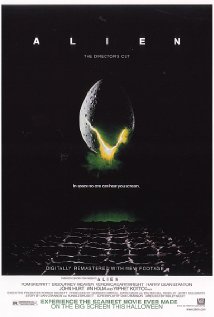
The consequences of a decision to break a long-standing policy for a short-term benefit, however noble it may seem at the time, is the catalyst for all the mayhem that erupts in  Alien, a tense and disturbing science fiction thriller, which spells out in grim detail the horrific results of breaking one rule to ameliorate an immediate problem.

The Nostromo, a commercial towing vehicle traveling to Earth with over a million tons of mineral ore, intercepts a signal which the crew perceives as an SOS. When Kane, a crew member, leaves the ship with the captain and investigates the origin of the signal, he is attacked by a foreign life form which attaches itself to his head. Some crew members want to bring Kane back to the ship to see if they can save him; but Ripley, the commanding officer when the captain is not on the ship, refuses to bring Kane back on board, citing quarantine protocol and the real danger of putting more lives at risk. In spite of her ruling, one of the ship’s officers disobeys Ripley and opens the door of the spaceship allowing the contaminated Kane to enter. This marks the beginning of the end of most of the crew who do not realize that they have allowed the alien to enter the ship as well.

The Ethics of the Fathers tells us that the wise man is he who foresees the consequences of his actions, who does not put others at risk to satisfy his own immediate needs. One rash act can leave in its wake a plethora of tragedy.

It is a Jewish sensibility to do whatever we can to prevent danger and harm to others, to minimize risk to our friends and neighbors. The Torah lists numerous laws that are designed to protect people. When we build a house, we are enjoined to erect a guardrail on a roof. Furthermore, we are enjoined not to possess an unstable ladder, not to own a vicious dog, or do anything that may create a hazard for anyone who enters our home. Moreover, contemporary authorities in Jewish law argue that driving recklessly is a violation of Jewish law in that it puts the lives of others as risk. In truth, when a Jew drives with courtesy, it is a way of sanctifying the name of God.

Although Alien deals with a foreign universe, it reminds us of the importance of following the rules and not placing others at risk. We cannot predict the outcomes of our actions. Therefore, it becomes incumbent upon us to think wisely before making an exception to the rules.

Purchase this movie from Amazon.com.

Men in Black (1997), directed by Barry Sonnenfeld

It took me 12 years to get my doctorate in English at Georgia State University. Usually, it’s a five-year gig including the dissertation. For me it took longer because I was married with kids, had a full-time job, and could not devote all my time to this important professional goal. I owe a great debt of gratitude to Dr. William Sessions, my academic advisor, who believed in me and encouraged me to persevere even when I had doubts. Dr. Sessions recognized that family came first, and he knew that I could finish the degree if I had more time to complete the program.

My friend Charlie pursued a different career path. He wanted to become a university professor, and he postponed getting married until after he finished his PhD. He then postponed marriage again because he wanted to be financially secure and employed on a tenure track. He was then in his 30s. I spoke to him off and on during this time, reminding him of the Talmudic statement that at the end of 120 years, God will ask him whether he married and tried to have kids. I also reminded him that life in one’s advanced years can be very lonely without a wife. Furthermore, he will never be called Abba/Dad, which to me is my most important title. In spite of my comments, Charlie continued his exciting academic life, publishing book after book and occasionally getting into the media as well. He never did marry.

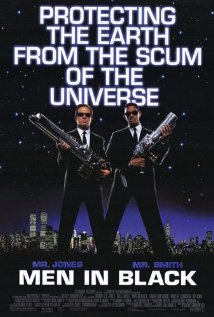
I thought of Charlie as I watched the crazy and wild Men in Black, a comedy about two men, Kay and Jay, working for a secret government agency who track alien life forms living on earth, and who embark on a mission to save the world from being destroyed by aliens. Their life is extraordinary and exciting. Every day is unpredictable. They meet creatures from other planets, they drive cars that are fast and fitted with the latest technological innovations, they have powerful weapons, and they can control the memories of others. In fact, they even periodically use the memory “neutralizer” to erase their own memories so that early frightening memories will not hinder them in their present assignments.

The catch is that their work requires them to give up their identity and their connections with friends and family. This is hard, for there are moments when one thinks of a wife, a time when one yearns for the human connection. From the aspect of eternity, family does come first. There is a touching moment when Kay reflects about the wife he left behind as he views her image on a monitor. When Jay comments that she is pretty, Kay clears the screen, but the image of his wife lingers in his mind.

After successfully avoiding the destruction of earth, Kay wants to transfer the mantle of leadership to Jay. Kay profoundly misses his wife and desires to go home. The pull of love is stronger than the adrenaline rush for action. He is older now and can appreciate the wisdom of Solomon who tells us “there is neither doing or reckoning nor knowledge or wisdom in the grave where you are going (Ecclesiastes 9:10).” The value of life is not measured in professional accomplishments alone, but rather in the human relationships that are nurtured over the years.

It is wise for us to treasure family over our job. At the end of our lives, we will not feel bad because we didn’t spend more time at the office. We will feel sad if we did not maximize our time with wife and children.

Purchase this move from Amazon.com.

Source Code (2011), directed by Duncan Jones

 As the years go by, I have become more conscious of time. I count my minutes. It is a mantra that I share with my students as well. When I begin the school year, I inform them that there are two rules in my class: do your best and don’t hurt other people. This means do not prevent other students from learning. When a student talks without raising his hand, when he interrupts another student who has the floor, he is, in effect, preventing other pupils from learning. Furthermore, he is stealing precious time from class, preventing me from maximizing class time for teaching. I tell students that I count my minutes because time is precious. A minute can be an eternity. Consider for a moment the two-minute warning in a professional football game. Destinies can change in a matter of seconds.

This is one of the themes of Source Code, a science-fiction thriller cast in the present, which describes a bold and innovative attempt to avoid a major disaster by injecting a person into a continuum of events eight minutes before one calamity strikes in the hope of averting a second disaster in the future. Sounds weird? It is, but it also provides a meditation on what living in the moment really means. Amazing things can happen if one is aware of the consequences of each passing minute. Source Code reminds us that the same basic events can be experienced in different ways if we will it so, if we truly understand the consequences of each one of our actions.

The movie also addresses a seminal question we have all asked ourselves at one time or another: “What would you do if you knew you had less than a minute to live?” The question forces us to focus on the present moment. Will it be our last? The Ethics of the Fathers, an example of classical Jewish wisdom literature, does not ask that question, but it does suggest a similar mindset.  We are advised by the Rabbis to think of every day as potentially the last day of our lives. This is not to encourage pessimism or depression, but to spur man on to live life to the fullest, to make every day count, to make each day meaningful.

There is a corollary to understanding the value of time. If there is enmity or ill will between friends, between spouses, between parent and child, reconciliation is a priority. Time does not allow for a slow resolution to conflict. In Source Code, this desire for reconciliation finds expression in the fractured relationship of the hero, Captain Colter Stevens played by Jake Gyllenhaal, to his father. Their last conversation was difficult and strained; but now both want to be at peace with one another. Both want emotional wholeness. Colter Stevens now understands, in his heightened state of awareness somewhere between life and death, that if he knew when he spoke with his father that it would be their last communication, he would not have argued with him. He would not want to leave a legacy of bad feelings between them. He would want to tell his father that he loved him just as his father would want to reaffirm his love for his son in any time of crisis.  Facing death also gives Colter a greater appreciation of life. He looks around and remarks “Such a beautiful day.” He sees people laughing and it makes him treasure moments of happiness.

Source Code demonstrates the power of a minute. It implicitly implores us not to waste time, our most valuable commodity, and to repair our damaged relationships without delay.

Purchase this movie from Amazon.com.

Frequency (2000), directed by Gregory Hoblit

From time to time, whenever I reflect on the milestone moments in my life, I think how special it would have been if my parents had been alive to share them with me. My decision to become a Jewish day school principal, a career that occupied the bulk of my professional life, was made after they died; and I never was able to share with them the peak moments of that experience. Moreover, they did not see all of their grandchildren. They never attended their weddings, nor were they able to bond with grandchildren as I am blessed to do now.

I thought of this as I watched Frequency, a crime thriller with a resonating subtext of a father-son relationship that spans the years. The plot is not easy to summarize. It deals with a supernatural phenomenon that allows a dead firefighter father to communicate with his son 30 years after the father has died in a tragic fire trying to rescue someone. They speak via short-wave radio and their communication creates the possibility of changing their family history.

The film opens with beautiful scenes of a family reveling in their close connections. We see a loving husband, an adoring son, and friendly neighbors. We see a father teaching a son how to ride a bicycle, which is the quintessential metaphor for a parent giving a child the ability to be independent. The love between them is evident. Against this background, father and son open up a conversation many years later after the father is dead. It is improbable, but once father and son accept the veracity of this seemingly impossible dialogue between two different time periods, they are overwhelmed with the opportunity to catch up with one another. The father asks the son what his job is, does he have a wife, does he have children; and then the conversation moves to the arena of sports, a topic which intensely bonded parent and child. The son reveals to the father how an injury prevented him from becoming a major league baseball player, that he is now a policeman and not a fireman like his father.

What touches the viewer is the palpable love between father and son. They have tears in their eyes as they sign off from one another with heartfelt “I love you”s. Father tells son “You have the voice of an angel.” Son tells father: “You have to be more careful because I don’t want to lose you again.” They are living in alternate realities but love spans the generations.

When something of note happened in my life, I always wanted to share it with my parents. I knew it meant something to them if I achieved something in life; and their acknowledgement of my accomplishment meant a great deal to me. I knew they loved me unconditionally and were there for me whether I would succeed or fail; but I wanted very much to share my successes with them. Parents are invested in the well being of their children. A parent, by Jewish law, has an obligation to help his child navigate life. A parent wants to be a parent and guide his children; and when there is love and openness, this guidance can occur.

Frequency reminds us that this parent-child relationship is at the core of family life, and it is to be treasured. When there is dialogue, there is love and there is hope.


Purchase this movie from Amazon.com.

Inception (2010), directed by Christopher Nolan

In my volunteer work for an international Jewish matchmaking site, I work with many dreamers. The people who dream the most are single men over 50 who want to marry girls under 35 because they would like to have children. On the surface, the dream makes sense, but the reality proves otherwise. Most girls in their thirties do not want to marry men in their fifties. And the dream gets scarier with advancing years. Men in their late 50s and even men over 60 cling to the dream while life is slipping away. It is very sad, because the dream prevents them from dealing with reality. I sometimes suggest to my “clients” that they should at some point reconcile themselves to the reality of just having companionship into their senior years rather than cling to an impossible dream that, in the final analysis, will leave them isolated and alone as mature adults. G-d tells us that “it is not good for man to be alone.” Companionship, even without the possibility of having kids, is superior to being by oneself. Our tradition tells us that a shared life refines a person. Being married compels one to think of another, not just of oneself, and that paradigm is Torah-based. The Torah tells us to “love your neighbor as yourself,” and the penultimate neighbor is one’s spouse. Therefore, it is good occasionally to dream but it also good to live in the real world.

To dream excessively is dangerous for it can make you lose touch with reality. This is the crux of Inception, a wildly imaginative thriller that deals with dreams and their consequences.

The story line of Inception is almost impossible to summarize. In simple terms, it involves a plot to plant a dream in someone’s mind in order to change an oncoming reality. In the course of the film, reality and dream are constantly intertwined, so you have to pay close attention to determine which parts of the narrative are real and which are projections of the subconscious. It is this confusion which is at the core of the relationship between Dom Cobb and his wife Mol. Dom is involved in corporate sabotage, extracting valuable secrets from vulnerable subjects who are dreaming. He is so expert at this that he introduces his wife into the world of dreams, with terrible consequences. Mol loses touch with reality because of her deep and extended exposure to the dream state of awareness, and their life together is transformed from a dream into a nightmare.

The only salvation for Dom is to return home to reality, a reality which requires him to leave his idealized mate in her world of fantasy. In a wrenching climactic scene, Mol asks Dom to remain with her in her dream world: “You said you dreamt that we would grow old together.” Dom responds that they did grow old together in their dream world. An image of intertwined hands of an elderly couple walking together exquisitely expresses this idea. He then confesses to her: “I miss you more than I can bear. But I have to let you go.” He understands that as painful as it may be, he must leave the dream world in order to enter reality and survive.

This willingness to accept reality even though it is not ideal reflects a mature outlook on life. We all need to dream, but the dream has to be tempered by a true comprehension of the real world around us. This perhaps is emblematic of the dream of Jacob’s ladder. Alone in the wilderness at night, Jacob had a dream of angels going up and down a ladder; but the ladder, which soared into the heavens, had its feet firmly planted on the ground.

Purchase this movie from Amazon.com.