Crimson Tide (1995), directed by Tony Scott

crimson tide posterWhen I served as a synagogue rabbi, I was often asked by congregants to listen to a dilemma they were facing and then to offer some guidance. As they explained their situation to me, I often felt I needed more information to give them sound advice. Sometimes the problem was straightforward; other times I counseled congregants to wait until more information was available before making a decision. I rarely regretted telling them to wait a little longer before adopting a particular course of action, but I would regret offering advice prematurely before all the facts were in. This is one of the challenges faced by the protagonists in Crimson Tide, a tense and absorbing naval thriller dealing with the possibility of nuclear war.

The film begins with rebels commandeering nuclear missile launching sites in Russia. When the rebel leader threatens to launch the missiles, the United States sends its own nuclear submarine to patrol the waters off Russia and, if necessary, to launch a pre-emptive attack against Russia. The tension escalates when Frank Ramsey, the captain of the submarine Alabama, and Ron Hunter, the new executive officer of the ship, clash over the protocols for preparing for a possible nuclear strike.

When the submarine receives news that the rebels are about to break the codes for the missile launch, the Alabama goes into a state of high alert. A hostile sub sends torpedoes towards the Alabama, which miss their target; but the explosion nearby causes the ship to lose its radio transmission. Herein lies the problem: the last completed message received is for the Alabama to launch its missiles, but there is a subsequent message that is incomplete. Does it confirm the previous order or does it cancel it? Ramsey argues that it does; Hunter says it does not. Both men operate out of pure motives, but one approach may lead to a worldwide nuclear holocaust and the other to the annihilation of the United States. Each passing moment without a decision puts America at risk, but a quick decision that is wrong is catastrophic for the world.

Jewish tradition encourages debate when the way forward is unclear. The Talmud is the quintessential text embodying the argumentative spirit searching for truth. The classic examples are the debates between Hillel and Shammai, two giants of Torah scholarship. They provide a model to emulate. They both want is best for the community and they are devoid of personal agenda,l so their disagreements are viewed positively. They may arrive at different conclusions, but both are animated by the same quest for truth.

When Ramsey is looking for a new executive officer, he confides to one of his senior officers that he wants someone who will be an independent thinker, someone who will not be afraid to challenge him. Inwardly, he values the perspective of others. This is a lesson that emerges from the Creation narrative. There, God says “Let us make man.”  The commentators ask: to whom is God talking? Who did God have to consult with before creating the world? In truth, God did not have to consult with anyone, but the Bible here is teaching us an important life lesson; namely, that before embarking on any important task, we should always consult others. God wanted to teach us that no matter how important and knowledgeable we think we are, we should seek counsel with others to make better decisions.

As I get older, I realize how little I know. As a young man, I thought there were only two ways to see things: the right way and the wrong way. With the benefit of life experience, I have learned that there are a variety of different approaches to life’s challenges. Crimson Tide reminds us that the more informed we are and the more we glean the wisdom of others, the better decisions we will make.

Purchase this movie from Amazon.com.

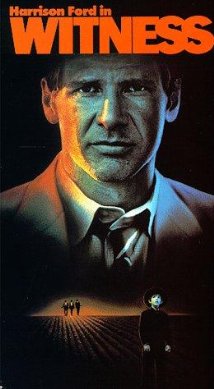
Witness (1985), directed by Peter Weir

Witness posterRecently I had a conversation with a recent immigrant to Israel and he told me he never picks up ultra-religious men who are hitching a ride. He feels they are lazy, exploitative of community funds, and are disloyal to the state of Israel. In sum, they are takers and not givers and should be less influential in the Israel political scene. Therefore, he does not want to reward them by giving them free rides. I told him that I do pick up such hitchhikers because I really don’t know them well and do not want the actions of a few to permeate my consciousness and cause me to view all the ultra-religious as takers.

Stereotyping those who are unfamiliar to us is the subtext of Witness, a police thriller which utilizes the Amish culture of Pennsylvania as a backdrop for its story. Rachel Lapp, a young Amish widow traveling by train with her 8-year-old son Samuel to visit her sister, stops at the Philadelphia station. Here Samuel wanders into the men’s room, where behind closed doors, he witnesses a brutal murder. Captain John Book is assigned to the case; and at the police station, Samuel identifies one of the killers as a narcotics officer who was involved in a drug raid in which the drugs mysteriously disappeared.

As events unfold, we learn that Book’s superior officer was behind the robbery of the contraband, and Book is now targeted by his sinister boss for execution. A gunfight leaves Book wounded and he flees to Amish country with Rachel and Samuel who are now in mortal danger.

Collapsing from loss of blood, Book stays with Amish until he gradually heals. Rachel and Book develop an affection for one another during his recuperation period and Book’s view of the Amish changes. They are no longer strange and backward, but people whose uncomplicated, wholesome perspective on life impresses Book as honest and purposeful. Book and Rachel both know that, coming from two different worlds, their relationship is a non-starter; but that does not stop them from caring for one another and seeing the world from the other’s vantage point.

Eventually, the corrupt police officers locate Book and travel to Amish country to kill him, and it is the Amish tradition of non-violence that figures prominently in the film’s denouement. Book is traveling into town by horse and buggy when his party is accosted by local bullies, who stereotypically regard the Amish as weak and out of touch with modernity. They pick a fight with Book’s group, not realizing that Book is not Amish. Book, incensed at their brazenness, decides to retaliate by breaking the nose of one of the bullies, an action totally out of character for the Amish. This leads to a police report which finds its way to his corrupt superiors, giving them Book’s location, the scene of a tense and bloody climax.

Jewish tradition tells us everyone is created in the image of God and, therefore, has infinite value. Being different does not mean being less worthy or less important. The Talmud states that baseless hatred was the cause of the destruction of the Second Temple. The great medieval scholar Moshe ibn Ezra said “Love blinds us to faults; hatred to virtues.” When we view others who are different from us in a negative light without even knowing them, we do not appreciate the good that is often within them. The Ethics of the Fathers further tells us that “hated of people removes a man from the world.” Witness reminds us that beneath the strange clothing of a religious sect, there may be values worth emulating. When we view the unusual looking stranger as a friend, we open up ourselves to growing intellectually and emotionally.

Purchase this movie from Amazon.com.

Margin Call (2011), directed by J.C. Chandor

margin call posterDuring my years in Jewish education, there were stressful moments when I felt a need to take counsel with someone older and wiser than me. Fortunately, experienced lay leaders in the community often provided me with a fresh perspective on an issue as I navigated my school through a challenging time. One lay leader, in particular, was skilled at enabling me to shift my paradigm and arrive at sound decisions. His conversations would always begin with the phrase: “conventional wisdom says…” and then he would launch into his own analysis of the situation. Talking with him was helpful because his valuable insights helped me see beyond the obvious.

There is a mesmerizing scene in Margin Call, a profanity –laced story of a Wall Street meltdown with moral ambiguities at its center, which reveals senior wisdom at work. Although it is a negative example applied to the world of finance, it demonstrates how an older person sees things differently from a younger person.

Seth Bregman, an engineering PhD from MIT who now works as a risk management analyst, discovers that his firm is on the verge of a total financial meltdown. He shares the information with his superior, who in turn shares the information with his superior. A middle of the night meeting of all the senior executives is called to determine how the company will deal with this impending crisis. One suggests selling off the toxic stock before the market can react to news of their worthlessness. Another feels that this approach will forever ruin the company because people will never trust the company again. And so the issue is debated throughout the night until the moment of reckoning when the stock market opens and we witness the consequences of decisions made in an environment of moral compromise.

It is fascinating to observe the way John Tuld, the CEO, approaches the problem. He does not ask for the minutia but rather wants to understand the big picture. When Seth attempts to explain the crisis, Tuld tells him: “speak as you might to a young child, or to a golden retriever and tell me the nature of the problem.” He informs the group that he gets paid the big bucks because he can predict the future of the company, not because of his everyday scrutiny of details. The details are best left to the analysts like Seth who can understand the numbers in sophisticated ways.

What emerges from this scene is an understanding of the radically different approaches of the young and old to the same problem. Both kinds of wisdom are useful. The young man knows facts and figures. The old man sees beyond the detail and into the heart of the matter. His desire for a simple explanation of why this calamity has occurred reflects his profound grasp of the problem and its ripple effects both now and in the future. In my own memory, I can recall many board meetings that meandered until one senior member of the board asked the simplest of questions to bring everyone back to the core issue being discussed.

The Ethics of the Fathers teaches us that the wise man learns from every man, but there is a cautionary note: “ Learning from the young is like eating unripe grapes whereas learning from the old is like eating ripe grapes or drinking aged wine.” The Sages suggest that one should favor the wisdom of the older man who speaks from experience as well as from knowledge.

Moreover, the Talmud tells us that as man ages, he becomes fit for attaining deeper levels of wisdom. For example, at five years of age, he may know Scripture, but it is not until age forty that he really begins to understand it. Margin Call reminds us that considering things from a senior’s point of view, even if we disagree with him, may enhance our own understanding of a problem.

Purchase this movie from Amazon.com.

When a Man Loves a Woman, (1994), directed by Luis Mandoki

when a man loves a woman posterA friend of mine employed in a large non-profit organization from time to time discussed in an anonymous way some of the challenges he is facing at work. He confided to me that his wife, whom he loves dearly, always has a suggestion to fix the problem and this frustrates him. All he wants is for his wife to listen to him as he unburdens himself from a thorny problem at the office. He does not want his wife to fix it. When his wife offers unsolicited advice, he takes it negatively as evidence that his wife does not think highly of his professional ability to solve the problem on his own.

This communication problem is at the heart of a very touching family drama about alcoholism, When a Man Loves a Woman. Alice Green, a school counselor, has a serious drinking problem. Married to Michael, an airline pilot, she is a loving wife but subject to unpredictable mood changes brought about by her secret, but obsessive, drinking. Her life begins to fall apart dramatically when she slaps her daughter, Jess, in a rage and soon after shatters a shower door as she falls down in an unconscious stupor.  Jess contacts Michael, who immediately returns home to care for his wife.

During her recuperation, Michael and Alice for the first time confront the reality of Alice’s alcoholism, and conclude that Alice must get professional help. This decision to enter rehab means that she will be away from family for a significant length of time, and Michael will now be in charge at home.

As Alice recovers, she finds new friends at the rehabilitation center who also are working through their alcohol problems. As she overcomes her alcohol dependency, Michael feels increasingly isolated and disconnected. In the past he has always been a player in handling family matters, but now he is confused and ill at ease with his wife’s new found identity.  In desperation, Alice asks Michael to go with her to a marriage counselor and he agrees, but it is not a quick fix.

One of the beauties of this film is its verisimilitude. Problems are not always resolved neatly. Things take time, and spouses say hurtful things even during the healing process, especially if they are emotionally fragile. Michael loves his wife and wants to fix things; but Alice does not need a husband who fixes things, and who, by implication considers his wife incompetent to take care of her home and her children. Alice, instead, wants a husband who listens, who acknowledges her problems, and who gives her the space and trust to solve her problems on her own.

A Judaic Studies teacher once told me that man is born with two ears and one mouth to teach him that he should listen more than talk. Listening is an art, and it is a pillar of the Jewish faith. When God tells the Jews to obey his law or suffer punishment, the Bible uses an unusual double phrase of the Hebrew word for listen. Loosely translated, it means “if you will surely listen.” The commentators point out that this double language means that one has to listen with great attention. Listening is not a casual activity. It means you have to engage your mind and heart and pay attention to what is being said. This is the kind of listening that Michael eventually does in When a Man Loves a Woman, a deeply honest film that encourages husbands and wives to listen attentively to one another to maintain and fortify their marriage.

Purchase this movie from Amazon.com.

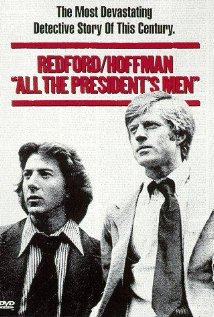
All the President’s Men (1976), directed by Alan J. Pakula

All the President's Men posterEvery day I pray that I will have a sense that God is always in front of me, that He is always in the room. It helps me control my thoughts, my actions, and my speech. When things irritate me, I think long and hard as to whether I want to respond to a provocation or to an unkind word. In general, I do not regret being silent, but I do regret a hurtful word that I may have uttered to someone, even when my intentions were noble.

I was reminded of the power of words as I watched the gripping political thriller All the President’s Men, which portrays in detail the intense investigative newspaper work of Bob Woodward and Carl Bernstein as they painstakingly researched the Watergate burglary, which eventually led to the resignation of President Richard Nixon.

Woodward and Bernstein seem like two Talmud study partners who continually probe each other to ascertain the truth. Each questions the other, and is unafraid of challenging or criticizing his friend. Their frank criticism of each other is not personal, but rather a sign that each one trusts the other to be honest and not to advance any personal agenda. Their shared mission, to discover what the Watergate burglary was all about, makes their egos subservient to the greater purpose of their work. It is this understanding of their common goal which is at the heart of their friendship and their search for truth.

They analyze and debate the significance of the words of everyone they interview. What do the words mean on a superficial level? What do the words imply? What does a response of silence indicate? There is a fascinating scene when Carl Bernstein needs to confirm the truth of an article that is about to appear in the morning newspaper. No one wants to be quoted, so Bernstein comes up with the following proposal as he talks to his contact on the phone: “if what I say is true, then I will count to ten, and if you do not hang up, I will assume my article is true. If it is not true, then you hang up before I reach the number ten, and I will assume that what I wrote is false.” Here, interestingly, everything hangs on what is not being said.

Ben Bradlee, editor of The Washington Post, the paper that employs Woodward and Bernstein, is also extremely sensitive about words and continually reminds the ambitious reporters that he cannot agree to print something in his paper unless they get confirmation of more of their facts. The paper cannot besmirch someone’s reputation based upon hearsay evidence or theorizing about what might have happened.

In the world of Jewish jurisprudence, the laws of slander and the gravity of hurting someone with words is the topic of many volumes written by sages of the past and present. These laws are carefully codified because of the essential concern that, as the Psalmist writes, “life and death are in the power of the tongue;” for one negative comment about a person might ruin his life professionally or personally. As a rabbi and school principal, I have been tested many times when people ask me for recommendations about people I know. It may be a recommendation for a job, for acceptance to an academic institution, or for a marriage partner. My general approach is to say what needs to be said without embellishment, for words are like arrows. Once uttered, they cannot be retrieved.

As we speak to the people around us, it is wise to weigh our words so that we do not hurt anyone inadvertently and to insure that our words will always be in the service of society and sanctity.

Purchase this movie fro Amazon.com.

Searching for Sugar Man (2012), directed by Malik Bendjelloul

searching for sugar man posterI have a friend who is a serious artist, and creates beautiful renditions of nature scenes. In fact, he recently had an exhibit at a well known New York gallery. He often debates within himself whether he should do more to promote his art or whether he should just create and leave the rest to God’s intervention. In the inspiring documentary, Searching for Sugar Man, Rodriguez, a Detroit folksinger, resolves the question of how much an artist should promote his work by disappearing into the woodwork and letting fate determine his destiny.

Sixto Rodriguez’s story is fascinating and wondrous. He recorded two albums in the 1970s, Cold Fact and Coming from Reality, that sold only a few copies. Singing and writing songs in the style of Bob Dylan, Rodriguez impressed early impresarios with his smooth blend of thoughtful lyrics and catchy melodies, and they thought he was the genuine article who would be famous. However, as Rodriguez himself says, the music business is unpredictable and no one can predict with accuracy who will succeed and who will not.

In spite of not making musical waves in America, his albums serendipitously reached South Africa and there Rodriguez became a musical icon comparable to Elvis Presley. His music became the national anthem of the anti-apartheid movement. His lyrics, in particular, were liberating and inspiring to the Afrikaner protest musicians of the 1980s. Ironically, Rodriguez was totally unaware of this and was living the blue collar life of a construction laborer in Detroit. Sadly, he never received any of the royalties for the 500,000 albums he sold.

Rumors abounded about him in South Africa. Some said he committed suicide publicly by lighting himself on fire; others said he shot himself or died of a drug overdose. No one really knew him. But two of his fans decided to investigate what really happened to Rodriguez. They began looking for clues to his roots in the lyrics of his songs. Eventually, the cities mentioned in his songs led them to find Rodriguez’s origins at Motown Records in Detroit, the birthplace of many successful rock stars.

The eureka moment arrived when the fans discovered that Rodriguez was still alive and living the simple life of a day laborer in Detroit with his daughters. This revelation motivated his South African fans to arrange a concert tour in South Africa in the 1990s where he played to thousands of fans of all ages, many of whom knew his songs by heart. Reports of his successful shows reached his friends in Detroit who could not believe that their quiet and unassuming friend was a real rock star with a massive following.

The coda at the end of films informs us that even when Rodriguez made money at his South African performances, he gave it all away to family and friends. For him, it was enough to share his music with his adoring fans. He did not seek fame; rather he sought human connection with his admirers. He wanted fan and artist to symbiotically commune through the language of lyric and song.

The Ethics of the Fathers, a classic of Jewish wisdom literature, tells us that when man seeks fame and recognition, they will elude him. Rodriguez, by living an unadorned life away from the bright lights of celebrity and by eschewing materialism, provides a thoughtful model for us to emulate in our acquisitive age. Our Sages tells us that the truly rich man is the man who is content with what he already has. Searching for Sugar Man reminds us that it is who we are that give us our identity, not what we possess.

Purchase this movie from Amazon.com.

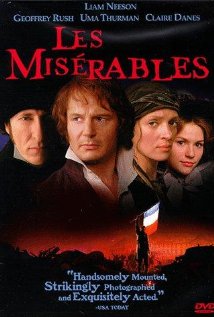
Les Miserables (1998), directed by Bille August

les miserables poster 1996 filmA friend of mine who gives parenting workshops recently counseled a parent whose teenage son was giving her lots of grief. She told her that she should give her child oodles of care and love. The parent retorted: “But what if that doesn’t work,” to which my friend replied, “Then give him a double dose of care and love.”

I thought of this interchange as I watched the 1998 version of Les Miserables, an accurate but abridged cinematic rendition of Victor Hugo’s classic novel. The well-known plot centers around Jean Valjean, a starving pauper, who is given a prison term of nineteen years for stealing a loaf of bread. When finally released on parole, he cannot find a place to lodge.  Facing continual rejection because of his criminal past, he thinks that he will have to resort to a life of crime to survive. Fortunately, he finds refuge for the night at the home of Bishop Myriel who feeds him and offers him shelter. However, Jean responds to this kindness by stealing the bishop’s silverware.  The next day Jean is caught and brought back to the bishop by the police. In a surprising gesture, Bishop Myriel tells the police that Jean is an old friend to whom he has given the silverware and he also gives Jean silver candlesticks as a further demonstration of his friendship. It is truly a double dose of love.

When the authorities depart, the bishop tells Jean that he will become a new man the next day, no longer a criminal but a person of genuine worth. Jean is overwhelmed with his kindness and resolves to change. The next scene takes place nine years later. Jean is now a wealthy businessman and mayor of the town, a man who clearly has repented and is now a new man.

The story of Jean Valjean is an epic narrative of repentance. Not only does he become an upstanding citizen, he also does charitable works that benefit the underprivileged and poor as well. His rehabilitation begins, however, when one man – the bishop—shows confidence in Jean, when he sees Jean for what he can be and not for what he was. Looking towards the future, the bishop showers Jean with respect, with kindness, and treats him as an equal and friend. He then encourages him to become a new man with a new destiny.

Jewish tradition describes Aaron, the brother of Moses, in similar terms. Aaron loved peace and pursued peace, says the Talmud, and did whatever he could to make people feel good about themselves. He even went out of his way, says the Midrash, to connect with people on the margins, the outsiders,  and to befriend people of less than reputable character, all of which he did because he understood that it is easier for people to do good when they possess self-esteem, when they see themselves as people of worth and integrity. This was Aaron’s specialty: to make people feel important and valued. He was so good at this that when he passed away, the Midrash informs us that the people mourned for him more than for Moses. The character of the bishop reminds us of Aaron, the man of the people who, in his own quiet way, challenged people to become the best that they could be.

Two valuable life lessons emerge from Les Miserables. Firstly, that it is possible to change, to repent and begin life anew. Secondly, to motivate people to repent, we must show them that we believe in them, that we believe in their basic goodness and their infinite value, which transcends any mistakes they may have made. Jean Valjean’s personal odyssey is a living testament to these psychological truths.

Purchase this movie on Amazon.com.

Big (1988), directed by Penny Marshall

Big posterFor many years I would take my ninth and tenth grade classes on a week-long trip to Washington, D.C. and New York City. Once someone asked me if I ever got bored seeing the same sights year in and year out, and I responded that I did not. Why? Because every time I go on the trip I see the same places, but with the eyes and excitement of a student who has never been there before. Washington and New York become the Grand Canyon every time we make the journey.

The ability to experience the same thing over and over again and yet to feel as if one is seeing it for the first time is a poetic sensibility. This is the core theme of Big, a comedy that makes a serious comment about being an adult but seeing the world from the perspective of a child. Wordsworth writes about it in his poetry when he says that “the child is the father of man.” I explain to my students that this means that as we grow older, we should still maintain a childlike appreciation of nature. This is the message of his classic poem “I wandered lonely as a cloud,” in which an old man experiences the joys of nature as he walks through the woods and discovers a field of flowers dancing in the radiant sun.

Twelve year old Josh Baskin wants very much to be older, to be big. He cannot get the attention of a girl he likes and he is turned away from an amusement park ride because he is too short. In frustration, he makes a wish in front of a mysterious fortune telling machine and, lo and behold, it is granted.

The next day, he wakes up as an adult. Scared at first, he does not know what to do. Even his mother sees him as a stranger who has kidnapped her beloved son. Until he can figure out a way to get back to his normal life, Josh decides to enter the adult world temporarily. Fortunately, he finds a job at a toy manufacturing company, and his childlike understanding of what toys would appeal to children makes him a marketing genius to the owner of the company. Within days, Josh is promoted to a senior position, and soon finds himself the object of adoration by many of the company’s employees, including an attractive female executive, which makes life very complicated for him.

How Josh handles being an adult when he is really only a child makes for many comic situations. But behind the humor, Josh is still only a child who misses his mother and he yearns to return to his previous life. Big captures the ambivalence in Josh’s feelings, and gives us a window into the good things that can happen if we can keep our childlike perspectives alive even as we grow older.

Jewish tradition tells us that we need to keep our youthful perspectives on life as we age. On a daily basis, the prayer book reminds us that God renews the world every day, and that is the way we should see nature every day. Moreover, the traditional Jew states a blessing when he sees an ocean once in thirty days, when he hears thunder and sees lightening, when he bites into a piece of food. Nothing is taken for granted. There is even a blessing after visiting the bathroom, in which he recognizes the marvel of how the body works. Josh Baskin’s story is a fairy tale, but its message resonates in real life: stay young on the inside as we grow old on the outside.

Purchase this movie from Amazon.com.

The Batman Trilogy (2005-2012) directed by Christopher Nolan

dark knight rises posterWhen I was principal of Yeshiva High School of Atlanta, I had a conversation with a board member who was a Holocaust survivor about the Holocaust Museum that was being built in Washington, D.C. He shared with me his feeling that it was not a wise use of community funds which could be better utilized to support Jewish day school education. I empathized with him since part of my job was to raise money for the school and I, too, felt that more community money should be directed towards Jewish education.

A couple of years ago, I had the opportunity to speak to my friend again and he shared with me his change of heart about the Holocaust Museum. Now he felt glad that the Museum was here to teach many subsequent generations about the Holocaust. He never envisioned years ago that there would be Holocaust deniers and that anti-Semitism would be alive and well in the world after the atrocities of the Holocaust. Never could he have imagined leaders of so-called civilized nations calling for the annihilation of the Jewish state. The world had changed and it was not for the better. Evil was a potent force in the 21st century, and the Holocaust Museum was an important agent of moral education challenging the perpetrators of evil.

The conversation brought back memories of my own innocent childhood in Mt. Vernon, New York, when everyone thought, post World War II, post- Holocaust, that the world was now enlightened, that there would be war no more, and that our collective human future was bright. 9/11 brought all that optimistic thinking to an abrupt halt.

The Batman trilogy of films deals metaphorically with how we come to terms with this new world where evil is real and ubiquitous. The reality of evil in these narratives undercuts our assumptions about the basic goodness of man and leaves us on edge.

The Dark Knight and The Dark Knight Rises present two villains who are the personifications of evil: the Joker and Bane. The Joker represents the chaotic nature of evil; Bane represents the committed terrorist, for whom death and destruction are liberating events. Bruce Wayne, aka Batman, begins with a conventional understanding of the Joker’s criminal mind. He tells his butler, Alfred: “Criminals aren’t complicated. I just have to figure out what he’s after.” Alfred wisely responds: “You don’t fully understand. Some men aren’t looking for anything logical, like money. They can’t be bought, bullied, reasoned, or negotiated with. Some men just want to watch the world burn.” Bruce is ambivalent about how to deal with the Joker and Bane, and it takes him a long time to understand how vicious they are and how he must change his preconceptions about the nature of evil people.

This perhaps can give us some understanding about the Biblical approach to unfettered evil, such as we find in Amalek, the arch-enemy of the Jews who attacked the old and weak as they were leaving Egypt. The Bible tells us to eradicate this evil and for the compassionate Jew, this is a hard business. On Passover at the Seder, we are bidden to spill out drops of wine from our cup when we recount the ten plagues because our cup of joy is never full when others have suffered. Even when justice triumphs, we feel for the victim who suffers. The Ethics of the Fathers also cautions us not to rejoice over the fall of the wicked even though he is deserving of punishment. Moreover, the Talmud recounts the story of Beruriah, the wife of Rabbi Meir, who, when her husband wanted to harm bullies who were constantly harassing him, exhorted him to pray that these sinners repent, not to pray that they die.

The Batman trilogy is a brainy thriller. It asks us to leave our simplistic notions of good and evil at the door and to recognize that in our new and dangerous world, we cannot ignore evil. To be naïve in the face of absolute terror and evil places us at great risk.

Purchase these movies on Amazon.com.

Apollo 13 (1995), directed by Ron Howard

Apollo 13 posterIn reflecting on my career as a high school principal, I recall many board meetings where a few board members would panic if the enrollment did not go up every year. That statistic alone was the acid test, and  a low enrollment number on any given year would be the catalyst for extensive discussions about what was wrong with the school and what we needed to do to fix it.

Fortunately, most board members took the long view and saw the inherent complexity and difficulty of establishing a Jewish day high school in a city that never had one. Thankfully, they supported me over the years in building Yeshiva High School of Atlanta, now known as Yeshiva Atlanta.

Panic in the face of adversity is not a good response, and I was reminded of this truth as I watched Apollo 13, a classic film about one of America’s early space flights in 1969. “Life is not a straight line,” a friend once told me when I was dealing with a lot of things that were going wrong. The key is to stay focused at moments of crisis. Rather than lose one’s cool, concentrate on how to solve the problem.

The tag line for the film is ‘Houston, we have a problem,” and they do have a serious problem. After months of preparation, the crew led by Commander Jim Lovell and assisted by Fred Haise and Ken Mattingly, is scheduled to fly to the moon. Two days before the launch, Mattingly is compelled to withdraw from the mission because he has been exposed to measles and he has never had them before.  The possibility that he could become ill during a crucial part of the flight disqualifies him; and Jack Swigert, an astronaut who has been out of the loop for many weeks, is asked to fill in for Mattingly. Lovell decides to accept the substitute rather than wait for another turn to fly to the moon.

The problem is compounded once the astronauts leave earth.  While in flight, Jack Swigert performs the routine procedure of stirring the oxygen tanks, and the oxygen tanks explode causing a mechanical failure. Now the mission is not to land on the moon, but to get home safely.

The two characters who stay focused and don’t lose their cool are Jim Lovell and Flight Director Gene Kranz at Mission Control in Houston. Aiding them is Ken Mattingly who simulates what is going on in the space capsule in order to give the Apollo crew the best advice to stay alive. These three men, very bright and who fully identify with the Apollo crew, think creatively to come up with solutions that will enable the men to re-enter earth’s atmosphere and arrive home safely.

The Bible is filled with examples of people who, when faced with negativity and bad karma, rise above the problem and find a way to succeed. Joseph, son of Jacob, is one role model. According to a Midrash, he is left in a snake-filled pit by his brothers. He then is sold as a slave in Egypt, and later finds himself in prison where he languishes for a number of years. During all that time, he does not give up and surrender to his environment. Instead, he finds a way to survive and eventually he is catapulted to the position of viceroy of Egypt. He does not look at the present dark moment as forever. Rather he sees beyond it. He knows he has a mission, and in his own quiet and deliberate way works to actualize a bright future.

Apollo 13 affirms that same message. When things go awry, do not collapse. Instead, analyze the situation and develop a strategy for success.

Purchase this movie from Amazon.com.