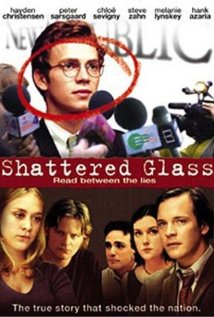
Shattered Glass (2003), directed by Billy Ray

As a high school student in A.B. Davis High School in Mount Vernon, New York, I took two years of Spanish. Much of the second year was taken up with the complexities of the subjunctive tense, about which I never could gain mastery. As a result, my marks over four consecutive marking periods were 50, 55, 60, 65, until I took the New York Regents at the end of the year. The Regents Exam was the state- mandated exam that separated the men from the boys. If you passed the Regents with a good grade, the meant that you really knew your stuff. In the days leading up to the Regents, our teacher gave us periodic exams, which I usually failed. During one of the exams, I looked up from my desk and saw perhaps the brightest student in the class use a cheat sheet. While I struggled to pass, he took a short cut to success. His report card was filled with “A”s while mine had “F”s.  I imagined a scary future: will he be doing this in medical school as well ?

But then the Regents came and I got in the 90s because there were no subjunctive tense questions on the exam. The teacher thought I cheated but couldn’t prove it so he had to give me an “A” for the last report card period. The whole experience reminded me that honesty ultimately pays, if not immediately, then in the long run. Honesty is  the heart of the matter in Shattered Glass.

Shattered Glass is a story ostensibly about journalism and its commitment to truthful reportage.  An early scene in the film depicts Stephen Glass, a successful journalist, sharing his wisdom with an avid group of high school students who may aspire to be writers one day. Glass’s presentation is warm, infectious, and devoid of egotism. He writes for The New Republic, the “in-flight magazine of Air Force One,” and tells his young fans that when you write for such an influential magazine, “your work gets read by people that matter.” Surely this is a heady job, but he cautions the students that reporters have to be responsible for what they write and there is more to the job than simply getting your own name into print. Journalism ultimately is about the pursuit of truth, and that is what makes it important.

All this is preamble for an account of deception and lies. As the movie unfolds, we see Stephen fabricating story after story in a working environment where fact-checking is critical. Because he is an entertaining presence at staff meetings, he ingratiates himself with his fellow employees, who are unsuspecting of his ethics. When an internet magazine uncovers the deception, Stephen’s imaginary world falls apart. He has spun a web of lies from which he cannot extricate himself, and he begins blaming others instead of accepting responsibility for his actions.

Shattered Glass is a powerful morality lesson depicting what transpires when we lack integrity, when there is no respect for truth. The Ethics of the Fathers tells us that one of the pillars upon which the world stands is truth (Avot 1:18). Without that essential element, societies cannot exist. The film also presents the consequences of losing a good name: loss of job, loss of credibility. Our Sages remind us that one’s good name is the most important possession we have. Rabbi Shimon says: “There are three crowns—the crown of Torah, the crown of priesthood, and the crown of kingship, but the crown of a good name surpasses them all (Avot 4:17).” Furthermore, we see how the pursuit of fame is ephemeral. The more one pursues it, the more it eludes him. Countless statements in the Talmud reinforce this notion: “He who seeks fame loses his reputation (Avot 1:13);” “A desire for honor removes a man from the world (Avot 4:28);” “Do not desire honor (Avot 6:5).” Finally, the Talmud explicitly tells us that we should always attribute the source when we quote another’s statement: “Whoever reports a saying in the name of its originator brings deliverance to the world, as it says, And Esther told the king in the name of Mordechai (Megillah 15a).

Finally Shattered Glass provides an example of the adage in The Ethics of the Fathers that tells us “Whoever desecrates the Name of Heaven in secret, they will exact punishment from him in public (Avot 4:5).” Stephen Glass is a liar, a distorter of truth in order to promote his own image. In the end, his deception is revealed in a public way, not only in the news media but in the film that is cleverly titled Shattered Glass.

Purchase this movie from Amazon.com.

Inception (2010), directed by Christopher Nolan

In my volunteer work for an international Jewish matchmaking site, I work with many dreamers. The people who dream the most are single men over 50 who want to marry girls under 35 because they would like to have children. On the surface, the dream makes sense, but the reality proves otherwise. Most girls in their thirties do not want to marry men in their fifties. And the dream gets scarier with advancing years. Men in their late 50s and even men over 60 cling to the dream while life is slipping away. It is very sad, because the dream prevents them from dealing with reality. I sometimes suggest to my “clients” that they should at some point reconcile themselves to the reality of just having companionship into their senior years rather than cling to an impossible dream that, in the final analysis, will leave them isolated and alone as mature adults. G-d tells us that “it is not good for man to be alone.” Companionship, even without the possibility of having kids, is superior to being by oneself. Our tradition tells us that a shared life refines a person. Being married compels one to think of another, not just of oneself, and that paradigm is Torah-based. The Torah tells us to “love your neighbor as yourself,” and the penultimate neighbor is one’s spouse. Therefore, it is good occasionally to dream but it also good to live in the real world.

To dream excessively is dangerous for it can make you lose touch with reality. This is the crux of Inception, a wildly imaginative thriller that deals with dreams and their consequences.

The story line of Inception is almost impossible to summarize. In simple terms, it involves a plot to plant a dream in someone’s mind in order to change an oncoming reality. In the course of the film, reality and dream are constantly intertwined, so you have to pay close attention to determine which parts of the narrative are real and which are projections of the subconscious. It is this confusion which is at the core of the relationship between Dom Cobb and his wife Mol. Dom is involved in corporate sabotage, extracting valuable secrets from vulnerable subjects who are dreaming. He is so expert at this that he introduces his wife into the world of dreams, with terrible consequences. Mol loses touch with reality because of her deep and extended exposure to the dream state of awareness, and their life together is transformed from a dream into a nightmare.

The only salvation for Dom is to return home to reality, a reality which requires him to leave his idealized mate in her world of fantasy. In a wrenching climactic scene, Mol asks Dom to remain with her in her dream world: “You said you dreamt that we would grow old together.” Dom responds that they did grow old together in their dream world. An image of intertwined hands of an elderly couple walking together exquisitely expresses this idea. He then confesses to her: “I miss you more than I can bear. But I have to let you go.” He understands that as painful as it may be, he must leave the dream world in order to enter reality and survive.

This willingness to accept reality even though it is not ideal reflects a mature outlook on life. We all need to dream, but the dream has to be tempered by a true comprehension of the real world around us. This perhaps is emblematic of the dream of Jacob’s ladder. Alone in the wilderness at night, Jacob had a dream of angels going up and down a ladder; but the ladder, which soared into the heavens, had its feet firmly planted on the ground.

Purchase this movie from Amazon.com.

No Direction Home: Bob Dylan (2005), directed by Martin Scorsese

A few years ago, I was visiting my daughter in Lakewood, New Jersey, home of the renowned Lakewood Yeshiva, when I noticed a peculiar item in the local newspaper. Bob Dylan, scheduled to appear at a baseball stadium in Lakewood as part of a tour with Willie Nelson and John Mellencamp, was accosted by a 24-year old policeman who arrested him for vagrancy. It seems that a resident had called the police and stated that a man was wandering around a low-income neighborhood looking at houses. When asked for his identification, he said “Bob Dylan,” but the police officer at the scene did not recognize the name. Dylan was apparently walking around looking at houses passing away the time before that evening’s show. The officers then asked Dylan, 68, to return with them to the hotel where the performers were staying, and there the tour staff vouched for him.

As a teenager, I grew up in the shadow of the great Elvis Presley, so Bob Dylan was never one of my musical icons. But as I grew older and my musical tastes became more eclectic, I began to pay attention to his music, especially his early material, which is why I was drawn to No Direction Home: Bob Dylan, a fascinating documentary about Dylan’s genesis as a musical icon in America. As I watched the narrative develop with early footage of his career interspersed with a present-day interview, I made several observations. Dylan was a very curious and bright young man, totally disconnected from his home town mid-western environment. It was when he came to New York City that he flowered musically, for here he met other poetic and musical originals who shared his quest for artistic growth. He was awed by their talent and integrity. Over time, however, he truly saw himself as a “one-of-a-kind” artist, who didn’t need to answer to anyone. Other people’s opinions did not matter to him. What was important was to be honest with himself. He confesses that his early lyrics made him a hero to the civil rights and anti-war movement, but these political movements did not drive his art. His art was driven by his musical instincts. In fact, the movie includes footage of him being booed by the audience for performing electric rather than acoustic material. But he didn’t care what the audience thought. He listened to the sound of his own drummer. Moreover, he finds it absurd that celebrities are even asked their political opinions since they know nothing about such matters. For him, silence makes more sense than dangling political conversations that go nowhere.

Which brings me to a Torah perspective that is embedded in this movie. Our Sages tell us that one of the pillars upon which the world is based is emet, truth or honesty. Whether one agrees with Dylan or not, one certainly will admit that this film portrays him as an honest person in an industry full of pomposity and posturing. Moreover, his story reminds us that fame is illusive the more one pursues it. Dylan did not pursue fame in a conscious way; he pursued music and its varied expressions and fame came to him. This is what our Sages clearly tell us in the Ethics of the Fathers: “he who seeks fame loses it (Avot 1:13).The implicit message is to focus on being the best you can be and rewards will eventually come.

As I reflected on the movie, I began to appreciate more and more Dylan’s musical genius and his uncompromising integrity. At the end of the day, I understand why the police officer probably did not recognize him. The policeman was born many years after Dylan dominated the musical landscape and Dylan himself did nothing to promote his artistry other than write and sing songs. He did not rely on a publicist; rather it was his music that spoke for him.  In this sense, we can learn from this musical master. Perhaps if we are true to ourselves and do not look for recognition, we can make our best contribution to the world and notoriety will come to us. Furthermore, by rejoicing in our own uniqueness, we can celebrate the special gifts of others who collectively enrich the artistic environment.


Purchase this movie from Amazon.com.

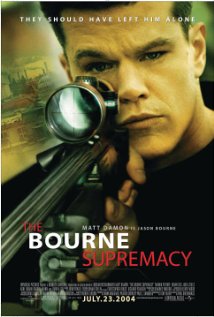
The Bourne Supremacy (2004), directed by Paul Greengrass

Confessing is cathartic. Every Yom Kippur in our home, I confess my shortcomings to my wife and my children. I apologize to them for raising my voice to them, for being unnecessarily critical of them, for not always understanding their personal challenges. I feel better after I do this because it helps me renew my spirit and become, I hope, a better person in the coming year. Yom Kippur, after all, is a day of forgiveness when God forgives us for our sins. But our Sages emphasize that God does not forgive us unless we first make amends for the sins committed against our fellow man. Confessing our mistakes and apologizing to our loved ones brings us closer to them and closer to God who desires our contrition, especially at this time of year. Such a personal admission acknowledges that we are imperfect yet sends a signal that we desire to improve ourselves and our relationships. It is noteworthy that a confessional scene in The Bourne Supremacy humanizes the hero in a way that connects him to all of us who have made regrettable mistakes in life and want to become better.

The Bourne Supremacy, the second in the trilogy of Bourne movies, is a great action movie; but what sets it apart is not only the superbly choreographed action sequences, but the humanity of its hero, Jason Bourne, a man searching to discover his lost identity. We believe his confusion. We believe that, in spite of his job as a professional assassin, he is essentially a good man. His humanity is exquisitely captured in a touching scene towards the close of the film in which Jason Bourne contacts the daughter of a Russian diplomat and his wife whom Bourne has assassinated. He shows up at her apartment unannounced and in a soft voice informs her that, contrary to what she thought, her mother did not kill her father and did not kill herself. He confesses in slow, carefully deliberate language: “I killed them. I killed her. That was my job. But it was my first time. Your father was supposed to be alone, but then your mother came out of nowhere and I had to change my plan. It changes things, that knowledge, doesn’t it? What you love gets taken from you. You want to know the truth. I’m sorry.” The confession purges Bourne of some of his guilt. He cannot retrieve the past but he has come to terms with it by admitting his crime to the child who was a survivor.

Moreover, confession works in more than one direction. It is cathartic for the one who confesses, for he is changed by speaking the words that indict him. Additionally, it changes the reality of the one to whom the confession is addressed. Acknowledging the words of a penitent can alter the life of the one who was hurt as well. The truth that Bourne reveals to the daughter of his victims frees her from a past filled with guilt, deception, and lies.

It is a brief scene but its impact is powerful. No longer is the film just a robust and entertaining thriller. It is also a commentary on the human cost of leading a violent life, even when the violence is for the just cause of protecting a nation.  Good people can sometimes do very bad things. This vignette reminds us that we can sometimes be cruel inadvertently. Thoughtlessly, we can hurt those we love most. The Bourne Identity reminds us that confession of our sins to those we care about can open a door to our own self-renewal and, just as important, it can allow others to move on with their lives, free of the negative baggage of the past.

Purchase this movie from Amazon.com.

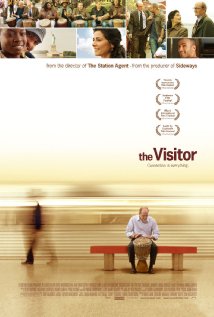
The Visitor (2007), directed by Thomas McCarthy

When my wife, of blessed memory, passed away over 20 years ago, I felt totally lost. It was hard for me to imagine living without her. There was a temptation to withdraw from society, to seek solace in memories and to immerse oneself in work to dull the emotional pain. However, the Torah has a different view of the aftermath of losing a beloved spouse. While it is impossible to recreate the past, the Bible clearly tells us it is not good for man to be alone. Life is meant to be shared and the Talmud openly instructs the surviving spouse to remarry even into one’s old age. To be alone as the years advance is not what God wants. The Visitor reminds us of the emptiness of living alone and suggests the remedies that can keep us engaged in life.

The Visitor is the story of Walter Vale, a disillusioned college professor who has recently lost his beloved wife of many years. Since her death he has become even more reclusive than before and solitude is his preferred state. His quiet and predictable world unravels, however, when two illegal immigrants, a white male from Syria and a black woman from Senegal, mistakenly take up residence in his Manhattan apartment. At first he wants them to leave, but recognizing their vulnerability in being sent out at night to find new lodgings, he invites them to stay. Their sojourn in his apartment lasts many days during which a deep friendship grows between him and his tenants.

Walter develops an interest in hand drumming, which is recognized by his tenant Tarek , a Syrian immigrant who is an accomplished drummer. Tarek teaches Walter some techniques which enable him to play the djembe reasonably well. This interest is drumming captivates Walter, indirectly propelling him towards more human connections. He plays with a drum circle in Central Park and shares the rhythms with people of varied cultures. The drum represents a kind of communal heartbeat which links all men together, and Walter breaks out of his aloneness to join the family of mankind.

The story takes a tragic turn when Tarek is picked up by the police and is placed in a Queens detention center. Tarek’s mother comes from Michigan to visit his son in New York since she has not heard from him in a while. When she discovers that he is incarcerated and may be deported, Walter intervenes and hires an immigration lawyer to help. In spite of his best efforts, Tarek is deported, and his mother decides to leave the States to go to Syria to be with her son. Although Tarek is likely to have a grim future, Walter has been transformed by his friendship with Tarek, Zainab,  and Tarek’s mother. He has moved from being a solitary man to a man who wants to connect with other people. The last scene of the film depicts Walter in an underground subway station playing the djembe, making a very loud drum sound, which metaphorically expresses Walter’s new heartfelt approach to life.

Our Sages tell us “not to separate from the community (Avot 2:5).” It is spiritually dangerous to be alone. Solitude can lead to depression and an unhealthy preoccupation with oneself. Therefore, it is good to be involved with others and to feel the distress of others; for one who feels another’s pain shares it with him and, in a sense, lessens the emotional burden of the sufferer. Walter’s attempt to help another makes him into a better man, a man who is alive to himself and to others. Moreover, the Torah tells us in many places to take care of the stranger, the one who is most defenseless in society, for we were once strangers in the land as well. This empathy for the outsider is a hallmark of a Torah personality; and Walter, a very decent man, becomes an even better man when he understands the plight of the stranger and does something to alleviate the stranger’s problem. By helping others, he helps himself.

Purchase a copy of this movie from Amazon.

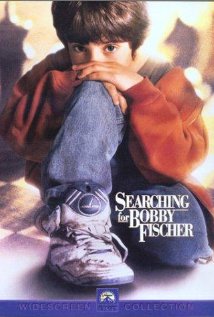
Searching for Bobby Fischer (1993), directed by Steve Zaillian

As an undergraduate student at Yeshiva University many years ago, I had the opportunity to watch Bobby Fischer play chess. I do not know how to play chess, but a friend of mine who did was participating in a school-wide completion between about 50 students and the chess master, who would play all of them simultaneously. I still remember coming down to the school cafeteria and watching close to a hundred students set up their chess boards on long tables preparing for their match with Bobby who would stroll down the various aisles making his moves quickly as his opponents reflected on what to do next. To my knowledge, no student won his match that night; but it was fascinating to observe this chess genius casually dispose of so many opponents in so short a time.

Searching for Bobby Fischer is a film about chess; but, more importantly, it is a film about life. We watch as little Josh Waitzkin develops a love of chess. He is fascinated by the game and enjoys watching the exciting contests of speed chess in Washington Square Park in New York City. His mother senses his love of the game and pays to have him play one the players in the park. His interest in the game grows, and his father decides to get him a top flight teacher. Josh studies with the guru but still retains his childlike interests and attitude. Basically Josh is kind person, the kind of person who wants to be nice to other people. He does not hate his opponents, nor does he look at them as objects to destroy. His mother, on listening to Josh’s wish to help a friend, tells him “You have a good heart. That’s the most important thing in the world.”

It is this conflict between being nice and being a winner that is the subtext for this sports film about  chess. As Josh achieves success in tournaments, his father becomes possessed with his son’s genius at playing the game. Frank Waitzkin comes to see chess not as game nor as science, but rather as pure art. The notion that his son plays like Bobby Fischer animates his ego and he begins to push Josh harder. He more than Josh wants the glory, the attention, the honor that he never received in his life. Frank pursues the ephemeral goal of fame, and forgets about  balance in life. As Josh advances in skills, his teacher Bruce puts him though exercises designed to toughen Josh mentally. But Josh is boy who likes and respects other people. His coach’s desire to make him like Bobby Fischer “who held the world in contempt” evokes a simple, direct response from Josh; “I’m not him.” His mother sharpens that observation when she tells her husband that “Josh is not weak. He’s decent.”

Several Torah themes are embedded in Searching for Bobby Fischer. In Proverbs, there is the wise directive to “train the child in the way that he goes (Proverbs 22:6).” The message here is that parents need to understand the uniqueness of their children. Different children possess different personalities, different interests, and different proclivities. That is the lesson that Frank Waitzkin learns as he first pushes Josh to excel, and then comes to recognize Josh for the decent boy that he was and is. Frank ultimately realizes that the game of chess does not define his son, who is much more than a chess player. He is a good son, a caring friend, and a decent human being who wants balance in life.

We also learn from the film that wisdom can come from many places, from parents, from a speed chess hustler in Washington Park, and from a serious teacher of chess. Notably, all are present for Josh’s crucial match at the Chess Grand National Tournament in Chicago, the site of the film’s finale. Our Sages in The Ethics of the Fathers explicitly tell us: “Who is wise? He who learns from every man  (Avot 4:1).” Everyone has something to teach us if we are a careful observer of mankind.

Finally, we learn the pursuit of fame is illusive. The more one runs after it, the more difficult it is to acquire. Finally, fame in the Jewish view is acquired through the simple acts of friendship and kindness that punctuate our lives. The film ends with Josh putting his arm over the shoulder of a friend who has just lost a match and telling him, “You’re a much stronger player than I was at your age.”  As the credits begin to roll, a coda informs us that while Josh still plays chess, he also plays baseball, basketball, football and soccer, and in the summer, goes fishing.” Josh intuitively understands that a fulfilling and meaningful life is a life with balance.

Purchase this movie from Amazon.com.

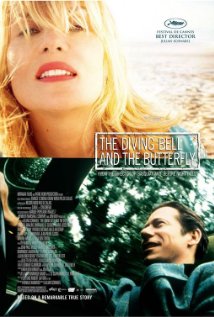
The Diving Bell and the Butterfly (2007), directed by Julian Schnabel

There is a scene somewhere in the middle of this film that captures the essence of disability. The central character is immobilized on a bench while a fly perches on his nose. He cannot swat it nor can he tell anyone else to bat it away. Finally, it flies away and there is a sense of relief. The insect is a little irritant, yet it looms large in the face of an absolute inability to rid oneself of it.

When I turned 60, I began to realize that I, too, could not always rid myself of bodily pain or discomfort. It takes time and mental effort to come to terms with a changing body. I experienced little aches and pains, my daily run became more challenging, and I knew that I could no longer be casual about my health. A sense of mortality became present in my life.

This sense of mortality can paralyze someone or spur him on to making every day count, by savoring the moment and appreciating the beauty of everyday miracles. The roadmap is unclear. It is not a comfortable realization to know that one is disabled physically, to know that one is no longer in control of his body. This difficult and painful epiphany is at the heart of The Diving Bell and the Butterfly.

The film’s opening titles are placed against a backdrop of medical x-rays, foreshadowing the serious medical condition of Jean-Dominique Bauby, the former editor of Elle magazine in France. The movie begins with him waking up from a coma after having suffered a stroke. We see things from his perspective. Everything is in and then out of focus. He sees doctors and nurses and tries to talk to them. We hear what is going on in his mind and we share his frustration and disappointment when he realizes that no one hears him. The doctor informs him that he has a rare condition called “locked-in syndrome,” which prevents him from moving anything other than one of his eyes. This ability to blink becomes Jean-Dominique’s way to communicate with the outside world, and the doctor is optimistic about making progress. But, in spite of the doctor’s upbeat assessment, this is depressing news to Jean-Do, as he is affectionately called by his friends.

Realizing that he is unable to communicate to family, he profoundly regrets some of his past actions or inactions. To the mother of his three children whom he never married, he thinks: “I can never make amends.” To the friend who spent many years in a foreign prison and who calls him when he is released, he wonders” “Why didn’t I call him back?”

His friend, who has suffered four years of incarceration, in a brief visit tells him: “Hold fast to the human inside you. You’ll survive. That’s what I came to tell you.” This conversation stays with him and Jean-Do begins to understand that, in spite of his paralysis, he can still live in his imagination and in his memory, two parts of his life that are free and unrestricted by physical disability.

The Diving Bell and the Butterfly is an unusual and powerful film. On the surface, it is about a person who suffers a stroke, which leaves him unable to speak or to move his body. In a more universal sense, the film is about the plight of the disabled as seen from the point of view of the disabled person. The first half-hour graphically depicts his realization of his paralyzed state and his initial efforts to communicate to those around him.

All of us have seen handicapped people, but the inner struggle that goes on inside the mind of the handicapped is largely unknown to us. We can sympathize, but we cannot really understand the overwhelming emotional darkness and isolation of one who lives daily with physical challenges. Now, through this film, we get a glimmer of understanding about life lived with physical limitations. Furthermore, it reminds us of the blessings Jews say every morning n which they thank God for the fact that each part of the body is working. We thank God that we can see, that we can walk, that we can go to the bathroom and relieve ourselves. No aspect of our physical life is to be taken for granted.

In this sense, the movie is an instructive teaching tool. It compels the viewer, through its vivid and naturalistic imagery, to be thankful each day for being ambulatory, for possessing the ability to speak and to communicate freely with others.

When a dear friend of mine would be asked how he was doing, he always responded, “Thank God, fantastic.” He did this because he truly felt thankful for the everyday miracles with which he was blessed. Watching The Diving Bell and the Butterfly will make you appreciate life more. Do the math and count your blessings.

Purchase this movie from Amazon.

Chariots of Fire (1981), directed by Hugh Hudson

When I first was becoming an observant Jew, I found it difficult to wear a yarmulke (skullcap) in public. The head covering identified me as an Orthodox Jew. Although I was growing religiously I still wanted to blend in and not be different from my peers. So I struggled inwardly. Sometimes I wore it; sometimes I donned a baseball hat, and sometimes I did not wear a head covering. My religious ambivalence came to the forefront when I accepted a role in our high school production of The Diary of Anne Frank. I played the part of Peter Van Daan, Anne’s romantic interest; and in one climactic scene near the end of the play, I had to embrace Anne and kiss her. From an Orthodox perspective, this was a no-no, but I was full of myself and my acting ability and did not pass on accepting the part or the kissing that went along with it.

The play was presented on Friday night, the Sabbath, as well as on Saturday night and my synagogue rabbi came to see the play on Saturday night. I sensed an oncoming crisis. I was going to kiss a girl publicly in front of my rabbi. What to do? The answer: I did it and my face turned beet red from the embarrassment. Trying to live in two disparate words was impossible for me, and that play became my last foray into acting in a play with a co-ed cast. My approach to my growing religious observance was inconsistent, and it was not until years later that I had the courage and wisdom to live a consistent religious life in which my actions in life mirrored my ideology. Which is why I became enamored with Chariots of Fire.

I first saw Chariots of Fire, a drama about the nature of sports, the competitive drive, and the consistency of religious convictions in 1981 when I myself was running five or six times a week. The film is about two men who are running in the 1924 Olympics: Eric Liddell, a young Scottish preacher, and Harold Abraham, a very competitive British Jew. The story chronicles their journey to Olympic glory, and in the process contrasts the lifestyles and worldviews of these two men.

We first see Liddell participating in a community get-together in the Scottish highlands. Having served as a missionary in China, he is a celebrity in his hometown because of his holy work on foreign soil and because of his running prowess. In an impromptu run, Eric competes with the local runners. As he rounds the track, the camera captures him in slow motion, running as if possessed by a divine spirit. Eric compares running in a race to participating in the race of life itself, both of which require concentration and energy to succeed at the highest levels. He feels that his power as a runner comes from the “Kingdom of God” within him, and this enables him not only to win races but to soar in life as well.

His mentors recognize that Eric’s ability to influence people and to move them spiritually is directly connected to his notoriety as a runner. They advise him to run in God’s name and so use his talent to bring more people under the canopy of faith.

His sister discourages him from running, fearing that it will take him away from his missionary work. Eric, however, tells her that God made him for a purpose and also made him fast. He poetically expresses his innermost feelings when he tells her that when he runs, he feels God’s pleasure and that winning a race is way to honor God.

This notion of sports competition as being emblematic of life is underscored in a scene which depicts Eric delivering a sermon in church focusing on passages from Isaiah, Chapter 40. As he speaks, images of Olympic competition mirror the Biblical phrases that he utters: “He giveth power to the faint….they that wait for the Lord shall renew their strength. They shall mount up with wings as eagles. They shall run and not be weary.” The sum total of all these images brings home the message that ultimately God is the source of all power, not man.

The crux of the movie occurs when Liddell is asked to compete on Sunday, his Sabbath. He has to wrestle with his desire to compete and win on the one hand, and his desire to be faithful to his religious beliefs on the other. In the end, he places principles before personal gain. Moreover, he understands that all his strength comes from God, and that all his earthly activities should express his connection with the divine.

In Jewish tradition, there is the notion that whatever we do in this world should be done to glorify God. In the classic text, Ethics of the Fathers, it states: “All that the Holy one, Blessed is He, created in this world, He created solely for His glory.” The rabbis deduce from this that even mundane acts can acquire sanctity if we perform them with the right attitude. Eating can be a mitzvah (a good deed) if we eat to nourish our physical bodies in order to be strong to serve God. Sleeping can be a mitzvah if we sleep in order to give our bodies needed rest so that we can rise like a lion on the morrow to do God’s work. It is this mindset that exemplifies the character of Eric Liddell. He sees life as an opportunity to serve his Creator, and he sees his running achievements as emanating not just from his own efforts but also from God’s personal involvement in his destiny.

In Chariots of Fire, Eric Liddell reminds us to place spiritual integrity over worldly glory. In his penultimate race, we see Eric running as if possessed by an inner spirit. As he runs, we hear his voice echoing his earlier comment to his sister: “Where does the power come from to see the race to its end? From within. God made me for a purpose. He also made me fast. When I run, I feel His pleasure.”

Purchase this movie from Amazon.

Stranger than Fiction (2006), directed by Marc Forster

Stranger Than Fiction posterAs a rabbinical student, I would often have discussions with classmates and teachers about theological questions that, in the final analysis, have no definitive answers. One classic question relates to the notion of free will. Simply put, if God is in charge and knows all, how can man have free will to choose? One response that a teacher gave to me made some sense and I share it with you.

We are finite creatures and can only live in the present. In this life, we are watching a video which opens with the caution: formatted to fit your screen. In contrast, God sees past, present, and future and his view is the wide-screen version. God is infinite and exists in all three time periods: past, present, and future. This is why He knows all and we cannot. Yet in spite of God’s knowledge of our future, traditional Judaism believes that God, in his infinite kindness, limited Himself and gave man the freedom to act. This problem of free will versus destiny is the crux of Stranger than Fiction, which depicts the ordinary and extraordinary life of Harold Crick.

Harold is an IRS agent whose life is defined by numbers. He also is a lonely man with few friends. The film opens with the viewer observing Harold’s robotic lifestyle, where everything is calculated down to the last second. Then the camera switches to brief scenes of a little boy receiving the gift of a bicycle from his parents and a woman looking for a job. These two characters appear at various points in the movie, and one wonders why since they seemingly have no connection to the plot.

Harold begins to hear a writer’s voice narrating what is happening to him at that moment. He is aware of the voice, but cannot fathom how it can describe his every action as he experiences it. The conceit of the film is that an author, Karen Eiffel, is actually writing his life, leaving him with little free will to exercise. It is frightening when Harold realizes that he no longer is in control of his destiny, especially when Karen writes that he will die “imminently.” The circuitous plot of the film describes Harold’s attempt to come to terms with his seeming inability to affect his future.

This realization that life will end soon moves Harold to be more proactive in the time he has left. He begins a romantic relationship and even learns to play the guitar.  Jewish tradition tells us that we do not know the day of our death; it could be any day. For example, the rabbis teach us to “repent one day before your death.” The commentators explain this to mean that since no man knows the day of his death, he should repent every day. In other words, make every day a special day and fill it with meaning. We should value time and value the people with whom we come into contact.

Harold understands this life lesson. One of his mentors in the film poetically observes that only we can determine if our life will be a comedy or a tragedy. Will our lives affirm the continuity of life or the inevitability of death? The spiritually sensitive person lives with this constant dialectic as he makes decisions each and every day of his life.

The lives of the boy on the bike, the woman looking for job who is now working as a bus driver, and Harold finally converge in the last segment of the film. Harold is at a bus stop and the boy on the bicycle rides in front of the bus. Harold reaches out to save the boy and is hit by the bus. Does he die as the author writes or does he live and exercise free will? The film raises the question of how much free will does man have. Jewish tradition tells us that God is in charge of the world, but God gives man a limited area to exercise free will. As it is written in the Ethics of the Fathers, “everything is foreseen, yet freedom of choice is given….everything depends on the abundance of good deeds.”

Man’s destiny is not totally pre-determined. Man cannot change some things, but there are some things he can do, and that is what Stranger than Fiction affirms. In the face of an all- knowing God, man can still influence his destiny, especially through the performance of a good deed, which is what Harold does when he saves the boy who rides in front of the bus.

Moreover, the film presents a morally sensitive character in the author, Karen Eiffel. She decides to change the tragic ending of her novel. She changes it from a literary perspective; she moves it from a masterpiece to just an average work of fiction in order to protect and save someone. What is paramount to her in the final analysis is not fame but doing the right thing. Morality trumps personal ego.

The movie concludes with Eiffel reminding the viewer that we need to thank God for the small pleasures of life that we often take for granted in our busy daily lives, for the “accessories of life” that are here to serve nobler causes and save our lives emotionally and spiritually. She speaks of the importance of the loving gesture, the subtle encouragement, the warm embrace. It is these little things that make life precious. Harold Crick appreciates this truth when he finds life after almost losing it.

Purchase Stranger than Fiction on DVD from Amazon.