Author Archives: herbert j. cohen

Menashe (2017), directed by Joshua Z. Weinstein

menasheWhen my wife passed away over 25 years ago, my world fell apart. After a year of parenting my six children by myself, it became clear to me that I needed to remarry to provide a semblance of a normal home life for my kids. It would never be the same. The past could not be replaced; but in some meaningful way, my kids would have a sense of family restored.

Menashe is an unusual film in that most of the dialogue is in Yiddish with a few English words thrown in. The story is about a recently widowed Hasidic man who is struggling to parent without a wife and mother at home. He faces many trials in trying to rear his only son, Rievin.

In the Hasidic community in which he lives, a child must be reared in the home where there is a father and mother. Menashe faces social pressure to remarry as soon as possible. But there is a problem. Menashe’s first marriage was unhappy and he is not interested in remarrying quickly, even though he knows that this may mean that he will be separated from his son.

Menashe works in a grocery store where he is a cashier and occasional salesman. He earns a low wage and has little money for extras. Eizik, his late wife’s financially well-off brother, offers his home to Rievin until Menashe can remarry and get his life in order.

Menashe resents his take-charge attitude, even when he knows that Eizik’s home is more stable than his. He feels Eizik looks down on him and treats him with disrespect. Menashe consequently is unwilling to accept criticism from him. Low self-esteem plagues Menashe.

Things come to a head when the anniversary of the death of Menashe’s wife approaches. Eizik wants the memorial in his home; Menashe wants it in his apartment even though he knows it will be less aesthetically pleasing.

To make the memorial service and the ensuing meal special, Menashe decides to cook a potato kugel. Unfortunately, he allows it to burn and it is barely edible. What is instructive is the way the various guests respond to the burnt kugel. Most take a small bite and quietly express their disappointment at the kugel’s taste. The revered rabbi who is present praises the food and encourages everyone to eat. More important to the rabbi than food is not embarrassing someone who falls short of community expectations.

The rabbi’s comments linger in Menashe’s mind. In his comment, there is a profound implicit message; namely, that you have to focus on the positive. When life brings disappointments, you have to accept them and move forward. You cannot wallow in what could have been or what should have been. For Menashe, this means accepting responsibility for his behavior and deciding to find a wife, even if she is not perfect. It will be a journey of self-discovery for Menashe as he tries his best to lead a normal life.

At the end of the movie, Menashe immerses in a mikvah, a ritual bath. Jewish tradition tells us that this act is symbolic of being born again. It is often done before the Jewish New Year and Yom Kippur, the Day of Atonement, days when we want to shake off the sins of the past and turn over a new leaf.

Menashe may not be the most punctilious in his religious observance, but he definitely defines himself as a religious Jew who takes the words of God and the instructions of his rabbis seriously. His story reminds us that even when life deals us a tragic blow, God wants us to pick ourselves up and make the best of what we have.

Purchase this movie from Amazon.com.

Forsaken (2015), directed by Jon Cassar

forsakenI have been having a problem finding films to review that by any definition I can call “kosher.” So much of what is on the screen today is full of unsavory behaviors that I have difficulty recommending them. Indeed, I rarely go to the cinema in Israel. I order movies on Amazon when they become reasonably priced and then send them to my daughter in Lakewood, New Jersey. When I visit the US, I then pick them up and bring them back to Israel where I can watch them at home.

One staple of my reviews is the Western genre. The stories may not be very original, but there is comfort in watching a familiar genre film done well. Such is the case with Forsaken.

The story is simple. John Henry Clayton has returned to his hometown after a ten-year absence, during which he fought in the Civil War and became a gunfighter with a fierce reputation. He hopes to repair his relationship with his father, a preacher at the local church.

When he arrives to the surprise of the townspeople and his father, he learns that his mother has recently died, and his gun-toting ways are an anathema to his dad who sees his son as an embarrassment. There is great misunderstanding between the two and it takes time for each one to overcome his judgmental attitude toward the other.

In his hometown, he finds that a corrupt banker, James McCurdy, is forcing farmers to sell their land so that he can make a profit when the railroad is built. His thugs are vicious, and they are ready to kill anyone who stands in their way. Tensions escalate and good people die until John Henry decides that he must act to stop the villains from terrorizing the town. It is a bloody and satisfying conclusion in which good triumphs over evil.

The triumph of good over evil is characteristic of Jewish history. When confronted with evil, we must act. Rabbi Steven Weil summarizes the approach of Rabbi Joseph Soloveitchik, a great theologian of the twentieth century, to the problem of evil and how we should respond to it. We should “never passively accept evil and suffering; we must fight against it. God endowed man with intellect and resources that should be used to actively and aggressively battle evil or, even better, seek to prevent suffering. Thus, we are obligated to research cures for diseases, build Iron Domes and David’s Slings and heed warnings to get out of harm’s way if all else fails and we are unable to thwart the evil. Passive resistance is not the Jewish way; sanctity and preservation of life is.”

John Henry initially wants to leave his violent ways behind him. Knowing that his father disapproves, he wants to be a good son and follow his father’s instruction and example, but it is challenging to do so when he daily witnesses the cruelty of James McCurdy and his henchmen.

His father, a man of the church, tries his best to remain stoic in the face of constant threats of violence and actual violence. He never changes his moral stance, even when his own life is hanging in the balance. However, he finally understands that his son’s perception of the reality of evil may be correct and he does not stand in his way when John Henry decides to act to protect the innocent townspeople.

Forsaken is a throwback to the westerns of the 1950s, when the bad guys dressed in black and the good guys in white. The lines between good and evil were clearly drawn. Going to watch a western where the good guys triumphed was a cathartic experience in which one left the theatre knowing that good will always prevail, a comforting thought to a person confronted with the existence of evil.

Purchase this movie from Amazon.com.

Pilgrimage (2017), directed by Brendan Muldowney

pilgrimageThere is a statement in The Ethics of the Fathers that resonates with me every time I read it: “civility (or good behavior) comes before Torah.” What is the takeaway? That for the Torah to reside in a person, he first has to conduct himself like a mentsch.

Rabbi Aharon Lichtenstein, of sainted memory, addresses this complex issue in part in an essay that he wrote in 1975 entitled “Does Judaism Recognize an Ethic Independent of Halacha (Jewish law)?” He concludes that it does. Citing examples of great non-Jewish writers who behaved in exemplary ways, he shows how, outside of the Jewish framework of Torah and Jewish law, these people were paragons of virtue and righteous living. He bases this insight on the passage in the Torah that speaks of all men being created in God’s image. Being a good person means recognizing the divinity in other people and treating them accordingly.

Pilgrimage is film that deals with religious faith and raises an important question. Is the true man of faith one who carries out the behest of the Pope in Rome or one who treats his fellow man with respect? Where does one see divinity? In the face of one’s neighbor, in the unpredictable acts of nature, or in the religious establishments of the time? There are no simple answers, but Pilgrimage puts a human face on the questions.

The narrative begins on a remote island in Ireland in 1209. A cadre of monks, at the request of the Pope, commits to transporting to Rome a holy relic that has been in their charge for many years. The relic is reputed to have special power and the Pope wants it in his hands before launching the upcoming Crusade.

However, the journey to bring it to him is fraught with peril. The key players in this cosmic drama are Brother Geraldus who represents the Pope’s interest, Brother Diarmuid, a young boy sent so that he can experience a holy quest, the Mute, a strong and faithful Christian who has made himself available as a servant to the brotherhood of monks, veteran Brother Claren, and Raymond De Merville, son of one of the monks who is charged with protecting the monks on their journey.

As they progress to their destination, their guards leave them, and they become vulnerable to hostile heathens who attack and kill some of them. The relic is lost, but the monks do not give up. They look for a way to retrieve the relic, putting their own lives at increased risk.

Rabbi Eliyahu Safran cites an interesting case from the Talmud that illustrates the conflicting claims of organized religion against respect for human life. The Torah, for example, tells us about the priests attending to the task of removing the ashes that had built up on the altar overnight. Rabbi Safran writes; “The Talmud describes how the priests would quite literally do battle for the privilege of attending to this task. They would race one another up the ramp in order to attend to this job to see who would get to the ashes first. The competition to perform this small but holy task grew so heated that, on one occasion, one priest shoved another off the ramp, causing him to fall and break his leg. Rather than end the competition, this seemed only to spur it on resulting in even more injury. Finally, a lottery system was enacted, bringing peace to this daily ritual.”

In this Talmudic example, the fervor to do a religious act resulted in tragic consequences. So too does the task of bringing the relic to the pope in The Pilgrimage, a film that serves as an object lesson in the negative outcome of religious zeal at the expense of human life. Implicit in Pilgrimage is the idea that religious faith must co-exist with righteous action. One cannot truly love God if he does not love man.

Purchase this movie from Amazon.com.

Loving Vincent (2017), directed by Dorota Kobiela and Hugh Welchman

loving vincentMany years ago, I saw Kirk Douglas in Lust for Life, a cinematic biography of Vincent van Gogh, based on the novel by Irving Stone. In recent years I visited the Van Gogh Museum in Amsterdam. Both experiences gave me an appreciation for the unique artistry and power of Van Gogh’s paintings.
Loving Vincent is an unusual motion picture. An animated film, it uses the style of Van’s Gogh’s art to tell its story. The film recounts hypothetically the last years of Vincent Van Gogh’s life. Did he commit suicide? Was he murdered? Was he depressed for a significant length of time? What may have contributed to his despondency?

The narrative begins one year after he died. Joseph Roulin, Vincent’s postman, requests his son Armond to deliver Vincent’s last letter to his brother Theo. The postman does not understand why Van Gogh chose to end his life when he seemed a well-adjusted man only a few weeks earlier. He shares his ambivalent feeling about Vincent’s death with his son, who reluctantly takes the letter to Paris.

Once in Paris, Armond learns that Theo died six months after Vincent. He then travels to the home of Dr. Paul Gachet, the physician who housed Van Gogh during a time of his artistic development and who shared his artistic sensibilities. Vincent’s relationship with his doctor is complicated and Armond leaves with more questions than he had before he met him.

All roads of inquiry finally lead to Theo’s widow, who happily reads Vincent’s last letter. The missive testifies to the strong love of the brothers for one another. It is signed “Your Loving Vincent.”

The mystery surrounding his death remains, but we sense that Van Gogh’s paintings show both the agony and ecstasy of his troubled life. He writes: “What am I in the eyes of most people – a nonentity, an eccentric, or an unpleasant person – somebody who has no position in society and will never have; in short, the lowest of the low. All right, then – even if that were absolutely true, then I should one day like to show by my work what such an eccentric, such a nobody, has in his heart.”

In his letters, Vincent reveals the purpose of his art: “I want to touch people with my art. I want them to say ‘he feels deeply, he feels tenderly’. I don’t know anything with certainty, but seeing the stars makes me dream.”

Van Gogh is an artist for whom details are important. Indeed, that is the nature of art, to be concerned about details and how they come together to create enduring works of art. Emuna Braverman, a Jewish educator, writes: “Look closely at a masterpiece painting and see how it is composed of many small brushstrokes. If we were able to approach the artist – Rembrandt or Monet for example – and ask them, ‘Did you really need that brushstroke of blue in the bottom left corner or that dab of red in the upper right?’ they would be appalled. It’s only through the combination of all those brushstrokes that you get the full beautiful picture, the masterpiece.” The little details affect the whole picture.

This notion that details are important is embedded in all of Judaism, and is not limited to art. Braverman connects Orthodox Sabbath observance with a concern for the detail of Jewish law, which expresses the very essence of the day. There are many laws about the Sabbath that, if observed, enable one to make, as Braverman says, a “spiritual masterpiece” of the day.

Loving Vincent gives us an opportunity to look at the work of a great master. It also reminds us that behind the artistry is often a life of turmoil and disappointment, in which the artist is plagued by lack of self-esteem. It is difficult to earn a living when the product the artist is selling is so idiosyncratic. Van Gogh rarely received kind words for his artistic renditions, but over time he became a celebrated artistic innovator. His work reminds us that God is in the details.

Purchase this movie from Amazon.com.

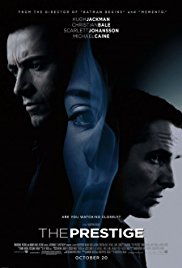
The Prestige (2006), directed by Christopher Nolan

prestigeWhen I was a kid playing basketball at the local Jewish Community Center, I would often hear adults mentioning famed football coach Vince Lombardi’s comments about winning. Here are some of those quotable quotes: “Success demands singleness of purpose.” “Winning isn’t everything, it’s the only thing.” “Second place is meaningless. You can’t always be first, but you have to believe that you should have been – that you were never beaten – that time just ran out on you.” These statements fit the profiles of the two central characters in The Prestige, a mind-bending tale of two adversarial magicians who spend their lives trying to best the other professionally.
Their initial friendship turns into bitter rivalry when the wife of Robert Angier, known as the “Great Danton,” dies in a magic trick because of a knot tied around her hands by Alfred Borden, a competing magician who is assisting Angier in his show. It is unclear whether Borden disregarded a warning not to use this particular kind of knot and deliberately placed Angier’s wife at risk by making the knot more difficult to untie, or whether he assumed that Angier’s wife could easily free herself from the knot. In any event, after the death of Angier’s wife, the two men go their separate ways, admiring the other’s illusions, but also attempting to damage the other’s professional reputation.

The competition between them intensifies with both men trying to outwit the other and learn the secrets behind the other’s magic tricks. Tragedy strikes Angier again during a trick called the “transported man” when he falls into a hidden giant tank of water from which he cannot escape. Borden watches Angier suffocate and is ultimately accused of murdering him.

The film is full of twists and turns, revealing information about how their magic is performed, and then suggesting that what we see is not really what is happening. One must pay close attention to the machinations of both Angier and Borden to discover the truth.

What is clear is that neither Angier nor Borden play by conventional rules. They both want to be the best magician, and everything in their life is subservient to satisfying the desires of their respective egos. Jewish ethicist Rabbi Dr. Asher Meir in an essay entitled “Ethics and Sportsmanship” writes: “In business, like in sports, keeping score is a legitimate and valuable way of motivating people and inducing them to give their best. But just as sportsmanship in games reminds us that winning is not what’s ultimately important, business ethics reminds us that we don’t win the game of life by accumulating the most ‘monopoly money,’ but rather by doing the most good with our God-given talents.”

In The Prestige, we have two men driven not by doing the best with their God-given talents, but by their personal desire to gain notoriety by creating the best illusion. They have no interest in benefiting society with their skills. All they want to do is provide an “aha” moment to the audience so that their tricks are memorable. For them, family responsibilities are secondary to winning accolades as the best illusionist.

The fates of Angier and Borden remind us that obsessive concern with fame ultimately does not bring us happiness in life. It may for the moment be satisfying, but it does not foster meaningful human connections. The Ethics of the Fathers, a classic of Jewish wisdom literature, reminds us: “He who pursues a name will lose his name.” Yaakov Astor, a veteran Jewish educator, writes: ”Fame is an empty goal; it’s nothing unto itself. The person who gears his every thought and action toward the pursuit of fame cannot grow. Growth is an internal quantity; fame is external, a shell. The person whose entire focus is the external shell is not alive and growing on the inside.” Angier and Borden do not understand this basic truth.

Purchase this movie from Amazon.com.

The Sixth Sense (1999), directed by M. Night Shyamalan

sixth senseI read chapters from Ethics of the Fathers, a classic of Jewish wisdom literature, every day. So many of its messages resonate that no matter how many times I study it, I always find something new in it. For example, when I first read the maxim “if not now, then when,” I was a young man and the phrase encouraged me not to procrastinate when it comes to doing good deeds. When I read the same maxim as a senior citizen, the subtext of the line is mortality. The maxim reminds me that every day could be my last, so I should use every minute of life wisely preparing myself for an audience with the Divine. At the end of my life, I will have to give an accounting of my life to the Holy One, blessed be He.
The Sixth Sense is a mystery, but also a meditation on how we prepare ourselves in this world for eternal life in the next. It is a complex film that deals with death and ultimate questions such as how we should conduct ourselves in this transitory world. How do we spend our time? With whom do we spend our time? With family? With friends? With work? To what extent do we prioritize our time with family? Sometimes we are so busy doing good things that we forget to spend time with those whom we love and who want and need our attention.

Malcom Crowe, a child psychologist, is deeply concerned about his patients. Regrettably, he cannot solve everyone’s problems. One evening, an ex-patient invades his home and shoots Malcolm in front of his loving wife, Anna, and then kills himself. The film continues a year later with Malcolm in recovery mode trying to help a nine-year old boy, Cole Sear, who seems to have the same delusions as the patient who entered his home a year before.

This time Malcolm does not want to fail his patient, so he devotes all his time to trying to understand his psychosis. Why does Cole see dead people? How does he communicate with them? The more time he spends with Cole, preoccupied with the boy’s problems, the less time he spends with his wife, and their relationship suffers.

After many therapy sessions, Malcom begins to believe Cole when he tells him that he sees people who do not realize they are dead. Malcolm suggests that Cole’s ability to see ghosts may have a purpose: Cole perhaps has a mission to help the dead finish their mission on earth. This insight becomes the catalyst for Malcolm’s completing his own life’s mission.

The Sixth Sense suggests that there is a middle ground between life and death where we can still do things that affect our status in the next world. Judaism does not believe in such a middle ground. Rather, Jews are encouraged to maximize the moments in this world so that our existence in the next world is one of supreme spiritual pleasure.

The Sages in Ethics of the Fathers, a classic of Jewish wisdom literature, maintain that one hour in the world of the living is more precious than all of life in the world to come. This world is the world in which we live and toil, and it is a world where we can do good actions. Once we leave this world, we can no longer perform good deeds.

Judaism believes that there is life after death. Our physical bodies may deteriorate over time, but our spiritual essence, our souls, which come from God, transcend the body. The fact that physical life has an end gives meaning to what we do on earth. Indeed, our spiritual existence after we die depends on the kind of life we led when we were alive.

Rabbi Benjamin Blech, referring to a source in Kabbalah, writes: “As we bid farewell to the world, we are shown a film that contains scenes of our entire lives. We are witnesses to every moment of our days on Earth as they pass before us with incredible rapidity. And as we watch our own story unfold, there are times when we cringe with embarrassment; others when we smile with glee. What happens after death is that we gain the wisdom to evaluate our own life by the standards of Heaven – because we have finally glimpsed an eternal perspective.”

Moreover, he insightfully comments: “Death isn’t a destroyer; it’s a transition. As the chassidic Rabbi Mendel of Kotzk put it, death is just a matter of going from one room to another. And if we live our lives in accord with the will of God, we are certain that the place we are going to is ultimately the more beautiful area.”

The Sixth Sense deals with the transition from life to death and raises questions about how we lead our earthy lives and prepare for our spiritual lives after death. The film encourages us to leave a legacy of good deeds before we enter our eternal abode.

Purchase this movie from Amazon.com.

Notes on Blindness (2016), directed by Peter Middleton and James Spinney

notes on blindnessA couple of years ago, I visited the Museum of the Blind in Holon, Israel. It was an immersive visit in a totally dark environment led by a blind guide who wants to give visitors a sense of what it is to be blind and what accommodations a blind person has to make to lead a relatively normal life. I left the museum extremely grateful for the gift of sight.
Notes on Blindness took that grateful feeling and made it deeper. The film is a true record of what happened to John Hull (1935-2015), a writer, theologian, and university professor in England, who totally lost his sight in 1983 after a number of operations on his failing eyes. The script of the film contains the exact words of his audio diary, which he kept to document his coming to terms with his blindness. They eventually became the basis for Hull’s book, Touching the Rock, and later the movie, Notes on Blindness.

Notes on Blindness is a film in a category of its own. Between segments of the film, the screen goes totally black for several seconds. Even as the story is told, much of it appears in dim lighting. Furthermore, the images are often out of focus, making it challenging for the viewer. Moreover, many of the scenes are shot with only parts of a person in focus. There are images of parts of faces, feet walking, and hands moving, as if to suggest impaired vision. As Hull narrates, we are given entrance to his dreams, his memory, and his imagination; and it is a fascinating journey.

As he comes to accept his blindness, he goes through various psychological stages. A particularly difficult time occurs when he returns to his native Australia to visit his aging parents. He remembers little of his visual life there and returns to England depressed.

It is at his home in England that his spirits are lifted. He emerges from “the shadowland of passivity” to a world with which he is familiar. He caresses his old furniture. He is pleased to find his desk and chair in their proper places, and he is happy to find his tape recorder in working condition.

What is amazing is the devotion of his wife who is by his side through all his adversity. We learn later that Hull and his wife, Marilyn, had five children, a profound testimony to their love and devotion to one another. Hull writes about her: “What I remember about you most vividly in those years was your amazing practicality. You never expressed regrets. You just got on with the next thing, step by step. The way you did that, I always thought was incredible.”

Hull does arrive at some kind of epiphany. He ultimately sees his blindness as a gift from God. It is not a gift he wants either for himself or his children; but now that he acknowledges this divine gift, he realizes that to complain about it is fruitless. What he must do is to decide how he will use this gift in a creative way for the rest of his days.

This perspective on life echoes the sentiment expressed in Milton’s poem “On His Blindness.” Here is the poem in its entirety:

When I consider how my light is spent,
Ere half my days, in this dark world and wide,
And that one Talent which is death to hide
Lodged with me useless, though my Soul more bent
To serve therewith my Maker, and present
My true account, lest he returning chide;
“Doth God exact day-labour, light denied?”
I fondly ask. But patience, to prevent
That murmur, soon replies, “God doth not need
Either man’s work or his own gifts; who best
Bear his mild yoke, they serve him best. His state
Is Kingly. Thousands at his bidding speed
And post o’er Land and Ocean without rest:
They also serve who only stand and wait.”

Milton, one of the great English poets, wrote this masterpiece when he was blind and coming to terms with his own personal affliction. One of my Torah teachers, in fact, said that this passage was a comfort to him when his father lost his sight. The essential message: we cannot know why God does what he does, but we can decide how we respond to adversity. That is the key to living a meaningful life.

Purchase this movie from Amazon.com.

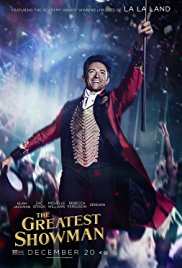
The Greatest Showman (2017), directed by Michael Gracey

greatest showmanIn the news recently was a story about a politician who announced that he was not going to seek re-election. He was successful in his career and made lots of money giving speeches across the country. Why was he retiring? He said it was because he did not want to be a “weekend dad” to his teenage children. He understood that his kids needed more face time with him, and he did not want to look back at his life and regret not spending more time with his children. Family was more important to him than fame or wealth. This dilemma in broad outline is at the heart of The Greatest Showman, the story of the rise of P.T. Barnum who makes choices between family and the pursuit of personal goals.
Phineas Taylor Barnum wants to make lots of money and be a celebrity. His wife is a polar opposite. She is content with little. For her, family is more important than fame or money. Phineas’ origins explain his perspective on life. Orphaned and poor, he is driven by his desire to succeed financially. Moreover, he possesses a creative and optimistic mind, ready to take on all kinds of challenges.

After losing his regular job in a trading company that goes bankrupt, he decides to open up a wax museum to support his family, a wife and two daughters, thinking that people will want to come to see his wax creations of famous people. It is a resounding failure.

He then launches a show introducing people who look weird, such as a woman who has grown a man’s beard and a midget. Others see his collection of oddities as a freak show, but he sees himself as giving these strange looking people a chance to celebrate their uniqueness. His motives, in truth, are a mixture of the altruistic and the pecuniary, and he is successful. His success enables him to tour all over the world, including America, and his family is left behind. Absence in this situation does not make the heart grow fonder. An emotional and psychological rift grows between husband and wife and it is only when tragedy strikes that Phineas rethinks his flamboyant lifestyle.

Rabbi Dovid Rosenfeld, a veteran Jewish educator, writes regularly on sayings from the Ethics of the Fathers, a classic of Jewish wisdom literature. On the passage “Who is rich? He who is satisfied with his lot,” he comments: “Wealth does not ensure happiness. It is an important means towards many other things — comfort, self-sufficiency, tranquility, peace of mind. But if we make it an end — if its pursuit consumes us and occupies all our waking hours — we will find nothing but stress and anxiety.”

Rabbi Rosenfeld quotes his teacher, Rabbi Yochanan Zweig, who also shares his perspective on the acquisition of wealth: “People who claim they are pursuing their careers so doggedly in order to provide comfortably for their families are generally deluding themselves. It is simply not true. They do it for themselves — for their own fulfillment. The pursuit of wealth and career assumes a life of its own. Such people become consumed with a drive for prestige, achievement, fulfillment, or they don’t even really know what. But career becomes their life goal in and of itself.”

The Greatest Showman on one level is an entertaining musical with songs and dances that engage your mind and heart. More important, it alerts us to the negative effects of possessing too much wealth and focusing on career more than family. In the end, it is family that endures, not money.

https://www.youtube.com/watch?v=AXCTMGYUg9A

Purchase this movie from Amazon.com.

For the Love of Spock (2016), directed by Adam Nimoy

for the love of spockIn the late fifties and sixties, I was a rock and roll aficionado and some of my favorite songs were what became known as “one-hit wonders.” They were great songs done by artists who basically produced only one hit song. Some examples: “Sometimes When We Touch” by Dan Hill, “Sea Cruise” by Frankie Ford, and “The Book of Love” by the Monotones. They were classics, but the vocalists had a short shelf life.
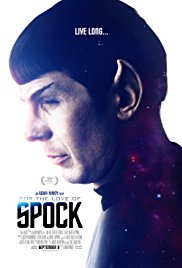
Reflecting about their careers reminded me of a line uttered by Leonard Nimoy in For the Love of Spock, a loving biography of the actor directed by his son Adam. Nimoy says that before Star Trek, the longest acting experience he had lasted only two weeks. He was a “two-week wonder,” and this created a financial uncertainty that influenced his career decisions throughout much of his life.

As a young man, he became enamored of the theatre and, against the wishes of his parents, journeyed to California to further his career goal of becoming an actor. He got parts in films, did live theatre, and, serendipitously, landed the role of Spock, the Vulcan alien who became a fixture of the celebrated Star Trek series. Although the show only lasted three seasons, it turned into a cultural phenomenon through many years of syndication, and gave Nimoy the kind of job stability that he yearned for since his early acting years.

The only downside to Nimoy’s luminous career was his performance at home as a husband and father. So immersed was he in his own career that he was scarcely available to his children. A chasm developed with his son Adam, in particular, who was going through his own adolescent crisis. For many years the two did not speak to one another. Happily, before Nimoy died, his son reconciled with him so that Nimoy’s final years were emotionally rich and rewarding. What is especially touching is hearing a letter that Leonard Nimoy wrote to his adult son in which he apologizes for not being there for him at challenging moments of Adam’s life, when he truly needed his dad to support him through addiction problems and divorce.

Dr. Miriam Adahan, a psychotherapist living in Jerusalem, encourages parents to be present in their children’s lives to help them develop ego-strengths during their formative years. How do we do this? Give children a smile, or word of praise, or express gratitude for the good things they do. Value the smallest acts of self-discipline that a child shows. Remind them of the wisdom of King Solomon who said, “No one gets even half their heart’s desires fulfilled (Ecclesiastes 1:13).” The assumption is that God gives you everything you need. It may not be all that you want, but it is all you need to grow and prosper.

The portrait of Leonard Nimoy that we see in For the Love of Spock is complex. The film is not hagiography; rather it gives us a window into the life of an artist who was multi-talented and craved success. But there was a price he paid in terms of family connections.

In truth, Nimoy did not have a close relationship with his own father, and that lack of a role model influenced his own lackadaisical attitude towards parenting. Interestingly, in spite of having little meaningful interaction with his own father, Leonard Nimoy still remembered his childhood fondly.

One memory, in particular, stands out and was the basis of one aspect of Spock’s character, Nimoy’s fictional persona; namely, the Vulcan greeting. Nimoy recalls going to the synagogue as a child and watching the descendants of priests utter their holiday blessing to the congregants while forming a “V” with the fingers of their hands. This became the Vulcan greeting that accompanied the phrase ”live long and prosper.” This phrase expresses Nimoy’s personal mantra and his life. Indeed, Leonard Nimoy lived long and did prosper.

Purchase this movie from Amazon.com.

War Machine (2017), directed by David Michod

war machineAfter serving in Jewish education for many years in America and teaching in two schools in Israel, I am no longer active in the field of education. However, I continue to read articles about the latest trends in Jewish education, particularly at the high school level where I spent most of my career.

What I find interesting is that while outwardly things change, especially due to technology, many things still remain the same. One example: Year in and year out, the subject of how to make prayer meaningful is discussed in Jewish schools.

Dr. Beth Hait, former assistant dean of students at Yeshiva University’s Stern College, in 2016 discusses three issues pertaining to prayer in Jewish day schools: attendance, decorum, and participation. These issues are the same ones I dealt with in the 1970s when I began my tenure as a high school principal. Hait insightfully writes: “If part of the goal of Jewish education is not only to impart knowledge but to build the foundation for a lifelong relationship with God, then understanding prayer should be a priority, and God should be an integral part of classroom conversation.”

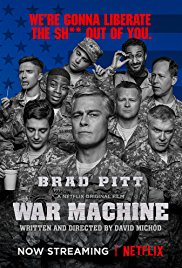
Indeed, there are no easy answers to perennial questions. Nonetheless, we try our best to solve the problem. This essentially is what four-star General Glen McMahon does when he is called in 2009 to deal with the war in Afghanistan, a war that has been going on for many years without a successful resolution. No previous general has been able to deal effectively with the diplomatic quagmire in Afghanistan, and so McMahan is brought in; but the same problems that plagued his predecessor plague him. The realities on the ground have not changed.

McMahan wants President Obama to authorize a troop surge of 40,000 soldiers to end the war, but he runs into political opposition. Things get worse when Sean Cullen, a writer for Rolling Stone magazine, pens an article critical of the general and his staff.

Cullen provides the voiceover narration for the film. He views McMahan with skeptical eyes, appreciating his energy and patriotism but questioning his judgment in matters where the general’s ego is involved. Cullen observes: “You could argue that the main reason certain generals like war so much is because only in war do they feel truly relevant. It’s only in war that they feel close to the center of power. Only in war do they feel the warm glow of other people’s attention.”

The problem depicted in War Machine is that America is involved in a war it cannot win. The locals don’t trust the Americans who may not be there to help them in the long run. At a press conference with McMahan, a German politician articulates the dilemma: “Your analysis of the insurgency there suggests to me that there is no monolithic Taliban. You are spread over the entire country. You are fighting 1,000 separate battles with locals whose principal ideological position would seem to be simply that they don’t want foreign soldiers in their village, and that, General, you must know, is a war you will never win.”

Jewish law considers the reasons why a nation has to go to war. Obviously, it can go to war to defend itself. Beyond that, things get complicated. Reuven Kimelman of Brandeis University, in an article on warfare and its restrictions in Judaism, tells us that the Sanhedrin, the Jewish Supreme Court in ancient times, is the body that can authorize a discretionary war. Kimelman quotes Rabbi David Bleich: “Before granting authorization to wage war, the Sanhedrin must weigh the probable losses, consider the chances of success, and assess the will of the people. The Sanhedrin is charged with assessing the military, political and economic reality and determining whether a proposed war is indeed necessary and whether it will be successful in achieving its objectives.”

The Sanhedrin was composed of wise men, not politically motivated but concerned about the long term wellbeing of the people. The egos of generals were not part of their consideration. War Machine reminds us of the complexity of military decisions that affect not only soldiers, but also the locals who are affected by what nations do on the battlefield.