Author Archives: herbert j. cohen

The Best Years of Our Lives (1946), directed by William Wyler

best years of our lives posterWhen I was in high school, I had a part-time job at a local pharmacy, working the evening shift from 4 PM until 11:30 and all day Sunday. It was the only store open on Sunday during the late 1950s, before the days of 24/7, or 24/6 in Israel.

One Sunday, a customer entered with a frightful face that was hard to look at. It looked like part of his face had been blown off. He had no nose, just a hole in the middle of his face where a nose was supposed to be, and his ears were deformed as well. Although his mouth was distorted, he spoke normally and I understood all of his requests. In fact, he was the best customer I had all day, for he bought gifts for his family that he would see later that day.

Many years later when I was reading Dalton Trumbo’s controversial anti-war book Johnny Got His Gun, I thought of him. I thought of him again when I heard Bob Dylan’s anti-war song “John Brown,” which is about a boy who leaves for war amid cheers and returns damaged both physically and mentally.

The classic film The Best Years of Our Lives deals with the aftermath of war and the challenge that servicemen face when they re-enter the world after their wartime experiences. The movie presents three different responses in the narratives of Fred Derry, Al Stevenson, and Homer Parish. The world has moved on, and these men come back to an unfamiliar landscape, but one to which they must adjust if they are to lead successful lives.

Fred was a captain in the Air Force, where he served valiantly to protect his fellow soldiers, but prior to the war he was a soda jerk with little education and without much of a future. Al was a sergeant who saw action in the Pacific, and he returns to an executive position at the bank for which he worked before the war. Homer was a star athlete, but lost his arms below the elbow in a ship fire. For him, the tragic legacy of the war lingers because of his physical disability. Now he has hooks instead of hands and his self-esteem has plummeted.

Homer, engaged to Wilma, feels that people see him as a freak of some kind, causing him to withdraw from Wilma. He does not want to be a burden to her, yet he loves her dearly. In a sublimely touching scene, he shows her what he has to do to manage his disability, for he cannot button his pajamas or open a door. With tenderness, Wilma buttons his pajamas and pledges her love to him. It is a happy ending to a stressful time in Homer’s life.

Jewish tradition has a special take on disabilities of all kinds. In the Talmud, there is a strange story about an extremely ugly person. The Talmud recounts that Rabbi Shimon ben Eleazar encountered this man; and when the ugly man extended a greeting to him, Rabbi Shimon mocked him. The ugly man then responded: why not go to the Artisan who made me and tell him “how ugly is the vessel You made.” Rabbi Shimon realized that he spoke cruelly, forgetting that God is the final arbiter of disability, and begged the man for forgiveness.

What the story teaches us is that God is the artisan that made all men, some ugly and some beautiful, and physical appearance has little or nothing to do with the way God sees us. God relates to what is inside, not to what is on the surface. This reflects how we should relate to the disabled, not with insensitivity, but with compassion and love, recognizing that we all are created in God’s image. Homer’s story in The Best Years of Our Lives reminds us to treat all people, and especially the disabled, with kindness, with respect, and with love.

Purchase this movie from Amazon.com.

McFarland, USA (2015), directed by Niki Caro

McFarland USA posterWhen I was a freshman at Yeshiva University, I thought I would try out for the basketball and wrestling teams. In high school I had never played on a school team, but I enjoyed the competition of organized sports. A freshman who befriended me was Bobby Podhurst, the tallest fellow I had ever known and I went with him to a practice one evening to see if my skill level in B-ball was up to college standards.

Since Yeshiva University had no gym of its own, we had to take a subway to Power Memorial High School for practice. I soon realized that I was not ready for prime time basketball after a long day of general and Judaic studies and then traveling for an hour on the subway for a late night practice. It was an exhausting experience, which clearly indicated that playing on a college athletic team was not for me. I lacked the skills and the stamina. However, I did learn one thing from placing myself in the shoes of college athletes for one evening. I gained a better understanding and appreciation of what a student commits to when he plays in organized athletic competition.

These thoughts raced through my mind as I watched McFarland, USA, a heartfelt sports story about an obscure school in a disadvantaged California community that emerges as a cross-country racing powerhouse.

The year is 1987, and football coach Jim White finds himself the assistant coach in McFarland, a small high school populated by Latino students with no plans to go to college. The future for them is arduous work picking crops on the field in the hot sun so that their families can survive economically. Jim observes that a number of boys do not even finish football practice because their parents pick them up to take them home to help them harvest crops.

Watching the boys run around the track during practice gives Jim the idea of starting a cross-country team of runners, mostly comprising those students who are cut from the football team.

The cross-country team initially does not have success, and Jim attributes it to his inexperienced coaching of the sport. He also learns about the personal challenges the boys face coming from a poor background. For them, attending college is an impossible dream.

One day Jim decides to join them in the fields to get an idea of what that work is. Only by standing in their shoes for the day will he understand the mighty challenges the boys face. For Jim it is an exhausting experience.

As the boys and Jim begin to know each other better, they find success on the running trails. They win competitions, and the townspeople buy uniforms and new running shoes for the team. One success follows another and the McFarland team eventually qualifies for participation in the state championships. The coda as the credits roll juxtaposes images of the actors with the real people they portrayed, and indicates what they did after high school. The ending of their individual stories is both surprising and inspiring.

Like many sports movies that depict a team’s rise from obscurity to fame, the story of McFarland is inspirational; but McFarland has another agenda as well. It considers the topic of prejudice as it depicts the team’s encounters with other schools, which have a negative view of Latinos. Moreover, Coach Jim White initially is himself guilty of prejudice. It is only when he joins the boys in the fields that he begins to understand what their life is like and begins to relate to them with genuine love and concern.

The Ethics of the Fathers, a classic Jewish work of ethical instruction, states: “Do not judge your fellow man until you have been in his position.” This is a maxim that Coach White takes to heart. Once he understands the challenges of his students, he is able to be a friend and mentor to them. They sense his sincerity and are ready to give him their very best. McFarland reminds us to refrain from judging people until we truly understand why they do what they do.

Purchase this movie on Amazon.com.

The Martian (2015), directed by Ridley Scott

martian posterIn the Bible and Talmud, there are descriptions of people who respond admirably to adversity. In spite of whatever happens, they do not give up; rather they find a way to continue to be optimistic and productive, no matter what the obstacle.

A classic example from the Talmud is Nachum Ish Gamzu. Whenever misfortune struck, he would say, “this too is for the good.” His unyielding optimism made him a role model for many who faced trials and tribulations.

Nachum became blind in his later years. He also lost his hands and feet, and lay in a dilapidated house where his bed was propped up on water jugs to prevent ants from reaching him. Throughout this time, Nachum responded by saying to himself and others that “this is also for the good.”

Mark Watney, the hero of the tense survival drama, The Martian, experiences adversities of a different sort, but his optimism in the face of overwhelming challenges recalls the attitude of Nachum Ish Gamzu. Mark’s story begins on Mars where he is collecting ground samples to bring back to earth. When an intense storm comes in, Hermes Commander Melissa Lewis orders the mission aborted. Regrettably, a piece of flying debris catapults Watney to a location far from the their space ship, and Mark is left behind.

Although the Director of NASA and the rest of the Hermes crew consider Mark dead, we learn that he is still alive. His first challenge is to remove a piece of antenna stuck in his abdomen. His second is to figure out how he can survive with an oxygen supply that is diminishing rapidly. His third challenge is to determine if he has enough food to last for four years since that is how long it will take to launch a rescue mission. As a botanist, he sees possibilities that the average astronaut will not, and so he begins to plant potatoes on a planet whose soil is not designed to grow earth-like vegetables.

NASA engineers soon detect some movement on Mars, and they discover that Mark is still alive. Eventually they establish communication with him, and a rescue plan is devised. Once his crew learns that he is still alive, they volunteer to be part of the rescue team. Although the plan is complicated, risky, and many obstacles need to be overcome, Mark never gives up. He looks at each problem as one solvable problem. He does not allow the complexity of the mission, which involves overcoming multiple challenges, to deter him from trying his best to survive.

Many years later we see Mark lecturing to class of budding astronauts. His words resonate with the wisdom of experience: “At some point, everything’s gonna go south on you and you’re going to say, this is it. This is how I end. Now you can either accept that, or you can get to work. That’s all it is. You just begin. You do the math. You solve one problem and you solve the next one, and then the next. And if you solve enough problems, you get to come home.”

The Ethics of the Fathers, a classic of Jewish wisdom literature, also expresses a similar perspective on confronting life’s challenges. When faced with a problem, what is important is that we begin to address it and look for ways to solve our dilemma. Indeed, all beginnings our difficult, and we are not always able to complete the task given to us. However, our job is to start with all of our strength and concentration to do the best we can. The rest is left to God. This positive approach to life is worth emulating.

Purchase this movie from Amazon.com.

LIke Father, Like Son (2013), directed by Hirokazu Koreeda

like father like sonIn 2007, Rabbi Aharon Lichtenstein, of blessed memory, gave a talk to students reflecting on his career path in Jewish education. At the time, he was one of the heads of a prominent yeshiva in Israel. However, his intellectual journey included stops at Harvard University where he earned a doctorate in English literature and Yeshiva University where he was a student of Rabbi Joseph Soloveitchik, one of the great Torah thinkers of the twentieth century.

In his talk he said that his greatest single success is, without a doubt, his family. Rabbi Lichtenstein understood that what is most important is not an academic degree or a prestigious job, but rather family, the bedrock of a meaningful life. I thought of this as I watched Like Father, Like Son, a moving story of two families whose children are switched at birth, and the consequences of that traumatic event.

Ryota Nonomiya is an ambitious, successful, and self-absorbed architect, addicted to his computer whenever he has a spare moment. He sees himself as extremely bright, talented, and possessing a solid work ethic. He rarely shows emotion, and his wife Midori and son Keita long for his attention.

On one fateful day, the hospital in which his son was born calls for a meeting with him and his wife. They learn that at birth his real son was switched with the child who presently they view as their son. The hospital acknowledges the error and seeks to place the boys with their blood parents.

Ryota and Midori soon meet with the other parents, Yukari and Yudai, people of modest means, but whose home is filled with warmth and love. After getting to know them a little better, they decide to switch children for one weekend. Ryusei, their biological son, spends a tense time in the home of Ryoto and Midori, his real parents, whose home is much more rigid than the one in which he was raised. Keita more easily adapts to the loving home of his real parents who fill the air with laughter and optimism.

The switch is extended for more weekends as both sets of parents struggle to determine what to do: keep the child they raised so far or take their blood child. The transition period is difficult since all of the parents have invested much love in their charges. Moreover, the children themselves have difficulty adjusting to the ambiance in their new homes, which are vastly different from their previous ones. What decision will be the wisest given the emotional realities?

Like Father, Like Son deals with some important parenting issues. What defines a good parent? Is it one who pushes his child to excel and gives him tangible rewards, or is it one who gives his child an abundance of love, joy, and time? Furthermore, how important is the amount of time you spend with your children?

Jewish tradition has an instructive approach on what it means to be a parent. The parent’s mission is to educate the child, not just to bring him physically into the world. The ancient Midrash tells us “he who brings up a child is to be called its father, not he who gave birth.” Parenting, therefore, is both a physical and emotional task, and the wise parent has to connect on both levels.

In a sense, the parent is God’s representative on earth, and children need to see parents, like the Divine, as symbols of authority and symbols of love. In the liturgy of the Jew, God is often referred to as “our Father, our King.” What this appellation means is that we relate to God as a King upon whom we are totally dependent, but we also relate to God as the loving father, who sticks with us even when we err. Like Father, Like Son reminds us of the complex nature of parenting, which beckons us not only to instruct but to unconditionally love our children.

Purchase this movie from Amazon.com.

Changing Lanes (2002), directed by Roger Michell

changing lanes posterWhen I call up people to get information I need, the conversation begins with this question: do you have time to talk now? If the answer is no, I say I will call later.

I am very sensitive to time issues because I value time. I count my minutes and struggle to make the most of whatever time is available. Inwardly, I am upset when I am involved in a conversation that goes nowhere and that simply keeps recycling the same stuff.

The value of time is immense and can sometimes make a profound difference in outcomes. Such is the situation in the tense thriller Changing Lanes, which considers the calamitous results of being late when an important matter needs to be resolved. Minutes can make the difference between success and failure at business and in life.

Gavin Banek is a successful lawyer. His agenda for the day is to go to court to file a power of appointment showing that a wealthy man on the verge of death assigned the administration of his charitable foundation to Banek’s law firm. The man’s daughter is contesting the appointment, arguing that her father did not know what he was doing when he signed the papers Banek gave him.

Across town Doyle Gipson is also on his way to court. His agenda: to gain custody of his children and prevent his wife from moving to Oregon with his kids. Banek and Gipson get into a fender bender on the FDR Drive in New York, and both are delayed from arriving at their destinations. In a rush Banek offers Gipson a blank signed check to pay for damages; he does not want to take the time to fill out a police report and insurance claim.

Gipson, a recovering alcoholic, wants to play by the book and does not accept the check. He wants “to do the right thing,” but Banek does not let him. Instead, he leaves the scene of the accident, with Gipson stranded with a flat tire.

When Gipson arrives at court twenty minutes late, he discovers that the judge has already ruled against him in the case. Failure to appear on time has devastating consequences for him and for his relationship with his family.

When Banek arrives in court, also late, he realizes he dropped the critical power of appointment document and he guesses that Gipson may have it. Thus, a scenario is set up where not being on time changes the destinies of both men. These basically good men are tested by a host of adverse circumstances and allow anger to drive them to outrageous acts of revenge.

Changing Lanes is a film with many messages. It reminds us not to let anger dominate our responses to provocations. Once angry, we lose control over outcomes. Furthermore, it reminds us of how important it is to keep our time commitments, for this affects not only our lives but the lives of others as well. When Banek offers to pay Gipson money to make things right, Gipson excoriates him: “Money. You think I want money? What I want is my morning back. I need you to give my time back to me. Can you give me back my time? Can you give my time back to me?”

The film reminds us that although people make terrible mistakes, reconciliation and forgiveness are still possible. In many cases, errors can be rectified. Ill will can turn into friendship and good will.

Jewish tradition is very clear on matters of repentance. If a person injures another either physically, financially, or emotionally, there is a road back. All he has to do is acknowledge his mistake, resolve not to do it again, and ask the injured party for forgiveness. In a mood of calm thoughtfulness, bridges of peace can be built over the most raging of rivers.

Purchase this movie from Amazon.com.


American Sniper (2014), directed by Clint Eastwood

aamerican sniper posterThe ability to balance one’s professional role with one’s family responsibilities is one of the core issues depicted in American Sniper, an unnerving film about US Navy Seal sniper Chris Kyle, who was credited with 160 kills, more than any other sniper in history. His success as a sniper, however, is not simply achieved. To protect a fellow soldier, he may have to kill a woman or child. He may have to pull the trigger when he has a doubt about the intentions of his target. Is the target on the phone talking to his girlfriend or is he giving instructions to a terrorist poised to shoot an American soldier? There is moral ambiguity, and this creates great stress.

When Chris is a child, his father lectures him about the existence of evil people in the world, and his words resonate when Chris watches the 9/11 Twin Tower attacks on television. It motivates him to want to do something to protect America. Chris visits a US Navy recruiting station and decides to enroll in the SEAL program, which involves a rigorous training regimen. The training program includes learning how to be a sniper, at which Chris excels because of his early hunting experiences with his father.

During this training period, he meets Taya with whom he falls in love. They marry, but on their wedding day receive word that he will be deployed to Iraq. It is a mission that excites him, for it will give a real chance to serve his country.

When he leaves for Iraq, Taya is pregnant with their first child. When they talk by phone, they share their longing for one another, but Kyle does not talk about what he does in the military. Moreover, he does not want her to know about the atrocities he witnesses in Iraq.

Possessing a deep commitment to serve his country, Kyle serves four tours of duty, becoming a legend as the most successful sniper in American history. As time passes, his zeal for battle service increases. As his passion to protect his comrades in arms grows, he becomes more and more disconnected from family until one day Taya rebukes him: “I need you to be human again. I need you here.”

Kyle is challenged to find meaning to the normal flow of everyday life, away from the threatening battles of Iraq. Transitioning from a sniper into a normal husband and father is not easy. American Sniper reminds us that a healthy life needs to be a life of balance between one’s professional goals and the demands of raising a family. It is an echo of what the great medieval sage, Maimonides, said many years ago when he spoke about pursuing the golden mean and avoiding extremes.

A Torah teacher of mine was a master at balancing his myriad responsibilities as a graduate instructor of complex Talmud texts and as a father of six children. When I visited him in his home in the 1960s, I noticed that on his mantelpiece he had photos of his kids wearing Little League baseball uniforms. It was the first and only time that I witnessed a Torah teacher whose children were attired in such dress. When I asked one of his sons many years later why these pictures occupied such a prominent place in his home, he told me “my father wanted to keep us normal.” His father and mother valued scholarship, but they valued good character more, which is often nurtured on the ball field through good sportsmanship and developing solid interpersonal relationships.

Achieving balance in life does not mean giving equal time and energy to one’s work and family. Rather, achieving balance requires us to look at how we prioritize our tasks, and, in a nuanced way, navigate the many challenges we face professionally and personally. American Sniper encourages us to achieve balance in life by putting family first.

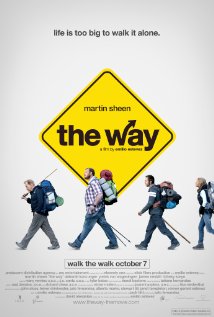
Purchase this movie from Amazon.com.

The Way (2010), directed by Emilio Estevez

way posterThe son of a good friend of mine announced to his family that he was not going to college. His parents, both professionals, were disturbed and appalled by their son’s decision but could not do anything about it. They, therefore, accepted it grudgingly and moved on with their lives. Many years later, after their son became wildly successful in business, they understood that to be successful every child does not have to attend university. Some may profit more from the school of life than a traditional school.

The conflict between how parents and children view higher education is at the heart of The Way, the picturesque narrative of the journey Thomas Avery, an American ophthalmologist, takes to pay homage to his dead son, Daniel, who perished in an accident on the Catholic pilgrimage road to the Cathedral of Santiago de Compostela in rural Spain.

At the outset, Thomas travels abroad to identify and claim the remains of this son. Once there, he decides to take the same walk that his son attempted, carrying with him Daniel’s ashes, which he sprinkles at various signposts along his journey. While walking on the trail, Thomas meets three pilgrims, each of whom has a specific reason for making the pilgrimage. Their reason is not to find spiritual meaning in life, but to accomplish certain goals. One wants to lose weight. Another wants to quit smoking, and another, a writer, wants to overcome “writer’s block.”

As they walk from place to place, Thomas and his newfound friends experience a number of challenges which bring them closer together as friends and makes them more empathetic to the unspoken personal issues each one is dealing with on their journey. When the group finally arrives at Santiago de Compostela, they discover for themselves and reveal to each other the real reasons why they joined the pilgrimage. Thomas, whose story is the central one, now understands the words that his son said to him before leaving home to explore the world.

As Thomas drove his son to the airport, he questions why Daniel is leaving. With typical parental concern, he reminds Daniel that he is choosing a life that may prevent him from succeeding in a professional career, especially since Daniel has told him that he does not plan to finish his doctoral studies at the university. Daniel responds: “You don’t choose a life, dad. You live one.”

Daniel reminds his father that Margaret Mead did not become a famous authority in primitive cultures only by studying about them. She actually went and lived among them. She talked with them, breathed the same air, and shared experiences with them. It was that first-hand contact with the locals that gave her an understanding that transcended what she learned in books.

Jewish tradition places great value on learning from life, beyond what is learned in books. There is a commandment in the Bible to stand up before the grey-haired man, before the senior citizen, even if he is unlearned. Why? Because, say our Sages, life itself is the great teacher and the fact that a man has survived the ages and lived to be an old man is something that we revere, irrespective of how wise he may be. Certainly the man who gains wisdom through books is to be respected whether he is old or young. But the man of wide life experience also is worthy of our respect because he has studied the book of life and found it full of intellectual, spiritual, and emotional treasures.

The Way is a film about one man’s journey to self-understanding, but his personal journey is a metaphor for the journey of all men who seek to understand life. The Way reminds us that knowledge of self is achieved not just by conventional study of texts, but by learning from our idiosyncratic life experiences.

Purchase this movie from Amazon.com.

Horton Hears a Who! (2008), directed by Jimmy Hayward and Steve Martino

Horton Hears a Who posterA friend of mine believes in the efficacy of conventional medicine. No matter what ails him, he refuses to consider holistic medical practices. He recently was having severe leg pain and I suggested that he consider acupuncture or chiropractic. He rejected both approaches categorically and continued to suffer, looking forward to his appointment with an orthopedic physician.

I was not certain that alternate therapies would work for my friend’s leg problem, but I was disturbed that he ruled them out without seriously considering the possibility that they might help. This dogmatic approach to problem solving is reflected in Horton Hears a Who, in which members of society reject the possibility of seeing things from another’s perspective.

This is the narrative crux of Horton Hears a Who, an animated version of the famous Dr. Seuss story of Horton, an elephant who hears voices of little creatures that no one else can hear. Everyone in the jungle of Nool dismisses these small voices, but Horton does not. He sees things differently, shifts his paradigm, and takes these voices seriously. He understands that it is possible to see things from another vantage point.

Horton discovers that the small voices are the voices of the residents of Who-ville, microscopic beings living on a speck of dust. A Who-ville scientist, Dr. Larue, tells the Mayor that Who-ville is in danger of extinction unless Horton finds a safer home for its citizens. And so begins Horton’s journey to Mt. Nool to provide safe haven for the residents of Who-ville. Along the way, he is harassed by many, especially the Sour Kangaroo, who feel Horton is out of his mind and hallucinating. Moreover, they feel his insistence on the reality of a microscopic Who-ville is dangerous educationally for it suggests to the children the existence of an alternate reality different from their own. Horton perseveres, however, repeating his motto “A person is a person, no matter how small.” In other words, opinions can have merit even if they express a minority view.

As Horton travels to Mt. Nool, he encounters life-threatening dangers. He almost falls off a bamboo bridge into a roaring river and he is attacked by a ferocious buzzard named Vlad, who almost kills him. In spite of these challenges and a hostile population that regards him as a liar and rebel, Horton continues to work on behalf of the citizens of Who-ville, whose perspective counts and who are relevant in spite of their miniscule dimensions.

Things come to a crisis because no one but Horton actually hears the citizens of Who-ville. But then the Mayor encourages everyone to shout “we are here” in the hope of letting the outside world know of their existence. In spite of their diminutive size, they still exist and want to live, albeit in their tiny universe.

In Jewish tradition, debate is good. The Talmud is filled with arguments expressing alternate points of view. Jewish law is decided by the majority of the Sages, but the minority view is still valued and preserved in the text. Why is this so? The Bible tells us that everyone is created in God’s image. This does not refer to a physical image, but rather to matters of the mind and spirit. Just as God is unique, so too is every human being. There is respect for differences and there is no expectation that everyone will think alike or look alike.

That is the essential message of Horton Hears a Who. Horton lives in his own world, but does not deny the reality of other worlds. He may talk to himself but he hears the voices of others. It is good to fit in and be normal, but it is also good to listen to others, to understand that your perceptions of reality are not the exclusive ones. Listening to others, understanding their worlds makes you a more sensitive and complete human being.

Purchase this movie from Amazon.com.

The Railway Man (2013), directed by Jonathan Teplitsky

railway man posterA friend once told me when he was going through some difficult times that his wife counseled him never to let someone live rent-free in his head. In other words, if you have issues with someone, resolve the issue and do not allow it to weigh you down or preoccupy your thoughts. Preoccupation with a negative experience or negative person can prevent you from accomplishing your goals. It is wise to let go of the past so you can have a future.

This essentially is the dramatic crux of The Railway Man, the story of Eric Lomax, a British officer captured by the Japanese in World War II. Sent to a prisoner-of-war camp, he is brutally tortured for building a radio receiver out of spare parts. Although his only goal was to hear news about the progress of the war that might lift his spirits and those of other prisoners, his captors view him as a spy and punish him savagely. The scars of that torture remain with him even after the war, giving him nightmares and horrific memories that disturb his emotional equilibrium.

For many years, Lomax suffers psychologically because of his wartime torture. It is only after his marriage to Patti, a calming influence in his life, that he decides to confront the demons of the past so that he can have a normal life, free of frightening dreams that take him back to his Japanese incarceration.

Eric discovers that the Japanese secret police officer, Takeshi Nagase, who brutalized him escaped prosecution as a war criminal and now works as a tour guide at the site of the old POW camp. Lomax travels there and confronts his old nemesis, threatening to kill him. But Eric is essentially a decent man unable to kill an unarmed man. His humanity touches his former nemesis, who reveals his sincere remorse for his actions so many years before. He reminds Eric that he did what he did because he thought his country’s survival was at stake. Only after the war did he see the objective cruelty of his behavior.

The encounter with Eric paves the way for reconciliation between villain and victim. Their portentous meeting is cathartic for Eric and allows him to move beyond the memory of his past suffering into a happier, more life-affirming existence. After their meeting, he writes to Takeshi: “Dear Mr. Nagase, the war has been over for many years. I have suffered much, but I know you have suffered, too. And you have been most courageous, and brave in working for reconciliation. While I cannot forget what happened in Kanchanaburi, I assure you of my total forgiveness. Sometime the hating has to stop.”

What enables him to forgive Takeshi is Eric’s deep love for his wife, Patti, who truly wants Eric to move beyond his past suffering into a happy future. His abiding affection for her motivates him to transcend painful yesterdays and focus on the present. Patti never pushes him to confront his past; rather she gently and lovingly suggests that he needs to confront the past so that they can build a happy marriage, free of painful memories. She is the helpful, supportive presence that enables him to move forward with his life.

When Adam marries Eve, the Bible uses a strange phrase to describe Eve’s relationship to Adam. The Hebrew phrase is ezer k’negdo, which literally means “she is a helpmate in opposition to him.” It is a contradictory and confusing description. The Sages explain the phrase as follows: if a man is worthy, then his wife will help him achieve his goals in life. If he is not, then she will work against him and prevent him from accomplishing his life’s goals.

Eric is a worthy man, blessed with Patti as his wife, for she enables him to confront former times and become emotionally healthy for the balance of his life. Patti does not judge him or criticize him. She only seeks to help him, and she does this by giving him the psychic room to resolve the issue on his own. The Railway Man is a testament to the resilient spirit of man, which can often be attributed to the resilient and wise spirit of his wife.

Purchase this movie from Amazon.com.

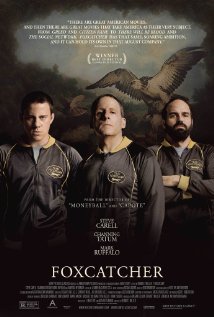
Foxcatcher (2014), directed by Bennett Miller

foxcatcher posterInherited wealth can be good or bad. If it enables a person to do many good deeds that are beneficial to society, that is great. But if it isolates the possessor of such wealth and makes him immune to the intrusions of society, if it allows and encourages him to live in his bubble divorced from everyday realities, then it can very bad.

I have an acquaintance who is independently wealthy. He did not earn any of his wealth. His parents support him and his family totally. They bought his home for him and he does not work. He spends his day planning to begin an Internet business and he has been planning to do this for the past five years, all the years I have known him. I occasionally wonder what motivates him to get up every day.

The sinister side of possessing lots of money is depicted in Foxcatcher, the dark and brooding story about John E. du Pont, heir to the du Pont family fortune, who decides to sponsor Mark Schultz, an Olympic wresting champion for an appearance at the Seoul Olympics.

Mark and his older brother Dave were both gold medal winners, but Dave is married with kids and he has no plans to participate in the upcoming Olympics in Seoul. Mark, however, is single and, outside of wrestling, has little other interests. He is contacted by John E. du Pont, a well-known philanthropist and wresting aficionado, who would like Mark to train at his private wresting training facility, Foxcatcher Farm, built on the du Pont estate in a suburb of western Philadelphia. Mark moves there and a friendship of sorts develops between him and du Pont. Strangely, du Pont introduces Mark to the use of cocaine, downplaying its negative effects.

Another oddity. When Du Pont tells Mark that he regards him as a true friend, he tells him he can call him by his familiar name: “My friends call me Eagle. Or Golden Eagle. Either of those would work.” Clearly, du Pont has grandiose visions of himself, unlike Mark who is a humble, unprepossessing figure.

When Mark and his teammates take a morning off, du Pont is incensed and he verbally assaults Mark, devastating him emotionally. Du Pont then calls Dave Schultz , a proven winner and effective coach, and convinces him to join the team at Foxcatcher. Upon his arrival, Dave sees that his brother has lost his self-esteem, is emotionally distressed, and is out of shape. In spite of Mark’s lack of conditioning, Dave works with him to win a match that secures a berth on the Olympic team. However, in Seoul he loses his matches.

Mark ultimately leaves Foxcatcher, but Dave stays on as du Pont’s assistant coach working with new wrestling talent. Du Pont is jealous of Dave’s natural rapport with the new recruits and is unsettled by Dave’s independence. Du Pont’s isolation eventually leads him to behaviors that are not mollified by interactions with the real world. Du Pont is a loner and that ultimately leads to a tragic denouement.

The Ethics of the Fathers states that jealousy and the desire for fame drive a man out of the world. Moreover, the Sages tell us not to separate ourselves from the community. John du Pont fails to understand these basic truths. Lacking self-esteem, he lords over others, always desirous of demonstrating his superiority. In truth, others resent him, finding him out of touch with the real world and focused only on creating an image of himself as a leader of men. Indeed, no one regards him as a leader. They simply follow his wishes because he pays their salaries.

Furthermore, his inability to connect with the community-at-large in a genuinely friendly way isolates him. He has no companions to whom he can relate honestly; therefore, he essentially only converses with himself. Foxcatcher is a grim film expressing the perils of seeking fame and leading a lonely life. Much can be learned from John du Pont’s bad example.

Purchase this movie from Amazon.com.