Category Archives: Action/Adventure

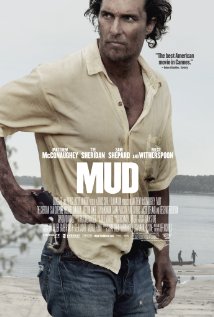
Mud (2012), directed by Jeff Nichols

mud posterWhen I was 14 years old, I dated seriously. I had a girlfriend and I thought I was going to marry her. In those innocent years, thoughts of sexual intimacy were not in my head. My emotions were clear and pure. Linda Sue was the girl I would marry. My fantasy came crashing down, however, when I travelled by subway from Mt. Vernon to the Bronx where she lived to surprise her. There I found her wooing another boy. I was speechless, devastated, and felt betrayed. Tears streamed down my cheeks as I made the lonely return trip to my home.

In hindsight, I can only thank God for not answering my prayers about Linda Sue. Indeed, she was a sweet and pretty girl, but I was clueless about what real love is at that tender age. Moreover, my own identity was as yet unformed. I did not know who I was let alone knew who Linda Sue was. That fateful day, my illusions about love began to give way to reality and a wiser view of what lasting relationships are all about.

Mud on one level is a film about a criminal on the run. But on a deeper level, it is a wise film about coping with life once our illusions are shattered.

The story opens as two teenage boys, Ellis and Neckbone, arrive at a small island in the Mississippi River. There they hope to acquire a boat stuck high in a tree, but they are frightened when they discover that someone is actually living in the boat. The occupant is Mud, a personable fellow who engages them in conversation, but who, in fact, is a fugitive on the run for murder.

Mud wants to reunite with his girlfriend Juniper and then leave town as soon as possible. To accomplish this, he enlists the aid of the two boys, who convey messages from him to Juniper about Mud’s intentions to meet her. The boys do not reveal Mud’s hiding place either to parents or police. They like him and, therefore, they trust him.

As this narrative is unfolding, there is a parallel plot involving Ellis and his parents, who are headed towards divorce. This is an unsettling reality that leaves Ellis emotionally confused. His house may be sold and his parents who once were in love are now out of love, something which Ellis cannot comprehend. Moreover, Ellis thinks he is in love with May Pearl, a high school girl several years older than him; and when she rejects his overtures in front of her friends, he is mortified.

In the midst of his own psychological turmoil, he is enthralled with Mud’s passionate devotion to Juniper, which motivates him to facilitate their reunion, naively thinking that love will conquer all. Ellis steals machine parts and other junkyard supplies to help Mud repair the boat stuck in the trees so that Mud can escape his pursuers.

Things, however, do not work out as planned and Ellis discovers that in the real world, one has to accommodate to the changing nature of human relationships. Separation and divorce may signal tragedy, but not necessarily the end of loving connections.

Jewish tradition frowns upon marital separation and divorce. Marriage is considered a holy bond, and divorce has many negative connotations. The Talmud actually says “even God sheds tears when someone divorces his wife.” Sometimes, however, divorce is necessary for a variety of reasons. The aftermath of such a tragedy does not have to be negative. It can mean a new, more fulfilling destiny for many, and a second chance at a successful life. Both Mud and Ellis, each at vastly different points in life and facing very different challenges, finally understand that separation can ultimately be good and allow people to re-emerge from darkness into light.
Purchase this movie from Amazon.com.

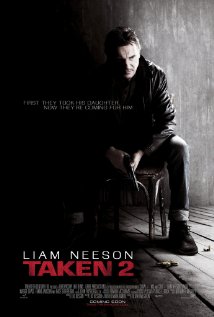
Taken 2 (2012), directed by Olivier Megaton

taken 2 posterI was recently eating at a restaurant with friends when one of them pointed out to me that my eyes were riveted on the big picture window behind him and not on him. He felt I was not paying attention to him. I apologized for my wandering eyes and asked for his forgiveness. I was grateful to him for rebuking me. I realized that having a conversation with someone does not just mean being in the same room with someone and talking. For anything meaningful to happen, I have to be engaged emotionally with what my friend is saying. I have to be aware not just of words, but of nuances in speech, in gestures that accompany words, and in body language as well. These critical issues of active listening and being aware of one’s surroundings are crucial in the action thriller Taken 2.

Brian Mills, an ex CIA agent invites his ex-wife, Lenore, and daughter, Kim, to spend some time with him in Istanbul. Unbeknownst to him, he is being targeted by group of Albanian terrorists who want to revenge the death of family members who were killed by Brian in past operations.

Once in Istanbul, he and his wife are taken by the terrorists and Kim is his only lifeline to rescue. In a tension-filled scene, he gives Kim instructions that are critical to saving his life and the life of his wife. Kim must go to his hotel room, find his suitcase, remove the gun and several hand grenades from inside the suitcase, and then throw the hand grenades in designated areas free of human traffic. All this is done so that Brian can track his whereabouts by listening carefully to the sound of the explosives. The louder the sound, the closer is Kim and rescue. Kim listens to her father with great concentration because she knows his life depends on it.

As I watched this violent, farfetched but entertaining yarn, I thought of how critical it is to pay attention when listening to others. Brian is an experienced CIA agent. He knows how to listen and how to be aware to all sensory information. When he first is seized and blindfolded in a car, he can sense his location because of the various street noises that he hears and because he can measure distances by measuring his travel time from one destination to the next. He listens with his mind as well as with his ears. He is not just passively noting noises; he is paying attention and this is much different from merely hearing sounds.

In Jewish law, there is much debate about the difference between merely hearing something and paying attention to what you hear. The laws pertaining to the proper performance of prayers is where much of this discussion takes place. Is simply reciting prayers sufficient or must you be mentally engaged with the words as well? According to some authorities, if one simply hears the words but does not pay attention to their specific meaning, he has to repeat his prayers since words without thought are meaningless.

Merely mouthing words without intellectual or emotional investment, without eye contact, is valueless. If we want to communicate important feelings, if we want to learn subjects deeply, if we want to connect with other human beings in a serious way, we have to be good listeners. We cannot simply nod our heads when someone is talking to us. We have to actively listen and take in what the other person is saying. Without listening attentively to others, we miss what they say and fail to deepen our relationship with our friends, our neighbors, and loved ones. When we pay attention and not merely listen, we enrich our lives and the lives of others.

Purchase this movie from Amazon.com.

Back to the Future (1985), directed by Robert Zemeckis

back to the future poster Time is relentless. Rational people understand that you cannot turn back the clock. Sometimes, however, there are moments in your youth when you summon up the strength or courage to do things that actually help you better navigate the future. Which is why I look back fondly at my foot race with John King in the sixth grade.

My neighborhood had changed because low income housing was built nearby and now my school’s population changed. Instead of attending a school with affluent, college-bound kids, I attended a school with many low achievers and discipline problems. Like many kids, I rose to the level of expectation of my teachers, who now viewed me as mediocre, instead of the academic star I was in my mother’s eyes. My self-esteem plummeted, even in gym class where I was overshadowed by some genuinely gifted athletes.

So it was a special day for me when I was pitted against John King, one of the tough and cool kids who smoked cigarettes in junior high school, in a 220 yard dash in my PE class. I was nervous, but on that day I was very fast and won the race. Winning did remarkable things for my self-esteem. I was who I was, but now I felt I could seriously compete against anyone in my school. I might not win every race, but I thought of myself as a potential winner and it did marvelous things for my ego.

That kind of personality transformation is at the heart of Back to the Future, an escapist fantasy of time travel, in which Marty McFly travels 30 years into the past and orchestrates the encounter in which his parents, George, a shy, bookish teenager, and Lorraine, meet and fall in love. Marty discovers that if his father becomes more assertive, Marty can alter his destiny and that of his parents as well.

The film opens in the home-laboratory of Dr. Emmett Brown, an eccentric scientist who prides himself on creating inventions, one of which is a time machine whose exterior is a DeLorean automobile. Through a series of improbable events, Marty jumps in the car to flee Libyan assassins and accidently is catapulted back to 1955, and that is when the adventure begins.

Marty meets his parents before they got married and realizes that unless he intervenes in their lives, they will not marry and he never will be born. The problem is that George McFly, Marty’s dad, is extremely introverted and devoid of self-esteem. He simply lacks the courage to ask Lorraine, Marty’s future mother, out on a date. Moreover, he is subject to the constant bullying of Biff Tannen, who often threatens him with violence. To complicate things, Marty’s mother as a teenager is infatuated with Marty rather than her destined husband, George. How everything is sorted out and how George and Lorraine finally meet and fall in love is the narrative arc of the film. In the end, we see that decisions and actions made as a youth can have profound implications for the rest of one’s life, especially in the life of George McFly.

Time is an eternal value in Jewish tradition, encapsulated in the maxim of The Ethics of the Fathers: “if not now, then when?” Everyday should be filled with achievement and spiritual growth, not procrastination. Furthermore, the Sages say that one should think that each day is potentially one’s last day. Therefore, one should think about how to conduct oneself every day of one’s life. Back to the Future reminds us that how we act today can influence our tomorrows. Therefore, let us be wise and make the decisions today that will enable us to have a successful future.

Purchase this movie from Amazon.com.

Young Sherlock Holmes (1985), directed by Barry Levinson

young sherlock holmes posterWhen I was a graduate student on Hunter College in New York, I took a course in Modern American Literature with a group of very bright students, but Jonathan surpassed them all. Strangely, he rarely came to class; but whenever he did come, he shared insights that truly mesmerized me. I learned more from him than from the instructor. He taught me the value of thinking outside of the box when interpreting and understanding the great classics of literature.

On the eve of the final, Jonathan called me and asked if he could come over and borrow my notes. He knew my notes were complete and accurate and he wanted to review them before the test. Happily, I gave them to him. Inwardly, I felt it was his choice to attend class or not, and if he felt attending class was a waste of his time, so be it. It was my choice as a friend to share my notes with him.

Friendship is at the core of Young Sherlock Holmes, an imaginative recreation of how Sherlock Holmes and John Watson became friends. Their personalities are diametrically opposed. Holmes is independent and daring, and Watson is a “play it by the book” medical student, staunchly averse to risk, always worried about jeopardizing his academic future. However, he admires Holmes’s adventurous spirit. Despite their differences, their affection for one another grows and is celebrated in the many detective novels of Sir Arthur Conan Doyle.

The film begins in Victorian England on a dark night when we see a hooded assassin use a blowpipe to shoot a dart into an unsuspecting man. The dart causes the man to hallucinate and commit suicide. Two more people die under similar circumstances; and Holmes, a friend of one of the victims, tries to piece together clues to find the murderer. This leads to all sorts of escapades in which he and Watson put themselves in danger as they discover an Egyptian cult bent on taking revenge for a wrong committed many years earlier.

At the end of their adventure, Holmes and Watson take leave of one another, and Watson realizes he forgot to thank him. Watson reflects: “He had taken a weak, frightened boy and made him into a courageous, strong man. My heart soared.” The friendship has transformed Watson and for that he is eternally grateful.

The Ethics of the Fathers, a classic of Jewish wisdom literature, reminds us not to take friends for granted and to appreciate what they do for us. Specifically, we are bidden to “acquire for yourself a friend.” Surely it does not refer to buying friends with money. One of the Sages interprets the aphorism by telling us that to acquire a friend, we cannot be rigid in our own opinions. We have to be open to the voice of others who see things differently. When we are sensitive to the needs of others and are tolerant of diverse opinions, then friendship grows. Friendship cannot thrive in an environment where friends are not free to express their opinions without fear of ridicule.  Moreover, the Sages point out that we should give honor to anyone who teaches us even one piece of wisdom.

These aphorisms resonated as I watched Young Sherlock Holmes. The story, narrated by Watson, reveals that he grew as a person because he recognized that Holmes, although different from him, was a person of great insight from whom he could learn. Watson did not let his own personal bias interfere with nurturing a new friendship. Indeed, friendship ultimately flowers in a garden of tolerance.

Purchase this movie from Amazon.com.

The Place Beyond the Pines (2012), directed by Derek Cianfrance

MV5BMjc1OTEwNjU4N15BMl5BanBnXkFtZTcwNzUzNDIwOQ@@._V1_SX214_When I moved to Israel four years ago, I lost a treasured possession: a silver wine goblet that was presented to my dad when he was president of the local synagogue for a number of years. To preserve the memory of that gift and of my father reciting the blessing over wine on the Sabbath, I decided to buy a replacement cup similar in appearance to the original cup and inscribe it as it was when it was originally presented to my father, and so I did. My father was not an educated man, but he was a wise man to whom I owe a great deal. He was present in my life at critical times, always supporting me and being there offering counsel. Keeping his memory alive both comforts and inspires me.

Fatherhood is at the core of the generational drama The Place Beyond the Pines. The first father we meet is Luke Glanton, a well-known motorcycle stuntman who regularly performs at state fairs. He is an absentee father who discovers he has had child with an ex-girlfriend. This revelation evokes a powerful desire within Luke to be a father, to take care of his son and to provide for his physical needs.

Because Luke’s father has been absent from his life, he is clueless about what parenting really means, translating it mainly into getting more things for his son. To accomplish this, he needs more money. He first obtains a job at an auto repair shop to supplement his income, but Luke wants more than this job can offer. When Robin, the auto repair shop owner, reveals that he was a former bank robber and asks Luke to join him in robbing a few banks, Luke readily agrees.

The second father we meet is Avery Cross, a policeman and father of a son as well. Raised in an affluent home, his own father is a role model of wisdom and material success. Avery intellectually understands the challenge of parenting, but his own personal drive for fame and fortune cause him to be an absentee father.

The lives of Luke and Avery intersect as do the lives of their sons, Jason and AJ, in painful, dangerous ways. There is a Talmudic notion that the acts of the fathers are a signpost for the children, implying that sons often retrace incidents from their parents’ lives in their own lives. They face the same challenges, but do not necessarily make the same choices when confronted with similar circumstances. The fact that AJ comes from an affluent background and  Jason comes from a poor family does not insure or predict success as an adult.

As we watch the relationship between the two sons unfold, we are compelled to meditate on the qualities that make a good parent. The Torah and Talmud clearly define our parental responsibilities towards children. We have to teach them Torah, which implies giving them moral guidance. We have to teach them how to swim, and by this our Sages mean we have to teach them how to navigate life in the face of all the slings and arrows of outrageous fortune that will befall them. Furthermore, we have to teach them an honest profession, or give them the means to learn one. Finally, we have to help them find a spouse. Implicit in these parental duties is the presupposition that we are involved in our children’s lives at watershed moments in their lives.

The Place Beyond the Pines reminds us that parenting does not begin simply with bringing home the baby from the hospital nor does it end with sending our child off to school. In the final analysis, parenting requires presence, not presents.

Purchase this movie from Amazon.com.

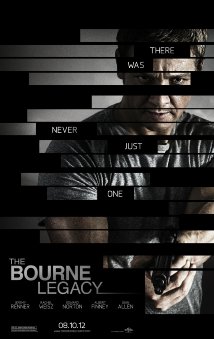
The Bourne Legacy (2012), directed by Tony Gilroy

bourne identityI have been blessed to work in Atlanta from 1970 until 1998, first as a synagogue rabbi and then as principal of Yeshiva High School of Atlanta. My role at Yeshiva was primarily that of builder whose job it was to lay the foundation for a Jewish day high school in Atlanta and to insure that it would grow over time.

After I left Atlanta, I assumed a number of principalships where my role was to improve the situation or to solve a particular problem. I was Mr. Fix-it or Mr. Hatchet Man depending on your perspective. In one school, I was told there was a major problem with the librarian who was focused on books, not people, and that she had to go. I was to be the agent of her removal. Board members and other staff told me the same story, and I was mentally prepared to make the change. But then I checked the evaluations of the staff person over the past ten years, and there was not one negative comment in her file. When I observed her myself, she was engaging her students and I was faced with a dilemma. How could I in good conscience fire her in the absence of negative comments in her record and when her current behavior was satisfactory?

I thought of this incident as I watched The Bourne Legacy, which details a far different crisis of conscience, not one as mundane as the one I faced in dealing with a librarian who was targeted unjustly for firing. Rather, The Bourne Legacy explores a grand crisis of conscience in the life of Aaron Cross, a special-ops soldier, who is given assignments to assassinate people who are a danger to democracy. He is charged with doing a good deed, but the means to accomplish it are morally repugnant. As his superior tells him, “we are morally indefensible and absolutely necessary.” Brutal killing in the name of a worthy cause repulses him;   and after fulfilling a number of assignments, he feels morally adrift. Unwilling to obey future orders, Aaron goes AWOL and tries to find solace. But problems arise.

Aaron’s elite team of assassins has been provided with meds that enhance physical and mental abilities. When his superiors realize that the program may be revealed to the public, they decide to abort this clandestine program and kill all the remaining assets. When Aaron becomes aware of this, he determines that his only salvation is to secure more of the drugs so that his enhanced abilities will prevent him from being killed or captured. Alternatively, he learns that he can “viral off” the drugs and retain his enhanced abilities for the rest of his life without taking any more pills. Thus begins an exciting chase with the government in pursuit of Cross as he tries to find a way to elude assassination and preserve his mental and physical edge.

Aaron Cross’s moral dilemma parallels a fascinating Talmudic discussion about whether a person who steals a palm branch to observe the festival of Tabernacles gets credit for performing the mitzvah/good deed. Simply put, can a person do a good deed by committing a sin? The overwhelming consensus of opinion is that one cannot.

Implicit in this Talmudic debate is the notion that in all areas of life, one should be careful not to commit a wrongdoing in order to do a good deed, for it places you on a slippery moral slope. Many years ago, a donor anonymously sent large sums of money to the school of which I was principal to assuage his guilt for profiteering from selling drugs.  His charitable instincts were laudable, but his nefarious way of supporting the school tainted the school and him. The Bourne Legacy reminds us to be mindful of the motives and manner of those who would encourage us to compromise our honesty for the sake of a noble cause.

Purchase this movie from Amazon.com.

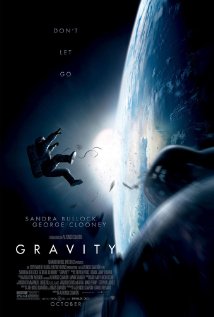
Gravity (2013), directed by Alfonso Cuaron

Gravity posterOver the course of my rabbinic career, I have seen people face enormous challenges physically and emotionally. Some are overwhelmed and life stops for them. Others are resilient and somehow find the strength to continue and even rebuild a shattered life. I remember many years ago when I received a call telling me that the son of a new synagogue member had tragically died in a farming accident as he was riding a tractor. The boy’s father was a Holocaust survivor and I stood in awe of him and his wife who kept their faith in the face of incomprehensible tragedy. Several years later, another major misfortune befell the family and I could not understand how the father weathered the storm of tragedy that assaulted him.

How we cope with an avalanche of ill fortune is the subject of Gravity, a tense and engrossing film about an accident that occurs in outer space, how the astronauts’ bad luck multiplies, and how they psychologically deal with the reality of their impending mortality.

Dr. Ryan Stone, Mission Specialist, is on her maiden space shuttle voyage with veteran astronaut Matt Kowalski, who is in charge of the expedition. During a spacewalk procedure, they receive news that space debris is headed their way and they must abort their mission. Abruptly, they lose communication with Mission Control, but they continue to transmit information in the hope of someone hearing them. Suddenly space debris hits them, causing Stone to tumble through space. Happily, Kowalski recovers her, after which they both try to return to the space shuttle, only to discover it unusable. This sets the stage for a survivalist drama as more and more problems occur, making it more difficult for them to return safely to earth.

In the course of their ordeal, they discuss Stone’s life on earth and the accidental death of her daughter. As their situation becomes more desperate, questions about the meaning of life surface. Faced with her possible death within hours, Ryan laments that no one will mourn for her and no one will pray for her soul. Her articulation of her emotional isolation illuminates the sadness of her life since losing her beloved daughter. She may have gotten over the heavy sadness of losing a child by keeping busy with her scientific work; but deep within her psyche, the pain remains for she has not emotionally come to terms with her tragic loss.

Whether she and Kowalski survive their ordeal makes for a tension-filled narrative that touches on themes of faith and resilience in the face of catastrophe. The outer-space setting makes these quandaries all the more stark and unsettling, for no one is present to view their frightening ordeal.

Judaism has much to say about how we should deal with tragedy in our lives. When we hear tragic news such as the death of a loved one, the Jew responds with a blessing: “Blessed are You, God, King of the Universe, Arbiter of Truth.” Death, of course, is not a happy event, but the true believer knows that God in His infinite wisdom always does what is good. While we may not rejoice in the face of tragedy, we do not succumb to despair for we know that, from the aspect of eternity, everything makes sense. Moreover, when the Jew says Kaddish, the Mourner’s Prayer during the year after the death of a close relative, the words he recites are words of praise to an all-powerful God. They are not words of anger or reproach because the Jew inwardly comprehends that even tragedy is part of the Divine plan. To fight it is impossible; therefore, the proper response to tragedy is to feel the initial pain and then to move forward knowing that our own life’s mission is not over even when we can no longer share it with a loved one.

Gravity reminds us of the uncertainty and danger inherent in living, but it also reminds us that crisis can be the catalyst of new understandings about ourselves and the world around us.

Purchase this movie from Amazon.com.

House of Flying Daggers (2004), directed by Zhang Yimou

house of flying daggers posterMy wife is an artist and over the years I have developed a strong sensitivity to matters of color, light, and composition. Her technique is original, fusing her own hand-dyed silks to acrylic paints to create dimensional nature images of trees and rocks. What fascinates me, in particular, is how she often will paint only a small part of the tree, and within that fragment will show the infinite variety of design and color that makes for a glorious view of nature, which in her view reflects the infinite wisdom and creativity of God.

Color and composition are at the heart of House of Flying Daggers, a Chinese epic dealing with the intrigues and fighting that went on when the Tang Dynasty was in decline in the year 859 CE. The plot concerns rebel groups such as the House of Flying Daggers which challenge the authority of the government. Indeed, the rebel group is very popular because their agenda is to rob from the rich and give to the poor.

When the local authorities kill the leader of the Flying Daggers, they emerge even stronger and two police captains strategize to kill the new leader. In this conflict, there are three major actors: Jin and Liu, the two police captains, and Mei, a blind dancer who poses as the daughter of the old leader of the Flying Dragons. Mei is perceived by the authorities as the key to finding out who is the new leader so that he can be assassinated. The narrative takes many twists and turns, and not all is as it seems. Characters hide their true motives, switch loyalties, and even fall in love with the enemy. The plot complications engage the viewer who is swept along by the actions and intrigues of the protagonists.

What separates House of the Flying Daggers from other action films is its resplendent use of color and composition. The Chinese dancers wear beautiful garb, rich in color and design. The scenes in the forest capture the beauty of trees swaying in the wind. The fight scenes are choreographed like a ballet. There is fluid motion in nature and in the movements of the soldiers, who literally fly through the air both to attack and to avoid harm.

One particular scene is extraordinary in its visual imagery and its simultaneous metaphorical meaning. Two adversaries, fighting with passion and agility, begin fighting in the autumn when the leaves are turning orange. As their battle continues, snow begins to fall and soon the entire wood is covered in white, suggesting that the ongoing battles between sworn enemies never end until there is a tragic consequence. It is a clever use of imagery and a brilliant commentary on the brutality of war which makes brutes of essentially decent men.

Judaism encourages the appreciation of nature, for nature is, in truth, a window into God’s supernal mind and a reflection of His power and wisdom. Observing a beautiful nature scene is another way of getting to know God. Maimonides observes in his Code of Jewish Law that man learns about God through His words, the Bible, and though His works, namely, through nature. Throughout Psalms, the poet King David reiterates the identification of nature’s beauty with a revelation of God. Psalm 19, for example, dramatically states: “The heavens describe the glory of God; and the firmament shows His handiwork.” In fact, Jews say a blessing when seeing a great sea or mountain range, or any great natural wonder.

Sustaining the natural world is one of God’s everyday miracles. House of Flying Daggers is at one level an exciting action film, but its innovative visual style invigorates our perception of nature in ways that make the film a transcendent cinema experience.

Purchase this movie from Amazon.com.

District 9 (2009), directed by Neill Blomkamp

district 9A number of years ago, one of my children asked me whether he should get involved with a major national organization and assume a position of leadership within it. He felt that such involvement would be good professionally because it would enable him to connect with many of the movers and shapers in the community. I advised him not to do so since I felt he had other important priorities in his life.  Being an officer would take up much time that might better be put to use in other endeavors. Moreover, I shared with him the famous Mishna from The Ethics of the Fathers, which instructs man not to get close with those in power for they will not be with you when times are tough. You cannot rely on them for support, even when your position on an issue is morally correct.

This is what informs the opening scenes of District 9, an adrenalin-filled action film that depicts in visceral detail the painful consequences for one man who innocently becomes part of the power elite as it deals with how to treat a space ship of aliens that mysteriously finds itself lost in the sky above Johannesburg, South Africa. The occupants of the stranded ship eventually are given refuge in a government-funded camp, where at first they are treated with respect and curiosity, but eventually are despised and shunned by the locals as sources of civil chaos and disease.

The agency charged with transferring this alien population of 1.8 million to a new location is Multi-National United (MNU), a private company whose true interest is not the aliens but the sophisticated weaponry which they possess. The weapons can only be used by the aliens because of their unique skeletal structure, and MNU wants to adapt this weaponry for human use.

When MNU begins this transfer, they give an administrative post to Wikus van der Merwe, son-in-law of one of the principals in the company, whose life is governed by the profit motive. Wikus, in contrast, is a gentle man who simply wants to do the right thing: to follow the rules of his superiors at work and to help the aliens. At first he relishes his new position, but he soon learns that supervising the transfer of so many aliens brings with it great personal risk. He is contaminated by a mysterious black fluid that he mishandles and within hours begins to morph into a “prawn,” the name given to the alien beings.

The metamorphosis at first affects his arm, which now is able to fire the alien weapons. MNU takes Wikus into custody and performs experiments on him to determine if they can use his DNA to figure out a way for humans to take advantage of the aliens’ advanced weaponry. With the permission of his father-in-law, one of the power elite, they decide to harvest his organs so they can have the best chance of replicating Wikus’ DNA and allow other humans to take advantage of the aliens’ weapon technology. As they attempt to harvest his organs, Wikus breaks free and flees to District 9, the slum where the prawns are living. It is here that he can blend in and search for a way to return to a normal life.

Wikis pays a steep price because of his involvement with the power elite. It changes him physically and destroys his marriage. District 9 reminds us that although there is glamour and notoriety when one is part of the inner circle of people who set policy and control outcomes, there are also grave risks. Jewish tradition shuns striving for glory and honor. Fame is transient and eludes the one who seeks it. When faced with such a temptation, our Sages caution us to stay focused on our own life’s mission, not those of others who are willing to sacrifice others to keep their own political positions strong.

Purchase this movie from Amazon.com.

Collateral (2004), directed by Michael Mann

collateral posterAs I scan the news every day, I see a recurrent theme. People who commit terrible crimes want very much to seem normal, regular guys who just want to preserve peace and order. In Syria where thousands are being killed by government forces, President Assad in a TV interview projects moderation and reason. Recently in Iran, leaders project charm and openness to the world while at home anyone who veers from the party line is subject to harassment or death. The politicos always want to portray themselves as reasonable men who are doing reasonable things, even if this means the murder of many innocents. I was reminded of this as I watched Collateral, a tense thriller in which a paid assassin conducts himself like an ordinary Joe.

The film begins when Max, a cab driver in Los Angeles, picks up Vincent, a friendly passenger, who offers him $600 to drive him around throughout the night as he makes a number of stops. Driving through Los Angeles, Vincent observes that the city is impersonal with no one really caring for one another. He shares a vignette with Max about a dead man on a subway who wasn’t even noticed by the other travelers. The viewer senses that Vincent really cares about the abandoned and forgotten. As the night wears on, however, we learn that Vincent is a paid assassin and at each one of the stops, he plans to murder someone. Max wants to escape after the first murder; but Vincent does not allow him to flee, and so Max’s ride with the devil begins.

Vincent executes two more people out of the five he has contracted to kill, and then orders Max to visit Max’s sick mother in the hospital. Before going up to her room, Vincent buys her flowers. Although his goal is to make Max’s delayed response to her phone calls seem normal, he goes the extra mile by purchasing the bouquet and engaging in sweet conversation with his mother. Vincent projects a solicitous attitude towards the old and infirm, but Max knows the truth and is emotionally unnerved by the sight of a confirmed killer by his mother’s bedside.

Vincent and Max then go to a night club filled with customers dancing to loud music. In the club is a heavily guarded target of Vincent’s. When Vincent attempts to assassinate the target with the FBI, the LAPD, and assorted underworld hit men in the room, a melee breaks out in which bullets fly. When someone mistakenly tries to shoot Max, it is Vincent who saves his life by killing the shooter, thereby adding another layer of confusion to Max’s relationship to Vincent.

All this gunplay and tension unravel Max, who in desperation wrecks his cab as he and Vincent make their getaway from the crime scene. When Max realizes that Vincent’s final hit is a passenger that he chauffeured earlier in the day, he goes out of his way to warn her. Vincent is determined to kill her in spite of his ambivalent feelings for Max; for at the end of the day, he is an assassin for hire, not a person who lets emotions get in the way of his mission.

The Ethics of the Fathers exhorts us to judge every man favorably, to give people the benefit of the doubt. However, once you know with certainty the evil nature of someone, you should be vigilant. As our Sages say, don’t judge anything by its outward appearance; rather judge it by its contents. No matter how charming an evil person is, that does not excuse immoral behavior. Judaism mandates that we judge people by their actions, not by their appearances.

Purchase this movie from Amazon.com.