Category Archives: Action/Adventure

A Bronx Tale (1993), directed by Robert DeNiro

When I served as principal of Yeshiva High School of Atlanta, I was always interested in discovering ways to become a better principal. One influential book I read was about Frank Boyden, who, for over 60 years, was the headmaster of Deerfield Academy, a prestigious private high school in New England. The essential idea behind his supervisory style is MBWA, management by wandering around. This meant that a principal should not squirrel himself in his office, but rather be a ubiquitous presence in the hallways and classrooms of the school. A sure path to administrative mediocrity is to isolate oneself from his students. A token of his total involvement with his pupils was his placement of his desk in the corridors of the school. He wanted to be visible to his students. Boyden’s story was inspiring, and for a brief time I also situated my desk in the hallway to be more available to my students.

The memory of this management approach resurrected itself as I watched A Bronx Tale, a profanity-laced coming of age story of growing up in a mobster-infested neighborhood of the Bronx in the 1960’s.

Calogero, a young boy with Sicilian roots, is raised in a loving and ethically focused home by his hard working parents, but he is entranced by the charisma of the local Mafia boss, Sonny. For a number of reasons, Calogero, later called “C,” sees Sonny as his surrogate father and begins to emulate his ways, and Sonny views C as the son he never had.

In one telling encounter, Sonny reveals to C that he learned his management style from Machiavelli, the celebrated Italian author of The Prince, a wise and ruthless treatise on how to gain and keep political power. Machiavelli always wanted to be close to his enemies to prevent their plots against him. His ubiquitous presence, or as Sonny terms it, his “availability,” placed him in the best position to control events around him. When C asks him whether it is better to be loved or feared, Sonny tells him it is better to be feared, for ultimately that is where the power is.

What does this have to do with supervising a school or management in general? In managing any enterprise, those in management positions sometimes are compelled to assert their authority and tell people things they do not want to hear, to be the bearer of ill tidings. But that is what a supervisor occasionally must do. It is not pleasant, but it must be done. Although we want people to love us, this cannot always be.

The Torah tells us that the mourning period for Aaron was longer than for Moses because the people loved Aaron more. He loved peace and pursued peace. In contrast, Moses was the law giver, the one who gave rebuke and correction to the people. He was respected but not necessarily loved.

The message of the Torah is love others, but to know that there are times when fear and respect are called for. Nowhere is this more relevant than when we function as parents. We want our kids to love us, but we have to strike a balance between love and fear. That is why the Torah expresses the commandment of honoring parents twice, to manifest the balanced way we have to parent.

A Bronx Tale, grounded in the violent and crime ridden streets of New York, obliquely echoes the reality of parenting with different paradigms and, more directly, the reality of successfully managing any important enterprise with a blend of love and authority.
Purchase this movie from Amazon.com.

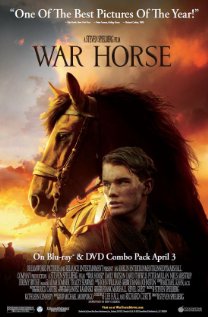
War Horse (2011), directed by Steven Spielberg

Many years ago when I was in elementary school, I was an outstanding student, always coming home with good grades. But in sixth grade, my neighborhood changed with the building of low income housing only a block away. The school’s population also changed. Soon I was the only Jew left in the neighborhood since my parents could not afford to move.

Gradually, I made new friends. I now wanted to be cool, not just smart. Unfortunately, coolness prevailed and I became a mediocre student during junior high school, and stayed mediocre when I attended a high school in a different area of the city even though this school had a large number of very bright students.

Because I came from a low-performing school, teachers always saw me as average and I was invariably placed in classes with students of average ability. Fortunately, my mother and my local rabbi perceived me as a serious and intelligent student, and it was their encouragement that motivated me eventually to shed my cool exterior and focus on academics later in life. Both were present at critical points in my life, encouraging me to spread my wings and fly intellectually. They believed in me and in my potential.

I thought of this as I watched War Horse, a poetic narrative about a boy and the horse that he trained from childhood. Although War Horse is about a horse, metaphorically it is about learning to cope with new situations and having people in your life who believe you are capable of being successful despite the odds.

The story begins in England in 1914. Ted Narracott needs a plough horse to work his farm, but impetuously buys a racing horse, using the little money he has to seal the deal. When the landlord comes to collect his rent for the farm, he cannot pay and is in jeopardy of losing his farm. Albert, his son, offers to train the horse, named Joey, to plow the field and, miraculously, Joey does it. Although born to be a race horse, Albert believes Joey can meet the challenge and, under Albert’s caring and gentle instruction, Joey becomes the plough horse that is needed, saving  Albert’s family from poverty. Moreover, when war breaks out, Joey is recruited as a war horse to transport heavy armament. Albert’s belief in Joey’s adaptability and innate strength enable Joey to survive and to endure adversities that cripple other horses.

Switch to the human metaphor. It is a truism that negative experiences often create opportunities; and to paraphrase an author who has written a self-help book, we become stronger at the broken places. What at first is a disappointment may in hindsight be a blessing that enables us to grow and be strong to face a future challenge.

What emerges from War Horse is a valuable message.  Setbacks are a part of life, but we can use them to make us stronger if we believe in ourselves and in our potential. Sometimes, a friend helps us through the darkness to return to the light. There is a powerful story in the Talmud about Rabbi Akiva.  Akiva, an illiterate 40-year old shepherd, worked for a wealthy man, whose daughter Rachel saw something special in Akiva. She offered to marry him if he began to study holy texts. She believed in him and Akiva became one of the greatest of Talmudic sages.

Sometimes we need a friend to encourage us to fulfill our potential. The friendship of one who believes in you, mentors you, and is there for you at the time of crisis can be transformational. Joey has this in Albert and others who care for him when he is in danger. When people believe in you, you can often do what you thought was impossible.

Purchase this movie from Amazon.com.

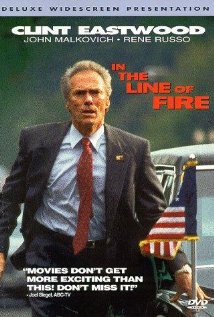
In the Line of Fire (1993), directed by Wolfgang Petersen

When I was going through a number of professional challenges many years ago, I questioned the motives of those who were undermining my position as Head of School. I aired my feelings in front of a small group of people, and I regretted it soon after. My critical comments did not improve things; in fact, they made me feel smaller. I had spoken about somebody negatively and it gnawed at me. The full realization of what I had done hit me many years later. The person to whom I attributed these base motives was no longer living in the city and our professional paths were totally different. In time, I forgot about my offensive remark; but, strangely, about 20 years later, as I was reciting the confessional of Yom Kippur, my offensive behavior of many years ago surfaced in my mind. I resolved to see if I could locate the person I maligned and ask for his forgiveness. Fortunately, I was able to contact him and ask for his forgiveness, which he readily granted. As often occurs, he did not even remember the incident which had been haunting me and was gracious towards me throughout the conversation.

My motive in finding him was to do teshuva, to repent. In Jewish tradition this means to stop the offensive behavior, ask for forgiveness from the injured party, and resolve not to commit the sin again. The ideal setting for teshuva would require you to be in exactly the same place as before, and choose to do the right thing. Instead of succumbing to ego and personal hurt, you would respond differently and not make the ethical mistake that you did in the past. If the exact same situation did not present itself, then you would still follow essentially the same protocol of repentance.

In the Line of Fire is an action thriller; but at its core, it is a narrative of repentance. Frank Harrigan, a veteran Secret Service agent, is haunted by his failure to protect President Kennedy from assassination. He continually relives the incident in his mind and questions whether he did his best to guard the president from Oswald’s fatal bullet. Did he not protect him adequately because he feared for his own life? He wonders: “I don’t know why I didn’t react. If only I reacted, I could have taken that shot. That would have been alright with me.” Here lies the crux of the film: Frank is given an opportunity to protect another president from a threat to his life, and to redeem himself. He has a chance to do teshuva, to repent, in the ideal sense by facing the same challenge, but now he can make the right decision that will enable him to emerge whole again.

Things, however, are different now. He is older and wiser but physically he is weaker. He pants and sweats as he runs after the killer, and we wonder whether he possesses the physical stamina to protect the president. The climax of the film takes place in a large hotel where the president is scheduled to speak. Frank has to locate the killer and neutralize him or stand between him and the president and take the bullet intended for the president.

In the Yom Kippur liturgy, we ask for forgiveness for the sin we might not have remembered. Frank Harrigan’s story reminds us to remember the mistakes of the past, and to try to find a way to correct them even many years later. Confronting the past in this way allows us the freedom to move forward, knowing that we have done our best. The ghosts of the past will then no longer haunt us.

Purchase this movie from Amazon.com


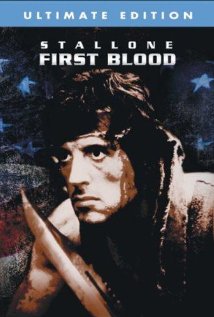
First Blood (1982), directed by Ted Kotcheff

As a senior at Yeshiva University in the 60s, I solicited ads for the annual yearbook. Since I had recently purchased a Volkswagen, I asked the dealership for an ad, and they readily agreed. I sent in the ad with the check, and a few days later received a letter from the yearbook editor informing me that he had to return the check and could not include the ad. Why? Because there were many Holocaust survivors who would be upset that Yeshiva University would run an advertisement for a German company.

The incident was eye-opening. I simply was getting an ad, but in the eyes of others who had suffered at the hands of the Germans, my innocent act was perceived as ignorant and insensitive. I quickly became aware that there was a vast gap between my perception of Germany and others who had been victims of German cruelty. Someone who has suffered and endured unspeakable horrors responds differently than someone who has not.  The tourist sees tragedy one way, the resident another. For the resident, it is real, not theoretical.

Those different perceptions inform First Blood, the movie that introduced John Rambo to film audiences. His story begins after the Vietnam War as he journeys to the American Northwest in search of an Army buddy. His unscrubbed appearance makes him look like a drifter and he is arrested by the local sheriff as a vagrant, who judges only by appearances. The long-term effects of the Vietnam War are not on the sheriff’s radar screen. To him, it is ancient history. But to Rambo, it is not.  At the jail he is harassed and brutalized. The sight of a razor about to shave him while he is being restrained evokes a memory of his torture at the hands of the North Vietnamese. He responds by bolting from his captors and escaping to the mountains on a stolen motorcycle. Only later does the sheriff learn that Rambo is a former Green Beret, an elite Special Forces soldier, who was awarded the Medal of Honor.

What makes First Blood special is its portrayal of the aftermath of war, the emotional scars that remain on a person after the battles are over. In a touching scene in which Rambo shares his pain with his former commander, he agonizingly laments about the dissonance between now and then: “Back there I could fly a gunship, I could drive a tank, I was in charge of million dollar equipment, back here I can’t even hold a job parking cars!” He cries over the loss of a close friend who was blown up by shoe-shine box that was wired with explosives: “The box blew his body all over the place. There were pieces of him all over me. I couldn’t find his legs.” These experiences remain with Rambo long after the guns have been silenced. The memories are part of his DNA for the rest of his life.

Three lessons clearly emerge from Rambo’s trial by ordeal. First, the experience of war is a game-changer in the psyche of man. It leaves wounds that are not always visible, but nonetheless inform a person’s behavior and thinking. We need to understand this when relating to people who have endured such adversity. Second, never judge a person by appearances alone, the way the sheriff judged Rambo. Jewish wisdom literature reminds us: do not look at the bottle but at what is inside of it. Third, judge every man favorably, say our Sages. When we assume the best about others, our own lives will be enriched.

Purchase this movie from Amazon.com.

Alien (1979), directed by Ridley Scott

In my career as a school principal, parents from time to time would ask me to break a school rule when their child was in trouble. In one case, the parent told me that enforcement of a particular rule would turn off his child from Judaism and I would be responsible for his son’s lack of faith. Such a comment weighed heavily on me. Moreover, in my early years, I wanted to be liked, and enforcement of the rule would make me unpopular with a few parents. Fortunately, a mentor of mine reminded me that my goal in my professional life should not be to be liked but to be respected. He impressed upon me that whenever I make an exception for one student, I have to make it for all students. There is no such thing as a private deal when it comes to maintaining the integrity of a school rule. Everybody has to follow the same Bible. Whatever expedient decision you make in the short term may bring you some satisfaction and peace momentarily, but it will eventually bring you havoc. It is just a matter of time.

The consequences of a decision to break a long-standing policy for a short-term benefit, however noble it may seem at the time, is the catalyst for all the mayhem that erupts in  Alien, a tense and disturbing science fiction thriller, which spells out in grim detail the horrific results of breaking one rule to ameliorate an immediate problem.

The Nostromo, a commercial towing vehicle traveling to Earth with over a million tons of mineral ore, intercepts a signal which the crew perceives as an SOS. When Kane, a crew member, leaves the ship with the captain and investigates the origin of the signal, he is attacked by a foreign life form which attaches itself to his head. Some crew members want to bring Kane back to the ship to see if they can save him; but Ripley, the commanding officer when the captain is not on the ship, refuses to bring Kane back on board, citing quarantine protocol and the real danger of putting more lives at risk. In spite of her ruling, one of the ship’s officers disobeys Ripley and opens the door of the spaceship allowing the contaminated Kane to enter. This marks the beginning of the end of most of the crew who do not realize that they have allowed the alien to enter the ship as well.

The Ethics of the Fathers tells us that the wise man is he who foresees the consequences of his actions, who does not put others at risk to satisfy his own immediate needs. One rash act can leave in its wake a plethora of tragedy.

It is a Jewish sensibility to do whatever we can to prevent danger and harm to others, to minimize risk to our friends and neighbors. The Torah lists numerous laws that are designed to protect people. When we build a house, we are enjoined to erect a guardrail on a roof. Furthermore, we are enjoined not to possess an unstable ladder, not to own a vicious dog, or do anything that may create a hazard for anyone who enters our home. Moreover, contemporary authorities in Jewish law argue that driving recklessly is a violation of Jewish law in that it puts the lives of others as risk. In truth, when a Jew drives with courtesy, it is a way of sanctifying the name of God.

Although Alien deals with a foreign universe, it reminds us of the importance of following the rules and not placing others at risk. We cannot predict the outcomes of our actions. Therefore, it becomes incumbent upon us to think wisely before making an exception to the rules.

Purchase this movie from Amazon.com.

Proof of Life (2000), directed by Taylor Hackford

Over the years as a rabbi, I have done some marital counseling. One standard piece of advice I give to couples of all ages is never go to bed angry, never leave a problem hanging and allow it to fester overnight. The consequences can be far-reaching and potentially devastating. My wife and I do not agree on everything, and we probably never will. But we both understand that it is foolish not to resolve a divisive issue as soon as possible. We have learned that there are three very important phrases in any marriage: “I’m sorry, Forgive me, and I love you.”

Proof of Life is about a marriage under stress. On the surface, it is an action film about a kidnapping in a South American country, which introduced me to something that, thank God, I know little about; namely, how a hostage release is negotiated with a kidnapper. It is scary, but fascinating. Based on a true story that appeared in Vanity Fair magazine, it recounts the tense ordeal of Alice Bowman and her husband Peter, who is kidnapped by guerilla rebels and taken into the country’s mountains for a number of months.

What makes the kidnapping especially worrisome is the conversation that Alice and Peter had the night before. Peter’s company is in financial straits, and yet Peter wants to stay in the country. Alice, who suffered a miscarriage when they were stationed in Africa, is emotionally spent and wants to return to the States. Peter, angry at his lot in life, tells her to take a break and leave the country alone; he will stay here. It is an emotionally wrenching scene to watch as the fabric of a relationship between a loving couple, who were once devoted to one another, begins to unravel.

It is against this emotional background that the kidnapping takes place. What ups the ante is the fact that Peter’s company has no insurance coverage for kidnapping, placing his wife Alice in the unfortunate position of personally hiring a hostage negotiator to achieve her husband’s release, all the while knowing that Peter feels ambivalent about the marriage.  After a false start, she engages Terry Thorne, an expert in kidnapping and ransom cases, to help her.

The beginnings of rapprochement and reconciliation occur when Peter asks his captors if he can take a picture of his wife out of his wallet to bring with him on his trek into the wilderness. It is a photo that both comforts and inspires him throughout his ordeal. Alice, too, begins to sense that her husband still loves her when a fellow prisoner who has escaped tells her of Peter’s devotion to her, and how it enabled him to survive pain and humiliation.

Peace between husband and wife is the bedrock of a Jewish home. So precious is spousal harmony that the Bible speaks of a ritual in which God’s holy name is erased in order to promote marital harmony and save a marriage in peril. Moreover, the classic dictum of “loving your neighbor as yourself” refers specifically, says the Talmud, to the relationship between husband and wife who are not only lovers but the best of friends.

Proof of Life on one level refers to the proof that the hostage negotiator wants before transferring money to kidnappers. On another level, it refers to the deep love that asserts itself when marriages are being tested. Resolving disputes, daily expressing love in word and deed to one’s spouse, is an affirmation that, in spite of adversity, love will endure. Love itself is proof of life.

Purchase this movie from Amazon.com.

The River Wild (1994), directed by Curtis Hanson

Rafting brings to mind the rafting trip that Jim and Huck Finn take on the Mississippi. It is a metaphor for a journey from youth to adulthood, and defines the travelers as they experience adventures along the way. Another memory is a rafting trip I took many years ago with Jan Siegelman, an Atlanta friend and veteran whitewater guide, and my two oldest boys, Dani and Elie, on the Ocoee River in Tennessee.

We encountered serious rapids. My boys handled it well but I fell off the raft three times, once stuck underwater for a short while until Jan freed me from being trapped between the raft and a rock. For me, river rafting was no longer just an exciting wilderness adventure. It represented risk-taking and danger. The River Wild, a thriller about a family rafting trip, viscerally depicts the inherent danger in navigating the rapids, and also describes how a moment of crisis can serve as a defining moment in the life of a family.

Gail and Tom have a troubled marriage. Tom, obsessed with work, is emotionally distant from his wife and young son, Roarke. Gail, whose father is deaf and uses sign language to communicate, looks to her mother for guidance. When Gail tells her that things are hard, her mother responds: “You don’t know what hard is. That’s because you give yourself an out.” Her mother wisely counsels her that marriage is by nature a challenging relationship, requiring consistent effort to endure.

Gail percolates with this wisdom as she begins her rafting trip with her son and husband who, surprisingly, joins them at the last minute. The trip takes a sinister turn when they are joined by Wade and Terry, armed fugitives who pretend to be carefree vacationers on a rafting excursion. Gail and Tom try to find an exit strategy, but it doesn’t work. They are trapped by men who threaten harm to their family if she does not cooperate. Their goal is to compel Gail, an experienced whitewater guide, to take them to safety downriver, where they can escape the law. The problem, however, is that they will have to go through the gauntlet, a section of the river where a rafter has recently died and another was paralyzed. It is a formidable and dangerous task.

The River Wild says a lot about the ties that bind a family. It demonstrates that spouses need to spend time with each other and talk to one another. When there is no dialogue, relationships are hard to maintain. Men are from Mars and women are from Venus is not just a clever maxim. It is a reminder to married couples to spend time trying to understand each other, to appreciate the everyday interactions and kindnesses that form the bedrock of a strong marriage. Moreover, the story reminds parents to be present for their children, to engage them, and celebrate their special moments with them.

Beyond these lessons about family, the film reminds us of the Torah requirement to preserve life and to avoid danger. The Talmud, in fact, states that the rules protecting us from danger are more important than ritual prohibitions. Without life, there is no opportunity to do God’s will. There are even laws that prohibit walking near a crumbling wall or an unstable bridge.

In The River Wild, crisis brings the family together, and forever after defines them as a loving unit, committed to one another for the long haul. Roarke sums it up when he responds to the policeman who asks him what happened. Roarke, smiling broadly, says: “My mom got us down the river and my dad saved our lives.”

Purchase this movie from Amazon.com.

Jeremiah Johnson (1972), directed by Sydney Pollack

As a young father, vacations generally meant going to places like Disneyland or to resorts with a pool and kid-friendly activities. Once I became an empty nester, vacation destinations changed. National Parks were the place to visit. My first one was to Acadia National Park in Maine; and over a number of years, my wife and I visited many in the United States and Canada. Instead of going somewhere to be amused, we traveled far to contemplate and appreciate the beautiful world that God has given us. Spending time hiking, surveying breathtaking lookout points, and listening to the sounds of nature were rejuvenating. Which is why I greatly enjoyed a recent viewing of the Western classic, Jeremiah Johnson.

Jeremiah leaves civilization as he knows it and journeys to the mountains. He wants to become a mountain man, living away from the hustle-bustle and corruption of the busy city. He wants to be alone,  and to discover the beauties of nature first-hand. There is a parallel here to a famous story told about Rabbi Samson Raphael Hirsh, a 19th century leader of German Jewry and Bible commentator, who near the end of his life resolved to visit the French Alps. His students tried to convince him not to go because of the risk to his health, whereupon he told them:”When I come before God, I will have to answer for many things. But what will I tell Him when He asks me, ‘Have you seen My Alps?'”

This thirst to see all of God’s resplendent world is a Jewish sensibility. The Talmud (Yerushalmi Tractate Kiddushin) explains that in the future God will hold us responsible if we do not enjoy the beautiful things He created in this world. It is a good thing to go out and see the trees, the mountains, the rivers, lakes and oceans. Seeing them reinforces our belief and appreciation for God who created all of it.

However, there is a dark side to being a mountain man. “Do not separate from the community,” say our Sages. Jeremiah learns that a life of isolation can be dangerous and unforgiving, and that there is a price to pay for solitude. For example, he has no back-up when things go awry.

One incident, in particular, brings this lesson home. Having married an Indian woman and found a modicum of happiness in the wilderness, he is asked by the U.S. Calvary to lead a search party to bring food to a stranded wagon train. He is not anxious to leave his family, but he reluctantly agrees and leads them to the wagon train. Inwardly, however, he is agitated that the route takes him through a sacred Indian burial ground. The scene of traversing the burial ground is one that encapsulates both the allure and danger of nature. It is a grey day, snowing gently but relentlessly as the soldiers pass by skeletons of dead Indians, foreshadowing a tragedy that is to come.  It is an image of both beauty and dread.

Left alone in a vast wilderness with savages all around, Jeremiah is forced to defend himself on countless occasions in order to survive. The Hobbesian notion that life is nasty, brutish, and short finds expression in the harsh life of Jeremiah Johnson. But in spite of it all, he emerges not as a bitter or angry person, but as one content with his lot, understanding that life is filled with contradictions, with happiness and sadness, with beauty and ugliness. It is a mature sensibility, worthy of emulation.

There is much to admire in Jeremiah Johnson. He is a man of few words, of deep feelings, of personal integrity, who, through age and experience, appreciates and values the beautiful world before him.

Purchase this movie from Amazon.com.

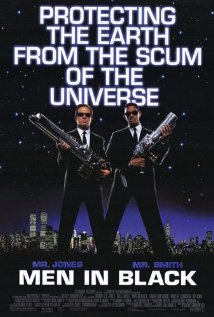
Men in Black (1997), directed by Barry Sonnenfeld

It took me 12 years to get my doctorate in English at Georgia State University. Usually, it’s a five-year gig including the dissertation. For me it took longer because I was married with kids, had a full-time job, and could not devote all my time to this important professional goal. I owe a great debt of gratitude to Dr. William Sessions, my academic advisor, who believed in me and encouraged me to persevere even when I had doubts. Dr. Sessions recognized that family came first, and he knew that I could finish the degree if I had more time to complete the program.

My friend Charlie pursued a different career path. He wanted to become a university professor, and he postponed getting married until after he finished his PhD. He then postponed marriage again because he wanted to be financially secure and employed on a tenure track. He was then in his 30s. I spoke to him off and on during this time, reminding him of the Talmudic statement that at the end of 120 years, God will ask him whether he married and tried to have kids. I also reminded him that life in one’s advanced years can be very lonely without a wife. Furthermore, he will never be called Abba/Dad, which to me is my most important title. In spite of my comments, Charlie continued his exciting academic life, publishing book after book and occasionally getting into the media as well. He never did marry.

I thought of Charlie as I watched the crazy and wild Men in Black, a comedy about two men, Kay and Jay, working for a secret government agency who track alien life forms living on earth, and who embark on a mission to save the world from being destroyed by aliens. Their life is extraordinary and exciting. Every day is unpredictable. They meet creatures from other planets, they drive cars that are fast and fitted with the latest technological innovations, they have powerful weapons, and they can control the memories of others. In fact, they even periodically use the memory “neutralizer” to erase their own memories so that early frightening memories will not hinder them in their present assignments.

The catch is that their work requires them to give up their identity and their connections with friends and family. This is hard, for there are moments when one thinks of a wife, a time when one yearns for the human connection. From the aspect of eternity, family does come first. There is a touching moment when Kay reflects about the wife he left behind as he views her image on a monitor. When Jay comments that she is pretty, Kay clears the screen, but the image of his wife lingers in his mind.

After successfully avoiding the destruction of earth, Kay wants to transfer the mantle of leadership to Jay. Kay profoundly misses his wife and desires to go home. The pull of love is stronger than the adrenaline rush for action. He is older now and can appreciate the wisdom of Solomon who tells us “there is neither doing or reckoning nor knowledge or wisdom in the grave where you are going (Ecclesiastes 9:10).” The value of life is not measured in professional accomplishments alone, but rather in the human relationships that are nurtured over the years.

It is wise for us to treasure family over our job. At the end of our lives, we will not feel bad because we didn’t spend more time at the office. We will feel sad if we did not maximize our time with wife and children.

Purchase this move from Amazon.com.

The Hurt Locker (2008), directed by Kathryn Bigelow

As a rabbi, as an educator, and as a parent, I have been asked many times for advice when friends and loved ones are going through stressful times. Sometimes I can help them, and sometimes their situation is so complex that I do not have a suggestion or answer that works for them. I want to help, but there are situations where my counsel is inadequate. I see the oncoming train wreck and I am powerless to change things or to prevent the damage from occurring.

Watching The Hurt Locker gave me a visceral understanding of this feeling. It is a stomach-churning war movie filled with profanity, extreme tension, and violence that deals with soldiers trained to disarm improvised explosive devices such as roadside bombs. The film vividly details the enormous risk they take on a daily basis to do their job. In one particular scene, Sergeant William James is called to a public square where a man is strapped in an explosive vest. The vest was placed on him against his will, and the man desperately wants someone to save him by removing the vest. The problem is that the vest is attached to his body with numerous locks. The crisis is compounded by a timing device on the man, which indicates that the bomb will explode in a matter of minutes. What to do? Sergeant James does his best but he cannot remove the locks in time. We are left to watch the bomb detonate and the man disappear into dust.

The film drives home in a graphic way the dilemma we all face at one time or another. We do our best and yet it still is not enough to make things right. Judaism recognizes this human dilemma, and the Sages give us guidance. The Ethics of the Fathers tell us that we should not run away from a difficult task; rather, we should begin it, do our best, and pray for the help of Heaven. We are only responsible for input. God is in charge of the outcome.

There is another life lesson embedded in The Hurt Locker. James is part of a three-man team. When he places himself in danger, his cohorts Sanborn and Eldridge automatically are placed at risk as well. James decides on one mission to take off his radio communication device to enable him to diffuse a bomb while unencumbered. The inability of his team to communicate with him in a hostile setting creates extreme uncertainty, and their straightforward mission is in danger of aborting. James also decides to hunt down terrorists on his own and invites his team to join him on this non-authorized mission, again needlessly placing his men at risk.

This failure to consider the fate of others when one makes decisions that affect other people is irresponsible and selfish. Indeed, James’ pursuit of his own adrenaline rush creates havoc for his partners. This self-centeredness is contrary to the Judaic maxim that we are all responsible for another. As the famous poet Donne said: “No man is an island.” We are all connected and the death of one man diminishes every man. Therefore, we are bound to consider the welfare of all when we make decisions, not just what’s in it for us.

The implications for how we conduct our own lives are clear. When faced with a daunting task, don’t take a pass. Just do your best and leave the rest to God. Furthermore, when making important decisions in life, think about your loved ones and how they will be affected by your decisions. Our decisions create ripple effects in the lives of others.

Purchase this movie from Amazon.com.