Category Archives: Action/Adventure

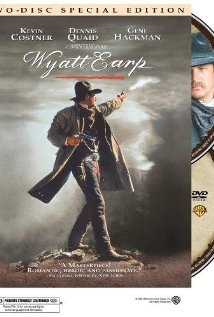
Wyatt Earp (1994), directed by Lawrence Kasdan

My father, of blessed memory, was not a frivolous person. He came to America as a young teen fleeing the pogroms of Russia in the early 1900s. He enlisted in the Navy and served honorably. He married relatively late and I wasn’t born until he was over 40. He worked hard as a painting contractor, breathing in lead-based paint before OSHA was around; and he did not have time to play basketball with me. He was busy trying to earn a living. In spite of his burdensome job, there was lots of love in my home. My father spent time with me, counseled me, and set a good example of upright living. Honest and charitable to the core, he devoted his free time to synagogue service and to rearing a growing family.

One of my favorite memories is going to the movies with him. My father rarely went, generally considering such pastimes a waste of time. But we did share an interest in westerns. Once in a very great while, I convinced him to come with me. I still remember the pleasure I had watching Gary Cooper in Springfield Rifle together with my Dad.

I was reminded of this as I watched Wyatt Earp, a 3-hour long epic revisionist western about that great Western hero. My Dad would not have liked the sordid parts of the narrative and the foul language, but he would have admired the beauty of the vast open spaces and the action sequences.

A subtext of the story is Wyatt’s relationship with his father, Nicholas Earp, who gives him critical pieces of advice along his life’s journey. It is notable that Nicholas Earp does not talk much; but when he does, people listen because they respect him and know that he loves them. Moreover, he gives advice to Wyatt at the right moment. Our Sages tell us we have an obligation to rebuke a child, but only when he is ready to listen. If he is not ready, then one should delay the rebuke.

When Wyatt is still a teenager, his father informs him that there are many vicious people who do not obey the law and “when you find yourself in a fight with such viciousness, hit first, and when you do hit, hit to kill.” He gives Wyatt a basic primer on how to deal with bad people who break the law and hurt other people. Show no mercy. To be affable is to be weak in the face of evil.

Later, when Wyatt’s beloved wife dies of typhoid, Wyatt, depressed and angry, immerses himself in drunkenness and theft. After landing in jail, his father comes to rescue him and pointedly tells him: “Do you think you are the first person to lose someone? That’s what life is all about. Loss. But we don’t use it as an excuse to destroy ourselves. We go on.” He imparts to Wyatt the life lesson that although life at times brings pain, life can still continue. Wyatt accepts these two pieces of advice, which guide him throughout his career as a successful lawman.

The task of a father in Jewish law is to teach his child Torah, to teach him a livelihood, and to teach him to swim, which many commentators take to mean to swim through life. Parents are repositories of wisdom and life experience, and too often we don’t take advantage of this. Advice from a person with much life experience who loves you, and who is invested in your successful living is a treasure. Wyatt Earp reminds us of the supreme value of a parent’s counsel.
Purchase this movie from Amazon.com.

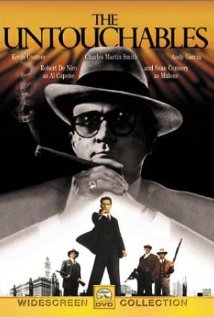
The Untouchables (1987), directed by Brian DePalma

I was in the middle of my afternoon prayers when the doorbell rang. My guests had arrived and I was faced with a dilemma: continue to pray or interrupt my prayers to welcome guests? I took my cue from the great patriarch Abraham, who stopped his conversation with God to tend to his guests. The Sages comment that this was a good thing, for Abraham was setting a paradigm for how we should welcome the stranger. The Codes of Jewish Law express this concept succinctly: if we are busy with one commandment, we are exempt from the other. Ideally, we should do both if at all possible. But if we cannot, then we have to prioritize and perform the time sensitive or more important one.

The best cinematic example of this dilemma of facing two tasks at the same time and having to choose between them occurs in The Untouchables, a violent crime drama about the war between Eliot Ness, an FBI agent, and Al Capone, the king of the Chicago mobsters during the Prohibition Era. Capone’s street-wise philosophy reveals a ruthless approach to anyone who stands in his way. In a stunning opening scene that reveals a bevy of lackeys surrounding Capone as he gets a shave, he tells them: “I live in a tough neighborhood, and we used to say you can get further with a kind word and a gun than you can with just a kind word.”

Ness is portrayed as a family man, honest, and morally untouchable. He lives by a code of personal integrity. But he faces an enemy who lives by corruption and brute force. It is a classic confrontation between good and evil. In this often brutal story is a scene that encapsulates more than any other the quandary of Eliot Ness: can I retain my humanity in the face of an overwhelming evil that wants to break the law and murder innocent people?

The critical scene takes place in a train station where Ness has gone to intercept Al Capone’s bookkeeper, who possesses information that could send Capone to prison for tax evasion. Suspense builds as the train is due to arrive momentarily. Before the train arrives, a young mother burdened with two suitcases attempts to negotiate a baby carriage with a crying infant up a steep flight of stairs. Ness, ever the family man, decides to help her. The young mother is appreciative and tells Ness “You’re such a gentleman, so kind.” At that moment, the accountant finally appears with an escort of armed thugs. Here is Ness’s challenge: he wants to help the mother and child up the stairs and get them out of harm’s way. However, any delay could cause him to lose his prey. Putting Capone behind bars has been his all-consuming mission for months and this is his only chance for success. Ness tries to do both; and, in an amazingly choreographed scene, he loses control of the carriage and guns begin to fire all around him. Will the baby be another innocent casualty in the war against Capone or will Ness apprehend the accountant with no harm to the child or its mother?

The movie does not provide clarity or solutions to his dilemma; rather it illustrates in a dramatic way the dilemma we all face at different times in our lives. We have two worthwhile things to do, and we have time for only one of them. Jewish law mandates that a preoccupation with one deed exempts us from the other. Although we should try to do both, we recognize that this is not always possible. Therefore, the lesson is to stay focused and prioritize our choices.

Purchase this movie from Amazon.com.

Source Code (2011), directed by Duncan Jones

 As the years go by, I have become more conscious of time. I count my minutes. It is a mantra that I share with my students as well. When I begin the school year, I inform them that there are two rules in my class: do your best and don’t hurt other people. This means do not prevent other students from learning. When a student talks without raising his hand, when he interrupts another student who has the floor, he is, in effect, preventing other pupils from learning. Furthermore, he is stealing precious time from class, preventing me from maximizing class time for teaching. I tell students that I count my minutes because time is precious. A minute can be an eternity. Consider for a moment the two-minute warning in a professional football game. Destinies can change in a matter of seconds.

This is one of the themes of Source Code, a science-fiction thriller cast in the present, which describes a bold and innovative attempt to avoid a major disaster by injecting a person into a continuum of events eight minutes before one calamity strikes in the hope of averting a second disaster in the future. Sounds weird? It is, but it also provides a meditation on what living in the moment really means. Amazing things can happen if one is aware of the consequences of each passing minute. Source Code reminds us that the same basic events can be experienced in different ways if we will it so, if we truly understand the consequences of each one of our actions.

The movie also addresses a seminal question we have all asked ourselves at one time or another: “What would you do if you knew you had less than a minute to live?” The question forces us to focus on the present moment. Will it be our last? The Ethics of the Fathers, an example of classical Jewish wisdom literature, does not ask that question, but it does suggest a similar mindset.  We are advised by the Rabbis to think of every day as potentially the last day of our lives. This is not to encourage pessimism or depression, but to spur man on to live life to the fullest, to make every day count, to make each day meaningful.

There is a corollary to understanding the value of time. If there is enmity or ill will between friends, between spouses, between parent and child, reconciliation is a priority. Time does not allow for a slow resolution to conflict. In Source Code, this desire for reconciliation finds expression in the fractured relationship of the hero, Captain Colter Stevens played by Jake Gyllenhaal, to his father. Their last conversation was difficult and strained; but now both want to be at peace with one another. Both want emotional wholeness. Colter Stevens now understands, in his heightened state of awareness somewhere between life and death, that if he knew when he spoke with his father that it would be their last communication, he would not have argued with him. He would not want to leave a legacy of bad feelings between them. He would want to tell his father that he loved him just as his father would want to reaffirm his love for his son in any time of crisis.  Facing death also gives Colter a greater appreciation of life. He looks around and remarks “Such a beautiful day.” He sees people laughing and it makes him treasure moments of happiness.

Source Code demonstrates the power of a minute. It implicitly implores us not to waste time, our most valuable commodity, and to repair our damaged relationships without delay.

Purchase this movie from Amazon.com.

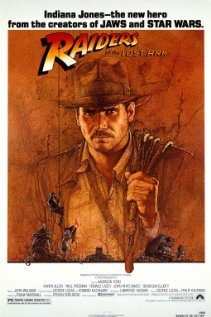
Raiders of the Lost Ark (1981), directed by Steven Spielberg

There is a time in everyone’s life, including my own, when things don’t go the way you want. This happened to me when I turned 60 years of age. I realized as I sought to find another position as a high school principal that I was no longer perceived as the “future” by others. Schools were looking for younger, dynamic leaders; and even though I felt at the top of my game professionally, no amount of conversation with school boards could change the reality of my age.

Looking for work in education, I was faced with rejection after rejection as a head of school. Thankful that I had good health, and knowing that God would only give me challenges that I could handle, I optimistically continued my job search, finally finding work as a family educator with a community Kollel. Landing this job eventually opened me up to new possibilities, and thus began my reinvention several years later on the job market in Israel where I am currently residing. I now write business articles for an internet website and supervise the English Department of a boys’ yeshiva in an ultra-religious neighborhood in Beit Shemesh. My new schedule allows time for daily Torah study, exercise, and writing a long-postponed book. As my mentors often told me and as I now understood first-hand, “when one door closes another door opens.”

This mature perspective in life is serendipitously depicted in the rollicking adventure yarn, Raiders of the Lost Ark. When I first saw it many years ago, it was an entertaining action flick; but the second time around, I saw life lessons in the exploits of Indiana Jones, the movie’s protagonist, who is thrust into one crisis after another, only to emerge wiser from each ordeal. In his search for the lost ark, he confronts adversaries everywhere he turns: physical threats from Nazis, competition from other archeologists, and even from a cave full of snakes. In every instance, he never loses hope, and somehow emerges from these crises a wiser and stronger man. Moreover, he never loses his innate optimism or his focus on his ultimate goal of finding the lost ark. Proverbs tells us the “seven times the righteous will fall, yet rise again.” This saying encapsulates the way Indiana Jones lives. He never gives in or gives up, knowing that to do so will short circuit his dreams.

Our Sages provide a fitting postscript for the conclusion of Raiders. In the Ethics of the Fathers (2:21), they tell us that our job is to begin the task even if we are not there at the end to see our life’s work realized. We are only responsible for input. The outcome of our travail is in God’s hands. This profound life lesson is given visual expression when we see the lost ark, instead of finding its resting place in a prestigious museum, consigned to a storage warehouse in Washington, D.C., probably never to be found again. It is an ironic but true image of man’s inability to control the outcome of his efforts. All we can do is try our best and get ready for the next chapter in our lives.

Purchase this movie from Amazon.

The Last Samurai (2003), directed by Edward Zwick

I have been living in Israel for a year and a half and have taken two trips back to the States. On my first trip, I brought a long list of things to buy to bring back to Israel. On the second trip, the list of things to bring back was brief and non-descript. I realized that by living in Israel I was becoming less interested in material things, getting used to a lifestyle of living with less, and arriving at a place philosophically where I truly felt that less is more.

This way of life is celebrated in the rousing and violent adventure The Last Samurai, which depicts in a symbolic sense the struggle between modernity and tradition. Tom Cruise is Nathan Algren, a Union soldier in the post Civil War period, who is haunted by the ghosts of his past indiscriminate killings. He is recruited by the Japanese government to help quash a Samurai insurrection that threatens the economic well being of the New Japan, which is promoting increased trade and dialogue with the West. Algren accepts the job, but in an early and bloody confrontation with the Samurai he is captured and brought to their mountain village. There, Katsumoto, the leader of the Samurai, engages him intellectually and emotionally. In this remote and picturesque setting, Algren soon finds himself enamored by the simple lifestyle of the Samurai, who live by a rich code of ethics supported by close ties of friendship and family.

Hallmarks of the Samurai way of life are self-discipline, devotion to a set of moral principles, and striving for perfection in whatever they do. Algren senses the spirituality of the Samurai and learns how to focus his mind so that he feels “life in every breath.” In many ways, the Samurai values echo the Jewish notions of living by a higher law and striving for spiritual perfection. Before the climactic battle scene, there is a scene of prayer suggesting that success in battle depends on one’s spiritual state. This is very much a Jewish sensibility. In these heightened moments of awareness right before battle, when life is so precarious, there is thoughtfulness about what really matters in life. Tradition is paramount. Katsumoto articulates this in a dialogue with the financial entrepreneurs who want to remove the archaic Samurai from the contemporary political landscape. The money men see them as a relic of the past, preventing Japan from entering the modern industrial age. Katsumoto tells them that the Samurai cannot forget who they are or where they come from. For him the sacred traditions animate and give meaning to the present.

When Algren, at the movie’s denouement, informs the young emperor of Japan of Katsumoto’s death, the young monarch wants to know how he died. Algren perceptively and wisely responds: “I will tell you how he lived.” His answer reminded me of the Jewish imperative to live by the commandments and not die by them. Following the eternal principles and traditions of the Torah gives meaning to one’s daily existence, imbuing each day with a sense of transcendent purpose. Both the Samurai and the Jew understand that although life can be filled with peaks and valleys, with joy and pain, leading a life of the spirit can give meaning to the entirety of one’s journey on earth. The film closes with speculation that Algren returns to the Samurai mountain village where he first met Katsumoto to begin a new life of spiritual integrity. He has discovered that progress is not always a good thing and that, spiritually speaking, less is often more.

Purchase this book from Amazon.com.

Frequency (2000), directed by Gregory Hoblit

From time to time, whenever I reflect on the milestone moments in my life, I think how special it would have been if my parents had been alive to share them with me. My decision to become a Jewish day school principal, a career that occupied the bulk of my professional life, was made after they died; and I never was able to share with them the peak moments of that experience. Moreover, they did not see all of their grandchildren. They never attended their weddings, nor were they able to bond with grandchildren as I am blessed to do now.

I thought of this as I watched Frequency, a crime thriller with a resonating subtext of a father-son relationship that spans the years. The plot is not easy to summarize. It deals with a supernatural phenomenon that allows a dead firefighter father to communicate with his son 30 years after the father has died in a tragic fire trying to rescue someone. They speak via short-wave radio and their communication creates the possibility of changing their family history.

The film opens with beautiful scenes of a family reveling in their close connections. We see a loving husband, an adoring son, and friendly neighbors. We see a father teaching a son how to ride a bicycle, which is the quintessential metaphor for a parent giving a child the ability to be independent. The love between them is evident. Against this background, father and son open up a conversation many years later after the father is dead. It is improbable, but once father and son accept the veracity of this seemingly impossible dialogue between two different time periods, they are overwhelmed with the opportunity to catch up with one another. The father asks the son what his job is, does he have a wife, does he have children; and then the conversation moves to the arena of sports, a topic which intensely bonded parent and child. The son reveals to the father how an injury prevented him from becoming a major league baseball player, that he is now a policeman and not a fireman like his father.

What touches the viewer is the palpable love between father and son. They have tears in their eyes as they sign off from one another with heartfelt “I love you”s. Father tells son “You have the voice of an angel.” Son tells father: “You have to be more careful because I don’t want to lose you again.” They are living in alternate realities but love spans the generations.

When something of note happened in my life, I always wanted to share it with my parents. I knew it meant something to them if I achieved something in life; and their acknowledgement of my accomplishment meant a great deal to me. I knew they loved me unconditionally and were there for me whether I would succeed or fail; but I wanted very much to share my successes with them. Parents are invested in the well being of their children. A parent, by Jewish law, has an obligation to help his child navigate life. A parent wants to be a parent and guide his children; and when there is love and openness, this guidance can occur.

Frequency reminds us that this parent-child relationship is at the core of family life, and it is to be treasured. When there is dialogue, there is love and there is hope.


Purchase this movie from Amazon.com.

We Were Soldiers (2002), directed by Randall Wallace

As a child growing up, one of my most vivid memories was that of my father, of blessed memory, showing me pictures of himself dressed in his Navy uniform in World War I. Coming to the United States as a young teenager fleeing the pogroms of Russia, he felt a great debt of gratitude to America and enlisted in the Navy. That time in the Navy was very special for him, and I remember him often marching in the local Memorial Day parade which honored the men of the Armed Forces. This love for America made us a very patriotic family. The thought of purchasing a foreign car was an anathema. We would buy only American.

As a recent oleh in Israel, I have again become very conscious of the military. I see soldiers daily and I feel safer in their presence and appreciate and value their holy work of defending the land. On the Sabbath, I notice a few worshippers in the synagogue carrying weapons, reminding me of the terrorist uncertainty that is part of the landscape in Israel. I also observe congregants who disappear for weeks at a time and then resurface at the daily minyan. This is because they are on active reserve duty, which requires them to separate from their families in order to protect the country.

All these thoughts came to mind as I watched We Were Soldiers, the story of one of the first major battles of the Vietnam war. It is a violent movie, with graphic scenes of warfare. However, there are aspects to We Were Soldiers that transcend the gory content. It is a film about disparate men becoming a family unit, protecting one another in times of extraordinary danger and crisis.

Two vignettes that do not take place on the battlefield convey a powerful message about the emotional bonds that are created between people when they face a common threat. As I watched these scenes, I thought of Gilad Shalit for whom we all prayed and I thought of the other soldiers who are still missing for many years and for whom we still pray.

On the eve of their departure from Ft. Benning, Georgia, to Vietnam, Colonel Hal Moore, played by Mel Gibson, addresses his men in a stirring and memorable speech: “We’re moving into the valley of the shadow of death. I can’t promise you that I will bring you all home. But this I swear before Almighty God, that when we go into battle, I will be the first to set foot on the field and I will be the last to step off and I will leave no one behind. Dead or alive, we will all come home together.”

This is a prelude to a soundless pre-dawn departure in which the men bid farewell to their wives and children and then assemble in the darkness waiting for transport to Vietnam. It is a quiet moment filled with apprehension and uncertainty, and we can feel the emotional stress of the soldiers and especially their loved ones as they take leave of one another to face an uncertain future.

As I reflected on the film, I felt reverence for those soldiers, both in America and Israel, who put their lives on the line for us. They teach us a valuable life lesson: all of humanity is interconnected. We are created in God’s image, and we are all part of the family of mankind. Family members care for one another, sacrifice for one another, and feel responsible for one another. At times of crisis, no family member, no one, should be left behind because, in the divine scheme of things, we all will come home together.

Purchase this movie from Amazon.com.

Inception (2010), directed by Christopher Nolan

In my volunteer work for an international Jewish matchmaking site, I work with many dreamers. The people who dream the most are single men over 50 who want to marry girls under 35 because they would like to have children. On the surface, the dream makes sense, but the reality proves otherwise. Most girls in their thirties do not want to marry men in their fifties. And the dream gets scarier with advancing years. Men in their late 50s and even men over 60 cling to the dream while life is slipping away. It is very sad, because the dream prevents them from dealing with reality. I sometimes suggest to my “clients” that they should at some point reconcile themselves to the reality of just having companionship into their senior years rather than cling to an impossible dream that, in the final analysis, will leave them isolated and alone as mature adults. G-d tells us that “it is not good for man to be alone.” Companionship, even without the possibility of having kids, is superior to being by oneself. Our tradition tells us that a shared life refines a person. Being married compels one to think of another, not just of oneself, and that paradigm is Torah-based. The Torah tells us to “love your neighbor as yourself,” and the penultimate neighbor is one’s spouse. Therefore, it is good occasionally to dream but it also good to live in the real world.

To dream excessively is dangerous for it can make you lose touch with reality. This is the crux of Inception, a wildly imaginative thriller that deals with dreams and their consequences.

The story line of Inception is almost impossible to summarize. In simple terms, it involves a plot to plant a dream in someone’s mind in order to change an oncoming reality. In the course of the film, reality and dream are constantly intertwined, so you have to pay close attention to determine which parts of the narrative are real and which are projections of the subconscious. It is this confusion which is at the core of the relationship between Dom Cobb and his wife Mol. Dom is involved in corporate sabotage, extracting valuable secrets from vulnerable subjects who are dreaming. He is so expert at this that he introduces his wife into the world of dreams, with terrible consequences. Mol loses touch with reality because of her deep and extended exposure to the dream state of awareness, and their life together is transformed from a dream into a nightmare.

The only salvation for Dom is to return home to reality, a reality which requires him to leave his idealized mate in her world of fantasy. In a wrenching climactic scene, Mol asks Dom to remain with her in her dream world: “You said you dreamt that we would grow old together.” Dom responds that they did grow old together in their dream world. An image of intertwined hands of an elderly couple walking together exquisitely expresses this idea. He then confesses to her: “I miss you more than I can bear. But I have to let you go.” He understands that as painful as it may be, he must leave the dream world in order to enter reality and survive.

This willingness to accept reality even though it is not ideal reflects a mature outlook on life. We all need to dream, but the dream has to be tempered by a true comprehension of the real world around us. This perhaps is emblematic of the dream of Jacob’s ladder. Alone in the wilderness at night, Jacob had a dream of angels going up and down a ladder; but the ladder, which soared into the heavens, had its feet firmly planted on the ground.

Purchase this movie from Amazon.com.

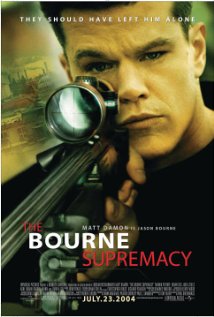
The Bourne Supremacy (2004), directed by Paul Greengrass

Confessing is cathartic. Every Yom Kippur in our home, I confess my shortcomings to my wife and my children. I apologize to them for raising my voice to them, for being unnecessarily critical of them, for not always understanding their personal challenges. I feel better after I do this because it helps me renew my spirit and become, I hope, a better person in the coming year. Yom Kippur, after all, is a day of forgiveness when God forgives us for our sins. But our Sages emphasize that God does not forgive us unless we first make amends for the sins committed against our fellow man. Confessing our mistakes and apologizing to our loved ones brings us closer to them and closer to God who desires our contrition, especially at this time of year. Such a personal admission acknowledges that we are imperfect yet sends a signal that we desire to improve ourselves and our relationships. It is noteworthy that a confessional scene in The Bourne Supremacy humanizes the hero in a way that connects him to all of us who have made regrettable mistakes in life and want to become better.

The Bourne Supremacy, the second in the trilogy of Bourne movies, is a great action movie; but what sets it apart is not only the superbly choreographed action sequences, but the humanity of its hero, Jason Bourne, a man searching to discover his lost identity. We believe his confusion. We believe that, in spite of his job as a professional assassin, he is essentially a good man. His humanity is exquisitely captured in a touching scene towards the close of the film in which Jason Bourne contacts the daughter of a Russian diplomat and his wife whom Bourne has assassinated. He shows up at her apartment unannounced and in a soft voice informs her that, contrary to what she thought, her mother did not kill her father and did not kill herself. He confesses in slow, carefully deliberate language: “I killed them. I killed her. That was my job. But it was my first time. Your father was supposed to be alone, but then your mother came out of nowhere and I had to change my plan. It changes things, that knowledge, doesn’t it? What you love gets taken from you. You want to know the truth. I’m sorry.” The confession purges Bourne of some of his guilt. He cannot retrieve the past but he has come to terms with it by admitting his crime to the child who was a survivor.

Moreover, confession works in more than one direction. It is cathartic for the one who confesses, for he is changed by speaking the words that indict him. Additionally, it changes the reality of the one to whom the confession is addressed. Acknowledging the words of a penitent can alter the life of the one who was hurt as well. The truth that Bourne reveals to the daughter of his victims frees her from a past filled with guilt, deception, and lies.

It is a brief scene but its impact is powerful. No longer is the film just a robust and entertaining thriller. It is also a commentary on the human cost of leading a violent life, even when the violence is for the just cause of protecting a nation.  Good people can sometimes do very bad things. This vignette reminds us that we can sometimes be cruel inadvertently. Thoughtlessly, we can hurt those we love most. The Bourne Identity reminds us that confession of our sins to those we care about can open a door to our own self-renewal and, just as important, it can allow others to move on with their lives, free of the negative baggage of the past.

Purchase this movie from Amazon.com.