Category Archives: Comedy

Say Anything (1989), directed by Cameron Crowe

say anything posterA female physician, who married a number of years ago, recently introduced me to her husband. I expected to meet a college grad in some white collar job, but I did not. Instead, I met a very sweet guy who worked as an auto mechanic in a local service station. I wondered what prompted each one to connect with each other, but soon realized that just because two people have similar educational backgrounds does not mean they are compatible intellectually and emotionally. Sometimes, opposites do attract. That is at the core of Say Anything, a teen romance between a class valedictorian and an affable young man who has no idea of what he wants to do with his life.

Lloyd Dobler, an average student who envisions kickboxing as a possible career, one day decides to date the brilliant Diane Court immediately after they graduate from high school before she leaves for college. Say Anything follows their relationship as it waxes and wanes through the prism of teenage angst.

It is 1988 and Diane is practicing her valedictorian speech. Although the talk is humorless, Lloyd still wants to date her, and so he asks her to come with him to a graduation party. Surprisingly, she accepts even though she has little idea of who Lloyd is. When she attends, she has a great time and feels more integrated into the world of other teenagers, who are more socially adept than she.

Diane continues to date Lloyd and they both enjoy one another’s company. When Diane learns that she has won a prestigious scholarship in England, Lloyd wants to come with her, much to the chagrin of Diane’s father. Plot complications ensue as she and Lloyd travel their rocky road to love in spite of their disparate backgrounds.

Jewish tradition is very clear on who has the final say when it comes to compatibility between couples. They are encouraged to consult with parents and trusted friends, but the final decision is the couple’s. The Babylonian Talmud tractate of Kiddushin (41a) records that “it is forbidden for a man to marry off his daughter when she is young, until she is older and says, “He is the one I wish to marry.” Moreover, even arranged marriages were never forced.  The consent of a Jewish young man and woman was required as a pre-condition for the match. Furthermore, the Biblical story of Isaac and Rebecca indicates that their wedding was not considered a done deal until Rebecca had given her consent. As the Torah says, “Let us call the maiden and ask her (Genesis 24:57).”

This principle of mutual consent was later made part of Jewish law. The great medieval sage Maimonides in his code of Jewish law, the Mishna Torah, declares that “a woman cannot be married unless she consents to the match of her own free will.” The Talmud thoughtfully mentions the following precautions before marrying: buy land quickly but be deliberate in finding a wife, don’t betroth a woman you have not seen, find a woman close in age to you, and do not marry for money.

Lloyd Dobler is very deliberate in his quest for Diane’s affection. He is not interested in money. He likes her looks but also admires her braininess and her good character. That is what sets Diane apart from other girls. She is a thinker who both examines and experiences life. This is what brings them together in spite of their different social and educational histories. The fact that they can be honest with each other and “say anything” makes their relationship special. Both Lloyd and Diane are without pretense and that paves the way for an enduring relationship.

Purchase this movie from Amazon.com.


Hope Springs (2012), directed by David Frankel

hope springs posterI recall that, as a teenager, I felt ready to get married at age 14. The hormones were operating at a high level and dating in my own mind was serious. Fortunately, I did not act on impulse and I matured, realizing that marriage was a serious and sacred enterprise that required a commitment of soul, not just bodies.

Now that I have entered the ranks of senior citizens, I understand better that love within marriage grows in many ways: physical, emotional, and spiritual. Marriage counselors of all stripes advise couples to work at marriage even in the senior years to keep it fresh and alive. That essentially is the narrative arc of Hope Springs, a thoughtful film about seniors dealing with a changing relationship that needs an infusion of passion at all levels to prevent the marriage from atrophy.

Empty nesters Kay and Arnold Soames, after 31 years of marriage, have fallen into a rut. Their marriage is devoid of passion and even simple connection. They sleep in separate bedrooms and their conversation is perfunctory. On one fateful day, Kay buys a book about how to keep a marriage fresh written by Dr. Bernie Feld, who runs a marriage counseling center in a remote coastal town in Maine. Kay signs up for a week-long therapy session and Arnold reluctantly goes. So begins an engaging account of Arnold and Kay’s attempt to rekindle the love that once was and seems to be no more.

The therapy involves Dr. Feld asking many candid questions about Kay and Arnold’s views of marital intimacy and how they feel about one another now. Touching one another for extended periods of time is the first exercise by Dr. Feld, and things progress from there to greater intimacy in all manifestations.

Kay and Arnold make progress and then return to Omaha, their home. At first, things begin to unravel, but when Kay and Arnold realize how much is at stake for both of them at this time of their lives, they recommit to working at their marriage. The two gifted actors who play Kay and Arnold, Meryl Streep and Tommy Lee Jones, enable the film to achieve a depth and honesty that is extraordinary and separate this film from others that also deal with an aging husband and wife adjusting to their changing minds and bodies.

The Sages of old tell us that although the primary purpose of marriage is to have children, intimacy within marriage is considered good even after a couple has children because it fortifies the marriage bond. The human touch is critical at all stages of marriage. It is interesting to note that during the childbearing years, traditional Judaism requires husband and wife to observe a separation during the wife’s menses and for seven days afterward. Practically speaking, this means that intimacy does not occur for approximately 12 days per month. After menopause, husband and wife can be intimate with one another all the time, as if to teach us that more touching is needed as one gets older so that one continues to feel desired.

Hope Springs reminds us that love springs eternal only if we work at it. Keeping busy with the technological conveniences of modern life, with cell phones, with computers, with surfing the internet allows us the freedom to communicate with the world; but the most important communication, suggest our Sages, is on the home front where we need to prioritize our communication efforts. A perfunctory kiss in the morning and a quick “I love you” is not enough. True love takes time to nurture and grow, but it can bring great rewards. Happily, Kay and Arnold make the investment that can save their future.

Purchase this movie from Amazon.com.
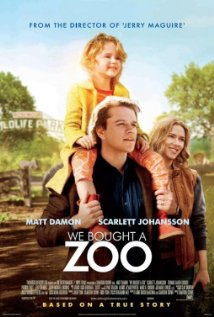
We Bought a Zoo (2011), directed by Cameron Crowe

we bought a zoo posterCoping with loss is complicated. When I lost my wife in 1989, my world fell apart. I could not understand it then nor can I can understand it now. How God in His wisdom could end the life of such a beautiful soul was totally beyond my ken. Yet this is what happened and that is what my family had to deal with. It was extremely helpful to have my children present to support me and for me to support them in this time of darkness. To a large degree, the love between the surviving spouse and the children helps one to deal with the overwhelming sadness.

I was reminded of this complicated adjustment period as I watched We Bought a Zoo, an emotionally rich film about Benjamin Mee, a widower still mourning the death of his wife. Emotionally exhausted with managing his kids and dealing with school discipline issues with his 14-year-old son Dylan, he decides to begin his life again by purchasing a new home in a rural area. But there is one problem. The house comes with a zoo, and the person who buys the house also has to accept responsibility for the zoo. Ben’s brother counsels him against the purchase, but Ben disregards his advice and buys it anyway when he sees how much Rosie, his 7-year-old daughter, is infatuated with the idea of owning a zoo and playing with the animals.

Together with Kelly Foster, the attractive and sensitive head of the zoo staff, they start renovating the zoo with the goal of opening it to the public. The task is monumental and requires strict compliance with the law to pass an inspection from the authorities. Expenses mount and the project is in danger of failing, but they find creative solutions.

Ben and his son Dylan are not on the same page with regard to the zoo enterprise, and eventually a heated argument between the two crystallizes the different perspectives of spouse and child on how each responds to loss. The father wants to survive emotionally and be a good parent, but he realizes he needs the support of his older son to help rear his young daughter. He cannot do it alone.

When Ben, in frustration, yells at Dylan, Dylan asks why he is yelling at him. Ben responds: “Because I’m your father and I’m the only one you’ve got! And the line of people in this world who really care about you ends here! So stop moping around this place, man! Do something! You just sit here and feel sorry for yourself, man! Help me with your sister! Help me, damn it!” When Dylan starts crying, his dad tearfully says: “I’m sorry that your mother got sick when she did. Believe me. I’m sorry that you didn’t get more of a childhood, man. That’s just how that one went. But we live here with a seven-year-old girl who still believes in the Easter Bunny. What are we gonna do?” At that moment, Dylan sees the pain and frustration of this father, and there is reconciliation.

Jewish tradition provides a pattern for dealing with loss. The mourning period is divided into three stages. The most intense time is the seven-day period after death, when friends and family visit to comfort the mourner. The second stage is the first thirty days after the death when the family begins to integrate the loss and function normally while still under the shadow of tragedy. The third stage is a year after the death when the anniversary of the loved one’s passing is marked by the lighting of candles and the recital of prayers in the synagogue.

Every year after that, there is a yearly ritual marking the anniversary of the day of death when candles are lit, prayers are said, and the person is remembered. The end goal is not to forget the loved one. The goal is to move on with life, but at the same time to treasure the memory.

This grief cycle is reflected in the final scene of We Bought a Zoo. Ben brings his children to the restaurant where he first met his wife and shares with his kids his first encounter with her. It is a tender and happy moment, which reminds us that dealing with loss does not mean forgetting; rather it means integrating the memory into our minds and hearts so that the loved one who is gone is still with us to comfort us and to inspire us.

Purchase this movie on Amazon.com.

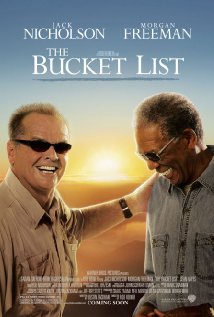
The Bucket List (2007), directed by Rob Reiner

bucket list posterIn the 1966-7 academic year, I was studying in a yeshiva in Israel and in the spring I had to have a hernia operation at Hadassah Hospital. I have vivid memories of the night before the operation. My roommate was scheduled for serious surgery and he said to me: “I wish I had what you have.” It was a statement that reverberated in my mind for many years. We never realize how blessed we are until we hear of the trials and travails of others.

People who are staying in a hospital tend to commiserate with one another simply because being ill in a health care facility can be a lonely experience. This is the opening scenario of The Bucket List, a touching narrative of two men from opposite sides of the track who share a common malady that brings them together in friendship.

Car mechanic Carter Chambers and billionaire hospital tycoon Edward Cole initially meet in the hospital after both have been diagnosed with terminal cancer. As they undergo their treatment, they share in brief their respective life stories and come to like one another. Carter is a family man, devoted to wife and children; Edward has been divorced four times and is estranged from his only daughter.

As they become increasingly aware of their mortality, Carter begins penning a “bucket list,” a list of things to do before the inevitable end. When he shares it with Edward, Edward offers to finance a trip for both of them that will enable Carter to do all the things on his bucket list and more. In spite of his wife’s protest, Carter agrees and they begin their around the world adventure, visiting tourist sites in China, India, and France among other places.

Towards the end of their trip, Carter realizes how much he misses his wife and decides to return home. Back in the States, we see Carter surrounded by a loving wife and children, and Edward alone in his luxurious apartment. It is clear that Carter’s life is more blessed because of his loving family.

Throughout the film, Carter expresses the wisdom of the ages. Early on in his relationship with Edward, he tells him of the two questions that a person is asked at the gateway to Heaven: Have you found joy in your life and has your life brought joy to others? He encourages Edward to find the joy in his life before it is too late.

Furthermore, Carter reminds Edward that “You measure yourself by the people who measure themselves by you.” The Ethics of the Fathers echo this idea when it tells us the right course for a man to follow is to choose a path that is a credit to him and that earns him respect from his fellow man.

These messages of healthy living resonate in Judaism. The Bible and the Talmudic Sages tell us to love other people, for when we love others we bring joy to our own lives. It makes us less self-centered and enables us to feel happiness in the accomplishments of others. God is overflowing with kindness and so should we be. The patriarch Abraham is the exemplar of the attribute of loving-kindness in Jewish tradition. When guests came to his home, he went to extraordinary efforts to make them feel important and welcome. He gave them a sumptuous meal even when he himself was recovering from his own circumcision in the heat of the day. The Ethics of the Fathers bluntly state: “If I am only for myself, what am I?” It is part of man’s mission to be concerned about all of God’s creatures. The Bucket List reminds us to live life to the fullest, to count our minutes, and to be generous to all men.

Purchase this movie from Amazon.com.
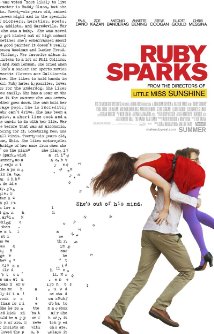
Ruby Sparks (2012), directed by Jonathan Dayton and Valerie Faris

ruuby sparks imageI know some single men who are very self-absorbed. They are successful professionals but cannot seem to take their female relationships to the next level: marriage. They see the world through their own eyes and the older they get, the more rigid they become, increasingly unwilling to understand that women also have needs, which do not always revolve around men. For example, a 50 year-old friend has finally decided to get married because he wants children. He assumes that a 35 year old woman will want to marry him and have kids. He does not comprehend that a 35 year old woman generally is not interested in a 50 year old guy, yet he persists in his quest to find a young bride.

I thought of this unrealistic mindset of my friend as I watched Ruby Sparks, a clever, funny, profanity-laden, and very insightful film about relationships in which the male partner always sees things from his perspective and fails to understand the needs of significant others in his life.

Calvin Weir-Fields, a young J.D. Salinger, has writer’s block after his first wildly successful novel. Visits to his therapist are helpful, but his inability to write persists, until something amazing happens. A girl, about whom he has been dreaming, becomes a real person and he falls in love with her. Improbable as it may seem, they date, dance together, and get to know one another as lovers and friends.

The conceit that informs the movie is that Calvin can control Ruby by writing about her. She is both real and a figment of his imagination. It takes a while for him to process this conundrum, but he does when other real people such as his brother and his parents are able to actually see her and talk to her. There is no rational explanation for what happens, but the film manages to say some wise things about relationships between men and women.

Consider these interchanges in the story. When Calvin, a loner, confides to Ruby that she is all he needs, Ruby responds “That’s a lot of pressure.” When Calvin feels depressed after Ruby leaves him for short time, he retires to his study and types that Ruby is miserable.  Sure enough, she immediately phones to tell him how much she misses him. When Ruby desires to stay close to Calvin and physically cling to him, barely allowing him to breathe, Calvin again goes to his typewriter and types that Ruby is “filled with effervescent joy.” This makes Ruby perpetually bubbly and unresponsive to the nuances in Calvin’s behavior.

The relationship reaches a dramatic crescendo when Calvin exerts his power to control Ruby in an almost diabolical way, mercilessly informing her of his power to control her. It is an extraordinary scene pitting the controlling male against the defenseless female. How this problem is ultimately resolved is the stuff of fancy, but along the way we glean wisdom about what the relationship of a man and woman should be.

Jewish tradition has much to say about the relationship between men and woman. Every Friday night, the traditional Jew sings an ode to the “woman of valor” described in King Solomon’s Book of Proverbs. She is independent, wise, and the key to passing down tradition to her children. In a Talmud class, a student once asked the teacher: “How can I get my wife to treat me as a king?” The answer from the teacher: “Treat your wife like a queen and she will treat you as a king.” The answer reveals the mutual respect that husband and wife should have towards one another. The issue is not one of control. Rather the relationship should be characterized by each partner giving to the other. The goal of marriage is not to control or change the other; rather it is to lovingly accept the divinity within each other so that there will be mutual respect for one another’s uniqueness.

Purchase this movie from Amazon.com.
Butch Cassidy and the Sundance Kid (1969), directed by George Roy Hill

butch cassidy posterIn Israel I teach a class that is preparing for the Bagrut, the national matriculation examination. One requirement of the test is to pass an oral test in the English language. The topic of the conversation between student and examiner is a brief research paper that the student submits to the tester a week before the exam. To make the assignment simple, I gave the following topic to the class because it is easy to do and provides a fertile topic for discussion: “Influential Films of the 20th and 21st Centuries.” I suggested that one of my students choose Butch Cassidy and the Sundance Kid.

As a kid growing up, I was a fan of the Western movie. Typically, the good guys were better looking than the bad guys and they wore white hats rather than black ones. It was easy to identify who was on the side of right. My conventional approach to Western heroes, however, was turned upside down after viewing Butch Cassidy. For the first time, I was rooting for the outlaws. The two stars were popular movie stars, Paul Newman and Robert Redford, and their relaxed and affable demeanor won me over.

The motive of the outlaws seems rational. They don’t want to hurt anybody. They just want to earn a decent living and Butch and Sundance feel unsuited for farming or ranching. When Butch hears how much money is being paid to capture or kill them, he wonders why E.H. Harriman, the owner of the robbed Union Pacific train, doesn’t just pay him not to rob the train. It would be more cost effective from his perspective.

Their life of crime continues until they are overtaken by a posse of lawmen led by Joe Lefors, who has a reputation for always capturing or killing his targets. Butch and Sundance elude him by traveling to Bolivia, a place where they feel immune from capture and a place rife with banks easy to rob. Their attempts to rob banks here, however, hit a snag since neither Butch nor Sundance knows Spanish. To remedy this, they spend hours learning the specialized vocabulary that is needed to rob a bank and soon achieve enough language proficiency to resume their nefarious ways. Regrettably, the law catches up with them even here.

For a short time, they try to “go straight,” and obtain work as payroll guards on a dangerous route often plagued by greedy bandits. When they are accosted by them, they kill the bandits. Realizing that they are unsuited for honest work, they return to their old ways. Eventually the Bolivian authorities catch up with them and Butch and Sundance die in a blaze of glory. It is a freeze frame shot that is iconic and memorable.

Jewish tradition in no way supports a criminal life style. Butch and Sundance, as ingratiating as they are, still are outlaws breaking the law and putting the lives of many in danger. It is noteworthy that one of the arch-villains of Jewish history is named Laban, which in Hebrew means white. Laban was the deceiver of the patriarch Jacob and caused him all kinds of grief. We even recall Laban’s name on the night of the Passover seder when we recount the idolatrous beginnings of the Jewish nation. One of the Biblical commentators suggests that his name is no accident. Rather, it deliberately calls attention to the fact that bad people often operate under a guise of legitimacy, of whiteness. Laban’s name, therefore, reminds us that we should not make judgments based on outward impressions, but rather on inner character and on a person’s performance of good deeds.

Butch Cassidy and the Sundance Kid is iconic and influential in the sense that it paved the way for subsequent anti-heroes in movies, characters with whom we could identify but whose morals and motives were suspect. Indirectly, the film tells us that we have to be wary of role models whose actions do not mirror their likeable personas.

Purchase this movie from Amazon.com.

Silver Linings Playbook (2012), directed by David O. Russell

silver linings playbookBeing a father has been and is one of the greatest gifts that I have been granted. Being called Abba/Dad/Father is more important and more gratifying than any other title I could possess. The appellation connects me with the cosmos, making me a messenger of past generations and a messenger of the future through my children.

Fatherhood is not simple. It presents challenges. As I have gotten older, I realize that I have been a different father for each of my kids. Proverbs tells us that we should raise a child according to his uniqueness, and I have tried to be nuanced in using my parenting tool box. It is not a cookie cutter activity, reflecting the reality that just as I have evolved as a human being throughout the years, my children also have evolved from childhood to adulthood, and they are still works in progress.

Jewish tradition tells me that I am my child’s primary teacher, although I can delegate that responsibility to teachers and schools. But the buck stops with me. Which is why parenting can be both joyous and stressful. Having acquired a plethora of life experiences, I want to share them with my children and save them from making mistakes. The reality is, however, that kids often want to test the waters themselves. When a parent wants to be prescriptive, kids may see that as meddlesome, implicitly suggesting that the child cannot make the right call on his own.

This complex father-son relationship is depicted in Silver Linings Playbook, a profanity-laced but genuine look at a family dynamic under stress. The films opens as Pat Solitano, who has bipolar disorder, is released from a mental health facility into the care of his parents. His wife, Nikki , has gone to the courts to have a restraining order placed on Pat because of his proclivity to violence. His father, Pat Sr., has lost his job and now wants to open a restaurant from his earnings as a bookmaker. In spite of this climate of negativity, Pat is determined to reconcile with his wife and find employment, always looking at things positively, looking for the silver lining beyond the present clouds.

It is clear that Pat is still not finished with his therapy; but the court, through a plea bargaining arrangement, has reduced the time that Pat is institutionalized. Refusing to take his meds, he is an accident waiting to happen, responding way out of proportion to life’s inevitable challenges. In one symptomatic scene, he wakes up his parents in the middle of the night asking if they know where his wedding video is. It is hilarious and sad at the same time.

Pat’s life begins to turn around when he meets Tiffany, a young widow who also has lost her job and shares a number of neuroses with Pat. It is a tumultuous relationship, but one that forces Pat to look at himself honestly and to begin to adjust to his new reality.

As his relationship with Tiffany deepens, his father does not understand the nature of their connection and how it is providing the necessary therapy for Pat’s recovery. His Dad only wants to spend time with his son to improve his rapport with him, but he does not know how to do it other than to watch football games together. In a powerful scene between father and son, Dad, with tears in eyes, wonders whether he did enough as a parent. Did he favor Pat’s brother? Did he give Pat enough love? Pat for once does not interrupt his father. He listens without comment, and then hugs him. It is an epiphany of love as they embrace and resolve to be closer in the days and weeks ahead.

Silver Linings Playbook is a serious meditation on human relationships. When these relationships are tested in the crucible of life experience, we sometimes realize that the best way to communicate is not through words, but through the language of the heart.

Purchase this movie from Amazon.com.

Back to the Future (1985), directed by Robert Zemeckis

back to the future poster Time is relentless. Rational people understand that you cannot turn back the clock. Sometimes, however, there are moments in your youth when you summon up the strength or courage to do things that actually help you better navigate the future. Which is why I look back fondly at my foot race with John King in the sixth grade.

My neighborhood had changed because low income housing was built nearby and now my school’s population changed. Instead of attending a school with affluent, college-bound kids, I attended a school with many low achievers and discipline problems. Like many kids, I rose to the level of expectation of my teachers, who now viewed me as mediocre, instead of the academic star I was in my mother’s eyes. My self-esteem plummeted, even in gym class where I was overshadowed by some genuinely gifted athletes.

So it was a special day for me when I was pitted against John King, one of the tough and cool kids who smoked cigarettes in junior high school, in a 220 yard dash in my PE class. I was nervous, but on that day I was very fast and won the race. Winning did remarkable things for my self-esteem. I was who I was, but now I felt I could seriously compete against anyone in my school. I might not win every race, but I thought of myself as a potential winner and it did marvelous things for my ego.

That kind of personality transformation is at the heart of Back to the Future, an escapist fantasy of time travel, in which Marty McFly travels 30 years into the past and orchestrates the encounter in which his parents, George, a shy, bookish teenager, and Lorraine, meet and fall in love. Marty discovers that if his father becomes more assertive, Marty can alter his destiny and that of his parents as well.

The film opens in the home-laboratory of Dr. Emmett Brown, an eccentric scientist who prides himself on creating inventions, one of which is a time machine whose exterior is a DeLorean automobile. Through a series of improbable events, Marty jumps in the car to flee Libyan assassins and accidently is catapulted back to 1955, and that is when the adventure begins.

Marty meets his parents before they got married and realizes that unless he intervenes in their lives, they will not marry and he never will be born. The problem is that George McFly, Marty’s dad, is extremely introverted and devoid of self-esteem. He simply lacks the courage to ask Lorraine, Marty’s future mother, out on a date. Moreover, he is subject to the constant bullying of Biff Tannen, who often threatens him with violence. To complicate things, Marty’s mother as a teenager is infatuated with Marty rather than her destined husband, George. How everything is sorted out and how George and Lorraine finally meet and fall in love is the narrative arc of the film. In the end, we see that decisions and actions made as a youth can have profound implications for the rest of one’s life, especially in the life of George McFly.

Time is an eternal value in Jewish tradition, encapsulated in the maxim of The Ethics of the Fathers: “if not now, then when?” Everyday should be filled with achievement and spiritual growth, not procrastination. Furthermore, the Sages say that one should think that each day is potentially one’s last day. Therefore, one should think about how to conduct oneself every day of one’s life. Back to the Future reminds us that how we act today can influence our tomorrows. Therefore, let us be wise and make the decisions today that will enable us to have a successful future.

Purchase this movie from Amazon.com.

Crimes and Misdemeanors (1989), directed by Woody Allen

crimes and misdemeanors posterAs principal of a budding Jewish day school, part of my job was to raise money as well as be the educational leader of the school; so it was with great joy when out of the blue I received a number of envelopes in the school mail box with thousands of dollars of cash. Over several months they mysteriously appeared and I attributed the gifts to an anonymous admirer and supporter of Jewish education. Several months later, the gifts suddenly stopped.

Soon after, I read in the local newspaper about the incarceration of a friend of mine for selling drugs. I never made a connection between the gifts of money and my friend’s crime until I visited him in prison some months later. It was then he confessed to me that the money he gave the school was from the profits of his drug sales. He wanted in some way to assuage his guilt and giving money to a Jewish day school was his atonement.

I was reminded of this incident as I watched Crimes and Misdemeanors, the disturbing story of ophthalmologist and philanthropist Judah Rosenthal. Judah has had an affair with a woman for several years, and she now threatens to ruin his life if he doesn’t marry her. His brother Jack suggests having the woman killed and this presents Judah with a major question of conscience: allow his life of wealth and privilege to continue or to hire a hit man to murder her. He reminisces: “I remember my father telling me that the eyes of God are on us always. What a phrase to a young boy. What were God’s eyes like? Unimaginably penetrating, intense eyes, I assumed.” At first the idea of murder is abhorrent to him, but then he equivocates. He has committed adultery, he has made incredibly stupid mistakes, but he knows that the revelation of his indiscretions to his wife will ruin him both in the eyes of his wife and the greater community. And so he decides to authorize the murder.

A parallel plot of the movie concerns Clifford Stern, a documentary filmmaker who is trying to produce a film on a great scholar who in spite of personal tragedy is able to affirm life with honesty, optimism and courage. It is his philosophy that counterbalances the sordid narrative of Judah Rosenthal. Professor Levy, the subject of the documentary, says in an interview that “we are all faced throughout our lives with agonizing decisions. Moral choices. Some are on a grand scale. Most of these choices are on lesser points. But we define ourselves by the choices we have made. We are in fact the sum total of our choices.”

Although Crimes and Misdemeanors plays like a comedy in many ways, at its core it is a deep philosophical meditation on the nature of morality in the contemporary world. In the Talmud, our Sages tell us one sin leads to another. Once we cross the line of morality and decency, we traverse a slippery slope and many sins are committed in the wake of one transgression. This is why the rabbis of the Talmud, who understood human nature profoundly,  often set up protective fences or decrees around the law to insure that the primary Biblical law is not broken.

Judah Rosenthal rationalizes his crime and it is unsettling to hear his self-analysis. First plagued by an overwhelming guilt, he hears the voice of his father who gave him a sense that God is watching him, and Judah feels that he has violated the moral universe. On the verge of a breakdown, he awakes one day and his moral crisis has vanished. Life goes on. There is no Divine retribution and he returns to his normal life.

Jewish tradition argues that guilt is sometimes good for a person and can even be redemptive. King David used guilt to spur him on to a life of good deeds and accomplishment. But David admitted his faults and did not rationalize his behavior when he sinned. It is this model that serves as a positive example for all of us who stumble occasionally as we navigate the moral choices that confront us.


Purchase this movie from Amazon.com.

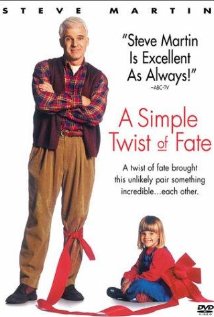
A Simple Twist of Fate (1994) directed by Gillies MacKinnon

simple twist of fateA friend of mine many years ago confided in me that he did not want to have children. He saw them as an inconvenience and simply preferred to own pets which would never make demands on him, argue with him, or keep him up at night. He would also not be required to pay exorbitant tuitions for Jewish day school education. When I countered that the Bible commands us to try to have children and that one of the first questions we are asked in the heavenly court is whether we truly attempted to have children, he dismissed my arguments. When I shared the practical reality that children take care of us emotionally and physically when we are older, and that they are a living extension of the legacy we create during our lifetime, he again rejected my thinking. To him, present creature comforts trumped everything.

A Simple Twist of Fate, based on George Eliot’s Victorian novel, Silas Marner, reminds us that to parent a child is a blessing that can make our own lives more meaningful. When we learn to care for child, we are leaving our own egocentric desires at the door and becoming better human beings by giving to another who cannot take care of himself. This is what happens to Michael McCann, a high school music teacher, when he adopts a small child who serendipitously finds her way into Michael’s home on a stormy winter night after her mother dies in the snow.

Until that transformational moment, Michael has led a reclusive life as a carpenter crafting elegant furniture and amassing a collection of gold coins which he counts every evening and jealously guards. On one fateful night, his coins are stolen, and Michael is shaken to the core. Depressed and irritable, his mood changes when he discovers Mathilda, the foundling, and rears her as her father. Life becomes meaningful for him as he learns to parent her. Love deepens as he guides her and watches her mature into an intelligent, precocious, and happy youngster.

Complications ensue when Mathilda’s real father attempts to adopt her many years later, citing Michael’s inability to pay for her education at the finest schools and his eccentric life style. Michael, after all, is only a carpenter who earns very little, and his social life is limited. Following in broad brush strokes the outline of Silas Marner, the film depicts the slings and arrows of outrageous fortune that beset Michael as he tries to retain custody of Mathilda. For him, parenting is a calling and he does not want to surrender that privilege.

Jewish tradition places great value on having children and on raising them to be images of the Divine. Being fruitful and multiplying is the first commandment in the Bible. God wants the world to be populated, and having children accomplishes this Divine goal. Moreover, Judaism emphasizes the chain of tradition and passing down values to the next generation. This is expressed in the Passover Seder, where children ask questions of parents, who supply answers to inquiring minds. Furthermore, every Friday night in many Jewish homes parents bless their children, poetically comparing them to the great patriarchs and matriarchs of the past, who carried the message of Jewish living to subsequent generations of Jews. Having children allows one to be a messenger of God in this cosmic plan.

As a parent, I have told my children that my most important title is not rabbi or doctor; rather it is Abba/Father. What my own parents left me was a host of positive memories which played a role in my own self-actualization as an adult. Their values are embedded in me, and that is their legacy, which I try to pass on to my own children.

A Simple Twist of Fate suggests that the best thing a parent can leave a child is a legacy of love and strong family values. These will endure beyond any material gift.

Purchase this movie from Amazon.com.