Category Archives: Drama

The Last of the Mohicans (1992), directed by Michael Mann

last of the mohicansFor many years, I was a fan of the motivational tapes of Zig Ziglar, a self-help guru who often gave me valuable insights about how to work with people who did not share your point of view, but who did care about the things you cared about. One of his wise aphorisms was “to sit on the same side of table” as the opposition to discuss thorny issues. In other words, see things from the perspective of your adversary and understand his perspective even if you don’t agree with it. Seek out compromise so that there is a win-win situation for both parties.

I was reminded of this as I watched The Last of the Mohicans, a passionate love story and a rousing and violent adventure about early America before it became a nation. A key plot point hinges on the ability to compromise and see things from the perspective of the other.

The narrative takes place in 1757 when the English colonies and the British are fighting the French for land on the American continent. Indians are fighting on both sides and the colonists are key players in the British effort to defeat the French. But there is a problem: the colonists have mixed feelings about the English. On the one hand, they are subjects of the King; but, on the other hand, they have their own dreams of independence and see the world differently. Many are prepared to fight for the British, but only if they can still defend their families at home who may come under attack. Without that assurance that their own concerns are addressed, they are unwilling to risk their lives for King and country, especially when the country is not fully supportive of their colonial initiative. They are willing to compromise if their personal needs are met, but the English are arrogant. The English see the colonists as servants of the Crown and they must do as the Crown dictates.

This dilemma presents itself at the beginning of the story as three men, Chingachgook, his son Uncas, and his adopted son Hawkeye visit their old friends, the Camerons. One of the colonists at the table informs everyone that he is recruiting men to fight for the British against the French, as long as the British agree to allow the men to return home in case their homes are attacked by the Huron war parties, loyal to the French. The British military leader, General Webb, agrees and the colonists then head to Fort William Henry to join the British forces.

Meanwhile, Cora Munroe and her younger sister Alice journey to visit their father, Colonel Edmund Munroe at Fort Henry. Upon arrival, their father is happy to see them but surprised to find them there at all. After all, it is a war zone, and their lives are in danger. Apparently, messages of the dire straits of the English never got through, and now Colonel Munroe is doubly burdened by both the fighting in front of him and insuring the safety of his daughters. Moreover, he demands that the colonists fight for the British and not return home to protect their families. For him, loyalty to England trumps all. Compounding the problem is Magua, a duplicitous Indian guide who leads the British into a trap.

Hawkeye saves Cora and her sister from the attack, and slowly Cora begins to understand the worldview of Hawkeye, a fiercely independent man who sees the British as foolish and narrow-minded, unwilling to compromise on principles that have no relation to the current reality in which they find themselves.

The inability to compromise creates an environment for catastrophe. Judaism, indeed, looks at compromise as a good thing. Gerald M. Steinberg, an expert in Jewish law, observes that mediation and conflict prevention are constructive ways to avoid dissension in the family and in the community. In finding compromise solutions, extremism is eschewed and moderation is valued.

Beneath the modus operandi of compromise is the fundamental assumption that peace among men is a quintessential value. Jews pray for peace three times a day and Jewish leaders are encouraged “to seek peace and pursue it.” For example, when Abraham and his nephew Lot had a difference of opinion about grazing areas for their sheep, to avoid further friction Abraham acted magnanimously. He said: “If you will go to the left, I will go to the right, and if you will to the right, then I will go to the left.”

The overall goal in Jewish litigation is to accept compromise in order to reduce conflict and increase peace. This perspective on conflict does not exist when the British relate to the colonials. In The Last of the Mohicans, we witness the tragic results of insisting on being right rather than being good.

Purchase this movie from Amazon.com.

The Good Lie (2014), directed by Philippe Farlardeau

good lie posterIn the late 1970s and 1980s, Yeshiva High School of Atlanta, the school of which I was principal, had an influx of students from Iran, who fled after the Iranian Revolution. All of them were very well behaved, had a smile on their face, and very much wanted to please. Some came without their parents and had to live with local families. It was a trying time for them; but most made a productive transition to life in America and were remarkably successful in their careers.

I thought of my Iranian students as I watched The Good Lie. The Good Lie tells the story of four child refugees from the Second Sudanese Civil War. After their parents are murdered, they journey to Ethiopia in search of a safe haven where they can have food and shelter. Many years later, they are chosen to be part of a major resettlement initiative in the United States. They welcome this opportunity to begin life anew, and they travel to Kansas City to their new homes. Regrettably, the sister of one of the boys has to be relocated to Boston, where there is a welcoming family prepared to accept her into their home.

Their new environment is strange, but with the help of Carrie Davis, an employment counselor, they find jobs and slowly reconstruct their lives in this new land. Their work at first is menial labor, but gradually they learn skills that enable them to move upwards socially and financially.

Haunting them throughout their odyssey are old memory tapes of past traumas that at times make their adjustment problematic. The shock of seeing a loved one killed or mauled by a lion is not easily forgotten. Nor do they throw out food casually when they remember the days when they endured starvation on a daily basis. Thankfully, their caring hosts do not abandon them in their periods of self-doubt and adversity, thus enabling them to eventually make a successful transition to their new environment.

Jewish tradition is very sensitive to the predicament of the outsider, the stranger in one’s midst. It is a foundational concept rooted in the historic reality that Jews were strangers in the land of Egypt. There are numerous warnings in the Bible not to oppress the stranger financially or verbally. The Talmud reminds us that language can hurt or heal. It can make people feel welcome or it can estrange people; therefore, we have to be very sensitive when talking to the outsider, the stranger.

Rabbi Jonathan Sacks perceptively writes: “a stranger, in particular, is sensitive to his or her status within society. He or she is an outsider. Strangers do not share with the native born a memory, a past, a sense of belonging. They are conscious of their vulnerability.”

Rabbi Sacks, quoting the great medieval sage Nachmanides, points out how powerless is the stranger in comparison to those who are native born. The stranger has no support network, no family, friends, or neighbors who are ready to help in times of crisis. Furthermore, the stranger is psychologically defenseless. Alone without family and friends, he feels isolated and unprotected. That is perhaps why God is the protector of the stranger since no one else is ready to step up and help them. Sacks further suggests that the Jew is the archetypal stranger with different beliefs and different customs; and, therefore, Jews should understand how important it is to integrate the outsider into the community. We need to make him feel safe and at home.

In the final analysis, we are all strangers at some time in our lives. The Good Lie reminds us to take care of the outsider and make him feel like an insider.

Purchase this movie from Amazon.com.

What’s Eating Gilbert Grape (1993), directed by Lasse Hallstrom

what's eating gilbert grapeIn the mid-1960s, I knew a couple that had a Down’s Syndrome child. They never took him home from the hospital.

There is no question that having a special needs child is challenging, but different families handle adversity in different ways. What’s Eating Gilbert Grape offers one example. Gilbert Grape lives n the small town of Endora together with his mentally challenged brother Arnie, his two sisters Amy and Ellen, and their obese mother Bonnie who weighs over 500 pounds. Depressed for many years since her husband’s death, she has not left her house for the past seven years. Gilbert is the surrogate father, taking care of Arnie who often gets into trouble when he climbs the town water tower and indirectly compels the fire department to try to coax him down to safety.

As the family prepares for Arnie’s eighteenth birthday party, Gilbert meets Becky, an attractive young woman, who gets stuck in Endora when her trailer breaks down. Becky and Gilbert become friends and they share their private thoughts and dreams with one another. What moves Gilbert to connect with Becky is her non-judgmental attitude towards others, specifically his brother and mother. She does not view them as freaks, but rather as people who are challenged by life experiences.

What’s Eating Gilbert Grape is a film that wanders. Watching the characters move from crisis to crisis is like observing life in real time, but cumulatively the scenes present a family that has figured out a way to deal with life’s disappointments and uncertainties. The members of the family love one another and support one another in spite of major emotional challenges. The family’s patience with Arnie and their abiding love for their mother is the glue that keeps them together and functioning despite obstacles.

Let me share some personal insights that came to mind as I watched the movie. My sister Carol was born with Down’s syndrome many years ago when mental retardation was referred to as mongoloidism, a strange and pejorative sounding term. Carol was six years older than me, but my sister Martha, only a year younger than Carol, probably could give a more realistic picture of what it was like to grow up with a developmentally disabled sibling who looked very different from the average child.

My mother and father got married late. She was in her late 30s and my father was in his 40s. In the late 1930s, Down’s syndrome wasn’t called Down’s syndrome; it was called mental retardation, and my sister Carol attended events for the mentally retarded. My mother and father felt terribly disappointed in not having a normal child. My father, in fact, occasionally would remind me not to tease Carol because she was “cursed.” This was a harsh term for my young ears, but I did stop my teasing. My parents were very sweet, sensitive people and devoted parents, but they were operating in a different social and therapeutic world than today’s parents of disabled children.

After her initial disappointment, my parents showered Carol with love and began thinking about what they could do for her. My mother committed many hours each and every day to doing the best for Carol. My mother made the rounds of many hospitals and doctors to see what could be done. Carol, my parents learned, could not improve much; but she could learn some things, so my mother tried her best to educate her. She registered her in the local public school in Mt. Vernon, New York, with my sister Martha; but after kindergarten, Carol was discharged. My mother then took her to a school in the Bronx, taking an elevated subway every day. It was an arduous trip, but my mother persevered.

Carol, like most children with Down’s syndrome, could not tell a lie. She had no concept of falsehood.   One day she told her teacher that she lived in Mt. Vernon. The next thing my Mom knew was that Carol was being discharged as a non-resident of New York City. That incident was the catalyst for my mother to try to establish a school for retarded children in Westchester County closer to our home. I recall many meetings that my parents attended working on behalf of this landmark project. There was a major battle over zoning laws and with neighbors who did not want a school for retarded children in their neighborhood. But eventually my mother was successful and the school was established and grew over the years. Moreover, as time went on, my mother was one of the founders of a Retarded Children’s workshop in White Plains which was located about 45 minutes by bus from Mt. Vernon.

My father, who labored hard as a painting contractor, would rise early in the morning to bring Carol to the bus stop, wait with her until she boarded, and then return at the end of the day to pick her up. I had it easy since these daily taxing responsibilities were not mine. But watching my mother devote so much energy to this important cause for the sake of her child taught me a valuable lesson about perseverance. Once she got over her initial disappointment, she always made the best out of a situation and she never gave up.

As a younger brother, I did not have the same challenges as my sister Martha who was so close in age to Carol. Martha spent lots of time with her and was very close with Carol. When Martha entered high school, I sensed that it was difficult for her. Martha’s circle of friends changed. Her friends had little understanding of mental retardation, and Martha became very self-conscious of Carol’s uniqueness whenever her friends came by to visit. Martha always was a good sister to Carol, but it was difficult for her to explain Carol’s specialness to her friends in the 1950s when Down’s syndrome was much less understood than now.

As a little boy, I would fantasize about becoming a doctor and being able to transform Carol into a normal person; but as I grew older I understood that my hopes for Carol were only a dream. Over the years I tried to be a dutiful brother, especially after my parents passed away. When my own children were of age, I explained Carol’s situation to them and they were always warm and accepting of their aunt, who always had a sweet smile for them whenever she saw them. Having her close by prompted me to remind my kids of how fortunate they were to possess a normal intellect, with the potential to learn so much knowledge. Why things happen is ultimately unknowable, and we need to reflect that there but for the grace of God go I.

Perhaps this is one of the lessons we learn from people with disabilities of all types: to be appreciative, to be grateful, for our own normality. In fact, I told my children that when we see people with a visible abnormal appearance, we recite a blessing: “Blessed are You, God of the Universe, who makes creatures different.” It could be that the Sages who formulated this blessing wanted to convey the message that all humans, no matter what their intellect or appearance, are creations of God imbued with an essential sanctity.

Which brings me back to What’s Eating Gilbert Grape. Its implicit message is that every child is a precious gift from God. Everyone has infinite value. Everyone deserves respect, and all are a reflection of the divine.

Purchase this movie from Amazon.com.

The Killing (1956), directed by Stanley Kubrick

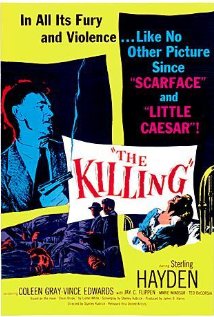
the killing posterThere is a statement in The Ethics of the Fathers that has puzzled me for many years. The Sages say: “one should not engage overly much in conversation with women. The admonition pertains to one’s wife, all the more so to other women.” My rabbinic training and my experience as a synagogue rabbi and husband has told me the opposite; namely, that I should engage in lots of conversation with my wife because good communication is a key to successful marriage. So how do I reconcile my personal experience with the aphorism of the Sages?

Watching The Killing gave me a better idea of what the Sages meant when they discouraged conversation between husband and wife. The Killing details a perfectly planned heist of a race track where the robbers will walk away with two million dollars. However, the plans go awry when one of the robbers divulges the plan to his unfaithful wife.

Johnny Clay, an ex-con, has planned a two million dollar robbery of a racetrack. His accomplices are all novices at crime, but each one has a personal motivation for breaking the law. They are all under financial pressure. One needs money to care for his sick wife; another needs money to pay gambling debts. Still another, George Peatty, needs money to give to his wife Sherry, who is constantly complaining about her lack of money and the accouterments of wealth. It is George’s conversation with his wife that proves to be the undoing of the perfect crime.

The set-up for the robbery is meticulously orchestrated by Johnny, who determines that the robbery will take place during the seventh race of the day. To distract the police, he hires Maurice, a former Russian wrestler, to start a brawl at the bar in the racetrack. He also hires Nikki, a hired gunman, to shoot Red Lightening, one of the racehorses, to create confusion on the track. During the ensuing melee, Johnny holds up the clerks at the payroll office and makes off with two million in cash. It is then that things fall apart. Sherry has shared information about the heist with her hoodlum lover, Val Cannon, who attempts to steal the proceeds of the robbery. A violent showdown between Val and his partner and the men who actually facilitated the robbery ends in bloodshed and Johnny has to improvise at the last minute to salvage his money.

An analysis of the fateful conversation between George and Sherry is instructive. All they talk about is money and material things. The dialogue has no connection to matters of the spirit, only to matters of the flesh.

What is discouraged by the Sages is idle conversation, not serious discussion about domestic issues. That kind of constructive discourse is encouraged. It is important for couples to share information about what is on their minds, what activities they should do, what challenges they are facing. It is good when husbands and wives indicate that they value the thoughts of their significant other. It is not wise, however, say our Sages, to complain about other people to one’s wife, to spread slander or gossip, to share burdens, troubles, or worries unless his wife can actually help him or encourage him.

The Killing is a classic example of film noir, a film without heroes. The men who get involved with the heist occupy ordinary occupations and are not professional crooks. They are simply men driven to crime because of their own dire circumstances, some of which have been created by them and some of which have not. Clearly, however, the plot turns on the confessional conversation between George Peatty and his acquisitive wife Sherry, who, like Delilah in the Bible, exploits her husband’s secrets for personal gain. Watching the ensuing catastrophe reminds us that our conversations with our wives should not be concerned about material things alone. Conversation between spouses is good when it is purposeful, focused, and expressive of a deep, loving commitment to one another.

Purchase this movie from Amazon.com.

Open Range (2003), directed by Kevin Costner

open range posterCourtship is a sub-topic in the picturesque and violent western Open Range. As a volunteer matchmaker on an Internet website, I have some idea of what makes for compatibility between people. Most of all, it involves common goals and dreams. When two people share the same understanding of the future, then the present is much easier to negotiate. Charley Waite and Sue Barlow intuitively grasp this truth and it helps them to decide to marry.

The film opens as Bud “Boss” Spearman and Charley Waite, together with hired hands Mose and Button, are bringing cattle to market. As they travel, accepted convention allows their cattle to feed on grass in the open range. All seems to be going fine until they enter the vicinity of Harmonville, a town controlled by Denton Baxter, a money-hungry Irish immigrant who sees free-grazers as usurpers of other people’s property.

Boss sends Mose to town to get supplies, but his innocent encounter with the locals leads to Mose being beaten and thrown into jail. When Boss and Charley go to town to release him from jail, they are given a warning that free-grazers are not welcome there. To get medical help for Mose, they go to Doc Barlow whose sister Sue assists him in his work. Charley finds her attractive, but does not pursue her because he thinks that Sue is the doctor’s wife, not his sister.

After returning to their camp, Mose and Button are attacked in the middle of the night when Boss and Charley are not around. When Mose dies and Button is seriously injured, Boss and Charley decide to take revenge.

After a tense confrontation between Boss and Charley and Baxter and his cohorts, bullets fly and casualties mount. When the dust settles, Charley and Sue discuss their respective futures. She confesses her love for him and Charley, after some deliberation, proposes marriage to Sue. Sue understands Charley’s complicated past life in which he committed terrible things that still haunt him, and she encourages him to focus on the time ahead and not permit his past life to determine his future: “I don’t have the answers, Charley. But I know that people get confused in this life about what they want, and what they’ve done, and what they think they should’ve because of it. Everything they think they are or did, takes hold so hard that it won’t let them see what they can be.” Sue has a mature perspective on life, realizing that the past does not determine the future.

Rabbi Dov Heller insightfully lists ten questions to ask before getting married, many of which are answered in the affirmative by Sue and Charley as they navigate their relationship. Here are some of them: (1) Do we care about each other as good friends? (2) Are we emotionally honest and vulnerable with one another? (3) Do we take care of each other’s needs? (4) Do we admire and respect each other? (4) Do I trust this person completely? (5) Do we want the same things out of life? (6) Do I have peace of mind about this decision? Sue and Charlie implicitly say yes to all of these questions.

Open Range is a very good example of the western genre that catapults the viewer to the beauty of wide-open spaces and depicts the classic confrontation between good and evil. It resonates, however, on the human level in its honest depiction of people working hard to make ends meet, yet who have hopes and dreams beyond what preoccupies them in the moment.

The portrayal of an older couple trying to find happiness reminds us that it is never to late to find love and meaning in life if, as the great English poet Matthew Arnold writes, one sees life steadily and sees it whole. Viewing things in this way gives one a perspective on all of life’s challenges and possible rewards.

Purchase this movie from Amazon.

The Theory of Everything (2014), directed by James Marsh

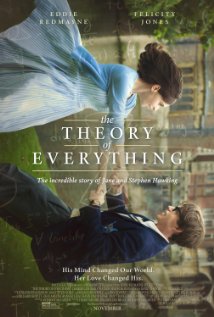
theory of everythingI saw The Theory of Everything shortly after I underwent an unplanned coronary bypass operation. For the first time in my life, I understood experientially what it means not to have control over one’s body. I felt completely vulnerable and the experience evoked much introspection. It, therefore, was not difficult for me to relate to the catastrophe that takes over the life of Stephen Hawking, a Cambridge Physics student who suddenly discovers he has a motor-neuron disease, which is known today as ALS. It is a progressive disease in which one loses all physical control of one’s body. Only the brain is still functional.

The narrative begins at Cambridge where Stephen meets Jane Wilde, a literature student. In addition to being physically attracted to one another, they have a strong intellectual compatibility and soon fall in love. When Stephen discovers his motor-neuron disease, Jane does not abandon him; instead she decides to marry him and be a source of love and support through his difficult medical journey.

Stephen continues at college and receives his doctorate in physics. He shows great promise in the world of academia, but as his illness progresses his relationship with his wife is strained. Amazingly, they have three children in spite of Stephen’s physical challenges and his marriage miraculously survives for a number of years.

To manage her stressful life at home, Jane joins the church choir, which for her is a natural extension of her faith. Her religious sensibility is something which Stephen does not share; being the detached scientist, he can only relate to that which is objectively verifiable.

As the disease worsens, technology comes to the rescue, enabling Stephen to talk through a computer with a built-in voice synthesizer. He becomes deeply engaged in his work and less engaged with his wife, who is finding life with Stephen difficult and stressful. Eventually, they divorce amicably as Stephen’s academic career blossoms allowing him to be productive intellectually in spite of his debilitating physical state.

Later on when they visit the Queen of England for an important personal audience with Her Majesty, Stephen asks his former wife and his children to accompany him. He smiles broadly at his children and says to Jane, “Look what we made.” Stephen understands that his greatest and most satisfying legacy is not his scientific publication but rather his children. They are the legacy that matters.

The first commandment in the Bible is to be fruitful and multiply. Having children creates a legacy. According to Jewish law, this commandment is fulfilled when one has a son and a daughter. Rabbi Mordechai Becher insightfully observes: “having children also helps the individual achieve his purpose in creation, by improving his character. Nurturing, caring for and educating children encourages the development of sympathy, mercy, and sensitivity to others.” Having kids compels one to think of others, and not be totally absorbed by one’s own needs.

Moreover, Jewish tradition mentions ways people can have “children” even if they physically cannot produce children. If one is not blessed with the ability to have kids, then a legacy of good deeds can resonate into the future. If one is a teacher, one can raise many disciples because students are viewed as one’s children. When a teacher passes along wisdom to subsequent generations, he is leaving a legacy of wisdom for his students and the children of his students.

The Theory of Everything reminds us that Hawking’s greatest gift to the world may not be his scientific theory, but his children who are the living embodiment of his thoughts and his hopes for the future. The insights and wisdom he imparts to them in the crucible of daily life find expression in the words and personalities of his children who live after him.

Purchase a copy of this movie from Amazon.com.

The Assassination of Richard Nixon (2004), directed by Niels Mueller

assassinaation of richard nixonI have been teaching kids for many years and I always tell them it is okay to make mistakes. Failure can be redemptive if you fail forward. Moreover, kids are works in progress and many students who are immature sixth graders blossom into thoughtful and wise young people.

My view of adults who make mistakes is different. There is a concept in Jewish law that people are presumed to be good, ethical human beings. The Ethics of the Fathers explicitly states that we should judge every man favorably. But what happens when someone continually violates your trust and disappoints you? Can a person lose his presumption of honesty and does that permit you to behave towards him in a different way?

The Assassination of Richard Nixon is a character study of Samuel Bicke, an individual who makes many mistakes in life but who does not accept responsibility for them. He alienates all those who love him. His story raises the question of how long we should permit a person known to be dishonest or unreliable to cause us damage, either emotionally or financially.

Samuel is psychologically damaged. He often gets angry when things do not go his way. Although he wants to reconcile with his ex-wife Marie, it is clear that she is uninterested and sees him as a loser. Sam also has left the employ of his brother for whom he was working in a successful tire company, complaining that his brother forced him to lie to customers about profit margins. In his despondency, Sam tries to join the Black Panthers, which he views as a societal change agent. His argument to the Black Panther leadership that he, although white, also suffers discrimination does not impress them.

In his new job as a salesman at an office furniture store, his employer describes Richard Nixon as the ultimate salesman, able to win re-election by a wide margin in spite of lying to the American people about his promise to end the Vietnam War. His boss also gives Sam books to read to improve his salesmanship, books such as How to Win Friends and Influence People and The Power of Positive Thinking. Sam, however, is socially inept and no book can alter his tragic trajectory.

The final blow arrives when Sam in desperation implicates his brother, Julius, in a fraudulent plot to steal tires from his brother’s supplier. In a mesmerizing conversation, Julius raises the issue of Sam’s moral integrity. When Sam waffles and does not fully accept responsibility for his actions, Julius washes his hands of his brother. Alone and dejected, Sam then plans to do something which in some way will validate his existence as an individual and which will influence and change the corrupt world as he perceives it.

Observing the lamentable arc of Sam Bicke’s life, it is easy to understand why people reject him. He is needy, unreliable, and dishonest to others and to himself. The general obligation to judge everyone favorably in Jewish law applies to a person when we first meet him. But, if after several encounters, he demonstrates that he is unethical, then our obligation falls away. We are not required to judge him favorably once we have evidence to the contrary.

Indeed, Jewish tradition advises us at the outset to judge others favorably. A righteous person, even in a compromising position, should certainly be given the benefit of the doubt. An average person as well should be given the benefit of the doubt and judged favorably. Even in a case where a negative perception may indicate guilt, one should still judge a person positively and certainly not speak negatively about him. However, a person who consistently behaves unethically should not be given the benefit of the doubt and should be judged unfavorably. Sam Bicke, once a good man, loses his presumption of integrity once he crosses an ethical red line. The Assassination of Richard Nixon tells his story but, more important, it describes the honest reactions of family and friends who understandably lose their trust in him.

Purchase this movie from Amazon.com.

Nebraska (2013), directed by Alexander Payne

nebraskaHow do you honor a parent? Frankly, I did not know until I was in college at Yeshiva University. My Torah learning career began late and my notion of honoring parents was vague. But once I studied the laws pertaining to honoring parents in the Bible, the Talmud, and Codes of Jewish law, honoring parents took on very specific meaning. It meant, for example, standing up when they entered a room, not openly contradicting them, serving them dinner first, taking care of them when they could not take care of themselves, providing them with food, clothing, and shelter.

Once I learned this, I began to understand how derelict I had been as a teenager, and I resolved to do better as an adult. Watching Nebraska reminded me of how inwardly comforting it is to be able to give respect and attention to a parent, especially when you know that a parent’s days are numbered. My parents have not been in this world for a long time, but I often think how nice it would be if I could speak with them, embrace them, and share with them the milestones of my life’s journey.

Nebraska begins with an image of an old man walking along a snow-covered road in Billings, Montana. He seems to be wandering aimlessly and a policeman picks him up and takes him to the police station. We learn that Woody Grant has decided to walk to Lincoln, Nebraska to collect a million dollars he thinks he has won in a mail-order sweepstakes. His son, David, greets him at the police station and brings him home.

It becomes clear that Woody is generally perceived by both family and friends as shiftless and incapable of taking care of himself. Even his wife feels he should be placed in a nursing home. David, however, has a different take on things. He sees his dad in search of mission, something to demonstrate that his life has meaning and that he still possesses value as a human being in spite of his advanced years.

Woody leaves the house again, and David tries to point out the futility of his quest in light of the obvious scam of the bogus sweepstakes. Woody remains determined and asks his son to drive him to Nebraska so that he can claim his winnings. David surprisingly agrees.

The trip is picaresque and uneventful at the same time. Despite a stop at Mt. Rushmore, Woody and David don’t talk much, but things happen that bring them closer together. Woody falls down and has to be brought to a hospital emergency room. He loses his false teeth and father and son have to search at night near railroad tracks to find them. They pay a visit to relatives they have not seen in a decade. David tries to ask his father for his input on his recent breakup with his girlfriend, but Woody offers little advice.

When word gets out that Woody has “won” a million dollars, old friends and relatives come out of the woodwork to remind Woody of old debts and former kindnesses to him and his family that need to be repaid. The local newspaper even takes his photo for an upcoming article. Sprinkled throughout these adventures are images and voices of people whom Woody knew in his youth. They paint a picture of a kind man with a trusting nature, who never could say no when asked for a favor and who served his country in the Korean War, very much unlike the laconic and ravaged old man we see today.

Nebraska is a thoughtful film that is awash in the images of life in mid-America and the ebb and flow of growing older. It is filled with memories, those of the past and those that are presently being formed. Their trip reveals an unspoken love that exists in spite of few words spoken. David, for all his outward simplicity, is a keen observer of life. He does not want to have any regrets about doing his best to make his father’s last years meaningful. Whenever his father falls, he is there to pick him up, no matter how inconvenient or unpleasant the task. In his consistent devotion to both the physical and emotional needs of his father, he is modeling what it means to honor a parent.

Purchase this movie from Amazon.com.

Greystoke: The Legend of Tarzan, Lord of the Apes (1984), directed by Hugh Hudson

greystoke poster When I was a student at Yeshiva University many years ago, there was a rabbinical student that was blind. Because of his disability, I was not at ease in his presence. I did not know how to connect to him and so I said nothing. Gradually, however, I noticed that some senior students and my teachers spoke to him easily, with warmth and genuine friendship, engaging him on a wide variety of topics. They, by example, showed me that I had to leave my preconceptions at the door, and relate to the disabled as regular people, and not treat them as social oddities.

This memory resurfaced as I watched Greystoke: The Legend of Tarzan, Lord of the Apes, a reimagining of the classic Tarzan myth but based primarily on the original source, Edgar Rice Burrough’s novel. The narrative begins in Scotland in 1885 where the newly married John Clayton of the affluent House of Greystoke is departing for a sea voyage to Africa with his pregnant wife, Alice.

Off the coast of Africa, the ship is caught in a storm and sinks, leaving John and his wife stranded in the jungle. They set up living quarters as best they can, and Alice bears a son. Soon after, she falls ill and dies, and John dies in a confrontation with a violent gorilla. The surviving baby, reared by a clan of apes, grows up thinking that it is an ape, emulating all their behaviors.

Many years later, Phillippe D’Arnot, a member of an English hunting party discovers the boy, Tarzan, and brings him back to Greystoke, the family estate, where he is reunited with his grandfather. The young man’s adjustment to his new home is not simple as depicted in a formal dinner scene in which Tarzan, now known as Johnnie, piles large amounts of food on his plate, is reluctant to return his plate to the waiter, and drinks his soup directly from the dish.

What is instructive and illuminating is the response of Johnnie’s grandfather to this bizarre behavior. He puts aside his soup spoon and also drinks his soup directly from the bowl. He understands immediately how strange Johnnie’s behavior appears to the rest of those dining and wants to provide a different paradigm of how to deal with someone who is different. Johnnie is not the other; he is one of us. Johnnie may not have a typical disability, but it is a social disability and the guests need to accept the “otherness” of the other, and make him feel at ease.

A similar story is recounted about Rabbi Yisrael Salanter, a great teacher of Jewish ethics and character development. When a dinner guest felt embarrassed because he spilled wine on the table, Rabbi Salanter spilled his own wine glass, claiming the table was not steady; therefore, the guest should not feel uncomfortable at his own faux pas.

The Torah does provide a general approach for relating to people with disabilities. First and foremost is the Biblical notion that we are all created in God’s image. This means that everyone, even those who are mentally challenged, deaf, or blind, have to be treated with respect because they all reflect an aspect of the divine. Moreover, understanding that we are all in God’s image implies that we accept the inherent diversity amongst all men, and we should do our utmost to connect to everyone, not only those who look and think like us. For example, the Sages rule that a blind man can be called to make a blessing over the Torah in the synagogue just like a sighted person even though the blind man cannot read the text. The goal is participation and integration into the community.

Greystoke, which deals with the odyssey of one man’s journey from the wild terrain of Africa to the civilized world of Scotland, is not a story of how to relate to people with disabilities. It is essentially a gripping tale of adventure that considers specifically whether Johnnie Clayton, aka Tarzan, can transition from the jungle to civilization. Can he survive all the emotional and psychological trauma that he faces in managing the dissonance between such disparate worlds?

The film presents no easy answers; but, along the way, considers the question of how we treat those who are different from us. Do we regard them as curiosities or do we welcome them into the family of man?

Purchase this movie from Amazon.com.

Big Miracle (2012), directed by Ken Kwapis

big miracle posterWhen I moved to Israel, I had trouble understanding the political system here. Unlike the United States, there are many, not just two, political parties jockeying for power. In the recent elections, I saw first hand the implications of this multi-party system. Every party has its own agenda and pushes it strongly. However, when there is a crisis and one issue dominates everyone’s thinking, then the smaller parties promote the larger party in order to insure that the issue driven by crisis is resolved for benefit of the entire nation. Crisis brings everyone together, even if in ordinary circumstances they would not agree on anything.

The notion that crisis brings people of different viewpoints together is at the heart of Big Miracle, a family film about the extraordinary rescue of whales who, as they make their 5000 mile annual migration, are trapped because of rapidly forming ice in the Artic that blocks their route to the open sea.

Adam Carlson, a TV newsman working in Barrow, Alaska, would like warmer climes and a broader marketplace for his talents, but destiny gives him an opportunity to pursue a great human interest story just when his commitment to being in Barrow is flagging. When he reports on the local news about the plight of the trapped whales, the story is picked up and featured on the national networks. His ex-girlfriend, Rachel Kramer, an avid environmentalist working for Greenpeace, encourages Adam to enlist the aid of everyone to save the whales both because it is the right thing to do and because it is good public relations to participate in the rescue effort. Representatives from oil companies who want to drill in wilderness areas and environmentalists, normally hostile enemies, join ranks to save the whales. Moreover, journalists of competing entities descend on Barrow to witness the rescue attempt and to write about a story that is mesmerizing people around the world.

Soon a working coalition forms between the local Alaskan whale hunters, environmental advocates, and the oil drilling companies. Even the American and Russian militaries join to free the trapped whales. Each employs a different strategy to rescue the whales, but all strategies are coordinated with one another.

The Midrash tells us that when the Jews first came to Egypt, they were twelve tribes who saw themselves possessing a common destiny as articulated by their father Jacob. Once there, however, factions developed over time; and as the slavery of the Jews progressed, there was more friction between the people. Only when the punitive decrees of Pharoah intensified did they become more unified. Adversity drove them together, until finally at Sinai, the unity of Israel was restored as they accepted the Torah as one, unified nation. A common goal took disparate elements of a nation and melded then into one people.

This reality of working for a common purpose is what underpins the miracle in Big Miracle. It is a familiar case of different interest groups leaving their personal baggage at home because of a desire to fulfill a larger purpose that transcends the individual.

This is an important insight to keep in mind when building bridges between people and institutions. A focus on the big issues that connect people enables one to accomplish a lot more than one individual could. An illustrative example is the requirement in Jewish law for the presence of ten men for communal Jewish prayer to take place. There is no requirement that the ten men think alike or practice their faith in identical ways. All they have to do to reach God is to stand together as one.

Purchase this movie from Amazon.com.