 I have been having a problem finding films to review that by any definition I can call “kosher.” So much of what is on the screen today is full of unsavory behaviors that I have difficulty recommending them. Indeed, I rarely go to the cinema in Israel. I order movies on Amazon when they become reasonably priced and then send them to my daughter in Lakewood, New Jersey. When I visit the US, I then pick them up and bring them back to Israel where I can watch them at home.
One staple of my reviews is the Western genre. The stories may not be very original, but there is comfort in watching a familiar genre film done well. Such is the case with Forsaken.
The story is simple. John Henry Clayton has returned to his hometown after a ten-year absence, during which he fought in the Civil War and became a gunfighter with a fierce reputation. He hopes to repair his relationship with his father, a preacher at the local church.
When he arrives to the surprise of the townspeople and his father, he learns that his mother has recently died, and his gun-toting ways are an anathema to his dad who sees his son as an embarrassment. There is great misunderstanding between the two and it takes time for each one to overcome his judgmental attitude toward the other.
In his hometown, he finds that a corrupt banker, James McCurdy, is forcing farmers to sell their land so that he can make a profit when the railroad is built. His thugs are vicious, and they are ready to kill anyone who stands in their way. Tensions escalate and good people die until John Henry decides that he must act to stop the villains from terrorizing the town. It is a bloody and satisfying conclusion in which good triumphs over evil.
The triumph of good over evil is characteristic of Jewish history. When confronted with evil, we must act. Rabbi Steven Weil summarizes the approach of Rabbi Joseph Soloveitchik, a great theologian of the twentieth century, to the problem of evil and how we should respond to it. We should “never passively accept evil and suffering; we must fight against it. God endowed man with intellect and resources that should be used to actively and aggressively battle evil or, even better, seek to prevent suffering. Thus, we are obligated to research cures for diseases, build Iron Domes and David’s Slings and heed warnings to get out of harm’s way if all else fails and we are unable to thwart the evil. Passive resistance is not the Jewish way; sanctity and preservation of life is.”
John Henry initially wants to leave his violent ways behind him. Knowing that his father disapproves, he wants to be a good son and follow his father’s instruction and example, but it is challenging to do so when he daily witnesses the cruelty of James McCurdy and his henchmen.
His father, a man of the church, tries his best to remain stoic in the face of constant threats of violence and actual violence. He never changes his moral stance, even when his own life is hanging in the balance. However, he finally understands that his son’s perception of the reality of evil may be correct and he does not stand in his way when John Henry decides to act to protect the innocent townspeople.
Forsaken is a throwback to the westerns of the 1950s, when the bad guys dressed in black and the good guys in white. The lines between good and evil were clearly drawn. Going to watch a western where the good guys triumphed was a cathartic experience in which one left the theatre knowing that good will always prevail, a comforting thought to a person confronted with the existence of evil.
 There is a statement in The Ethics of the Fathers that resonates with me every time I read it: “civility (or good behavior) comes before Torah.” What is the takeaway? That for the Torah to reside in a person, he first has to conduct himself like a mentsch.
 Many years ago, I saw Kirk Douglas in Lust for Life, a cinematic biography of Vincent van Gogh, based on the novel by Irving Stone. In recent years I visited the Van Gogh Museum in Amsterdam. Both experiences gave me an appreciation for the unique artistry and power of Van Gogh’s paintings.
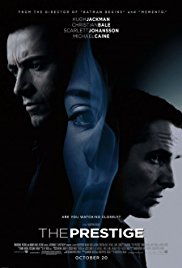 When I was a kid playing basketball at the local Jewish Community Center, I would often hear adults mentioning famed football coach Vince Lombardi’s comments about winning. Here are some of those quotable quotes: “Success demands singleness of purpose.” “Winning isn’t everything, it’s the only thing.” “Second place is meaningless. You can’t always be first, but you have to believe that you should have been – that you were never beaten – that time just ran out on you.” These statements fit the profiles of the two central characters in The Prestige, a mind-bending tale of two adversarial magicians who spend their lives trying to best the other professionally.
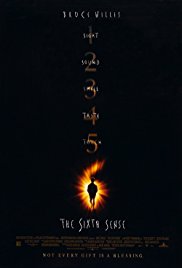 I read chapters from Ethics of the Fathers, a classic of Jewish wisdom literature, every day. So many of its messages resonate that no matter how many times I study it, I always find something new in it. For example, when I first read the maxim “if not now, then when,” I was a young man and the phrase encouraged me not to procrastinate when it comes to doing good deeds. When I read the same maxim as a senior citizen, the subtext of the line is mortality. The maxim reminds me that every day could be my last, so I should use every minute of life wisely preparing myself for an audience with the Divine. At the end of my life, I will have to give an accounting of my life to the Holy One, blessed be He.
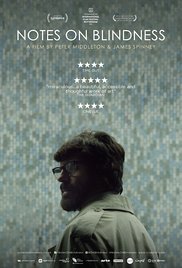 A couple of years ago, I visited the Museum of the Blind in Holon, Israel. It was an immersive visit in a totally dark environment led by a blind guide who wants to give visitors a sense of what it is to be blind and what accommodations a blind person has to make to lead a relatively normal life. I left the museum extremely grateful for the gift of sight.
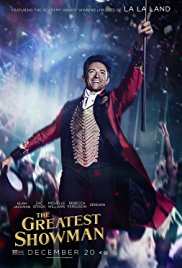 In the news recently was a story about a politician who announced that he was not going to seek re-election. He was successful in his career and made lots of money giving speeches across the country. Why was he retiring? He said it was because he did not want to be a “weekend dad” to his teenage children. He understood that his kids needed more face time with him, and he did not want to look back at his life and regret not spending more time with his children. Family was more important to him than fame or wealth. This dilemma in broad outline is at the heart of The Greatest Showman, the story of the rise of P.T. Barnum who makes choices between family and the pursuit of personal goals.
 After serving in Jewish education for many years in America and teaching in two schools in Israel, I am no longer active in the field of education. However, I continue to read articles about the latest trends in Jewish education, particularly at the high school level where I spent most of my career.
 A few weeks ago, I had hip replacement surgery. Over the past several years, my hip has degenerated. I have moved from becoming an avid runner to an avid walker, to a part time cyclist and swimmer, to a struggling walker who walks at an extremely slow pace. When friends told me about the benefits of hip replacement surgery, at first I was reluctant; but as my hip continued to get worse, I felt I had little choice if I wanted to improve the quality of my life. And so I had the surgery. But there was one problem: I did not fully grasp the complicated and arduous road to rehabilitation, which would take 4 to 6 weeks.
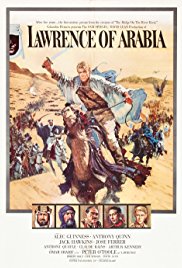 I first saw Lawrence of Arabia in 1962. It was a cinematic event, panoramic in scope and intellectually engaging. The central character, T. E. Lawrence, a brave and psychologically complex British lieutenant, was not a conventional movie hero and the story was complicated. I remember being impressed by the dramatic visuals, but I was not touched emotionally by the narrative.
 Kosher Movies