Category Archives: Family friendly

Source Code (2011), directed by Duncan Jones

 As the years go by, I have become more conscious of time. I count my minutes. It is a mantra that I share with my students as well. When I begin the school year, I inform them that there are two rules in my class: do your best and don’t hurt other people. This means do not prevent other students from learning. When a student talks without raising his hand, when he interrupts another student who has the floor, he is, in effect, preventing other pupils from learning. Furthermore, he is stealing precious time from class, preventing me from maximizing class time for teaching. I tell students that I count my minutes because time is precious. A minute can be an eternity. Consider for a moment the two-minute warning in a professional football game. Destinies can change in a matter of seconds.

This is one of the themes of Source Code, a science-fiction thriller cast in the present, which describes a bold and innovative attempt to avoid a major disaster by injecting a person into a continuum of events eight minutes before one calamity strikes in the hope of averting a second disaster in the future. Sounds weird? It is, but it also provides a meditation on what living in the moment really means. Amazing things can happen if one is aware of the consequences of each passing minute. Source Code reminds us that the same basic events can be experienced in different ways if we will it so, if we truly understand the consequences of each one of our actions.

The movie also addresses a seminal question we have all asked ourselves at one time or another: “What would you do if you knew you had less than a minute to live?” The question forces us to focus on the present moment. Will it be our last? The Ethics of the Fathers, an example of classical Jewish wisdom literature, does not ask that question, but it does suggest a similar mindset.  We are advised by the Rabbis to think of every day as potentially the last day of our lives. This is not to encourage pessimism or depression, but to spur man on to live life to the fullest, to make every day count, to make each day meaningful.

There is a corollary to understanding the value of time. If there is enmity or ill will between friends, between spouses, between parent and child, reconciliation is a priority. Time does not allow for a slow resolution to conflict. In Source Code, this desire for reconciliation finds expression in the fractured relationship of the hero, Captain Colter Stevens played by Jake Gyllenhaal, to his father. Their last conversation was difficult and strained; but now both want to be at peace with one another. Both want emotional wholeness. Colter Stevens now understands, in his heightened state of awareness somewhere between life and death, that if he knew when he spoke with his father that it would be their last communication, he would not have argued with him. He would not want to leave a legacy of bad feelings between them. He would want to tell his father that he loved him just as his father would want to reaffirm his love for his son in any time of crisis.  Facing death also gives Colter a greater appreciation of life. He looks around and remarks “Such a beautiful day.” He sees people laughing and it makes him treasure moments of happiness.

Source Code demonstrates the power of a minute. It implicitly implores us not to waste time, our most valuable commodity, and to repair our damaged relationships without delay.
Purchase this movie from Amazon.com.

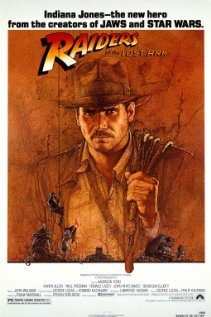
Raiders of the Lost Ark (1981), directed by Steven Spielberg

There is a time in everyone’s life, including my own, when things don’t go the way you want. This happened to me when I turned 60 years of age. I realized as I sought to find another position as a high school principal that I was no longer perceived as the “future” by others. Schools were looking for younger, dynamic leaders; and even though I felt at the top of my game professionally, no amount of conversation with school boards could change the reality of my age.

Looking for work in education, I was faced with rejection after rejection as a head of school. Thankful that I had good health, and knowing that God would only give me challenges that I could handle, I optimistically continued my job search, finally finding work as a family educator with a community Kollel. Landing this job eventually opened me up to new possibilities, and thus began my reinvention several years later on the job market in Israel where I am currently residing. I now write business articles for an internet website and supervise the English Department of a boys’ yeshiva in an ultra-religious neighborhood in Beit Shemesh. My new schedule allows time for daily Torah study, exercise, and writing a long-postponed book. As my mentors often told me and as I now understood first-hand, “when one door closes another door opens.”

This mature perspective in life is serendipitously depicted in the rollicking adventure yarn, Raiders of the Lost Ark. When I first saw it many years ago, it was an entertaining action flick; but the second time around, I saw life lessons in the exploits of Indiana Jones, the movie’s protagonist, who is thrust into one crisis after another, only to emerge wiser from each ordeal. In his search for the lost ark, he confronts adversaries everywhere he turns: physical threats from Nazis, competition from other archeologists, and even from a cave full of snakes. In every instance, he never loses hope, and somehow emerges from these crises a wiser and stronger man. Moreover, he never loses his innate optimism or his focus on his ultimate goal of finding the lost ark. Proverbs tells us the “seven times the righteous will fall, yet rise again.” This saying encapsulates the way Indiana Jones lives. He never gives in or gives up, knowing that to do so will short circuit his dreams.

Our Sages provide a fitting postscript for the conclusion of Raiders. In the Ethics of the Fathers (2:21), they tell us that our job is to begin the task even if we are not there at the end to see our life’s work realized. We are only responsible for input. The outcome of our travail is in God’s hands. This profound life lesson is given visual expression when we see the lost ark, instead of finding its resting place in a prestigious museum, consigned to a storage warehouse in Washington, D.C., probably never to be found again. It is an ironic but true image of man’s inability to control the outcome of his efforts. All we can do is try our best and get ready for the next chapter in our lives.

Purchase this movie from Amazon.

The Last Samurai (2003), directed by Edward Zwick

I have been living in Israel for a year and a half and have taken two trips back to the States. On my first trip, I brought a long list of things to buy to bring back to Israel. On the second trip, the list of things to bring back was brief and non-descript. I realized that by living in Israel I was becoming less interested in material things, getting used to a lifestyle of living with less, and arriving at a place philosophically where I truly felt that less is more.

This way of life is celebrated in the rousing and violent adventure The Last Samurai, which depicts in a symbolic sense the struggle between modernity and tradition. Tom Cruise is Nathan Algren, a Union soldier in the post Civil War period, who is haunted by the ghosts of his past indiscriminate killings. He is recruited by the Japanese government to help quash a Samurai insurrection that threatens the economic well being of the New Japan, which is promoting increased trade and dialogue with the West. Algren accepts the job, but in an early and bloody confrontation with the Samurai he is captured and brought to their mountain village. There, Katsumoto, the leader of the Samurai, engages him intellectually and emotionally. In this remote and picturesque setting, Algren soon finds himself enamored by the simple lifestyle of the Samurai, who live by a rich code of ethics supported by close ties of friendship and family.

Hallmarks of the Samurai way of life are self-discipline, devotion to a set of moral principles, and striving for perfection in whatever they do. Algren senses the spirituality of the Samurai and learns how to focus his mind so that he feels “life in every breath.” In many ways, the Samurai values echo the Jewish notions of living by a higher law and striving for spiritual perfection. Before the climactic battle scene, there is a scene of prayer suggesting that success in battle depends on one’s spiritual state. This is very much a Jewish sensibility. In these heightened moments of awareness right before battle, when life is so precarious, there is thoughtfulness about what really matters in life. Tradition is paramount. Katsumoto articulates this in a dialogue with the financial entrepreneurs who want to remove the archaic Samurai from the contemporary political landscape. The money men see them as a relic of the past, preventing Japan from entering the modern industrial age. Katsumoto tells them that the Samurai cannot forget who they are or where they come from. For him the sacred traditions animate and give meaning to the present.

When Algren, at the movie’s denouement, informs the young emperor of Japan of Katsumoto’s death, the young monarch wants to know how he died. Algren perceptively and wisely responds: “I will tell you how he lived.” His answer reminded me of the Jewish imperative to live by the commandments and not die by them. Following the eternal principles and traditions of the Torah gives meaning to one’s daily existence, imbuing each day with a sense of transcendent purpose. Both the Samurai and the Jew understand that although life can be filled with peaks and valleys, with joy and pain, leading a life of the spirit can give meaning to the entirety of one’s journey on earth. The film closes with speculation that Algren returns to the Samurai mountain village where he first met Katsumoto to begin a new life of spiritual integrity. He has discovered that progress is not always a good thing and that, spiritually speaking, less is often more.

Purchase this book from Amazon.com.

Frequency (2000), directed by Gregory Hoblit

From time to time, whenever I reflect on the milestone moments in my life, I think how special it would have been if my parents had been alive to share them with me. My decision to become a Jewish day school principal, a career that occupied the bulk of my professional life, was made after they died; and I never was able to share with them the peak moments of that experience. Moreover, they did not see all of their grandchildren. They never attended their weddings, nor were they able to bond with grandchildren as I am blessed to do now.

I thought of this as I watched Frequency, a crime thriller with a resonating subtext of a father-son relationship that spans the years. The plot is not easy to summarize. It deals with a supernatural phenomenon that allows a dead firefighter father to communicate with his son 30 years after the father has died in a tragic fire trying to rescue someone. They speak via short-wave radio and their communication creates the possibility of changing their family history.

The film opens with beautiful scenes of a family reveling in their close connections. We see a loving husband, an adoring son, and friendly neighbors. We see a father teaching a son how to ride a bicycle, which is the quintessential metaphor for a parent giving a child the ability to be independent. The love between them is evident. Against this background, father and son open up a conversation many years later after the father is dead. It is improbable, but once father and son accept the veracity of this seemingly impossible dialogue between two different time periods, they are overwhelmed with the opportunity to catch up with one another. The father asks the son what his job is, does he have a wife, does he have children; and then the conversation moves to the arena of sports, a topic which intensely bonded parent and child. The son reveals to the father how an injury prevented him from becoming a major league baseball player, that he is now a policeman and not a fireman like his father.

What touches the viewer is the palpable love between father and son. They have tears in their eyes as they sign off from one another with heartfelt “I love you”s. Father tells son “You have the voice of an angel.” Son tells father: “You have to be more careful because I don’t want to lose you again.” They are living in alternate realities but love spans the generations.

When something of note happened in my life, I always wanted to share it with my parents. I knew it meant something to them if I achieved something in life; and their acknowledgement of my accomplishment meant a great deal to me. I knew they loved me unconditionally and were there for me whether I would succeed or fail; but I wanted very much to share my successes with them. Parents are invested in the well being of their children. A parent, by Jewish law, has an obligation to help his child navigate life. A parent wants to be a parent and guide his children; and when there is love and openness, this guidance can occur.

Frequency reminds us that this parent-child relationship is at the core of family life, and it is to be treasured. When there is dialogue, there is love and there is hope.


Purchase this movie from Amazon.com.

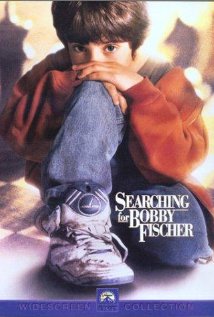
Searching for Bobby Fischer (1993), directed by Steve Zaillian

As an undergraduate student at Yeshiva University many years ago, I had the opportunity to watch Bobby Fischer play chess. I do not know how to play chess, but a friend of mine who did was participating in a school-wide completion between about 50 students and the chess master, who would play all of them simultaneously. I still remember coming down to the school cafeteria and watching close to a hundred students set up their chess boards on long tables preparing for their match with Bobby who would stroll down the various aisles making his moves quickly as his opponents reflected on what to do next. To my knowledge, no student won his match that night; but it was fascinating to observe this chess genius casually dispose of so many opponents in so short a time.

Searching for Bobby Fischer is a film about chess; but, more importantly, it is a film about life. We watch as little Josh Waitzkin develops a love of chess. He is fascinated by the game and enjoys watching the exciting contests of speed chess in Washington Square Park in New York City. His mother senses his love of the game and pays to have him play one the players in the park. His interest in the game grows, and his father decides to get him a top flight teacher. Josh studies with the guru but still retains his childlike interests and attitude. Basically Josh is kind person, the kind of person who wants to be nice to other people. He does not hate his opponents, nor does he look at them as objects to destroy. His mother, on listening to Josh’s wish to help a friend, tells him “You have a good heart. That’s the most important thing in the world.”

It is this conflict between being nice and being a winner that is the subtext for this sports film about  chess. As Josh achieves success in tournaments, his father becomes possessed with his son’s genius at playing the game. Frank Waitzkin comes to see chess not as game nor as science, but rather as pure art. The notion that his son plays like Bobby Fischer animates his ego and he begins to push Josh harder. He more than Josh wants the glory, the attention, the honor that he never received in his life. Frank pursues the ephemeral goal of fame, and forgets about  balance in life. As Josh advances in skills, his teacher Bruce puts him though exercises designed to toughen Josh mentally. But Josh is boy who likes and respects other people. His coach’s desire to make him like Bobby Fischer “who held the world in contempt” evokes a simple, direct response from Josh; “I’m not him.” His mother sharpens that observation when she tells her husband that “Josh is not weak. He’s decent.”

Several Torah themes are embedded in Searching for Bobby Fischer. In Proverbs, there is the wise directive to “train the child in the way that he goes (Proverbs 22:6).” The message here is that parents need to understand the uniqueness of their children. Different children possess different personalities, different interests, and different proclivities. That is the lesson that Frank Waitzkin learns as he first pushes Josh to excel, and then comes to recognize Josh for the decent boy that he was and is. Frank ultimately realizes that the game of chess does not define his son, who is much more than a chess player. He is a good son, a caring friend, and a decent human being who wants balance in life.

We also learn from the film that wisdom can come from many places, from parents, from a speed chess hustler in Washington Park, and from a serious teacher of chess. Notably, all are present for Josh’s crucial match at the Chess Grand National Tournament in Chicago, the site of the film’s finale. Our Sages in The Ethics of the Fathers explicitly tell us: “Who is wise? He who learns from every man  (Avot 4:1).” Everyone has something to teach us if we are a careful observer of mankind.

Finally, we learn the pursuit of fame is illusive. The more one runs after it, the more difficult it is to acquire. Finally, fame in the Jewish view is acquired through the simple acts of friendship and kindness that punctuate our lives. The film ends with Josh putting his arm over the shoulder of a friend who has just lost a match and telling him, “You’re a much stronger player than I was at your age.”  As the credits begin to roll, a coda informs us that while Josh still plays chess, he also plays baseball, basketball, football and soccer, and in the summer, goes fishing.” Josh intuitively understands that a fulfilling and meaningful life is a life with balance.

Purchase this movie from Amazon.com.

Chariots of Fire (1981), directed by Hugh Hudson

When I first was becoming an observant Jew, I found it difficult to wear a yarmulke (skullcap) in public. The head covering identified me as an Orthodox Jew. Although I was growing religiously I still wanted to blend in and not be different from my peers. So I struggled inwardly. Sometimes I wore it; sometimes I donned a baseball hat, and sometimes I did not wear a head covering. My religious ambivalence came to the forefront when I accepted a role in our high school production of The Diary of Anne Frank. I played the part of Peter Van Daan, Anne’s romantic interest; and in one climactic scene near the end of the play, I had to embrace Anne and kiss her. From an Orthodox perspective, this was a no-no, but I was full of myself and my acting ability and did not pass on accepting the part or the kissing that went along with it.

The play was presented on Friday night, the Sabbath, as well as on Saturday night and my synagogue rabbi came to see the play on Saturday night. I sensed an oncoming crisis. I was going to kiss a girl publicly in front of my rabbi. What to do? The answer: I did it and my face turned beet red from the embarrassment. Trying to live in two disparate words was impossible for me, and that play became my last foray into acting in a play with a co-ed cast. My approach to my growing religious observance was inconsistent, and it was not until years later that I had the courage and wisdom to live a consistent religious life in which my actions in life mirrored my ideology. Which is why I became enamored with Chariots of Fire.

I first saw Chariots of Fire, a drama about the nature of sports, the competitive drive, and the consistency of religious convictions in 1981 when I myself was running five or six times a week. The film is about two men who are running in the 1924 Olympics: Eric Liddell, a young Scottish preacher, and Harold Abraham, a very competitive British Jew. The story chronicles their journey to Olympic glory, and in the process contrasts the lifestyles and worldviews of these two men.

We first see Liddell participating in a community get-together in the Scottish highlands. Having served as a missionary in China, he is a celebrity in his hometown because of his holy work on foreign soil and because of his running prowess. In an impromptu run, Eric competes with the local runners. As he rounds the track, the camera captures him in slow motion, running as if possessed by a divine spirit. Eric compares running in a race to participating in the race of life itself, both of which require concentration and energy to succeed at the highest levels. He feels that his power as a runner comes from the “Kingdom of God” within him, and this enables him not only to win races but to soar in life as well.

His mentors recognize that Eric’s ability to influence people and to move them spiritually is directly connected to his notoriety as a runner. They advise him to run in God’s name and so use his talent to bring more people under the canopy of faith.

His sister discourages him from running, fearing that it will take him away from his missionary work. Eric, however, tells her that God made him for a purpose and also made him fast. He poetically expresses his innermost feelings when he tells her that when he runs, he feels God’s pleasure and that winning a race is way to honor God.

This notion of sports competition as being emblematic of life is underscored in a scene which depicts Eric delivering a sermon in church focusing on passages from Isaiah, Chapter 40. As he speaks, images of Olympic competition mirror the Biblical phrases that he utters: “He giveth power to the faint….they that wait for the Lord shall renew their strength. They shall mount up with wings as eagles. They shall run and not be weary.” The sum total of all these images brings home the message that ultimately God is the source of all power, not man.

The crux of the movie occurs when Liddell is asked to compete on Sunday, his Sabbath. He has to wrestle with his desire to compete and win on the one hand, and his desire to be faithful to his religious beliefs on the other. In the end, he places principles before personal gain. Moreover, he understands that all his strength comes from God, and that all his earthly activities should express his connection with the divine.

In Jewish tradition, there is the notion that whatever we do in this world should be done to glorify God. In the classic text, Ethics of the Fathers, it states: “All that the Holy one, Blessed is He, created in this world, He created solely for His glory.” The rabbis deduce from this that even mundane acts can acquire sanctity if we perform them with the right attitude. Eating can be a mitzvah (a good deed) if we eat to nourish our physical bodies in order to be strong to serve God. Sleeping can be a mitzvah if we sleep in order to give our bodies needed rest so that we can rise like a lion on the morrow to do God’s work. It is this mindset that exemplifies the character of Eric Liddell. He sees life as an opportunity to serve his Creator, and he sees his running achievements as emanating not just from his own efforts but also from God’s personal involvement in his destiny.

In Chariots of Fire, Eric Liddell reminds us to place spiritual integrity over worldly glory. In his penultimate race, we see Eric running as if possessed by an inner spirit. As he runs, we hear his voice echoing his earlier comment to his sister: “Where does the power come from to see the race to its end? From within. God made me for a purpose. He also made me fast. When I run, I feel His pleasure.”

Purchase this movie from Amazon.

Stranger than Fiction (2006), directed by Marc Forster

Stranger Than Fiction posterAs a rabbinical student, I would often have discussions with classmates and teachers about theological questions that, in the final analysis, have no definitive answers. One classic question relates to the notion of free will. Simply put, if God is in charge and knows all, how can man have free will to choose? One response that a teacher gave to me made some sense and I share it with you.

We are finite creatures and can only live in the present. In this life, we are watching a video which opens with the caution: formatted to fit your screen. In contrast, God sees past, present, and future and his view is the wide-screen version. God is infinite and exists in all three time periods: past, present, and future. This is why He knows all and we cannot. Yet in spite of God’s knowledge of our future, traditional Judaism believes that God, in his infinite kindness, limited Himself and gave man the freedom to act. This problem of free will versus destiny is the crux of Stranger than Fiction, which depicts the ordinary and extraordinary life of Harold Crick.

Harold is an IRS agent whose life is defined by numbers. He also is a lonely man with few friends. The film opens with the viewer observing Harold’s robotic lifestyle, where everything is calculated down to the last second. Then the camera switches to brief scenes of a little boy receiving the gift of a bicycle from his parents and a woman looking for a job. These two characters appear at various points in the movie, and one wonders why since they seemingly have no connection to the plot.

Harold begins to hear a writer’s voice narrating what is happening to him at that moment. He is aware of the voice, but cannot fathom how it can describe his every action as he experiences it. The conceit of the film is that an author, Karen Eiffel, is actually writing his life, leaving him with little free will to exercise. It is frightening when Harold realizes that he no longer is in control of his destiny, especially when Karen writes that he will die “imminently.” The circuitous plot of the film describes Harold’s attempt to come to terms with his seeming inability to affect his future.

This realization that life will end soon moves Harold to be more proactive in the time he has left. He begins a romantic relationship and even learns to play the guitar.  Jewish tradition tells us that we do not know the day of our death; it could be any day. For example, the rabbis teach us to “repent one day before your death.” The commentators explain this to mean that since no man knows the day of his death, he should repent every day. In other words, make every day a special day and fill it with meaning. We should value time and value the people with whom we come into contact.

Harold understands this life lesson. One of his mentors in the film poetically observes that only we can determine if our life will be a comedy or a tragedy. Will our lives affirm the continuity of life or the inevitability of death? The spiritually sensitive person lives with this constant dialectic as he makes decisions each and every day of his life.

The lives of the boy on the bike, the woman looking for job who is now working as a bus driver, and Harold finally converge in the last segment of the film. Harold is at a bus stop and the boy on the bicycle rides in front of the bus. Harold reaches out to save the boy and is hit by the bus. Does he die as the author writes or does he live and exercise free will? The film raises the question of how much free will does man have. Jewish tradition tells us that God is in charge of the world, but God gives man a limited area to exercise free will. As it is written in the Ethics of the Fathers, “everything is foreseen, yet freedom of choice is given….everything depends on the abundance of good deeds.”

Man’s destiny is not totally pre-determined. Man cannot change some things, but there are some things he can do, and that is what Stranger than Fiction affirms. In the face of an all- knowing God, man can still influence his destiny, especially through the performance of a good deed, which is what Harold does when he saves the boy who rides in front of the bus.

Moreover, the film presents a morally sensitive character in the author, Karen Eiffel. She decides to change the tragic ending of her novel. She changes it from a literary perspective; she moves it from a masterpiece to just an average work of fiction in order to protect and save someone. What is paramount to her in the final analysis is not fame but doing the right thing. Morality trumps personal ego.

The movie concludes with Eiffel reminding the viewer that we need to thank God for the small pleasures of life that we often take for granted in our busy daily lives, for the “accessories of life” that are here to serve nobler causes and save our lives emotionally and spiritually. She speaks of the importance of the loving gesture, the subtle encouragement, the warm embrace. It is these little things that make life precious. Harold Crick appreciates this truth when he finds life after almost losing it.

Purchase Stranger than Fiction on DVD from Amazon.