 Many years ago, I asked a lawyer whom I respected what was his specialty. His answer: money. It was an “aha” moment when I realized that law is not always synonymous with justice, and that what often determines a legal outcome is how much money is at stake in terms of potential gain for the attorneys working on the case.
The conversation reminded me why lawyers generally don’t want a case to go to trial. It is simply too expensive in terms of time and effort spent. Jan Schlictman, the protagonist of A Civil Action openly states this at the beginning of the film: “Odds of a plaintiff’s lawyer winning in civil court are two to one against. Your odds of surviving a game of Russian Roulette are better than winning a case at trial. So why does anyone do it? They don’t. They settle. Only fools with something to prove end up ensnared in it.”
This is the mindset that opens A Civil Action, an insightful film about one lawyer’s quest to right a wrong in Woburn, Massachusetts, a city where environmental toxins dumped into the river have contaminated the area’s water supply, causing the death of a number of children.
Woburn resident Anne Anderson contacts attorney Jan Schlictman’s personal injury firm to take legal action against those responsible for the contamination. At first Schlichtman rejects the case, but when he realizes that the contamination is a major environmental issue and there are a couple of deep pockets who can be sued for millions, he changes his mind and accepts.
Money is his motivator, but slowly he takes a personal interest in the case, especially when he begins to share the grief of parents who have suffered the profound loss of their children. He becomes a legal crusader on a mission, working long hours with no regard for the financial toll it is taking on his partners or himself.
The plaintiffs, in truth, are not interested in a monetary settlement. They simply want their city’s water supply cleaned up and an apology from the companies that created and contributed to the problem. Initially, the companies are willing to settle and grant the plaintiffs a large sum of money, but the companies do not want to admit culpability. Indeed, they are not depicted as unscrupulous people, just businessmen who want to protect their financial interests.
Jan tries his best on behalf of the plaintiffs in presenting this class-action lawsuit, but the companies’ opposition is strong and not easily overcome. Various settlements are suggested along the way, but Jan is unmoved. He sticks to principle even when there is great cost to him and his fellow firm members, who did not anticipate or desire to pursue a trial instead of a settlement. How this all turns out makes for a mesmerizing courtroom drama. It also gives the viewer an insight into the nuanced complexity of the American judicial system.
In stark contrast is Judaism’s rabbinic court system, which adjudicates civil disputes. The court consists of a panel of three judges, chosen from among a pool of scholars who are experts in Talmud and Jewish law. In general, the court takes no fee and does not take a donation or gift from any party using its services. It seeks to avoid long-term litigation, which only serves to fill the coffers of lawyers who want to profit from their clients. The case is in question is looked at from the perspective of the codes of Jewish law and specific case law that is relevant to the issue being discussed. After thorough analysis, a decision is given with the clear expectation that both sides of the dispute will agree with the outcome no matter who wins. Money does not rule; justice does.
A Civil Action portrays a nuanced view of how our legal system works. There are no evil judges or lawyers. There are only people who want to protect their financial interests. When we realize that our adversaries are often people like us, then solutions, albeit imperfect, can be found to the thorniest of problems.
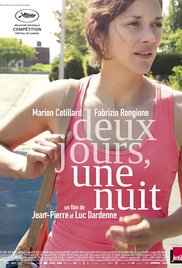 I do not know many people who will do something to benefit someone else if it means that they will suffer a negative consequence. I have read of such actions taking place in the cauldron of the Holocaust narrative or in a prison setting, but it is a rare occurrence in times of peace and prosperity. Yet that is exactly what is depicted in Two Days, One Night, a slice-of-life drama in which Sandra, a factory worker, goes around visiting her fellow employees asking them to forego their annual bonuses so that she can retain her job.
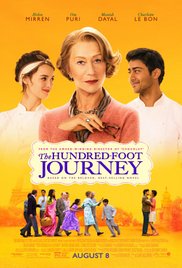 Some people are passionate about food; others eat simply to be nourished, lacking interest in food preparation and presentation. I remember watching one of my Torah teachers eating a piece of gefilte fish almost every day for lunch in the Yeshiva. He ate at his desk in the study hall and did not want to waste a moment in walking to a nearby restaurant.
 There is a brief scene in Beyond the Sea, a biopic of singer Bobby Darin, which resonates with me personally. Bobby unbuttons his shirt and reveals his scar from open-heart surgery. It looks like a long zipper on his chest. I, too, have had open-heart surgery and remember other patients telling me I am now a member of the “zipper club,” all of whose members brandish an extended scar on their chest.
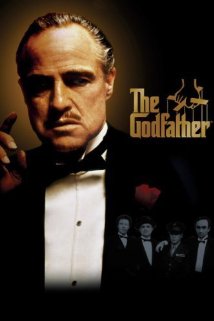 My review of The Godfather trilogy requires some preliminary discussion. Why have I chosen to consider all three films in one review and why is it a “kosher” movie in spite of the fact that there is much violence and profanity in the film?
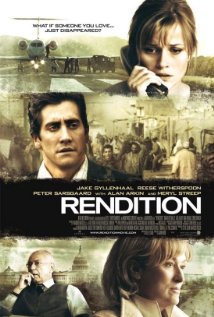 As I write this review, the country is in a fierce debate as to whether the United States should accept Syrian refugees from that war-ravaged country. Coming after a devastating attack on innocent civilians by Islamic extremists in Paris, many in this country are wary of accepting Muslims without serious background checks. I witnessed similar anti-Muslim sentiment after 9/11, when Islamic extremists brought down the World Trade Center towers. I have no opinions about this matter other than to accept the reality that the resolution to this problem is complicated and probably will involve a balance of kindness and caution. We want to help people in dire straits; but we also have to be prudent and not put our own citizens at risk.
 One of my favorite poems is “The Convergence of the Twain” by Thomas Hardy. The poem describes two events occurring at the same time but at different locations. At some future time, the events converge. One is the building of the ship, the Titanic; the other is the forming of the iceberg with which the ship will collide. Hardy writes: “Alien they seemed to be/ No mortal eye could see/ The intimate welding of their later history/ Till the Spinner of the Years/ Said ‘Now!’/And each one hears/ And consummations comes, and jars two hemispheres.”
 My parents were people of modest means. Moreover, they always considered the needs of their children before their own. I never felt deprived as a child even though I lived in a low-income neighborhood and did not go on fancy vacations to Disneyworld. Life was joyous because my parents, by example, found joy in the everyday, in spending time with their children, in working as volunteers on behalf of the local synagogue, and in regularly visiting our extended family and friends. I do not recall ever envying other kids because I was satisfied with my lot in life. I remember that my favorite Bar Mitzvah gift was a simple basketball given to me by my friends Kenny and Marilyn Beeman.
 In the late 1970s, I taught a class on the Holocaust to teenagers at Yeshiva High School of Atlanta. A high point of the course was an interview with a survivor of the camps. There were many living in Atlanta, but it was not easy to find people willing to talk about their terrible experiences in the concentration camps. For them it was too painful to resurrect those memories.
 When I was in high school, I had a part-time job at a local pharmacy, working the evening shift from 4 PM until 11:30 and all day Sunday. It was the only store open on Sunday during the late 1950s, before the days of 24/7, or 24/6 in Israel.
 Kosher Movies