 I know a woman who likes to shop. I am grateful not to be the person in the store who sells her things because she is always dissatisfied with her purchases. One example. I watched her shop for athletic shoes on one occasion. She took close to an hour trying on different pairs of shoes in different sizes. She finally decided on one pair and made the purchase. Two days later I happened to be picking up a tennis racket for a friend, and I saw her again. She was unhappy with the purchase and returned to the store looking for refund or for a different pair of shoes. The same obsessive behavior was observed when she bought a piece of jewelry or a hat.
That kind of monomania typifies the approach of famous fashion designer Reynolds Woodcock to his work and to his relationships with other people, especially women. His story unfolds in Phantom Thread.
The narrative begins in 1954 in London. The opening scenes reveal Woodcock’s obsession with detail and his controlling personality. On a rare visit to the countryside, he meets Alma, a waitress at a restaurant, and their friendship blossoms into a relationship in which Alma becomes Woodcock’s artistic inspiration and lover.
At first, the relationship is calm and refreshing for both Alma and Woodcock. Over time, however, Woodcock’s obsessive personality reasserts itself and they begin to argue with one another. He criticizes her for even attempting to disagree with him: “I cannot begin my day with a confrontation, please. I’m delivering the dress today, and I can’t take up space with confrontation. I simply don’t have time for confrontations.” He refuses to invest in human relationships that disturb his equilibrium.
Things come to a head when Woodcock excoriates Alma for preparing a romantic dinner for him that breaks his normal work routine, which to him is sacrosanct. Alma is repelled by Woodcock’s obsessive concern for his own needs, yet she still cares for him greatly for he is the gateway to a new and exciting life for her. Her challenge: finding a way to make Woodcock more a man of feeling, willing and ready to emotionally connect with other human beings. She embarks upon an unconventional strategy by which she will cause him to experience a sense of mortality. This will compel him to rely on other human beings and not live a life of emotional isolation.
Rabbi Avraham Yitzchak Kook, the first chief Ashkenazi Chief rabbi in Palestine appointed in 1921, wrote about the importance of both the mind and the heart in living a full life: “Man cannot live with intellect alone, nor with emotion alone; intellect and emotion must forever be joined together Only the quality of equilibrium, which balances intellect with emotion, can deliver him completely.”
Moreover, in Ecclesiastes written by King Solomon in the autumn of his life, it states there is “a time to weep and a time to laugh. A time to wail and a time to dance” (3:2-8). To live life fully, we must embrace life with all its varied and at times contradictory thoughts and emotions, especially when it comes to loving another person.
Erich Fromm, the psychoanalyst and humanistic philosopher, discusses the paradox of love: “Two beings become one and yet remain two.” Rabbi Maurice Lamm gives a Jewish twist to this notion. He writes: “The Torah, in requiring the end result of man and woman becoming one flesh requires ezer, an overcoming of loneliness, a mutual completion of the selves, and also ke’negdo, an opposite, independent person with whom one chooses to side at will.” Woodcock finally comes to this understanding when he experiences a near death experience. At that moment, he sees Alma both as an opposite and as one who gives his life a sense of emotional completion.
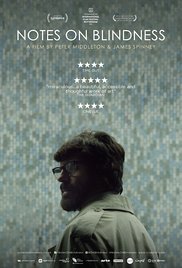 A couple of years ago, I visited the Museum of the Blind in Holon, Israel. It was an immersive visit in a totally dark environment led by a blind guide who wants to give visitors a sense of what it is to be blind and what accommodations a blind person has to make to lead a relatively normal life. I left the museum extremely grateful for the gift of sight.
 In the news recently was a story about a politician who announced that he was not going to seek re-election. He was successful in his career and made lots of money giving speeches across the country. Why was he retiring? He said it was because he did not want to be a “weekend dad” to his teenage children. He understood that his kids needed more face time with him, and he did not want to look back at his life and regret not spending more time with his children. Family was more important to him than fame or wealth. This dilemma in broad outline is at the heart of The Greatest Showman, the story of the rise of P.T. Barnum who makes choices between family and the pursuit of personal goals.
 A friend of mine scheduled hip replacement surgery. He and his wife visited the surgeon who had been recommended by many. After the meeting, my friend and his wife came away with different impressions. While both felt the surgeon was highly competent, the wife detected a streak of arrogance in the doctor, and it bothered her. She preferred a surgeon who radiated humility, not pride. The husband felt that, at the end of the day, God is the healer, not the surgeon, and the surgeon’s arrogant attitude was not a reason to choose another doctor.
 I recently read a book by my son, Rabbi Daniel Cohen, entitled What Will They Say About You When You’re Gone: Creating a Life of Legacy. Drawing upon his synagogue experiences and officiating at hundreds of funerals, he poses the question of how we want to be remembered. Through personal anecdote and sharing interviews with movers and shapers in the worlds of business and art, he suggests ways to re-engineer your life so that when your life is over, you will be remembered for things that matter, not for how much you acquired.
 When I was about to enter college in 1960, I thought I was going to be a high school teacher. Somewhere along the way, my Judaic studies at Yeshiva University became my academic focus and I resolved to be a pulpit rabbi. My professional career began in Atlanta, Georgia, where I was the assistant rabbi at a large Orthodox synagogue.
 When I was around ten years old, my father took me to the office of a veterinarian and we came home with a dog. It had the face of Lassie, but it was mixed breed without a distinguished lineage.
 My wife is an artist. She has perfected a technique called fabric fusion. She starts off with a gray scale photograph and then overlays it with acrylic paints and hand-dyed silks. She has had exhibits of her work at the Tel Aviv Opera House and at the Jerusalem Theatre, both prestigious locations to show art. She sells her work, but she primarily paints because it satisfies her creative urge.
 I remember hearing about the incident. I learned that two young boys were playing around with each other and one of them had a stick with a nail on the end of it. In the course of their “playing around,” the boy with the stick hit the other child in the eye. Blood gushed out and the boy was in great pain.
 After five years of teaching English in Israeli schools, I now have no official job. The school in which I worked cannot hire me because I am beyond retirement age. What do I do now? I learn Torah every day and I exercise every day. Additionally, I write almost every day. Mostly, I write film reviews that appear on the Internet and, when I visit the States, I lecture on “kosher movies,” films that have something meaningful to say about life and the subject of my recent book, Kosher Movies: A Film Critic Discovers Life Lessons at the Cinema. Such writing compels me to think, to remember certain aspects of my life, and to formulate life lessons to impart to the reader. Writing keeps me engaged with the world.
 Kosher Movies