 I live life as it unfolds in the present moment. I do not recall saying to myself “What if I had done this rather than that.” Yet I have friends who continually ask themselves “what would my life be like if I had made this decision rather than that decision.” The reality is that we cannot turn back the clock and decisions we made years ago cannot be changed. Those decisions affect our lives many years later.
This dilemma is the subtext of La La Land, a one-of-a-kind musical in which the protagonists arrive at a moment when the past is all too present in their minds, but it is too late to make midcourse corrections.
The story takes place in Los Angeles and describes the efforts of two talented people to succeed in the entertainment industry. Mia is an actress working in a coffee shop while she goes to endless auditions looking for a part in a movie or play. Rejections for her are both routine and emotionally painful. Sebastian is a jazz pianist who wants to open his own jazz club. For him, jazz is exciting, unpredictable, and innovative. He revels in the great jazz musicians of the past and wants to continue their legacy of musical innovation. The problem, however, is that he has no money and barely survives financially.
Mia and Sebastian meet serendipitously over several months. They bicker, make jokes, and slowly begin developing a serious rapport with one another. As love blossoms, they share their professional aspirations with each other. Each is the other’s muse, and they inspire one another to fulfill their dreams. When Sebastian hears how demeaning the auditions are, he suggests that she write her own material and present herself as a writer as well as performer. Mia encourages him to open his own jazz venue.
What happens next is the stuff of fantasy. They watch the classic film, Rebel Without a Cause, with its pivotal scene at the Griffith Observatory, and then actually visit the site and dance among the stars at the planetarium.
Recognizing their strong affection for one another, they share their goals again, measuring how far they have come to actualizing them. Mia is in the midst of writing a one-woman show and Sebastian has been offered a job with a touring band that is led by his old friend, Keith. The job will provide him with financial stability. They both realize that the pursuit of their individual careers may not permit their love to continue.
Judaism believes that it is important to set goals, to have dreams. In fact, once a year on Rosh HaShana, the Jewish New Year, Jewish law requires us to take inventory of our lives. What did we accomplish in the past year? How can I do better in the year ahead? What are my goals for the coming year? Azriel Hirsch Friedman, a Torah teacher and motivational lecturer in Jerusalem, writes: “Failure is the building block of success. Even with a promise of success from God, Moses failed miserably when he first tried to take the Jews from Egypt. To get out of the place you are stuck, you will unquestionably fail. Don’t worry. It’s often just God’s way of testing how much you believe in your own dreams, helping you to clarify, re-evaluate and perfect them. We are judged only on our effort and never on our success. Jewish success is to be able to know for yourself.”
Mia and Sebastian ultimately come to know themselves as they work to define their talents and strengths. That does not mean that the outcome will always be satisfying. La La Land reminds us that outcomes are not in our hands. Nonetheless, we still have to try our best as we navigate the challenges we face in our own lives.
 A friend of mine and his wife occasionally have discussions about whom to invite for Friday night Sabbath dinners. She favors inviting old friends. He prefers inviting new faces because he wants to know those who are unknown. He prefers the unpredictability of new faces and feels that the good deed of inviting people to one’s home is better fulfilled when one does not know the guests beforehand.
 I am 73 years old, and since coming to Israel six years ago, I am officially a vatik, a senior citizen entitled to discounts on the bus and to reduced admissions at sundry places. Some people actually offer me their seats on public transportation. It makes me uncomfortable to be the recipient of these kindnesses and to realize that, at least in the eyes of some, I am old. I always thought the other guy was old and I was not, but that illusion is now shattered.
 Divorce is often painful for husband and wife, but most certainly for children. It is an emotional upheaval, leaving many damaged souls in its wake. As a synagogue rabbi for a number of years, I generally encouraged people contemplating divorce to stay married, but they usually came to me after the die for divorce was cast.
 On rare occasions, I have been confronted with having to make a decision knowing that if I decide one way, I will hurt someone I care about; and if I decide differently, I will hurt someone else. Either way, I will wind up alienating a friend.
 From my early childhood, I was an avid moviegoer. My mother took me regularly; and when I grew older, I continued to go frequently. Movies captivated me because they transported me to faraway places and to exciting adventures. I lived in a small town and movies were my ticket to Neverland. Although I enjoyed movies, I generally did not think of them as accurate descriptions of the real world. They were fantasies, pleasing entertainments, and that was it.
 The Ethics of the Fathers tells us that one hour repenting and doing good deeds in this world is better than life in the world-to-come. Why? The Sages explain: we can only exercise our free will while we are alive. Therefore, we can choose to do good deeds only when we are alive. Doing good deeds is our mission on earth, so everything we do or don’t do influences our eternal destiny. That is why life in this world is so precious.
 Growing up in the 50s and 60s, dating for marriage was a very straightforward process. You met, dated for several months, and then came the moment of truth. Do you propose marriage or move on to dating someone else?
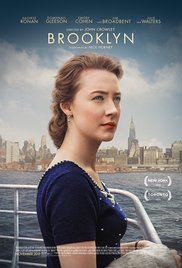 I was born in Mt. Vernon, New York, a small bedroom community bordering the Bronx and only 25 minutes by train to Grand Central Station. To me Mt. Vernon was home. My family lived there as did many of my aunts, uncles, and cousins.
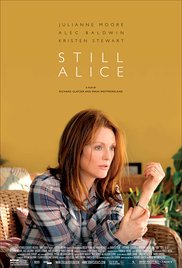 A friend of mine in his seventies was diagnosed with Alzheimer’s several years ago. At first it was indicated by minor forgetfulness; but over time, the symptoms became more severe. His wife confessed to me after a couple of years that her husband was no longer the person he once was. He barely recognized her or the rest of his family. Indeed it was a sad and disturbing reality that the family confronted.
 Kosher Movies