At my elementary school, a couple of kids in the school band thought my name was Herbert Coleman, not Herbert Cohen. They assumed I was not Jewish. Then one day they became aware that my name was Cohen and they knew I was a Jew. That realization gave them license to threaten and intimidate me. One told me not to show up for the school band parade in which I played drums. When I told my mother about the threat, she went to the principal and related the incident to him. Moreover, she told him that she expected me to be in the parade as planned, and I was. But the memory of the event is still with me. I was the same person whether my name was Coleman or Cohen, but for people who are prejudiced, the stereotype becomes the reality.
This is what happens in Focus, the story of Lawrence Newman, a self-effacing office manager who, when he gets a new pair of glasses, begins to “look Jewish.” This puts him at odds with neighbors in his Christian neighborhood, in which there is a strong current of anti-Semitism.
The more he tries to convince people of his Gentile roots, the more suspicious his neighbors become. They view Jews as responsible for the United States entry into the war and as a subversive element within American society. Moreover, they view Finkelstein, the Jewish grocer in the neighborhood, as an outsider bringing in undesirables that taint the Christian character of the neighborhood.
Things go south for Newman at work. Because he is perceived as a Jew, his boss relegates him to a remote office where he cannot be seen by people who visit his firm. Soon, Newman resigns in anger only to find that securing a new job is difficult when people regard him as Jewish. He forms a relationship with Gertrude Hart, a woman whom he did not hire when he was an office manager because she looked Jewish, but she now works for a Jewish firm that hires him.
Romance blossoms and they marry, but he still encounters quiet hostility from his neighbors who regard him as a Jew and an outsider. Things reach a boiling point when Newman attends a rally of a neo-Nazi group and there is a brutal attack on Finkelstein’s store. All this galvanizes Newman and his wife to rethink who they are and redefine themselves as persecuted Jews who want to be treated without prejudice.
Judaism affirms the sacred essence of all of God’s creations. Everyone is created in God’s image; therefore; everyone possesses a spark of the divine and has infinite potential. In Judaism there is no place for prejudice or discrimination since we all come from the same place. Eve was everyone’s mother.
Moreover, Jews were strangers without a homeland for many years; the Bible reminds us of this many times. In Leviticus (19:33-34), it states: “When an alien lives with you in your land, do not ill-treat him. The alien living with you must be treated as one of your native-born. Love him as yourself, for you were aliens in Egypt. I am the Lord your God.” We are Biblically commanded to empathize with the stranger, the one who is different from us.
The story of Lawrence Newman is a parable for the story of everyman, who is inherently different from every other man. His last name, Newman, is a clarion call to all men to be free of prejudice and to relate to all men as new men, without the baggage of old memory tapes of ingrained discrimination.
Many years ago, I asked a lawyer whom I respected what was his specialty. His answer: money. It was an “aha” moment when I realized that law is not always synonymous with justice, and that what often determines a legal outcome is how much money is at stake in terms of potential gain for the attorneys working on the case.
The conversation reminded me why lawyers generally don’t want a case to go to trial. It is simply too expensive in terms of time and effort spent. Jan Schlictman, the protagonist of A Civil Action openly states this at the beginning of the film: “Odds of a plaintiff’s lawyer winning in civil court are two to one against. Your odds of surviving a game of Russian Roulette are better than winning a case at trial. So why does anyone do it? They don’t. They settle. Only fools with something to prove end up ensnared in it.”
This is the mindset that opens A Civil Action, an insightful film about one lawyer’s quest to right a wrong in Woburn, Massachusetts, a city where environmental toxins dumped into the river have contaminated the area’s water supply, causing the death of a number of children.
Woburn resident Anne Anderson contacts attorney Jan Schlictman’s personal injury firm to take legal action against those responsible for the contamination. At first Schlichtman rejects the case, but when he realizes that the contamination is a major environmental issue and there are a couple of deep pockets who can be sued for millions, he changes his mind and accepts.
Money is his motivator, but slowly he takes a personal interest in the case, especially when he begins to share the grief of parents who have suffered the profound loss of their children. He becomes a legal crusader on a mission, working long hours with no regard for the financial toll it is taking on his partners or himself.
The plaintiffs, in truth, are not interested in a monetary settlement. They simply want their city’s water supply cleaned up and an apology from the companies that created and contributed to the problem. Initially, the companies are willing to settle and grant the plaintiffs a large sum of money, but the companies do not want to admit culpability. Indeed, they are not depicted as unscrupulous people, just businessmen who want to protect their financial interests.
Jan tries his best on behalf of the plaintiffs in presenting this class-action lawsuit, but the companies’ opposition is strong and not easily overcome. Various settlements are suggested along the way, but Jan is unmoved. He sticks to principle even when there is great cost to him and his fellow firm members, who did not anticipate or desire to pursue a trial instead of a settlement. How this all turns out makes for a mesmerizing courtroom drama. It also gives the viewer an insight into the nuanced complexity of the American judicial system.
In stark contrast is Judaism’s rabbinic court system, which adjudicates civil disputes. The court consists of a panel of three judges, chosen from among a pool of scholars who are experts in Talmud and Jewish law. In general, the court takes no fee and does not take a donation or gift from any party using its services. It seeks to avoid long-term litigation, which only serves to fill the coffers of lawyers who want to profit from their clients. The case is in question is looked at from the perspective of the codes of Jewish law and specific case law that is relevant to the issue being discussed. After thorough analysis, a decision is given with the clear expectation that both sides of the dispute will agree with the outcome no matter who wins. Money does not rule; justice does.
A Civil Action portrays a nuanced view of how our legal system works. There are no evil judges or lawyers. There are only people who want to protect their financial interests. When we realize that our adversaries are often people like us, then solutions, albeit imperfect, can be found to the thorniest of problems.
I do not know many people who will do something to benefit someone else if it means that they will suffer a negative consequence. I have read of such actions taking place in the cauldron of the Holocaust narrative or in a prison setting, but it is a rare occurrence in times of peace and prosperity. Yet that is exactly what is depicted in Two Days, One Night, a slice-of-life drama in which Sandra, a factory worker, goes around visiting her fellow employees asking them to forego their annual bonuses so that she can retain her job.
The setting is an industrial town in Belgium. Sandra, a young wife and mother, has been on leave of absence from work because of emotional problems and is now ready to reclaim her old job. In the interim, however, management concludes that they no longer need Sandra’s services if her colleagues work slightly longer hours. Her bosses offer each member of the staff a substantial bonus if they agree to make Sandra redundant. Becoming aware of this proposal on Friday, Sandra visits as many of her co-workers as possible over the weekend to ask them to forego their bonuses so that she can retain her job. The crucial vote will take place on Monday morning, and the outcome is unclear until the last moment.
The problem for Sandra is that most of the colleagues need the bonus money for their own families. We watch as Sandra makes her plea to her co-workers. Some are ready to pass on their bonus to help a friend in need; others put the needs of their own family first and reject her overture.
The essential existential question posed by Sandra’s dilemma is the following: how much is a person required to sacrifice in order to help another if helping the other person hurts you in some way. Jewish law provides some guidelines to approach this problem. The Codes suggest that a person should give charity according to his means, but not more than a fifth of one’s earnings, lest the giver himself fall into poverty.
Moreover, there is a discussion in the responsa of Rabbi Moshe Feinstein, one of great Jewish legal minds of the twentieth century, concerning donating bone marrow for someone who needs it. He observes that although one is not obligated to give it, he is allowed to do it if he chooses. This may be analogous to Sandra’s precarious financial situation. She desperately needs a job to take care of her family, and it is a good deed to help her, especially if one can manage with less money and still provide for one’s family. But if one thinks that his own family will suffer if one gives his money to a friend, then one is not required to donate.
Jewish jurisprudence recommends a balanced approach: to consider both the welfare of a friend and your own welfare. There are no clear-cut answers to such a dilemma, and everyone has to evaluate his own situation carefully, recognizing that one’s own welfare generally takes precedence.
The final scene in which the factory workers take the crucial vote is nuanced, recognizing the moral ambiguity of the situation and the consequences for everyone. Two Days, One Night does not take the simplistic way out; rather it leaves us with complexity and the suggestion that the very process of dealing with adversity has intrinsic value for the one who is undergoing it. Even when life challenges leave us with uncertain results, the journey towards resolution of conflicts often makes us emotionally stronger.
Some people are passionate about food; others eat simply to be nourished, lacking interest in food preparation and presentation. I remember watching one of my Torah teachers eating a piece of gefilte fish almost every day for lunch in the Yeshiva. He ate at his desk in the study hall and did not want to waste a moment in walking to a nearby restaurant.
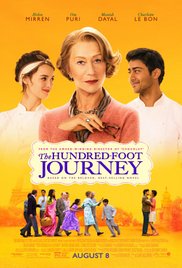
I also vividly recall spending a Friday night meal with the two heads of the Yeshiva I attended in ninth grade. I accompanied them on a fund-raising outing to the Five Towns where they attempted to storm local pulpits and appeal for money to sustain the Yeshiva in difficult financial times. On Friday night, our main course consisted of hard-boiled eggs, but that did not dampen the rabbis’ enthusiasm for the holy Sabbath. They sang sacred melodies until the wee hours of the morning. In contrast, in The Hundred-Foot Journey, money does not limit the ability of people to eat fine food, and all the characters are students and worshippers at the shrine of good cuisine.
Because of political turmoil and danger to life in Mumbai, India, Hassan Kadam and his family move to France where they hope to open a restaurant similar to one they owned in Mumbai. When their van breaks down, they are forced to rely on the kindness of strangers and one kind stranger does appear. She is Marguerite, a young woman who volunteers to take them to a local car mechanic and who also serves them platters of scrumptious and attractive food. The Kadam family is impressed both with her generosity and with her cooking.
While waiting for the repair, Papa Kadam wanders around the town and discovers an abandoned restaurant for sale. He sees the purchase of the restaurant as somehow divinely ordained, a message from his deceased wife that his car did not break down in this village for no reason, but rather to enable him to find a suitable location for his restaurant. Against family objections, he buys the property and the family works diligently to transform the decrepit property into Maison Mumbai, a food emporium specializing in Indian cuisine.
All is not fine, however, when Madame Malory, the owner of a award-winning restaurant across the street, about 100 feet away, sees Maison Mumbai as a serious competitor encroaching on her business. Meanwhile, Hassan, a gifted chef, strikes up a friendship with Marguerite who he discovers is the sous chef at the competing restaurant. She shares with him her passion and love for cooking food.
War breaks out between Papa Kadam and Madame Malory when Madame Malory asks to see the menu of Maison Mumbai, and then proceeds to go the market and purchase all the ingredients that Papa needs to cook his food. Papa retaliates by doing the same thing to Madame Malory, and so the hostilities continue.
Tempers boil until someone torches Maison Mumbai. Then Madame Malory, feeling guilty for encouraging a negative attitude towards her competitor, tries to expiate her sin by helping to fix the damaged restaurant. Papa and Madame become friends and Hassan becomes the bridge of their reconciliation.
Clearly recognizing Hassan’s amazing talents as a chef, they both encourage him to go to Paris where he will fine tune and broaden his cooking repertoire in the world-class restaurants of the city. Hassan, however, is conflicted during his sojourn in Paris. Does he truly want to be in the rarefied ambiance of one of the great culinary cities of the world, or does he want to be with Marguerite in his adopted hometown in rural France? Wherein lies his destiny?
Food preparation and presentation is at the heart of The Hundred-Foot Journey, but the film suggests that there are more important things that motivate people. It is good to appreciate passionately the sundry varieties of food that God has given us, but it is more important to passionately value our human connections, which endure beyond mealtime.
For the Jew, the Sabbath is the day that celebrates the enjoyment of food. The Sabbath table is supposed to be beautiful and enjoyable because it marks the Sabbath as a day different from the rest of the week. During the week, the emphasis is on the nourishment value of food. The Jerusalem Talmud states: “The world can live without wine, but it cannot live without water; the world can live without peppers, but it cannot live without salt.” The comment is a reminder of the value of simple fare that enables us to live. We should eat to live and not live to eat.
There is a brief scene in Beyond the Sea, a biopic of singer Bobby Darin, which resonates with me personally. Bobby unbuttons his shirt and reveals his scar from open-heart surgery. It looks like a long zipper on his chest. I, too, have had open-heart surgery and remember other patients telling me I am now a member of the “zipper club,” all of whose members brandish an extended scar on their chest.
But there is something more that animates those who have experienced this kind of operation. All of us have an intense appreciation for the everyday miracle of good health, and all of us are sensitive to the reality that life is unpredictable and we have to both treasure and maximize our moments. This is the subtext of Bobby Darin’s meteoric rise to fame.
The film begins with the early history of Bobby Darin as a young boy plagued by many bouts of rheumatic fever which leave him with a weak heart. Doctors tell his mother that her son will be lucky to live past his teen years. Bobby, upon hearing this dire prognosis, is motivated to make the most of every moment of his life. He wants to rival Sinatra’s success; and so he forms a band, playing any venue he can to solidify his fan base and to develop his talents.
He achieves success with a recording of “Splish Splash,” a rock and roll song that makes him a teen idol. But Bobby does not want that kind of fame. He aspires to sing melodies with a big band, and eventually achieves major renown with his iconic version of “Mack the Knife.”
Bobby’s burgeoning success gets the attention of Hollywood where he is cast in a movie with Sandra Dee, an eighteen-year actress whom he marries after a brief courtship. Later he receives an offer to appear in Captain Newman, M.D. as a shell-shocked soldier, a performance that earns him an Academy Award nomination.
As musical tastes change, Bobby finds himself out of sync with contemporary musical trends and his popularity plummets. Bobby, however, does not give in to despair but rather finds a way to redefine himself as a musical artist for a new generation of admirers.
Bobby values the moment, does not take life for granted, and wants to make the most of the time he is given on earth. His childhood realization that he will not live into old age stays with him for his entire career, making him a super achiever. Although he died at age thirty-seven, his music still remains vibrant in the 21st century.
The Ethics of the Fathers cautions us to repent on the day of your death. How do you know when is your last day? You do not; therefore, repent every day since any day might be the end of your life. It is instructive to watch Bobby and Sandra resolve a heated argument. Bobby throws around furniture and smashes windows on his car, driving away in anger. He returns a few minutes later and, embracing his wife, realizes that life is short and he cannot let anger rule him. He must reconcile right away so that he and his wife can get back to the same page of their basically loving relationship.
Scripture tells us that it is better to visit the house of mourning than the house of feasting. The Sages explain that in the house of mourning, we entertain thoughts of our own mortality; and that is a spur for us to use time wisely, not to waste a moment.
Moreover, our forefather Jacob always felt he did not deserve God’s many kindnesses and so he constantly felt vulnerable. Feeling vulnerable makes you want to achieve more because you do not know what tomorrow may bring. This kind of sensibility pervades the psyche of Bobby Darin, who understood that any moment might be his last. Beyond the Sea reminds us of the brevity of life and to treasure every minute.
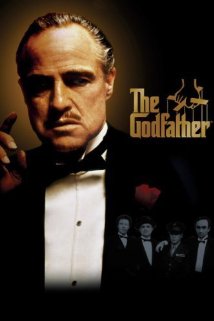
My review of The Godfather trilogy requires some preliminary discussion. Why have I chosen to consider all three films in one review and why is it a “kosher” movie in spite of the fact that there is much violence and profanity in the film?
I have defined a “kosher movie” as a film that has something meaningful to say about life, a film that can help us navigate our own lives. In this sense, the Godfather films have many life lessons that can apply to us, lessons about leadership, about succession within an organization, lessons about relating to family members who strongly disagree with you, lessons about how important it is to control one’s temper, and insights into how difficult it is to repent for one’s misdeeds.
I chose to write about the three films because, taken as a whole, they tell one story about the life of one family, and how the people in the family change and how relationships within the family change. To review only one of them is not to recount the entire story of a family’s evolution as it tries to preserve its own unique identity as a family.
Let me begin with the opening scene of The Godfather: Part I, a wedding celebration. There is a tradition that “no Sicilian can refuse a request on his daughter’s wedding day,” and so many guests at the wedding of Don Vito’s Corleone’s daughter in the summer of 1945 come to ask the head of the Mafia Corleone family for favors. At the wedding are Don Vito’s three sons, the mercurial and hot-tempered Sonny, the slow-witted Fredo, and the decorated Marine hero, Michael, who attends with his girlfriend Kay.
One guest, a singer, wants help landing a movie role to revitalize a moribund career. Another wants revenge against men who raped his daughter. Still another wants help to enable his nephew to become an American citizen. Don Corelone responds with the classic tagline: ”I’ll make him an offer he can’t refuse,” which is an oblique way of saying that I will use violence to accomplish my ends.
Things become complicated when other Mafia gangs want to go into the heroin business. They ask for the Don’s political assistance since he has many friends embedded in the legal and political communities. The Don refuses because he knows that his involvement in the drug trade will destroy his political friendships. This interchange plants the seeds of insurrection within the ranks of the rival gangs, ultimately leading to an assassination attempt on the life of Don Corleone.
All this turmoil influences Michael who loves his father and wants to protect him. Michael offers to kill the two men who were behind the assassination attempt, and an elaborate plan is devised. The only downside is that Michael will have to leave the country for some time until it is safe for him to return.
In the interim, tragedy strikes when the hot-tempered Sonny is violently shot to death by his enemies. Don Corleone wants to end the madness, and so offers to provide political protection to those gangs involved in the drug business as long as it not sold to children.
When Michael returns to the United States four years later, he reconnects with Kay, his former girlfriend, and they marry with Kay believing that Michael will legitimize his business within five years. A key to his success is keeping a tight lid on family disagreements. They are never to be revealed publicly even though privately they can disagree. Moreover, he understands how important it is not to be careless. As the Don says to Michael: “I spent my whole life trying not to be careless. Women and children can afford to be careless, but not men.” These are valuable leadership lessons: do not air dirty family laundry in public and do not be careless in planning for important future events in your life.
The Godfather: Part II interweaves the lives of Michael Corleone, the new head of the Corleone family, and Vito Corleone, his father as the young Sicilian who founded the Corleone dynasty.
The film opens in 1901, in the town of Corleone, Sicily, where Vito’s brother and mother are killed in mob-related violence. Vito is forced to flee for his life, and ends up in America, where he begins his life of crime with small –time theft, graduating to murder and intimidation for huge profits. Slowly, Vito becomes a man with whom to consult to solve problems and he is highly feared and respected by the community.
The story then shifts to 1958 with Michael Corleone, Godfather of the Corleone family, dealing with business and family problems during an elaborate celebration at his Lake Tahoe, Nevada compound. He needs gaming licenses for his casinos in Las Vegas and enlists the support of a United States senator to help him negotiate fees. He also has conversations with his younger sister, Connie, who is about to marry a man of whom Michael disapproves. He also discusses a possible alliance with Hyman Roth, a gangster who is encouraging Michael to establish gambling venues in Las Vegas. While he wants to follow the advice of Roth, his adviser reminds him of his father’s attitude towards Roth: “your father did business with Hyman Roth, your father respected Hyman Roth, but your father never trusted Hyman Roth.” Another leadership lesson: respect others but do not always trust them to have your best interest at heart.
Michael, like his father, survives an assassination attempt, which leads to a new cycle of violence. But what rankles Michael is the discovery that his brother Fredo was indirectly tied to this event and that Fredo has lied to him, the ultimate betrayal by a family member.
The Godfather: Part III depicts Michael in his twilight years. Now almost sixty, he seeks redemption for a life of crime and violence. To assuage his guilt, he donates money to the Church and other charities. But yet again, his criminal past asserts itself and he is engulfed in more violence, compelling him to appoint Vincent Mancini, Sonny Corleone’s illegitimate son, as his successor.
Classic lines from all three films relate to leadership strategies and life lessons, and they reverberate long after seeing the movie. Here are some of them uttered by Michael Corleone: “My father taught me many things. He taught me: keep your friends close, but your enemies closer.” “Never hate your enemies. It affects your judgment.” “Never let anyone know what you are thinking.” “Temper clouds your judgment,” “The higher I go, the crookeder it becomes.” “The only wealth in this world is children; more than all the money, power on earth.” “Give me a chance to redeem myself, and I will sin no more.”
All the quotations reveal leadership strategies and convey life lessons, echoed in various chapters of Ethics of the Fathers. As Michael Corleone matures, he sees things from the balcony. He is less concerned with day-to-day matters and more concerned with family and his personal legacy. He wants spiritual redemption and he wants a relationship with his children. His life has been a melange of crime and violence and he wants to end it with a legacy of peace.
Judaism encourages us to see things from the aspect of eternity, and that is what Michael Corleone finally does. No longer is power and money important. What is important are the human connections that transcend the desire for material things. The only things that will accompany us on our final journey, say our Sages, are our good deeds, which are sown in the garden of family and friends. At the end of the day, that is all that matters.
As I write this review, the country is in a fierce debate as to whether the United States should accept Syrian refugees from that war-ravaged country. Coming after a devastating attack on innocent civilians by Islamic extremists in Paris, many in this country are wary of accepting Muslims without serious background checks. I witnessed similar anti-Muslim sentiment after 9/11, when Islamic extremists brought down the World Trade Center towers. I have no opinions about this matter other than to accept the reality that the resolution to this problem is complicated and probably will involve a balance of kindness and caution. We want to help people in dire straits; but we also have to be prudent and not put our own citizens at risk.
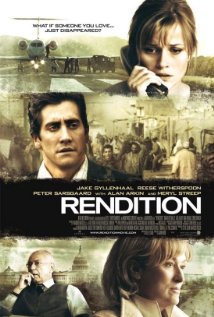
This dilemma is the moral setting for Rendition, a tense thriller in which the government, without specific evidence, incarcerates a suspected terrorist because it does not want to risk him being at large to commit terrorist attacks.
Anwar El-Ibrahimi, born in Egypt, is a chemical engineer who lives in Chicago with his pregnant wife Isabella and their young son. When returning from a trip to South Africa, American authorities detain him because Anwar’s phone records indicate that Rashid, a known terrorist, has made calls to his number. There is no actual evidence, only a suspicion that Anwar is a terrorist. However, that is deemed enough to exercise the policy of rendition whereby a man is sent to a secret detention facility without access to due process of law. He simply disappears and no one knows of his whereabouts.
When Anwar does not arrive home as expected, Isabella begins to worry. As the days pass on, she contacts an old friend, now working for the government in Washington, to assist her in finding her husband, but to no avail.
In the meantime, Douglas Freeman, a CIA analyst who generally works behind the scenes and not directly with the person suspected of wrongdoing, is given the task of observing Anwar’s interrogation, which involves brutal torture. Clearly, Douglas is uncomfortable watching the torture and he has doubts about Anwar’s guilt. After questioning Anwar himself, he concludes that Anwar is innocent. Freeman’s challenge: how to stop the torture and how to restore Anwar to his wife and family.
In Jewish law, there is the presumption of innocence, what is known in Hebrew as a chezkat kashrut. You are supposed to judge people favorably, say the Sages. Always give people the benefit of the doubt and consider them innocent until you have evidence to the contrary.
A case from the Talmud is instructive. The Talmud tractate of Sanhedrin (37b) describes a case of conjecture based upon circumstantial evidence. The judge asks the witnesses: if you see the accused chasing someone into a deserted ruin, and you followed him and saw him with a sword in his hand dripping with blood, and then you heard the cries of someone inside the ruin, this is not absolute proof of anything.
Even though there is a strong possibility that the person you see with the sword committed the crime, no definite conclusions can be drawn. It may be correct to hold such a person in custody on suspicion of a crime, but that should only be for a short time and certainly he should not be punished until he has his day in court.
Rendition is a scary movie. The film depicts a climate of fear and terror where the outsider is distrusted. At such a time, it is difficult to be open and generous. Although we need to assume the best of others, there are times when caution is needed. The Torah, after all, states that “we should live by its commandments,” not die by them. Rendition captures the essence of this moral dilemma.
One of my favorite poems is “The Convergence of the Twain” by Thomas Hardy. The poem describes two events occurring at the same time but at different locations. At some future time, the events converge. One is the building of the ship, the Titanic; the other is the forming of the iceberg with which the ship will collide. Hardy writes: “Alien they seemed to be/ No mortal eye could see/ The intimate welding of their later history/ Till the Spinner of the Years/ Said ‘Now!’/And each one hears/ And consummations comes, and jars two hemispheres.”
Déjà Vu, a tense and clever thriller, does not deal with two discrete events as depicted in “The Convergence of the Twain,” but it does raise a theoretical question: would the Titanic tragedy have been avoided if someone intervened to change the run-up to the cataclysm?
Time travel has been a fascinating topic in the cinema. The manipulation of time opens up all sorts of creative doors in terms of plot, content and message. There are times in life when we want the opportunity for a do-over to correct a past mistake or to come up with a better response to a problem, and this is what transpires in Déjà Vu.
The film opens with an explosion of a ferry in New Orleans. There are 543 casualties including many sailors and their families who were headed for a Mardi Gras celebration. ATF agent Doug Carlin is recruited by an experimental FBI surveillance team to help investigate the terrorist attack.
Carlin learns that the body of Claire Kuchever, washed ashore an hour before the explosion, has been burned with a similar explosive, suggesting that she was murdered. The killer apparently wanted it to look like she was simply another victim of the ferry explosion.
Working with the surveillance team, Carlin learns about a new technology which bridges both past and present. The team has the ability to go back four days and analyze the events leading up to the catastrophe, with the hope of catching the perpetrator. Carlin, however, sees an opportunity to go back to the past to prevent the murder of Claire Kuchever, and to prevent the ferry from being blown up. How this happens is implausible, fascinating, and cinematically riveting. Carlin, frustrated that police are only able to react to crimes once they are committed, now is driven by the possibility of stopping a crime before it occurs. He wants to save Claire who is alive in the past, yet dead in the present.
When he finally confronts the terrorist, Doug Carlin tells him: “Satan reasons like a man, but God thinks of eternity.” What emerges from this statement is the notion that man only lives in the present. We only see life in the format that fits our human screen. God, however, sees the wide screen version of life, for He sees past, present, and future as one. He sees the big picture; we do not. As it says in Ethics of the Fathers, “everything is forseen by God,” which indicates that God is beyond time. Although man lives within time, God does not.
Déjà Vu explores the idea that time is relative, not a constant. Given that perspective, the question arises whether man can influence what happens in the future if his vision is limited to the present. Can man exercise free will in the face of a Creator who foresees everything? Doug Carlin’s actions suggest that he can.
Jewish tradition supports the view that although God may know the future, He limits himself deliberately and allows man to exercise free choice. The implicit message of Déjà Vu is to do good even when the outcome is uncertain. Choose life even when surrounded by death.
My parents were people of modest means. Moreover, they always considered the needs of their children before their own. I never felt deprived as a child even though I lived in a low-income neighborhood and did not go on fancy vacations to Disneyworld. Life was joyous because my parents, by example, found joy in the everyday, in spending time with their children, in working as volunteers on behalf of the local synagogue, and in regularly visiting our extended family and friends. I do not recall ever envying other kids because I was satisfied with my lot in life. I remember that my favorite Bar Mitzvah gift was a simple basketball given to me by my friends Kenny and Marilyn Beeman.
Being happy with one’s lot in life is the dramatic crux of Charlie and the Chocolate Factory. Willy Wonka owns the biggest, most successful chocolate factory in the world. One day he realizes that he is getting old and that he needs to plan for someone else to take over the company. He devises a plan to reveal the secret of his chocolate recipes to five lucky kids who will be invited to visit inside Wonka’s chocolate factory. Wonka will then choose one of the kids to be the heir to his chocolate kingdom. The five fortunate children are those who find golden tickets inside Wonka chocolate bars.
The winners of the tickets include Augustus Gloop, a gluttonous young man who cannot stop eating. Veruca Salt, a very spoiled young girl who demands and receives whatever she wants from her parents, Violet Beauregard, an extremely competitive girl who always thinks she will win any kind of competition, Mike Teevee, who is hooked on violent TV games, and, lastly, Charlie Bucket, a modest, poor boy from a loving family.
The factory tour is filled with surprises and Willy Wonka’s special inventions. When the kids interact with them, there are consequences that remove them from the competition. The only one left is Charlie Bucket, who refuses the prize of factory ownership when it entails living in the factory and leaving his family. Charlie admires Willy Wonka; but does not want to lead his kind of life, a disconnected life that was largely shaped by his dysfunctional relationship with his father. For Charlie, family is everything.
I recently read an autobiographical sketch of a Torah teacher of mine written when he was in his seventies. Much of what he wrote echoes Charlie’s take on what are the truly important things in life. He writes: “I grew up in a home wherein chocolate was very, very much a treat. This was a moral issue: we should have necessities, but we should not have so many luxuries.” The emphasis is on cherishing values, not things.
Charlie, accustomed to living humbly, does not feel he is missing anything. This coincides with the maxim of our Sages who say that the wealthy person is the one that is satisfied with his lot, who does not live for more acquisitions. Moreover, my teacher wrote: “If I had to point to a single success, I think, without a doubt, it is my family.” Charlie Bucket shares this perspective. He recognizes that Willy Wonka, the king of the chocolate kingdom who possesses all the accouterments of wealth one could ask for, is a lonely person alienated from family and friends in the real world. Charlie’s happiness, in contrast, is rooted in family connections with parents and grandparents who love him dearly. It is this kind of unconditional family love that gives Charlie a wisdom and contentment far beyond his years. It is worthy of emulation.
In the late 1970s, I taught a class on the Holocaust to teenagers at Yeshiva High School of Atlanta. A high point of the course was an interview with a survivor of the camps. There were many living in Atlanta, but it was not easy to find people willing to talk about their terrible experiences in the concentration camps. For them it was too painful to resurrect those memories.
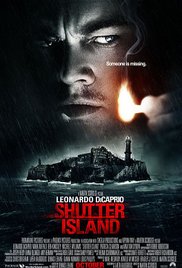
Emotional anguish is at the heart of Shutter Island, a disturbing psychological study that has little to do with the Holocaust, but a lot to do with gruesome memories and the extent to which they influence our current lives.
The film opens as U.S. Marshals Teddy Daniels and Chuck Aule are on a ferryboat traveling towards Shutter Island, the location of a federal mental hospital for the criminally insane. A mood of dread and unease pervades every frame of the movie. Teddy and Chuck have been called in because a violent criminal has escaped and they are tasked with finding her.
They meet Dr. Cawley, the head of the facility, who is debating the best way to treat mental illness. Is it to use surgery to change the way patients think or is it by using drugs to help a person find a way out of his mental turmoil? He tells Teddy and Chuck that perhaps the best way is to be a good listener and help a patient recognize and come to terms with his psychiatric problem.
As Teddy and Chuck pursue their investigation, they meet impediments. The staff is not always cooperative, and certain people whom they want to question are no longer on the island. Furthermore, the information they receive about Rachel, the violent missing patient, is often contradictory. Rachel has been incarcerated because she has killed her three children, but she denies her crime.
During this stressful ordeal, Teddy has migraine headaches, causing him to dream about his time during World War II when he was a soldier who participated in the liberation of the camps. The loathsome scenes that he witnessed still haunt him.
Teddy is also haunted by the image of Andrew Laeddis, a maintenance worker at the apartment where his family lived. Laeddis set his apartment on fire, a fire that resulted in the untimely death of Teddy’s wife.
Things come to a head when Teddy learns that the ferry that brought him to the island is not returning to pick him up. When he finally confronts Dr. Cawley with all his suspicions about the real purpose of the Shutter Island facility, reality and fantasy collide in the life of Teddy Daniels, making Shutter Island one of the brainiest and unsettling thrillers I have ever seen.
What is the Jewish perspective on dealing with past trauma and tragedy? Judaism encourages living in the present but remembering the past as well, even when it is unpleasant. Jews are bidden to remember Amalek, the nation that attacked the Hebrews in the wilderness as they made their way to the Promised Land. Moreover, there is a period of three weeks of mourning during the summer when Jews recall the destruction of the two Temples in Jerusalem, culminating on the ninth day of the Hebrew month of Av, a national day of fasting. The day is spent recalling the many tragedies that befell the Jewish people throughout the ages and is noted for the sorrowful lamentations that form part of the liturgy of the day.
Horrific events are recalled in great detail, but the final tone of the day is one of optimism. It is a day of sadness, but our Sages intimate that on this day the Messiah will be born, ushering in a time of peace and reconciliation.
Shutter Island depicts the frightful consequences of failing to accept the reality of personal tragedy and being stuck in past trauma. Jewish tradition encourages us to remember tragedy, but then to move on with our lives, recognizing that the only true path to healing is acceptance of the past and a resolve not to repeat the same mistakes again.
 At my elementary school, a couple of kids in the school band thought my name was Herbert Coleman, not Herbert Cohen. They assumed I was not Jewish. Then one day they became aware that my name was Cohen and they knew I was a Jew. That realization gave them license to threaten and intimidate me. One told me not to show up for the school band parade in which I played drums. When I told my mother about the threat, she went to the principal and related the incident to him. Moreover, she told him that she expected me to be in the parade as planned, and I was. But the memory of the event is still with me. I was the same person whether my name was Coleman or Cohen, but for people who are prejudiced, the stereotype becomes the reality.
 Many years ago, I asked a lawyer whom I respected what was his specialty. His answer: money. It was an “aha” moment when I realized that law is not always synonymous with justice, and that what often determines a legal outcome is how much money is at stake in terms of potential gain for the attorneys working on the case.
 I do not know many people who will do something to benefit someone else if it means that they will suffer a negative consequence. I have read of such actions taking place in the cauldron of the Holocaust narrative or in a prison setting, but it is a rare occurrence in times of peace and prosperity. Yet that is exactly what is depicted in Two Days, One Night, a slice-of-life drama in which Sandra, a factory worker, goes around visiting her fellow employees asking them to forego their annual bonuses so that she can retain her job.
 Some people are passionate about food; others eat simply to be nourished, lacking interest in food preparation and presentation. I remember watching one of my Torah teachers eating a piece of gefilte fish almost every day for lunch in the Yeshiva. He ate at his desk in the study hall and did not want to waste a moment in walking to a nearby restaurant.
 There is a brief scene in Beyond the Sea, a biopic of singer Bobby Darin, which resonates with me personally. Bobby unbuttons his shirt and reveals his scar from open-heart surgery. It looks like a long zipper on his chest. I, too, have had open-heart surgery and remember other patients telling me I am now a member of the “zipper club,” all of whose members brandish an extended scar on their chest.
 My review of The Godfather trilogy requires some preliminary discussion. Why have I chosen to consider all three films in one review and why is it a “kosher” movie in spite of the fact that there is much violence and profanity in the film?
 As I write this review, the country is in a fierce debate as to whether the United States should accept Syrian refugees from that war-ravaged country. Coming after a devastating attack on innocent civilians by Islamic extremists in Paris, many in this country are wary of accepting Muslims without serious background checks. I witnessed similar anti-Muslim sentiment after 9/11, when Islamic extremists brought down the World Trade Center towers. I have no opinions about this matter other than to accept the reality that the resolution to this problem is complicated and probably will involve a balance of kindness and caution. We want to help people in dire straits; but we also have to be prudent and not put our own citizens at risk.
 One of my favorite poems is “The Convergence of the Twain” by Thomas Hardy. The poem describes two events occurring at the same time but at different locations. At some future time, the events converge. One is the building of the ship, the Titanic; the other is the forming of the iceberg with which the ship will collide. Hardy writes: “Alien they seemed to be/ No mortal eye could see/ The intimate welding of their later history/ Till the Spinner of the Years/ Said ‘Now!’/And each one hears/ And consummations comes, and jars two hemispheres.”
 My parents were people of modest means. Moreover, they always considered the needs of their children before their own. I never felt deprived as a child even though I lived in a low-income neighborhood and did not go on fancy vacations to Disneyworld. Life was joyous because my parents, by example, found joy in the everyday, in spending time with their children, in working as volunteers on behalf of the local synagogue, and in regularly visiting our extended family and friends. I do not recall ever envying other kids because I was satisfied with my lot in life. I remember that my favorite Bar Mitzvah gift was a simple basketball given to me by my friends Kenny and Marilyn Beeman.
 In the late 1970s, I taught a class on the Holocaust to teenagers at Yeshiva High School of Atlanta. A high point of the course was an interview with a survivor of the camps. There were many living in Atlanta, but it was not easy to find people willing to talk about their terrible experiences in the concentration camps. For them it was too painful to resurrect those memories.
 Kosher Movies