Category Archives: Action/Adventure

Paths of Glory (1957), directed by Stanley Kubrick

paths of glory posterAs a school principal for many years, I have often tried to mediate between the needs of teachers in the classroom with the needs of regional educational administrators. There is a clear difference between the perspectives of teachers who want the freedom to teach what they want and administrators who promote adherence to a specific literary curriculum. The latter group is often preoccupied with students attaining high scores on examinations, which implicitly give their districts better reputations in the family of academic institutions.

This difference in perspectives between those on the ground and those in the strategic planning rooms is evident in Paths of Glory, a classic war film that depicts that different ways soldiers and commanders view the same situation.

It is World War I and the French and Germans are engaged in fierce battle. General Broulard informs General Mireau, his subordinate, that a major offensive is planned and that Mireau’s division is to seize a very well-defended German position known as the “anthill.” The likelihood of success is very small, but Mireau agrees to the assault when Broulard hints at a possible promotion for him if he accepts the mission. It is clear that Mireau values his own future more than that of his troops.

Insensitive to the genuine emotions of the soldiers in the theatre of war, Mireau inspects his troops and scolds them whenever they reveal any hesitation about combat. Instead of inspiring and encouraging them, he verbally abuses them when they show any fear at all.

In contrast to Mireau is Colonel Dax, the commander of the 701st Regiment, who will lead the men into battle. When informed about the planned attack on the anthill, Dax is unenthusiastic, knowing it is a fool’s errand. When Mireau threatens to relieve him of his command, Dax reluctantly agrees to go forward with the mission, not wanting to abandon his soldiers at a critical time.

Predictably, the attack is a disaster and many French soldiers fall. When Mireau learns that some of the soldiers are still in the trenches, he orders his own artillery to fire upon them to get them to move from protected spaces.

The next day, Mireau accuses his own men of cowardice and, together with other officers, recommends executing three random men before a firing squad as an example. Dax vociferously objects and, because of his civilian expertise as a lawyer, offers to serve as the attorney for the accused men, whose lives hang in the balance.

In stark contrast to Mireau is the Biblical image of military leadership. In the Bible, the general, the one in charge, is seen as role model for all, who both protects and inspires his men. Abraham does not delegate the battle to others; he wages war himself when necessary. So too does King David. The general does not place his soldiers at unnecessary risk, certainly not to advance his own reputation at the expense of endangering his own men.

As I write this review, Israel is engaged in a war in Gaza. A neighbor of mine recently traveled south to visit the troops and to give them moral support. He told me that while there he saw a general giving encouragement to his soldiers, relating to them as a father to a son, full of compassion and concern for his children. I thought of this symbiotic relationship between commander and soldier as I watched Paths of Glory. It is a model of good relationships between officers and soldiers, of leaders who do not promote themselves to the detriment of those they lead.

Purchase this movie from Amazon.com.


Barry Lyndon (1975), directed by Stanley Kubrick

MV5BMTczNzkyMjQ4N15BMl5BanBnXkFtZTcwOTQ2NjU4Mw@@._V1_SX214_AL_One of the “ah-ha” moments of my undergraduate career was reading William Makepeace Thackeray’s novel Vanity Fair: a Novel without a Hero. I was not a big reader in high school and what I read was not of a classic nature. But at college, I was exposed to great works of literature and it was a mind-blowing experience. I was introduced to worlds I never knew about and people who captured my attention and my imagination. What excited me about Vanity Fair was that I really cared about what happened to the people described in the book. Their problems and their challenges became mine and I was engrossed in their lives, even though none of them was a conventional hero. What they all shared was a common humanity, struggling to survive in an indifferent and sometimes cruel world; and their stories fascinated me. Barry Lyndon is another of Thackeray’s great novels, and it has been transformed cinematically into an opulent and engaging story similar in tone to Vanity Fair. It could be called “a film without a hero.”

The narrative begins in the 1750s in Ireland when Barry’s father is killed in a duel. Raised by his mother, he is sheltered from the harsh realities of learning how to earn a living. Instead, he tries to move upward on the social and financial ladder by allying himself with people in positions of power and influence. After numerous years of drifting and gambling, he finally secures the hand in marriage of a rich countess, Lady Lyndon, whose aged and sick husband has recently died.

Although they have a child, Barry is unfaithful to Lady Lyndon. Lord Bullingdon, Lady Lyndon’s son by her first marriage, observes this behavior and sees Barry as an opportunist interested only in his mother’s money. He is correct and, unfortunately, Barry’s life of excess drives the family to the brink of financial ruin by spending his wife’s fortune trying to become a respected and influential member of high society. He throws lavish parties to ingratiate himself with those in power and purchases overly appraised works of art. Eventually, he regrets his selfishness and apologizes to his wife, but only after much damage has been done. The dysfunctional relationship between Barry and his stepson, Lord Bullingdon, continues, however, with tragic consequences.

Kubrick, a masterful director, captures the opulence and physical beauty of the idle life of the wealthy and privileged with rich and exquisite images. Every scene looks like a museum painting. But beneath the outward beauty is a corrupt society focused only on power and pleasure, a society which disdains work and worships those with influence.

The positive value of work is nowhere to be seen in Barry Lyndon, which portrays a life of excess and leisure. This is in stark contrast to Jewish values. The Talmud, indeed, places great value on work. It is filled with comments abhorring idleness, suggesting that it leads to mental illness and sexual immorality (Talmud Bavli 59b). Moreover, Rabbi Yehuda and Rabbi Shimon state that work honors the workman (Nedarim 49b), and they themselves would deliberately carry heavy loads to show that manual labor was to be respected. Furthermore, Rabbi Yehuda Ben Besayrah remarks: “If a person has no work to do, what should he do? If he has a dilapidated yard or field, he should go and occupy himself with it.” Work is therapeutic, for it keeps man mentally healthy. Further, the Sages warn us “not to be tempted by opulence and not to be jealous of those who maintain positions of authority.” To be idle, in Jewish tradition, is to lead an unproductive life. Work, in contrast, gives man stability, a sense of self-worth, and happiness. Barry Lyndon reminds us that the life of idleness prevents one from leading an emotionally rich and balanced life.

Purchase this movie from Amazon.com.


Friendly Persuasion (1956), directed by William Wyler

friendly persuation posterIn my career as a synagogue rabbi and day school principal, I have encountered people who hold extremist views. In my first years in the rabbinate, I myself tended to view community conflicts as issues that could be addressed either as right or wrong. There was no middle ground. As I got older and wiser, I saw that there was lots of grey and it was silly of me to see things only in stark black and white terms. I remember hearing Rabbi Norman Lamm, President of Yeshiva University, give a talk on what he called “radical moderation.” In an age of increased religious polarization, it was refreshing to hear a more balanced and nuanced approach to a problem. Now that I am living in Israel, a beautiful land filled with extreme ideologies of all sorts, Rabbi Lamm’s words resonate even more.

I was reminded of this as I watched Friendly Persuasion, a story of a Quaker family whose belief in non-violence is tested during the American Civil War. Jess Birdwell, the patriarch of the family, is interested in worldly things even though he basically subscribes to Quaker simplicity and pacifism. His wife, Eliza, frowns upon any expression of materialism, but becomes more understanding of her husband’s perspective on life. For example, she at first is totally opposed to her husband purchasing an organ for the home; but after a conversation with him, agrees to have it in the attic as long as it is not played when company is around. It is this kind of practical family accommodation that typifies the Birdwell family, a family that has strong core beliefs but one which makes compromises in the woof and warp of daily life.

Against this background of a contemplative and at times humorous Quaker life, there is a war raging, and it affects the Birdwell household. Jess and his oldest son Josh are recruited to fight against the Confederates, but they both decline because of principle. They are categorically against killing. However, when a band of marauders is about to lay waste to their home and possibly kill their family, they are compelled to rethink the verities upon which their life is based.

The movie depicts various responses to their moral crisis. One family member sticks to his belief in non-violence no matter what. Another chooses the path of violence with limitations. Another decides that killing is sometimes justified when home and hearth are threatened. It is a painful decision for him; and while pulling the trigger, he weeps for the loss of life he is causing. The characters all maintain their core beliefs but their actions indicate a personal vision of what is required in the face of real life challenges. There are no simple answers.

Judaism believes that once there is agreement and commitment to basic principles, then we are free to shape our own individual spiritual destinies. Not everyone has to observe the law in exactly the same way as long as we accept the divinity and integrity of that revelation at Sinai. In a sense, this is what we see in Friendly Persuasion. The Quakers agree on fundamental principles, but as individuals make nuanced decisions as they encounter varied life experiences.

A similar approach is found recorded by King Solomon in the Book of Ecclesiastes. Here he writes that “wisdom is better than weapons.” War in Jewish tradition is always viewed as a last resort after other solutions to a threat are exhausted. However, when the threat persists, Judaism permits battle. It is this complex approach that reflects real-life decision-making, which is at the heart of Friendly Persuasion.

 Purchase this movie on Amazon.com.

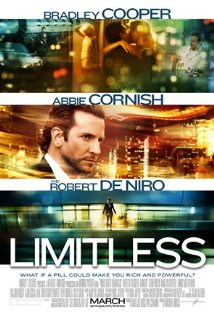
Limitless (2011), directed by Neil Burger

limitless posterI began to study Talmud seriously when I entered Yeshiva University, which had just started a program for college students who did not attend Jewish day schools. It was a challenging subject and at first I had very mixed success. My Talmud teacher summed it up when he wrote on my evaluation the following remarks: “Earnest and studious, has been plodding along with unusual diligence and, as a result, has made fine progress especially in his ability to master texts. Analytic grasp is still weak, tends to repeat some ideas mechanically without fully understanding them. But on the whole has made highly encouraging progress.” Frustrated by my difficulty analyzing such complex material, I thought it would be wonderful to be able to take a pill and suddenly become an analytical savant. I did not do this, but Eddie Morra in the intense drama Limitless does.

Eddie Morra is a writer with writer’s block. He has a contract with a literary agent but cannot summon the intellectual energy to write his book. His life is falling apart financially. His girlfriend rejects him, and he is threatened with eviction from his apartment. Things change, however, when he meets his ex-brother-in-law Vernon, who offers him a new brain drug that will get him out of his lethargy. Eddie takes it, feeling things can’t get any worse, and experiences an intellectual epiphany. He sees everything with brilliant clarity and now is able to write freely. Immediately, he cranks out several hundred pages with ease and impresses his agent.

Eddie returns to Vernon, wanting more of the drug, which is called NZT48. Finding Vernon dead, he searches his apartment for the drug and finds cash and a large stash of NZT48. Overwhelmed with his new-found abilities, Eddie takes the pill regularly and quickly amasses huge amounts of money as a day trader on the stock market based on his uncanny ability to predict the success of many companies on the exchange.

His success in the market leads to a meeting with Carl Van Loon, a major player in the corporate merger world, who senses that Eddie can be a valuable member of his negotiating team in an upcoming merger deal. Meanwhile, Eddie’s supply of NZT48 is dwindling, and Eddie is having relapses which stymie his smooth presentations to Van Loon. How Eddie tries to be sharp when his supernatural analytic skills are growing dull is the plot conceit that drives the story forward.

There is a mesmerizing conversation between Eddie and Van Loon, which highlights the different paths these men have walked to arrive at their current positions in life. Eddie’s path is serendipitous: Carl’s is deliberate. When Eddie informs Carl that he is looking to be on his own, Carl reminds him: “I mean you do know you’re a freak? Your deductive powers are a gift from God or chance or a straight shot of sperm or whatever or whoever wrote your life-script. A gift, not earned. You do not know what I know because you have not earned those powers. You’re careless with those powers, you flaunt them and you throw them around like a brat with his trust-fund. You haven’t had to climb up all the greasy little rungs. You haven’t been bored blind at the fundraisers. You haven’t done the time. You think you can leap over all in a single bound. You haven’t had to bribe or charm or threat your way to a seat at that table. You don’t know how to assess your competition because you haven’t competed.” It is a classic case of the callow wisdom of youth pitted against the sage wisdom and experience of age.

There is an insightful comment about the perennial conflict between youth and age found in The Ethics of the Fathers. The Sages write: “He who learns from young men is like one who eats unripe grapes and drinks new wine from the winepress. He who learns from old men is like one who eats ripe grapes and drinks aged wine.” Clearly, Jewish tradition favors the learning from old men who combine the wisdom of life experience with intellectual power. Limitless showcases the smarts of youth and the acumen of age, and lets the audience see the virtues and faults of both.

Purchase this movie from Amazon.com.
 

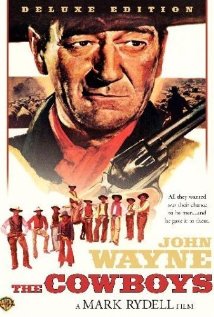
The Cowboys (1972), directed by Mark Rydell

cowboys posterEvery father wants his son to be successful. In the course of my career as a synagogue rabbi and school principal, I have had conversations with parents who are disheartened because their hopes and dreams for their children have not come to pass. Sometimes fathers and mothers are regretful about the way they parented their kids; others wax philosophical, expressing no regrets. They feel they have done their best, but are not in control of outcomes. And so they accept the reality of unfulfilled dreams.

One case of unfulfilled expectations, in particular, comes to mind. When I was a Jewish high school principal, I tried to convince a boy’s parents to send him to Yeshiva University where he would be able to continue his general and Judaic studies. Moreover, I told his parents that the college years were critical, defining years of a young person’s life and it is likely that he will meet his future marriage partner during this time. They ignored my entreaties and enrolled the young man at a very fine state university, where he did well academically. He also met his wife there, and she was not Jewish. It was a classic case of intermarriage. Emotions ruled over logic. For many years after, the parents rued their short-sighted decision.

Rancher Wil Andersen, played by the iconic John Wayne in the twilight of his career, also is a parent whose kids didn’t fulfill his dreams. In a quiet conversation with a friend, he reflects: “My oldest son would have been forty this year. Middle aged. But they went bad on me… or I went bad on them.” He wonders if their choice of lifestyle was because he wasn’t the father he should have been. Perhaps his stern approach turned them off from all his instruction, and their wayward ways were a form of rebellion against his rigid parenting persona.

The Cowboys begins with Wil wanting to bring his cattle to market in Belle Fourche, a 400-mile long cattle drive. The problem: all his drovers want to postpone the drive while they pan for gold. A friend suggests he train and use local schoolboys to replace the drovers. He does not want to do his; but faced with little alternative, he reluctantly hires them. And so begins his arduous trek to Belle Fourche. Jebediah Nightlinger, the camp cook who is a repository of wisdom and life experience, suggests to Andersen that he now has a second chance to be the father that he could have been for his own two boys.

Andersen ponders this message as he teaches the boys to rope, brand, and herd the cattle and horses. Things go well for a while until rustlers attempt to steal the herd. Then all the skills that Andersen has taught the boys come to the fore as they attempt to bring the cattle drive to a successful conclusion.

Wil Andersen is the surrogate parent of these young teenagers and he imparts wisdom to them both explicitly with words and implicitly by being a role model for the boys to emulate. The Cowboys demonstrates that, when it comes to parent-child relationships, children learn by example as well as by words, by what is caught as well as by what is taught. This reflects a Jewish sensibility. It is not only the parents who instruct the young. The prime responsibility to educate the child is the father’s. However, if he is unable to do this, he can hire a surrogate. Nowadays, the surrogate is the Jewish day school with its staff of rabbis and teachers who transmit the wisdom of the ages to students by explicit instruction and by being role models for them. Outside of the school, children learn by observing the adults around them. Therefore, it is wise for adults to be always aware of what we say in front of children, and how we behave in front of them as well.

Purchase this movie from Amazon.com.
 

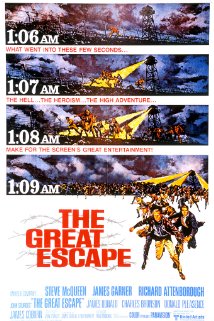
The Great Escape (1963), directed by John Sturges

great escape posterMany years ago, a friend of mine enrolled in a master’s degree program in Social Work. He had great people skills which he felt would insure his success as a social worker and thought the program would be a breeze to navigate. He never envisioned that the program would be academically rigorous, requiring lots of research and lots of homework. But, in truth, it was; and after two semesters, he gave up and dropped out. He was not prepared for adversity, and so the slightest problem became a mountain which he did not want to climb.

The Great Escape tells the dramatic story of a cohort of men who did not give up in the face of adversity, who were focused and committed to their mission even when the road they travelled was bumpy and full of detours. It is based on a true story of a group of prisoners of war for whom the Germans had constructed a special prison camp. Their motivation? All the inmates were prisoners who made repeated escape attempts. The goal of the Germans was to place all these rotten eggs in one basket so they more effectively could control their activities, which distracted and undermined Germany’s focus on the war effort.

The prisoners, however, had different plans, which the ranking officer Ramsey clearly articulates to the German Commandant, reminding him that it was the sworn duty of the prisoners to confound the German military as much as possible in order to tie up German war resources.

The prisoners do this by building a tunnel underneath the camp barracks that extends to a no man’s land outside the barbed wire gates of the camp, thus enabling a cohort of 250 prisoners to attempt an escape to freedom. It is a task fraught with danger and plagued with many setbacks along the way. Squadron Leader Bartlet coordinates the effort, assigns team leaders, and begins to gather the necessary materials to implement the plan.

Many problems have to be addressed. How to get rid of the dirt that they dig out of the tunnels? How to maintain the structural integrity of the tunnel so that dirt does not fall and bury the ones who are building it? How to create forged passports and identity papers? How to determine what dangers lay outside the woods beyond the camp? How to dress like ordinary people so that they are not immediately picked up by the authorities after their escape? It is a gargantuan task and not everything goes smoothly.

What is notable is the response of the men when things go awry. When one of the three tunnels that the men are constructing is discovered, they do not give up. Instead, they devote all their efforts to completing another tunnel. When they find out that the end of tunnel leaves them outside the camp but twenty feet shy of the protective woods, they do not give up. They just accept the new reality and devise a way to signal the men to make a dash for the woods when the guards are not looking in that direction. It is this positive attitude than enables them to succeed. It is a commitment to the mission in spite of obstacles.

This approach to life is a Jewish sensibility. King Solomon in his magnificent book of Proverbs, states that “seven times the righteous fall and yet they rise again.” Life is full of challenges and disappointments. We cannot avoid them. But we do not have to succumb to them. The Great Escape informs us that where there is a will, where there is a focused desire to get something done, there usually will be a way. Things ultimately may not turn out exactly the way we want, but our primary goals can still be accomplished.

Purchase this movie from Amazon.com.
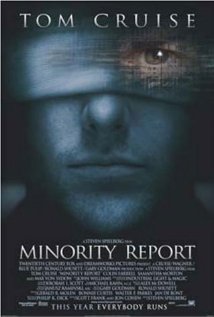
Minority Report (2002), directed by Steven Spielberg

minority report posterSeveral years ago, I went to a wedding of a friend in the Midwest. There I met a number of teachers who taught in the local day school. One introduced himself and reminded me that he was once a student at Yeshiva High School of Atlanta and had actually dormed at my home for half a year. I did not immediately recognize him, but when he told me his name, a flood of memories rushed through my head. I remembered that he came from a small Southern town and that his parents wanted him to take advantage of high school Jewish education and so they enrolled him at my school. Although he did well academically, he never subscribed to the ethos of the school and regularly challenged authority. Upon graduation, I felt sure that he would abandon whatever Judaism he possessed.

But my prediction was all wrong. At some point, he was “born again” and blossomed as a student of Torah. Never would I have guessed that he would eventually make his career Jewish education. The entire encounter reminded me that one snapshot in time is not a reliable indicator of one’s future success or failure. The future is ultimately unknowable.

Minority Report, a dark and very tense science fiction thriller, suggests the opposite, that you actually can know the future of person and can even intervene to prevent him from committing a crime. In the year 2054, there is a “PreCrime” program that is operational in the nation’s capital In Washington, D.C.  John Anderton and his team of “PreCrime” police officers are able to act on information obtained from “precogs,” three mutated humans who can see into the future. They can predict the time and date of the crime, the culprit, and the intended victim. Once this is known, the data is forwarded to the police who proactively intervene to prevent the crime.
Because the country is poised to take the program nationally, the United States Justice Department sends its own investigator, Danny Witwer, to evaluate the program. Danny discovers some internal inconsistencies in the program and determines that PreCrime is flawed and subject to human manipulation. At first he sees John Anderton as the prime suspect, but eventually his attention turns elsewhere as he doggedly pursues his leads. The film raises the provocative question of whether one should take action against people you view as criminals, even if they have yet to commit the crime.

Interestingly, the Bible speaks of a pre-crime scenario in which capital punishment theoretically is meted out to one who will commit a crime in the future even though in the present he may be guiltless. This is the instance of the “wayward and rebellious son” who is brought to the court by his parents for capital punishment. Although his behavior at present is gluttonous and he is guilty of thievery, he has not yet murdered anyone. Yet the Bible prescribes the death penalty.

The Talmud, however, in the final analysis is inconclusive on this matter, stating that the case of the “wayward and rebellious son” never actually occurred and, indeed, will never happen. Then why, ask the Sages, do we have the law on the books?  One answer is that the passage teaches us lessons about parenting and serves as a warning to children to listen to parents and to voices of authority in general. Minority Report, which explores the notion of pre-crime punishment, concludes that no one can truly know the future; and, therefore, we can only respond to infractions in the here and now, not future ones. This, indeed, affirms the Torah value of judging people as they are now, not as the villains they may become.

Purchase this movie from Amazon.com.
The Hunger Games (2012), directed by Gary Ross

hunger games posterIn the high school English class I teach, we often read the celebrated short story “The Lottery” by Shirley Jackson. It is about a yearly ritual in a small town which everyone comes to watch. The surprise ending reveals that the ritual is the stoning of one of the town’s residents that is chosen by lottery. The class discussion considers how society often has rituals or practices that are immoral but still persist because of long standing customs or traditions. No one present really understands why they still exist. The story resurfaced in my mind as I watched The Hunger Games, the grim narrative of a nation that every year sacrifices a cohort of young people as part of its national ritual of consecration and rededication to its founding ideology.

The country of Panem, created from a post-apocalyptic North America, is made up of a rich governmental region surrounded by 12 districts less wealthy than the Capital. To commemorate its history, which is obliquely referenced in the movie, the government sponsors a yearly competition in which each of the 12 districts, through a lottery, must submit a boy and girl between the ages of 12 and 18 to the Hunger Games. Here the contestants, or “tributes” as they are known, fight to the death until there is only one survivor.

Things become very tense when 16 year-old Katniss Everdeen volunteers to take the place of her younger sister Primrose, who is selected to participate in the Games. The Games are televised nationally, evoking the kind of Olympic sports coverage that we see in the media today. Katness trains diligently and creatively, evoking the attention and praise of sponsors who will provide her with extra survival tools such as matches, knives, and medicine should she need them. The contests, brutal and unpredictable in execution, test Katness’s skill, intelligence, and courage. However, it is ultimately an act of personal rebellion that places her in a precarious situation in spite of her fighting prowess. Katness implicitly questions the legitimacy of the ritual that requires so many sacrifices; to the state, her controversial act of protest makes her a threat to the nation’s stability.

Judaism has many customs and rituals, but they are not arbitrary. They all have Biblical roots in Divine commands. Jews are even cautioned in the Bible not to add to existing laws, for the addition of laws or customs may ultimately water down or corrupt the original decree or custom.

I recall as a child going to the synagogue for the afternoon prayer service and finding a man praying while wearing a raincoat in the heat of the summer. When someone asked him to remove the coat, he loudly protested saying it was his tradition to always wear a long raincoat while praying and he refused the request. It was really weird and I couldn’t understand his rationale.  As I grew up, I began to understand that smart people sometimes hang on to old customs, not because it is the right thing to do but because that is what they have been doing for many, many years. Habit has replaced reason, potentially undermining the very divine foundations of the law.

The Hunger Games is a cautionary tale reminding us to examine our traditions and customs and to consider their true origins. We are wise when we do not blindly observe ancient customs, especially when it may lead to loss of life and when it contradicts common sense. Common sense should not be uncommon when it comes to the pursuit of truth.

Purchase this movie from Amazon.com.

Butch Cassidy and the Sundance Kid (1969), directed by George Roy Hill

butch cassidy posterIn Israel I teach a class that is preparing for the Bagrut, the national matriculation examination. One requirement of the test is to pass an oral test in the English language. The topic of the conversation between student and examiner is a brief research paper that the student submits to the tester a week before the exam. To make the assignment simple, I gave the following topic to the class because it is easy to do and provides a fertile topic for discussion: “Influential Films of the 20th and 21st Centuries.” I suggested that one of my students choose Butch Cassidy and the Sundance Kid.

As a kid growing up, I was a fan of the Western movie. Typically, the good guys were better looking than the bad guys and they wore white hats rather than black ones. It was easy to identify who was on the side of right. My conventional approach to Western heroes, however, was turned upside down after viewing Butch Cassidy. For the first time, I was rooting for the outlaws. The two stars were popular movie stars, Paul Newman and Robert Redford, and their relaxed and affable demeanor won me over.

The motive of the outlaws seems rational. They don’t want to hurt anybody. They just want to earn a decent living and Butch and Sundance feel unsuited for farming or ranching. When Butch hears how much money is being paid to capture or kill them, he wonders why E.H. Harriman, the owner of the robbed Union Pacific train, doesn’t just pay him not to rob the train. It would be more cost effective from his perspective.

Their life of crime continues until they are overtaken by a posse of lawmen led by Joe Lefors, who has a reputation for always capturing or killing his targets. Butch and Sundance elude him by traveling to Bolivia, a place where they feel immune from capture and a place rife with banks easy to rob. Their attempts to rob banks here, however, hit a snag since neither Butch nor Sundance knows Spanish. To remedy this, they spend hours learning the specialized vocabulary that is needed to rob a bank and soon achieve enough language proficiency to resume their nefarious ways. Regrettably, the law catches up with them even here.

For a short time, they try to “go straight,” and obtain work as payroll guards on a dangerous route often plagued by greedy bandits. When they are accosted by them, they kill the bandits. Realizing that they are unsuited for honest work, they return to their old ways. Eventually the Bolivian authorities catch up with them and Butch and Sundance die in a blaze of glory. It is a freeze frame shot that is iconic and memorable.

Jewish tradition in no way supports a criminal life style. Butch and Sundance, as ingratiating as they are, still are outlaws breaking the law and putting the lives of many in danger. It is noteworthy that one of the arch-villains of Jewish history is named Laban, which in Hebrew means white. Laban was the deceiver of the patriarch Jacob and caused him all kinds of grief. We even recall Laban’s name on the night of the Passover seder when we recount the idolatrous beginnings of the Jewish nation. One of the Biblical commentators suggests that his name is no accident. Rather, it deliberately calls attention to the fact that bad people often operate under a guise of legitimacy, of whiteness. Laban’s name, therefore, reminds us that we should not make judgments based on outward impressions, but rather on inner character and on a person’s performance of good deeds.

Butch Cassidy and the Sundance Kid is iconic and influential in the sense that it paved the way for subsequent anti-heroes in movies, characters with whom we could identify but whose morals and motives were suspect. Indirectly, the film tells us that we have to be wary of role models whose actions do not mirror their likeable personas.

Purchase this movie from Amazon.com.

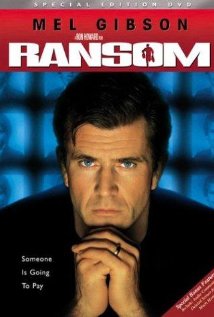
Ransom (1996), directed by Ron Howard

ransom posterOne of my sons once ran away from home. I do not recall what precipitated it, but I do remember the panic that my wife and I felt when we could not locate him. We searched the house, called neighbors, and offered a prayer. After an agonizing hour, we finally did find him in the backyard, and we both breathed a great sigh of relief.

I recalled that very stressful day as I watched the opening scenes of Ransom, a tense thriller about the kidnapping of a young boy. The moment when parents discover their child is missing is gut-wrenching; and while parents may utter comforting words to one another at a time of crisis, inwardly they fear the worst.

Tom Mullen, a successful owner of a new and growing airline, has his admirers and his critics, some of whom are jealous of his wealth and social standing. He is an obvious target for unsavory types who want his money; and on the day of a student science fair in Central Park in New York, they kidnap his son as he wanders through the crowds.

Soon the kidnappers call and demand a ransom of two million dollars and tell the Mullens not to involve the police or FBI. Here is their dilemma. What is the best way to insure that their son returns home safe and sound? The Mullens decide to inform the FBI, but they are prepared to deliver the ransom to the kidnappers. Agent Lonnie Hawkins approves of Tom’s approach to getting back his son, mentioning to him that from a statistical perspective the odds of getting him back alive are increased if he simply pays the ransom.

However, after one bungled attempt to pay the kidnappers, Tom has an epiphany about the kidnappers, and concludes that his son will not return alive even if the ransom is paid. Tom then does something surprising. He goes on TV and announces that he will not pay the ransom but will instead offer a bounty of two million dollars for information leading to the death or arrest of the kidnapper.

In the Talmud there is direction for coming to a decision in a complicated situation where the outcome is unclear. The Talmud tells us that when there is a choice between a doubt and a certainty, choose the certainty, or at least the solution that from a statistical perspective is more likely to achieve the desired results. Of course, one Talmudic aphorism does not wisdom make and the intelligent person considers other pieces of wisdom as well.

The Ethics of the Fathers encourages us to be deliberate in judgment. We should not rush to rash decisions. Moreover, the Sages tell us not to act as a judge alone if at all possible. Try to glean the opinions of others to make better decisions. At the end of the day, making life and death decisions requires great knowledge and wide life experience and it cannot be reduced to one set of givens or another. Life’s tests are often complex and there are no easy answers.

Ransom offers one idiosyncratic approach to a terrible dilemma, but there are a wide range of possible responses to a life and death scenario. Only hindsight will reveal if one has made the perfect decision in a situation fraught with peril. For the present, our Sages recommend that we gather knowledge, consult with others, look at our options, weigh them carefully, and consider who the players are. With the best input, the outcomes will be acceptable even though they may not be perfect.

Purchase this movie from Amazon.com.