Category Archives: Crime

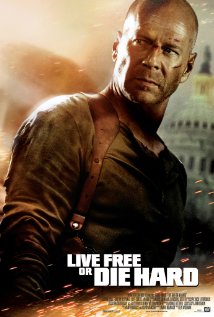
Live Free or Die Hard (2007), directed by Len Wiseman

mv5bndqxmde1otg4nv5bml5banbnxkftztcwmtmzotqzmw-_v1_sy317_cr00214317_The computer teacher, the techie, is often the most powerful member of the teaching staff in a high school. He controls the keys to the kingdom of the Internet. He can enable teachers and students to enter the portals of Google, Wikipedia, and a variety of social networks. He can expand their worlds.

As a school principal for many years, I observed the transformation of the school office via computer applications. Instead of two or three secretaries, we eventually needed only one. Instead of dictating speeches and correspondence through a Dictaphone machine, we now wrote and corrected our own material using Microsoft Word. Furthermore, we mostly used the more convenient and speedy electronic mail rather than snail mail, which was slower and used so much paper. Currently, when I have to inform my parents and students in Israel of school news and changes in class schedules and syllabi, we use email and social media outlets, not letters or phone calls.

The computer guru, in truth, can be a beacon of light bringing wisdom and enlightenment to the world, but he can also be a sinister force for evil if he uses the computer to lord over others and take advantage of them. In truth, the computer can be a powerful means to control and shape politics and economics in a destructive way. Such is the premise of Live Free or Die Hard, part of the Die Hard series of movies starring Bruce Willis. In it, a computer genius, Thomas Gabriel, designs a plan to create worldwide chaos so that he can profit from the ensuing panic and destruction. Can he be stopped in time is the classic question in this formulaic but exceptional action-packed thriller. Gabriel begins by sabotaging the nation’s infrastructure. Traffic signals malfunction, trains and planes come to a halt, the stock market closes, and the financial systems of the nation are breached. He then launches a plan to take out the nation’s power grid. Gabriel is able to do this because, as a former national security director responsible for building the security systems, he knows the systems inside and out, including all its vulnerabilities.

Why is he so hell-bent on causing so much human damage through computer manipulations?  The back story informs us that many years earlier he attempted to interrupt a Joint Chief of Staffs meeting to share his professional expertise and to point out weaknesses in the nation’s security system using only his laptop. At the time, he was rebuked and publically humiliated. As a result, he now wants to show all those who mocked him that he truly does have the power to control events and they do not. He wants money and he wants revenge.

Watching this film reminded me of the many people I have observed in positions of power. The best of such people work selflessly for the community with no personal agenda. The worst see the possession of power as an opportunity for payback, to control, and to intimidate. It can be very scary for one who falls within their orbit.

The Talmud tells us in many places that the possession of power brings with it responsibilities. The classic example is King David. He does not seek kingship. Rather it is thrust upon him, and he struggles to leave a positive legacy. He is not perfect, but he tries to be loyal to God and beneficent to his subjects. All he wants is for his people to actualize their spiritual potential, to be all they can be. David understands that power may corrupt, and that it is wise to temper power with an abiding sense of community responsibility. Power is neutral. It is our job to harness it for good.
Purchase this movie from Amazon.com.

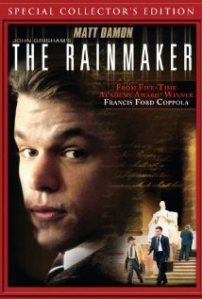
The Rainmaker (1997), directed by Francis Ford Coppola

rainmaker-posterA friend of mine has been studying for the actuarial examinations for the past several years, but without success in passing them. He has hired private tutors to help him, taken online courses, and devotes an hour daily to working on practice tests; but the examination still eludes him. He is a very intelligent young man, a National Merit Scholar in Math, but his paycheck is small without the credential of Enrolled Actuary. Presently, he works for a pension fund company which hired him with the hope that he will soon pass the test that will qualify him for more responsibility in the office and a bigger salary. In the interim, his keen analysis of data and company files has enabled his company to save millions of dollars because of discoveries he has made in the accounting processes of his firm, even though he lacks an official actuarial credential.

There is a character in Francis Ford Coppola’s exceptional legal drama, The Rainmaker, who mimics what happened to my friend. Deck Shifflet is a paralegal who has failed the bar exam six times, but he is a master at locating critical information about insurance companies and their economically driven claims policies. His resourcefulness enables him to get hired by law firms who take advantage of his knowledge at a fraction of the cost of a full-fledged attorney.

The Rainmaker revolves around the case of a middle-aged couple, Dot and Buddy Black, who file suit against an insurance company, Great Benefit, which denied insurance coverage for a bone marrow transplant for their 22-year old son Donny Ray, dying of leukemia. In spite of religiously paying their premiums for many years, they are victimized by small print in the insurance contract which precludes the company paying for aggressive procedures to cure their son. Moreover, Great Benefit has a corporate policy of denying all claims when they are first presented. It is only the customers who press on despite initial rejection of their claim who receive any compensation at all.

Rudy Baylor, a young attorney representing the Blacks against the high-powered lawyers for Great Benefit, has just passed the Tennessee bar exam; but he has never before argued a case in front of a judge and jury. It is a daunting task for a rookie attorney, but he has a secret weapon in Deck Shifflet. When all seems lost, it is Deck who repeatedly comes up with an innovative strategy that potentially can win the case, or locate a crucial witness who has long since dropped out of sight.

The Ethics of the Fathers tells us that the wise person learns from every man. Deck in professional terms is a loser, but he possesses the street smarts needed to be successful in the sinister world of insurance fraud. Deck reminds us that the possession of a credential, a degree or a license, does not guarantee wisdom, insight, or financial success.

Rudy recognizes Deck’s value and partners with him in his law practice. It is a partnership founded on genuine friendship, mutual trust, and respect. Each one relies on the other for expertise in the area where they are weak. Rudy’s sincerity and humility impress the jury, but it is Deck’s resourceful research and knowledge of human nature that buttress Rudy’s legal arguments before the jury.

Our Sages teach us that we should never belittle any man for every man has his hour of glory, his moment in the sun. The synergy of Rudy and Deck remind us that every person has something to contribute to the greater good regardless of pedigree, regardless of intellectual or social background. No one should be considered insignificant.

Purchase this movie from Amazon.com.

J. Edgar (2011), directed by Clint Eastwood

I have a friend, or rather I had a friend, who was very accomplished, bright, articulate, and the energy behind many worthwhile community projects. But there was a problem. In spite of his many achievements, he was disliked by many people because he was always critical of those around him who did not meet his expectations, who in his view did not meet his high professional standards.

Moreover, he regularly made negative comments about other people and made critical comments to me as well. Although I felt he clearly was alienating everyone, I did not feel he was ready to hear my reproof and so I kept my silence. When my personal schedule changed making it impossible for me to see him on a regular basis, I felt relieved to be out of his orbit.  Finally I would have a day free of criticism and negativity. My friend was a success in many ways, but no one liked him. His constant criticism alienated even those who admired his talents and his community accomplishments.

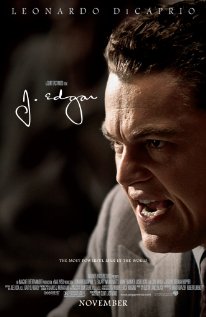
I thought of him as I watched J. Edgar, a biopic of J. Edgar Hoover, the long time director of the FBI, a man who did a great deal of good for the country by introducing scientific methodology into the crime solving process, but whose legacy was tarnished by his cold and harsh persona which distanced even those who admired his professional achievements. J. Edgar never realized that people do not like to be reminded daily of their imperfections and where they fall short. He may have spoken his mind, but his words were like arrows that left others bleeding.

The film begins with J. Edgar telling his story to a writer in an attempt to set the historical record straight about his life and deeds. Told in a series of flashbacks, the movie is fascinating in its analysis of historical events such as the capture of celebrated criminals like John Dillinger and in revealing the painstaking scientific methodology that enabled the FBI to track down Bruno Hauptmann, the kidnapper and murderer of the Lindbergh baby. The film’s attention to period detail and its overall verisimilitude makes you feel that you are witnessing history.

What emerges from the narrative, however, are not only the solid accomplishments of the Bureau but J.Edgar’s ubiquitous critical tone towards almost everyone. Even when FBI agent Melvin Purvis captures  John Dillinger, the nation’s most wanted criminal, J. Edgar finds fault with him and wants to reassign him to a desk job. In the end, J. Edgar has no friends; only one or two people remain loyal to him because of their long-standing association with him, not because they love him.

J. Edgar is alone at the end of this life because he fails to see the good in people around him. The Ethics of the Fathers tells us that every person is presumed to be of good character unless there is hard evidence to the contrary. That is the bedrock of a civilized society which depends on trust and good will among its citizens. J. Edgar, however, looked for the dirt in others, not the diamonds.

Moreover, the Talmud tells us that God is pleased with man when men behave pleasantly towards one another. Kindness lubricates society. It makes people want to share with others and help others less fortunate. It places the emphasis on the good of the community, not on self-promotion even when it benefits the community. Sadly, J. Edgar gets lost in his own notoriety and it diminishes his reputation. His story reminds us to focus on catching people doing something right and sharing one’s achievements with all those who contributed to the successful completion of an enterprise. In this way, we can leave an enduring and positive legacy.

Purchase this movie from Amazon.com.

A Bronx Tale (1993), directed by Robert DeNiro

When I served as principal of Yeshiva High School of Atlanta, I was always interested in discovering ways to become a better principal. One influential book I read was about Frank Boyden, who, for over 60 years, was the headmaster of Deerfield Academy, a prestigious private high school in New England. The essential idea behind his supervisory style is MBWA, management by wandering around. This meant that a principal should not squirrel himself in his office, but rather be a ubiquitous presence in the hallways and classrooms of the school. A sure path to administrative mediocrity is to isolate oneself from his students. A token of his total involvement with his pupils was his placement of his desk in the corridors of the school. He wanted to be visible to his students. Boyden’s story was inspiring, and for a brief time I also situated my desk in the hallway to be more available to my students.

The memory of this management approach resurrected itself as I watched A Bronx Tale, a profanity-laced coming of age story of growing up in a mobster-infested neighborhood of the Bronx in the 1960’s.

Calogero, a young boy with Sicilian roots, is raised in a loving and ethically focused home by his hard working parents, but he is entranced by the charisma of the local Mafia boss, Sonny. For a number of reasons, Calogero, later called “C,” sees Sonny as his surrogate father and begins to emulate his ways, and Sonny views C as the son he never had.

In one telling encounter, Sonny reveals to C that he learned his management style from Machiavelli, the celebrated Italian author of The Prince, a wise and ruthless treatise on how to gain and keep political power. Machiavelli always wanted to be close to his enemies to prevent their plots against him. His ubiquitous presence, or as Sonny terms it, his “availability,” placed him in the best position to control events around him. When C asks him whether it is better to be loved or feared, Sonny tells him it is better to be feared, for ultimately that is where the power is.

What does this have to do with supervising a school or management in general? In managing any enterprise, those in management positions sometimes are compelled to assert their authority and tell people things they do not want to hear, to be the bearer of ill tidings. But that is what a supervisor occasionally must do. It is not pleasant, but it must be done. Although we want people to love us, this cannot always be.

The Torah tells us that the mourning period for Aaron was longer than for Moses because the people loved Aaron more. He loved peace and pursued peace. In contrast, Moses was the law giver, the one who gave rebuke and correction to the people. He was respected but not necessarily loved.

The message of the Torah is love others, but to know that there are times when fear and respect are called for. Nowhere is this more relevant than when we function as parents. We want our kids to love us, but we have to strike a balance between love and fear. That is why the Torah expresses the commandment of honoring parents twice, to manifest the balanced way we have to parent.

A Bronx Tale, grounded in the violent and crime ridden streets of New York, obliquely echoes the reality of parenting with different paradigms and, more directly, the reality of successfully managing any important enterprise with a blend of love and authority.

Purchase this movie from Amazon.com.

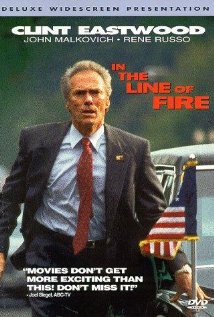
In the Line of Fire (1993), directed by Wolfgang Petersen

When I was going through a number of professional challenges many years ago, I questioned the motives of those who were undermining my position as Head of School. I aired my feelings in front of a small group of people, and I regretted it soon after. My critical comments did not improve things; in fact, they made me feel smaller. I had spoken about somebody negatively and it gnawed at me. The full realization of what I had done hit me many years later. The person to whom I attributed these base motives was no longer living in the city and our professional paths were totally different. In time, I forgot about my offensive remark; but, strangely, about 20 years later, as I was reciting the confessional of Yom Kippur, my offensive behavior of many years ago surfaced in my mind. I resolved to see if I could locate the person I maligned and ask for his forgiveness. Fortunately, I was able to contact him and ask for his forgiveness, which he readily granted. As often occurs, he did not even remember the incident which had been haunting me and was gracious towards me throughout the conversation.

My motive in finding him was to do teshuva, to repent. In Jewish tradition this means to stop the offensive behavior, ask for forgiveness from the injured party, and resolve not to commit the sin again. The ideal setting for teshuva would require you to be in exactly the same place as before, and choose to do the right thing. Instead of succumbing to ego and personal hurt, you would respond differently and not make the ethical mistake that you did in the past. If the exact same situation did not present itself, then you would still follow essentially the same protocol of repentance.

In the Line of Fire is an action thriller; but at its core, it is a narrative of repentance. Frank Harrigan, a veteran Secret Service agent, is haunted by his failure to protect President Kennedy from assassination. He continually relives the incident in his mind and questions whether he did his best to guard the president from Oswald’s fatal bullet. Did he not protect him adequately because he feared for his own life? He wonders: “I don’t know why I didn’t react. If only I reacted, I could have taken that shot. That would have been alright with me.” Here lies the crux of the film: Frank is given an opportunity to protect another president from a threat to his life, and to redeem himself. He has a chance to do teshuva, to repent, in the ideal sense by facing the same challenge, but now he can make the right decision that will enable him to emerge whole again.

Things, however, are different now. He is older and wiser but physically he is weaker. He pants and sweats as he runs after the killer, and we wonder whether he possesses the physical stamina to protect the president. The climax of the film takes place in a large hotel where the president is scheduled to speak. Frank has to locate the killer and neutralize him or stand between him and the president and take the bullet intended for the president.

In the Yom Kippur liturgy, we ask for forgiveness for the sin we might not have remembered. Frank Harrigan’s story reminds us to remember the mistakes of the past, and to try to find a way to correct them even many years later. Confronting the past in this way allows us the freedom to move forward, knowing that we have done our best. The ghosts of the past will then no longer haunt us.

Purchase this movie from Amazon.com


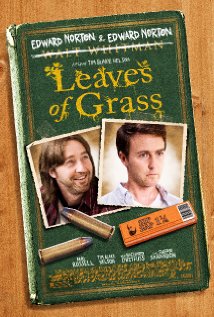
Leaves of Grass (2010), directed by Tim Blake Nelson

There was a time when “college dropout” was a pejorative term, but no more. Think Bill Gates or Steve Jobs. But as a teenager in the 50s, conventional wisdom was that getting a college degree was a prerequisite for success in life. Now many years later, I have a different perspective. While there is much to say about the positives of college, there are also negatives. I understand that it is a potentially corrupting environment, that it is filled with its own intellectual biases, and that the possession of a college degree does not guarantee success in life.

All this floated through my mind as I watched Leaves of Grass, the story of two twin brothers, one a Classics professor at Brown University, the other the grower of high grade marijuana in an elaborate and sophisticated hydroponics warehouse. Two bright children, same parents, yet radically different approaches to life. Consider Jacob and Esau in broad brushstrokes.

In the opening scene, Bill Kincaid is lecturing about the perfect world of the Greek philosophers, but he concludes by noting that, in spite of their desire for perfection, they and we still live in an imperfect world. All the brains in the world do not necessarily create a happy or moral universe. The Talmud echoes this when it states that the good deed is superior to the study of holy text. Good actions supersede intellectual accomplishments.

The plot thickens when Brady Kincaid tricks his twin brother into returning to their hometown. His motive: to use him as his double to create an airtight alibi for his own nefarious plans. Complications ensue, and the unpredictability of life asserts itself in a series of surprising, improbable, and violent  events, which on a deeper level reflect the dissonance between the academic world of theory and the real world in which we live.

To underscore this tension between theory and reality, Brady describes his view of God to his friend Bolger. He explains that man and God operate on two parallel lines, always following one another but never intersecting. In the end, man’s quest for God is neither linear nor necessarily satisfying.

This conflict is highlighted when Bill meets Janet, a poet and high school English teacher. Enamored with her, he shares his approach to life, which is grounded in the academic virtues of study, order, and reason. She confides to Bill that she entertained the possibility of teaching college students but found them too close-minded, just the opposite of what our own conventional wisdom would say, and contrary to Bill’s perception of college students. For Bill, this is a cathartic insight as he tries to navigate both his and Brady’s world.

These philosophical understandings are mirrored in the Ethics of the Fathers, a revered piece of Jewish wisdom literature, which says that it is not in the power of man to understand the inscrutable universe, to explain, for example, the peace of the wicked or the suffering of the righteous. Finite man cannot comprehend the infinite God. All he can do is to follow the parallel line of God, as it were, and do one’s best in an imperfect universe.

This philosophical reconciliation with man’s imperfection is signaled by the closing image of Bill and Janet, relaxing on beach chairs and holding hands in the rain. Rain which frightened him as a child now is both calming and restorative. Bill now experientially knows that life does not always provide answers, and that our human task is to persevere in the face of ambiguity.

Purchase this movie from Amazon.com.