Category Archives: Drama

LIke Father, Like Son (2013), directed by Hirokazu Koreeda

like father like sonIn 2007, Rabbi Aharon Lichtenstein, of blessed memory, gave a talk to students reflecting on his career path in Jewish education. At the time, he was one of the heads of a prominent yeshiva in Israel. However, his intellectual journey included stops at Harvard University where he earned a doctorate in English literature and Yeshiva University where he was a student of Rabbi Joseph Soloveitchik, one of the great Torah thinkers of the twentieth century.

In his talk he said that his greatest single success is, without a doubt, his family. Rabbi Lichtenstein understood that what is most important is not an academic degree or a prestigious job, but rather family, the bedrock of a meaningful life. I thought of this as I watched Like Father, Like Son, a moving story of two families whose children are switched at birth, and the consequences of that traumatic event.

Ryota Nonomiya is an ambitious, successful, and self-absorbed architect, addicted to his computer whenever he has a spare moment. He sees himself as extremely bright, talented, and possessing a solid work ethic. He rarely shows emotion, and his wife Midori and son Keita long for his attention.

On one fateful day, the hospital in which his son was born calls for a meeting with him and his wife. They learn that at birth his real son was switched with the child who presently they view as their son. The hospital acknowledges the error and seeks to place the boys with their blood parents.

Ryota and Midori soon meet with the other parents, Yukari and Yudai, people of modest means, but whose home is filled with warmth and love. After getting to know them a little better, they decide to switch children for one weekend. Ryusei, their biological son, spends a tense time in the home of Ryoto and Midori, his real parents, whose home is much more rigid than the one in which he was raised. Keita more easily adapts to the loving home of his real parents who fill the air with laughter and optimism.

The switch is extended for more weekends as both sets of parents struggle to determine what to do: keep the child they raised so far or take their blood child. The transition period is difficult since all of the parents have invested much love in their charges. Moreover, the children themselves have difficulty adjusting to the ambiance in their new homes, which are vastly different from their previous ones. What decision will be the wisest given the emotional realities?

Like Father, Like Son deals with some important parenting issues. What defines a good parent? Is it one who pushes his child to excel and gives him tangible rewards, or is it one who gives his child an abundance of love, joy, and time? Furthermore, how important is the amount of time you spend with your children?

Jewish tradition has an instructive approach on what it means to be a parent. The parent’s mission is to educate the child, not just to bring him physically into the world. The ancient Midrash tells us “he who brings up a child is to be called its father, not he who gave birth.” Parenting, therefore, is both a physical and emotional task, and the wise parent has to connect on both levels.

In a sense, the parent is God’s representative on earth, and children need to see parents, like the Divine, as symbols of authority and symbols of love. In the liturgy of the Jew, God is often referred to as “our Father, our King.” What this appellation means is that we relate to God as a King upon whom we are totally dependent, but we also relate to God as the loving father, who sticks with us even when we err. Like Father, Like Son reminds us of the complex nature of parenting, which beckons us not only to instruct but to unconditionally love our children.

Purchase this movie from Amazon.com.

Changing Lanes (2002), directed by Roger Michell

changing lanes posterWhen I call up people to get information I need, the conversation begins with this question: do you have time to talk now? If the answer is no, I say I will call later.

I am very sensitive to time issues because I value time. I count my minutes and struggle to make the most of whatever time is available. Inwardly, I am upset when I am involved in a conversation that goes nowhere and that simply keeps recycling the same stuff.

The value of time is immense and can sometimes make a profound difference in outcomes. Such is the situation in the tense thriller Changing Lanes, which considers the calamitous results of being late when an important matter needs to be resolved. Minutes can make the difference between success and failure at business and in life.

Gavin Banek is a successful lawyer. His agenda for the day is to go to court to file a power of appointment showing that a wealthy man on the verge of death assigned the administration of his charitable foundation to Banek’s law firm. The man’s daughter is contesting the appointment, arguing that her father did not know what he was doing when he signed the papers Banek gave him.

Across town Doyle Gipson is also on his way to court. His agenda: to gain custody of his children and prevent his wife from moving to Oregon with his kids. Banek and Gipson get into a fender bender on the FDR Drive in New York, and both are delayed from arriving at their destinations. In a rush Banek offers Gipson a blank signed check to pay for damages; he does not want to take the time to fill out a police report and insurance claim.

Gipson, a recovering alcoholic, wants to play by the book and does not accept the check. He wants “to do the right thing,” but Banek does not let him. Instead, he leaves the scene of the accident, with Gipson stranded with a flat tire.

When Gipson arrives at court twenty minutes late, he discovers that the judge has already ruled against him in the case. Failure to appear on time has devastating consequences for him and for his relationship with his family.

When Banek arrives in court, also late, he realizes he dropped the critical power of appointment document and he guesses that Gipson may have it. Thus, a scenario is set up where not being on time changes the destinies of both men. These basically good men are tested by a host of adverse circumstances and allow anger to drive them to outrageous acts of revenge.

Changing Lanes is a film with many messages. It reminds us not to let anger dominate our responses to provocations. Once angry, we lose control over outcomes. Furthermore, it reminds us of how important it is to keep our time commitments, for this affects not only our lives but the lives of others as well. When Banek offers to pay Gipson money to make things right, Gipson excoriates him: “Money. You think I want money? What I want is my morning back. I need you to give my time back to me. Can you give me back my time? Can you give my time back to me?”

The film reminds us that although people make terrible mistakes, reconciliation and forgiveness are still possible. In many cases, errors can be rectified. Ill will can turn into friendship and good will.

Jewish tradition is very clear on matters of repentance. If a person injures another either physically, financially, or emotionally, there is a road back. All he has to do is acknowledge his mistake, resolve not to do it again, and ask the injured party for forgiveness. In a mood of calm thoughtfulness, bridges of peace can be built over the most raging of rivers.

Purchase this movie from Amazon.com.


American Sniper (2014), directed by Clint Eastwood

aamerican sniper posterThe ability to balance one’s professional role with one’s family responsibilities is one of the core issues depicted in American Sniper, an unnerving film about US Navy Seal sniper Chris Kyle, who was credited with 160 kills, more than any other sniper in history. His success as a sniper, however, is not simply achieved. To protect a fellow soldier, he may have to kill a woman or child. He may have to pull the trigger when he has a doubt about the intentions of his target. Is the target on the phone talking to his girlfriend or is he giving instructions to a terrorist poised to shoot an American soldier? There is moral ambiguity, and this creates great stress.

When Chris is a child, his father lectures him about the existence of evil people in the world, and his words resonate when Chris watches the 9/11 Twin Tower attacks on television. It motivates him to want to do something to protect America. Chris visits a US Navy recruiting station and decides to enroll in the SEAL program, which involves a rigorous training regimen. The training program includes learning how to be a sniper, at which Chris excels because of his early hunting experiences with his father.

During this training period, he meets Taya with whom he falls in love. They marry, but on their wedding day receive word that he will be deployed to Iraq. It is a mission that excites him, for it will give a real chance to serve his country.

When he leaves for Iraq, Taya is pregnant with their first child. When they talk by phone, they share their longing for one another, but Kyle does not talk about what he does in the military. Moreover, he does not want her to know about the atrocities he witnesses in Iraq.

Possessing a deep commitment to serve his country, Kyle serves four tours of duty, becoming a legend as the most successful sniper in American history. As time passes, his zeal for battle service increases. As his passion to protect his comrades in arms grows, he becomes more and more disconnected from family until one day Taya rebukes him: “I need you to be human again. I need you here.”

Kyle is challenged to find meaning to the normal flow of everyday life, away from the threatening battles of Iraq. Transitioning from a sniper into a normal husband and father is not easy. American Sniper reminds us that a healthy life needs to be a life of balance between one’s professional goals and the demands of raising a family. It is an echo of what the great medieval sage, Maimonides, said many years ago when he spoke about pursuing the golden mean and avoiding extremes.

A Torah teacher of mine was a master at balancing his myriad responsibilities as a graduate instructor of complex Talmud texts and as a father of six children. When I visited him in his home in the 1960s, I noticed that on his mantelpiece he had photos of his kids wearing Little League baseball uniforms. It was the first and only time that I witnessed a Torah teacher whose children were attired in such dress. When I asked one of his sons many years later why these pictures occupied such a prominent place in his home, he told me “my father wanted to keep us normal.” His father and mother valued scholarship, but they valued good character more, which is often nurtured on the ball field through good sportsmanship and developing solid interpersonal relationships.

Achieving balance in life does not mean giving equal time and energy to one’s work and family. Rather, achieving balance requires us to look at how we prioritize our tasks, and, in a nuanced way, navigate the many challenges we face professionally and personally. American Sniper encourages us to achieve balance in life by putting family first.

Purchase this movie from Amazon.com.

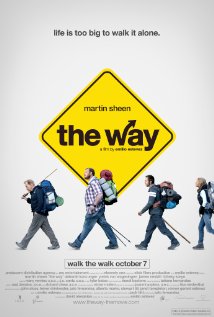
The Way (2010), directed by Emilio Estevez

way posterThe son of a good friend of mine announced to his family that he was not going to college. His parents, both professionals, were disturbed and appalled by their son’s decision but could not do anything about it. They, therefore, accepted it grudgingly and moved on with their lives. Many years later, after their son became wildly successful in business, they understood that to be successful every child does not have to attend university. Some may profit more from the school of life than a traditional school.

The conflict between how parents and children view higher education is at the heart of The Way, the picturesque narrative of the journey Thomas Avery, an American ophthalmologist, takes to pay homage to his dead son, Daniel, who perished in an accident on the Catholic pilgrimage road to the Cathedral of Santiago de Compostela in rural Spain.

At the outset, Thomas travels abroad to identify and claim the remains of this son. Once there, he decides to take the same walk that his son attempted, carrying with him Daniel’s ashes, which he sprinkles at various signposts along his journey. While walking on the trail, Thomas meets three pilgrims, each of whom has a specific reason for making the pilgrimage. Their reason is not to find spiritual meaning in life, but to accomplish certain goals. One wants to lose weight. Another wants to quit smoking, and another, a writer, wants to overcome “writer’s block.”

As they walk from place to place, Thomas and his newfound friends experience a number of challenges which bring them closer together as friends and makes them more empathetic to the unspoken personal issues each one is dealing with on their journey. When the group finally arrives at Santiago de Compostela, they discover for themselves and reveal to each other the real reasons why they joined the pilgrimage. Thomas, whose story is the central one, now understands the words that his son said to him before leaving home to explore the world.

As Thomas drove his son to the airport, he questions why Daniel is leaving. With typical parental concern, he reminds Daniel that he is choosing a life that may prevent him from succeeding in a professional career, especially since Daniel has told him that he does not plan to finish his doctoral studies at the university. Daniel responds: “You don’t choose a life, dad. You live one.”

Daniel reminds his father that Margaret Mead did not become a famous authority in primitive cultures only by studying about them. She actually went and lived among them. She talked with them, breathed the same air, and shared experiences with them. It was that first-hand contact with the locals that gave her an understanding that transcended what she learned in books.

Jewish tradition places great value on learning from life, beyond what is learned in books. There is a commandment in the Bible to stand up before the grey-haired man, before the senior citizen, even if he is unlearned. Why? Because, say our Sages, life itself is the great teacher and the fact that a man has survived the ages and lived to be an old man is something that we revere, irrespective of how wise he may be. Certainly the man who gains wisdom through books is to be respected whether he is old or young. But the man of wide life experience also is worthy of our respect because he has studied the book of life and found it full of intellectual, spiritual, and emotional treasures.

The Way is a film about one man’s journey to self-understanding, but his personal journey is a metaphor for the journey of all men who seek to understand life. The Way reminds us that knowledge of self is achieved not just by conventional study of texts, but by learning from our idiosyncratic life experiences.

Purchase this movie from Amazon.com.

The Railway Man (2013), directed by Jonathan Teplitsky

railway man posterA friend once told me when he was going through some difficult times that his wife counseled him never to let someone live rent-free in his head. In other words, if you have issues with someone, resolve the issue and do not allow it to weigh you down or preoccupy your thoughts. Preoccupation with a negative experience or negative person can prevent you from accomplishing your goals. It is wise to let go of the past so you can have a future.

This essentially is the dramatic crux of The Railway Man, the story of Eric Lomax, a British officer captured by the Japanese in World War II. Sent to a prisoner-of-war camp, he is brutally tortured for building a radio receiver out of spare parts. Although his only goal was to hear news about the progress of the war that might lift his spirits and those of other prisoners, his captors view him as a spy and punish him savagely. The scars of that torture remain with him even after the war, giving him nightmares and horrific memories that disturb his emotional equilibrium.

For many years, Lomax suffers psychologically because of his wartime torture. It is only after his marriage to Patti, a calming influence in his life, that he decides to confront the demons of the past so that he can have a normal life, free of frightening dreams that take him back to his Japanese incarceration.

Eric discovers that the Japanese secret police officer, Takeshi Nagase, who brutalized him escaped prosecution as a war criminal and now works as a tour guide at the site of the old POW camp. Lomax travels there and confronts his old nemesis, threatening to kill him. But Eric is essentially a decent man unable to kill an unarmed man. His humanity touches his former nemesis, who reveals his sincere remorse for his actions so many years before. He reminds Eric that he did what he did because he thought his country’s survival was at stake. Only after the war did he see the objective cruelty of his behavior.

The encounter with Eric paves the way for reconciliation between villain and victim. Their portentous meeting is cathartic for Eric and allows him to move beyond the memory of his past suffering into a happier, more life-affirming existence. After their meeting, he writes to Takeshi: “Dear Mr. Nagase, the war has been over for many years. I have suffered much, but I know you have suffered, too. And you have been most courageous, and brave in working for reconciliation. While I cannot forget what happened in Kanchanaburi, I assure you of my total forgiveness. Sometime the hating has to stop.”

What enables him to forgive Takeshi is Eric’s deep love for his wife, Patti, who truly wants Eric to move beyond his past suffering into a happy future. His abiding affection for her motivates him to transcend painful yesterdays and focus on the present. Patti never pushes him to confront his past; rather she gently and lovingly suggests that he needs to confront the past so that they can build a happy marriage, free of painful memories. She is the helpful, supportive presence that enables him to move forward with his life.

When Adam marries Eve, the Bible uses a strange phrase to describe Eve’s relationship to Adam. The Hebrew phrase is ezer k’negdo, which literally means “she is a helpmate in opposition to him.” It is a contradictory and confusing description. The Sages explain the phrase as follows: if a man is worthy, then his wife will help him achieve his goals in life. If he is not, then she will work against him and prevent him from accomplishing his life’s goals.

Eric is a worthy man, blessed with Patti as his wife, for she enables him to confront former times and become emotionally healthy for the balance of his life. Patti does not judge him or criticize him. She only seeks to help him, and she does this by giving him the psychic room to resolve the issue on his own. The Railway Man is a testament to the resilient spirit of man, which can often be attributed to the resilient and wise spirit of his wife.

Purchase this movie from Amazon.com.

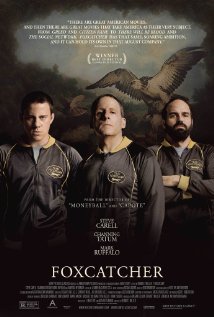
Foxcatcher (2014), directed by Bennett Miller

foxcatcher posterInherited wealth can be good or bad. If it enables a person to do many good deeds that are beneficial to society, that is great. But if it isolates the possessor of such wealth and makes him immune to the intrusions of society, if it allows and encourages him to live in his bubble divorced from everyday realities, then it can very bad.

I have an acquaintance who is independently wealthy. He did not earn any of his wealth. His parents support him and his family totally. They bought his home for him and he does not work. He spends his day planning to begin an Internet business and he has been planning to do this for the past five years, all the years I have known him. I occasionally wonder what motivates him to get up every day.

The sinister side of possessing lots of money is depicted in Foxcatcher, the dark and brooding story about John E. du Pont, heir to the du Pont family fortune, who decides to sponsor Mark Schultz, an Olympic wresting champion for an appearance at the Seoul Olympics.

Mark and his older brother Dave were both gold medal winners, but Dave is married with kids and he has no plans to participate in the upcoming Olympics in Seoul. Mark, however, is single and, outside of wrestling, has little other interests. He is contacted by John E. du Pont, a well-known philanthropist and wresting aficionado, who would like Mark to train at his private wresting training facility, Foxcatcher Farm, built on the du Pont estate in a suburb of western Philadelphia. Mark moves there and a friendship of sorts develops between him and du Pont. Strangely, du Pont introduces Mark to the use of cocaine, downplaying its negative effects.

Another oddity. When Du Pont tells Mark that he regards him as a true friend, he tells him he can call him by his familiar name: “My friends call me Eagle. Or Golden Eagle. Either of those would work.” Clearly, du Pont has grandiose visions of himself, unlike Mark who is a humble, unprepossessing figure.

When Mark and his teammates take a morning off, du Pont is incensed and he verbally assaults Mark, devastating him emotionally. Du Pont then calls Dave Schultz , a proven winner and effective coach, and convinces him to join the team at Foxcatcher. Upon his arrival, Dave sees that his brother has lost his self-esteem, is emotionally distressed, and is out of shape. In spite of Mark’s lack of conditioning, Dave works with him to win a match that secures a berth on the Olympic team. However, in Seoul he loses his matches.

Mark ultimately leaves Foxcatcher, but Dave stays on as du Pont’s assistant coach working with new wrestling talent. Du Pont is jealous of Dave’s natural rapport with the new recruits and is unsettled by Dave’s independence. Du Pont’s isolation eventually leads him to behaviors that are not mollified by interactions with the real world. Du Pont is a loner and that ultimately leads to a tragic denouement.

The Ethics of the Fathers states that jealousy and the desire for fame drive a man out of the world. Moreover, the Sages tell us not to separate ourselves from the community. John du Pont fails to understand these basic truths. Lacking self-esteem, he lords over others, always desirous of demonstrating his superiority. In truth, others resent him, finding him out of touch with the real world and focused only on creating an image of himself as a leader of men. Indeed, no one regards him as a leader. They simply follow his wishes because he pays their salaries.

Furthermore, his inability to connect with the community-at-large in a genuinely friendly way isolates him. He has no companions to whom he can relate honestly; therefore, he essentially only converses with himself. Foxcatcher is a grim film expressing the perils of seeking fame and leading a lonely life. Much can be learned from John du Pont’s bad example.

Purchase this movie from Amazon.com.

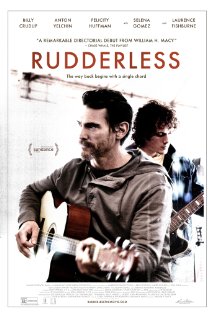
Rudderless (2014), directed by William H. Macy

rudderless posterBeing a father is complicated. I sometimes wonder when I look at my kids to what extent I was a good parent, to what extent am I responsible for who they are today. There are no easy answers. I am sure I was influential; but at the end of the day, my kids, like all kids, have free will and they make their own choices. I cannot control them. I can only give them a perspective from which to view life. I cannot determine their future actions.

This topic is at the heart of Rudderless, a thoughtful film about parent-child relationships and the extent to which parents influence and are responsible for their children’s life choices.

The film begins innocently as Josh Manning is recording his own songs on his computer in his college dorm room. His father Sam calls him after closing a big deal at his advertising firm and wants to celebrate with him, even encouraging him to cut class to meet him. Josh acquiesces. As Sam waits for his son Josh at a restaurant, he sees scenes of a campus shooting in which six students are killed. The next scene reveals a memorial wake in Josh’s home in which friends try to console both Sam and Emily, Josh’s divorced parents, over the loss of their son.

Sam is inconsolable. He is unable to continue at work and succumbs to alcoholism. The story continues two years later with Sam living on a sailboat and working as a contractor’s assistant painting houses. When he meets his ex-wife to sign papers allowing her to sell their former home, she leaves him a stack of things that belonged to Josh. At first, he is reluctant to take them since there is no storage room on boat. However, he notices some notebooks and CDs that pique his curiosity and he begins pouring over the material. He discovers songs, words and lyrics, written by Josh. The melodies and words give him a new insight into his son, and Sam teaches himself his son’s songs. Sam even performs one of them at a local “open mic” venue, which catches the attention of Quentin, a young musician who is inspired by the emotional power of the songs. Thus begins a relationship between Sam and Quentin, which morphs into the creation of Rudderless, a band that features the songs of Josh Manning.

Both Sam and Quentin are evasive about their past and this eventually strains their relationship. In one sense, Quentin becomes a surrogate son to Sam, who sincerely wants to connect with Quentin both musically and emotionally. Quentin becomes the son that Sam no longer has, and Sam wants to help him.

The story then takes a sharp unexpected turn, which compels the viewer to reevaluate everything that has gone before, and I do not want to reveal such a critical plot turnaround. Suffice it to say that the relationship between Quentin and Sam undergoes a crisis, compelling Sam to rethink his performance of his son’s music and his involvement with the band, which is growing in popularity each day.

A key issue considered in the narrative is to what extent we are responsible for our children’s actions, especially when those actions are very bad. Jewish tradition is instructive in this regard. When a Jewish boy reaches the age of thirteen, he has a Bar Mitzvah, a ceremony that marks the end of childhood and the beginning of adulthood. At this celebration, the father utters a declaration known as baruch sheptarani, which in English means “Blessed is the One who has relieved me from the punishment due to this one.” The Sages tell us that a father has the obligation to educate his son from birth until the age of thirteen. Once he reaches that age, the father is not required to educate his son. The implication is that until that age, parents can influence their child. However, after that age the child becomes more independent and less receptive to the correction of the parent. Indeed, the parent can still coach and guide, but it is more difficult to teach a child in a direct way.

The implicit message of the blessing’s recital is that parents should spend lots of time with one’s children teaching and guiding them before they reach their teenage years. Once those years arrive, parents have less influence, so they need to build up a bank account of love and respect with their children. This will make it more likely for their children to follow parental suggestions. Rudderless reminds us that we are not in control of our older children; therefore, we need to be very involved with them in their early years in order to be influential in the rest of their lives.

Purchase this movie from Amazon.com.

2001: A Space Odyssey (1968), directed by Stanley Kubrick

two thousand one posterI first saw 2001: A Space Odyssey in 1968. It was a landmark movie for me. Until then, I viewed movies primarily as entertainments that occasionally had a worthwhile message. 2001 was an intellectual, mind-expanding experience. I left the theatre fascinated and wondering what it was all about. The controversy over the film mushroomed over the years. Originally opening to mixed reviews, it became a cult favorite and thousands of people have written about it. I have my own view of the meaning of the film, which I will share with you; but in no way is my understanding of the film definitive. It just represents my thinking after viewing the film three times over the course of close to fifty years.

The movie is divided into three parts. Part One entitled “The Dawn of Man” depicts a serene African landscape populated mostly by apes who argue over rights to a waterhole. In the midst of their contention, a black rectangular monolith mysteriously emerges from the ground, and the apes view it with wonder. The next day one ape learns how to use a bone of a dead animal as a weapon, and he uses it to claim control over the waterhole. The sequence ends with the ape throwing the bone into the air and the bone morphing into a spaceship, which introduces the viewer to the second part of the film.

In this second part, we are introduced to Dr. Heywood Floyd, a scientist bound for Clavius, an outpost on the moon. Ostensibly traveling there to determine if there is an epidemic on the outpost, there is a veil of secrecy over the mission, suggesting another purpose for Dr. Floyd’s trip. Once on Clavius, Floyd and his team discover the same rectangular monolith that appeared before the apes in the previous sequence. The monolith seems to have emerged from the ground and been in existence for millions of years.

The third part of the film takes place eighteen months later as an American spaceship journeys to the planet Jupiter. Commanding the ship are mission pilots and scientists Drs. David Bowman and Frank Poole. Traveling with them are three other scientists in cryogenic hibernation, and the ship’s computer Hal 9000, who controls most of the ship’s operations. As they fly towards their destination, they discover that Hal is making errors and they struggle to determine the source of these apparent malfunctions.

They conclude that Hal is sabotaging the voyage and they attempt to deactivate him, which leads to a series of dire complications. In the process of disconnecting Hal, Bowman learns about the real purpose of the mission: to discover the origin and purpose of the monolith on the moon.

Bowman’s ship is then brought into a vortex of colored lights and designs, suggesting his transportation to an unknown location. When he arrives there, we find him in a tastefully furnished apartment in which he sees himself as an older man, and then as a dying man. As a man about to expire with his last breath, he sees the monolith at the end of his bed. He is then transformed to an embryo floating through space, which is the closing image of the film.

My summary of 2001 reflects the intellectual ambiguities embedded in the narrative. It is evident that the unexplained existence of the monolith is the image that unites the three sections of the film. In simple terms, the film glorifies science and technology, which enable the apes to become intelligent men and to harness technology in the service of man. The monolith, however, suggests the limitations of science. There are simply some things that cannot be known or understood.

Rabbi Nathan Cardozo does not talk about the monolith; but in a thought-provoking article on the intrinsic value of art, music, and natural beauty, he does comment on the limitations of science to explain the enigma of creation. He sees art as a vehicle to apprehend the unknowable, albeit in an intuitive way. He observes that science cannot give any insight into the mystery of existence, but natural beauty, the arts, and music can. He writes: “Real art does not reproduce the visible but rather reveals the invisible. Consequently, not even artists are able to explain the beauty that resides within their creations. In general, they cannot explain their art any more than a plant can explain horticulture. This failure of the rational mind to categorize and define puts man in direct confrontation with the ineffable, and warns him not to fall victim to the simplistic belief that science can give him any insight into the mystery of our existence.”

I do not think that 2001 has a religious agenda. However, hidden within the history of man from his origins as a half-man, half-ape, to a scientist probing the outer limits of the universe is the notion that man can never know the secrets of creation. The singular response to this cosmic mystery is to view the world with a sense of wonder. The closing image of the fetus in a sac observing the universe simultaneously reminds us of our limitations as human beings and of our ability to see the world anew each and every day just as a small child would view this amazing universe.

Purchase this movie from Amazon.com.


A Most Violent Year (2014), directed by J.C. Chandor

most violent yearThere have been times in my life when I wanted to respond to a provocation, but I realized that any response of mine would not solve the problem. I thought of a passage in The Ethics of the Fathers that advised me to control my response: “Who is strong? He who controls his inclination.” That is the real definition of power, being in control of one’s own emotions. Moreover, the Sages tell us “He who increases his words increases sin.” The more you talk, the greater likelihood you will say things that you will regret. All these thoughts came into my mind as I watched A Most Violent Year, the story of Abel Morales, the owner of a New York heating oil company whose integrity and self-control are tested in the crucible of city-wide violence and corruption.

Abel Morales is under pressure. His oil trucks are being hijacked, causing him to lose thousands of dollars in heating oil revenue. His drivers are assaulted and intimidated by thugs working for unknown competitors. His wife Anna encourages him to fight violence with violence, but Abel refuses to do so. At this same time, he is being investigated by the local district attorney for price fixing, tax evasion, and other nefarious practices. Adding to the pressure is a deal he has been working on for years: buying a fuel oil terminal on the East River, which will enable him to import more oil from barges and to store oil in the summer when the cost of fuel is low. Abel gives a down payment of 40% on the property with an agreement that he must close the deal in 30 days. If he fails to meet the deadline, the seller will offer the property to Abel’s competitors and keep the down payment.

As the hijackings continue, a friend suggests that Abel’s drivers carry handguns and he will provide fake permits for the weapons. Abel rejects the suggestion, fearing that any illegalities by his company will jeopardize the bank financing for the fuel oil terminal. In spite of his desire to do things legally, events transpire that threaten his company’s existence and his purchase of the terminal. Moreover, his family is the target of hoodlums who want to ruin Abel’s business.

Watching Abel trying to save his company, buy the terminal, and protect his family at the same time is a study of man in control of his emotions, always keeping his eye on his end goal and understanding that the path to that goal may be circuitous and unpredictable. In explaining his approach to adversity, he observes: “You should know that I have always taken the path that is most right. The result is never in question for me. Just what path do you take to get there, and there is always one that is most right. And that is what this is.”

There is a specific moment that captures Abel’s studied approach to dealing with calamity. It happens in a dialogue between Abel and his wife, whom he loves. She acquires a gun to protect herself and her children, but does not have a permit for the gun. Abel tells her that possession of a gun without a permit can lead to her incarceration and separation from her children. He is appalled at her ignorance of consequences, yet he controls his temper in spite of his anger. His abiding love for her and his children keep him focused and prevents him from saying anything that will permanently damage their relationship.

A Most Violent Year is not the most violent gangster film. Instead, it depicts people operating outside the law who still want to demonstrate the accouterments of civility and good behavior. Controlling one’s emotions and one’s speech are alternate ways to demonstrate power, and at times they are more powerful than using a gun.

Purchase this movie from Amazon.com.

The Count of Monte Cristo (2002), directed by Kevin Reynolds

count of mone cristo posterI had a recent conversation with a friend who told me about his mother’s six-year bout with cancer. He told me that once she had the cancer diagnosis, she led an incredibly productive life. Uncertain about the future, she lived each day to the max, accomplishing an entire range of worthwhile activities. Hearing the story reminded me that bad news or bad circumstances can be a spur to good outcomes. A lot depends on one’s perspective.

In The Count of Monte Cristo. Edmund Dantes, an unlearned sailor, is placed in prison unjustifiably for thirteen years. But it is in prison that he learns how to read and write, how to fight, and how to navigate the corridors of power. Were it not for his incarceration, his life would be blessed but unremarkable.

The story begins in 1815 when Edmond Dantès and his friend Fernand Mondego, travel to the isle of Elba to seek medical attention for their sick captain. Dantès and Mondego are chased by the British who assume that they are supporters of the exiled Napoleon Bonaparte, who is living on the island. Bonaparte comes to their rescue and gives them access to his physician. In return for his kindness, he asks Dantes to deliver a letter to a Monsieur Clarion in France, a request to which Dantes agrees.

The letter becomes the vehicle through which Dantes is betrayed by his friend Mondego, resulting in his being imprisoned and tortured in the Chateau d’If for thirteen years. While there, he surreptitiously meets another prisoner, Abbe Faria, a former priest and soldier in Napoleon’s army. Faria tutors him in literature, philosophy, economics, swordsmanship, and military strategy, eventually enabling him to blend into court society and plan an elaborate revenge.

At his death, Faria reveals the location of a vast treasure to Dantes. He encourages Dantes to use this newfound wealth for good things and not just for revenge. When Faria’s body is to be taken out of the prison for burial, Dantes creatively comes up with a clever ruse. He changes places with the corpse, which is wrapped up in a large sack and escapes from the prison. How he orchestrates his vengeance makes for a fascinating adventure, with a number of surprise plot twists along the way. The evolving perspective of Dantes shows a man bent on revenge but who, inwardly, is a religious man struggling to make sense of what has happened to him. In the end, the attitude of the priest Abbe Faria prevails in Dantes’ life.

The classic example in the Bible of someone who grows through a prison experience is Joseph. He is sold into slavery and put into prison for a crime he did not commit. He could easily have succumbed to a life focused only on revenge, but he did not because his abiding faith convinced him that a divine plan was in the making. Edmund Dantes does not see this immediately. Revenge is his primary motivation; and it is a motive that motivates him to survive, but it also poisons the way he perceives the future.

Dantes begins as a devout believer and goes through a period where he denies the presence of God in his life. His core values of faith are tested over a long period of incarceration. However, contact with Abbe Faria ultimately changes his destiny financially, emotionally, and religiously. The implicit message of Edmund Dantes’ ordeal is to overcome anger and revenge and devote your life to good. Doing good is redemptive and enables one to transcend the pain of the past.

Purchase this movie from Amazon.com.