Category Archives: Drama

Inside Man (2006), directed by Spike Lee

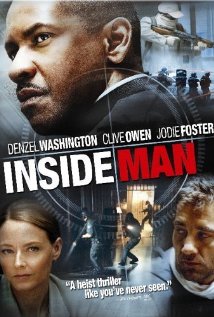
inside man posterWhen I was a school principal, one of my students was involved in a heist. It was not a bank heist but the heist of Cokes from a soda machine. To find out who was pilfering soda from the machine, one day I hid in the lunchroom after lunch was over. I soon caught the offending student with his hand in the machine pulling out a soda bottle. I expected to find a student from a poor family committing the deed, but it was the child of a wealthy family. I learned that when it comes to ferreting out people who steal, I can’t make easy assumptions about who did the deed. Moreover, I can never fully know what motivates people to act dishonestly or how the criminal mind works. This perspective on criminals came to mind as I watched Inside Man, a very clever heist movie.

I have seen many heist movies over the years, but Inside Man is perhaps the best. In truth, it is a movie about a bank robbery but no money is stolen. There are other matters afoot, and the robbery is the cover for a crime of a different sort; it a fascinating game of cat and mouse that leaves the viewer constantly wondering what is the real purpose of the heist.

The film begins innovatively. Dalton Russell speaks to the audience informing them he has just committed a bank robbery. He then explains the “who, the what, the where, the when, and the why” of it in very simplistic terms, and now all that all he has to do is describe how the robbery was done.

The robbery begins when a group dressed as painters enter a bank in the Wall Street neighborhood of Manhattan. They shut the bank’s doors and disable the bank’s security cameras before anyone realizes what is happening. Donning masks, they order the customers and employees to fall to the floor, threatening death to anyone who disobeys. They then herd the hostages into one room and tell them to undress and don painter’s suits and masks, thus making them indistinguishable from the robbers.

Detective Keith Frazier is assigned to negotiate with the robbers in a tense hostage situation. As he methodically analyzes the situation and communicates with the robbers, scenes of Frazier interviewing the hostages after the robbery intrude into the narrative. The goal of the interviews is to determine if any of the perpetrators are among the hostages.

As the robbery progresses, Dalton makes many demands of Frazier. He requests a bus, a plane, and he even asks for the answers to a riddle. It eventually becomes clear to Frazier that Dalton is merely stalling for time and is in no rush to exit the bank. When the siege of the bank finally ends and the police storm the building, the hostages run out of the bank dressed as the criminals, making it impossible for the authorities to distinguish between the good guys and the bad guys.

The denouement follows the actions of Frazier as he tries to put the pieces of the puzzle together, ultimately figuring out what actually was stolen and why. It is a fascinating trip, in which Spike Lee, the director, finds ample opportunity to upend traditional stereotypes of blacks, Jews, and Muslims, subtly reminding us that what is on the surface is not always what is inside a man’s heart.

In this sense, the title Inside Man suggests a double entendre, which is very much a part of Jewish tradition. The Ethics of the Fathers notes that we should never judge a man by what is he appears to be on the outside. Rather, judge by what is on the inside. The “inside man” is the one who really counts.

Purchase this movie from Amazon.com.

A Tale of Two Cities (1935), directed by Jack Conway

tale of two cities posterI recently had dinner with a friend who shared with me his disappointment that his son at age 37 was still unmarried and was leading a life contrary to the values with which he had been raised. I told him that his son is still on a journey. It is not yet complete and his son may yet fulfill his hopes and dreams. The important thing was never to give up for the future is unknown. Past mistakes don’t always predict tomorrow’s consequences.

A Tale of Two Cities is a story of one man’s personal redemption from sinner to saint. The Talmud tractate of Avodah Zarah (10b) observes that there are people who can earn their portion in Olam Haba, the world-to-come, in one hour, suggesting that an entire life of sin can be overcome by repenting in the final moments of one’s life. This basically is the narrative arc of the life of Sidney Carton, the hero of A Tale of Two Cities.

The film opens on the eve of the French Revolution when Lucy Manette travels to France from England to rescue her aging father, who has been a prisoner in the Bastille for many years. During the trip, she meets Charles Darney, a French aristocrat, who is sympathetic to the plight of the downtrodden French citizens.

Charles, however, is the nephew of the Marquis de St. Evremonde, an aristocrat with little regard for the wellbeing of the poor. Aware of Charles’ favorable view of the poor, the Marquis frames his nephew for treason, recognizing that Charles is a potential danger to the French aristocratic establishment because of his heretical views. The case against Darney fails, however, because of the clever defense of Sydney Carton, an attorney who drinks to excess and has led a dissolute life.

When Lucie thanks Carton for his efforts, he falls in love with her; however, he inwardly understands that her love for Darney transcends any emotional attachment to him. After Darney and Lucie marry, move to England, and have a daughter, Sydney continues to remain a loyal friend of the family.

A crisis arises when Darney is tricked into returning to France during the Reign of Terror in order to defend a friend who has been unjustly accused of sympathy for the now deposed aristocracy. In a trial full of passion and anger but bereft of logic, he is sentenced to death by guillotine because of his familial connection to the Evremondes, who are symbols of tyranny.

Carton understands the danger and devises a plan to save Darnay from the guillotine. The plan hinges on Carton switching places with Darnay, who is incarcerated in prison awaiting execution. It becomes clear that Carton is willing to sacrifice himself to save those he loves.

As the image of the guillotine fills the screen, we hear Carton uttering his last thoughts: “It’s a far, far better thing I do than I have ever done. It’s a far, far better rest I go to than I have ever known.”

Carton’s final words reflect his changed worldview. For him, life is no longer a journey, but rather a destination. He has said farewell to his wasted past and enters the next world personally redeemed.

In some ways, the last moments of his life parallel the story of Samson, the judge who, although basically a good man, led a licentious life. Recognizing his faults, Samson decides at the end of his life to sacrifice himself so that others can survive. Sidney Carton’s final moments follow this example of repentance.

Purchase this movie from Amazon.com.

Friday Night Lights (2004), directed by Peter Berg

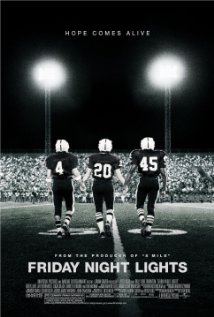
friday night lights posterMany years ago, I met a teacher from a prestigious private high school in Atlanta, who shared with me his approach to class management. He told me that he tells his students that he has only two rules: do your best and do not hurt other people. It was an “aha” moment for me, for it made me think about simplifying my teaching style. Perhaps instead of stressing compliance with rules, I would reasonably request that everyone do their best and that they not hurt other people. In specific terms, students should not prevent me from teaching or prevent other students from learning.

Once I adopted these rules, I informed my classes that the source of these rules was the Bible, which states that man is created in God’s image. If everybody is a reflection of the Divine, then everyone deserves respect. Practically speaking, this meant that students would have to listen to other students and not interrupt them, and that students would not disturb the lessons with conversation while I was teaching. Compliance with these basic rules would insure that I would have a “perfect” class. A variation of this kind of divinely-inspired discipline permeates the sports program at Permian High School in Odessa, Texas, in 1988, the setting of Friday Night Lights, the story of one tumultuous year in a high school football program.

The football season starts with promise as “Boobie” Miles, the star player runs through the opponent’s defenses with reckless abandon. But success is short-lived when Boobie sustains a season-ending injury. Coach Gary Gaines now has to rely on his quiet, less flamboyant players to win games. Chief among them are Mike Winchell, the quarterback who needs to play with consistency to win games, fullback Don Billingsley, who has a rocky relationship with his fault-finding father, third-string running back Chris Comer, who fears getting hurt, and safety Brian Chavez, who is brainy, but lacks natural football savvy.

After some initial losses, Permian begins to win regularly. The possibility of playing in the State Championship Final looms larger with each win. The team coalesces in spirit as the season progresses and makes it to the championship game facing a much more physical team from Dallas.

Down by over two touchdowns at the half, Coach Gaines gives a half-time speech for the ages, in which he defines “being perfect.” His coaching mantra has been “be perfect,” and now he explains what it means: “Being perfect is not about that scoreboard out there. It’s not about winning. It’s about you and your relationship with yourself, your family and your friends. Being perfect is about being able to look your friends in the eye and know that you didn’t let them down because you told them the truth. And that truth is you did everything you could. There wasn’t one more thing you could’ve done. Can you live in that moment as best you can, with clear eyes, and love in your heart, with joy in your heart? If you can do that gentleman – you’re perfect.” He continues: “I want you to take a moment, and I want you to look each other in the eyes. I want you to put each other in your hearts forever because forever is about to happen here in just a few minutes. Boys, my heart is full. My heart is full.” It is a speech that brings tears to my eyes every time I hear it because of its emotional power and because it resonates to my Jewish soul.

Jewish tradition also encourages us to aim for perfection. How do we define it? There is a classic Chassidic story about Zusha, a great Sage, who was weeping on his deathbed. His students asked him why he was so sad, to which he responded that when he arrives at Heaven, God will not ask him why he did not achieve as much as Moses, but rather why he did not fulfill his potential as Zusha.

The Talmud encourages us to be as great as Moses, but the reality is that we cannot be as great as he. We cannot be perfect. But we do have a responsibility to be the best that we can be given our talents and unique circumstances. Friday Night Lights reminds us to do our absolute best. A supreme effort in this world may open up the gates to the next.

Purchase this movie from Amazon.com.

Body of Lies (2008), directed by Ridley Scott

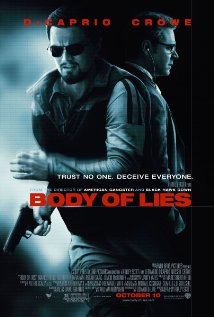
body of lies posterAs I write this review, the world is in chaos. There is civil war in Syria, ISIS is spreading terror throughout the world, the governments of Libya and Yemen are in a downward spiral, Iraq is fighting a war against jihadists, Iran is on the verge of becoming a nuclear threshold state, and the United States is no longer viewed by its historic allies as a nation that can be trusted.

A few years ago, I would never have dreamed of such a doomsday scenario. But, lo and behold, it is here and we are living the impossible dream. I share this with the reader because so much of what is happening today is alluded to in the opening minutes of the political thriller Body of Lies, a prescient story of men caught in the web of secret intelligence communities that will stop at nothing to achieve their aims.

I learned something new about the way terrorists operate from Body of Lies. Ed Hoffman, a CIA supervisor, observes that terrorists generally avoid taking advantage of technology. They do not use cell phones and computers to transmit information; they prefer to speak face to face with people and through written messages that can be destroyed easily. In the final analysis, what counts is intelligence provided by humans in the field, not necessarily computer generated information. Roger Ferris is Ed Hoffman’s man in the field, who provides him with all kinds of useful data about the bad guys. He sees things up close, subjectively, while Ed sees things from a distance, objectively.

The story opens as Ferris is searching for Al-Saleem, an Al Quaida terrorist who is orchestrating a series of suicide bombings across England and Europe. Ferris’ travels take him to a number of middle-eastern countries, including Jordan where he forms an uneasy alliance with Hani Salaam, the head of Jordanian intelligence.

Amidst many clandestine attacks and counterattacks, Ferris comes up with a plan to make contact with Al-Saleem, through staging a terrorist attack that will encourage Al-Saleem to be in touch with the terrorist entity that caused the attack. In order to do this, Ferris sets up a straw man, Omar Sadiki, an innocent architect, for whom he creates a computer profile that makes it appear as if Sadiki were the head of a terrorist cell.

The ruse works but with tragic consequences. The more Ferris labors to get valuable information that can save innocent lives, the more moral compromises he has to make in the short run; and many innocent people die in the service of the long term goal of eradicating terrorists. Ed Hoffman reminds Ferris more than once that in the world of terrorism and counterterrorism, no one is innocent. Located thousands of miles away from the morally abhorrent actions, he looks at the big picture, making decisions based only upon dispassionate calculations. For Ferris, however, every decision is personal.

Jewish tradition is mindful of the distinction between experiencing things first-hand and experiencing them from a distance. While viewing a situation from the balcony, we miss seeing the total picture. We need to be on the ground floor as well to see the complex reality.

The Sages who composed the text of the Hagadah, the text that is read at the Passover Seder, encouraged simulated first-hand experiences at the Seder table when Jews yearly recount the Egyptian slavery experience. The Seder meal is filled with tangible reminders of bondage. We are to eat simple unleavened bread and bitter herbs. The Hagadah explicitly tells us to experience the evening as if you personally went out of Egypt. It should not be a mere recital of words; rather the Seder should be a visceral reimagining of the Exodus experience.

Body of Lies reminds us that to understand the complexity of the fragmented world around us, we need to see events from two perspectives, that of the outsider and insider. Only then can we appreciate the wisdom it takes to make good decisions in a morally confusing universe.

Purchase this movie from Amazon.com.

Lone Survivor (2013), directed by Peter Berg

lone survivor posterHospitality is a big deal in Jewish law and lore. Abraham is the model of the gracious host. In the midst of a painful recuperation from circumcision, he waited outside of his tent on a hot day to welcome any passing strangers to his home where he provided them with lodging and a sumptuous feast. The Midrash says that he even interrupted his prayer to God to take care of guests. Hospitality to strangers plays a key role in the intense and violent war film Lone Survivor.

In Afghanistan, a four-man cohort of Navy SEALS, consisting of Michael Murphy, Marcus Luttrell, Matthew Axelson, and Danny Dietz, is tasked with capturing or killing a Taliban leader responsible for the deaths of over twenty Marines. The SEALS are inserted into a mountainous region and proceed to their rendezvous point. But there is a problem. They are discovered by an elderly shepherd and two young goat herders.

The men evaluate their options, which include killing the shepherds and thus preserving their mission or releasing them and aborting the mission, knowing it has been compromised. A brief but heated discussion ensues. Luttrell argues to release them: “Under the rules of engagement, we can’t touch them,” to which Axelson responds: “I understand. And I don’t care. I care about you. I care about you. I care about you.” Finally, they decide to release them and abort the mission; but, soon after, Taliban forces ambush them with terrible consequences.

Although the SEALS inflict many casualties, they are outnumbered. Moreover, because of technical problems, they cannot contact their home base to arrange an extraction, making their situation even more desperate. One by one, they succumb to injuries, but Luttrell finds temporary refuge in a local Pashton village. One of the villagers, rejecting the brutality of the Taliban, takes Luttrell into his home and sends a messenger to a nearby American air base to report Luttrell’s location. In the interim, the Taliban arrive preparing to execute Luttrell; but the villagers intervene, preventing them from killing him. What saves Luttrell’s life is the moral code of the local Afghan population, which prides itself on protecting the stranger once he enters their home.

Jewish tradition has much to say about how we should treat the stranger and how we bear responsibility for his safety. The residents of Sodom were the polar opposites of Abraham. Instead of warmly welcoming the stranger, they did everything they could to take advantage of him. The Talmud states that if the guest bed was too short, they would cut off the stranger’s legs. If the bed was too long, they would stretch him so that his body would fit. This evil approach to hospitality led to the destruction of the Sodom.

Another Biblical source relating to our treatment of the stranger is the law of the eglah arufah, the decapitated calf, which was slaughtered when an unidentified corpse was discovered outside the city limits. If that happened, the elders of the city had to convene a meeting to determine whose responsibility it should have been to take care of this stranger. There is an element of communal guilt for permitting someone to go unprotected from the city. Therefore, an atoning ritual was performed on behalf of the closest city to which the body was found. Again, the recurrent theme is to take care of the vulnerable stranger.

Lone Survivor is a riveting movie about a group of courageous soldiers who made a decision to put their lives on the line to preserve morality in a war where the enemy had no such scruples. Thankfully, Marcus Luttrell survived to tell the story, which not only depicts the brutality of war, but portrays the uncommon kindness of people who, despite potential harm, stepped forward to help the defenseless stranger.

Purchase this movie from Amazon.com.

The Miracle Worker (1962), directed by Arthur Penn

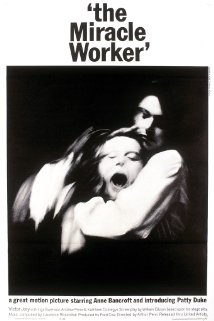
the miracle worker poster When I was in high school, I was a mediocre student. The only one who thought I was very bright was my mother. I had come from a junior high school of low achievers and was assigned to classes with mediocre students. These classes were taught by mediocre teachers and so we graduated as very average students.

Somehow I got accepted into a university with many bright students, and my fortunes changed. Hanging around smart kids made me smarter and I had an intellectual awakening. Moreover, for the first time in my life, I had many teachers who took an interest in my academic growth and who themselves were fascinating lecturers. I began to look forward to class, to learning. I began to be curious about the world. Caring teachers and a stimulating environment made all the difference.

One teacher makes all the difference in the life of Helen Keller, the subject of the moving drama, The Miracle Worker, which describes the student-teacher relationship of Helen Keller, blind and deaf, and Anne Sullivan, her teacher.

Helen is born in 1882 and by 1887 is healthy but impossible to discipline. Out of total frustration, her parents decide to hire Annie Sullivan, a recent graduate of the Perkins Institute for the Blind, to serve as both a teacher and companion for Helen. Annie, an exceptionally determined young lady, wants to create a new world for Helen in which her student can lead a productive and meaningful life; she does not want merely to make her minimally functional as a disabled person.

At first the relationship of student and teacher is stormy. However, over time Helen learns the alphabet and more from Annie. Simple actions like learning to fold a napkin or eating with a spoon are watershed moments that bring them closer together.

During the time she is working with Helen, disagreements surface between teacher and parent about what is best for her. The parents out of love indulge her; Annie, however, encourages tough love, not giving in to Helen’s every whim for fear it will make her perpetually dependent on the kindness of others.

Annie’s view finally prevails and Helen learns how to wash and dress herself and many other necessary skills to integrate her into both family and society. The real breakthrough, however, occurs when Helen grasps the connection between words and objects, the things the words represent. It is mesmerizing and inspirational to watch as the young student finally grasps the connection between the word water and the actual fluid it represents.

The special bond between student and teacher is at the core of The Miracle Worker. Jewish tradition celebrates this relationship by describing instances of extreme devotion of a teacher to a student. The Talmud observes that it was not uncommon for a teacher to review material 100 times with the student so that the student could retain and understand what he was learning. Moreover, there is a story in the Talmud of a student who only understood the lesson if the teacher retaught it 400 times. On one occasion, the student heard that the teacher might have to leave the lesson and so the student was distracted and did not grasp the material even after 400 times. The Talmud records that the teacher, Rabbi Preida, then reviewed it another 400 times. Granted that this may be an exaggeration, it still reinforces the notion that a teacher should be so committed to his students that he will undertake the near impossible if that is what it takes to insure that the student learns.

Annie Sullivan in The Miracle Worker is the model of a teacher who never gives up, who believes in the vast potential of her students, and who treasures the intellectual progress of her charges. All teachers can learn from her example.

Purchase this movie from Amazon.com.

Warrior (2012), directed by Gavin O’Conner

warrior posterAs a parent, I sometimes wonder if I did my best in rearing my kids. Is there anything I should have done that I did not do? Thank G-d, I do feel I did my best, but parenting is not a cookie cutter activity and in hindsight I think of things that I might have done differently. The reality is that I was a different parent for each one of my children. I was growing older and some of my children had a different version of my younger self. I had more experience by the time I was parenting my younger children, but I may have had less quality time with them because my professional demands were increasing. More things were going on in my life and that may have affected my parenting style.

Parenting is the subtext of Warrior, a gritty and violent story about a mixed martial arts competition which culminates in a fight between two brothers, Tommy and Brendan, whose father was not there for them in their formative years. Both brothers are angry young men, but one has learned how to forgive and one has not.

Tommy Riordan, an ex-Marine, visits his father, Paddy Conlon, a recovering alcoholic who now has made religion a part of his life. Still angry at his father for his abusive behavior towards his mother many years ago, he has no interest in reconciliation. However, it turns out that he needs his father to train him for a mixed martial arts tournament named Sparta, which has a prize purse of $5,000,000. Tommy wants to win so he can give the money to the family of his Marine buddy who died in a friendly fire incident in Iraq.

Meanwhile, Brendan Conlon, Tommy’s older brother, is having challenges of his own. A high school physics teacher and former martial arts fighter, he can’t make ends meet after refinancing his home mortgage to pay for the open-heart surgery of his daughter. Faced with the possible loss of his home, he decides to re-enter his former profession as a mixed martial arts fighter to increase his income. When his friend, Frank, a fighting coach, loses his primary fighter for the Sparta competition, Brendan asks Frank to use him as a replacement.

When Brendan arrives at the tournament, he sees that Tommy is entered as well. As this grueling contest of skill and strength progresses, Tommy and Brendan win their respective matches bringing them to an inevitable showdown against one another. Their shared animosity for their father is the glue that binds them together, but Brendon’s forgiving nature allows him to move beyond feeling intense anger for his father. Tommy, however, is a loner with no wife and family and he stews with hatred.

In the early part of my professional career, I served as a synagogue rabbi. Part of my job was to perform funerals, and I was often witness to scenes of family reconciliation at times of emotional stress. The mortality of a parent, the aging of a parent, or the serious illness of a parent made the family more sensitive to one another, more willing to let old irritants and old arguments fall by the wayside in order to be at peace with parent and siblings. When a parent is on the verge of leaving this world, family bonds reassert themselves.

Jewish history reminds us not to let the sins or shortcomings of the past determine our future. After the sin of the Golden Calf, the close relationship between God and the Jewish people, comparable to the relationship between parent and child, was torn asunder. But the holiday of Yom Kipper teaches us that the break does not have to be permanent. There is a time for healing no matter what the mistake. Warrior reminds us that families sometimes fracture, but family ties don’t break. In moments of despair and anger, exercising both courage and humility can re-establish love and connection.

Purchase this movie from Amazon.com.

My Sister’s Keeper (2009), directed by Nick Cassavetes

my sister's keeperCaregiving can be a full-time occupation. A friend of mine spends hours taking care of her aged mother, spending time with her, talking with her, trying to make her comfortable while she navigates the complicated bureaucratic machinery that is charged with providing for her mother’s basic needs.

My friend has not taken a vacation in years. Taking care of her mom is her priority, and to watch her is to see a child fulfilling the biblical command of honoring parents in the quintessential way. However, there is a downside to this total involvement. Her husband’s needs are neglected and her children feel abandoned. Certainly, her entire family understands the motivation of their mother, but inwardly they miss her attention.

This emotional triage that takes place in families when one member is ill is the subject of My Sister’s Keeper, a thoughtful film in which a devoted mother focuses all her attention on her cancer-stricken daughter to the detriment of her relationship with her husband and other children.

The title My Sister’s Keeper refers to Anna Fitzgerald, who was conceived in order to provide a genetic match for her critically ill sister Kate who suffers from an acute form of cancer. Parents Sara and Brian were not planning to have more children, but when a doctor suggests that providing a genetic match for Kate may be the only way for Kate to survive all the medical challenges that lie ahead, they have another child. The crux of the story concerns the renal failure of Kate at age 15 and the reality that Anna will be asked to donate her kidney, which prompts her to hire an attorney, Campbell Alexander, to sue her parents for medical emancipation. This will allow her to have control over the rights to her own body.

This legal challenge is the catalyst for a re-evaluation of the family’s attitude towards Kate, Kate’s attitude towards them, and their perceptions of each other. Each one in their own way is being tested through the crucible of painful life experience, compelled to examine their motives for caring for Kate and compelled to see things from the perspective of others, all of whom care for and love one another.

The Torah clearly states: “you shall love your neighbor as yourself.” In simple terms, this means that you should treat your friends just as you want them to treat you. If you were sick and unable to manage things, you would want someone to tend to you. Therefore, you should be there for others who need you at times of stress or crisis.

None of us plans to be a caregiver, but sometimes it happens and we have to do our best. God’s plans for us and our own plans for our future do not always coincide. But that is the challenge. At the same time, we cannot ignore the rest of our family.

Caring for the sick is not a cookie-cutter activity. Jewish law instructs us to be very aware of the specific needs of the sick person. One size or type of service does not fit all. One great sage tells us to minister to the ill with our body, our soul, and with financial support if needed. “With our body” means that we should do physical actions to help the sick person. “With our soul” means we should pray on behalf of the sick person and inform the sick person that he is in our prayers.

My Sister’s Keeper reminds us that caring for the sick can be time-consuming, labor intensive, and emotionally draining, but it also must be emotionally nuanced. While the focus has to be on the sick person, the needs of everyone in the family still must be considered.

Purchase this movie from Amazon.com.

The Namesake (2006), directed by Mira Nair

namesake posterA friend of mine lamented that his son never asks him for advice. He wants to be relevant in his son’s life, but throughout his teen years and into adulthood his son has never consulted him about important life choices. The present reality is that his son has made many mistakes in life. He is now unemployed, devoid of savings, and is unmarried. The father yearns to be mentor to his son, but his son is not interested. I was reminded of this as I watched The Namesake, a wise narrative about a man born in India, who journeys to the United States for his education and for a job.

Ashoke Ganguil is very much an Indian at heart, but circumstances compel him to see his destiny in America. Although he marries Ashima, an Indian girl, they move to America where they raise their children, a boy, Gogol, and a girl, Sonia.

The film chronicles Ashoke and Ashima’s adjustment to a new land, which includes a gradual emotional separation from their parents and their ethnic traditions. A sore point between the father and son is the bestowing of the name Gogol on his son. His son has heard many times that his father considered Gogol a great writer and that is why he bears his name. However, Ashoke hints at various times that there is deeper reason for giving his son that strange name.

When the adult Gogol brings his girlfriend to meet his parents, Ashoke senses that the time to engage his son in meaningful conversation is dwindling. Ashoke insists upon having some private time with him to explain why he gave him the name Gogol. Ashokke wants to talk to him heart to heart, free of any distractions. He takes Gogol for a drive and stops to share the story of the origin of his name with him.

As he was was riding in a train in India many years ago, he was reading Gogol’s famous short story “The Overcoat.“ Another passenger noticed how wrapped up he was in the book and encouraged him to travel, see the world, and learn about life first-hand. Ashoke responded that this is what books are for. They allow you to travel to faraway places and still stay where you are.

The next moment the train crashes and his fellow passenger is killed along with many others. Ashoke miraculously is saved; in the hospital recuperating, he resolves to see the world up close, not through books. The trauma of almost losing his life while reading Gogol made him want to memorialize the moment, and so he named his son Gogol to always remember his good fortune at being rescued from almost certain death.

At that moment, Gogol begins to see his fatherly differently. He is no longer the titular head of the family; he is the wise man who is sharing wisdom with his son. He wants to leave him a meaningful legacy. He wants to teach him the value of life, the supreme value of time. The name Gogol transmits this life-affirming message.

The Torah, the repository of Jewish wisdom, is to be transmitted from generation to generation, from father to son. The Sages compare Torah to a living tree that gives spiritual sustenance to all who study and practice it. The father is the agent of that transmission. Just as a mother innately wants to nourish her child with milk, so does the father want to nourish his child with wisdom, for wisdom shared grows exponentially. The reality, however, is that children are often not ready to listen.

The wisdom of Mark Twain is relevant, for it advises us to shift our paradigms when it comes to parental guidance. He observed: “When I was a boy of fourteen, my father was so ignorant I could hardly stand to have the old man around. But when I got to be twenty-one, I was astonished at how much the old man had learned in seven years.”

Purchase this movie from Amazon.com.

Frozen River (2008), directed by Courtney Hunt

frozen river posterIn Joseph Telushkin’s masterful biography of the Lubavitcher Rebbe, he cites an incident in which the Rebbe gives advice to a young woman going through a difficult time in her life when she feels no one understands her emotional pain. He counsels her with an anecdote about motherhood: “When you will grow up and marry and, God willing, have a child, the nature of things are that in the first year…a child begins to teethe and teething is a painful process and the child cries as a result. And the mother feels the pain as if it were her own.” The Rebbe then tells her that this is the way he feels her pain, and that comment enters the girl’s mind and heart.

When we speak about fully identifying with the pain of others, the mother’s love for the child is paradigmatic. This is evident in the case of three mothers who experience crises with their children in the emotionally tense drama Frozen River.

The setting is upstate New York, near the Mohawk Reservation and the Canadian border. Ray Eddy works in a discount store struggling to raise two sons after her husband, a gambling addict, has absconded with all of her savings. In her search for him, she meets Lila Littlewolf, a Mohawk indian who works in a bingo parlor. Although initially mistrustful of each other, they eventually forge an alliance because of their common need for money to provide for their children. Together they transport illegal immigrants over the border from Canada into the United States, crossing the frozen St. Lawrence River, a very dangerous trip that brings them the sizable sum of $1200 per crossing.

On one of their forays to bring illegals into the States, they transport a Pakistani couple who insist on bringing a package with them in the trunk of the car. Unbeknownst to them, Ray leaves the package behind, fearful that it might contain explosives. Once at their destination, they learn that the package contained the baby of the Pakistani woman, who is distraught at losing her child. Ray and Lila do not hesitate trying to recover the baby even though it is pitch black and cold. Ray and Lila are both mothers, and they need no convincing to retrace their route and attempt to locate the baby. Thankfully, the baby is still alive and they happily return it to its mother.

The experience unnerves Ray and Lila, but economic necessity drives them to continue making illegal runs, risking discovery and incarceration by the authorities. Their motivation: to create a better situation for their respective children. A mother’s unconditional love trumps everything.

Rabbi Joseph Soloveitchik, one of the great Torah sages of the twentieth century, poetically describes motherhood: “The nine months of pregnancy, with all its attendant biological and psychological changes, the birth of the child with pain and suffering, the nursing of the baby and, later, the caretaking of and attending to the youngster–all form part of the motherhood experience.” For the mother “the image of the baby, the memory of an infant held in her arms, the picture of herself playing, laughing, embracing, nursing, cleaning, and so forth, never vanishes. She always looks upon her child as upon a baby who needs her help and company, and whom she has to protect and shield.” Rabbi Soloveitchik continues: “The mother can never forget the biological fact that her child was once a part of her, that she gave him her blood and that she brought him into the world with suffering and pain. When she says ‘my baby,’ she means to say: Once we were one body. I gave you life.”

In Jewish tradition, God is sometimes referred to by a feminine descriptive, Shechina, to accentuate the similarity of God’s love to a mother’s love. It is this kind of profound sensibility that animates Ray, Lila, and the Pakistani woman, the mothers in Frozen River. It is a film that reminds us of the overwhelming power of motherly love and how it inevitably asserts itself in the midst of crisis.

Purchase this movie from Amazon.com.