Category Archives: Drama

Tender Mercies (1983), directed by Bruce Beresford

When I was a synagogue rabbi in the early 70s, one of my most unsettling moments occurred when I had to officiate at the funeral of a teenage boy who died in a horrific accident. It was a rainy day, as if God Himself were weeping. What made it especially painful was the fact the father of the boy was a Holocaust survivor. I was amazed when I looked at the family during the eulogy. There was palpable, overwhelming sadness in the air; but the family’s faith in the face of terrible tragedy was manifest. A number of years later, this man’s wife was murdered in a random act of violence, and I could not help but wonder how the family could survive such a progression of tragedies, and yet they did. The Ethics of the Fathers tells us that man can never understand the ways of the infinite God, and so we move through life with unanswered questions all around us. The pain never goes away, but we find ways to cope.

Tender Mercies, a beautiful story of personal redemption in the face of adversity, reminds us that we can never know why things happen. All we can do is appreciate the tender mercies God grants to us in our lives which are filled with interludes of happiness and sadness.

Mac Sledge, played by Robert Duvall, is an over-the-hill country music star whose alcoholism has ruined his career. He awakens one morning in a forsaken Texas roadside motel and meets the owner, Rosa Lee, a young widow with a son named Sonny, who has lost her husband in Vietnam. She offers him room and board in exchange for his work at her motel and gas station on the condition that he does not drink while he is working for her. Over time, their feelings for one another grow and Mac eventually asks Rosa Lee to marry him. They attend church regularly and Mac finds that life is now full of promise. His emotional baptism ceremony represents his break with the past and his resolve to see life anew. Rosa Lee is largely responsible for his spiritual conversion. In a poignant scene, she tells Mac that “I say my prayers for you and when I thank the Lord for his tender mercies, you’re at the head of the list.”

With such love and encouragement, Mac’s life slowly turns around. His reputation as a songwriter inspires young musicians, and Mac decides to resurrect his career as a country music artist in a modest way. Secretly, however, he yearns to reconnect with his daughter, Sue Anne, whom he has not seen for many years. When the meeting occurs, it is filled with the hope of reconciliation; but tragically Sue Anne is killed in an automobile accident only days after they meet.

The trajectory of his life is a mystery to Mac and he wonders aloud to Rosa Lee: “I don’t know why I wandered out to this part of Texas drunk, and you took me in and pitied me and helped me to straighten out, marry me. Why? Why did that happen? Is there a reason that happened? And Sonny’s Daddy died in the war, my daughter killed in an automobile accident. Why?”

In the final scene of the movie, Mac has an epiphany. While throwing a football with Sonny, he smiles. He finally comprehends that finite man cannot know the answers to the riddles of life.  Mac has lost a daughter, but he can still be a father to Sonny.  A feeling of purpose animates his life in spite of personal failures and family tragedies. His story echoes the adage from Proverbs, which says that “seven times the righteous will fall, and then they will rise again.” In the Jewish view, it is important to fail forward, to use failure as a way to stimulate emotional growth and understanding.
Purchase this movie from Amazon.com.

J. Edgar (2011), directed by Clint Eastwood

I have a friend, or rather I had a friend, who was very accomplished, bright, articulate, and the energy behind many worthwhile community projects. But there was a problem. In spite of his many achievements, he was disliked by many people because he was always critical of those around him who did not meet his expectations, who in his view did not meet his high professional standards.

Moreover, he regularly made negative comments about other people and made critical comments to me as well. Although I felt he clearly was alienating everyone, I did not feel he was ready to hear my reproof and so I kept my silence. When my personal schedule changed making it impossible for me to see him on a regular basis, I felt relieved to be out of his orbit.  Finally I would have a day free of criticism and negativity. My friend was a success in many ways, but no one liked him. His constant criticism alienated even those who admired his talents and his community accomplishments.

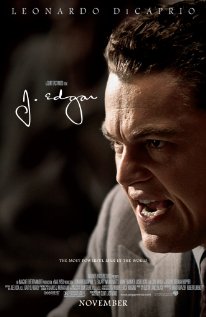
I thought of him as I watched J. Edgar, a biopic of J. Edgar Hoover, the long time director of the FBI, a man who did a great deal of good for the country by introducing scientific methodology into the crime solving process, but whose legacy was tarnished by his cold and harsh persona which distanced even those who admired his professional achievements. J. Edgar never realized that people do not like to be reminded daily of their imperfections and where they fall short. He may have spoken his mind, but his words were like arrows that left others bleeding.

The film begins with J. Edgar telling his story to a writer in an attempt to set the historical record straight about his life and deeds. Told in a series of flashbacks, the movie is fascinating in its analysis of historical events such as the capture of celebrated criminals like John Dillinger and in revealing the painstaking scientific methodology that enabled the FBI to track down Bruno Hauptmann, the kidnapper and murderer of the Lindbergh baby. The film’s attention to period detail and its overall verisimilitude makes you feel that you are witnessing history.

What emerges from the narrative, however, are not only the solid accomplishments of the Bureau but J.Edgar’s ubiquitous critical tone towards almost everyone. Even when FBI agent Melvin Purvis captures  John Dillinger, the nation’s most wanted criminal, J. Edgar finds fault with him and wants to reassign him to a desk job. In the end, J. Edgar has no friends; only one or two people remain loyal to him because of their long-standing association with him, not because they love him.

J. Edgar is alone at the end of this life because he fails to see the good in people around him. The Ethics of the Fathers tells us that every person is presumed to be of good character unless there is hard evidence to the contrary. That is the bedrock of a civilized society which depends on trust and good will among its citizens. J. Edgar, however, looked for the dirt in others, not the diamonds.

Moreover, the Talmud tells us that God is pleased with man when men behave pleasantly towards one another. Kindness lubricates society. It makes people want to share with others and help others less fortunate. It places the emphasis on the good of the community, not on self-promotion even when it benefits the community. Sadly, J. Edgar gets lost in his own notoriety and it diminishes his reputation. His story reminds us to focus on catching people doing something right and sharing one’s achievements with all those who contributed to the successful completion of an enterprise. In this way, we can leave an enduring and positive legacy.

Purchase this movie from Amazon.com.

A Bronx Tale (1993), directed by Robert DeNiro

When I served as principal of Yeshiva High School of Atlanta, I was always interested in discovering ways to become a better principal. One influential book I read was about Frank Boyden, who, for over 60 years, was the headmaster of Deerfield Academy, a prestigious private high school in New England. The essential idea behind his supervisory style is MBWA, management by wandering around. This meant that a principal should not squirrel himself in his office, but rather be a ubiquitous presence in the hallways and classrooms of the school. A sure path to administrative mediocrity is to isolate oneself from his students. A token of his total involvement with his pupils was his placement of his desk in the corridors of the school. He wanted to be visible to his students. Boyden’s story was inspiring, and for a brief time I also situated my desk in the hallway to be more available to my students.

The memory of this management approach resurrected itself as I watched A Bronx Tale, a profanity-laced coming of age story of growing up in a mobster-infested neighborhood of the Bronx in the 1960’s.

Calogero, a young boy with Sicilian roots, is raised in a loving and ethically focused home by his hard working parents, but he is entranced by the charisma of the local Mafia boss, Sonny. For a number of reasons, Calogero, later called “C,” sees Sonny as his surrogate father and begins to emulate his ways, and Sonny views C as the son he never had.

In one telling encounter, Sonny reveals to C that he learned his management style from Machiavelli, the celebrated Italian author of The Prince, a wise and ruthless treatise on how to gain and keep political power. Machiavelli always wanted to be close to his enemies to prevent their plots against him. His ubiquitous presence, or as Sonny terms it, his “availability,” placed him in the best position to control events around him. When C asks him whether it is better to be loved or feared, Sonny tells him it is better to be feared, for ultimately that is where the power is.

What does this have to do with supervising a school or management in general? In managing any enterprise, those in management positions sometimes are compelled to assert their authority and tell people things they do not want to hear, to be the bearer of ill tidings. But that is what a supervisor occasionally must do. It is not pleasant, but it must be done. Although we want people to love us, this cannot always be.

The Torah tells us that the mourning period for Aaron was longer than for Moses because the people loved Aaron more. He loved peace and pursued peace. In contrast, Moses was the law giver, the one who gave rebuke and correction to the people. He was respected but not necessarily loved.

The message of the Torah is love others, but to know that there are times when fear and respect are called for. Nowhere is this more relevant than when we function as parents. We want our kids to love us, but we have to strike a balance between love and fear. That is why the Torah expresses the commandment of honoring parents twice, to manifest the balanced way we have to parent.

A Bronx Tale, grounded in the violent and crime ridden streets of New York, obliquely echoes the reality of parenting with different paradigms and, more directly, the reality of successfully managing any important enterprise with a blend of love and authority.

Purchase this movie from Amazon.com.

Jane Eyre (2006, PBS version), directed by Susanna White

When I was in ninth grade, my Torah teacher told me what I should look for in a wife. He said that while outward beauty was important, it was not the critical ingredient for marital happiness. He urged me to stay away from girls who wore lots of make-up and who were acquisitive. For long-term happiness, you need a girl with good character, who is kind and understanding, soft in deed and word. His words made an impression on my young mind and I generally found myself dating those kinds of girls.

In secular literature, it is hard to find such a concern for good character when looking for a marriage partner. For example, in Jane Austen’s classic novel Pride and Prejudice, the parents of Elizabeth Bennett want her to marry a person of means. The key ingredients for marital bliss are wealth and eligibility, not good character. In Henry James’ Washington Square, Morris Townsend, the suitor of Catherine Sloper, is portrayed as a fortune hunter, interested in Catherine’s assets, not her character. In fact, Dr. Austin Slope, Catherine’s father, sees beneath Morris’s façade and forbids Catherine to marry him.

One notable exception to this pattern is Edward Rochester’s oblique pursuit of Jane Eyre in Charlotte Bronte’s famous novel Jane Eyre, which has inspired a number of film versions, the best of which is the PBS production directed by Susanna White and starring Toby Stephen as Edward Rochester and Ruth Wilson as a luminous Jane Eyre.

After ostensibly courting the wealthy and attractive socialite Blanche Ingram, Rochester finally confesses his love for Jane, whom he regards as a pure, simple, and virtuous soul.  Clearly, he values substance over form, good character over physical charm and beauty. It is of interest to note that Rochester is many years Jane’s senior, a person with much more life experience than Jane. Similarly, the Biblical courtship of Isaac for Rebecca, which is the topic of an extended narrative in the Bible, describes a relationship where the man is much older than the woman. But the age difference counts for little when the two lovers are on the same spiritual wavelength.

The quest to find a wife is a major task of Jewish men. To find one’s bashert, one’s destined one, a person must exert great personal effort and may also need to consult with many friends and relatives, including, of course, one’s parents. In the Bible, Abraham is actively engaged in finding a wife for his beloved son Isaac. He charges his trusted servant Eliezer with this responsibility and to travel to Aram-Naharaim, where Abraham’s family lived. There Abraham hopes that Eliezer will find a wife for Isaac.

Eliezer journeys there with ten of his master’s camels. The great explicator of Biblical text, Rashi, observes that the camels were identifiably those of Abraham because they were muzzled. Abraham’s camels would go out muzzled because of his concern for theft. He did not want his animals to graze in the field of others. Honesty was paramount to Abraham. For such a man, the litmus tests for a suitable wife were truthfulness, sincerity, and kindness, not the possession of wealth.

Eliezer, the trusted servant who came from the home of honest Abraham, determined that the woman who not only gives him water but his camels as well will be the one for Isaac, for she has demonstrated that she cares for all living creatures.

The story of Isaac’s quest for a wife is an early precursor of Rochester’s love for Jane. Both courtships remind us that, in the final analysis, wealth and beauty are passing. What remains is good character that lasts for a lifetime.

Purchase this movie from Amazon.com.

War Horse (2011), directed by Steven Spielberg

Many years ago when I was in elementary school, I was an outstanding student, always coming home with good grades. But in sixth grade, my neighborhood changed with the building of low income housing only a block away. The school’s population also changed. Soon I was the only Jew left in the neighborhood since my parents could not afford to move.

Gradually, I made new friends. I now wanted to be cool, not just smart. Unfortunately, coolness prevailed and I became a mediocre student during junior high school, and stayed mediocre when I attended a high school in a different area of the city even though this school had a large number of very bright students.

Because I came from a low-performing school, teachers always saw me as average and I was invariably placed in classes with students of average ability. Fortunately, my mother and my local rabbi perceived me as a serious and intelligent student, and it was their encouragement that motivated me eventually to shed my cool exterior and focus on academics later in life. Both were present at critical points in my life, encouraging me to spread my wings and fly intellectually. They believed in me and in my potential.

I thought of this as I watched War Horse, a poetic narrative about a boy and the horse that he trained from childhood. Although War Horse is about a horse, metaphorically it is about learning to cope with new situations and having people in your life who believe you are capable of being successful despite the odds.

The story begins in England in 1914. Ted Narracott needs a plough horse to work his farm, but impetuously buys a racing horse, using the little money he has to seal the deal. When the landlord comes to collect his rent for the farm, he cannot pay and is in jeopardy of losing his farm. Albert, his son, offers to train the horse, named Joey, to plow the field and, miraculously, Joey does it. Although born to be a race horse, Albert believes Joey can meet the challenge and, under Albert’s caring and gentle instruction, Joey becomes the plough horse that is needed, saving  Albert’s family from poverty. Moreover, when war breaks out, Joey is recruited as a war horse to transport heavy armament. Albert’s belief in Joey’s adaptability and innate strength enable Joey to survive and to endure adversities that cripple other horses.

Switch to the human metaphor. It is a truism that negative experiences often create opportunities; and to paraphrase an author who has written a self-help book, we become stronger at the broken places. What at first is a disappointment may in hindsight be a blessing that enables us to grow and be strong to face a future challenge.

What emerges from War Horse is a valuable message.  Setbacks are a part of life, but we can use them to make us stronger if we believe in ourselves and in our potential. Sometimes, a friend helps us through the darkness to return to the light. There is a powerful story in the Talmud about Rabbi Akiva.  Akiva, an illiterate 40-year old shepherd, worked for a wealthy man, whose daughter Rachel saw something special in Akiva. She offered to marry him if he began to study holy texts. She believed in him and Akiva became one of the greatest of Talmudic sages.

Sometimes we need a friend to encourage us to fulfill our potential. The friendship of one who believes in you, mentors you, and is there for you at the time of crisis can be transformational. Joey has this in Albert and others who care for him when he is in danger. When people believe in you, you can often do what you thought was impossible.

Purchase this movie from Amazon.com.

Incendies (2010), directed by Denis Villeneuve

Many, many years ago when I was a student in an afternoon Hebrew school, we would misbehave and cause grief to our well-intentioned teachers. I remember vividly that one day when the teacher left the room, we started to have a catch not with a ball, but with a tefilin bag with tefilin inside of it that gave the bag weight. Our teacher suddenly returned and his face turned ashen when he realized what his charges were doing in his absence. He said nothing. He didn’t have to. We were desecrating that which he felt, and what we should have felt, was holy.

Later we found out that our teacher was a Holocaust survivor, and we immediately sensed the folly of what we had done. He had never spoken about his past; we just assumed he was another teacher to harass. That indelible scene of so many years ago still lingers with me today, and I recalled that event of long ago as I watched Incendies, a film that reminds us of how little we know of the many people who occupy our lives.

Incendies opens with the reading of the will of Nawal Marwan, a Christian woman raised in a turbulent Middle East, where Christians and Moslems war with one another. She has lived in Canada for the past eighteen years as a legal secretary working for one employer, yet her employee barely knows her other than as a loyal and dependable worker. He is now functioning as the executor of her estate and informs her twin son and daughter, Simon and Jeanne, of an unusual request made by their late mother. Her mother wants them to deliver two letters, one to their father, whom they have never seen, and one to their brother, about whom they have never heard. Although her son, Simon, considers this request a sign of his mother’s madness, her daughter sees it as an opportunity to uncover the truth about who her mother really was. She accepts the assignment from the executor and this sets in motion a journey to a war torn country in the Middle East to discover the past of Nawal Marwan.

When Nawal’s son dismisses his mother as unstable and reclusive, he naively assumes that he knows who his mother was. Because of his youthful arrogance and insensitivity, he does not yet understand that his mother’s quiet demeanor, her silence, may have been her strategy for survival.

As the narrative unfolds, we discover that Nawal’s life consisted of unspeakable horrors, and yet she somehow survived and outwardly lived a normal life. Her demons continued to haunt her and her response was silence, never confiding in her children or revealing to them anything about her past.

Jewish tradition echoes her response of silence in the face of tragedy. The mourner in his first meal after the death of a loved one eats a hard-boiled egg, perfectly round, without an opening, without a mouth as it were. This reminds the mourner that in confronting the finality of death, the most appropriate response is silence. There are no words to make things better.

One of my teachers, Rabbi Aharon Lichtenstein, gave me another perspective on silence that relates to Narwal’s reticence to reveal secrets to her children. Sometimes silence will contribute more to a situation than speech, and that it is often wise to “strangle the shout” than to engage in a conversation, the consequences of which are unclear. Our Sages tell us that “there is nothing better for a man than silence,” implying that sometimes it is through restraint from speech that our goals are best accomplished.

Purchase this movie from Amazon.com.

Ferris Beuller’s Day Off (1986), directed by John Hughes

I remember the meeting well. A teacher discovered a student who had plagiarized a paper and gave him a failing grade. The father of the student demanded a meeting with me, the teacher, and his son. He opened the meeting with a line I will never forget: “My son never lies.” The teacher, a woman with a sterling reputation for excellent teaching, exemplary character, and an abiding concern for the welfare of her pupils, was stunned by the implicit assertion that she either had lied in making the accusation or made a terrible mistake in evaluating the student’s work.

Having worked with students for many decades, I, like most teachers, always assume the best of students. But when confronted with incontrovertible evidence of cheating, I accept the reality that students, even good ones, occasionally may do dishonest things. The teacher in question broke down in tears from the baseless accusation. I, of course, defended and supported her. Several months later, the father apologetically confided in me that his relationship with his son was very rocky, and he felt a need at our meeting to be publically supportive of his son even if he had doubts about the veracity of his statements.

This kind of misguided, naïve parenting is at the heart of Ferris Beuller’s Day Off, a comic but true perspective on teenage life in the 80s that still resonates today. The plot, such as there is one, revolves around high school senior Ferris, who decides to cut school on a beautiful spring day and enjoy the day in downtown Chicago. He enlists his girlfriend Sloane and his buddy Cameron to join him on his self-declared vacation day.

The day begins with a lie as Ferris fakes an illness to his fawning and naïve parents, who believe everything he says. It is clear that they are preoccupied with their own lives; parenting to them is a diversion, not a mission. Cameron’s dad is never seen in the film. We only see his polished Ferrari, glistening in the family’s hillside garage. It is an emblem of parental neglect and a reminder of his parents’ total preoccupation with material things. In fact, almost all the adults in the movie are out of touch with children. Whether it be parents, teachers, administrators, all are self-absorbed and only peripherally aware of the children with whom they interact.

Two insights emerge from Ferris. First, parents need to be present in the lives of their children. They need to spend quality time with them and not be so preoccupied with business that they are clueless about what makes their child tick. Second, Ferris’s visit with his friends to the Chicago Art Museum suggests that kids need more than mastery of rote knowledge to succeed as human beings. Ferris, Sloane, and Cameron engage the modern art they view with creativity and wonder. The classroom is boring, but the museum, which houses a major collection of abstract art, unleashes a creativity that speaks to their curious and active teenage minds.

Proverbs tells us “to educate a child according to his personality.” This means that it is the job of parents to know their children well and to provide opportunities for them to develop their own unique talents. The patriarch Isaac, according to some Biblical commentators, erred in educating his children Jacob and Esau with the same parenting tool box. He failed to recognize that each one required a different parenting approach, one that recognized their different personalities and intellectual and spiritual inclinations. It may be easy to do more of the same when it comes to parenting, but it may be wiser to do something different that takes into account the way each child learns.

Purchase this movie from Amazon.com.

On Golden Pond (1981), directed by Mark Rydell

As a youngster, I often found it hard to see how older people can be in love in the conventional romantic sense. After all, physically they were often overweight, had sagging skin, and possessed grey or no hair, hardly the attributes I would consider beautiful. But when I myself got older and also began to manifest those same characteristics, I realized that seniors could be deeply in love, and physical attributes were not important. Love transcends the physical in happily married couples. In time, I understood the wisdom of King Solomon in Proverbs who, in praising the woman of the house, reminds us that “outward grace is deceitful and beauty is vain,” and that the basis of enduring love is a shared life vision based upon a common spiritual destiny, not the smoothness of one’s skin or the size of a waistline.

This is one essential message of On Golden Pond, a story of a loving couple in the twilight of life.  Norman and Ethel Thayer, masterly played with great honesty and sensitivity by Henry Fonda and Katherine Hepburn, return to their summer home on Golden Pond. Norman is beginning to lose his memory and in a tense and disturbing moment runs back to his cottage without finishing the errand on which Ethel sent him. He confesses to her: “You know why I came back so fast? I got to the end of our lane. I couldn’t remember where the old town road was. There was nothing familiar. Not one damn tree. Scared me half to death. That’s why I came running back here to you. So I could see your pretty face and I could feel safe and that I was still me.”

Spouses married for many years view love in ways that are impossible for newlyweds to understand. The ebbs and flows of life, the sharing of joys and sadness, bring loving couples closer together. Each represents a safe harbor to the other, a place of refuge from a world that is shutting down around them, when mortality is not an abstract concept, but an ever-approaching reality. This deep connection only develops over time, and does not come about instantaneously.

Another message of On Golden Pond relates to Norman’s relationship with this daughter Chelsea, from whom he has been estranged for many years. Chelsea calls Norman by his first name, which underlines the emotional distance between them. She returns to the summer cottage to celebrate her father’s 80th birthday, but she still carries baggage with her. She remembers all the times her father was absorbed in his own pursuits, and not present for her emotionally.

Her mother finally rebukes her: “Don’t you think that everyone looks back on their childhood with a certain amount of bitterness and regret about something. You’re a big girl now. Aren’t you tired of it all? It doesn’t have to ruin your life.” This is a valuable life lesson:  get rid of old, unpleasant memory tapes; look with fresh, unbiased eyes at your old relationships and begin anew.

Chelsea eventually does this and, after many years, calls her father “Dad,” not by his first name, suggesting that she is now prepared for a new relationship with her father.

In Jewish law, a child is forbidden to call a parent by his first name. This implicitly instructs the child to be constantly aware of a parent as someone who is a source of authority, guidance, and love, not just another buddy. On Golden Pond reminds us to revisit our parental relationships, repair them if needed,  and create new memories that will bind together generations in the future.

Purchase this movie from Amazon.com.

In the Line of Fire (1993), directed by Wolfgang Petersen

When I was going through a number of professional challenges many years ago, I questioned the motives of those who were undermining my position as Head of School. I aired my feelings in front of a small group of people, and I regretted it soon after. My critical comments did not improve things; in fact, they made me feel smaller. I had spoken about somebody negatively and it gnawed at me. The full realization of what I had done hit me many years later. The person to whom I attributed these base motives was no longer living in the city and our professional paths were totally different. In time, I forgot about my offensive remark; but, strangely, about 20 years later, as I was reciting the confessional of Yom Kippur, my offensive behavior of many years ago surfaced in my mind. I resolved to see if I could locate the person I maligned and ask for his forgiveness. Fortunately, I was able to contact him and ask for his forgiveness, which he readily granted. As often occurs, he did not even remember the incident which had been haunting me and was gracious towards me throughout the conversation.

My motive in finding him was to do teshuva, to repent. In Jewish tradition this means to stop the offensive behavior, ask for forgiveness from the injured party, and resolve not to commit the sin again. The ideal setting for teshuva would require you to be in exactly the same place as before, and choose to do the right thing. Instead of succumbing to ego and personal hurt, you would respond differently and not make the ethical mistake that you did in the past. If the exact same situation did not present itself, then you would still follow essentially the same protocol of repentance.

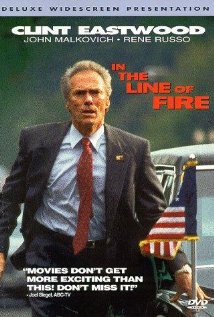
In the Line of Fire is an action thriller; but at its core, it is a narrative of repentance. Frank Harrigan, a veteran Secret Service agent, is haunted by his failure to protect President Kennedy from assassination. He continually relives the incident in his mind and questions whether he did his best to guard the president from Oswald’s fatal bullet. Did he not protect him adequately because he feared for his own life? He wonders: “I don’t know why I didn’t react. If only I reacted, I could have taken that shot. That would have been alright with me.” Here lies the crux of the film: Frank is given an opportunity to protect another president from a threat to his life, and to redeem himself. He has a chance to do teshuva, to repent, in the ideal sense by facing the same challenge, but now he can make the right decision that will enable him to emerge whole again.

Things, however, are different now. He is older and wiser but physically he is weaker. He pants and sweats as he runs after the killer, and we wonder whether he possesses the physical stamina to protect the president. The climax of the film takes place in a large hotel where the president is scheduled to speak. Frank has to locate the killer and neutralize him or stand between him and the president and take the bullet intended for the president.

In the Yom Kippur liturgy, we ask for forgiveness for the sin we might not have remembered. Frank Harrigan’s story reminds us to remember the mistakes of the past, and to try to find a way to correct them even many years later. Confronting the past in this way allows us the freedom to move forward, knowing that we have done our best. The ghosts of the past will then no longer haunt us.

Purchase this movie from Amazon.com


The Green Mile (1999), directed by Frank Darabont

Over the years that I have been a school principal, I have observed many different supervisory – management styles. The majority of my colleagues are sensitive souls; they are fair-minded, thoughtful, and not quick to rebuke a teacher. Uppermost in their minds is doing what is in the best interest of the students, not in acquiring more power or prestige for themselves. I regrettably recall one exception.

Very uncomfortably, I watched a principal observe a class and then submit his written report to the teacher later in the day. The teacher was given no opportunity to respond. The report was overwhelming negative, severely affecting the teacher’s self-perception, so much so that the teacher shortly thereafter left the field to begin a career in computers. Postcript: the principal a few years later was fired and did not last more than a year or two in subsequent positions. He who gave rebuke to others was now the victim of negative reviews himself. What goes around comes around.

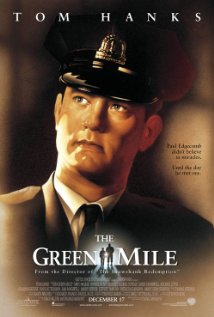
The Green Mile provides an example of a person who aims to hurt others both emotionally and physically: Percy Wetmore. His comeuppance, after a number of shocking cruelties to prisoners waiting on Death Row, is greeted with cathartic satisfaction when it finally arrives.

The Green Mile is not Percy’s story, however. It is the story of Paul Edgecomb, a Louisiana prison guard in the 1930’s and inmate John Coffey, a huge black man incarcerated for the murder of two little girls. Paul is surprised when he discovers that, in spite of his enormous size, John belies an innate meekness, communicating with the simplicity of a child afraid of the dark. The story is told in flashback, as Paul recounts his experiences to another resident of the retirement home in which he lives.

What emerges from the narrative is the stark difference between how Percy treats the prisoners and how Paul treats them. Knowing that they are all scheduled for execution by electric chair, Paul treats them humanely knowing that it is better for the prison system and for the prisoner if the condemned man can retain his equanimity in the face of certain death. In spite of their alleged crime, Paul recognizes their essential humanity.

Examples abound of his sensitivity to the men who have to walk the “green mile,” a green patch of linoleum leading to the execution site. He allows a prisoner to keep a pet mouse, he gives one man a gift of his wife’s corn bread, and arranges to show the Fred Astaire film Top Hat to a condemned man who has never before seen a movie.

In contrast to this humane behavior is the cruelty committed by Percy, who in one of his many sadistic moments, deliberately does not wet the sponge that is to be placed on the head of the condemned man as the electric plate is tightened before the release of electric current to his body. It is a grisly scene, which accentuates the stark contrast between Paul and Percy.

Proverbs tell us that when our enemy falls, we should not rejoice, lest God be displeased and He turn His wrath to us. Moreover, our Sages advise us not to see someone at the time of his degradation. The point of these instructions is to be sensitive to people in distress. We do not in any way excuse criminal behavior, but we do not gloat over their punishment. It may be necessary, but it is not joyful.

The Green Mile is a movie that has a lot to say about life, about how we treat others, and how we need to recognize and appreciate the humanity of all men.

Purchase this movie from Amazon.com.