Category Archives: Family friendly

Neil Young: Heart of Gold (2006), directed by Jonathan Demme

In the 1970s when I assumed the principalship of Yeshiva High School of Atlanta, part of my job was to raise money for the school. One of the ways I did it was through establishing a band that would play for weddings and Bar Mitzvahs. I was blessed to have a number of talented adults who were willing to donate their services for this project. We named the band Matzah since we saw ourselves as the Jewish version of Bread, a popular rock group of the seventies.

I recall that the most difficult part of being in the band was setting up my drums and the sound equipment. Playing the drums and providing the vocals was easy. What was difficult was shleping all the heavy and unwieldy equipment up the various hotel freight elevators, arranging the placement of my drums and positioning the sound system. My experience of being in this band for close to 15 years made me especially sensitive to a band’s preparation for an event. This is perhaps why I enjoyed a superb documentary chronicling the premiere performance of Neil Young’s album “Prairie Wind.”

Elvis Presley, Elton John, Billy Joel – these were my musical icons as I grew up. I had never even heard of Neil Young. But there was one student at Yeshiva High School who was a big Neil Young hasid, and did a spot-on imitation of him that captured the imagination of his fellow students. This student, now a successful Atlanta attorney, introduced me to his music. But it was not until 25 years later that I gave serious attention to this classic troubadour, when he was the subject of the Jonathan Demme film Neil Young: Heart of Gold.

The film opens as Neil is driving through Nashville, getting ready for his “Prairie Wind” concert in the celebrated Ryman Auditorium. It is fascinating to meet the other members of the band, all of whom, like Neil, are now senior citizens, along in years but young in spirit. Each member of the band has special memories of how they first played with Neil, about their first recording session, about the unique place of the Ryman Auditorium in the annals of rock music. Yet what is remarkable is their excitement about playing new music together. Singing and playing together re-establishes their community of old. At that moment, they are no longer old men; they are young men, mellowed by a lifetime of experiences, infused with wisdom and hope.

Interestingly, we learn at the beginning that Neil is going to New York after the concert to have an operation on a life-threatening brain aneurysm. Moreover, in the course of the concert, Neil reflects upon the recent loss of his father and his dad’s dementia. He also talks about his daughter in college. All of this banter reminds us the Neil is no longer the hippie icon but rather a mature and creative singer/ songwriter. He values each moment of life and the opportunity to still be creative into the twilight of life.

His focus on being in the moment and sharing the creative muse with his long-time friends and family calls to mind the Biblical examples of Abraham, who is described as being active until the very day of his death, and Moses, about whom the Bible tells us at his death, “his eyes were not weak, nor his strength gone.” In fact, Moses concludes his final oration at the end of his 120 years with a song of faith and optimism about the future. Song, in truth, is a metaphor for the soaring human spirit. Singing a song, particularly in the twilight of life and singing with others, connects us to our past and future, and reaffirms our eternal ties to the community of man.
Purchase this movie from Amazon.com.

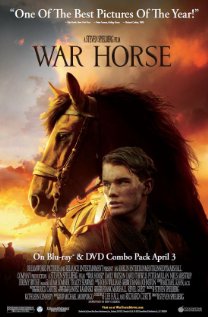
War Horse (2011), directed by Steven Spielberg

Many years ago when I was in elementary school, I was an outstanding student, always coming home with good grades. But in sixth grade, my neighborhood changed with the building of low income housing only a block away. The school’s population also changed. Soon I was the only Jew left in the neighborhood since my parents could not afford to move.

Gradually, I made new friends. I now wanted to be cool, not just smart. Unfortunately, coolness prevailed and I became a mediocre student during junior high school, and stayed mediocre when I attended a high school in a different area of the city even though this school had a large number of very bright students.

Because I came from a low-performing school, teachers always saw me as average and I was invariably placed in classes with students of average ability. Fortunately, my mother and my local rabbi perceived me as a serious and intelligent student, and it was their encouragement that motivated me eventually to shed my cool exterior and focus on academics later in life. Both were present at critical points in my life, encouraging me to spread my wings and fly intellectually. They believed in me and in my potential.

I thought of this as I watched War Horse, a poetic narrative about a boy and the horse that he trained from childhood. Although War Horse is about a horse, metaphorically it is about learning to cope with new situations and having people in your life who believe you are capable of being successful despite the odds.

The story begins in England in 1914. Ted Narracott needs a plough horse to work his farm, but impetuously buys a racing horse, using the little money he has to seal the deal. When the landlord comes to collect his rent for the farm, he cannot pay and is in jeopardy of losing his farm. Albert, his son, offers to train the horse, named Joey, to plow the field and, miraculously, Joey does it. Although born to be a race horse, Albert believes Joey can meet the challenge and, under Albert’s caring and gentle instruction, Joey becomes the plough horse that is needed, saving  Albert’s family from poverty. Moreover, when war breaks out, Joey is recruited as a war horse to transport heavy armament. Albert’s belief in Joey’s adaptability and innate strength enable Joey to survive and to endure adversities that cripple other horses.

Switch to the human metaphor. It is a truism that negative experiences often create opportunities; and to paraphrase an author who has written a self-help book, we become stronger at the broken places. What at first is a disappointment may in hindsight be a blessing that enables us to grow and be strong to face a future challenge.

What emerges from War Horse is a valuable message.  Setbacks are a part of life, but we can use them to make us stronger if we believe in ourselves and in our potential. Sometimes, a friend helps us through the darkness to return to the light. There is a powerful story in the Talmud about Rabbi Akiva.  Akiva, an illiterate 40-year old shepherd, worked for a wealthy man, whose daughter Rachel saw something special in Akiva. She offered to marry him if he began to study holy texts. She believed in him and Akiva became one of the greatest of Talmudic sages.

Sometimes we need a friend to encourage us to fulfill our potential. The friendship of one who believes in you, mentors you, and is there for you at the time of crisis can be transformational. Joey has this in Albert and others who care for him when he is in danger. When people believe in you, you can often do what you thought was impossible.

Purchase this movie from Amazon.com.

On Golden Pond (1981), directed by Mark Rydell

As a youngster, I often found it hard to see how older people can be in love in the conventional romantic sense. After all, physically they were often overweight, had sagging skin, and possessed grey or no hair, hardly the attributes I would consider beautiful. But when I myself got older and also began to manifest those same characteristics, I realized that seniors could be deeply in love, and physical attributes were not important. Love transcends the physical in happily married couples. In time, I understood the wisdom of King Solomon in Proverbs who, in praising the woman of the house, reminds us that “outward grace is deceitful and beauty is vain,” and that the basis of enduring love is a shared life vision based upon a common spiritual destiny, not the smoothness of one’s skin or the size of a waistline.

This is one essential message of On Golden Pond, a story of a loving couple in the twilight of life.  Norman and Ethel Thayer, masterly played with great honesty and sensitivity by Henry Fonda and Katherine Hepburn, return to their summer home on Golden Pond. Norman is beginning to lose his memory and in a tense and disturbing moment runs back to his cottage without finishing the errand on which Ethel sent him. He confesses to her: “You know why I came back so fast? I got to the end of our lane. I couldn’t remember where the old town road was. There was nothing familiar. Not one damn tree. Scared me half to death. That’s why I came running back here to you. So I could see your pretty face and I could feel safe and that I was still me.”

Spouses married for many years view love in ways that are impossible for newlyweds to understand. The ebbs and flows of life, the sharing of joys and sadness, bring loving couples closer together. Each represents a safe harbor to the other, a place of refuge from a world that is shutting down around them, when mortality is not an abstract concept, but an ever-approaching reality. This deep connection only develops over time, and does not come about instantaneously.

Another message of On Golden Pond relates to Norman’s relationship with this daughter Chelsea, from whom he has been estranged for many years. Chelsea calls Norman by his first name, which underlines the emotional distance between them. She returns to the summer cottage to celebrate her father’s 80th birthday, but she still carries baggage with her. She remembers all the times her father was absorbed in his own pursuits, and not present for her emotionally.

Her mother finally rebukes her: “Don’t you think that everyone looks back on their childhood with a certain amount of bitterness and regret about something. You’re a big girl now. Aren’t you tired of it all? It doesn’t have to ruin your life.” This is a valuable life lesson:  get rid of old, unpleasant memory tapes; look with fresh, unbiased eyes at your old relationships and begin anew.

Chelsea eventually does this and, after many years, calls her father “Dad,” not by his first name, suggesting that she is now prepared for a new relationship with her father.

In Jewish law, a child is forbidden to call a parent by his first name. This implicitly instructs the child to be constantly aware of a parent as someone who is a source of authority, guidance, and love, not just another buddy. On Golden Pond reminds us to revisit our parental relationships, repair them if needed,  and create new memories that will bind together generations in the future.

Purchase this movie from Amazon.com.

Moneyball (2011), directed by Bennett Miller

I like teachers and have great respect for them. This is why in my early years as a school principal, I always found it difficult to fire a teacher even when it was clear to me that it had to be done. One particular case still haunts me. The teacher was a wonderful person, but was boring. After much observation, I knew I would have to terminate him but I was conflicted. He had a large family and my firing him would have great consequences for his family. I agonized and finally called a mentor for advice. He was quick and to the point. He said: “You are not an employment agency. You must do what is in the best interest of the students.” It was one of those whiplash moments. Everything became clear. Students come first, and that conversation guided much of my subsequent decision-making in my professional career.

I was reminded of that conversation as I watched Moneyball, a smart, insightful movie about the business side of baseball. Billy Beane, general manager of the Oakland Athletics must release a player and he does it with intelligence and style. He knows that his goal is to win games, and he will do whatever is necessary to achieve his end. He never loses his focus. He calls the player in the office and with a smile informs him: “Jeremy, you’ve been traded to the Phillies. This is Ed Wade’s number. He’s a good guy, he’s the GM. He’s expecting your call. Buddy will help you with the plane flight. You’re a good ballplayer, Jeremy, and we wish you the best.” The parting is necessary, but it is humane and brief.

Beyond serving as a model of management, Billy Beane’s story also has other important life lessons. Billy determines that players are valued incorrectly and that even a team with limited financial resources can find undervalued players who can be melded into a winning team. His strategy: select players with the highest on base percentage. Don’t buy players; buy runs and you will win ballgames. The strategy is successful, setting a precedent for how players will be recruited in the future. The lesson: sometimes we have to shift our paradigms in order to be successful at solving problems.

I had to shift my paradigm when I first began teaching. At first, my primary concern was teaching the material. In a few years, I realized that to be successful, I needed to alter my perspective. The successful teacher focuses on students, not just information. That paradigm shift would make a dramatic difference in the way I taught and the way students learned. I was now teaching people, not facts, and the classroom dynamic changed.

Another life lesson: statistics alone cannot predict the future. Scouts saw Billy Beane as a first round pick and they offered him a huge contract with a major league team right out of high school. Billy then came to the proverbial fork in the road: should he go to Stamford on a full scholarship or sign with majors. He chose the latter, but never fulfilled the potential that scouts saw in him. Money and fame were the allure; but when he left professional baseball, he vowed never again to make a decision based upon money alone.

These lessons reflect Jewish sensibilities. The ability to see alternate points of view, to shift paradigms, is the essence of Talmudic learning. The great rabbis Hillel and Shammai looked at the same realities but possessed vastly different approaches to solving problems. Moreover, King Solomon reminds us at the end of his life that wealth does not bring happiness. The truly wise man is the one who is happy with what he has.

Purchase this movie from Amazon.com.

Jeremiah Johnson (1972), directed by Sydney Pollack

As a young father, vacations generally meant going to places like Disneyland or to resorts with a pool and kid-friendly activities. Once I became an empty nester, vacation destinations changed. National Parks were the place to visit. My first one was to Acadia National Park in Maine; and over a number of years, my wife and I visited many in the United States and Canada. Instead of going somewhere to be amused, we traveled far to contemplate and appreciate the beautiful world that God has given us. Spending time hiking, surveying breathtaking lookout points, and listening to the sounds of nature were rejuvenating. Which is why I greatly enjoyed a recent viewing of the Western classic, Jeremiah Johnson.

Jeremiah leaves civilization as he knows it and journeys to the mountains. He wants to become a mountain man, living away from the hustle-bustle and corruption of the busy city. He wants to be alone,  and to discover the beauties of nature first-hand. There is a parallel here to a famous story told about Rabbi Samson Raphael Hirsh, a 19th century leader of German Jewry and Bible commentator, who near the end of his life resolved to visit the French Alps. His students tried to convince him not to go because of the risk to his health, whereupon he told them:”When I come before God, I will have to answer for many things. But what will I tell Him when He asks me, ‘Have you seen My Alps?'”

This thirst to see all of God’s resplendent world is a Jewish sensibility. The Talmud (Yerushalmi Tractate Kiddushin) explains that in the future God will hold us responsible if we do not enjoy the beautiful things He created in this world. It is a good thing to go out and see the trees, the mountains, the rivers, lakes and oceans. Seeing them reinforces our belief and appreciation for God who created all of it.

However, there is a dark side to being a mountain man. “Do not separate from the community,” say our Sages. Jeremiah learns that a life of isolation can be dangerous and unforgiving, and that there is a price to pay for solitude. For example, he has no back-up when things go awry.

One incident, in particular, brings this lesson home. Having married an Indian woman and found a modicum of happiness in the wilderness, he is asked by the U.S. Calvary to lead a search party to bring food to a stranded wagon train. He is not anxious to leave his family, but he reluctantly agrees and leads them to the wagon train. Inwardly, however, he is agitated that the route takes him through a sacred Indian burial ground. The scene of traversing the burial ground is one that encapsulates both the allure and danger of nature. It is a grey day, snowing gently but relentlessly as the soldiers pass by skeletons of dead Indians, foreshadowing a tragedy that is to come.  It is an image of both beauty and dread.

Left alone in a vast wilderness with savages all around, Jeremiah is forced to defend himself on countless occasions in order to survive. The Hobbesian notion that life is nasty, brutish, and short finds expression in the harsh life of Jeremiah Johnson. But in spite of it all, he emerges not as a bitter or angry person, but as one content with his lot, understanding that life is filled with contradictions, with happiness and sadness, with beauty and ugliness. It is a mature sensibility, worthy of emulation.

There is much to admire in Jeremiah Johnson. He is a man of few words, of deep feelings, of personal integrity, who, through age and experience, appreciates and values the beautiful world before him.

Purchase this movie from Amazon.com.

The Road Home (1999), directed by Zhang Yimou

Living in Israel has brought me in touch with many people whom I met earlier in my life. Let me explain. Firstly, many friends of my youth had a dream of ultimately living in the holiest place in the world and now many of them are actually living here. It is a retirement village in which no one is really retired. Everybody is redefining themselves in some way and connecting to the eternal past of the Jewish people, while at the same time living a vibrant present existence. Secondly, there are others whom I meet not because they are new immigrants in the land, but because they come to Israel to bury a loved one. It is a place for an ingathering of the exiles, those who are living and those who are not. When we come to Israel, we know we are coming home in a profound way. Watching The Road Home evokes comparisons to this Jewish sensibility but emerges from a Chinese tradition.

The title of the film The Road Home alludes to the journey of a man to his final resting place. Specifically it refers to the tradition of carrying the coffin to the grave so that the deceased “doesn’t lose his way.” This is a movie about deeply held traditions that both animate and connect people over the span of many generations, traditions that link them to the past and to the future.

The film opens as an urban man is returning to the rural village of his birth to bury his father, a revered teacher who brought wisdom to many generations of youngsters. Looking at the photo of his parents evokes a retrospective of the courtship of his father and mother many years ago. It is a romance based not so much on physical attraction, although there is that element, but mostly on a shared understanding of life and a common destiny.

After this poetically charged story of courtship, the film returns to the preparations for the funeral, which will require a march of several miles to the burial site in the midst of a blinding snow storm. Everybody in the village wants to participate in this tradition of escorting the dead, especially when it is a way to show respect for a beloved teacher. Their affection for him is palpable as we watch the villagers vie for the opportunity to carry the bier despite the inclement weather.

As a final mark of respect and tribute for his father, the son, on the day after the funeral, teaches a lesson in the village schoolhouse which is about to be demolished. He stands before the children, echoing the instruction of his father. The subtitles emblazoned on the screen reveal clearly the life lessons imparted by his father: “In everything there is a purpose. Know the past. Know respect for your elders.” By encouraging the students to appreciate and value the past, he assures them of a meaningful present and future. The teacher is the glue that binds the generations.

Torah values are ubiquitous in the movie. There is the value of respect for elders, the value of respect for tradition, the value of a loving relationship founded on common values, and the value of finding meaning in adversity. Ecclesiastes tells us that “it is better to visit a house of mourning than a house of feasting, for that is the end of all men and the living will lay it to his heart (7:2).” In the case of The Road Home, the loss of a loved one becomes the road to greater self-understanding.

Purchase this movie from Amazon.com.

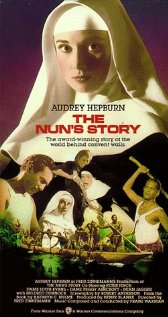
The Nun’s Story (1958), directed by Fred Zinneman

I was an average student in high school, so when I entered Yeshiva University as a freshman, I was overwhelmed with the many very bright students around me. It took me some time to feel I could compete academically; and for most of my undergraduate career, I did not participate much in class discussion.

I got mostly A’s in my courses, but did not offer my opinion in class until I took a course in Russian and Scandinavian literature in my senior year, which changed my perspective. I received an A on every test, yet received a B for the course. I went to my professor and asked him why I received a B. His response went something like this: “You do not participate in class discussion. You may know the material for the test, but I have no sense that you really understand the novels in a sophisticated way and can integrate them into some kind of thoughtful discussion.” I realized then that it was not good enough to know the subject; I had to show others that I knew it. Therein lay the conflict: self-effacement versus self-promotion.

For me, the conflict was not easily resolved. I was raised in a home of modesty and humility. My father was president of the local synagogue and my mother was president of its sisterhood and she worked countless hours for the Association for the Help of Retarded Children in Westchester County. They were selfless people, not at all interested in getting recognition. I never heard my parents utter a word about seeking honor for the good work they did, and I shared that perspective as I matured.

This approach towards doing good without receiving recognition resonated as I watched The Nun’s Story, a narrative of a young girl, Gabrielle van der Mal, who decides to become a nun. The daughter of a renowned physician, she has a solid understanding of tropical diseases and wants to devote her life to working in the Congo where she can alleviate the suffering of many. As we watch her move through the various stages of becoming a nun, she is continually challenged. Although far superior academically to her peers, she is always asked to submerge her ego, to overcome her desire for personal recognition, and to allow others to achieve their dreams at her expense. Her mentors encourage self-effacement even over self-esteem. Instead of sending her to work in the Congo with the indigenous population which she wants, she is sent there to work in a European hospital. There she contributes mightily but this does not satisfy her desire to work with the natives. The constant obstacles she faces are all designed to teach her humility and self-effacement.

In truth, humility is a value in Jewish tradition. Moses, the greatest of all prophets, was known as the most humble of all men. The commentators underscore this when the Bible reveals that Moses was 80 when he became the leader of the Jewish people, an age when one would expect him to seek a modicum of comfort and ease in life. Yet he is chosen by God at that age precisely to emphasize that he accepted the mantle of leadership not because of any desire for fame or recognition but solely to respond to the command of God. He is devoid of ego. All he wants is to do God’s will, and then he will disappear from the stage.

The Nun’s Story encourages a similar spirituality. As the Reverend Mother advises Gabriel: “Do good, then disappear.” Ideally, the desire to do good should not hinge on the approval or approbation of others. We should do good for God’s sake, not our own.

Purchase this movie from Amazon.com.

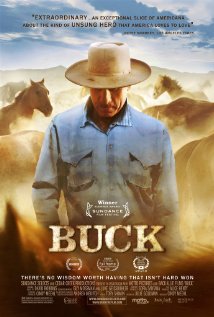
Buck (2011), directed by Cindy Meehl

When I was about ten years old, my father surprised me by taking me to a veterinarian’s office to pick up a dog. It was a “mutt,” a mixed breed, part collie and part something else. The visit was one of my “wow” moments growing up. I named the dog Shep, and we became fast friends. He would sleep at the foot of my bed, chew at the bedpost, and wake me up every morning with a happy look. My father taught the dog to go the newsstand a block away and to bring home the paper in its mouth. I thought that was really cool. When my day did not go well, Shep was always there to cheer me up. He was my dependable friend. But, like many kids, I was not diligent about walking the dog and taking care of all the stuff that goes with caring for a pet. Eventually my mother gave the dog away, and I spent that fateful day crying over my lost Shep.

The whole experience, in retrospect, gave me an appreciation for the value of pets in people’s lives. The presence of a pet, in a sense, is therapeutic for the owner. He is a reliable friend, never critical of you, lacking artifice, and always anxious to please.

These human qualities of animals form the subtext for Buck, an arresting documentary about Buck Brannaman, a horse whisperer with an uncanny ability to understand and train, not “break,” wild horses. As we watch him work with horses, he reveals how close his work is to child-rearing. The same principles are operative. Be gentle, be kind, be a good listener, show tough love when you have to, and don’t scare them. Interestingly, he describes the act of placing a saddle on a horse as a potentially frightening experience for the horse, which may see it as a lion attack. Therefore, the issue of trust between horse and rider is critical for training progress to be made. The same holds true in parenting children. The more trust between parent and child, the more communication and the more effective is the parental guidance.

It is noteworthy that the most prestigious Biblical figures who serve as role models for posterity began their careers as shepherds, people who care for animals. Their job of caring for sheep made them more adept at caring for human beings. Moses, Abraham, Jacob, King David—all had shepherd on their resumes. Similarly, Rebecca, one of the matriarchs of the Jewish people was selected as a wife for Isaac because of her kindness to animals. When Abraham’s servant asked for water, Rebecca brought water not only for him but for his camels as well. This was the litmus test of her character and Rebecca passed with flying colors.

In the Bible, God tells the Jewish people not to muzzle the ox when it is doing work in the field. Moreover, if we see an animal laboring under a heavy load, we are required to relieve the animal of its burden; and when we finish our day’s work, we should first feed our animal before we sit down to eat. Furthermore, if we come across a mother bird and want to take its eggs, we must first chase away the mother bird so that it does not suffer any psychological distress. All these sensitivities apply to the human realm as well. We permit workers to eat from the crops they are harvesting. We assist people who are struggling to support a heavy load, and we avoid causing psychological pain.

Buck reminds us of the many life lessons we can learn by being attuned to the needs of animals. Understanding their needs and their fears can make us more sensitive human beings.

Purchase this movie from Amazon.com.

The Young Victoria (2008), directed by Jean-Marc Vallee

A number of years ago, I wrote a book called Kosher Parenting, in which I pointed out that parenting is never finished. As one of my mentors once told me, “when you have small children, you have small problems and when you have big children, you have big problems.” The difference between parenting young children and parenting older children, however, is that small children generally listen to you and big children think for themselves. Older children will not simply follow your recommendations. They need to discover their own truth, their own path, not necessarily the one that well-meaning adults choose.

Nowhere is this more relevant than when children are choosing someone to marry. Jewish law wisely tells us that final decisions about marriage partners should be left to the principals, not to parents. Parents and elders can only provide guidance; children have to make the ultimate choice.

This dynamic is in evidence in The Young Victoria. Elders and wise men are ubiquitous, constantly theorizing about possible marriage choices for the young Queen Victoria. However, she thinks for herself and chooses a companion not based on political gain, but on emotional compatibility. Prince Albert, her chosen one, understands her origins, her aloneness, and her desire to be a good monarch and work for the welfare of her people. Their minds are on the same frequency, and it is instructive to observe their growing attachment to one another. They are honest with one another, they respect one another, they do not take advantage of one another, and they share common aspirations.

But their journey is not a smooth one. They have to learn to complement one another to achieve their goals and dreams. Victoria is a queen and initially expects obedience from her husband. Albert, however, does not see himself as a tourist or subject in the Queen’s palace but rather as her husband and life partner. It takes time for Victoria to appreciate this aspect of her married life; but once she does, she fulfills herself both as monarch and as loving wife. One of her trusted advisors counsels her: “The Prince is able, clever, faithful. Let him share your work.” She recognizes his wisdom and in a private moment with her husband tells him: “I hope you don’t mind. I had your desk brought in.”When she finally invites Albert to bring his desk into her office, it signals an understanding that they are in this together, that they willingly share their destinies, that they both want the best for England.

In a coda at the end of the film, we learn that Albert and Victoria championed reform in education, welfare, industry, and the arts, and that she reigned over England for almost the entire century, a remarkable feat for a monarch. Moreover, she was a mother to nine children.

The story of Albert and Victoria reminds us that enduring love is based not only on physical attraction but on shared goals and dreams, the feeling that a common destiny unites a couple. This is a Jewish approach to marriage. When I speak to my children about marriage, I remind them that when two people are ideologically on the same page, when they share a common goal, then all problems are solvable.

Albert and Victoria’s love represented the ideal synthesis of physical attraction and common purpose. As such it was the kind of love about which the Talmud writes: “when our love was strong, we lay on the edge of a knife.” No matter what adversities they faced, they were confident they could be overcome because they shared one another’s goals and dreams. This is a key component of a successful marriage.


Purchase this movie from Amazon.com.

Toy Story 3 (2010), directed by Lee Unkrich

Many years ago, I hired what I thought was a star teacher. He gave an excellent model lesson, had good references, and even played the guitar. Yet I soon discovered a serious flaw. He never wanted to deal with parents. It seems that, once long ago, he was abused verbally and emotionally by an insensitive school parent. The repercussions of that event still lingered and colored his approach to all parents. He was still angry with them, for they were the enemy. Ultimately, I had to let him go because our school welcomed parent engagement and did not see parents as adversaries.

The experience reminded me that sometimes we can let a bad experience define how we behave in the future. In truth, it is a great tragedy if we cannot move beyond a hurtful experience, if we permit anger and ill will towards others to dominate our lives.

Toy Story 3, an animated film that is a parable of human relationships, provides one classic example of this in the character of Lotso, the chief toy in a day care center full of dysfunctional and malevolent toys that lord over the new recruits who come to Sunnyside Day Care. Lotso has allowed a bad experience in his youth to forever taint his relationships with anyone he meets. The back story reveals that Lotso also was once a treasured toy, but his owner abandoned him, or so Lotso thought. In truth, she lost him and did not deliberately abandon him. Lotso, however, lived on the false myth of his abandonment and made that bad experience the seminal one in his life. Anger was what drove him and defined him.

Into Lotso’s monstrous world enter a group of naïve toys, who fear obsolescence when their owner, now grown up, departs for college. They fear abandonment, but take heart in the possibility of finding a warm and friendly environment of a local day care center. From a distance it looks attractive. But a closer look reveals that the ownerless day care toys are not only used but abused. The kids at the day care do not feel any emotional connection to the toys. The children play with the toys and then toss them away. In contrast, the new recruits, accustomed to an owner who had invested in a relationship with them, want in some way to replicate that situation. They want to feel valued, emotionally connected, and respected. The toys are truly us.

Their first impression of Lotso is positive. He is soft spoken and huggable on the outside, but they do not realize he is an angry monster on the inside. His past anger has determined his future.

Jewish tradition tells us that anger is one of the worst traits to possess. In fact, the Talmud compares it to idol worship. When one is angry, it is a manifestation of a lack of belief in God’s providential supervision of the universe. After all, how can one be angry if God is in charge of things? It is a Jewish mode of sensibility to presume that from the aspect of eternity, everything ultimately will make sense because God is orchestrating events in a hidden way which our finite minds cannot comprehend at the moment.

Lotso, whose life is defined by anger, reminds us not to allow negative memory tapes of the past to determine our present or future. It is a bad thing when anger lives rent-free in our brains and influences our present relationships.

Purchase this movie from Amazon.com.