Category Archives: Movie review

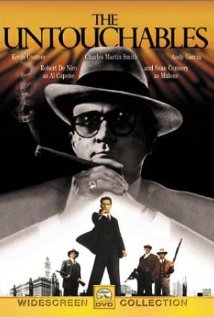
The Untouchables (1987), directed by Brian DePalma

I was in the middle of my afternoon prayers when the doorbell rang. My guests had arrived and I was faced with a dilemma: continue to pray or interrupt my prayers to welcome guests? I took my cue from the great patriarch Abraham, who stopped his conversation with God to tend to his guests. The Sages comment that this was a good thing, for Abraham was setting a paradigm for how we should welcome the stranger. The Codes of Jewish Law express this concept succinctly: if we are busy with one commandment, we are exempt from the other. Ideally, we should do both if at all possible. But if we cannot, then we have to prioritize and perform the time sensitive or more important one.

The best cinematic example of this dilemma of facing two tasks at the same time and having to choose between them occurs in The Untouchables, a violent crime drama about the war between Eliot Ness, an FBI agent, and Al Capone, the king of the Chicago mobsters during the Prohibition Era. Capone’s street-wise philosophy reveals a ruthless approach to anyone who stands in his way. In a stunning opening scene that reveals a bevy of lackeys surrounding Capone as he gets a shave, he tells them: “I live in a tough neighborhood, and we used to say you can get further with a kind word and a gun than you can with just a kind word.”

Ness is portrayed as a family man, honest, and morally untouchable. He lives by a code of personal integrity. But he faces an enemy who lives by corruption and brute force. It is a classic confrontation between good and evil. In this often brutal story is a scene that encapsulates more than any other the quandary of Eliot Ness: can I retain my humanity in the face of an overwhelming evil that wants to break the law and murder innocent people?

The critical scene takes place in a train station where Ness has gone to intercept Al Capone’s bookkeeper, who possesses information that could send Capone to prison for tax evasion. Suspense builds as the train is due to arrive momentarily. Before the train arrives, a young mother burdened with two suitcases attempts to negotiate a baby carriage with a crying infant up a steep flight of stairs. Ness, ever the family man, decides to help her. The young mother is appreciative and tells Ness “You’re such a gentleman, so kind.” At that moment, the accountant finally appears with an escort of armed thugs. Here is Ness’s challenge: he wants to help the mother and child up the stairs and get them out of harm’s way. However, any delay could cause him to lose his prey. Putting Capone behind bars has been his all-consuming mission for months and this is his only chance for success. Ness tries to do both; and, in an amazingly choreographed scene, he loses control of the carriage and guns begin to fire all around him. Will the baby be another innocent casualty in the war against Capone or will Ness apprehend the accountant with no harm to the child or its mother?

The movie does not provide clarity or solutions to his dilemma; rather it illustrates in a dramatic way the dilemma we all face at different times in our lives. We have two worthwhile things to do, and we have time for only one of them. Jewish law mandates that a preoccupation with one deed exempts us from the other. Although we should try to do both, we recognize that this is not always possible. Therefore, the lesson is to stay focused and prioritize our choices.
Purchase this movie from Amazon.com.

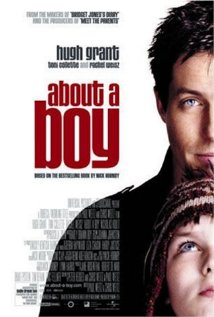
About a Boy (2002), directed by Paul Weitz and Chris Weitz

I do some work as a volunteer matchmaker for an international website. Primarily, I work with 40-year olds, and occasionally I encourage some of my bachelor friends to join the website. I am surprised at their reluctance to join considering the fact all of them tell me about their desire to settle down and have a family. One tells me he is too busy, another that he prefers to meet real people and not to meet people on an impersonal website. Another says that friends are setting him up and this is not a good time for him to put his profile on the website. Time marches on and I still hear the same refrains. As a rabbi and personal friend, I feel sad and troubled. I cannot say it with certainty, but it seems that these friends want no responsibility, even if the alternative is to be alone. They may not say it, but their actions speak louder than their words. They enjoy a life where they are accountable to no one, where there is no emotional investment in any significant other.

Such is the life portrayed by Will Lightman in About a Boy, a hilarious look at the self-indulgent life of the career bachelor. Will narrates his own story. He has no job and lives off the royalties of a popular holiday song that his father wrote in 1958. He goes to a single parents’ group to meet single mothers, fabricating a story about a two-year old son of his to gain their sympathy and trust. He spends his time shopping, watching television, and exercising, which to him means playing pool. To Will, he leads a full life. He exclaims: “A person’s life is like a TV show. I was the star of the Will Show, and the Will Show was not an ensemble drama. Guests came and went. It came down to me.”  Considering how “busy” he is, he wonders if he really would even have time for a job.

Will’s life begins to change when he meets Marcus, a young boy with a suicidal mother. Through a series of improbable events, he befriends Marcus and slowly starts to think of the welfare of others. Will buys Marcus sneakers and marvels that “I made a boy happy, and it was only 60 quid.” At a Christmas party, he begins to understand the importance of human connection. He leaves the party with a “warm, fuzzy feeling.” The stark realization that his present life is meaningless occurs when Will meets the love of his life and discovers he has nothing to say to her. He has no job. He is a blank slate.

Ultimately, Will concludes that Marcus is the only thing that means something to him and Will finally comes out of his self-centered self to help Marcus at a moment of crisis. Connection with Marcus leads to connection with others, and Will becomes a more rounded individual at the story’s end.

King David writes in Psalms that “those that sow in tears will reap in joy.” The commentators suggest that this means we should be mindful of the pain of others in order to feel true joy. Living an isolated life, without feeling the travail of others, is leading a life without meaning; for it is only in connection with others that our own life becomes meaningful. The Ethics of the Fathers states it differently: if I am only for myself, what am I?” About a Boy reminds us that leading a life of meaning requires one to think of others, not just of oneself.

Purchase this movie from Amazon.com.

The Terminal (2004), directed by Steven Spielberg

When I came to Israel a couple of years ago as a recent oleh (immigrant), I arrived with a rudimentary speaking knowledge of Hebrew and no Israeli cell phone. Yet I had arranged from America to meet old friends, now living in Israel, at the airport, who would take my wife and me to our home in Beit Shemesh. The challenge: how to make contact with him if I had no cell phone and no Israeli money to use a pay phone. Moreover, even if I had money for a pay phone, I was unaware that I had to dial city code prefixes before the actual phone number.

Fortunately, I found my friends and everything worked out, but I was reminded of my unsettling airport experience as I watched an early scene in The Terminal, in which Viktor Navorksi, a citizen of an Eastern European country in the midst of a violent coup, arrives in the United States and is unable to leave the airport. His passport is no longer valid and he cannot enter the USA until his situation is resolved. While stuck in the airport, airport security gives him food vouchers and a 15-minute phone card, but Viktor does not have the language skills to know how to use them. Viktor is confused and I understood his frustration.

As his temporary stay at the airport extends into weeks and months, Viktor, a building contractor, uses his skills at construction to get a job with a renovation crew at the terminal. This enables him to earn money to buy food, clothes, and other necessities. These crafting skills and his modest personality slowly ingratiate him with the airport staff, who admire his resourcefulness and his innate kindness towards others.

A turning point occurs when a foreign national wants to bring in medicine for his deathly ill father. He threatens airport personnel and Viktor, because of his language skills, is brought in to diffuse the situation. He successfully resolves the tension by calming the foreigner and creatively suggesting to him that he claim that the medicine he brought in from Canada is for goats and, therefore, needs no special clearance. Viktor, originally seen as a buffoon, now is perceived as a savvy negotiator, which brings him the admiration of many who work at the airport.

Our first impression of outsiders may be akin to seeing Viktor for the first time as simply a foreigner; but once we mentally engage another human being, we are peeling an onion, discovering new layers every time we speak with him. I have found that the more I get to know people, the more interesting they become.

When my wife and I have guests over for a Friday night Shabbat meal, I always ask the invitees to introduce themselves for a moment. I sometimes suggest that each guest tell us something we may not know about them. Surprisingly, I learned that one of our guests celebrated her 70th birthday by parachuting out of a plane. There is clearly more to people than what meets the eye. Viktor Novarski reminds me of the innate complexity of people, and that we should give people a second chance to make a first impression.

The Bible instructs us many times to remember our sojourn in Egypt when we were strangers in a strange land. I am no longer a recent immigrant but I remember how good it felt when I was greeted with a smile, when someone asked me what my name was and where I was from, when someone clarified a confusing moment. It is a good thing to be kind to the stranger. After all, one day the stranger may be you.


Purchase this movie from Amazon.com.

Page One: Inside the New York Times (2011), directed by Andrew Rossi

Two friends of mine do not use email. One is a synagogue rabbi and one is a school principal. Both are in the twilight of their careers and they see no need to update their familiarity with new modes of communication. If people want to contact them, there is always the telephone. To be sure, they are not philosophically opposed to progress; they just don’t feel at ease with the computer or the Blackberry and are reluctant to make the leap into today’s world of technology. I never had that aversion to technology. My late wife was a math teacher at my school and she introduced computer literacy into the curriculum many years ago. She and my kids kept me abreast of the latest technological advances and I was able to use them throughout my career, enabling me to communicate with people efficiently and quickly. The more techie stuff I used, the more productive I became. Years ago, I had a secretary who wrote drafts of my letters; now, without a secretary, I could do my own correspondence with Microsoft Word and respond to my constituency faster than ever before.

This perspective gave me an appreciation for Page One: Inside the New York Times, an engaging documentary giving an insider’s view of the state of print journalism today. The key factoid is that the advertising revenue that was central to a newspaper’s success is no longer present. Newspaper classifieds have given way to Monster.com and CraigsList and a myriad of internet alternatives to get out the word about a business, a job, or any new initiative. This leaves the paper in crisis mode, trying to survive in the face of decreasing revenues. There are scenes of layoffs, of columnists trying to learn new skills, and of media people justifying the uniqueness of what the New York Times does on the total informational landscape.

What emerges are intimate portraits of talented, mostly older, people coming to grips with radical change in their industry. It is a cliché that change is the only constant in life, and that is clearly what happens in Page One. The question is how we deal with unavoidable change. Does it crush us or does it create new opportunities for us?

A passage in the Talmud is instructive: “Who is a wise man? He who sees a future development.” Similarly, Ecclesiastes writes “the wise man has eyes in his head.” The Sages say that this means that at the beginning of something, the wise man foresees what will be in the end. This approach does not relate only to one’s career but to life itself. For successful living, we must be open to change and look beyond the immediate consequences of our actions.

David Carr, a New York Times journalist, is the film’s main character. His own history dramatically illustrates the ability to change. At a critical point in his life, he realizes that to see a different ending to his life, there must be a new beginning. Although the film does not deal with his past, Carr mentions that he was a single parent and former crack addict who left his wasteful life behind and reinvented himself as a reporter. No longer afraid of new challenges, he possesses the sobriety and wisdom to deal with failure. He understands that he has to change in order to survive and prosper. Indeed, the film shows him learning to navigate the latest social media craze “Twitter” with the goal of becoming adept at gleaning news and information from this public forum.

Watching Page One may help us get to page two of our own lives.

Purchase this movie from Amazon.com.

Zelig (1983), directed by Woody Allen

Going to grade school in Mt. Vernon, New York, I was a good student focusing on academics until my neighborhood changed almost overnight. Low income projects were built a block away and Jews fled the hood rapidly. We could not afford to move so we stayed and my education took a different turn. Surrounded by peers who wanted to be cool, I wanted to be cool too. As a result, I spent time combing my hair and listening to rock and roll instead of focusing on my studies. Over a period of several years in a junior high school of average achievers, I became average. No longer at the top of my class, I became one of the cool guys. I remember vividly going into the school restroom with Ernest, a buddy, and styling my hair just like Elvis, slicked back with a curl dangling in front. Hormones were raging and Ernest and I wanted to look good for the girls. It wasn’t until my high school years and my being “born-again” as an Orthodox Jew that I firmly realized that the most fulfilling way to lead a life is to be yourself, to think of larger issues than personal appearance, and not to construct a life determined by the expectations of peers. I finally understood that my goal in life should not only be to be liked, but to be holy, a goal of a totally different order.

I was reminded of this as I watched Zelig, the story of Leonard Zelig, a man whose only purpose in life is to be liked by others. It is an all-consuming goal, which even has physical consequences. If he is with Chinese people, he becomes Chinese and can even speak the language; if he is with people of color, the actual color of his skin changes; if he is with physicians, he becomes a doctor who can speak the medical lingo. He becomes whoever he is with. Through a protracted psychoanalysis with Dr. Eudora Fletcher, we learn that Zelig morphs into whoever he is in order to protect himself emotionally. When alone with himself, he has no identity.

The film traces Zelig’s journey towards personal self-actualization, which occurs because of the love of one person who deeply cares for him, who validates him, who thus enables him to change his life: Dr. Eudora Fletcher. This notion that a person who knows that he is loved feels valued is a Jewish sensibility. Parents understand this almost intuitively. Rabbi Akiva in the Talmud used to say that “Beloved is man, for he was created in God’s image. It shows even a greater love when God informed man that he was created in His image.” If we know God made us in His image and loves us, we feel special; and that is very good for us emotionally. Because we are all created in God’s image, all of us have infinite value. Moreover, God created the world, say our Sages, with only one man. This teaches us that one life is equivalent to the entire world. None of us is a mere number. Each one of us is an entire world.

Zelig reminds us that ultimately we achieve very little in life if all we do is imitate others. The key to emotional maturity and progress lies in our very individuality, in our ability to understand how we in our own special way can contribute to and enrich the world around us by being who we are, by celebrating our divinely-given uniqueness.

Purchase this movie from Amazon.com.

The Young Victoria (2008), directed by Jean-Marc Vallee

A number of years ago, I wrote a book called Kosher Parenting, in which I pointed out that parenting is never finished. As one of my mentors once told me, “when you have small children, you have small problems and when you have big children, you have big problems.” The difference between parenting young children and parenting older children, however, is that small children generally listen to you and big children think for themselves. Older children will not simply follow your recommendations. They need to discover their own truth, their own path, not necessarily the one that well-meaning adults choose.

Nowhere is this more relevant than when children are choosing someone to marry. Jewish law wisely tells us that final decisions about marriage partners should be left to the principals, not to parents. Parents and elders can only provide guidance; children have to make the ultimate choice.

This dynamic is in evidence in The Young Victoria. Elders and wise men are ubiquitous, constantly theorizing about possible marriage choices for the young Queen Victoria. However, she thinks for herself and chooses a companion not based on political gain, but on emotional compatibility. Prince Albert, her chosen one, understands her origins, her aloneness, and her desire to be a good monarch and work for the welfare of her people. Their minds are on the same frequency, and it is instructive to observe their growing attachment to one another. They are honest with one another, they respect one another, they do not take advantage of one another, and they share common aspirations.

But their journey is not a smooth one. They have to learn to complement one another to achieve their goals and dreams. Victoria is a queen and initially expects obedience from her husband. Albert, however, does not see himself as a tourist or subject in the Queen’s palace but rather as her husband and life partner. It takes time for Victoria to appreciate this aspect of her married life; but once she does, she fulfills herself both as monarch and as loving wife. One of her trusted advisors counsels her: “The Prince is able, clever, faithful. Let him share your work.” She recognizes his wisdom and in a private moment with her husband tells him: “I hope you don’t mind. I had your desk brought in.”When she finally invites Albert to bring his desk into her office, it signals an understanding that they are in this together, that they willingly share their destinies, that they both want the best for England.

In a coda at the end of the film, we learn that Albert and Victoria championed reform in education, welfare, industry, and the arts, and that she reigned over England for almost the entire century, a remarkable feat for a monarch. Moreover, she was a mother to nine children.

The story of Albert and Victoria reminds us that enduring love is based not only on physical attraction but on shared goals and dreams, the feeling that a common destiny unites a couple. This is a Jewish approach to marriage. When I speak to my children about marriage, I remind them that when two people are ideologically on the same page, when they share a common goal, then all problems are solvable.

Albert and Victoria’s love represented the ideal synthesis of physical attraction and common purpose. As such it was the kind of love about which the Talmud writes: “when our love was strong, we lay on the edge of a knife.” No matter what adversities they faced, they were confident they could be overcome because they shared one another’s goals and dreams. This is a key component of a successful marriage.


Purchase this movie from Amazon.com.

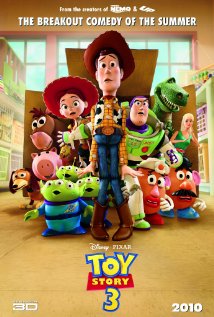
Toy Story 3 (2010), directed by Lee Unkrich

Many years ago, I hired what I thought was a star teacher. He gave an excellent model lesson, had good references, and even played the guitar. Yet I soon discovered a serious flaw. He never wanted to deal with parents. It seems that, once long ago, he was abused verbally and emotionally by an insensitive school parent. The repercussions of that event still lingered and colored his approach to all parents. He was still angry with them, for they were the enemy. Ultimately, I had to let him go because our school welcomed parent engagement and did not see parents as adversaries.

The experience reminded me that sometimes we can let a bad experience define how we behave in the future. In truth, it is a great tragedy if we cannot move beyond a hurtful experience, if we permit anger and ill will towards others to dominate our lives.

Toy Story 3, an animated film that is a parable of human relationships, provides one classic example of this in the character of Lotso, the chief toy in a day care center full of dysfunctional and malevolent toys that lord over the new recruits who come to Sunnyside Day Care. Lotso has allowed a bad experience in his youth to forever taint his relationships with anyone he meets. The back story reveals that Lotso also was once a treasured toy, but his owner abandoned him, or so Lotso thought. In truth, she lost him and did not deliberately abandon him. Lotso, however, lived on the false myth of his abandonment and made that bad experience the seminal one in his life. Anger was what drove him and defined him.

Into Lotso’s monstrous world enter a group of naïve toys, who fear obsolescence when their owner, now grown up, departs for college. They fear abandonment, but take heart in the possibility of finding a warm and friendly environment of a local day care center. From a distance it looks attractive. But a closer look reveals that the ownerless day care toys are not only used but abused. The kids at the day care do not feel any emotional connection to the toys. The children play with the toys and then toss them away. In contrast, the new recruits, accustomed to an owner who had invested in a relationship with them, want in some way to replicate that situation. They want to feel valued, emotionally connected, and respected. The toys are truly us.

Their first impression of Lotso is positive. He is soft spoken and huggable on the outside, but they do not realize he is an angry monster on the inside. His past anger has determined his future.

Jewish tradition tells us that anger is one of the worst traits to possess. In fact, the Talmud compares it to idol worship. When one is angry, it is a manifestation of a lack of belief in God’s providential supervision of the universe. After all, how can one be angry if God is in charge of things? It is a Jewish mode of sensibility to presume that from the aspect of eternity, everything ultimately will make sense because God is orchestrating events in a hidden way which our finite minds cannot comprehend at the moment.

Lotso, whose life is defined by anger, reminds us not to allow negative memory tapes of the past to determine our present or future. It is a bad thing when anger lives rent-free in our brains and influences our present relationships.

Purchase this movie from Amazon.com.

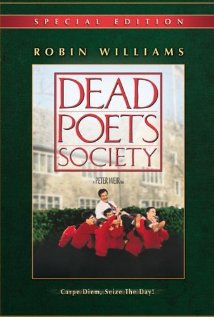
Dead Poet’s Society ( 1989), directed by Peter Weir

One of my children once ran away from home. My late wife and I were distraught. We were about to call the police when I discovered our missing son in the backyard. My son and I had a disagreement of some kind and he had disappeared. But he did not go very far. He just wanted to get my attention, and so he hid in the backyard. This unsettling and frightening experience was a watershed event in my parenting life. Until then, I assumed that the tool box of parenting skills that I had used with my other children would work with all my children. But now I received a wake-up call reminding me that every child is different and I would have to modify my parenting techniques to reflect the idiosyncrasies of each child. I finally understood profoundly King Solomon’s statement in Proverbs that we should “train a child in the way he will go.” When it comes to parenting, one size does not fit all.

Dead Poet’s Society is primarily about a charismatic teacher who profoundly influences his students, but it is also a film about the dynamic between parents and children, about parental expectations on the one hand, and the aspirations of children on the other. Are the two in sync? When Proverbs exhorts us to “train a child in the way that he will go,” it means that parents need to understand the natural inclinations of a child and encourage him to use those natural abilities and interests to develop his own adult identity. When Jewish tradition instructs a parent to teach his child a trade, the choice of trade is not written in stone. The presumption is that the child will choose what suits him with parental input, but not parental control.

When a parent wants control, not mere input, there is conflict, especially during the teenage years. Neil Perry, an outstanding high school student, wants to be an actor. He is passionate about it and, without his father’s knowledge, tries out and wins the part of Puck in Shakespeare’s A Midsummer Night’s Dream. When his father discovers his son’s deception, he decides to remove his son from the school which he loves in order to end to his son’s acting ambitions. The emotional strain of this parent-child conflict ultimately has a tragic end, reinforcing the notion that children should be allowed to listen to their own inner voices when it comes to choosing one’s life work.

This parent-child struggle contrasts with the positive relationship between a teacher, John Keating played by Robin Williams, and his students. The teacher encourages the students to think for themselves, to do something extraordinary with their lives. He tells them to seize the day and enjoy poetry, beauty, and love, all things which make life worthwhile. Thoreau is Keating’s literary icon, a writer who listens to the sound of a different drummer, who desires to “live deep and suck out all the marrow of life.” Thoreau did not want to die and discover that he had not lived. Keating wants his students to share that robust perspective on life. He invites them to stand on their desks and see things from on high, anticipating that the exercise will embed in their minds the value of seeing things from the balcony. From this vantage point, one can see new approaches to solving problems, new ways to approach the givens of life.

Dead Poet’s Society has much to say about teaching, parenting, and life. Viewing it reaffirms the complexity of the never-ending task of both teacher and parent, who, in their own contradictory and loving ways, want to give children roots to plant and wings to fly.


Purchase this movie from Amazon.com.

Source Code (2011), directed by Duncan Jones

 As the years go by, I have become more conscious of time. I count my minutes. It is a mantra that I share with my students as well. When I begin the school year, I inform them that there are two rules in my class: do your best and don’t hurt other people. This means do not prevent other students from learning. When a student talks without raising his hand, when he interrupts another student who has the floor, he is, in effect, preventing other pupils from learning. Furthermore, he is stealing precious time from class, preventing me from maximizing class time for teaching. I tell students that I count my minutes because time is precious. A minute can be an eternity. Consider for a moment the two-minute warning in a professional football game. Destinies can change in a matter of seconds.

This is one of the themes of Source Code, a science-fiction thriller cast in the present, which describes a bold and innovative attempt to avoid a major disaster by injecting a person into a continuum of events eight minutes before one calamity strikes in the hope of averting a second disaster in the future. Sounds weird? It is, but it also provides a meditation on what living in the moment really means. Amazing things can happen if one is aware of the consequences of each passing minute. Source Code reminds us that the same basic events can be experienced in different ways if we will it so, if we truly understand the consequences of each one of our actions.

The movie also addresses a seminal question we have all asked ourselves at one time or another: “What would you do if you knew you had less than a minute to live?” The question forces us to focus on the present moment. Will it be our last? The Ethics of the Fathers, an example of classical Jewish wisdom literature, does not ask that question, but it does suggest a similar mindset.  We are advised by the Rabbis to think of every day as potentially the last day of our lives. This is not to encourage pessimism or depression, but to spur man on to live life to the fullest, to make every day count, to make each day meaningful.

There is a corollary to understanding the value of time. If there is enmity or ill will between friends, between spouses, between parent and child, reconciliation is a priority. Time does not allow for a slow resolution to conflict. In Source Code, this desire for reconciliation finds expression in the fractured relationship of the hero, Captain Colter Stevens played by Jake Gyllenhaal, to his father. Their last conversation was difficult and strained; but now both want to be at peace with one another. Both want emotional wholeness. Colter Stevens now understands, in his heightened state of awareness somewhere between life and death, that if he knew when he spoke with his father that it would be their last communication, he would not have argued with him. He would not want to leave a legacy of bad feelings between them. He would want to tell his father that he loved him just as his father would want to reaffirm his love for his son in any time of crisis.  Facing death also gives Colter a greater appreciation of life. He looks around and remarks “Such a beautiful day.” He sees people laughing and it makes him treasure moments of happiness.

Source Code demonstrates the power of a minute. It implicitly implores us not to waste time, our most valuable commodity, and to repair our damaged relationships without delay.

Purchase this movie from Amazon.com.

Raiders of the Lost Ark (1981), directed by Steven Spielberg

There is a time in everyone’s life, including my own, when things don’t go the way you want. This happened to me when I turned 60 years of age. I realized as I sought to find another position as a high school principal that I was no longer perceived as the “future” by others. Schools were looking for younger, dynamic leaders; and even though I felt at the top of my game professionally, no amount of conversation with school boards could change the reality of my age.

Looking for work in education, I was faced with rejection after rejection as a head of school. Thankful that I had good health, and knowing that God would only give me challenges that I could handle, I optimistically continued my job search, finally finding work as a family educator with a community Kollel. Landing this job eventually opened me up to new possibilities, and thus began my reinvention several years later on the job market in Israel where I am currently residing. I now write business articles for an internet website and supervise the English Department of a boys’ yeshiva in an ultra-religious neighborhood in Beit Shemesh. My new schedule allows time for daily Torah study, exercise, and writing a long-postponed book. As my mentors often told me and as I now understood first-hand, “when one door closes another door opens.”

This mature perspective in life is serendipitously depicted in the rollicking adventure yarn, Raiders of the Lost Ark. When I first saw it many years ago, it was an entertaining action flick; but the second time around, I saw life lessons in the exploits of Indiana Jones, the movie’s protagonist, who is thrust into one crisis after another, only to emerge wiser from each ordeal. In his search for the lost ark, he confronts adversaries everywhere he turns: physical threats from Nazis, competition from other archeologists, and even from a cave full of snakes. In every instance, he never loses hope, and somehow emerges from these crises a wiser and stronger man. Moreover, he never loses his innate optimism or his focus on his ultimate goal of finding the lost ark. Proverbs tells us the “seven times the righteous will fall, yet rise again.” This saying encapsulates the way Indiana Jones lives. He never gives in or gives up, knowing that to do so will short circuit his dreams.

Our Sages provide a fitting postscript for the conclusion of Raiders. In the Ethics of the Fathers (2:21), they tell us that our job is to begin the task even if we are not there at the end to see our life’s work realized. We are only responsible for input. The outcome of our travail is in God’s hands. This profound life lesson is given visual expression when we see the lost ark, instead of finding its resting place in a prestigious museum, consigned to a storage warehouse in Washington, D.C., probably never to be found again. It is an ironic but true image of man’s inability to control the outcome of his efforts. All we can do is try our best and get ready for the next chapter in our lives.

Purchase this movie from Amazon.