 A friend of mine scheduled hip replacement surgery. He and his wife visited the surgeon who had been recommended by many. After the meeting, my friend and his wife came away with different impressions. While both felt the surgeon was highly competent, the wife detected a streak of arrogance in the doctor, and it bothered her. She preferred a surgeon who radiated humility, not pride. The husband felt that, at the end of the day, God is the healer, not the surgeon, and the surgeon’s arrogant attitude was not a reason to choose another doctor.
An extremely competent but prideful physician is the main character in Dr. Strange, the origin story of Marvel comic book hero Stephen Strange, a gifted doctor who sees himself as a mini-god. The opening segment of the film depicts a tragic car accident that results in catastrophic injury to his hands. He can no longer work as a surgeon and feels life is over.
One day, however, he hears about a fellow who was paralyzed and who, without medical intervention, regained the use of his limbs. To do this, the man journeyed to a faraway place in Katmandu, Nepal, called Kamar-tal, where he learned to use his mind to overcome his physical paralysis.
Strange decides to travel to Kamar-tal. There he meets people proficient in the mystic arts including The Ancient One, and Mordo, a sorcerer. These practitioners of magic exist in an alternate reality, which strives to rescue the world from enemies existing in other dimensions.
Under their tutelage, Strange moves from being a self-centered egotist to a person genuinely concerned about the fate of others. Moreover, he now believes not only in science but accepts other sources of knowledge that do not function according to the rules of science. At the outset of his psychological journey, he states: “I do not believe in fairy tales about chakras or energy or the power of belief. There is no such thing as spirit! We are made of matter and nothing more. You’re just another tiny, momentary speck within an indifferent universe.” At journey’s end, he comprehends that he is not the center of the universe; but, rather, some spiritual power is. Furthermore, his brush with death has made him value life more. The Ancient One tells him: “ Death is what gives life meaning.” That piece of wisdom resonates within Strange; life’s brevity makes him treasure each moment more.
These valuable life lessons are part of Jewish tradition. The Jewish belief system is built on the notion there is both a spiritual and material world and that what we do on this earth transcends the physical. Indeed, our earthly lives eventually morph into a purely spiritual existence on another plane where we are held accountable for the good and bad things we have done.
Moreover, the Sages in The Ethics of the Fathers remind us to repent one day before we die. Since we do not know when they day will arrive, we are to live with an awareness that each day might be our last. Therefore, each day should be filled with good deeds. Thinking about mortality is good because that thought will spur us on to a life of greater accomplishment.
Neurosurgeon Dr. Stephen Strange does not suddenly become a paragon of humility, but he does learn that life has other dimensions than the physical. Moreover, he learns that a mission-driven life can involve more than one mission, and that a person’s mission can change depending on the turnabouts in one’s own life. Indeed, Dr. Strange, a fictional comic book story, offers one model for cultivating humility and discovering our true destiny.
 As a rabbi, I have often been asked questions relating to destiny versus free will. Can we change our destiny by exercising our free will? It is a complicated question and, from a theological perspective, not easily answered. It seems, however, that Judaism has an approach to looking at the problem. Let me explain. I have been involved in cases where congregants have someone in their family facing death. One traditional response to such a dire situation is to change the name of the person in a life-threatening situation. By doing so, we create an alternative ending, namely, life instead of death. I asked one of my Torah teachers how this works, and this is what he told me.
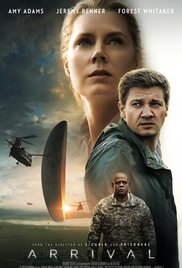
 At the Sabbath table here in Israel, we often invite guests, some of whom do not speak English. When we run out of words, I find that music, Sabbath melodies even without words, can sustain the conversation. We do not have to understand one another in a conventional sense. The music and its harmonies bring us together and we are communicating on another level. Music becomes the universal language. Close Encounters o the Third Kind deals with a visit of aliens from another planet. Although they share no common language with earthlings, they are able to communicate with harmonic tones. Music brings them together.
 As I get older, I reflect upon the life I have led. Although I cannot change the past, I sometimes feel that I could have made different decisions that might have led to different outcomes. For example, if I had decided to become the chief rabbi of a small synagogue instead of an assistant rabbi at a large synagogue, my career path might have been different. In Atlanta, circumstances allowed me to switch my professional direction, and I became a high school principal instead of a pulpit rabbi. The opportunity would probably never have come to me if I began my rabbinic career as the chief rabbi in a small town.
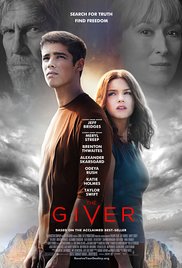 In one of the Israeli schools in which I taught, the students in one particular seventh grade class were mostly interested in parroting back information. The typical question I received was “can I read the next paragraph” or “what was my grade on the last test?” It was rare to hear a question that reflected a thinking, active intellect.
 For many years I would listen to inspirational tapes on my way to and from work. Most of the tapes were transcriptions of lectures from Rabbi Avigdor Miller, a contemporary Jewish ethicist, and Zig Ziglar, an icon in the field of motivational speakers. I gleaned insights from both of them, but one insight of Zig’s, in particular, resonated within me as I watched Avatar, a science-fiction tale of an exploratory expedition to Pandora, an Earth-like moon on which live the Na’vi, a human-like species, together with an incredible feast of plant life.
 In the Bible and Talmud, there are descriptions of people who respond admirably to adversity. In spite of whatever happens, they do not give up; rather they find a way to continue to be optimistic and productive, no matter what the obstacle.


 Kosher Movies