The Wrong Man (1956), directed by Alfred Hitchcock

wrong-man-posterWhen I taught Hamlet some years ago to a high school class in Atlanta, a student voiced surprise that Ophelia, a woman deeply in love with Hamlet, committed suicide. It prompted a class discussion about how friends experience great pain when they see a loved one suffering.

Such is the case of Rose Balestero in The Wrong Man directed by Alfred Hitchcock, who informs us at the beginning of the film that everything we are about to see is true.

Rose is the wife of Manny Balestero, a musician in the prestigious Stork Club in New York City. He enjoys his work, but is consistently in debt because of his small paycheck. When his wife needs money to have her wisdom teeth extracted, he goes to a life insurance company to borrow money against his wife’s policy. It is here that things fall apart. Several office workers identify Manny as the thief who robbed the life insurance company twice before. They summon the police and Manny is arrested on suspicion of robbery. In truth, their identification of Manny is faulty, but the witnesses claim they are sure that he is the robber.

Although the witnesses are not reliable, they cast aspersions on Manny. There is great emotional upheaval in the life of his family when Manny is incarcerated. Sadly, Rose eventually falls into deep depression because of the stress her husband is enduring. She feels his emotional pain so much that it causes her to lose touch with reality. Although Manny is eventually exonerated of the crime when the real perpetrator of the robbery is apprehended and clearly identified, Rose’s depression lingers for a number of years before she mentally recovers.

Having empathy for another human being is a classic Jewish sensibility, especially when dealing with the relationship between spouses. A great twentieth century sage and doer of good deeds, Rabbi Aryeh Levine, was known to be an exemplar of a person who truly cared about others and totally identified with their pain.

The Talmud tells us to love one’s wife as himself and honor and respect her more than himself. When Rabbi Levine’s wife felt pain her leg, they went to the doctor together. When the physician asked, “what can I do for you,” the rabbi responded: “my wife’s foot is hurting us.” He fully identified with his wife’s suffering because he viewed her as part of him. Our tradition tells us that a man’s wife is like part of his own body, and, therefore, husband and wife feel the distress of the other.

Empathy does not only relate to the relationship of one spouse to another. It is even a requirement in Jewish jurisprudence. Maimonides writes that only a person who has children can be appointed to the Sanhedrin, the Jewish Supreme Court, in order to insure a proper judgment. Maimonides felt that a judge must have the perspective of a parent, combining justice and mercy, if he is to judge wisely and compassionately.

Mendel Kalmenson, in an article on friendship, quotes the words of the Lubavitcher Rebbe on what it means to be empathetic and a good friend: “A friend is someone in whose presence you can think aloud without worrying about being taken advantage of. A friend is someone who suffers with you when you are in pain and rejoices in your joy. A friend is someone who looks out for you, and always has your best interests in mind. In fact, a true friend is like an extension of yourself.” The Sages inform us that spouses are one’s best friends. Clearly Rose Balestero is her husband’s best friend for she acutely feels his pain.

Furthermore, Kalmenson observes: “Empathy is not to be confused with sympathy. Sympathy is feeling bad for someone else; empathy is feeling bad with someone else.” Rose Balestero feels the pain of Manny, her husband, and it is overwhelming.

Empathy is good when it does not overwhelm us. If we can feel the anguish of loved ones, and still maintain our emotional equilibrium, then ultimately, we will feel their joy.

Purchase this movie from Amazon.com.

Fastball (2016), directed by Jonathan Hock

fastball-posterOne of my Torah teachers, Rabbi Aharon Rakeffet, is an avid baseball fan. He sees baseball as particularly engaging for students of Talmud. His reasons? “Because it’s slow-moving and you can think,” he said. “Every play requires you to ponder what to do. How shall I react to the reality that I see on the playing field? What play are you going to use? In other sports, it’s quick; you don’t ponder what will happen next. Things move very fast in basketball and football. But in baseball you have questions. Is the pitcher or the batter a left-hander, a right-hander, will the fielders pull the infield in, push the outfield back, give up the run, worry about the bunt, go for the double play, the squeeze, should he steal, what do you do, put him in scoring position, hit away. There’s so much involved that you have time to think. To me, if you have that Talmudic mind, it’s one of the reasons you like baseball.”
The Talmudic mind is on display in Fastball, an intellectually engaging documentary about the fastest pitch in baseball, but also a trip down memory lane visiting the baseball greats of the past. The narration by Kevin Costner focuses on the confrontation between batter and pitcher that is fraught with tension and peril. The ball is thrown upwards of 100 miles per hour toward the batter’s head. The pitcher intimidates while the batter exhibits caution, vigilance, and nerves of steel. The film considers the extent to which the speed of the ball influences the success of the pitcher and the ultimate outcome of the game.

Tracing the origins of the fastball compels one to visit the evolutionary history of baseball by interviewing celebrated players from both the past and present. Moreover, there is a scientific/mathematical analysis of the speed of the ball from the pitcher’s mound to the batter’s box, which enables the viewer to understand fully the impact of speed on the ball’s rotation.

After considering which pitcher has the best fastball, there is a vignette about a pitcher who is no longer remembered by the vast majority of fans and players even though he was reputed to have the fastest pitch. Why is this? Because even though he had the fastest pitch, he lacked consistent control of the ball. Speed alone does not make winners; only when speed is harnessed to control does winning occur.

This sensibility of balancing speed with control and mastery existed in Jewish academies of learning in the past and exists today as well. In many of these post-high school institutions of learning, there are two categories of classes. One class moves with alacrity and covers lots of Talmudic ground, but does not go deeply into the text. The second, more advanced class, moves more slowly and spends lots of time analyzing the nuances of the text. The great scholars emerge out of the second group of classes, which not only covers ground, but enables students to attain mastery of a topic. Speed alone does not produce success.

Fastball ultimately informs us that Nolan Ryan had the fastest pitch along with the most control of the ball. Interestingly, he had a long baseball career pitching for a number of teams.

It is this mindset of being both fast and controlled that contributes to success in all areas of life. When we are energetic and quick and combine that with a thoughtful demeanor, we increase our chances for success in life. In the Ethics of the Fathers, we are told to rise like a lion and be as swift as a deer, but we are also cautioned to be deliberate in judgment. Speed unfettered by reason leads to accidents. Speed buttressed by the attribute of control leads to success.

Purchase this movie from Amazon.com.

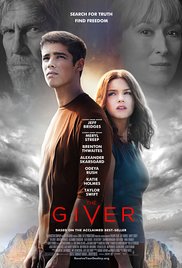
The Giver (2014), directed by Phillip Noyce

giver-posterIn one of the Israeli schools in which I taught, the students in one particular seventh grade class were mostly interested in parroting back information. The typical question I received was “can I read the next paragraph” or “what was my grade on the last test?” It was rare to hear a question that reflected a thinking, active intellect.

At one point I even told the students that unless they began asking thoughtful questions, the class would become boring for me to teach. I told the students I needed them to respond to the literature I taught. I did not want them only to behave; I wanted them to feel the power of the poetic image or verse. I wanted them to consider the meaning of the works we read. I wanted my students not only to think but to feel.

The Giver, a story set in some future time after a nuclear war, describes a society that wants its citizens to think and not to feel. What is paramount is living in tranquility without strong emotions that potentially can corrupt society. Therefore, citizens have their memories wiped out to insure a stable and peaceful world in the future.

The narrative follows the life of teenager Jonas who, after the completion of high school, is assigned a specific vocation in the community together with other teens in the city. The matching of student and vocation takes place in a public ceremony, and Jonas’s mission is saved for last. Unlike his peers, Jonas is chosen to be the new Receiver of Memories because he possesses the four attributes of intelligence, integrity, courage, and an ability to look beyond the present moment. The person charged with instructing Jonas about the past before the cataclysmic destruction of society is the Giver, an old man who is a living repository of all past memories.

Memories of the past both enlighten Jonas and frighten him. In dreams he sees visions of happy scenes and images of violence and destruction. The Giver explains that Jonas’ confused emotional state will create problems for himself and society. In spite of this, Jonas begins to appreciate the role of emotion, which makes life a richer experience.

He shares his newfound wisdom with friends, but the Elders are worried that his actions will destroy the tranquility of their society. The conflict between the Elders’ desire to preserve the status quo and Jonas’ desire to reinsert emotion into the lives of the citizens leads to tension and conflict. Finding balance between emotion and reason in society and in one’s personal life is the theme of The Giver.

Traditional Judaism promotes balance between emotion and reason. It is good to think and it is also good to feel. For example, the Sages tell us that prayer should not only be cerebrally understood and recited; it should also express the heartfelt sentiments of the supplicant. In reciting the daily prayers, Rabbi Shimon says that one should not make his prayers routine; rather they should express the deep emotion of the person praying. One should try to feel God’s presence.

Moreover, God reveals Himself in the Book of Genesis by two Hebrew names: Elokim and Hashem. Our Sages tell us that Elokim refers to God acting as a God of stern judgment and reason; Hashem refers to a God acting with mercy and compassion. For the world to exist, there most be a combination of justice and mercy. Just as God possesses both attributes, so too should humans. Reason without emotion is unnatural and potentially harmful.

Jonas arrives at this truth as he learns from the Giver, who we discover is not simply a repository of past memories, but a person of feeling who wants future generations to be human in the fullest sense of the word. He reminds us that life is richer and more complete if we experience the agonies and ecstasies of the human experience.

Purchase this movie from Amazon.com.

High Noon (1952), directed by Fred Zinnemann

high-noon-posterThere have been times in my rabbinic and educational career when I tried to enlist the aid of friends to move a particular project forward. I would speak to many acquaintances, all of whom gave me warm expressions of support. But when it was crunch time, they were with me in spirit only, but not in terms of giving me dollars for my project.

I realized then that I would have to go it alone, and I often applied to foundations for funding rather than solicit individuals within the community. The experience of not successfully fundraising for a project was disappointing, but it taught me a valuable lesson echoed in The Ethics of the Fathers. There it states: “In a place where there is no man, strive to be a man.” If there is a critical project that needs to be done, and no one steps forward to help, then you should be prepared to do it yourself.

Such is the predicament of Marshall Will Kane in the classic western High Noon. The film opens as three outlaws ride into Hadleyville to meet the noon train on which is riding Frank Miller, a notorious criminal whom Kane has arrested for murder and sent to prison several years before. Now Miller has been pardoned and he is traveling to Hadleyville to settle old scores with those responsible for his incarceration.

Serendipitously, Kane is getting married to pacifist Quaker Amy Fowler that same day in the morning. At his wife’s wishes, he is leaving his position as Marshall and looking forward to a quiet time in life. The community encourages him to leave town before Miller and his men arrive, and he does. But once on the open road, he turns his buckboard around. He feels that Miller will continue to hunt him wherever he is and the townspeople, without a new marshal in town, will be defenseless against Miller and his cronies.

Kane solicits the help of the townspeople, but to no avail. He walks to the local saloon to get volunteers and they reject his overtures. He then goes to the church, interrupting the sermon, to get help. The congregants are more civil, but again he comes up empty-handed. Slowly, it dawns on him that he will have to face Miller and his henchmen alone. With that sobering thought, Kane writes a will, which he leaves in his desk drawer, to be opened in the event of his death.

When it is high noon, the train arrives and Miller gets off to meet his gang. They walk into town looking for Kane. The camera shows Marshal Kane all by himself on the deserted street. It is an iconic scene, emblematic of the formidable challenge he has to meet: one lonely man against four very bad men who want to kill him.

Jewish history has within it models of reluctant heroism and leadership, the most famous of which is Moses. He does not thirst for glory. He does not want to be the center of attention, but he eventually understands that he is the only man to lead the Jews out of slavery in Egypt to freedom in the Promised Land.

When he sees a slave being abused by an Egyptian, Moses looks “this way and that.” The Biblical commentators suggest that Moses was looking for help, for someone else to take action, but no one did. At that moment, he realized that it was up to him to act.

Will Kane in High Noon is tempted to leave town and save his own life, and he contemplates that course of action briefly. But in a moment of moral clarity, he decides to protect the community even though he must act alone. In the end, doing the right thing trumps personal considerations.

Purchase this movie from Amazon.com.

Ushpizin (2004), directed by Gidi Dar

ushpizinA friend of mine and his wife occasionally have discussions about whom to invite for Friday night Sabbath dinners. She favors inviting old friends. He prefers inviting new faces because he wants to know those who are unknown. He prefers the unpredictability of new faces and feels that the good deed of inviting people to one’s home is better fulfilled when one does not know the guests beforehand.
Jewish tradition requires us to be hospitable, especially to those is need. Is this ethos of extending hospitality represented by inviting people we know or people we don’t know, or are there other criteria to keep in mind? The Israeli film Ushpizin, which means guests in English, suggests an approach to an answer.

It is the festival of Sukkot in Jerusalem in an ultra-orthodox neighborhood. The holidays require Jews to build a temporary shack and to live in it for seven days. There is also a commandment to wave a palm branch and a citron, together with a myrtle and willow, during the holiday liturgy. Moshe and Mali Bellanga, however, are impoverished and do not have money to buy a sukkah or to purchase the four species. And then “miracles” occur. A friend finds an abandoned sukkah for Moshe and an anonymous donor slips $1000 under their door.

These miracles, however, become tests. Moshe uses part of his money to purchase a citron at an extravagant price, upsetting his wife Mali, who wanted to use to money to pay off debts. Moshe knows that the truly happy person is the one who is content with little, yet he succumbs to his desire to acquire a citron far beyond his means when, in fact, he is not required to do so according to Jewish law.

Another test for them comes when two escaped convicts from Moshe’s past show up at this door. They apparently know Moshe from his previous life before he became religious, and Moshe and Mali debate whether they should welcome them as guests for the holiday. There are disadvantages. They are unsavory characters and their presence in the home may strain Moshe and Mali’s relationship. There will be no privacy and the guests may introduce a foreign lifestyle into their holy home. Moshe and Mali are people of deep faith, however, and they decide that these two men have been sent to them by God, creating a wonderful opportunity for Moshe and Mali to share the holidays with people less fortunate than them.

With each passing day of the holiday, the convicts bring more chaos into the Bellanga home, but Moshe and Mali continue to see each problem as a test of their religious faith. Their rabbi advises Moshe never to get angry, even when anger may seem justified. The life lesson that he imparts to him is to remain calm in the knowledge that all tests come from God. Facing a test and overcoming it refines our character and, by doing so, makes us better people.

Ushpizin depicts people living on the edge of poverty and not succumbing to negativity. Mali and Moshe do have arguments, but their different opinions do not shatter their abiding love for one another. They both recognize that whatever happens is ultimately the result of God orchestrating events from afar. Mali and Moshe always say “Thank God,” even when events seem to turn out badly. Moreover, they control their anger, allowing them to see things from the aspect of eternity. Their daily expressions of thanksgiving to God and their control of anger remind us of what it takes to truly be a holy person.

Purchase this movie from Amazon.com.

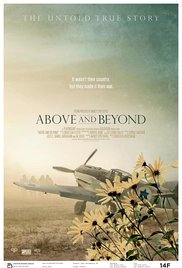
Above and Beyond (2014), directed by Roberta Grossman

above-and-beyondA “lone soldier” home is located around the corner from me. What is a “lone soldier?” He is a volunteer who serves in the Israel Defense Forces even though he has no immediate family with him or her in Israel. Reliable sources tell us there are over 6000 of them serving in the army.

What makes someone volunteer for such service? One answer is given in the stirring documentary, Above and Beyond, which tells the story of a group of World War II pilots who, in 1948, volunteered to fight for Israel in its War of Independence. They knew that Israel was about to be attacked by its Arab neighbors and that the country might not survive the onslaught of so many powerful enemies unless it had help from others. They viewed themselves as being on the cusp of history and they were determined to do whatever they could to enable the new nation to survive. This diverse band of brothers fought in key battle theatres and laid the groundwork for the Israeli Air Force.

The narrative begins with the United Nations resolution to divide Palestine and the British decision to leave, opening up the way for an Arab conquest of the land. Into that perilous situation steps a group of volunteer Jewish American former World War II pilots who help the Jews secure planes and fly them into the line of fire, preventing the Arabs from driving the Jews out of Palestine.

What gives the film authenticity is actual footage of the original aircraft and contemporary interviews with the pilots who flew them. What is remarkable is the fact that these soldiers who survived the hazards of World War II voluntarily placed their lives in danger to help the fledgling state of Israel.

Indeed, there is a rich tradition of volunteerism in Jewish history. The basic commandment “to love your neighbor as yourself” sets the tone, encouraging all people to help one another in times of crisis. The commandment relates not just to requiring the rich to assist the poor, but includes all situations where people are in need of help. In truth, the notion of helping someone can relate to lifting his spirits as well as giving him charity. Furthermore, history records that such diverse causes as Jewish schools, burial societies, providing money for impoverished newlyweds so that they can establish their own homes, self- defense organizations, health and emergency medical centers all began under volunteer auspices.

The Talmud tractate of Sanhedrin tells us: “Whoever destroys a single life is as guilty as though he had destroyed the entire world; and whoever rescues a single life earns as much merit as though he had rescued the entire world.” This mindset energizes the American pilots who want to prevent another Holocaust. They view their rescue mission as an opportunity to make a difference in the historic destiny of the Jewish people. For them, to save one life is to save the world.

Moreover, the Ethics of the Fathers states: “If I am only for myself, what kind of person am I?” The pilots are idealistic, unselfish, and willing to take risks. This combination enables these men to defy logic and convention, to try the impossible and sometimes achieve it.

Above and Beyond provides a window into a little known but important part of Israel’s history. It informs us that most volunteers are motivated by wanting to do the right thing, not by visions of being recognized publicly or getting financial benefit. It is gratifying to watch ordinary people rise to the occasion and make mighty contributions to the Jewish people that ripple into the future. Above and Beyond reminds us that heroes are often ordinary people meeting extraordinary challenges.

Purchase this movie from Amazon.com.

Glen Campbell: I’ll Be Me (2014), directed by James Keach

glen-campbell-ill-be-meA couple of years ago, a friend of mine was diagnosed with Alzheimer’s Disease. I did not see him often, so it was unnerving for me to see him so helpless and confused when I finally visited him. Once a robust, intelligent, and expressive man, he was a shadow of his former self, needing almost 24- hour care. Now his family only had memories of the great man he once was.

I was surprised when I heard about the documentary recounting the life of musical icon Glen Campbell. Titled Glen Campbell: I’ll Be Me, the film deals primarily with his Alzheimer’s diagnosis and the subsequent 151-farewell tour show upon which he embarked both to celebrate his music and to share his experience of dealing with Alzheimer’s.

Over the span of his career, Glen Campbell created a large catalog of hit songs including “Rhinestone Cowboy, “ Wichita Lineman,” and “Gentle on My Mind.” He began as a country music star and was the first to crossover into contemporary popular music. In this sense, he opened to door to thousands of country musicians who, until that point in time, played music exclusively for country music fans.

Campbell was diagnosed with Alzheimer’s in 2011. Together with his wife Kim, they decided to go public with the diagnosis and begin a “Goodbye Tour” that was initially supposed to be for three weeks. However, due to strong emotional support and appreciative audience reactions, they continued with a nationwide tour that lasted for 151 shows.

The film begins in the doctor’s office with the diagnosis and it is fascinating to observe the physician’s questions as well as Campbell’s responses. His answers reveal that his memory is becoming more selective about what information it retains. For example, Campbell may not remember who was the first president of the United States because he thinks this is not useful information. However, he remembers song lyrics and how to play the guitar because these things still matter to him.

As the tour progresses, the quality of his performance declines, but his myriad fans do not seem to mind. They consider themselves fortunate to be present at what will probably be one of his final concerts. Throughout the tour, his family and small cadre of musicians, some of whom are family members, give Campbell support and love no matter the outcome of a particular performance. His children feel blessed to spend this time with their Dad.

Near the end of the tour, the question is asked why Campbell agreed to do the tour. The answer: he genuinely wanted to perform again and his family felt that his performance would give more media attention to Alzheimer’s, a disease afflicting so many Americans, and, by extension, to their caregivers whose lives are dramatically changed when they take care of loved one who may not even remember their names or who they are.

Jewish tradition emphasizes the dignity of man. We all are created in God’s image and are deserving of respect no matter our physical or mental condition. The image of God can still exist in a body damaged by disease or in a mind damaged by mental illness. Alzheimer’s does not define our value from the aspect of eternity.

One of the most touching moments in the film occurs when Campbell sings “A Better Place, “ a song that expresses his hopeful spirit in the midst of his mental decline. Here are the lyrics that resonate: “Some days I’m so confused. Lord/ My past gets in my way/ I need the ones I love, Lord/ More and more each day/ One thing I know/ The world’s been good to me/ A better place awaits, you’ll see.”

Glen Campbell: I’ll be Me is a one-of-of-a-kind movie, a film that reminds us of the fragility of life. What life is like today may not be what it is tomorrow. This is a life lesson that relates not only to those afflicted with debilitating disease, but to all of us making life’s journey.

Purchase this movie from Amazon.com.

The Age of Adaline (2015), directed by Lee Toland Kreiger

age-of-adalineI am 73 years old, and since coming to Israel six years ago, I am officially a vatik, a senior citizen entitled to discounts on the bus and to reduced admissions at sundry places. Some people actually offer me their seats on public transportation. It makes me uncomfortable to be the recipient of these kindnesses and to realize that, at least in the eyes of some, I am old. I always thought the other guy was old and I was not, but that illusion is now shattered.
When I immigrated to Israel in 2010, I was automatically enrolled in a 55-plus club, no longer considered a young man. In my conversations with other members of the group, no one ever expressed to me a desire to be young again. All my new friends desired was to be healthy and not be dependent on the kindness of others, even if they were one’s own children. Moreover, the married couples seemed to enjoy growing old together. It was a time in life free of posturing or acquiring more stuff and, instead, allowing love to flow freely between spouses and parents and children and to be satisfied with little. A perfect life was simply to grow old together in good health.

 The Age of Adaline presents a unique perspective on aging. Adaline Bowman was born in 1908, married, and had a daughter. No long after her husband died in a work-related accident while building the Golden Gate Bridge, she drives to her parents’ home. Snow begins to fall, making the road hazardous. Her car crashes and a freak electrical storm ensues, creating an unusual chain reaction that causes Adaline to remain 29 years old forever.

Adaline researches her condition but cannot find clues as to why she remains young as others grow old. After being accosted and frightened by local and federal authorities, she resolves to leave San Francisco and establish a new identity every decade.

All is calm until she meets Ellis Jones, a wealthy philanthropist, at a New Year’s Eve party. She at first rejects his advances. But Ellis persists pursuing her and finally convinces her to have a date with him. At the date, Ellis reveals much about himself, but Adaline reveals little of her past. Their relationship deepens and Ellis invites her to visit his parents on the occasion of their 40th wedding anniversary.

When Ellis’ father, William, sees her for the first time, he instinctively calls her Adaline, for she reminds him of a woman with whom he had a past relationship and to whom he intended to propose marriage. Although Adaline informs him that Adaline was her mother, William is still puzzled at her stark resemblance to the love of his life so many years ago. The unraveling of the mystery of Adaline’s past and present life with William and Ellis makes us ponder the meaning of aging in our youth and old age.

The Ethics of the Fathers makes some important observations about reaching various stages of our life. The Sages tell us that at 5 years old, we should begin our study of the Bible, at 10 we should begin study of Mishna, the Oral Law, at 13 we begin to perform the commandments, at 18 we marry, at 20 we find a vocation, at 30 we are at our peak of physical strength, at 40 we understand life at a deeper level, at 50 we can give advice, and so the Sages continue until 100. At different ages, we are ready to experience different things, to develop ourselves in different ways, and to make our own unique contributions to society depending on our strength, our talents and our wisdom.

Adaline’s dilemma is that she is stuck at age 29. Life is imperfect because it stays the same. Finally, when her dilemma is serendipitously resolved, she notices a grey hair and her immediate response is “perfect.” Now she can grow old with someone she loves and now life becomes more meaningful because she experiences the phenomenon of change.

The possibility of change makes the present more precious. When we sense that life is transient, every day is cherished. When Adaline’s finally ages, it reminds us that growing old is a good thing for it makes us treasure each moment. Life now can be perfect.

Purchase this movie from Amazon.com.

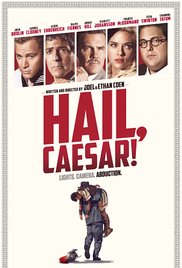
Hail, Caesar (2016), directed by Ethan and Joel Coen

hail-caesar-posterAs a high school principal, I often found myself multitasking. Professionally, I was teaching, administrating, and trying to raise money to pay salaries. Personally, I was trying to be an exemplary father and husband.

A constant challenge was to set priorities, to distinguish between the urgent from the truly important. It was not always easy to see the difference when I was dealing with an important educational issue and a salary deadline was only days away.

Seeing Eddie Mannix, the central character in Hail, Caesar, who is charged with fixing many crises in the Hollywood entertainment industry, reminded me of the many times I had to juggle many tasks at one time, each requiring a slightly different skill set and each demanding time and attention.

Hail, Caesar takes place in Hollywood during the 1950s. Eddie is charged with protecting the reputations of studio stars. Moreover, he works to solve sensitive issues related to movies that are in production or about to be produced. For example, in a Biblical epic about Christ, he consults with a Catholic priest, a Protestant clergyman, and a rabbi to insure there will be nothing that will offend any religious sensibility. Concurrently, he is working with Western cowboy star Hobie Doyle who is brought in by studio heads to star in a British comedy of manners. Here the problem is how to enable Hobie to drop his Southern drawl in favor of a British accent.

Things become more dicey when movie star Baird Whitlock, the actor playing the Roman Autolycus in the Biblical epic about Christ, is kidnapped by a group of communist screenwriters who feel that the major studios have abused them and taken advantage of them. They want Baird to champion their cause.

Baird’s abduction forces the movie to change its shooting schedule until he is found. Meanwhile, newspaper gossip columnists sense there is a story behind his disappearance and they go to Eddie to get answers. As Eddie finesses his way in giving information to the columnists, he receives word that the kidnappers are demanding a $100,000 ransom. In the midst of all this turmoil, a major corporation recruits Eddie to become a fixer for them.

Jewish law and tradition does not deal specifically with multi-tasking, but does consider two related topics: kavannah or intention, and hesech hadaat, distraction. Kavannah relates to the ability to concentrate, to focus on a present task. For example, when one is praying, one is supposed to focus on the words as he attempts to connect to the Creator. In the Talmud, there is a discussion whether we fulfill a ritual act if, in fact, we are unfocused when we do so. Many of the Sages rule that if one is unfocused during prayer, he has to recite the prayer over again.

Distraction also is a factor in multitasking. If your intention wanders during the ritual act, the act may have to be repeated. For example, Jews are required to ritually wash their hands before eating bread and then say a blessing. If there is conversation between the washing of the hands and the blessings, it is considered an interruption and one has to wash his hands a second time. Everything depends on one’s ability to concentrate no matter what the distraction.

Eddie Mannix is a master of positive multitasking. He succeeds in juggling many jobs at one time because he can shift his entire focus from one topic to another. He does not think about two things at the same time. Rather he moves from concentrating on one subject to concentrating fully on another subject in a matter of seconds. He knows that a wandering mind, an easily distracted person, is a liability to himself and others. Eddie Mannix reminds us that success comes to those who maintain focus in the midst of chaos.

Purchase this movie from Amazon.com.

The Parent Trap (1998), directed by Nancy Meyers

parent-trap-posterDivorce is often painful for husband and wife, but most certainly for children. It is an emotional upheaval, leaving many damaged souls in its wake. As a synagogue rabbi for a number of years, I generally encouraged people contemplating divorce to stay married, but they usually came to me after the die for divorce was cast.

I also served as a legal witness in many Jewish divorce proceedings. Invariably, they were sad events. A wedding that had started out with so much promise now came to a tragic conclusion. A relationship that began in love ended with acrimony. I recall divorce proceedings where neither spouse wanted to talk to the other, so bitter was their parting.

The Parent Trap is a domestic fantasy that starts with two people who are already divorced. The opening titles reveal a loving relationship between Nick Parker and Elizabeth James that begins on an ocean liner cruise. The story continues eleven years later at a camp in Maine, where we meet two girls, Hallie and Annie, who look exactly like each other. They discover they are actually twins, and their divorced parents have never told them about the existence of the other. Nick has raised Hallie in Napa Valley where he grows vintage wines and Elizabeth raises Annie in London as she builds a career as a successful wedding gown designer.

After Hallie and Annie discover that they are twins, they devise a plan to meet the parent they never knew. Each girl teaches the other to impersonate her, and they switch places at the end of their camp stay. Hallie travels to London and Annie to Napa Valley.

Their ruse works for a while, but eventually Nick and Elizabeth became aware of the elaborate charade orchestrated by their twin daughters. This leads them to rethinking their divorce, which occurred so many years ago, and what prompted the split. How this family conundrum is resolved is the stuff of romantic fantasy.

The Bible says that through marriage, man and woman become “one flesh.” The commentators say this means that each person in a marriage is like an actual limb of the other. Just as a person does not get upset at his limb when he has a pain in his arm or leg, so too should a person not be upset when a spouse occasionally causes him pain. That occasional discomfort is part of marriage, an arrangement that grows and becomes stronger in the crucible of life’s ups and downs.

A central Jewish concept is Shalom Bayit, peace in the home. When spouses get along with one another, God’s presence is felt in the home. Divorce is permissible in Jewish law, but it is a last resort. The Talmud (Sanhedrin 22a) tells us that when divorce occurs, the Temple altar metaphorically weeps as if to mourn the emotional tragedy of a marriage torn asunder.

The Parent Trap is a light entertainment with important messages. Firstly, when there is disagreement between husband and wife, one should act quickly to resolve issues and not allow them to fester. “Never go to bed angry” was a wise piece of advice I heard many years ago that has proved valuable during many years of marriage. The longer one waits to resolve a problem, the more difficult it is to resolve. Secondly, one should focus on the positives in a relationship and overlook the negatives as much as possible, especially when the welfare of children is at stake.

Nick and Elizabeth finally understand, after years of miscommunication, that there is more that binds them together than divides them. Their story reminds us to think twice before severing the ties that bind.

Purchase this movie from Amazon.com.