 For the past several years, I have been teaching in a middle school and a high school in Israel. I have observed that in dealing with 7th and 8th graders, the students tend to be very self-absorbed, interested only in what they have to say and not paying attention to the comments of others. In the high school, I see students more respectful of each other, more willing to listen to the opinions of a peer. There I see more students sensitive to the Biblical notion of “loving your neighbor as yourself.” Just as you would want to be heard, so too should you listen to the words of your neighbor and give his comments respect even when you disagree with him.
In Jewish jurisprudence, there is discussion as to what degree we should observe this commandment of loving our neighbor as ourselves. Do we observe it even when, by doing so, we put ourselves and our interests at a disadvantage? Is there some balance between our needs and the needs of others that needs to be struck?
This moral dilemma is portrayed in a scene in Unbroken, the story of Olympic runner Louis Zamperini, an airman who, during World War II, crashed into the Pacific Ocean on a rescue mission to locate a missing aircraft. Of the eight men aboard Louie’s plane, only three survive: Louie, Phil, and Mac. The three are able to inflate a life raft, and so begins their treacherous journey on the open sea.
They have limited food; and Louis, as the take-charge guy, tells his friends that they need to limit their consumption of food so that the meager food they have will enable them to survive until they are rescued. They have only one bar of chocolate and Louie tells them that they can eat one piece in the morning and one in the evening. Mac, however, decides to eat all the chocolate.
The Talmud (Baba Metzia 62a) discusses a similar case of “lifeboat ethics.” Two people are traveling in the desert and there is a jug with only enough water for one of them to survive. There is a difference of opinion as to what course should a person take in such a moral dilemma. One sage, Ben Petura, says that it is better if both of them drink rather than have one witness the death of the other. Rabbi Akiva, however, maintains that your life should come first before the life of your friend. This moral calculus is analyzed in contemporary volumes of Jewish law that deal with the conduct of men in battle who have to make decisions that affect the health and safety of others. Unbroken does not provide simplistic answers; it only raises the question.
Louis Zamperini, a practical man, does not compromise his integrity. He does not blame Mac for taking all of the chocolate for himself. He accepts the reality of Mac’s feelings and actions and then moves on to think of new ways to acquire food in the middle of the ocean. Louie, an optimist, does not lose his focus in the face of a setback. He continues to try his best to keep everyone alive.
When he finally is rescued, only to find himself in a Japanese prisoner of war camp. he again expresses his independent spirit. He is unwilling to bend in the face of physical punishment and extreme torture designed to undermine his humanity.
Louis Zamperini survives incarceration and even forgives his enemies. Years later, we see the real Louis Zamperini as a senior citizen running with the Olympic flag. He counts his blessings and traces his survival and success in life to his faith in God, which sustained him throughout all his trials. When faced with moral conundrums, Louie chooses the high road and becomes a model for us all.
 Occasionally I meet old friends whose life has passed them by. As young men, they seemed so full of promise. I thought they would be professional successes in adulthood with loving wives and children. Yet something happened along the way. They were barely making a living, had not married, and were a shell of their former selves.
 I was a mediocre high school student at A.B. Davis High School in Mt. Vernon, New York. One day when I had to turn in a book report about a book I had not read, I decided to copy a friend’s paper. I did not realize that my friend had plagiarized his paper, so my act of plagiarism was once removed from the original act. Nonetheless, I was submitting work that was not mine. My history teacher, Mr. Elman, for whom the report was written, discovered my duplicity and failed me for the course. He was very disappointed in me and I felt ashamed of what I did.
 On rare occasions, I have been confronted with having to make a decision knowing that if I decide one way, I will hurt someone I care about; and if I decide differently, I will hurt someone else. Either way, I will wind up alienating a friend.
 In the 1960s, when I was an undergraduate student at Yeshiva University, one of my good friends told me about a student group that traveled once a week to the home of Rabbi Avigdor Miller, a celebrated Torah scholar and ethicist. Once there, the revered rabbi would speak for about ten to fifteen minutes about a particular character trait and then give the students an assignment that would help us integrate that character trait into our daily lives.
 Terrorism is very much a part of the world’s landscape at this point in history. Terrorist attacks occur not only in Israel, but in the United States, France, and Belgium among other countries. The world is a scary place, and many are trying to figure out what is the intellectual and emotional appeal of this aberrant behavior, which destabilizes the world. The Dancer Upstairs is a quiet, thoughtful, and tense film that gives us some understanding of the philosophical and practical motives that drive terrorists in the modern world.
 From my early childhood, I was an avid moviegoer. My mother took me regularly; and when I grew older, I continued to go frequently. Movies captivated me because they transported me to faraway places and to exciting adventures. I lived in a small town and movies were my ticket to Neverland. Although I enjoyed movies, I generally did not think of them as accurate descriptions of the real world. They were fantasies, pleasing entertainments, and that was it.
 I began my doctoral studies in English in Atlanta in 1972. It was intended to be a 5-year program, but it took much longer because I was busy with earning a living and rearing a young family. I finally received my PhD in 1984, twelve years after I started.
 The Ethics of the Fathers tells us that one hour repenting and doing good deeds in this world is better than life in the world-to-come. Why? The Sages explain: we can only exercise our free will while we are alive. Therefore, we can choose to do good deeds only when we are alive. Doing good deeds is our mission on earth, so everything we do or don’t do influences our eternal destiny. That is why life in this world is so precious.
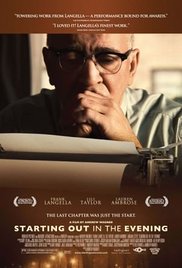 In the late 1960s, I was a graduate student in English at Hunter College, a division of the City University of New York. I read literary critics like Irving Howe and Lionel Trilling, and breathed in the air of the New York intellectual scene.
 Kosher Movies