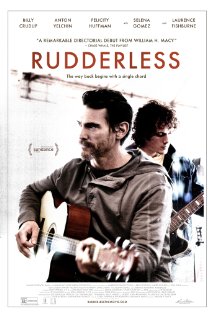
Rudderless (2014), directed by William H. Macy

rudderless posterBeing a father is complicated. I sometimes wonder when I look at my kids to what extent I was a good parent, to what extent am I responsible for who they are today. There are no easy answers. I am sure I was influential; but at the end of the day, my kids, like all kids, have free will and they make their own choices. I cannot control them. I can only give them a perspective from which to view life. I cannot determine their future actions.

This topic is at the heart of Rudderless, a thoughtful film about parent-child relationships and the extent to which parents influence and are responsible for their children’s life choices.

The film begins innocently as Josh Manning is recording his own songs on his computer in his college dorm room. His father Sam calls him after closing a big deal at his advertising firm and wants to celebrate with him, even encouraging him to cut class to meet him. Josh acquiesces. As Sam waits for his son Josh at a restaurant, he sees scenes of a campus shooting in which six students are killed. The next scene reveals a memorial wake in Josh’s home in which friends try to console both Sam and Emily, Josh’s divorced parents, over the loss of their son.

Sam is inconsolable. He is unable to continue at work and succumbs to alcoholism. The story continues two years later with Sam living on a sailboat and working as a contractor’s assistant painting houses. When he meets his ex-wife to sign papers allowing her to sell their former home, she leaves him a stack of things that belonged to Josh. At first, he is reluctant to take them since there is no storage room on boat. However, he notices some notebooks and CDs that pique his curiosity and he begins pouring over the material. He discovers songs, words and lyrics, written by Josh. The melodies and words give him a new insight into his son, and Sam teaches himself his son’s songs. Sam even performs one of them at a local “open mic” venue, which catches the attention of Quentin, a young musician who is inspired by the emotional power of the songs. Thus begins a relationship between Sam and Quentin, which morphs into the creation of Rudderless, a band that features the songs of Josh Manning.

Both Sam and Quentin are evasive about their past and this eventually strains their relationship. In one sense, Quentin becomes a surrogate son to Sam, who sincerely wants to connect with Quentin both musically and emotionally. Quentin becomes the son that Sam no longer has, and Sam wants to help him.

The story then takes a sharp unexpected turn, which compels the viewer to reevaluate everything that has gone before, and I do not want to reveal such a critical plot turnaround. Suffice it to say that the relationship between Quentin and Sam undergoes a crisis, compelling Sam to rethink his performance of his son’s music and his involvement with the band, which is growing in popularity each day.

A key issue considered in the narrative is to what extent we are responsible for our children’s actions, especially when those actions are very bad. Jewish tradition is instructive in this regard. When a Jewish boy reaches the age of thirteen, he has a Bar Mitzvah, a ceremony that marks the end of childhood and the beginning of adulthood. At this celebration, the father utters a declaration known as baruch sheptarani, which in English means “Blessed is the One who has relieved me from the punishment due to this one.” The Sages tell us that a father has the obligation to educate his son from birth until the age of thirteen. Once he reaches that age, the father is not required to educate his son. The implication is that until that age, parents can influence their child. However, after that age the child becomes more independent and less receptive to the correction of the parent. Indeed, the parent can still coach and guide, but it is more difficult to teach a child in a direct way.

The implicit message of the blessing’s recital is that parents should spend lots of time with one’s children teaching and guiding them before they reach their teenage years. Once those years arrive, parents have less influence, so they need to build up a bank account of love and respect with their children. This will make it more likely for their children to follow parental suggestions. Rudderless reminds us that we are not in control of our older children; therefore, we need to be very involved with them in their early years in order to be influential in the rest of their lives.

Purchase this movie from Amazon.com.

2001: A Space Odyssey (1968), directed by Stanley Kubrick

two thousand one posterI first saw 2001: A Space Odyssey in 1968. It was a landmark movie for me. Until then, I viewed movies primarily as entertainments that occasionally had a worthwhile message. 2001 was an intellectual, mind-expanding experience. I left the theatre fascinated and wondering what it was all about. The controversy over the film mushroomed over the years. Originally opening to mixed reviews, it became a cult favorite and thousands of people have written about it. I have my own view of the meaning of the film, which I will share with you; but in no way is my understanding of the film definitive. It just represents my thinking after viewing the film three times over the course of close to fifty years.

The movie is divided into three parts. Part One entitled “The Dawn of Man” depicts a serene African landscape populated mostly by apes who argue over rights to a waterhole. In the midst of their contention, a black rectangular monolith mysteriously emerges from the ground, and the apes view it with wonder. The next day one ape learns how to use a bone of a dead animal as a weapon, and he uses it to claim control over the waterhole. The sequence ends with the ape throwing the bone into the air and the bone morphing into a spaceship, which introduces the viewer to the second part of the film.

In this second part, we are introduced to Dr. Heywood Floyd, a scientist bound for Clavius, an outpost on the moon. Ostensibly traveling there to determine if there is an epidemic on the outpost, there is a veil of secrecy over the mission, suggesting another purpose for Dr. Floyd’s trip. Once on Clavius, Floyd and his team discover the same rectangular monolith that appeared before the apes in the previous sequence. The monolith seems to have emerged from the ground and been in existence for millions of years.

The third part of the film takes place eighteen months later as an American spaceship journeys to the planet Jupiter. Commanding the ship are mission pilots and scientists Drs. David Bowman and Frank Poole. Traveling with them are three other scientists in cryogenic hibernation, and the ship’s computer Hal 9000, who controls most of the ship’s operations. As they fly towards their destination, they discover that Hal is making errors and they struggle to determine the source of these apparent malfunctions.

They conclude that Hal is sabotaging the voyage and they attempt to deactivate him, which leads to a series of dire complications. In the process of disconnecting Hal, Bowman learns about the real purpose of the mission: to discover the origin and purpose of the monolith on the moon.

Bowman’s ship is then brought into a vortex of colored lights and designs, suggesting his transportation to an unknown location. When he arrives there, we find him in a tastefully furnished apartment in which he sees himself as an older man, and then as a dying man. As a man about to expire with his last breath, he sees the monolith at the end of his bed. He is then transformed to an embryo floating through space, which is the closing image of the film.

My summary of 2001 reflects the intellectual ambiguities embedded in the narrative. It is evident that the unexplained existence of the monolith is the image that unites the three sections of the film. In simple terms, the film glorifies science and technology, which enable the apes to become intelligent men and to harness technology in the service of man. The monolith, however, suggests the limitations of science. There are simply some things that cannot be known or understood.

Rabbi Nathan Cardozo does not talk about the monolith; but in a thought-provoking article on the intrinsic value of art, music, and natural beauty, he does comment on the limitations of science to explain the enigma of creation. He sees art as a vehicle to apprehend the unknowable, albeit in an intuitive way. He observes that science cannot give any insight into the mystery of existence, but natural beauty, the arts, and music can. He writes: “Real art does not reproduce the visible but rather reveals the invisible. Consequently, not even artists are able to explain the beauty that resides within their creations. In general, they cannot explain their art any more than a plant can explain horticulture. This failure of the rational mind to categorize and define puts man in direct confrontation with the ineffable, and warns him not to fall victim to the simplistic belief that science can give him any insight into the mystery of our existence.”

I do not think that 2001 has a religious agenda. However, hidden within the history of man from his origins as a half-man, half-ape, to a scientist probing the outer limits of the universe is the notion that man can never know the secrets of creation. The singular response to this cosmic mystery is to view the world with a sense of wonder. The closing image of the fetus in a sac observing the universe simultaneously reminds us of our limitations as human beings and of our ability to see the world anew each and every day just as a small child would view this amazing universe.

Purchase this movie from Amazon.com.


A Most Violent Year (2014), directed by J.C. Chandor

most violent yearThere have been times in my life when I wanted to respond to a provocation, but I realized that any response of mine would not solve the problem. I thought of a passage in The Ethics of the Fathers that advised me to control my response: “Who is strong? He who controls his inclination.” That is the real definition of power, being in control of one’s own emotions. Moreover, the Sages tell us “He who increases his words increases sin.” The more you talk, the greater likelihood you will say things that you will regret. All these thoughts came into my mind as I watched A Most Violent Year, the story of Abel Morales, the owner of a New York heating oil company whose integrity and self-control are tested in the crucible of city-wide violence and corruption.

Abel Morales is under pressure. His oil trucks are being hijacked, causing him to lose thousands of dollars in heating oil revenue. His drivers are assaulted and intimidated by thugs working for unknown competitors. His wife Anna encourages him to fight violence with violence, but Abel refuses to do so. At this same time, he is being investigated by the local district attorney for price fixing, tax evasion, and other nefarious practices. Adding to the pressure is a deal he has been working on for years: buying a fuel oil terminal on the East River, which will enable him to import more oil from barges and to store oil in the summer when the cost of fuel is low. Abel gives a down payment of 40% on the property with an agreement that he must close the deal in 30 days. If he fails to meet the deadline, the seller will offer the property to Abel’s competitors and keep the down payment.

As the hijackings continue, a friend suggests that Abel’s drivers carry handguns and he will provide fake permits for the weapons. Abel rejects the suggestion, fearing that any illegalities by his company will jeopardize the bank financing for the fuel oil terminal. In spite of his desire to do things legally, events transpire that threaten his company’s existence and his purchase of the terminal. Moreover, his family is the target of hoodlums who want to ruin Abel’s business.

Watching Abel trying to save his company, buy the terminal, and protect his family at the same time is a study of man in control of his emotions, always keeping his eye on his end goal and understanding that the path to that goal may be circuitous and unpredictable. In explaining his approach to adversity, he observes: “You should know that I have always taken the path that is most right. The result is never in question for me. Just what path do you take to get there, and there is always one that is most right. And that is what this is.”

There is a specific moment that captures Abel’s studied approach to dealing with calamity. It happens in a dialogue between Abel and his wife, whom he loves. She acquires a gun to protect herself and her children, but does not have a permit for the gun. Abel tells her that possession of a gun without a permit can lead to her incarceration and separation from her children. He is appalled at her ignorance of consequences, yet he controls his temper in spite of his anger. His abiding love for her and his children keep him focused and prevents him from saying anything that will permanently damage their relationship.

A Most Violent Year is not the most violent gangster film. Instead, it depicts people operating outside the law who still want to demonstrate the accouterments of civility and good behavior. Controlling one’s emotions and one’s speech are alternate ways to demonstrate power, and at times they are more powerful than using a gun.

Purchase this movie from Amazon.com.

The Count of Monte Cristo (2002), directed by Kevin Reynolds

count of mone cristo posterI had a recent conversation with a friend who told me about his mother’s six-year bout with cancer. He told me that once she had the cancer diagnosis, she led an incredibly productive life. Uncertain about the future, she lived each day to the max, accomplishing an entire range of worthwhile activities. Hearing the story reminded me that bad news or bad circumstances can be a spur to good outcomes. A lot depends on one’s perspective.

In The Count of Monte Cristo. Edmund Dantes, an unlearned sailor, is placed in prison unjustifiably for thirteen years. But it is in prison that he learns how to read and write, how to fight, and how to navigate the corridors of power. Were it not for his incarceration, his life would be blessed but unremarkable.

The story begins in 1815 when Edmond Dantès and his friend Fernand Mondego, travel to the isle of Elba to seek medical attention for their sick captain. Dantès and Mondego are chased by the British who assume that they are supporters of the exiled Napoleon Bonaparte, who is living on the island. Bonaparte comes to their rescue and gives them access to his physician. In return for his kindness, he asks Dantes to deliver a letter to a Monsieur Clarion in France, a request to which Dantes agrees.

The letter becomes the vehicle through which Dantes is betrayed by his friend Mondego, resulting in his being imprisoned and tortured in the Chateau d’If for thirteen years. While there, he surreptitiously meets another prisoner, Abbe Faria, a former priest and soldier in Napoleon’s army. Faria tutors him in literature, philosophy, economics, swordsmanship, and military strategy, eventually enabling him to blend into court society and plan an elaborate revenge.

At his death, Faria reveals the location of a vast treasure to Dantes. He encourages Dantes to use this newfound wealth for good things and not just for revenge. When Faria’s body is to be taken out of the prison for burial, Dantes creatively comes up with a clever ruse. He changes places with the corpse, which is wrapped up in a large sack and escapes from the prison. How he orchestrates his vengeance makes for a fascinating adventure, with a number of surprise plot twists along the way. The evolving perspective of Dantes shows a man bent on revenge but who, inwardly, is a religious man struggling to make sense of what has happened to him. In the end, the attitude of the priest Abbe Faria prevails in Dantes’ life.

The classic example in the Bible of someone who grows through a prison experience is Joseph. He is sold into slavery and put into prison for a crime he did not commit. He could easily have succumbed to a life focused only on revenge, but he did not because his abiding faith convinced him that a divine plan was in the making. Edmund Dantes does not see this immediately. Revenge is his primary motivation; and it is a motive that motivates him to survive, but it also poisons the way he perceives the future.

Dantes begins as a devout believer and goes through a period where he denies the presence of God in his life. His core values of faith are tested over a long period of incarceration. However, contact with Abbe Faria ultimately changes his destiny financially, emotionally, and religiously. The implicit message of Edmund Dantes’ ordeal is to overcome anger and revenge and devote your life to good. Doing good is redemptive and enables one to transcend the pain of the past.

Purchase this movie from Amazon.com.

The Last of the Mohicans (1992), directed by Michael Mann

last of the mohicansFor many years, I was a fan of the motivational tapes of Zig Ziglar, a self-help guru who often gave me valuable insights about how to work with people who did not share your point of view, but who did care about the things you cared about. One of his wise aphorisms was “to sit on the same side of table” as the opposition to discuss thorny issues. In other words, see things from the perspective of your adversary and understand his perspective even if you don’t agree with it. Seek out compromise so that there is a win-win situation for both parties.

I was reminded of this as I watched The Last of the Mohicans, a passionate love story and a rousing and violent adventure about early America before it became a nation. A key plot point hinges on the ability to compromise and see things from the perspective of the other.

The narrative takes place in 1757 when the English colonies and the British are fighting the French for land on the American continent. Indians are fighting on both sides and the colonists are key players in the British effort to defeat the French. But there is a problem: the colonists have mixed feelings about the English. On the one hand, they are subjects of the King; but, on the other hand, they have their own dreams of independence and see the world differently. Many are prepared to fight for the British, but only if they can still defend their families at home who may come under attack. Without that assurance that their own concerns are addressed, they are unwilling to risk their lives for King and country, especially when the country is not fully supportive of their colonial initiative. They are willing to compromise if their personal needs are met, but the English are arrogant. The English see the colonists as servants of the Crown and they must do as the Crown dictates.

This dilemma presents itself at the beginning of the story as three men, Chingachgook, his son Uncas, and his adopted son Hawkeye visit their old friends, the Camerons. One of the colonists at the table informs everyone that he is recruiting men to fight for the British against the French, as long as the British agree to allow the men to return home in case their homes are attacked by the Huron war parties, loyal to the French. The British military leader, General Webb, agrees and the colonists then head to Fort William Henry to join the British forces.

Meanwhile, Cora Munroe and her younger sister Alice journey to visit their father, Colonel Edmund Munroe at Fort Henry. Upon arrival, their father is happy to see them but surprised to find them there at all. After all, it is a war zone, and their lives are in danger. Apparently, messages of the dire straits of the English never got through, and now Colonel Munroe is doubly burdened by both the fighting in front of him and insuring the safety of his daughters. Moreover, he demands that the colonists fight for the British and not return home to protect their families. For him, loyalty to England trumps all. Compounding the problem is Magua, a duplicitous Indian guide who leads the British into a trap.

Hawkeye saves Cora and her sister from the attack, and slowly Cora begins to understand the worldview of Hawkeye, a fiercely independent man who sees the British as foolish and narrow-minded, unwilling to compromise on principles that have no relation to the current reality in which they find themselves.

The inability to compromise creates an environment for catastrophe. Judaism, indeed, looks at compromise as a good thing. Gerald M. Steinberg, an expert in Jewish law, observes that mediation and conflict prevention are constructive ways to avoid dissension in the family and in the community. In finding compromise solutions, extremism is eschewed and moderation is valued.

Beneath the modus operandi of compromise is the fundamental assumption that peace among men is a quintessential value. Jews pray for peace three times a day and Jewish leaders are encouraged “to seek peace and pursue it.” For example, when Abraham and his nephew Lot had a difference of opinion about grazing areas for their sheep, to avoid further friction Abraham acted magnanimously. He said: “If you will go to the left, I will go to the right, and if you will to the right, then I will go to the left.”

The overall goal in Jewish litigation is to accept compromise in order to reduce conflict and increase peace. This perspective on conflict does not exist when the British relate to the colonials. In The Last of the Mohicans, we witness the tragic results of insisting on being right rather than being good.

Purchase this movie from Amazon.com.

The Good Lie (2014), directed by Philippe Farlardeau

good lie posterIn the late 1970s and 1980s, Yeshiva High School of Atlanta, the school of which I was principal, had an influx of students from Iran, who fled after the Iranian Revolution. All of them were very well behaved, had a smile on their face, and very much wanted to please. Some came without their parents and had to live with local families. It was a trying time for them; but most made a productive transition to life in America and were remarkably successful in their careers.

I thought of my Iranian students as I watched The Good Lie. The Good Lie tells the story of four child refugees from the Second Sudanese Civil War. After their parents are murdered, they journey to Ethiopia in search of a safe haven where they can have food and shelter. Many years later, they are chosen to be part of a major resettlement initiative in the United States. They welcome this opportunity to begin life anew, and they travel to Kansas City to their new homes. Regrettably, the sister of one of the boys has to be relocated to Boston, where there is a welcoming family prepared to accept her into their home.

Their new environment is strange, but with the help of Carrie Davis, an employment counselor, they find jobs and slowly reconstruct their lives in this new land. Their work at first is menial labor, but gradually they learn skills that enable them to move upwards socially and financially.

Haunting them throughout their odyssey are old memory tapes of past traumas that at times make their adjustment problematic. The shock of seeing a loved one killed or mauled by a lion is not easily forgotten. Nor do they throw out food casually when they remember the days when they endured starvation on a daily basis. Thankfully, their caring hosts do not abandon them in their periods of self-doubt and adversity, thus enabling them to eventually make a successful transition to their new environment.

Jewish tradition is very sensitive to the predicament of the outsider, the stranger in one’s midst. It is a foundational concept rooted in the historic reality that Jews were strangers in the land of Egypt. There are numerous warnings in the Bible not to oppress the stranger financially or verbally. The Talmud reminds us that language can hurt or heal. It can make people feel welcome or it can estrange people; therefore, we have to be very sensitive when talking to the outsider, the stranger.

Rabbi Jonathan Sacks perceptively writes: “a stranger, in particular, is sensitive to his or her status within society. He or she is an outsider. Strangers do not share with the native born a memory, a past, a sense of belonging. They are conscious of their vulnerability.”

Rabbi Sacks, quoting the great medieval sage Nachmanides, points out how powerless is the stranger in comparison to those who are native born. The stranger has no support network, no family, friends, or neighbors who are ready to help in times of crisis. Furthermore, the stranger is psychologically defenseless. Alone without family and friends, he feels isolated and unprotected. That is perhaps why God is the protector of the stranger since no one else is ready to step up and help them. Sacks further suggests that the Jew is the archetypal stranger with different beliefs and different customs; and, therefore, Jews should understand how important it is to integrate the outsider into the community. We need to make him feel safe and at home.

In the final analysis, we are all strangers at some time in our lives. The Good Lie reminds us to take care of the outsider and make him feel like an insider.

Purchase this movie from Amazon.com.

What’s Eating Gilbert Grape (1993), directed by Lasse Hallstrom

what's eating gilbert grapeIn the mid-1960s, I knew a couple that had a Down’s Syndrome child. They never took him home from the hospital.

There is no question that having a special needs child is challenging, but different families handle adversity in different ways. What’s Eating Gilbert Grape offers one example. Gilbert Grape lives n the small town of Endora together with his mentally challenged brother Arnie, his two sisters Amy and Ellen, and their obese mother Bonnie who weighs over 500 pounds. Depressed for many years since her husband’s death, she has not left her house for the past seven years. Gilbert is the surrogate father, taking care of Arnie who often gets into trouble when he climbs the town water tower and indirectly compels the fire department to try to coax him down to safety.

As the family prepares for Arnie’s eighteenth birthday party, Gilbert meets Becky, an attractive young woman, who gets stuck in Endora when her trailer breaks down. Becky and Gilbert become friends and they share their private thoughts and dreams with one another. What moves Gilbert to connect with Becky is her non-judgmental attitude towards others, specifically his brother and mother. She does not view them as freaks, but rather as people who are challenged by life experiences.

What’s Eating Gilbert Grape is a film that wanders. Watching the characters move from crisis to crisis is like observing life in real time, but cumulatively the scenes present a family that has figured out a way to deal with life’s disappointments and uncertainties. The members of the family love one another and support one another in spite of major emotional challenges. The family’s patience with Arnie and their abiding love for their mother is the glue that keeps them together and functioning despite obstacles.

Let me share some personal insights that came to mind as I watched the movie. My sister Carol was born with Down’s syndrome many years ago when mental retardation was referred to as mongoloidism, a strange and pejorative sounding term. Carol was six years older than me, but my sister Martha, only a year younger than Carol, probably could give a more realistic picture of what it was like to grow up with a developmentally disabled sibling who looked very different from the average child.

My mother and father got married late. She was in her late 30s and my father was in his 40s. In the late 1930s, Down’s syndrome wasn’t called Down’s syndrome; it was called mental retardation, and my sister Carol attended events for the mentally retarded. My mother and father felt terribly disappointed in not having a normal child. My father, in fact, occasionally would remind me not to tease Carol because she was “cursed.” This was a harsh term for my young ears, but I did stop my teasing. My parents were very sweet, sensitive people and devoted parents, but they were operating in a different social and therapeutic world than today’s parents of disabled children.

After her initial disappointment, my parents showered Carol with love and began thinking about what they could do for her. My mother committed many hours each and every day to doing the best for Carol. My mother made the rounds of many hospitals and doctors to see what could be done. Carol, my parents learned, could not improve much; but she could learn some things, so my mother tried her best to educate her. She registered her in the local public school in Mt. Vernon, New York, with my sister Martha; but after kindergarten, Carol was discharged. My mother then took her to a school in the Bronx, taking an elevated subway every day. It was an arduous trip, but my mother persevered.

Carol, like most children with Down’s syndrome, could not tell a lie. She had no concept of falsehood.   One day she told her teacher that she lived in Mt. Vernon. The next thing my Mom knew was that Carol was being discharged as a non-resident of New York City. That incident was the catalyst for my mother to try to establish a school for retarded children in Westchester County closer to our home. I recall many meetings that my parents attended working on behalf of this landmark project. There was a major battle over zoning laws and with neighbors who did not want a school for retarded children in their neighborhood. But eventually my mother was successful and the school was established and grew over the years. Moreover, as time went on, my mother was one of the founders of a Retarded Children’s workshop in White Plains which was located about 45 minutes by bus from Mt. Vernon.

My father, who labored hard as a painting contractor, would rise early in the morning to bring Carol to the bus stop, wait with her until she boarded, and then return at the end of the day to pick her up. I had it easy since these daily taxing responsibilities were not mine. But watching my mother devote so much energy to this important cause for the sake of her child taught me a valuable lesson about perseverance. Once she got over her initial disappointment, she always made the best out of a situation and she never gave up.

As a younger brother, I did not have the same challenges as my sister Martha who was so close in age to Carol. Martha spent lots of time with her and was very close with Carol. When Martha entered high school, I sensed that it was difficult for her. Martha’s circle of friends changed. Her friends had little understanding of mental retardation, and Martha became very self-conscious of Carol’s uniqueness whenever her friends came by to visit. Martha always was a good sister to Carol, but it was difficult for her to explain Carol’s specialness to her friends in the 1950s when Down’s syndrome was much less understood than now.

As a little boy, I would fantasize about becoming a doctor and being able to transform Carol into a normal person; but as I grew older I understood that my hopes for Carol were only a dream. Over the years I tried to be a dutiful brother, especially after my parents passed away. When my own children were of age, I explained Carol’s situation to them and they were always warm and accepting of their aunt, who always had a sweet smile for them whenever she saw them. Having her close by prompted me to remind my kids of how fortunate they were to possess a normal intellect, with the potential to learn so much knowledge. Why things happen is ultimately unknowable, and we need to reflect that there but for the grace of God go I.

Perhaps this is one of the lessons we learn from people with disabilities of all types: to be appreciative, to be grateful, for our own normality. In fact, I told my children that when we see people with a visible abnormal appearance, we recite a blessing: “Blessed are You, God of the Universe, who makes creatures different.” It could be that the Sages who formulated this blessing wanted to convey the message that all humans, no matter what their intellect or appearance, are creations of God imbued with an essential sanctity.

Which brings me back to What’s Eating Gilbert Grape. Its implicit message is that every child is a precious gift from God. Everyone has infinite value. Everyone deserves respect, and all are a reflection of the divine.

Purchase this movie from Amazon.com.

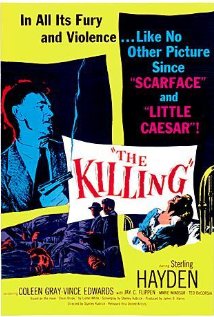
The Killing (1956), directed by Stanley Kubrick

the killing posterThere is a statement in The Ethics of the Fathers that has puzzled me for many years. The Sages say: “one should not engage overly much in conversation with women. The admonition pertains to one’s wife, all the more so to other women.” My rabbinic training and my experience as a synagogue rabbi and husband has told me the opposite; namely, that I should engage in lots of conversation with my wife because good communication is a key to successful marriage. So how do I reconcile my personal experience with the aphorism of the Sages?

Watching The Killing gave me a better idea of what the Sages meant when they discouraged conversation between husband and wife. The Killing details a perfectly planned heist of a race track where the robbers will walk away with two million dollars. However, the plans go awry when one of the robbers divulges the plan to his unfaithful wife.

Johnny Clay, an ex-con, has planned a two million dollar robbery of a racetrack. His accomplices are all novices at crime, but each one has a personal motivation for breaking the law. They are all under financial pressure. One needs money to care for his sick wife; another needs money to pay gambling debts. Still another, George Peatty, needs money to give to his wife Sherry, who is constantly complaining about her lack of money and the accouterments of wealth. It is George’s conversation with his wife that proves to be the undoing of the perfect crime.

The set-up for the robbery is meticulously orchestrated by Johnny, who determines that the robbery will take place during the seventh race of the day. To distract the police, he hires Maurice, a former Russian wrestler, to start a brawl at the bar in the racetrack. He also hires Nikki, a hired gunman, to shoot Red Lightening, one of the racehorses, to create confusion on the track. During the ensuing melee, Johnny holds up the clerks at the payroll office and makes off with two million in cash. It is then that things fall apart. Sherry has shared information about the heist with her hoodlum lover, Val Cannon, who attempts to steal the proceeds of the robbery. A violent showdown between Val and his partner and the men who actually facilitated the robbery ends in bloodshed and Johnny has to improvise at the last minute to salvage his money.

An analysis of the fateful conversation between George and Sherry is instructive. All they talk about is money and material things. The dialogue has no connection to matters of the spirit, only to matters of the flesh.

What is discouraged by the Sages is idle conversation, not serious discussion about domestic issues. That kind of constructive discourse is encouraged. It is important for couples to share information about what is on their minds, what activities they should do, what challenges they are facing. It is good when husbands and wives indicate that they value the thoughts of their significant other. It is not wise, however, say our Sages, to complain about other people to one’s wife, to spread slander or gossip, to share burdens, troubles, or worries unless his wife can actually help him or encourage him.

The Killing is a classic example of film noir, a film without heroes. The men who get involved with the heist occupy ordinary occupations and are not professional crooks. They are simply men driven to crime because of their own dire circumstances, some of which have been created by them and some of which have not. Clearly, however, the plot turns on the confessional conversation between George Peatty and his acquisitive wife Sherry, who, like Delilah in the Bible, exploits her husband’s secrets for personal gain. Watching the ensuing catastrophe reminds us that our conversations with our wives should not be concerned about material things alone. Conversation between spouses is good when it is purposeful, focused, and expressive of a deep, loving commitment to one another.

Purchase this movie from Amazon.com.

Open Range (2003), directed by Kevin Costner

open range posterCourtship is a sub-topic in the picturesque and violent western Open Range. As a volunteer matchmaker on an Internet website, I have some idea of what makes for compatibility between people. Most of all, it involves common goals and dreams. When two people share the same understanding of the future, then the present is much easier to negotiate. Charley Waite and Sue Barlow intuitively grasp this truth and it helps them to decide to marry.

The film opens as Bud “Boss” Spearman and Charley Waite, together with hired hands Mose and Button, are bringing cattle to market. As they travel, accepted convention allows their cattle to feed on grass in the open range. All seems to be going fine until they enter the vicinity of Harmonville, a town controlled by Denton Baxter, a money-hungry Irish immigrant who sees free-grazers as usurpers of other people’s property.

Boss sends Mose to town to get supplies, but his innocent encounter with the locals leads to Mose being beaten and thrown into jail. When Boss and Charley go to town to release him from jail, they are given a warning that free-grazers are not welcome there. To get medical help for Mose, they go to Doc Barlow whose sister Sue assists him in his work. Charley finds her attractive, but does not pursue her because he thinks that Sue is the doctor’s wife, not his sister.

After returning to their camp, Mose and Button are attacked in the middle of the night when Boss and Charley are not around. When Mose dies and Button is seriously injured, Boss and Charley decide to take revenge.

After a tense confrontation between Boss and Charley and Baxter and his cohorts, bullets fly and casualties mount. When the dust settles, Charley and Sue discuss their respective futures. She confesses her love for him and Charley, after some deliberation, proposes marriage to Sue. Sue understands Charley’s complicated past life in which he committed terrible things that still haunt him, and she encourages him to focus on the time ahead and not permit his past life to determine his future: “I don’t have the answers, Charley. But I know that people get confused in this life about what they want, and what they’ve done, and what they think they should’ve because of it. Everything they think they are or did, takes hold so hard that it won’t let them see what they can be.” Sue has a mature perspective on life, realizing that the past does not determine the future.

Rabbi Dov Heller insightfully lists ten questions to ask before getting married, many of which are answered in the affirmative by Sue and Charley as they navigate their relationship. Here are some of them: (1) Do we care about each other as good friends? (2) Are we emotionally honest and vulnerable with one another? (3) Do we take care of each other’s needs? (4) Do we admire and respect each other? (4) Do I trust this person completely? (5) Do we want the same things out of life? (6) Do I have peace of mind about this decision? Sue and Charlie implicitly say yes to all of these questions.

Open Range is a very good example of the western genre that catapults the viewer to the beauty of wide-open spaces and depicts the classic confrontation between good and evil. It resonates, however, on the human level in its honest depiction of people working hard to make ends meet, yet who have hopes and dreams beyond what preoccupies them in the moment.

The portrayal of an older couple trying to find happiness reminds us that it is never to late to find love and meaning in life if, as the great English poet Matthew Arnold writes, one sees life steadily and sees it whole. Viewing things in this way gives one a perspective on all of life’s challenges and possible rewards.

Purchase this movie from Amazon.

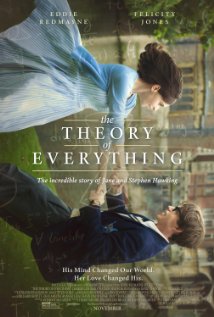
The Theory of Everything (2014), directed by James Marsh

theory of everythingI saw The Theory of Everything shortly after I underwent an unplanned coronary bypass operation. For the first time in my life, I understood experientially what it means not to have control over one’s body. I felt completely vulnerable and the experience evoked much introspection. It, therefore, was not difficult for me to relate to the catastrophe that takes over the life of Stephen Hawking, a Cambridge Physics student who suddenly discovers he has a motor-neuron disease, which is known today as ALS. It is a progressive disease in which one loses all physical control of one’s body. Only the brain is still functional.

The narrative begins at Cambridge where Stephen meets Jane Wilde, a literature student. In addition to being physically attracted to one another, they have a strong intellectual compatibility and soon fall in love. When Stephen discovers his motor-neuron disease, Jane does not abandon him; instead she decides to marry him and be a source of love and support through his difficult medical journey.

Stephen continues at college and receives his doctorate in physics. He shows great promise in the world of academia, but as his illness progresses his relationship with his wife is strained. Amazingly, they have three children in spite of Stephen’s physical challenges and his marriage miraculously survives for a number of years.

To manage her stressful life at home, Jane joins the church choir, which for her is a natural extension of her faith. Her religious sensibility is something which Stephen does not share; being the detached scientist, he can only relate to that which is objectively verifiable.

As the disease worsens, technology comes to the rescue, enabling Stephen to talk through a computer with a built-in voice synthesizer. He becomes deeply engaged in his work and less engaged with his wife, who is finding life with Stephen difficult and stressful. Eventually, they divorce amicably as Stephen’s academic career blossoms allowing him to be productive intellectually in spite of his debilitating physical state.

Later on when they visit the Queen of England for an important personal audience with Her Majesty, Stephen asks his former wife and his children to accompany him. He smiles broadly at his children and says to Jane, “Look what we made.” Stephen understands that his greatest and most satisfying legacy is not his scientific publication but rather his children. They are the legacy that matters.

The first commandment in the Bible is to be fruitful and multiply. Having children creates a legacy. According to Jewish law, this commandment is fulfilled when one has a son and a daughter. Rabbi Mordechai Becher insightfully observes: “having children also helps the individual achieve his purpose in creation, by improving his character. Nurturing, caring for and educating children encourages the development of sympathy, mercy, and sensitivity to others.” Having kids compels one to think of others, and not be totally absorbed by one’s own needs.

Moreover, Jewish tradition mentions ways people can have “children” even if they physically cannot produce children. If one is not blessed with the ability to have kids, then a legacy of good deeds can resonate into the future. If one is a teacher, one can raise many disciples because students are viewed as one’s children. When a teacher passes along wisdom to subsequent generations, he is leaving a legacy of wisdom for his students and the children of his students.

The Theory of Everything reminds us that Hawking’s greatest gift to the world may not be his scientific theory, but his children who are the living embodiment of his thoughts and his hopes for the future. The insights and wisdom he imparts to them in the crucible of daily life find expression in the words and personalities of his children who live after him.

Purchase a copy of this movie from Amazon.com.