The Pursuit of Happyness (2006), directed by Gabriele Muccino

pursuit of happyness posterThere was a time in my life when I was in a very poor cash position. I went to relatives and friends and asked for help, and they all assisted me. I told all of them that I would repay their loans and in a couple of years I did. A few people forgave the loan but most did not, but I was happy to pay them back now that my financial situation had improved. It is no fun to be heavily in debt, and I identified easily with the emotional stress of Chris Gardner in The Pursuit of Happyness, an inspirational film about a man with very bad financial luck who manages to turn his life around because of sheer hard work and unswerving commitment to a goal.

The story begins in 1981 in San Francisco where salesman Chris Gardner purchases a large number of portable bone-density scanners to sell to doctors. But there is a problem. The machines are very expensive and do not reveal much more than standard x-ray machines. The result: few machines are sold and Chris goes into deep debt. The financial stress causes a rift between Chris and his wife. Eventually, as their economic situation deteriorates more and more, his wife Linda wants out of the marriage. Chris insists on keeping their 5-year old son with him in spite of his wife’s pleas. The fact that Chris’s own father walked out on him is a memory tape that haunts Chris, and he does not want to follow in his father’s footsteps when it comes to his own son.

In the course of trying to sell his scanners, he by chance meets Jay Twistle, a manager for the stock brokerage firm of Dean Witter Reynolds. Fascinated by the glamour of the job of stock broker, he applies for an internship at the company. In a serendipitous cab ride that he shares with Twistle, Chris impresses him with his facility for solving a Rubik’s Cube puzzle and Twistle accepts Chris for the internship.

As Chris tries his best to turn the internship into a real job with pay, he encounters a surfeit of impediments. Police arrest him for unpaid parking tickets. His bank account is garnished by the IRS for unpaid income tax. He is evicted from his home because of overdue rent, forcing him and his son to sleep in the subway for a short time and then to live in a facility for the homeless.

Because of these pressures, Chris is forced to utilize every available free moment to make phone contacts and set up sales calls for stock purchases. He even defies protocol by seeking out high value customers even though he is an intern. Moreover, he does not want to reveal his disadvantaged situation to anyone at the firm for fear it will jeopardize his chances for the coveted paid position at Dean Witter.

King Solomon in his classic Proverbs tells us that “seven times the righteous will fall, yet they will rise again.” It is a message of hope in the face of adversity, to stay focused even when things fall apart. We all have friends who, when faced with possible failure in reaching their professional goals, give up hope. For example, I know of many young, promising teachers who leave education because of their initial difficulties in the field. I also know some who weather the storm and leave meaningful legacies in their respective institutions.

Chris Gardner in The Pursuit of Happyness comprehends the value of perseverance in the face of adversity. His story inspires us to be steadfast even in the face of enormous obstacles.
 Purchase this movie from Amazon.com.

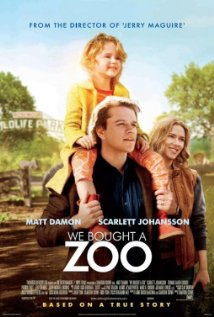
We Bought a Zoo (2011), directed by Cameron Crowe

we bought a zoo posterCoping with loss is complicated. When I lost my wife in 1989, my world fell apart. I could not understand it then nor can I can understand it now. How God in His wisdom could end the life of such a beautiful soul was totally beyond my ken. Yet this is what happened and that is what my family had to deal with. It was extremely helpful to have my children present to support me and for me to support them in this time of darkness. To a large degree, the love between the surviving spouse and the children helps one to deal with the overwhelming sadness.

I was reminded of this complicated adjustment period as I watched We Bought a Zoo, an emotionally rich film about Benjamin Mee, a widower still mourning the death of his wife. Emotionally exhausted with managing his kids and dealing with school discipline issues with his 14-year-old son Dylan, he decides to begin his life again by purchasing a new home in a rural area. But there is one problem. The house comes with a zoo, and the person who buys the house also has to accept responsibility for the zoo. Ben’s brother counsels him against the purchase, but Ben disregards his advice and buys it anyway when he sees how much Rosie, his 7-year-old daughter, is infatuated with the idea of owning a zoo and playing with the animals.

Together with Kelly Foster, the attractive and sensitive head of the zoo staff, they start renovating the zoo with the goal of opening it to the public. The task is monumental and requires strict compliance with the law to pass an inspection from the authorities. Expenses mount and the project is in danger of failing, but they find creative solutions.

Ben and his son Dylan are not on the same page with regard to the zoo enterprise, and eventually a heated argument between the two crystallizes the different perspectives of spouse and child on how each responds to loss. The father wants to survive emotionally and be a good parent, but he realizes he needs the support of his older son to help rear his young daughter. He cannot do it alone.

When Ben, in frustration, yells at Dylan, Dylan asks why he is yelling at him. Ben responds: “Because I’m your father and I’m the only one you’ve got! And the line of people in this world who really care about you ends here! So stop moping around this place, man! Do something! You just sit here and feel sorry for yourself, man! Help me with your sister! Help me, damn it!” When Dylan starts crying, his dad tearfully says: “I’m sorry that your mother got sick when she did. Believe me. I’m sorry that you didn’t get more of a childhood, man. That’s just how that one went. But we live here with a seven-year-old girl who still believes in the Easter Bunny. What are we gonna do?” At that moment, Dylan sees the pain and frustration of this father, and there is reconciliation.

Jewish tradition provides a pattern for dealing with loss. The mourning period is divided into three stages. The most intense time is the seven-day period after death, when friends and family visit to comfort the mourner. The second stage is the first thirty days after the death when the family begins to integrate the loss and function normally while still under the shadow of tragedy. The third stage is a year after the death when the anniversary of the loved one’s passing is marked by the lighting of candles and the recital of prayers in the synagogue.

Every year after that, there is a yearly ritual marking the anniversary of the day of death when candles are lit, prayers are said, and the person is remembered. The end goal is not to forget the loved one. The goal is to move on with life, but at the same time to treasure the memory.

This grief cycle is reflected in the final scene of We Bought a Zoo. Ben brings his children to the restaurant where he first met his wife and shares with his kids his first encounter with her. It is a tender and happy moment, which reminds us that dealing with loss does not mean forgetting; rather it means integrating the memory into our minds and hearts so that the loved one who is gone is still with us to comfort us and to inspire us.

Purchase this movie on Amazon.com.

City by the Sea (2002), directed by Michael Caton-Jones

city by the sea posterParenting is complicated, especially when it comes to divorce. Many years ago, a friend who went through a stressful divorce, described the toll it took on the relationship between him and his children. His wife, in order to strengthen her own parental identity, created an environment in which the kids had to take sides. His wife manipulated the situation by bad mouthing her husband and limiting his contact with the kids. Eventually, the kids rejected their father in spite of the children’s natural instinct to be loved by both parents.

The professionals tell us that this is the worst outcome of divorce. They urge parents to keep their personal agenda away from the children as much as possible because kids need to maintain healthy and solid relationships with both parents. It was tragic to witness my friend being demonized in the eyes of his kids.

That was not the end of the story. It has been documented that as a result of parental alienation, kids often develop low self-esteem, depression, distrust people, and sometimes fall into substance abuse. Self-hatred also may result because the child may feel unloved by the alienated parent. All these consequences occurred in the children of my friend. Overall, it was a sad and deeply troubling narrative.

City by the Sea, a crime drama, tells the story of Joey LaMarca, a policeman’s son, who is the victim of parent alienation. His father and mother split acrimoniously and Joey’s descent into the world of drugs was part of the fallout. In a drug deal gone bad, Joey without premeditation kills a drug dealer. This sets in motion two parallel forces searching for Joey: the police who see Joey as a prime suspect, and the partner of the dead drug dealer who wants to kill Joey to preserve the invincible aura surrounding his drug operation.

Vincent, Joey’s dad, is conflicted. He has been out of Joey’s life for years. On the one hand, he wants to help him. On the other, he feels duty bound as a law enforcement officer to treat his son as he would treat any other offender. Things come to a boil when Spyder, the drug dealer who is looking for Joey, murders Vincent’s partner. Joey calls his father to tell him that he did not kill the policeman, and Vincent believes him. This creates the foundation of a new relationship between father and son, who for the first time express their affection one another in a direct way, without interference from outsiders.

In Jewish tradition the father-son dialogue is founded on mutual trust and a belief in the essential goodness of the other. In the Ethics of the Fathers, our Sages point out the kindness of the Creator not only in creating man, but in letting man know that he is a “child of God.” When one feels that he is God’s child, it is an emotional game-changer. When Vincent finally expresses his belief in Joey’s innocence, this sets the stage for reconciliation and love.

In Judaism, the transference of wisdom from one generation to the next does not occur through the mere reading of holy text. Rather, it is personal. It is embedded in the conversations between father and son that are steeped in morality and love. In City by theSea, Vincent LaMarca finally understands that his relationship with his son can be saved only when he communicates to him from the heart, when he freely expresses his parenting mistakes, and embarks on a course of lifetime connection with his son.

Purchase this movie from Amazon.com.

Friendly Persuasion (1956), directed by William Wyler

friendly persuation posterIn my career as a synagogue rabbi and day school principal, I have encountered people who hold extremist views. In my first years in the rabbinate, I myself tended to view community conflicts as issues that could be addressed either as right or wrong. There was no middle ground. As I got older and wiser, I saw that there was lots of grey and it was silly of me to see things only in stark black and white terms. I remember hearing Rabbi Norman Lamm, President of Yeshiva University, give a talk on what he called “radical moderation.” In an age of increased religious polarization, it was refreshing to hear a more balanced and nuanced approach to a problem. Now that I am living in Israel, a beautiful land filled with extreme ideologies of all sorts, Rabbi Lamm’s words resonate even more.

I was reminded of this as I watched Friendly Persuasion, a story of a Quaker family whose belief in non-violence is tested during the American Civil War. Jess Birdwell, the patriarch of the family, is interested in worldly things even though he basically subscribes to Quaker simplicity and pacifism. His wife, Eliza, frowns upon any expression of materialism, but becomes more understanding of her husband’s perspective on life. For example, she at first is totally opposed to her husband purchasing an organ for the home; but after a conversation with him, agrees to have it in the attic as long as it is not played when company is around. It is this kind of practical family accommodation that typifies the Birdwell family, a family that has strong core beliefs but one which makes compromises in the woof and warp of daily life.

Against this background of a contemplative and at times humorous Quaker life, there is a war raging, and it affects the Birdwell household. Jess and his oldest son Josh are recruited to fight against the Confederates, but they both decline because of principle. They are categorically against killing. However, when a band of marauders is about to lay waste to their home and possibly kill their family, they are compelled to rethink the verities upon which their life is based.

The movie depicts various responses to their moral crisis. One family member sticks to his belief in non-violence no matter what. Another chooses the path of violence with limitations. Another decides that killing is sometimes justified when home and hearth are threatened. It is a painful decision for him; and while pulling the trigger, he weeps for the loss of life he is causing. The characters all maintain their core beliefs but their actions indicate a personal vision of what is required in the face of real life challenges. There are no simple answers.

Judaism believes that once there is agreement and commitment to basic principles, then we are free to shape our own individual spiritual destinies. Not everyone has to observe the law in exactly the same way as long as we accept the divinity and integrity of that revelation at Sinai. In a sense, this is what we see in Friendly Persuasion. The Quakers agree on fundamental principles, but as individuals make nuanced decisions as they encounter varied life experiences.

A similar approach is found recorded by King Solomon in the Book of Ecclesiastes. Here he writes that “wisdom is better than weapons.” War in Jewish tradition is always viewed as a last resort after other solutions to a threat are exhausted. However, when the threat persists, Judaism permits battle. It is this complex approach that reflects real-life decision-making, which is at the heart of Friendly Persuasion.

 Purchase this movie on Amazon.com.

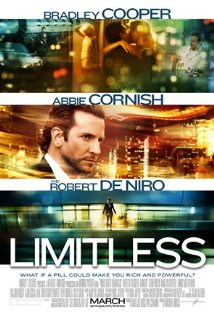
Limitless (2011), directed by Neil Burger

limitless posterI began to study Talmud seriously when I entered Yeshiva University, which had just started a program for college students who did not attend Jewish day schools. It was a challenging subject and at first I had very mixed success. My Talmud teacher summed it up when he wrote on my evaluation the following remarks: “Earnest and studious, has been plodding along with unusual diligence and, as a result, has made fine progress especially in his ability to master texts. Analytic grasp is still weak, tends to repeat some ideas mechanically without fully understanding them. But on the whole has made highly encouraging progress.” Frustrated by my difficulty analyzing such complex material, I thought it would be wonderful to be able to take a pill and suddenly become an analytical savant. I did not do this, but Eddie Morra in the intense drama Limitless does.

Eddie Morra is a writer with writer’s block. He has a contract with a literary agent but cannot summon the intellectual energy to write his book. His life is falling apart financially. His girlfriend rejects him, and he is threatened with eviction from his apartment. Things change, however, when he meets his ex-brother-in-law Vernon, who offers him a new brain drug that will get him out of his lethargy. Eddie takes it, feeling things can’t get any worse, and experiences an intellectual epiphany. He sees everything with brilliant clarity and now is able to write freely. Immediately, he cranks out several hundred pages with ease and impresses his agent.

Eddie returns to Vernon, wanting more of the drug, which is called NZT48. Finding Vernon dead, he searches his apartment for the drug and finds cash and a large stash of NZT48. Overwhelmed with his new-found abilities, Eddie takes the pill regularly and quickly amasses huge amounts of money as a day trader on the stock market based on his uncanny ability to predict the success of many companies on the exchange.

His success in the market leads to a meeting with Carl Van Loon, a major player in the corporate merger world, who senses that Eddie can be a valuable member of his negotiating team in an upcoming merger deal. Meanwhile, Eddie’s supply of NZT48 is dwindling, and Eddie is having relapses which stymie his smooth presentations to Van Loon. How Eddie tries to be sharp when his supernatural analytic skills are growing dull is the plot conceit that drives the story forward.

There is a mesmerizing conversation between Eddie and Van Loon, which highlights the different paths these men have walked to arrive at their current positions in life. Eddie’s path is serendipitous: Carl’s is deliberate. When Eddie informs Carl that he is looking to be on his own, Carl reminds him: “I mean you do know you’re a freak? Your deductive powers are a gift from God or chance or a straight shot of sperm or whatever or whoever wrote your life-script. A gift, not earned. You do not know what I know because you have not earned those powers. You’re careless with those powers, you flaunt them and you throw them around like a brat with his trust-fund. You haven’t had to climb up all the greasy little rungs. You haven’t been bored blind at the fundraisers. You haven’t done the time. You think you can leap over all in a single bound. You haven’t had to bribe or charm or threat your way to a seat at that table. You don’t know how to assess your competition because you haven’t competed.” It is a classic case of the callow wisdom of youth pitted against the sage wisdom and experience of age.

There is an insightful comment about the perennial conflict between youth and age found in The Ethics of the Fathers. The Sages write: “He who learns from young men is like one who eats unripe grapes and drinks new wine from the winepress. He who learns from old men is like one who eats ripe grapes and drinks aged wine.” Clearly, Jewish tradition favors the learning from old men who combine the wisdom of life experience with intellectual power. Limitless showcases the smarts of youth and the acumen of age, and lets the audience see the virtues and faults of both.

Purchase this movie from Amazon.com.


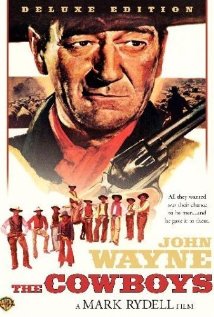
The Cowboys (1972), directed by Mark Rydell

cowboys posterEvery father wants his son to be successful. In the course of my career as a synagogue rabbi and school principal, I have had conversations with parents who are disheartened because their hopes and dreams for their children have not come to pass. Sometimes fathers and mothers are regretful about the way they parented their kids; others wax philosophical, expressing no regrets. They feel they have done their best, but are not in control of outcomes. And so they accept the reality of unfulfilled dreams.

One case of unfulfilled expectations, in particular, comes to mind. When I was a Jewish high school principal, I tried to convince a boy’s parents to send him to Yeshiva University where he would be able to continue his general and Judaic studies. Moreover, I told his parents that the college years were critical, defining years of a young person’s life and it is likely that he will meet his future marriage partner during this time. They ignored my entreaties and enrolled the young man at a very fine state university, where he did well academically. He also met his wife there, and she was not Jewish. It was a classic case of intermarriage. Emotions ruled over logic. For many years after, the parents rued their short-sighted decision.

Rancher Wil Andersen, played by the iconic John Wayne in the twilight of his career, also is a parent whose kids didn’t fulfill his dreams. In a quiet conversation with a friend, he reflects: “My oldest son would have been forty this year. Middle aged. But they went bad on me… or I went bad on them.” He wonders if their choice of lifestyle was because he wasn’t the father he should have been. Perhaps his stern approach turned them off from all his instruction, and their wayward ways were a form of rebellion against his rigid parenting persona.

The Cowboys begins with Wil wanting to bring his cattle to market in Belle Fourche, a 400-mile long cattle drive. The problem: all his drovers want to postpone the drive while they pan for gold. A friend suggests he train and use local schoolboys to replace the drovers. He does not want to do his; but faced with little alternative, he reluctantly hires them. And so begins his arduous trek to Belle Fourche. Jebediah Nightlinger, the camp cook who is a repository of wisdom and life experience, suggests to Andersen that he now has a second chance to be the father that he could have been for his own two boys.

Andersen ponders this message as he teaches the boys to rope, brand, and herd the cattle and horses. Things go well for a while until rustlers attempt to steal the herd. Then all the skills that Andersen has taught the boys come to the fore as they attempt to bring the cattle drive to a successful conclusion.

Wil Andersen is the surrogate parent of these young teenagers and he imparts wisdom to them both explicitly with words and implicitly by being a role model for the boys to emulate. The Cowboys demonstrates that, when it comes to parent-child relationships, children learn by example as well as by words, by what is caught as well as by what is taught. This reflects a Jewish sensibility. It is not only the parents who instruct the young. The prime responsibility to educate the child is the father’s. However, if he is unable to do this, he can hire a surrogate. Nowadays, the surrogate is the Jewish day school with its staff of rabbis and teachers who transmit the wisdom of the ages to students by explicit instruction and by being role models for them. Outside of the school, children learn by observing the adults around them. Therefore, it is wise for adults to be always aware of what we say in front of children, and how we behave in front of them as well.

Purchase this movie from Amazon.com.


Forever Young (1992), directed by Steve Miner

forever young posterFailure to make decisions is a decision itself. Let me share a silly story from my early childhood. My mother took me to see a Bob Hope comedy. Near the beginning of the movie, I asked if I could go out and buy some candy, and my mother said yes. I had trouble making up my mind and when I returned to the movie, I found that it was at the same scene when I exited. I was gone for over an hour and I missed the entire movie.

Indecision is the catalyst of what transpires in Forever Young, a romance with a science-fiction twist. Daniel McCormick, an air force test pilot, has trouble making up his mind. He wants to ask his girlfriend, Helen, to marry him; but he cannot summon the courage to pop the question. While he debates within himself, fate intervenes and Daniel loses the opportunity to ask Helen to be his wife. His indecision is fatal. He misses his entire life with Helen.

Daniel’s story begins in 1939 when he is courting his beloved Helen. After a brief encounter at a local diner, Helen is involved in an accident, which leaves her in a long-lasting coma. The doctors think she will never recover; so after six months, Daniel volunteers for a cryonic freezing experiment in which he will be placed in suspended animation for a year. Thus, he will be spared the pain of witnessing Helen’s death.

He wakes up 53 years later to a new world with voice mail and planes that he only dreamt about many years earlier. Daniel attempts to find his old friend, Finley, who initiated the freezing experiment. He learns that he has died, but his daughter gives Daniel her father’s journals, which detail her father’s experiment and indicate that, once unfrozen, the aging process will kick in at an accelerated rate.

Things get tense when Daniel sees his body aging quickly and, at the same time, discovers that Helen is still alive. It is a race against time to find her before he succumbs to his inexorable aging process. Love, however, conquers all in this romantic fantasy, and it is gratifying to watch what transpires when Daniel and Helen, lovers from their youth, now reunite as seniors recognizing the deep soul connection that bound them together so many years ago.

As a teenager, I once heard a joke that kept me laughing for many days afterward. Here’s the joke: a man asked someone if he was a man of decision. The answer: “Well, yes and no.” The assumption behind the punch line was that while people outwardly want to be decisive, inwardly they often equivocate and don’t make up their minds.

Judaism discourages indecision. The rabbis of the Talmud grow to great lengths to get clarity, to pursue truth, to find the answers to difficult questions. They encourage clear decision-making, and often devise a calculus to arrive at a decision. For example, when faced with questions of Torah law, the Sages instruct us to choose the more stringent path; when faced with questions of Rabbinic law, they instruct us to take the more lenient position. To remain in a state of doubt when decisions need to be made is fraught with peril, for doubt will surely lead to inaction, equivocation, bad life choices, and a host of missed opportunities in life.

If one is still unsure about what decision to make, our Sages recommend speaking to someone older and wiser and getting his perspective on a situation. Judaism accepts the notion of a hierarchy of intellect and holiness. Once you identify the holy man of wisdom who represents the values in which you believe, you then ask him your query. Whatever the answer, you can feel confident that you are making the best decision possible since you have consulted the best and the brightest of men.

Forever Young is a stark reminder of the negative consequences of not being able to make a decision, and encourages us make the most of time we are allotted on this earth.

 Purchase this movie from Amazon.com.


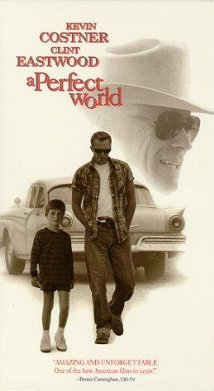
A Perfect World (1993), directed by Clint Eastwood

perfect world posterA story to share about my father. When I was 12 years old, I attended a religious camp in the Catskill Mountains in New York. On visiting day, my parents came up to see me. It was the first time I went to a sleepaway camp and my parents and I were looking forward to the meeting. During the visit, a rabbi approached my father and asked him to travel over two hours to pick up Rabbi Aharon Kotler, the founder of the esteemed Lakewood Yeshiva who would come to the camp to address the campers. My father readily accepted the mission; but when he arrived at the destination, he was told that someone else had picked up the rabbi. This was way before cell phones so there was no way to contact my father to cancel the mission. I remember distinctly that my father did not utter one word of complaint. He just did what he felt was right and did not complain when things did not go as planned. His response implicitly taught me that when given a task, your job is to do it with the realization that you are not in control of the outcome. Only God is. Jewish law reflects this approach when it tells us that we receive a reward for traveling to synagogue, even if we discover when we arrive there that there is no quorum for communal prayer.

Another story. My father, after many years of driving used cars, finally bought a new car. Soon after the purchase, I borrowed it and drove carelessly down a street where a garbage truck was making a stop. Instead of waiting patiently for the truck to move, I accelerated and scraped the side of the car, ruining the exterior. When I returned home, my dad simply asked me if I was okay. There was not a word of criticism about my thoughtless driving. I felt guilty for what I had done and incredibly stupid, but I realized that my father trusted me to grasp the folly of my foolish behavior without any reminder from him. I learned from him that sometimes you can learn more from what a parent does not say than from what he says.

All these recollections are a preamble to the subject matter of A Perfect World, a film in which the nature of fatherhood is explored. It is a story about two sons who see the world differently because neither has a father to teach him how to be successful in life.

The narrative unfolds in Texas in 1963 when two convicts, Butch Haynes and Jerry Pugh, escape from a state penitentiary and kidnap eight-year old Phillip Perry to use as a hostage against pursuing police. During the course of their flight, Butch, who himself was an abused child, becomes a protector of Phillip and relates to him as a father, offering insights and life lessons that forge a friendship between the two. Butch becomes the surrogate father that Phillip never had.

On the run with Butch, Phillip, only eight years old, experiences an independence that is exhilarating and frightening at the same time. He shoplifts a Casper the Friendly Ghost costume, yet feels incredibly guilty for breaking the moral code that he has learned from his mother. In the course of their picaresque journey, Phillip confronts moral ambiguities for the first time, and begins to make moral choices.

What does being a father mean? As a father myself, I know it means more than a biological connection. It implies a teaching task as well. The Bible states this clearly when it says “You shall teach your children.” Fatherhood means more than paying the bills for your child. It also means guiding your children, teaching them to make wise decisions so they can navigate life successfully. A Perfect World reminds us of the profound influence of fathers on children, who mentor by example as well as by explicit instruction.

 Purchase this movie from Amazon.com.

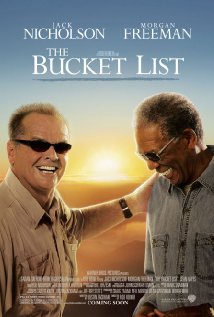
The Bucket List (2007), directed by Rob Reiner

bucket list posterIn the 1966-7 academic year, I was studying in a yeshiva in Israel and in the spring I had to have a hernia operation at Hadassah Hospital. I have vivid memories of the night before the operation. My roommate was scheduled for serious surgery and he said to me: “I wish I had what you have.” It was a statement that reverberated in my mind for many years. We never realize how blessed we are until we hear of the trials and travails of others.

People who are staying in a hospital tend to commiserate with one another simply because being ill in a health care facility can be a lonely experience. This is the opening scenario of The Bucket List, a touching narrative of two men from opposite sides of the track who share a common malady that brings them together in friendship.

Car mechanic Carter Chambers and billionaire hospital tycoon Edward Cole initially meet in the hospital after both have been diagnosed with terminal cancer. As they undergo their treatment, they share in brief their respective life stories and come to like one another. Carter is a family man, devoted to wife and children; Edward has been divorced four times and is estranged from his only daughter.

As they become increasingly aware of their mortality, Carter begins penning a “bucket list,” a list of things to do before the inevitable end. When he shares it with Edward, Edward offers to finance a trip for both of them that will enable Carter to do all the things on his bucket list and more. In spite of his wife’s protest, Carter agrees and they begin their around the world adventure, visiting tourist sites in China, India, and France among other places.

Towards the end of their trip, Carter realizes how much he misses his wife and decides to return home. Back in the States, we see Carter surrounded by a loving wife and children, and Edward alone in his luxurious apartment. It is clear that Carter’s life is more blessed because of his loving family.

Throughout the film, Carter expresses the wisdom of the ages. Early on in his relationship with Edward, he tells him of the two questions that a person is asked at the gateway to Heaven: Have you found joy in your life and has your life brought joy to others? He encourages Edward to find the joy in his life before it is too late.

Furthermore, Carter reminds Edward that “You measure yourself by the people who measure themselves by you.” The Ethics of the Fathers echo this idea when it tells us the right course for a man to follow is to choose a path that is a credit to him and that earns him respect from his fellow man.

These messages of healthy living resonate in Judaism. The Bible and the Talmudic Sages tell us to love other people, for when we love others we bring joy to our own lives. It makes us less self-centered and enables us to feel happiness in the accomplishments of others. God is overflowing with kindness and so should we be. The patriarch Abraham is the exemplar of the attribute of loving-kindness in Jewish tradition. When guests came to his home, he went to extraordinary efforts to make them feel important and welcome. He gave them a sumptuous meal even when he himself was recovering from his own circumcision in the heat of the day. The Ethics of the Fathers bluntly state: “If I am only for myself, what am I?” It is part of man’s mission to be concerned about all of God’s creatures. The Bucket List reminds us to live life to the fullest, to count our minutes, and to be generous to all men.

Purchase this movie from Amazon.com.

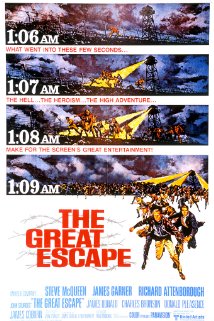
The Great Escape (1963), directed by John Sturges

great escape posterMany years ago, a friend of mine enrolled in a master’s degree program in Social Work. He had great people skills which he felt would insure his success as a social worker and thought the program would be a breeze to navigate. He never envisioned that the program would be academically rigorous, requiring lots of research and lots of homework. But, in truth, it was; and after two semesters, he gave up and dropped out. He was not prepared for adversity, and so the slightest problem became a mountain which he did not want to climb.

The Great Escape tells the dramatic story of a cohort of men who did not give up in the face of adversity, who were focused and committed to their mission even when the road they travelled was bumpy and full of detours. It is based on a true story of a group of prisoners of war for whom the Germans had constructed a special prison camp. Their motivation? All the inmates were prisoners who made repeated escape attempts. The goal of the Germans was to place all these rotten eggs in one basket so they more effectively could control their activities, which distracted and undermined Germany’s focus on the war effort.

The prisoners, however, had different plans, which the ranking officer Ramsey clearly articulates to the German Commandant, reminding him that it was the sworn duty of the prisoners to confound the German military as much as possible in order to tie up German war resources.

The prisoners do this by building a tunnel underneath the camp barracks that extends to a no man’s land outside the barbed wire gates of the camp, thus enabling a cohort of 250 prisoners to attempt an escape to freedom. It is a task fraught with danger and plagued with many setbacks along the way. Squadron Leader Bartlet coordinates the effort, assigns team leaders, and begins to gather the necessary materials to implement the plan.

Many problems have to be addressed. How to get rid of the dirt that they dig out of the tunnels? How to maintain the structural integrity of the tunnel so that dirt does not fall and bury the ones who are building it? How to create forged passports and identity papers? How to determine what dangers lay outside the woods beyond the camp? How to dress like ordinary people so that they are not immediately picked up by the authorities after their escape? It is a gargantuan task and not everything goes smoothly.

What is notable is the response of the men when things go awry. When one of the three tunnels that the men are constructing is discovered, they do not give up. Instead, they devote all their efforts to completing another tunnel. When they find out that the end of tunnel leaves them outside the camp but twenty feet shy of the protective woods, they do not give up. They just accept the new reality and devise a way to signal the men to make a dash for the woods when the guards are not looking in that direction. It is this positive attitude than enables them to succeed. It is a commitment to the mission in spite of obstacles.

This approach to life is a Jewish sensibility. King Solomon in his magnificent book of Proverbs, states that “seven times the righteous fall and yet they rise again.” Life is full of challenges and disappointments. We cannot avoid them. But we do not have to succumb to them. The Great Escape informs us that where there is a will, where there is a focused desire to get something done, there usually will be a way. Things ultimately may not turn out exactly the way we want, but our primary goals can still be accomplished.

Purchase this movie from Amazon.com.