Jeremiah Johnson (1972), directed by Sydney Pollack

As a young father, vacations generally meant going to places like Disneyland or to resorts with a pool and kid-friendly activities. Once I became an empty nester, vacation destinations changed. National Parks were the place to visit. My first one was to Acadia National Park in Maine; and over a number of years, my wife and I visited many in the United States and Canada. Instead of going somewhere to be amused, we traveled far to contemplate and appreciate the beautiful world that God has given us. Spending time hiking, surveying breathtaking lookout points, and listening to the sounds of nature were rejuvenating. Which is why I greatly enjoyed a recent viewing of the Western classic, Jeremiah Johnson.

Jeremiah leaves civilization as he knows it and journeys to the mountains. He wants to become a mountain man, living away from the hustle-bustle and corruption of the busy city. He wants to be alone,  and to discover the beauties of nature first-hand. There is a parallel here to a famous story told about Rabbi Samson Raphael Hirsh, a 19th century leader of German Jewry and Bible commentator, who near the end of his life resolved to visit the French Alps. His students tried to convince him not to go because of the risk to his health, whereupon he told them:”When I come before God, I will have to answer for many things. But what will I tell Him when He asks me, ‘Have you seen My Alps?'”

This thirst to see all of God’s resplendent world is a Jewish sensibility. The Talmud (Yerushalmi Tractate Kiddushin) explains that in the future God will hold us responsible if we do not enjoy the beautiful things He created in this world. It is a good thing to go out and see the trees, the mountains, the rivers, lakes and oceans. Seeing them reinforces our belief and appreciation for God who created all of it.

However, there is a dark side to being a mountain man. “Do not separate from the community,” say our Sages. Jeremiah learns that a life of isolation can be dangerous and unforgiving, and that there is a price to pay for solitude. For example, he has no back-up when things go awry.

One incident, in particular, brings this lesson home. Having married an Indian woman and found a modicum of happiness in the wilderness, he is asked by the U.S. Calvary to lead a search party to bring food to a stranded wagon train. He is not anxious to leave his family, but he reluctantly agrees and leads them to the wagon train. Inwardly, however, he is agitated that the route takes him through a sacred Indian burial ground. The scene of traversing the burial ground is one that encapsulates both the allure and danger of nature. It is a grey day, snowing gently but relentlessly as the soldiers pass by skeletons of dead Indians, foreshadowing a tragedy that is to come.  It is an image of both beauty and dread.

Left alone in a vast wilderness with savages all around, Jeremiah is forced to defend himself on countless occasions in order to survive. The Hobbesian notion that life is nasty, brutish, and short finds expression in the harsh life of Jeremiah Johnson. But in spite of it all, he emerges not as a bitter or angry person, but as one content with his lot, understanding that life is filled with contradictions, with happiness and sadness, with beauty and ugliness. It is a mature sensibility, worthy of emulation.

There is much to admire in Jeremiah Johnson. He is a man of few words, of deep feelings, of personal integrity, who, through age and experience, appreciates and values the beautiful world before him.

Purchase this movie from Amazon.com.

A River Runs Through It (1992), directed by Robert Redford

None of our children are alike. Over the years, I have understood more and more the wisdom of King Solomon who instructs parents to “educate a child according to his way,” which implies that parenting is not a cookie-cutter skill. Rather, effective parenting involves understanding the uniqueness of each child and recognizing that success in life can be measured in many different ways. For one, it might be getting an advanced degree; for another, it might be being a very skilled plumber. All we can do is teach children how to navigate life, give them freedom to choose their own path, and pray for the best results.

But, life, like a river, is constantly moving and we can’t always see what is at the bottom. There is a mystery that we cannot penetrate and unpredictable things can happen after the best parenting efforts. You can do everything right, and your child may still make bad decisions. Your hopes and dreams for that child may never be realized. How do you relate to that child and how do you integrate that outcome into your own life?

A River Runs Through It offers suggestions. It is the autobiography of Norman and Paul, brothers who grow up in 1920s Missoula, Montana. Their father, a Presbyterian minister, does his best to parent them while at the same time recognizing their need to follow their own hearts. Fly fishing is the activity that bonds the generations, and is the film’s lyrical metaphor for achieving perfection in life.

Norman and his father have an affinity for poetry. When Norman discovers his dad reciting a Wordsworth poem, Norman chimes in and reads alternate verses; thus they achieve a perfect synchronicity of souls. They truly are on the same wave length.

While Norman achieves academic success, Paul achieves success as a newspaper reporter and fly fisherman, who demonstrates a level of artistic perfection as he catches fish in Blackfoot River. Catching a huge fish in the midst of being pulled by a powerful current is a special moment for Paul and his father, who is unaware of Paul’s addiction to gambling and carousing. We sense that this brief moment of perfection in the life of father and son will not last. As Norman narrates the story of his family as an old man, he observes that “life is not a work of art.” He recognizes that in spite of our best efforts, outcomes are beyond our control.

A classic phrase in Jewish prayer is “Our Father, Our King.” When we ask God for help, we appeal to two aspects of the Divine persona. He is our King, the one who makes the rules, and He is also our Father, always there with unconditional love in spite of our shortcomings. This is the Jewish paradigm for parenting.

Reverend Maclean, father of Norm and Paul, says it eloquently in a sermon: “Each one of you will at one time in your lives look upon a loved one who is in need and ask the question: we are willing to help, Lord, but what, if anything, is needed? For it is true we can seldom help those closest to us. Either we don’t know what part of ourselves to give or, more often than not, the part we have to give is not wanted. And so it is that those we live with and should know, they still elude us. But we can still love them; we can love completely without complete understanding.”

This is a Jewish sensibility, to be present always in the lives of those we love most, both when they make us proud and when they encounter uncertainty or failure.

Purchase this movie from Amazon.com.

Rain Man (1988), directed by Barry Levinson

My sister Carol had Down’s syndrome. As a little boy, I would fantasize about becoming a doctor and being able to transform Carol into a normal person; but as I grew older I understood that my hopes for Carol were only a dream. Over the years I tried to be a dutiful brother, especially after my parents passed away. When my own children were of age, I explained Carol’s situation to them and they were always warm and accepting of their aunt, who always had a sweet smile for them whenever she saw them. I often reminded my kids of how fortunate they were to possess a normal intellect, with the potential to learn so much knowledge. Why things happen is ultimately unknowable, and we need to reflect that there but for the grace of God go I.

Rain Man tells the story of two siblings, Charlie Babbitt who is normal, and Raymond Babbitt, an autistic “savant,” who has been institutionalized. Charlie is very self-absorbed, immersed in a world of money and materialism. When Charlie learns that his estranged father has died, he travels to Cincinnati for the funeral and to settle the estate. There he learns that all he will receive from the estate is a classic Buick Roadmaster, while an undisclosed beneficiary will inherit three million dollars. The beneficiary turns out to be the mental institution where his brother Raymond lives, a brother of whose existence Charlie was never aware. Charlie kidnaps Raymond from the institution in the hope of forcing the trustee of the funds to make a settlement with Charlie for half the inheritance. Thus begins their cross-country trip together.

In the course of their trip, Charlie observes Raymond’s fixation on ritual as a calming mechanism in the face of change. Raymond must watch certain TV programs, he must go to bed by 11 PM, and he must have pancakes for breakfast on specific days. At first Charlie thinks this is a massive charade and feels he can correct Raymond’s behavior. Over the course of their journey, however, he learns that Raymond’s autism is not subject to a quick fix. His routines provide stability, and any deviation potentially creates chaos for him and those around him. For example, Raymond refuses to fly on an airline unless it is Quantas, which has a zero crash record. The problem is that Quantas does not fly from Cincinnati to Los Angeles. This is the catalyst for the car trip across America, a shared experience that bonds the two brothers together, ultimately resulting in Charlie’s recognition that, in spite of his brotherly love, the people and the institution in which Raymond lives are best equipped to care for him.

As a young rabbi, I remember my own naïve arrogance when I thought that I could fix all problems. In retrospect, I realize the delusion of my youth. It was not until years later and encounters with people in the real world that I understood that there are occasions when I did not have all the answers and that I had to call a professional for guidance.

Perhaps one of the lessons we learn from people with disabilities of all types is to be appreciative and grateful for our own normality. In fact, I told my children that when we see people with a visible abnormal appearance, we recite a blessing: “Blessed are You, God of the Universe, who makes creatures different.” It could be that the Sages who formulated this blessing wanted to convey the message that all humans, no matter what their intellect or appearance, are creations of God imbued with an essential sanctity and infinite value. Rain Man reminds us of this truth.

Purchase this movie from Amazon.com.

Men in Black (1997), directed by Barry Sonnenfeld

It took me 12 years to get my doctorate in English at Georgia State University. Usually, it’s a five-year gig including the dissertation. For me it took longer because I was married with kids, had a full-time job, and could not devote all my time to this important professional goal. I owe a great debt of gratitude to Dr. William Sessions, my academic advisor, who believed in me and encouraged me to persevere even when I had doubts. Dr. Sessions recognized that family came first, and he knew that I could finish the degree if I had more time to complete the program.

My friend Charlie pursued a different career path. He wanted to become a university professor, and he postponed getting married until after he finished his PhD. He then postponed marriage again because he wanted to be financially secure and employed on a tenure track. He was then in his 30s. I spoke to him off and on during this time, reminding him of the Talmudic statement that at the end of 120 years, God will ask him whether he married and tried to have kids. I also reminded him that life in one’s advanced years can be very lonely without a wife. Furthermore, he will never be called Abba/Dad, which to me is my most important title. In spite of my comments, Charlie continued his exciting academic life, publishing book after book and occasionally getting into the media as well. He never did marry.

I thought of Charlie as I watched the crazy and wild Men in Black, a comedy about two men, Kay and Jay, working for a secret government agency who track alien life forms living on earth, and who embark on a mission to save the world from being destroyed by aliens. Their life is extraordinary and exciting. Every day is unpredictable. They meet creatures from other planets, they drive cars that are fast and fitted with the latest technological innovations, they have powerful weapons, and they can control the memories of others. In fact, they even periodically use the memory “neutralizer” to erase their own memories so that early frightening memories will not hinder them in their present assignments.

The catch is that their work requires them to give up their identity and their connections with friends and family. This is hard, for there are moments when one thinks of a wife, a time when one yearns for the human connection. From the aspect of eternity, family does come first. There is a touching moment when Kay reflects about the wife he left behind as he views her image on a monitor. When Jay comments that she is pretty, Kay clears the screen, but the image of his wife lingers in his mind.

After successfully avoiding the destruction of earth, Kay wants to transfer the mantle of leadership to Jay. Kay profoundly misses his wife and desires to go home. The pull of love is stronger than the adrenaline rush for action. He is older now and can appreciate the wisdom of Solomon who tells us “there is neither doing or reckoning nor knowledge or wisdom in the grave where you are going (Ecclesiastes 9:10).” The value of life is not measured in professional accomplishments alone, but rather in the human relationships that are nurtured over the years.

It is wise for us to treasure family over our job. At the end of our lives, we will not feel bad because we didn’t spend more time at the office. We will feel sad if we did not maximize our time with wife and children.

Purchase this move from Amazon.com.

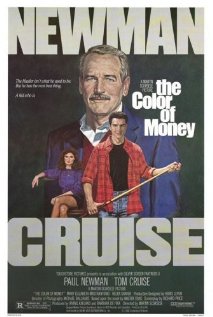
The Hustler (1961), directed by Robert Rossen and The Color of Money (1986), directed by Martin Scorsese

As a youth, I played basketball every Sunday at the local JCC on the Spartans, who were Spartans in name only. We had a mediocre record. Opposing us were much better teams, and one player outshined everyone. Robby regularly scored over 20 points a game, and when he reached high school, he was a superstar. Watching him was poetry in motion.

I expected to read about Robby in the newspapers, but it didn’t happen. Robby dropped out of college, never fulfilled his potential, and played basketball in local recreation leagues as an adult. The snapshot in time that I saw in high school was no predictor of future success. Only in retrospect do we possess clarity. That’s why I chose to review two movies which present the same character, “Fast Eddie” Felson, as a young charismatic pool hustler in The Hustler, and then as a successful liquor salesman 25 years later in The Color of Money. Watching both films gives us a rare opportunity to see the evolution of a character over a span of years. Has he changed and in what way?

There is a scene in The Hustler when Eddie, a pool playing virtuoso, is told that he has talent, but lacks character. Eddie, self-absorbed and arrogant, pursues money. To him, it indicates success; and he admires Bert, a wealthy gambler. When Sarah, Eddie’s girlfriend, asks Eddie how he knows that Bert is a winner, Eddie responds, “He has things.” It is a shallow perspective on life, and it takes a tragedy to remind Eddie that there are more important things than money and fame.

The Color of Money depicts “Fast Eddie” 25 years later, still a flawed character. He renews his passion for pool through a young protégé, Vincent; and offers to take Vincent on the road and teach him how to make money by playing pool in venues where he is unknown. Eddie still wants fame vicariously, and the temptation to hustle still motivates him.

Eddie, however, eventually begins to see in Vincent aspects of his younger self which repel him. Money is now irrelevant to Eddie; what is important to him is simply being the best and winning fairly. There is a moment where he sees his reflection in a pool ball and what he sees he does not like. Eddie’s newfound integrity reinvigorates his pool game, and his ultimate challenge is not winning a game of pool under dubious circumstances, but rather beating Vincent in a private game.

Ethics of the Fathers says that “every man has his hour” of prominence and success in life.  Eddie had his in The Hustler and now Vincent has his in The Color of Money. The question we all face is what happens after our hour in the sun. Do we allow old age and self-doubt to emotionally cripple us or do we redefine ourselves in light of our new reality? Abraham, our forefather, is a role model. The Bible tells us that “Abraham was coming in days,” an unusual way to inform us that he is old. The commentators tell us that this indicates that, in spite of his age, he was vigorous and productive on each day of his life into his senior years. He never retired until God retired him. Change for him was a constant.

Making changes is never easy, but in a moment of reflection, Eddie changes his perspective and desires integrity to crown his life. King Solomon instructs us: “a good name is better than precious oil.” Eddie Felson finally understands this time-honored maxim that integrity is better than wealth.

Purchase The Hustler and The Color of Money from Amazon.com.

The Hurt Locker (2008), directed by Kathryn Bigelow

As a rabbi, as an educator, and as a parent, I have been asked many times for advice when friends and loved ones are going through stressful times. Sometimes I can help them, and sometimes their situation is so complex that I do not have a suggestion or answer that works for them. I want to help, but there are situations where my counsel is inadequate. I see the oncoming train wreck and I am powerless to change things or to prevent the damage from occurring.

Watching The Hurt Locker gave me a visceral understanding of this feeling. It is a stomach-churning war movie filled with profanity, extreme tension, and violence that deals with soldiers trained to disarm improvised explosive devices such as roadside bombs. The film vividly details the enormous risk they take on a daily basis to do their job. In one particular scene, Sergeant William James is called to a public square where a man is strapped in an explosive vest. The vest was placed on him against his will, and the man desperately wants someone to save him by removing the vest. The problem is that the vest is attached to his body with numerous locks. The crisis is compounded by a timing device on the man, which indicates that the bomb will explode in a matter of minutes. What to do? Sergeant James does his best but he cannot remove the locks in time. We are left to watch the bomb detonate and the man disappear into dust.

The film drives home in a graphic way the dilemma we all face at one time or another. We do our best and yet it still is not enough to make things right. Judaism recognizes this human dilemma, and the Sages give us guidance. The Ethics of the Fathers tell us that we should not run away from a difficult task; rather, we should begin it, do our best, and pray for the help of Heaven. We are only responsible for input. God is in charge of the outcome.

There is another life lesson embedded in The Hurt Locker. James is part of a three-man team. When he places himself in danger, his cohorts Sanborn and Eldridge automatically are placed at risk as well. James decides on one mission to take off his radio communication device to enable him to diffuse a bomb while unencumbered. The inability of his team to communicate with him in a hostile setting creates extreme uncertainty, and their straightforward mission is in danger of aborting. James also decides to hunt down terrorists on his own and invites his team to join him on this non-authorized mission, again needlessly placing his men at risk.

This failure to consider the fate of others when one makes decisions that affect other people is irresponsible and selfish. Indeed, James’ pursuit of his own adrenaline rush creates havoc for his partners. This self-centeredness is contrary to the Judaic maxim that we are all responsible for another. As the famous poet Donne said: “No man is an island.” We are all connected and the death of one man diminishes every man. Therefore, we are bound to consider the welfare of all when we make decisions, not just what’s in it for us.

The implications for how we conduct our own lives are clear. When faced with a daunting task, don’t take a pass. Just do your best and leave the rest to God. Furthermore, when making important decisions in life, think about your loved ones and how they will be affected by your decisions. Our decisions create ripple effects in the lives of others.

Purchase this movie from Amazon.com.

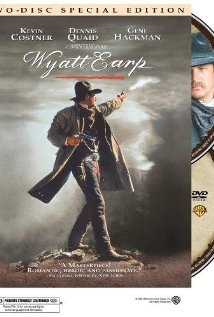
Wyatt Earp (1994), directed by Lawrence Kasdan

My father, of blessed memory, was not a frivolous person. He came to America as a young teen fleeing the pogroms of Russia in the early 1900s. He enlisted in the Navy and served honorably. He married relatively late and I wasn’t born until he was over 40. He worked hard as a painting contractor, breathing in lead-based paint before OSHA was around; and he did not have time to play basketball with me. He was busy trying to earn a living. In spite of his burdensome job, there was lots of love in my home. My father spent time with me, counseled me, and set a good example of upright living. Honest and charitable to the core, he devoted his free time to synagogue service and to rearing a growing family.

One of my favorite memories is going to the movies with him. My father rarely went, generally considering such pastimes a waste of time. But we did share an interest in westerns. Once in a very great while, I convinced him to come with me. I still remember the pleasure I had watching Gary Cooper in Springfield Rifle together with my Dad.

I was reminded of this as I watched Wyatt Earp, a 3-hour long epic revisionist western about that great Western hero. My Dad would not have liked the sordid parts of the narrative and the foul language, but he would have admired the beauty of the vast open spaces and the action sequences.

A subtext of the story is Wyatt’s relationship with his father, Nicholas Earp, who gives him critical pieces of advice along his life’s journey. It is notable that Nicholas Earp does not talk much; but when he does, people listen because they respect him and know that he loves them. Moreover, he gives advice to Wyatt at the right moment. Our Sages tell us we have an obligation to rebuke a child, but only when he is ready to listen. If he is not ready, then one should delay the rebuke.

When Wyatt is still a teenager, his father informs him that there are many vicious people who do not obey the law and “when you find yourself in a fight with such viciousness, hit first, and when you do hit, hit to kill.” He gives Wyatt a basic primer on how to deal with bad people who break the law and hurt other people. Show no mercy. To be affable is to be weak in the face of evil.

Later, when Wyatt’s beloved wife dies of typhoid, Wyatt, depressed and angry, immerses himself in drunkenness and theft. After landing in jail, his father comes to rescue him and pointedly tells him: “Do you think you are the first person to lose someone? That’s what life is all about. Loss. But we don’t use it as an excuse to destroy ourselves. We go on.” He imparts to Wyatt the life lesson that although life at times brings pain, life can still continue. Wyatt accepts these two pieces of advice, which guide him throughout his career as a successful lawman.

The task of a father in Jewish law is to teach his child Torah, to teach him a livelihood, and to teach him to swim, which many commentators take to mean to swim through life. Parents are repositories of wisdom and life experience, and too often we don’t take advantage of this. Advice from a person with much life experience who loves you, and who is invested in your successful living is a treasure. Wyatt Earp reminds us of the supreme value of a parent’s counsel.

Purchase this movie from Amazon.com.

The Curious Case of Benjamin Button (2008), directed by David Fincher

In the early 1970s, my late wife and I would regularly visit The Great Southeast Music Hall, an inexpensive music emporium that showcased up and coming artists. One night as we exited, I looked at the billboard announcing next week’s artist. He had a new album called “Cold Spring Harbor,” but I decided to pass on this unknown talent. And so it was that I missed an opportunity to hear Billy Joel at the beginning of his celebrated career.

Flash forward to today and The Curious Case of Benjamin Button, an unusual narrative about a person who is born as an old man and grows progressively younger, compelling the viewer to think about time in unconventional ways. The narrator, Benjamin Button, observes that “our lives are defined by opportunities, even the ones we missed.”

Missing the Billy Joel concert did not define my life, but Benjamin Button reminded me of the special opportunities that all of us have in our life’s journey. Our sages tell us: “When an opportunity for a good deed comes to us, we should do it with alacrity.” There are moments in life when time and circumstance meet, when we have an opportunity for greatness, for success, or to simply change our life’s direction, an opportunity that may not ever come again. How do we capture those moments?

Benjamin Button offers suggestions. When Benjamin is abandoned as a baby, a young married black couple finds him on their doorstep. Queenie, the wife, decides that she will take care of this child of God. Since the woman has been unable to bear children, she sees finding Benjamin as an opportunity to be a mother. It is an opportunity she will not let pass.

Benjamin, himself, takes advantage of opportunities. His changing body daily reminds him of the fickle nature of time and circumstance, and when a tugboat captain is looking for volunteers, Benjamin signs on immediately. This leads to a series of maritime adventures in World War II, and to a life-long interest in travel and discovery. It also broadens his view of the world. Having been born and raised in New Orleans, he now feels comfortable in foreign lands.

The film’s central story is the love between Benjamin and Daisy, a girl whom he first met at a retirement home when she was visiting her grandmother. She thought him an old man but connected to him because of his boyish ways. Their relationship evolves over the course of time as Benjamin gets younger looking as she gets older, until they reach an interlude in time when both are about the same age and can relate to one another romantically. It is a moment of opportunity and they marry and have a child.

Benjamin Button asks us to contemplate how we capitalize on the moments of opportunity that arise in our lives. When I was 12, my synagogue rabbi gave my parents an opportunity to send me to a religious camp. They said yes, and so my life was forever changed. At first, it was isolating, but I soon found new friends who were on my wavelength and life was good, fulfilling and purposeful. My parents were wise; they saw that, as a teenager, I was coming to the proverbial fork in the road and they gave me the opportunity to take the less traveled road.

As a rabbi and educator, I witness many people failing to take advantage of a particular moment in time, and this affects the rest of their lives. Having missed one opportunity, sadly they miss many others. Benjamin Button reminds us to be aware of precious moments of opportunity, and to take advantage of them to enrich our lives.

Purchase this movie from Amazon.com.

The Road Home (1999), directed by Zhang Yimou

Living in Israel has brought me in touch with many people whom I met earlier in my life. Let me explain. Firstly, many friends of my youth had a dream of ultimately living in the holiest place in the world and now many of them are actually living here. It is a retirement village in which no one is really retired. Everybody is redefining themselves in some way and connecting to the eternal past of the Jewish people, while at the same time living a vibrant present existence. Secondly, there are others whom I meet not because they are new immigrants in the land, but because they come to Israel to bury a loved one. It is a place for an ingathering of the exiles, those who are living and those who are not. When we come to Israel, we know we are coming home in a profound way. Watching The Road Home evokes comparisons to this Jewish sensibility but emerges from a Chinese tradition.

The title of the film The Road Home alludes to the journey of a man to his final resting place. Specifically it refers to the tradition of carrying the coffin to the grave so that the deceased “doesn’t lose his way.” This is a movie about deeply held traditions that both animate and connect people over the span of many generations, traditions that link them to the past and to the future.

The film opens as an urban man is returning to the rural village of his birth to bury his father, a revered teacher who brought wisdom to many generations of youngsters. Looking at the photo of his parents evokes a retrospective of the courtship of his father and mother many years ago. It is a romance based not so much on physical attraction, although there is that element, but mostly on a shared understanding of life and a common destiny.

After this poetically charged story of courtship, the film returns to the preparations for the funeral, which will require a march of several miles to the burial site in the midst of a blinding snow storm. Everybody in the village wants to participate in this tradition of escorting the dead, especially when it is a way to show respect for a beloved teacher. Their affection for him is palpable as we watch the villagers vie for the opportunity to carry the bier despite the inclement weather.

As a final mark of respect and tribute for his father, the son, on the day after the funeral, teaches a lesson in the village schoolhouse which is about to be demolished. He stands before the children, echoing the instruction of his father. The subtitles emblazoned on the screen reveal clearly the life lessons imparted by his father: “In everything there is a purpose. Know the past. Know respect for your elders.” By encouraging the students to appreciate and value the past, he assures them of a meaningful present and future. The teacher is the glue that binds the generations.

Torah values are ubiquitous in the movie. There is the value of respect for elders, the value of respect for tradition, the value of a loving relationship founded on common values, and the value of finding meaning in adversity. Ecclesiastes tells us that “it is better to visit a house of mourning than a house of feasting, for that is the end of all men and the living will lay it to his heart (7:2).” In the case of The Road Home, the loss of a loved one becomes the road to greater self-understanding.

Purchase this movie from Amazon.com.

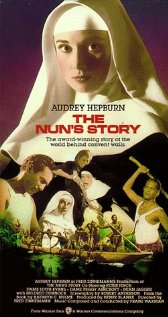
The Nun’s Story (1958), directed by Fred Zinneman

I was an average student in high school, so when I entered Yeshiva University as a freshman, I was overwhelmed with the many very bright students around me. It took me some time to feel I could compete academically; and for most of my undergraduate career, I did not participate much in class discussion.

I got mostly A’s in my courses, but did not offer my opinion in class until I took a course in Russian and Scandinavian literature in my senior year, which changed my perspective. I received an A on every test, yet received a B for the course. I went to my professor and asked him why I received a B. His response went something like this: “You do not participate in class discussion. You may know the material for the test, but I have no sense that you really understand the novels in a sophisticated way and can integrate them into some kind of thoughtful discussion.” I realized then that it was not good enough to know the subject; I had to show others that I knew it. Therein lay the conflict: self-effacement versus self-promotion.

For me, the conflict was not easily resolved. I was raised in a home of modesty and humility. My father was president of the local synagogue and my mother was president of its sisterhood and she worked countless hours for the Association for the Help of Retarded Children in Westchester County. They were selfless people, not at all interested in getting recognition. I never heard my parents utter a word about seeking honor for the good work they did, and I shared that perspective as I matured.

This approach towards doing good without receiving recognition resonated as I watched The Nun’s Story, a narrative of a young girl, Gabrielle van der Mal, who decides to become a nun. The daughter of a renowned physician, she has a solid understanding of tropical diseases and wants to devote her life to working in the Congo where she can alleviate the suffering of many. As we watch her move through the various stages of becoming a nun, she is continually challenged. Although far superior academically to her peers, she is always asked to submerge her ego, to overcome her desire for personal recognition, and to allow others to achieve their dreams at her expense. Her mentors encourage self-effacement even over self-esteem. Instead of sending her to work in the Congo with the indigenous population which she wants, she is sent there to work in a European hospital. There she contributes mightily but this does not satisfy her desire to work with the natives. The constant obstacles she faces are all designed to teach her humility and self-effacement.

In truth, humility is a value in Jewish tradition. Moses, the greatest of all prophets, was known as the most humble of all men. The commentators underscore this when the Bible reveals that Moses was 80 when he became the leader of the Jewish people, an age when one would expect him to seek a modicum of comfort and ease in life. Yet he is chosen by God at that age precisely to emphasize that he accepted the mantle of leadership not because of any desire for fame or recognition but solely to respond to the command of God. He is devoid of ego. All he wants is to do God’s will, and then he will disappear from the stage.

The Nun’s Story encourages a similar spirituality. As the Reverend Mother advises Gabriel: “Do good, then disappear.” Ideally, the desire to do good should not hinge on the approval or approbation of others. We should do good for God’s sake, not our own.

Purchase this movie from Amazon.com.