Category Archives: Action/Adventure

Becoming Bulletproof (2014), directed by Michael Barnett

becoming bulletproofMy sister Carol, of blessed memory, was six years older than me. She had Down’s syndrome, and as a kid I vividly remember going with Carol and my mother to Teen Town, a Thursday night social get-together where developmentally disabled teenagers could mingle socially, form friendships, and plan outings together. It was there that Carol met Sam Berniger, who also had Down’s syndrome.

Carol and Sam were an item in those days, often flirting with one another. At first it was strange to observe because I viewed my own sister as disabled in some way and not capable of romantic relationships. However, after witnessing Carol and Sam’s obvious affection for one another, I realized they were no different from other teens I knew. They wanted human connection. They wanted to feel love and affection, and that desire is common to all people, not just the developmentally disabled.

I thought of their romance as I watched Becoming Bulletproof, an arresting documentary about a cohort of disabled people from all over the United States, who come together once a year to make a movie.

Some background information is in order. Zeno Mountain Farms has an annual project of making a film using people with disabilities of all kinds as actors. Although their disabilities are wide-ranging, the young men and women come together in the service of art, making a movie that somehow transcends the limitations of their disabilities.

The project takes place in their summer camp program, and this year the project is to produce a short western movie by the camp’s residents. Period costumes are used, some paid for and some donated. The key scene is the confrontation between the hero and the villain in a shootout on a deserted street. The entire cast serves as bystanders to the imminent bloodshed. The camera pans over the worried faces of people in the crowd and then focuses on the guns in the holsters of the antagonists, who are about to draw their weapons against one another. It is a scene reminiscent of many classic western movies.

Working with the campers are people without disabilities who relate to the disabled as normal human beings. They see the disabled as significant others; and by doing so, they discover their common humanity, and forget about the disabled label. Watching the residents learn their lines and act their respective parts is both very heart wrenching and inspiring. What is especially noteworthy is how the staff relates to the residents as regular friends and family, even though the disabilities that distinguish them are glaringly evident.

Although there is an implicit message embedded in the movie, the movie is not preachy. The message: the disabled want to be recognized as people of value, who have an independent identity, who want to be taken seriously. This harks back to the Biblical notion that we are all created in God’s image; therefore, we all have infinite value regardless of our physical disabilities.

Jewish law recommends treating the disabled as regular members of the community as much as is humanly possible considering the idiosyncratic nature of each disability. As a synagogue rabbi, I recall vividly a father who painstakingly taught his developmentally disabled son how to recite the Torah portion for his Bar Mitzvah. In the father’s eyes, it was very important that his child experience the same rite of passage as other young men.

Becoming Bulletproof is testimony to the fact that the disabled are part of the human family, and want to be treated as such. Stigmatizing someone as disabled may be a necessity in the world of therapeutics, but labels should not define a person in the world of human discourse.
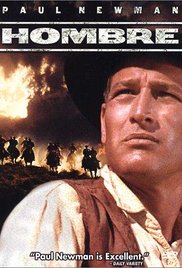


Hombre (1967), directed by Martin Ritt

hombre posterRelatives recently visited us in Israel. While here, we visited the celebrated Museum of the Blind, which is part of the Israel Children’s Museum in Holon. The exhibit is called Dialogue With the Blind, which offers an hour experiencing the world of the blind with a sightless guide.

Besides giving me an experiential understanding of the plight of the blind and making me feel so thankful for the gift of sight, I was reminded of how important it is to help our fellow human beings who are going through tough and challenging times. As I wandered in the dark and occasionally lost my footing, the blind guide helped me get back to a stable surface by getting my attention with his friendly and supportive voice and then grabbing my hand to point me in the right direction. He reminded me of how meaningful it is to know that you have a friend who will support you in moments of crisis, who will prevent you from falling. It is comforting when you know that friends are thinking about you and feeling responsible for your welfare.

Feeling responsible for other people is a narrative crux of Hombre, a revisionist Western that hinges on whether someone will step forward and deal with calamities when others cannot. The central character is John “Hombre” Russell, a white man raised as an Indian, who is the object of racial prejudice and alienated from the white man’s culture.

When Russell’s white stepfather dies, he inherits a boarding house owned by him. After inspecting the boarding house, he decides to sell it and return home. He and several other passengers take the stagecoach to Bisbee. The passengers include Jessie, the landlady of the boarding house, Audra Favor and her husband Alex, an administrator of Indian lands and, sadly, an embezzler of Indian reparation funds, and Cicero Grimes, a coarse bully with an agenda of his own.

Grimes’ agenda becomes clear when his cohorts show up to rob the stagecoach. Specifically, they want the embezzled funds carried by Alex Favor. In the ensuing melee, Grimes kidnaps Audra. As they ride away, Russell shoots two of the robbers and recovers the saddlebag of cash. To avoid pursuit by the outlaws, they head through the mountains and stop at an abandoned mining camp.

It is there that a moral dilemma emerges. When Grimes and his crew catch up with Russell and the other travelers on the stagecoach, Grimes offers to trade Audra for cash. To encourage a response, he ties up Audra in the hot sun, knowing that she will die if no one comes to aid her. Alex, Audra’s husband, does not want to risk his life to save his wife. Only Jessie expresses a willingness to help. At that moment, Russell steps forward, knowing that he is the only one who can save Audra and stop Grimes.

Jewish tradition clearly states: “we are all responsible for one another.” The Talmud suggests that this mantra of being responsible for one another means providing for the basic needs of another such us food, shelter, and physical safety. When we see someone in trouble, we need to act to help that person. We cannot simply turn our eyes away and mistakenly think that things will get better on their own.

Hombre is the story of one man who decides to risk his own life in order to help those in trouble. It is not an easy decision for John Russell, who has been exploited as an Indian for many years. However, his essential humanity prevails in a moment of crisis where only he can enable the others to survive.

Purchase this movie from Amazon.com.

Avatar (2009), directed by James Cameron

avatar posterFor many years I would listen to inspirational tapes on my way to and from work. Most of the tapes were transcriptions of lectures from Rabbi Avigdor Miller, a contemporary Jewish ethicist, and Zig Ziglar, an icon in the field of motivational speakers. I gleaned insights from both of them, but one insight of Zig’s, in particular, resonated within me as I watched Avatar, a science-fiction tale of an exploratory expedition to Pandora, an Earth-like moon on which live the Na’vi, a human-like species, together with an incredible feast of plant life.

The film opens as Jake Sully, a crippled war veteran and ex-Marine, wakes up in a spaceship on its way to Pandora. We soon learn about the Avatar program. Although humans cannot breathe the air on Pandora, the Avatar program enables a human to connect with his own avatar, a genetically-produced hybrid of a human and a Na’vi, and function as a regular Na’vi on Pandora. On Pandora, Jake, although paralyzed on Earth, can walk and breathe in his Na’vi body.

The purpose of the expedition, run by the Resources Development Administration, is to mine for the mineral unobtanium, a powerful energy source selling for millions per kilo that can return affordable energy to Earth, which is rapidly losing all its energy resources. The strategy of the earthlings is to persuade the natives to cooperate with their planned objective by injecting avatars into Na’vi society, who will convince the local natives to cooperate with the intruders from Earth.

As Jake ingratiates himself in the Na’vi world, he slowly begins to understand their worldview, which involves possessing a reverence for nature and not exploiting it for profit. This perspective conflicts with the view of the military head of the expedition, Colonel Quaritch, who is prepared to destroy the Na’vi civilization if it does not cooperate with him.

Jake’s conflict intensifies when he bonds with Neytiri, a Na’vi girl who rescues him from fierce animal attacks. Miraculously, the spirit world in which Neytiri lives confirms Jake as a pure soul, enabling him to be fully accepted into the Na’vi society. Meanwhile, he is still giving valuable information to his human counterparts and, at the same time, trying his utmost to persuade them to give him more time to convince the natives to leave the area in which the treasured mineral unobtanium is found.

Unfortunately, time runs out without a workable resolution to the conflict. Casualties pile up on both sides as war breaks out. The humans lack the patience to seek a compromise solution in which every interest can be preserved, and so they attack ferociously. Jake leads a counter-attack to prevent destruction of the Na’vi and their way of life. The outcome of their final battle is unclear until many lives have been lost. This failure to negotiate a compromise brings about catastrophic consequences.

Let me return to Zig Ziglar. One of his strategies to obtain good outcomes whenever two parties have different opinions is to imagine yourself sitting on the same side of table as your adversary. If you sit on the same side of table, it means that you understand the perspective of the adversary even if you do not agree with him. When you sit on the same side of table, you are likely to compromise, avoid extreme positions, and find a way that works for both parties.

Judaism stresses the avoidance of extremes and seeking the golden mean. Moreover, people in positions of influence are encouraged to pursue peace. Often times in Jewish jurisprudence, people are encouraged to pursue the paths of peace, darkei sholom. Even if one thinks his opinion is the correct one, it is sometimes better to accept another’s point of view in order to avoid conflict. In Avatar, we see the terrible consequences of unmediated conflict. It is a reminder that it is sometimes important to be patient and find a way where we can create a win-win situation in which all parties to the dispute are sitting on the same side of the table.

Purchase this movie from Amazon.com.

Everest (2015), directed by Baltasar Kormakur

everest posterI recently was in Zimbabwe touring Victoria Falls, one of the world’s great natural wonders. Members of the group had the opportunity to take a helicopter ride to view the Falls. Such a ride was not on my bucket list, so I passed. But many members of my group took the trip, discounting any possible risk. When they returned from the flight, they all were exhilarated about taking the helicopter ride. It appealed to their sense of adventure and they felt that this was a once-in-a-lifetime experience that they wanted to enjoy.

On the plane ride back to Israel, I watched Everest, the dramatic true story of an ill-fated climbing expedition on the tallest of mountains. Watching it reminded me of the thirst for adventure that drives man to do dangerous things.

The film ominously begins by informing the viewer that one in four people who try to summit die in the attempt. The film then shifts to 1998 when Rob Hall, CEO of Adventure Consultants, gathers together a team to climb the mountain. Among the team members are Beck Weathers, an experienced climber, and Doug Hansen, a climber who has attempted Everest before but without success. Doug expects that this will be his last expedition so he is determined to reach the summit no matter what is his physical state.

Rob informs his climbers that writer Jon Krakauer will be joining them on the expedition. Krakauer is a celebrated journalist and book author, and his presence on the trip creates the possibility of great rewards for Rob’s company if Krakauer writes a complimentary article about it. The safety of the climb, however, is Rob’s primary concern and so he explains the risks his climbers will face on their ascent because of the altitude and freezing temperatures.

As they move from Base Camp to Camp II, Krakauer asks the members of the team why they want to summit Everest. Doug sees himself as an ordinary guy and he wants to show the world that an ordinary guy can do extraordinary things. A woman climber wants to be the first woman to climb the mountain.

As they approach the summit, some team members get sick. Beck, in particular, has vision problems because of a surgery that he experienced a year before. In spite of hardships, some climbers do make it to the top, but then bad weather sets in making the return highly problematic and extremely dangerous.

The descent down the mountain is fraught with obstacles, the main one being the lack of oxygen tanks that were supposed to be placed along the way down. Climbers become dizzy and cannot handle the rarefied air. Hypothermia sets in creating more problems. In the end, not everyone survives, and those who do are left with emotional and physical scars.

Judaism recommends a calculus for risk-taking. When risk-taking is a part of everyday life, we take risks. We take risks when we drive an automobile, when we traverse a pedestrian crosswalk, when we go for a swim in the ocean, when we walk on a broken sidewalk. That is generally considered acceptable risk. Moreover, there is the notion, expressed in the Book of Psalms, that God is watching over us and protecting us from small risks.

Furthermore, Jews have an obligation to protect themselves and others from harm. There is a commandment to build a fence around any flat roof to prevent someone from falling. Similarly, we are bound to keep our dogs on leashes so they do not frighten visitors, and we are bidden to provide a safe home environment so that people in our homes will not fall and hurt themselves. The Sages clearly forbid activities that are dangerous, such as bungy-jumping.

Judaism, however, recognizes that one may take on increased risk if the task is performed to earn a living. The key is to be sure that the risk is reasonable and does not put one’s life in danger. Indeed, the definition of an acceptable risk is not precise, and the job of the individual is to assess the danger inherent in the task and then make a decision, keeping in mind that the preservation of life is paramount.

Everest depicts men who push the envelope and take on extreme physical challenges. The ascent of Mt. Everest involves great peril and the Sages of Jewish law would probably forbid it. It simply is too risky. The minor risks involved in everyday living are acceptable; the risks involved in serious mountain climbing are not.

Purchase this movie from Amazon.


Déjà Vu (2006), directed by Tony Scott

deja vuOne of my favorite poems is “The Convergence of the Twain” by Thomas Hardy. The poem describes two events occurring at the same time but at different locations. At some future time, the events converge. One is the building of the ship, the Titanic; the other is the forming of the iceberg with which the ship will collide. Hardy writes: “Alien they seemed to be/ No mortal eye could see/ The intimate welding of their later history/ Till the Spinner of the Years/ Said ‘Now!’/And each one hears/ And consummations comes, and jars two hemispheres.”

Déjà Vu, a tense and clever thriller, does not deal with two discrete events as depicted in “The Convergence of the Twain,” but it does raise a theoretical question: would the Titanic tragedy have been avoided if someone intervened to change the run-up to the cataclysm?

Time travel has been a fascinating topic in the cinema. The manipulation of time opens up all sorts of creative doors in terms of plot, content and message. There are times in life when we want the opportunity for a do-over to correct a past mistake or to come up with a better response to a problem, and this is what transpires in Déjà Vu.

The film opens with an explosion of a ferry in New Orleans. There are 543 casualties including many sailors and their families who were headed for a Mardi Gras celebration. ATF agent Doug Carlin is recruited by an experimental FBI surveillance team to help investigate the terrorist attack.

Carlin learns that the body of Claire Kuchever, washed ashore an hour before the explosion, has been burned with a similar explosive, suggesting that she was murdered. The killer apparently wanted it to look like she was simply another victim of the ferry explosion.

Working with the surveillance team, Carlin learns about a new technology which bridges both past and present. The team has the ability to go back four days and analyze the events leading up to the catastrophe, with the hope of catching the perpetrator. Carlin, however, sees an opportunity to go back to the past to prevent the murder of Claire Kuchever, and to prevent the ferry from being blown up. How this happens is implausible, fascinating, and cinematically riveting. Carlin, frustrated that police are only able to react to crimes once they are committed, now is driven by the possibility of stopping a crime before it occurs. He wants to save Claire who is alive in the past, yet dead in the present.

When he finally confronts the terrorist, Doug Carlin tells him: “Satan reasons like a man, but God thinks of eternity.” What emerges from this statement is the notion that man only lives in the present. We only see life in the format that fits our human screen. God, however, sees the wide screen version of life, for He sees past, present, and future as one. He sees the big picture; we do not. As it says in Ethics of the Fathers, “everything is forseen by God,” which indicates that God is beyond time. Although man lives within time, God does not.

Déjà Vu explores the idea that time is relative, not a constant. Given that perspective, the question arises whether man can influence what happens in the future if his vision is limited to the present. Can man exercise free will in the face of a Creator who foresees everything? Doug Carlin’s actions suggest that he can.

Jewish tradition supports the view that although God may know the future, He limits himself deliberately and allows man to exercise free choice. The implicit message of Déjà Vu is to do good even when the outcome is uncertain. Choose life even when surrounded by death.

Purchase this movie from Amazon.com.

The Martian (2015), directed by Ridley Scott

martian posterIn the Bible and Talmud, there are descriptions of people who respond admirably to adversity. In spite of whatever happens, they do not give up; rather they find a way to continue to be optimistic and productive, no matter what the obstacle.

A classic example from the Talmud is Nachum Ish Gamzu. Whenever misfortune struck, he would say, “this too is for the good.” His unyielding optimism made him a role model for many who faced trials and tribulations.

Nachum became blind in his later years. He also lost his hands and feet, and lay in a dilapidated house where his bed was propped up on water jugs to prevent ants from reaching him. Throughout this time, Nachum responded by saying to himself and others that “this is also for the good.”

Mark Watney, the hero of the tense survival drama, The Martian, experiences adversities of a different sort, but his optimism in the face of overwhelming challenges recalls the attitude of Nachum Ish Gamzu. Mark’s story begins on Mars where he is collecting ground samples to bring back to earth. When an intense storm comes in, Hermes Commander Melissa Lewis orders the mission aborted. Regrettably, a piece of flying debris catapults Watney to a location far from the their space ship, and Mark is left behind.

Although the Director of NASA and the rest of the Hermes crew consider Mark dead, we learn that he is still alive. His first challenge is to remove a piece of antenna stuck in his abdomen. His second is to figure out how he can survive with an oxygen supply that is diminishing rapidly. His third challenge is to determine if he has enough food to last for four years since that is how long it will take to launch a rescue mission. As a botanist, he sees possibilities that the average astronaut will not, and so he begins to plant potatoes on a planet whose soil is not designed to grow earth-like vegetables.

NASA engineers soon detect some movement on Mars, and they discover that Mark is still alive. Eventually they establish communication with him, and a rescue plan is devised. Once his crew learns that he is still alive, they volunteer to be part of the rescue team. Although the plan is complicated, risky, and many obstacles need to be overcome, Mark never gives up. He looks at each problem as one solvable problem. He does not allow the complexity of the mission, which involves overcoming multiple challenges, to deter him from trying his best to survive.

Many years later we see Mark lecturing to class of budding astronauts. His words resonate with the wisdom of experience: “At some point, everything’s gonna go south on you and you’re going to say, this is it. This is how I end. Now you can either accept that, or you can get to work. That’s all it is. You just begin. You do the math. You solve one problem and you solve the next one, and then the next. And if you solve enough problems, you get to come home.”

The Ethics of the Fathers, a classic of Jewish wisdom literature, also expresses a similar perspective on confronting life’s challenges. When faced with a problem, what is important is that we begin to address it and look for ways to solve our dilemma. Indeed, all beginnings our difficult, and we are not always able to complete the task given to us. However, our job is to start with all of our strength and concentration to do the best we can. The rest is left to God. This positive approach to life is worth emulating.

Purchase this movie from Amazon.com.

American Sniper (2014), directed by Clint Eastwood

aamerican sniper posterThe ability to balance one’s professional role with one’s family responsibilities is one of the core issues depicted in American Sniper, an unnerving film about US Navy Seal sniper Chris Kyle, who was credited with 160 kills, more than any other sniper in history. His success as a sniper, however, is not simply achieved. To protect a fellow soldier, he may have to kill a woman or child. He may have to pull the trigger when he has a doubt about the intentions of his target. Is the target on the phone talking to his girlfriend or is he giving instructions to a terrorist poised to shoot an American soldier? There is moral ambiguity, and this creates great stress.

When Chris is a child, his father lectures him about the existence of evil people in the world, and his words resonate when Chris watches the 9/11 Twin Tower attacks on television. It motivates him to want to do something to protect America. Chris visits a US Navy recruiting station and decides to enroll in the SEAL program, which involves a rigorous training regimen. The training program includes learning how to be a sniper, at which Chris excels because of his early hunting experiences with his father.

During this training period, he meets Taya with whom he falls in love. They marry, but on their wedding day receive word that he will be deployed to Iraq. It is a mission that excites him, for it will give a real chance to serve his country.

When he leaves for Iraq, Taya is pregnant with their first child. When they talk by phone, they share their longing for one another, but Kyle does not talk about what he does in the military. Moreover, he does not want her to know about the atrocities he witnesses in Iraq.

Possessing a deep commitment to serve his country, Kyle serves four tours of duty, becoming a legend as the most successful sniper in American history. As time passes, his zeal for battle service increases. As his passion to protect his comrades in arms grows, he becomes more and more disconnected from family until one day Taya rebukes him: “I need you to be human again. I need you here.”

Kyle is challenged to find meaning to the normal flow of everyday life, away from the threatening battles of Iraq. Transitioning from a sniper into a normal husband and father is not easy. American Sniper reminds us that a healthy life needs to be a life of balance between one’s professional goals and the demands of raising a family. It is an echo of what the great medieval sage, Maimonides, said many years ago when he spoke about pursuing the golden mean and avoiding extremes.

A Torah teacher of mine was a master at balancing his myriad responsibilities as a graduate instructor of complex Talmud texts and as a father of six children. When I visited him in his home in the 1960s, I noticed that on his mantelpiece he had photos of his kids wearing Little League baseball uniforms. It was the first and only time that I witnessed a Torah teacher whose children were attired in such dress. When I asked one of his sons many years later why these pictures occupied such a prominent place in his home, he told me “my father wanted to keep us normal.” His father and mother valued scholarship, but they valued good character more, which is often nurtured on the ball field through good sportsmanship and developing solid interpersonal relationships.

Achieving balance in life does not mean giving equal time and energy to one’s work and family. Rather, achieving balance requires us to look at how we prioritize our tasks, and, in a nuanced way, navigate the many challenges we face professionally and personally. American Sniper encourages us to achieve balance in life by putting family first.

Purchase this movie from Amazon.com.

The Count of Monte Cristo (2002), directed by Kevin Reynolds

count of mone cristo posterI had a recent conversation with a friend who told me about his mother’s six-year bout with cancer. He told me that once she had the cancer diagnosis, she led an incredibly productive life. Uncertain about the future, she lived each day to the max, accomplishing an entire range of worthwhile activities. Hearing the story reminded me that bad news or bad circumstances can be a spur to good outcomes. A lot depends on one’s perspective.

In The Count of Monte Cristo. Edmund Dantes, an unlearned sailor, is placed in prison unjustifiably for thirteen years. But it is in prison that he learns how to read and write, how to fight, and how to navigate the corridors of power. Were it not for his incarceration, his life would be blessed but unremarkable.

The story begins in 1815 when Edmond Dantès and his friend Fernand Mondego, travel to the isle of Elba to seek medical attention for their sick captain. Dantès and Mondego are chased by the British who assume that they are supporters of the exiled Napoleon Bonaparte, who is living on the island. Bonaparte comes to their rescue and gives them access to his physician. In return for his kindness, he asks Dantes to deliver a letter to a Monsieur Clarion in France, a request to which Dantes agrees.

The letter becomes the vehicle through which Dantes is betrayed by his friend Mondego, resulting in his being imprisoned and tortured in the Chateau d’If for thirteen years. While there, he surreptitiously meets another prisoner, Abbe Faria, a former priest and soldier in Napoleon’s army. Faria tutors him in literature, philosophy, economics, swordsmanship, and military strategy, eventually enabling him to blend into court society and plan an elaborate revenge.

At his death, Faria reveals the location of a vast treasure to Dantes. He encourages Dantes to use this newfound wealth for good things and not just for revenge. When Faria’s body is to be taken out of the prison for burial, Dantes creatively comes up with a clever ruse. He changes places with the corpse, which is wrapped up in a large sack and escapes from the prison. How he orchestrates his vengeance makes for a fascinating adventure, with a number of surprise plot twists along the way. The evolving perspective of Dantes shows a man bent on revenge but who, inwardly, is a religious man struggling to make sense of what has happened to him. In the end, the attitude of the priest Abbe Faria prevails in Dantes’ life.

The classic example in the Bible of someone who grows through a prison experience is Joseph. He is sold into slavery and put into prison for a crime he did not commit. He could easily have succumbed to a life focused only on revenge, but he did not because his abiding faith convinced him that a divine plan was in the making. Edmund Dantes does not see this immediately. Revenge is his primary motivation; and it is a motive that motivates him to survive, but it also poisons the way he perceives the future.

Dantes begins as a devout believer and goes through a period where he denies the presence of God in his life. His core values of faith are tested over a long period of incarceration. However, contact with Abbe Faria ultimately changes his destiny financially, emotionally, and religiously. The implicit message of Edmund Dantes’ ordeal is to overcome anger and revenge and devote your life to good. Doing good is redemptive and enables one to transcend the pain of the past.

Purchase this movie from Amazon.com.

The Last of the Mohicans (1992), directed by Michael Mann

last of the mohicansFor many years, I was a fan of the motivational tapes of Zig Ziglar, a self-help guru who often gave me valuable insights about how to work with people who did not share your point of view, but who did care about the things you cared about. One of his wise aphorisms was “to sit on the same side of table” as the opposition to discuss thorny issues. In other words, see things from the perspective of your adversary and understand his perspective even if you don’t agree with it. Seek out compromise so that there is a win-win situation for both parties.

I was reminded of this as I watched The Last of the Mohicans, a passionate love story and a rousing and violent adventure about early America before it became a nation. A key plot point hinges on the ability to compromise and see things from the perspective of the other.

The narrative takes place in 1757 when the English colonies and the British are fighting the French for land on the American continent. Indians are fighting on both sides and the colonists are key players in the British effort to defeat the French. But there is a problem: the colonists have mixed feelings about the English. On the one hand, they are subjects of the King; but, on the other hand, they have their own dreams of independence and see the world differently. Many are prepared to fight for the British, but only if they can still defend their families at home who may come under attack. Without that assurance that their own concerns are addressed, they are unwilling to risk their lives for King and country, especially when the country is not fully supportive of their colonial initiative. They are willing to compromise if their personal needs are met, but the English are arrogant. The English see the colonists as servants of the Crown and they must do as the Crown dictates.

This dilemma presents itself at the beginning of the story as three men, Chingachgook, his son Uncas, and his adopted son Hawkeye visit their old friends, the Camerons. One of the colonists at the table informs everyone that he is recruiting men to fight for the British against the French, as long as the British agree to allow the men to return home in case their homes are attacked by the Huron war parties, loyal to the French. The British military leader, General Webb, agrees and the colonists then head to Fort William Henry to join the British forces.

Meanwhile, Cora Munroe and her younger sister Alice journey to visit their father, Colonel Edmund Munroe at Fort Henry. Upon arrival, their father is happy to see them but surprised to find them there at all. After all, it is a war zone, and their lives are in danger. Apparently, messages of the dire straits of the English never got through, and now Colonel Munroe is doubly burdened by both the fighting in front of him and insuring the safety of his daughters. Moreover, he demands that the colonists fight for the British and not return home to protect their families. For him, loyalty to England trumps all. Compounding the problem is Magua, a duplicitous Indian guide who leads the British into a trap.

Hawkeye saves Cora and her sister from the attack, and slowly Cora begins to understand the worldview of Hawkeye, a fiercely independent man who sees the British as foolish and narrow-minded, unwilling to compromise on principles that have no relation to the current reality in which they find themselves.

The inability to compromise creates an environment for catastrophe. Judaism, indeed, looks at compromise as a good thing. Gerald M. Steinberg, an expert in Jewish law, observes that mediation and conflict prevention are constructive ways to avoid dissension in the family and in the community. In finding compromise solutions, extremism is eschewed and moderation is valued.

Beneath the modus operandi of compromise is the fundamental assumption that peace among men is a quintessential value. Jews pray for peace three times a day and Jewish leaders are encouraged “to seek peace and pursue it.” For example, when Abraham and his nephew Lot had a difference of opinion about grazing areas for their sheep, to avoid further friction Abraham acted magnanimously. He said: “If you will go to the left, I will go to the right, and if you will to the right, then I will go to the left.”

The overall goal in Jewish litigation is to accept compromise in order to reduce conflict and increase peace. This perspective on conflict does not exist when the British relate to the colonials. In The Last of the Mohicans, we witness the tragic results of insisting on being right rather than being good.

Purchase this movie from Amazon.com.

Open Range (2003), directed by Kevin Costner

open range posterCourtship is a sub-topic in the picturesque and violent western Open Range. As a volunteer matchmaker on an Internet website, I have some idea of what makes for compatibility between people. Most of all, it involves common goals and dreams. When two people share the same understanding of the future, then the present is much easier to negotiate. Charley Waite and Sue Barlow intuitively grasp this truth and it helps them to decide to marry.

The film opens as Bud “Boss” Spearman and Charley Waite, together with hired hands Mose and Button, are bringing cattle to market. As they travel, accepted convention allows their cattle to feed on grass in the open range. All seems to be going fine until they enter the vicinity of Harmonville, a town controlled by Denton Baxter, a money-hungry Irish immigrant who sees free-grazers as usurpers of other people’s property.

Boss sends Mose to town to get supplies, but his innocent encounter with the locals leads to Mose being beaten and thrown into jail. When Boss and Charley go to town to release him from jail, they are given a warning that free-grazers are not welcome there. To get medical help for Mose, they go to Doc Barlow whose sister Sue assists him in his work. Charley finds her attractive, but does not pursue her because he thinks that Sue is the doctor’s wife, not his sister.

After returning to their camp, Mose and Button are attacked in the middle of the night when Boss and Charley are not around. When Mose dies and Button is seriously injured, Boss and Charley decide to take revenge.

After a tense confrontation between Boss and Charley and Baxter and his cohorts, bullets fly and casualties mount. When the dust settles, Charley and Sue discuss their respective futures. She confesses her love for him and Charley, after some deliberation, proposes marriage to Sue. Sue understands Charley’s complicated past life in which he committed terrible things that still haunt him, and she encourages him to focus on the time ahead and not permit his past life to determine his future: “I don’t have the answers, Charley. But I know that people get confused in this life about what they want, and what they’ve done, and what they think they should’ve because of it. Everything they think they are or did, takes hold so hard that it won’t let them see what they can be.” Sue has a mature perspective on life, realizing that the past does not determine the future.

Rabbi Dov Heller insightfully lists ten questions to ask before getting married, many of which are answered in the affirmative by Sue and Charley as they navigate their relationship. Here are some of them: (1) Do we care about each other as good friends? (2) Are we emotionally honest and vulnerable with one another? (3) Do we take care of each other’s needs? (4) Do we admire and respect each other? (4) Do I trust this person completely? (5) Do we want the same things out of life? (6) Do I have peace of mind about this decision? Sue and Charlie implicitly say yes to all of these questions.

Open Range is a very good example of the western genre that catapults the viewer to the beauty of wide-open spaces and depicts the classic confrontation between good and evil. It resonates, however, on the human level in its honest depiction of people working hard to make ends meet, yet who have hopes and dreams beyond what preoccupies them in the moment.

The portrayal of an older couple trying to find happiness reminds us that it is never to late to find love and meaning in life if, as the great English poet Matthew Arnold writes, one sees life steadily and sees it whole. Viewing things in this way gives one a perspective on all of life’s challenges and possible rewards.

Purchase this movie from Amazon.