I live in Israel where I often read about the moral dilemmas faced by the Israel Defense Forces as they fight terror that threatens the fabric of daily life. There are no simple answers to these complex questions. I reflected on this reality as I watched Sicario, a tense and unsettling look on law enforcement in America as it tries to control illegal drug trafficking in Mexico, a drug trade that infiltrates the southern border of the United States.
The story begins with an FBI SWAT raid of a home used by Mexican drug cartel kidnappers. Agent Kate Macer and her partner Reggie Wayne discover dozens of dead bodies, presumably executed by drug dealers. Kate’s boss thinks highly of her and recommends that she participate in a special task force put together by the Defense Department and the CIA to ferret out the people who caused these horrific murders.
The leaders of the team are CIA agent Matt Graver and his partner Alejandro Gillick, who are joined by U.S. Marshals and an elite cohort of Delta Force soldiers. Their target is Manuel Diaz, one of the major players in the drug cartel operation. As the mission progresses, Kate wonders what the true purpose of the mission is. Gradually she learns that Diaz is only important for his connection to the drug lord Fausto Alarcon.
In order to reach him, many may die. CIA agent Graver believes that collateral damage is worth it if they achieve the goal of disrupting the flow of drugs into America. Kate sees it as using immoral means to attain worthy goals. She is uncomfortable with the mission, which expects her to compromise truth in order to attain the desired results.
Jewish tradition asks us to consider the moral calculus before embarking on a mission that involves compromising one’s integrity. The litmus test is whether the action fits within the parameters of the Torah and Jewish Talmudic law, which offers general guidelines as to how to deal with these very thorny moral questions.
In an article on battlefield ethics based on sources in the Talmud and Codes of Jewish Law, Rabbi Michael Broyde outlines the conditions that allow for a theoretical “license to kill.” One may not kill an innocent third party to save someone’s life. One may not compel a person to risk his life to save another. One may not kill a person after he has already committed an evil act, and one may not use more force than is minimally needed. Moreover, before waging battle, one must first try to establish peace. Of utmost importance is killing only combatants, not innocent people. They must be given a chance to leave the battle theater. Once these conditions are met, then one has a theoretical “license to kill.”
When one considers these givens of Jewish tradition as guidelines for proper conduct, we see that the good guys in Sicario operate in morally ambiguous terrain. It is not easy to live in this environment, which continually tests our sense of right and wrong.
Understanding this reality, Alejandro advises the morally sensitive Kate to leave: “You should move to a small town, someplace where the rule of law still exists. You will not survive here. You are not a wolf, and this is a land of wolves now.”
Sicario is not a typical action flick, although it has its share of tense and visceral action scenes. The film also makes us think about the complexity of law enforcement in an environment where there is no respect for the law. There are no easy answers for someone with a conscience. Kate Macer is thrown into chaotic universe with no moral center, and it unnerves her. Watching Sicario unnerves us as well.
During the course of many years of serving as a school principal, there have been occasions when I had to publicize bad stuff within the school community. It was something I never liked to do; but when it came to matters of health and safety, I felt I had to go public if that is what it took to protect other students.
I recall one incident involving a student caught for drug usage in high school. It was grounds for expulsion, a grave infraction that might prevent the student from attending another Jewish school and thus not have the opportunity to learn more about his faith. It was a stressful time of decision-making, but I expelled the student to protect the rest of the students from potential harm and to reassure parents that the school’s “no tolerance” for drugs policy was taken seriously.
Discovering and publicizing someone for inappropriate behavior is at the core of Spotlight, a visceral narrative about a four-person cadre of Boston Globe reporters who decide to investigate charges of abuse by Catholic priests in Boston. The year is 2001, and the Boston Globe has a new editor, Marty Baron. At an early meeting between Baron and the staff, Baron brings up the case of a Catholic priest who molested many children over a period of 30 years. A lawyer for the victims, Mitch Garabedian, argues that Cardinal Law, the senior cleric in the city, knew about the molestations but did nothing about it. He even cites the existence of sealed documents that prove the Church’s negligence. Baron suggests taking the Church to court to compel the unsealing of the documents.
As the Spotlight team does more research, they discover that there is a three-year statute of limitations in molestation cases, which does not allow for a thorough investigation of abuse claims. Moreover, the children feel shame and guilt and do not want their peers to know of the abuse. Furthermore, the settlements for damage are capped at $20,000, a miniscule sum in light of the emotional and psychological damage done.
The Spotlight team is persistent and eventually they get access to victims, whom they interview. More investigation reveals that the problem is systemic and not limited to Boston clergy. Clergy who molested children did not lose their jobs. Instead, they were sent to other parishes where the same abusive behavior re-emerged. In the church employment directories, priests who moved from parish to parish were simply designated as on “sick leave” or “absent on leave.” There was no mention of the egregious, corrupt conduct, which prompted their relocation.
At the end of the day, many suffered because of this conspiracy of silence. Few people wanted to tarnish the image of the church, and so there were many victims. As Mitch Garabedian, one of the victim’s lawyers said, “if it takes a village to raise a child, it takes a village to abuse one.”
Jewish law has a clear approach to determining whether one can reveal confidential information. It is based on the passage “do not stand by while your brother’s blood is being shed (Leviticus 19:16).” This commandment obligates one to shield another person from harm. If revealing private information protects other people by securing their health and safety, then it is permitted.
Interestingly, this commandment comes directly after the prohibition against talebearing. The commentators explain that telling tales about other people is tantamount to shedding their blood since serious damage can be done by disclosing private information. Therefore, the spreading of confidential information is, for the most part, only permitted when the goal is to prevent harm to others.
Spotlight, a film that shines a light on abuses in the clergy, has a larger message; namely, that we have a responsibility to publicize wrongdoing that affects our community in order to protect its citizens from harm.
Many years ago, I asked a lawyer whom I respected what was his specialty. His answer: money. It was an “aha” moment when I realized that law is not always synonymous with justice, and that what often determines a legal outcome is how much money is at stake in terms of potential gain for the attorneys working on the case.
The conversation reminded me why lawyers generally don’t want a case to go to trial. It is simply too expensive in terms of time and effort spent. Jan Schlictman, the protagonist of A Civil Action openly states this at the beginning of the film: “Odds of a plaintiff’s lawyer winning in civil court are two to one against. Your odds of surviving a game of Russian Roulette are better than winning a case at trial. So why does anyone do it? They don’t. They settle. Only fools with something to prove end up ensnared in it.”
This is the mindset that opens A Civil Action, an insightful film about one lawyer’s quest to right a wrong in Woburn, Massachusetts, a city where environmental toxins dumped into the river have contaminated the area’s water supply, causing the death of a number of children.
Woburn resident Anne Anderson contacts attorney Jan Schlictman’s personal injury firm to take legal action against those responsible for the contamination. At first Schlichtman rejects the case, but when he realizes that the contamination is a major environmental issue and there are a couple of deep pockets who can be sued for millions, he changes his mind and accepts.
Money is his motivator, but slowly he takes a personal interest in the case, especially when he begins to share the grief of parents who have suffered the profound loss of their children. He becomes a legal crusader on a mission, working long hours with no regard for the financial toll it is taking on his partners or himself.
The plaintiffs, in truth, are not interested in a monetary settlement. They simply want their city’s water supply cleaned up and an apology from the companies that created and contributed to the problem. Initially, the companies are willing to settle and grant the plaintiffs a large sum of money, but the companies do not want to admit culpability. Indeed, they are not depicted as unscrupulous people, just businessmen who want to protect their financial interests.
Jan tries his best on behalf of the plaintiffs in presenting this class-action lawsuit, but the companies’ opposition is strong and not easily overcome. Various settlements are suggested along the way, but Jan is unmoved. He sticks to principle even when there is great cost to him and his fellow firm members, who did not anticipate or desire to pursue a trial instead of a settlement. How this all turns out makes for a mesmerizing courtroom drama. It also gives the viewer an insight into the nuanced complexity of the American judicial system.
In stark contrast is Judaism’s rabbinic court system, which adjudicates civil disputes. The court consists of a panel of three judges, chosen from among a pool of scholars who are experts in Talmud and Jewish law. In general, the court takes no fee and does not take a donation or gift from any party using its services. It seeks to avoid long-term litigation, which only serves to fill the coffers of lawyers who want to profit from their clients. The case is in question is looked at from the perspective of the codes of Jewish law and specific case law that is relevant to the issue being discussed. After thorough analysis, a decision is given with the clear expectation that both sides of the dispute will agree with the outcome no matter who wins. Money does not rule; justice does.
A Civil Action portrays a nuanced view of how our legal system works. There are no evil judges or lawyers. There are only people who want to protect their financial interests. When we realize that our adversaries are often people like us, then solutions, albeit imperfect, can be found to the thorniest of problems.
My review of The Godfather trilogy requires some preliminary discussion. Why have I chosen to consider all three films in one review and why is it a “kosher” movie in spite of the fact that there is much violence and profanity in the film?
I have defined a “kosher movie” as a film that has something meaningful to say about life, a film that can help us navigate our own lives. In this sense, the Godfather films have many life lessons that can apply to us, lessons about leadership, about succession within an organization, lessons about relating to family members who strongly disagree with you, lessons about how important it is to control one’s temper, and insights into how difficult it is to repent for one’s misdeeds.
I chose to write about the three films because, taken as a whole, they tell one story about the life of one family, and how the people in the family change and how relationships within the family change. To review only one of them is not to recount the entire story of a family’s evolution as it tries to preserve its own unique identity as a family.
Let me begin with the opening scene of The Godfather: Part I, a wedding celebration. There is a tradition that “no Sicilian can refuse a request on his daughter’s wedding day,” and so many guests at the wedding of Don Vito’s Corleone’s daughter in the summer of 1945 come to ask the head of the Mafia Corleone family for favors. At the wedding are Don Vito’s three sons, the mercurial and hot-tempered Sonny, the slow-witted Fredo, and the decorated Marine hero, Michael, who attends with his girlfriend Kay.
One guest, a singer, wants help landing a movie role to revitalize a moribund career. Another wants revenge against men who raped his daughter. Still another wants help to enable his nephew to become an American citizen. Don Corelone responds with the classic tagline: ”I’ll make him an offer he can’t refuse,” which is an oblique way of saying that I will use violence to accomplish my ends.
Things become complicated when other Mafia gangs want to go into the heroin business. They ask for the Don’s political assistance since he has many friends embedded in the legal and political communities. The Don refuses because he knows that his involvement in the drug trade will destroy his political friendships. This interchange plants the seeds of insurrection within the ranks of the rival gangs, ultimately leading to an assassination attempt on the life of Don Corleone.
All this turmoil influences Michael who loves his father and wants to protect him. Michael offers to kill the two men who were behind the assassination attempt, and an elaborate plan is devised. The only downside is that Michael will have to leave the country for some time until it is safe for him to return.
In the interim, tragedy strikes when the hot-tempered Sonny is violently shot to death by his enemies. Don Corleone wants to end the madness, and so offers to provide political protection to those gangs involved in the drug business as long as it not sold to children.
When Michael returns to the United States four years later, he reconnects with Kay, his former girlfriend, and they marry with Kay believing that Michael will legitimize his business within five years. A key to his success is keeping a tight lid on family disagreements. They are never to be revealed publicly even though privately they can disagree. Moreover, he understands how important it is not to be careless. As the Don says to Michael: “I spent my whole life trying not to be careless. Women and children can afford to be careless, but not men.” These are valuable leadership lessons: do not air dirty family laundry in public and do not be careless in planning for important future events in your life.
The Godfather: Part II interweaves the lives of Michael Corleone, the new head of the Corleone family, and Vito Corleone, his father as the young Sicilian who founded the Corleone dynasty.
The film opens in 1901, in the town of Corleone, Sicily, where Vito’s brother and mother are killed in mob-related violence. Vito is forced to flee for his life, and ends up in America, where he begins his life of crime with small –time theft, graduating to murder and intimidation for huge profits. Slowly, Vito becomes a man with whom to consult to solve problems and he is highly feared and respected by the community.
The story then shifts to 1958 with Michael Corleone, Godfather of the Corleone family, dealing with business and family problems during an elaborate celebration at his Lake Tahoe, Nevada compound. He needs gaming licenses for his casinos in Las Vegas and enlists the support of a United States senator to help him negotiate fees. He also has conversations with his younger sister, Connie, who is about to marry a man of whom Michael disapproves. He also discusses a possible alliance with Hyman Roth, a gangster who is encouraging Michael to establish gambling venues in Las Vegas. While he wants to follow the advice of Roth, his adviser reminds him of his father’s attitude towards Roth: “your father did business with Hyman Roth, your father respected Hyman Roth, but your father never trusted Hyman Roth.” Another leadership lesson: respect others but do not always trust them to have your best interest at heart.
Michael, like his father, survives an assassination attempt, which leads to a new cycle of violence. But what rankles Michael is the discovery that his brother Fredo was indirectly tied to this event and that Fredo has lied to him, the ultimate betrayal by a family member.
The Godfather: Part III depicts Michael in his twilight years. Now almost sixty, he seeks redemption for a life of crime and violence. To assuage his guilt, he donates money to the Church and other charities. But yet again, his criminal past asserts itself and he is engulfed in more violence, compelling him to appoint Vincent Mancini, Sonny Corleone’s illegitimate son, as his successor.
Classic lines from all three films relate to leadership strategies and life lessons, and they reverberate long after seeing the movie. Here are some of them uttered by Michael Corleone: “My father taught me many things. He taught me: keep your friends close, but your enemies closer.” “Never hate your enemies. It affects your judgment.” “Never let anyone know what you are thinking.” “Temper clouds your judgment,” “The higher I go, the crookeder it becomes.” “The only wealth in this world is children; more than all the money, power on earth.” “Give me a chance to redeem myself, and I will sin no more.”
All the quotations reveal leadership strategies and convey life lessons, echoed in various chapters of Ethics of the Fathers. As Michael Corleone matures, he sees things from the balcony. He is less concerned with day-to-day matters and more concerned with family and his personal legacy. He wants spiritual redemption and he wants a relationship with his children. His life has been a melange of crime and violence and he wants to end it with a legacy of peace.
Judaism encourages us to see things from the aspect of eternity, and that is what Michael Corleone finally does. No longer is power and money important. What is important are the human connections that transcend the desire for material things. The only things that will accompany us on our final journey, say our Sages, are our good deeds, which are sown in the garden of family and friends. At the end of the day, that is all that matters.
One of my favorite poems is “The Convergence of the Twain” by Thomas Hardy. The poem describes two events occurring at the same time but at different locations. At some future time, the events converge. One is the building of the ship, the Titanic; the other is the forming of the iceberg with which the ship will collide. Hardy writes: “Alien they seemed to be/ No mortal eye could see/ The intimate welding of their later history/ Till the Spinner of the Years/ Said ‘Now!’/And each one hears/ And consummations comes, and jars two hemispheres.”
Déjà Vu, a tense and clever thriller, does not deal with two discrete events as depicted in “The Convergence of the Twain,” but it does raise a theoretical question: would the Titanic tragedy have been avoided if someone intervened to change the run-up to the cataclysm?
Time travel has been a fascinating topic in the cinema. The manipulation of time opens up all sorts of creative doors in terms of plot, content and message. There are times in life when we want the opportunity for a do-over to correct a past mistake or to come up with a better response to a problem, and this is what transpires in Déjà Vu.
The film opens with an explosion of a ferry in New Orleans. There are 543 casualties including many sailors and their families who were headed for a Mardi Gras celebration. ATF agent Doug Carlin is recruited by an experimental FBI surveillance team to help investigate the terrorist attack.
Carlin learns that the body of Claire Kuchever, washed ashore an hour before the explosion, has been burned with a similar explosive, suggesting that she was murdered. The killer apparently wanted it to look like she was simply another victim of the ferry explosion.
Working with the surveillance team, Carlin learns about a new technology which bridges both past and present. The team has the ability to go back four days and analyze the events leading up to the catastrophe, with the hope of catching the perpetrator. Carlin, however, sees an opportunity to go back to the past to prevent the murder of Claire Kuchever, and to prevent the ferry from being blown up. How this happens is implausible, fascinating, and cinematically riveting. Carlin, frustrated that police are only able to react to crimes once they are committed, now is driven by the possibility of stopping a crime before it occurs. He wants to save Claire who is alive in the past, yet dead in the present.
When he finally confronts the terrorist, Doug Carlin tells him: “Satan reasons like a man, but God thinks of eternity.” What emerges from this statement is the notion that man only lives in the present. We only see life in the format that fits our human screen. God, however, sees the wide screen version of life, for He sees past, present, and future as one. He sees the big picture; we do not. As it says in Ethics of the Fathers, “everything is forseen by God,” which indicates that God is beyond time. Although man lives within time, God does not.
Déjà Vu explores the idea that time is relative, not a constant. Given that perspective, the question arises whether man can influence what happens in the future if his vision is limited to the present. Can man exercise free will in the face of a Creator who foresees everything? Doug Carlin’s actions suggest that he can.
Jewish tradition supports the view that although God may know the future, He limits himself deliberately and allows man to exercise free choice. The implicit message of Déjà Vu is to do good even when the outcome is uncertain. Choose life even when surrounded by death.
In the late 1970s, I taught a class on the Holocaust to teenagers at Yeshiva High School of Atlanta. A high point of the course was an interview with a survivor of the camps. There were many living in Atlanta, but it was not easy to find people willing to talk about their terrible experiences in the concentration camps. For them it was too painful to resurrect those memories.
Emotional anguish is at the heart of Shutter Island, a disturbing psychological study that has little to do with the Holocaust, but a lot to do with gruesome memories and the extent to which they influence our current lives.
The film opens as U.S. Marshals Teddy Daniels and Chuck Aule are on a ferryboat traveling towards Shutter Island, the location of a federal mental hospital for the criminally insane. A mood of dread and unease pervades every frame of the movie. Teddy and Chuck have been called in because a violent criminal has escaped and they are tasked with finding her.
They meet Dr. Cawley, the head of the facility, who is debating the best way to treat mental illness. Is it to use surgery to change the way patients think or is it by using drugs to help a person find a way out of his mental turmoil? He tells Teddy and Chuck that perhaps the best way is to be a good listener and help a patient recognize and come to terms with his psychiatric problem.
As Teddy and Chuck pursue their investigation, they meet impediments. The staff is not always cooperative, and certain people whom they want to question are no longer on the island. Furthermore, the information they receive about Rachel, the violent missing patient, is often contradictory. Rachel has been incarcerated because she has killed her three children, but she denies her crime.
During this stressful ordeal, Teddy has migraine headaches, causing him to dream about his time during World War II when he was a soldier who participated in the liberation of the camps. The loathsome scenes that he witnessed still haunt him.
Teddy is also haunted by the image of Andrew Laeddis, a maintenance worker at the apartment where his family lived. Laeddis set his apartment on fire, a fire that resulted in the untimely death of Teddy’s wife.
Things come to a head when Teddy learns that the ferry that brought him to the island is not returning to pick him up. When he finally confronts Dr. Cawley with all his suspicions about the real purpose of the Shutter Island facility, reality and fantasy collide in the life of Teddy Daniels, making Shutter Island one of the brainiest and unsettling thrillers I have ever seen.
What is the Jewish perspective on dealing with past trauma and tragedy? Judaism encourages living in the present but remembering the past as well, even when it is unpleasant. Jews are bidden to remember Amalek, the nation that attacked the Hebrews in the wilderness as they made their way to the Promised Land. Moreover, there is a period of three weeks of mourning during the summer when Jews recall the destruction of the two Temples in Jerusalem, culminating on the ninth day of the Hebrew month of Av, a national day of fasting. The day is spent recalling the many tragedies that befell the Jewish people throughout the ages and is noted for the sorrowful lamentations that form part of the liturgy of the day.
Horrific events are recalled in great detail, but the final tone of the day is one of optimism. It is a day of sadness, but our Sages intimate that on this day the Messiah will be born, ushering in a time of peace and reconciliation.
Shutter Island depicts the frightful consequences of failing to accept the reality of personal tragedy and being stuck in past trauma. Jewish tradition encourages us to remember tragedy, but then to move on with our lives, recognizing that the only true path to healing is acceptance of the past and a resolve not to repeat the same mistakes again.
Inherited wealth can be good or bad. If it enables a person to do many good deeds that are beneficial to society, that is great. But if it isolates the possessor of such wealth and makes him immune to the intrusions of society, if it allows and encourages him to live in his bubble divorced from everyday realities, then it can very bad.
I have an acquaintance who is independently wealthy. He did not earn any of his wealth. His parents support him and his family totally. They bought his home for him and he does not work. He spends his day planning to begin an Internet business and he has been planning to do this for the past five years, all the years I have known him. I occasionally wonder what motivates him to get up every day.
The sinister side of possessing lots of money is depicted in Foxcatcher, the dark and brooding story about John E. du Pont, heir to the du Pont family fortune, who decides to sponsor Mark Schultz, an Olympic wresting champion for an appearance at the Seoul Olympics.
Mark and his older brother Dave were both gold medal winners, but Dave is married with kids and he has no plans to participate in the upcoming Olympics in Seoul. Mark, however, is single and, outside of wrestling, has little other interests. He is contacted by John E. du Pont, a well-known philanthropist and wresting aficionado, who would like Mark to train at his private wresting training facility, Foxcatcher Farm, built on the du Pont estate in a suburb of western Philadelphia. Mark moves there and a friendship of sorts develops between him and du Pont. Strangely, du Pont introduces Mark to the use of cocaine, downplaying its negative effects.
Another oddity. When Du Pont tells Mark that he regards him as a true friend, he tells him he can call him by his familiar name: “My friends call me Eagle. Or Golden Eagle. Either of those would work.” Clearly, du Pont has grandiose visions of himself, unlike Mark who is a humble, unprepossessing figure.
When Mark and his teammates take a morning off, du Pont is incensed and he verbally assaults Mark, devastating him emotionally. Du Pont then calls Dave Schultz , a proven winner and effective coach, and convinces him to join the team at Foxcatcher. Upon his arrival, Dave sees that his brother has lost his self-esteem, is emotionally distressed, and is out of shape. In spite of Mark’s lack of conditioning, Dave works with him to win a match that secures a berth on the Olympic team. However, in Seoul he loses his matches.
Mark ultimately leaves Foxcatcher, but Dave stays on as du Pont’s assistant coach working with new wrestling talent. Du Pont is jealous of Dave’s natural rapport with the new recruits and is unsettled by Dave’s independence. Du Pont’s isolation eventually leads him to behaviors that are not mollified by interactions with the real world. Du Pont is a loner and that ultimately leads to a tragic denouement.
The Ethics of the Fathers states that jealousy and the desire for fame drive a man out of the world. Moreover, the Sages tell us not to separate ourselves from the community. John du Pont fails to understand these basic truths. Lacking self-esteem, he lords over others, always desirous of demonstrating his superiority. In truth, others resent him, finding him out of touch with the real world and focused only on creating an image of himself as a leader of men. Indeed, no one regards him as a leader. They simply follow his wishes because he pays their salaries.
Furthermore, his inability to connect with the community-at-large in a genuinely friendly way isolates him. He has no companions to whom he can relate honestly; therefore, he essentially only converses with himself. Foxcatcher is a grim film expressing the perils of seeking fame and leading a lonely life. Much can be learned from John du Pont’s bad example.
There have been times in my life when I wanted to respond to a provocation, but I realized that any response of mine would not solve the problem. I thought of a passage in The Ethics of the Fathers that advised me to control my response: “Who is strong? He who controls his inclination.” That is the real definition of power, being in control of one’s own emotions. Moreover, the Sages tell us “He who increases his words increases sin.” The more you talk, the greater likelihood you will say things that you will regret. All these thoughts came into my mind as I watched A Most Violent Year, the story of Abel Morales, the owner of a New York heating oil company whose integrity and self-control are tested in the crucible of city-wide violence and corruption.
Abel Morales is under pressure. His oil trucks are being hijacked, causing him to lose thousands of dollars in heating oil revenue. His drivers are assaulted and intimidated by thugs working for unknown competitors. His wife Anna encourages him to fight violence with violence, but Abel refuses to do so. At this same time, he is being investigated by the local district attorney for price fixing, tax evasion, and other nefarious practices. Adding to the pressure is a deal he has been working on for years: buying a fuel oil terminal on the East River, which will enable him to import more oil from barges and to store oil in the summer when the cost of fuel is low. Abel gives a down payment of 40% on the property with an agreement that he must close the deal in 30 days. If he fails to meet the deadline, the seller will offer the property to Abel’s competitors and keep the down payment.
As the hijackings continue, a friend suggests that Abel’s drivers carry handguns and he will provide fake permits for the weapons. Abel rejects the suggestion, fearing that any illegalities by his company will jeopardize the bank financing for the fuel oil terminal. In spite of his desire to do things legally, events transpire that threaten his company’s existence and his purchase of the terminal. Moreover, his family is the target of hoodlums who want to ruin Abel’s business.
Watching Abel trying to save his company, buy the terminal, and protect his family at the same time is a study of man in control of his emotions, always keeping his eye on his end goal and understanding that the path to that goal may be circuitous and unpredictable. In explaining his approach to adversity, he observes: “You should know that I have always taken the path that is most right. The result is never in question for me. Just what path do you take to get there, and there is always one that is most right. And that is what this is.”
There is a specific moment that captures Abel’s studied approach to dealing with calamity. It happens in a dialogue between Abel and his wife, whom he loves. She acquires a gun to protect herself and her children, but does not have a permit for the gun. Abel tells her that possession of a gun without a permit can lead to her incarceration and separation from her children. He is appalled at her ignorance of consequences, yet he controls his temper in spite of his anger. His abiding love for her and his children keep him focused and prevents him from saying anything that will permanently damage their relationship.
A Most Violent Year is not the most violent gangster film. Instead, it depicts people operating outside the law who still want to demonstrate the accouterments of civility and good behavior. Controlling one’s emotions and one’s speech are alternate ways to demonstrate power, and at times they are more powerful than using a gun.
There is a statement in The Ethics of the Fathers that has puzzled me for many years. The Sages say: “one should not engage overly much in conversation with women. The admonition pertains to one’s wife, all the more so to other women.” My rabbinic training and my experience as a synagogue rabbi and husband has told me the opposite; namely, that I should engage in lots of conversation with my wife because good communication is a key to successful marriage. So how do I reconcile my personal experience with the aphorism of the Sages?
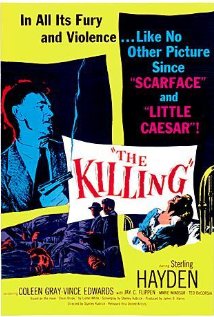
Watching The Killing gave me a better idea of what the Sages meant when they discouraged conversation between husband and wife. The Killing details a perfectly planned heist of a race track where the robbers will walk away with two million dollars. However, the plans go awry when one of the robbers divulges the plan to his unfaithful wife.
Johnny Clay, an ex-con, has planned a two million dollar robbery of a racetrack. His accomplices are all novices at crime, but each one has a personal motivation for breaking the law. They are all under financial pressure. One needs money to care for his sick wife; another needs money to pay gambling debts. Still another, George Peatty, needs money to give to his wife Sherry, who is constantly complaining about her lack of money and the accouterments of wealth. It is George’s conversation with his wife that proves to be the undoing of the perfect crime.
The set-up for the robbery is meticulously orchestrated by Johnny, who determines that the robbery will take place during the seventh race of the day. To distract the police, he hires Maurice, a former Russian wrestler, to start a brawl at the bar in the racetrack. He also hires Nikki, a hired gunman, to shoot Red Lightening, one of the racehorses, to create confusion on the track. During the ensuing melee, Johnny holds up the clerks at the payroll office and makes off with two million in cash. It is then that things fall apart. Sherry has shared information about the heist with her hoodlum lover, Val Cannon, who attempts to steal the proceeds of the robbery. A violent showdown between Val and his partner and the men who actually facilitated the robbery ends in bloodshed and Johnny has to improvise at the last minute to salvage his money.
An analysis of the fateful conversation between George and Sherry is instructive. All they talk about is money and material things. The dialogue has no connection to matters of the spirit, only to matters of the flesh.
What is discouraged by the Sages is idle conversation, not serious discussion about domestic issues. That kind of constructive discourse is encouraged. It is important for couples to share information about what is on their minds, what activities they should do, what challenges they are facing. It is good when husbands and wives indicate that they value the thoughts of their significant other. It is not wise, however, say our Sages, to complain about other people to one’s wife, to spread slander or gossip, to share burdens, troubles, or worries unless his wife can actually help him or encourage him.
The Killing is a classic example of film noir, a film without heroes. The men who get involved with the heist occupy ordinary occupations and are not professional crooks. They are simply men driven to crime because of their own dire circumstances, some of which have been created by them and some of which have not. Clearly, however, the plot turns on the confessional conversation between George Peatty and his acquisitive wife Sherry, who, like Delilah in the Bible, exploits her husband’s secrets for personal gain. Watching the ensuing catastrophe reminds us that our conversations with our wives should not be concerned about material things alone. Conversation between spouses is good when it is purposeful, focused, and expressive of a deep, loving commitment to one another.
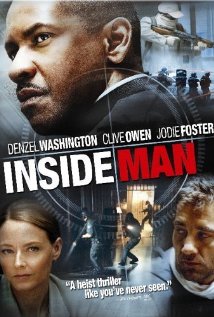
When I was a school principal, one of my students was involved in a heist. It was not a bank heist but the heist of Cokes from a soda machine. To find out who was pilfering soda from the machine, one day I hid in the lunchroom after lunch was over. I soon caught the offending student with his hand in the machine pulling out a soda bottle. I expected to find a student from a poor family committing the deed, but it was the child of a wealthy family. I learned that when it comes to ferreting out people who steal, I can’t make easy assumptions about who did the deed. Moreover, I can never fully know what motivates people to act dishonestly or how the criminal mind works. This perspective on criminals came to mind as I watched Inside Man, a very clever heist movie.
I have seen many heist movies over the years, but Inside Man is perhaps the best. In truth, it is a movie about a bank robbery but no money is stolen. There are other matters afoot, and the robbery is the cover for a crime of a different sort; it a fascinating game of cat and mouse that leaves the viewer constantly wondering what is the real purpose of the heist.
The film begins innovatively. Dalton Russell speaks to the audience informing them he has just committed a bank robbery. He then explains the “who, the what, the where, the when, and the why” of it in very simplistic terms, and now all that all he has to do is describe how the robbery was done.
The robbery begins when a group dressed as painters enter a bank in the Wall Street neighborhood of Manhattan. They shut the bank’s doors and disable the bank’s security cameras before anyone realizes what is happening. Donning masks, they order the customers and employees to fall to the floor, threatening death to anyone who disobeys. They then herd the hostages into one room and tell them to undress and don painter’s suits and masks, thus making them indistinguishable from the robbers.
Detective Keith Frazier is assigned to negotiate with the robbers in a tense hostage situation. As he methodically analyzes the situation and communicates with the robbers, scenes of Frazier interviewing the hostages after the robbery intrude into the narrative. The goal of the interviews is to determine if any of the perpetrators are among the hostages.
As the robbery progresses, Dalton makes many demands of Frazier. He requests a bus, a plane, and he even asks for the answers to a riddle. It eventually becomes clear to Frazier that Dalton is merely stalling for time and is in no rush to exit the bank. When the siege of the bank finally ends and the police storm the building, the hostages run out of the bank dressed as the criminals, making it impossible for the authorities to distinguish between the good guys and the bad guys.
The denouement follows the actions of Frazier as he tries to put the pieces of the puzzle together, ultimately figuring out what actually was stolen and why. It is a fascinating trip, in which Spike Lee, the director, finds ample opportunity to upend traditional stereotypes of blacks, Jews, and Muslims, subtly reminding us that what is on the surface is not always what is inside a man’s heart.
In this sense, the title Inside Man suggests a double entendre, which is very much a part of Jewish tradition. The Ethics of the Fathers notes that we should never judge a man by what is he appears to be on the outside. Rather, judge by what is on the inside. The “inside man” is the one who really counts.
 I live in Israel where I often read about the moral dilemmas faced by the Israel Defense Forces as they fight terror that threatens the fabric of daily life. There are no simple answers to these complex questions. I reflected on this reality as I watched Sicario, a tense and unsettling look on law enforcement in America as it tries to control illegal drug trafficking in Mexico, a drug trade that infiltrates the southern border of the United States.
 During the course of many years of serving as a school principal, there have been occasions when I had to publicize bad stuff within the school community. It was something I never liked to do; but when it came to matters of health and safety, I felt I had to go public if that is what it took to protect other students.
 Many years ago, I asked a lawyer whom I respected what was his specialty. His answer: money. It was an “aha” moment when I realized that law is not always synonymous with justice, and that what often determines a legal outcome is how much money is at stake in terms of potential gain for the attorneys working on the case.
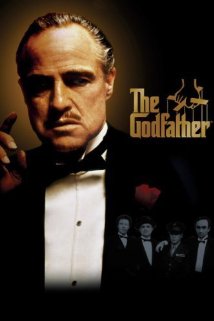 My review of The Godfather trilogy requires some preliminary discussion. Why have I chosen to consider all three films in one review and why is it a “kosher” movie in spite of the fact that there is much violence and profanity in the film?
 One of my favorite poems is “The Convergence of the Twain” by Thomas Hardy. The poem describes two events occurring at the same time but at different locations. At some future time, the events converge. One is the building of the ship, the Titanic; the other is the forming of the iceberg with which the ship will collide. Hardy writes: “Alien they seemed to be/ No mortal eye could see/ The intimate welding of their later history/ Till the Spinner of the Years/ Said ‘Now!’/And each one hears/ And consummations comes, and jars two hemispheres.”
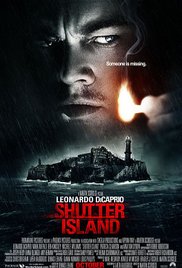 In the late 1970s, I taught a class on the Holocaust to teenagers at Yeshiva High School of Atlanta. A high point of the course was an interview with a survivor of the camps. There were many living in Atlanta, but it was not easy to find people willing to talk about their terrible experiences in the concentration camps. For them it was too painful to resurrect those memories.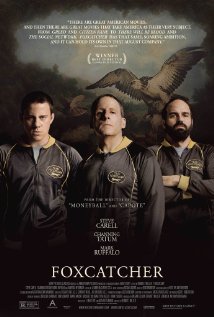

 Kosher Movies