Category Archives: Crime

Young Sherlock Holmes (1985), directed by Barry Levinson

young sherlock holmes posterWhen I was a graduate student on Hunter College in New York, I took a course in Modern American Literature with a group of very bright students, but Jonathan surpassed them all. Strangely, he rarely came to class; but whenever he did come, he shared insights that truly mesmerized me. I learned more from him than from the instructor. He taught me the value of thinking outside of the box when interpreting and understanding the great classics of literature.

On the eve of the final, Jonathan called me and asked if he could come over and borrow my notes. He knew my notes were complete and accurate and he wanted to review them before the test. Happily, I gave them to him. Inwardly, I felt it was his choice to attend class or not, and if he felt attending class was a waste of his time, so be it. It was my choice as a friend to share my notes with him.

Friendship is at the core of Young Sherlock Holmes, an imaginative recreation of how Sherlock Holmes and John Watson became friends. Their personalities are diametrically opposed. Holmes is independent and daring, and Watson is a “play it by the book” medical student, staunchly averse to risk, always worried about jeopardizing his academic future. However, he admires Holmes’s adventurous spirit. Despite their differences, their affection for one another grows and is celebrated in the many detective novels of Sir Arthur Conan Doyle.

The film begins in Victorian England on a dark night when we see a hooded assassin use a blowpipe to shoot a dart into an unsuspecting man. The dart causes the man to hallucinate and commit suicide. Two more people die under similar circumstances; and Holmes, a friend of one of the victims, tries to piece together clues to find the murderer. This leads to all sorts of escapades in which he and Watson put themselves in danger as they discover an Egyptian cult bent on taking revenge for a wrong committed many years earlier.

At the end of their adventure, Holmes and Watson take leave of one another, and Watson realizes he forgot to thank him. Watson reflects: “He had taken a weak, frightened boy and made him into a courageous, strong man. My heart soared.” The friendship has transformed Watson and for that he is eternally grateful.

The Ethics of the Fathers, a classic of Jewish wisdom literature, reminds us not to take friends for granted and to appreciate what they do for us. Specifically, we are bidden to “acquire for yourself a friend.” Surely it does not refer to buying friends with money. One of the Sages interprets the aphorism by telling us that to acquire a friend, we cannot be rigid in our own opinions. We have to be open to the voice of others who see things differently. When we are sensitive to the needs of others and are tolerant of diverse opinions, then friendship grows. Friendship cannot thrive in an environment where friends are not free to express their opinions without fear of ridicule.  Moreover, the Sages point out that we should give honor to anyone who teaches us even one piece of wisdom.

These aphorisms resonated as I watched Young Sherlock Holmes. The story, narrated by Watson, reveals that he grew as a person because he recognized that Holmes, although different from him, was a person of great insight from whom he could learn. Watson did not let his own personal bias interfere with nurturing a new friendship. Indeed, friendship ultimately flowers in a garden of tolerance.

Purchase this movie from Amazon.com.

The Place Beyond the Pines (2012), directed by Derek Cianfrance

MV5BMjc1OTEwNjU4N15BMl5BanBnXkFtZTcwNzUzNDIwOQ@@._V1_SX214_When I moved to Israel four years ago, I lost a treasured possession: a silver wine goblet that was presented to my dad when he was president of the local synagogue for a number of years. To preserve the memory of that gift and of my father reciting the blessing over wine on the Sabbath, I decided to buy a replacement cup similar in appearance to the original cup and inscribe it as it was when it was originally presented to my father, and so I did. My father was not an educated man, but he was a wise man to whom I owe a great deal. He was present in my life at critical times, always supporting me and being there offering counsel. Keeping his memory alive both comforts and inspires me.

Fatherhood is at the core of the generational drama The Place Beyond the Pines. The first father we meet is Luke Glanton, a well-known motorcycle stuntman who regularly performs at state fairs. He is an absentee father who discovers he has had child with an ex-girlfriend. This revelation evokes a powerful desire within Luke to be a father, to take care of his son and to provide for his physical needs.

Because Luke’s father has been absent from his life, he is clueless about what parenting really means, translating it mainly into getting more things for his son. To accomplish this, he needs more money. He first obtains a job at an auto repair shop to supplement his income, but Luke wants more than this job can offer. When Robin, the auto repair shop owner, reveals that he was a former bank robber and asks Luke to join him in robbing a few banks, Luke readily agrees.

The second father we meet is Avery Cross, a policeman and father of a son as well. Raised in an affluent home, his own father is a role model of wisdom and material success. Avery intellectually understands the challenge of parenting, but his own personal drive for fame and fortune cause him to be an absentee father.

The lives of Luke and Avery intersect as do the lives of their sons, Jason and AJ, in painful, dangerous ways. There is a Talmudic notion that the acts of the fathers are a signpost for the children, implying that sons often retrace incidents from their parents’ lives in their own lives. They face the same challenges, but do not necessarily make the same choices when confronted with similar circumstances. The fact that AJ comes from an affluent background and  Jason comes from a poor family does not insure or predict success as an adult.

As we watch the relationship between the two sons unfold, we are compelled to meditate on the qualities that make a good parent. The Torah and Talmud clearly define our parental responsibilities towards children. We have to teach them Torah, which implies giving them moral guidance. We have to teach them how to swim, and by this our Sages mean we have to teach them how to navigate life in the face of all the slings and arrows of outrageous fortune that will befall them. Furthermore, we have to teach them an honest profession, or give them the means to learn one. Finally, we have to help them find a spouse. Implicit in these parental duties is the presupposition that we are involved in our children’s lives at watershed moments in their lives.

The Place Beyond the Pines reminds us that parenting does not begin simply with bringing home the baby from the hospital nor does it end with sending our child off to school. In the final analysis, parenting requires presence, not presents.

Purchase this movie from Amazon.com.

On the Waterfront (1954), directed by Elia Kazan

on  the waterfrontIn Orthodox religious circles, consulting with a wise man about personal challenges or problems is standard operating procedure. The wise man usually is a rabbi who possesses a lot of wisdom and life experience, and one who ideally knows the questioner personally. Therefore, when he considers the question, he combines his encyclopedic knowledge with a human touch to give the best advice that he can. The questioner implicitly trusts the wise man, whom he knows has no personal interest that will prevent him from making a good decision purely in the questioner’s best interest. In my own life, I have often consulted with such a sage when faced with personal challenges, knowing that I am getting the best possible guidance.

Terry Malloy in On the Waterfront has no such mentors, no one to help him navigate the rough moral terrain that he faces on the New York docks where he works for Johnny Friendly, the corrupt boss of the longshoremen’s union. Terry innocently sends his good friend Joey to meet with his boss’s cohorts on an isolated rooftop thinking that they only want to talk to his friend. Instead, he witnesses his friend’s brutal murder.

Soon after, two officials from the Waterfront Crime Commission approach Terry asking him to consider testifying in court regarding the death of his friend. When Terry refuses, they tell him they will subpoena him to compel him to appear in court. Now he is faced with a dilemma. Shall I be loyal to my boss on the docks who has given me employment and is a long time family friend, or should I testify against him for the murder of a close friend?

A local priest and the sister of the murdered man become the voices of conscience to Terry, slowly motivating him to rethink his passive approach to the corruption he sees around him. His disappointment in himself and those closest to him reach a crescendo when he has a heart to heart conversation with his brother Charlie, who encourages him not to testify in court against Johnny Friendly. In the course of that dialogue, Terry has an epiphany. He realizes that it was his brother who, many years before, pressured him as a professional boxer to take a dive to pay his brother’s gambling debt. Instead of encouraging him to fight to win a bout that could have given him a chance at the title, Charlie counseled him to surrender;  and Terry naively passed on his one opportunity to gain recognition as a champion and to gain exceptional financial rewards. Terry poignantly acknowledges to his brother, “I could have been a contender,” and we hear the overwhelming disappointment in his voice.

What could have been, what should have been, what might have been are all questions that haunt the narrative. After a series of personal trials, Terry emerges from self-doubt to a person who possesses a clear moral center, unafraid of physical pain or financial consequences. This inspires the dock workers who finally challenge the rule of the corrupt union boss, viewing Terry as the agent of their redemption.

The Ethics of the Fathers, a major piece of Jewish wisdom literature, encourages every man to “make for yourself a teacher.” The Sages explain that this means every man should acquire a mentor, someone to help him navigate life’s challenges. Seeking advice from someone older and wiser than you is a good thing. It is not an admission of weakness or stupidity. Rather it is a recognition that you do not know everything, that you welcome criticism, that you are open to improvement, and that you value the opinion of the wise. On the Waterfront reminds us how important and valuable is a good mentor who has our best interest at heart and who can enable us to fulfill our latent potential.

Purchase this movie from Amazon.com.

Crimes and Misdemeanors (1989), directed by Woody Allen

crimes and misdemeanors posterAs principal of a budding Jewish day school, part of my job was to raise money as well as be the educational leader of the school; so it was with great joy when out of the blue I received a number of envelopes in the school mail box with thousands of dollars of cash. Over several months they mysteriously appeared and I attributed the gifts to an anonymous admirer and supporter of Jewish education. Several months later, the gifts suddenly stopped.

Soon after, I read in the local newspaper about the incarceration of a friend of mine for selling drugs. I never made a connection between the gifts of money and my friend’s crime until I visited him in prison some months later. It was then he confessed to me that the money he gave the school was from the profits of his drug sales. He wanted in some way to assuage his guilt and giving money to a Jewish day school was his atonement.

I was reminded of this incident as I watched Crimes and Misdemeanors, the disturbing story of ophthalmologist and philanthropist Judah Rosenthal. Judah has had an affair with a woman for several years, and she now threatens to ruin his life if he doesn’t marry her. His brother Jack suggests having the woman killed and this presents Judah with a major question of conscience: allow his life of wealth and privilege to continue or to hire a hit man to murder her. He reminisces: “I remember my father telling me that the eyes of God are on us always. What a phrase to a young boy. What were God’s eyes like? Unimaginably penetrating, intense eyes, I assumed.” At first the idea of murder is abhorrent to him, but then he equivocates. He has committed adultery, he has made incredibly stupid mistakes, but he knows that the revelation of his indiscretions to his wife will ruin him both in the eyes of his wife and the greater community. And so he decides to authorize the murder.

A parallel plot of the movie concerns Clifford Stern, a documentary filmmaker who is trying to produce a film on a great scholar who in spite of personal tragedy is able to affirm life with honesty, optimism and courage. It is his philosophy that counterbalances the sordid narrative of Judah Rosenthal. Professor Levy, the subject of the documentary, says in an interview that “we are all faced throughout our lives with agonizing decisions. Moral choices. Some are on a grand scale. Most of these choices are on lesser points. But we define ourselves by the choices we have made. We are in fact the sum total of our choices.”

Although Crimes and Misdemeanors plays like a comedy in many ways, at its core it is a deep philosophical meditation on the nature of morality in the contemporary world. In the Talmud, our Sages tell us one sin leads to another. Once we cross the line of morality and decency, we traverse a slippery slope and many sins are committed in the wake of one transgression. This is why the rabbis of the Talmud, who understood human nature profoundly,  often set up protective fences or decrees around the law to insure that the primary Biblical law is not broken.

Judah Rosenthal rationalizes his crime and it is unsettling to hear his self-analysis. First plagued by an overwhelming guilt, he hears the voice of his father who gave him a sense that God is watching him, and Judah feels that he has violated the moral universe. On the verge of a breakdown, he awakes one day and his moral crisis has vanished. Life goes on. There is no Divine retribution and he returns to his normal life.

Jewish tradition argues that guilt is sometimes good for a person and can even be redemptive. King David used guilt to spur him on to a life of good deeds and accomplishment. But David admitted his faults and did not rationalize his behavior when he sinned. It is this model that serves as a positive example for all of us who stumble occasionally as we navigate the moral choices that confront us.


Purchase this movie from Amazon.com.

Collateral (2004), directed by Michael Mann

collateral posterAs I scan the news every day, I see a recurrent theme. People who commit terrible crimes want very much to seem normal, regular guys who just want to preserve peace and order. In Syria where thousands are being killed by government forces, President Assad in a TV interview projects moderation and reason. Recently in Iran, leaders project charm and openness to the world while at home anyone who veers from the party line is subject to harassment or death. The politicos always want to portray themselves as reasonable men who are doing reasonable things, even if this means the murder of many innocents. I was reminded of this as I watched Collateral, a tense thriller in which a paid assassin conducts himself like an ordinary Joe.

The film begins when Max, a cab driver in Los Angeles, picks up Vincent, a friendly passenger, who offers him $600 to drive him around throughout the night as he makes a number of stops. Driving through Los Angeles, Vincent observes that the city is impersonal with no one really caring for one another. He shares a vignette with Max about a dead man on a subway who wasn’t even noticed by the other travelers. The viewer senses that Vincent really cares about the abandoned and forgotten. As the night wears on, however, we learn that Vincent is a paid assassin and at each one of the stops, he plans to murder someone. Max wants to escape after the first murder; but Vincent does not allow him to flee, and so Max’s ride with the devil begins.

Vincent executes two more people out of the five he has contracted to kill, and then orders Max to visit Max’s sick mother in the hospital. Before going up to her room, Vincent buys her flowers. Although his goal is to make Max’s delayed response to her phone calls seem normal, he goes the extra mile by purchasing the bouquet and engaging in sweet conversation with his mother. Vincent projects a solicitous attitude towards the old and infirm, but Max knows the truth and is emotionally unnerved by the sight of a confirmed killer by his mother’s bedside.

Vincent and Max then go to a night club filled with customers dancing to loud music. In the club is a heavily guarded target of Vincent’s. When Vincent attempts to assassinate the target with the FBI, the LAPD, and assorted underworld hit men in the room, a melee breaks out in which bullets fly. When someone mistakenly tries to shoot Max, it is Vincent who saves his life by killing the shooter, thereby adding another layer of confusion to Max’s relationship to Vincent.

All this gunplay and tension unravel Max, who in desperation wrecks his cab as he and Vincent make their getaway from the crime scene. When Max realizes that Vincent’s final hit is a passenger that he chauffeured earlier in the day, he goes out of his way to warn her. Vincent is determined to kill her in spite of his ambivalent feelings for Max; for at the end of the day, he is an assassin for hire, not a person who lets emotions get in the way of his mission.

The Ethics of the Fathers exhorts us to judge every man favorably, to give people the benefit of the doubt. However, once you know with certainty the evil nature of someone, you should be vigilant. As our Sages say, don’t judge anything by its outward appearance; rather judge it by its contents. No matter how charming an evil person is, that does not excuse immoral behavior. Judaism mandates that we judge people by their actions, not by their appearances.

Purchase this movie from Amazon.com.

Catch Me If You Can (2002), directed by Steven Spielberg

 catch me if you can posterOver 25 years ago, one of my sons asked me a question of Jewish law. I meditated for a moment and gave him an answer that I thought was correct. About a year later, I discovered that what I told him was incorrect. I apologized for giving him the wrong answer and life went on. Still, however, my quick response of many years ago rankles in my mind. He came to me because he assumed that I was a source of wisdom upon whom he could rely, like money in the bank. My hasty answer wasn’t fully researched and turned out to be flat-out wrong. I realized then and now that, in spite of their sometimes challenging behavior, children intuitively respect and revere parents, and we always have to be conscious of our status as teachers and role models for them, and behave at our very best for them.

This father-son dynamic is tested in Catch Me If You Can, an entertaining and thoughtful drama based upon the true life story of Frank Abagnale, Jr., a clever young man who impersonated an airline pilot, a doctor, and a lawyer in order to bilk others out of millions of dollars on three continents, all done before he reached the age of twenty.

The narrative begins with a dinner honoring his father who has worked for his local civic organization for many years. Frank Jr. watches his father in admiration as he tells the story of two mice who were in peril of drowning in a vat of milk. One succumbs and the other keeps on scurrying about until the milk turns into butter and he is saved. The moral: hard work leads to ultimate success. It is a great lesson for a father to teach his son.

However, privately Frank’s father is not what he seems. He has money problems, which he denies, doing whatever he can to avoid responsibility. Frank Jr. follows his lead but is more creative than his father, charting an egregious course for himself that gets the attention of the FBI.

When, after many months of crime, he pays a surprise visit to his father, the meeting turns into a painful realization of his father’s failure to parent him in morality. Frank Sr. complains that the government is after him: “The IRS wants more. I gave them cake. They want the crumbs. I’ll make them chase me for the rest of their lives.” He also reveals that he knows his son has stolen millions of dollars from unsuspecting victims and is being investigated by the FBI. Frank Jr. pointedly asks him: “Why didn’t you ever ask me to stop?” His love for his father is still there, but he is angry and disappointed that his father never voiced objection to his life of crime.

The Talmud tells us that a father has an obligation to teach his son a trade; and if he doesn’t do this, it is tantamount to teaching his son to be a robber. A parent’s task clearly is not just to provide for a child’s material needs but to give him moral guidance, to teach him how to navigate an ethical life in a world in which morality is tested every day.

The concrete image of this parental role is what transpires on the Passover Seder night, where the father sits at the head of table and conducts an evening of moral instruction for his family. The evening is filled with life lessons, focusing on the interchanges between father and son. Metaphorically speaking, parents always sit at the head of the table, and it is from that vantage point that we should exercise our parental roles.

Purchase this movie from Amazon.com.

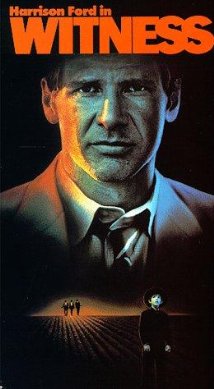
Witness (1985), directed by Peter Weir

Witness posterRecently I had a conversation with a recent immigrant to Israel and he told me he never picks up ultra-religious men who are hitching a ride. He feels they are lazy, exploitative of community funds, and are disloyal to the state of Israel. In sum, they are takers and not givers and should be less influential in the Israel political scene. Therefore, he does not want to reward them by giving them free rides. I told him that I do pick up such hitchhikers because I really don’t know them well and do not want the actions of a few to permeate my consciousness and cause me to view all the ultra-religious as takers.

Stereotyping those who are unfamiliar to us is the subtext of Witness, a police thriller which utilizes the Amish culture of Pennsylvania as a backdrop for its story. Rachel Lapp, a young Amish widow traveling by train with her 8-year-old son Samuel to visit her sister, stops at the Philadelphia station. Here Samuel wanders into the men’s room, where behind closed doors, he witnesses a brutal murder. Captain John Book is assigned to the case; and at the police station, Samuel identifies one of the killers as a narcotics officer who was involved in a drug raid in which the drugs mysteriously disappeared.

As events unfold, we learn that Book’s superior officer was behind the robbery of the contraband, and Book is now targeted by his sinister boss for execution. A gunfight leaves Book wounded and he flees to Amish country with Rachel and Samuel who are now in mortal danger.

Collapsing from loss of blood, Book stays with Amish until he gradually heals. Rachel and Book develop an affection for one another during his recuperation period and Book’s view of the Amish changes. They are no longer strange and backward, but people whose uncomplicated, wholesome perspective on life impresses Book as honest and purposeful. Book and Rachel both know that, coming from two different worlds, their relationship is a non-starter; but that does not stop them from caring for one another and seeing the world from the other’s vantage point.

Eventually, the corrupt police officers locate Book and travel to Amish country to kill him, and it is the Amish tradition of non-violence that figures prominently in the film’s denouement. Book is traveling into town by horse and buggy when his party is accosted by local bullies, who stereotypically regard the Amish as weak and out of touch with modernity. They pick a fight with Book’s group, not realizing that Book is not Amish. Book, incensed at their brazenness, decides to retaliate by breaking the nose of one of the bullies, an action totally out of character for the Amish. This leads to a police report which finds its way to his corrupt superiors, giving them Book’s location, the scene of a tense and bloody climax.

Jewish tradition tells us everyone is created in the image of God and, therefore, has infinite value. Being different does not mean being less worthy or less important. The Talmud states that baseless hatred was the cause of the destruction of the Second Temple. The great medieval scholar Moshe ibn Ezra said “Love blinds us to faults; hatred to virtues.” When we view others who are different from us in a negative light without even knowing them, we do not appreciate the good that is often within them. The Ethics of the Fathers further tells us that “hated of people removes a man from the world.” Witness reminds us that beneath the strange clothing of a religious sect, there may be values worth emulating. When we view the unusual looking stranger as a friend, we open up ourselves to growing intellectually and emotionally.

Purchase this movie from Amazon.com.

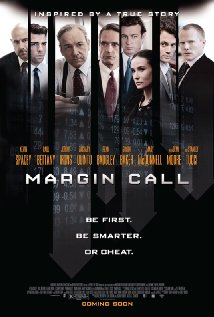
Margin Call (2011), directed by J.C. Chandor

margin call posterDuring my years in Jewish education, there were stressful moments when I felt a need to take counsel with someone older and wiser than me. Fortunately, experienced lay leaders in the community often provided me with a fresh perspective on an issue as I navigated my school through a challenging time. One lay leader, in particular, was skilled at enabling me to shift my paradigm and arrive at sound decisions. His conversations would always begin with the phrase: “conventional wisdom says…” and then he would launch into his own analysis of the situation. Talking with him was helpful because his valuable insights helped me see beyond the obvious.

There is a mesmerizing scene in Margin Call, a profanity –laced story of a Wall Street meltdown with moral ambiguities at its center, which reveals senior wisdom at work. Although it is a negative example applied to the world of finance, it demonstrates how an older person sees things differently from a younger person.

Seth Bregman, an engineering PhD from MIT who now works as a risk management analyst, discovers that his firm is on the verge of a total financial meltdown. He shares the information with his superior, who in turn shares the information with his superior. A middle of the night meeting of all the senior executives is called to determine how the company will deal with this impending crisis. One suggests selling off the toxic stock before the market can react to news of their worthlessness. Another feels that this approach will forever ruin the company because people will never trust the company again. And so the issue is debated throughout the night until the moment of reckoning when the stock market opens and we witness the consequences of decisions made in an environment of moral compromise.

It is fascinating to observe the way John Tuld, the CEO, approaches the problem. He does not ask for the minutia but rather wants to understand the big picture. When Seth attempts to explain the crisis, Tuld tells him: “speak as you might to a young child, or to a golden retriever and tell me the nature of the problem.” He informs the group that he gets paid the big bucks because he can predict the future of the company, not because of his everyday scrutiny of details. The details are best left to the analysts like Seth who can understand the numbers in sophisticated ways.

What emerges from this scene is an understanding of the radically different approaches of the young and old to the same problem. Both kinds of wisdom are useful. The young man knows facts and figures. The old man sees beyond the detail and into the heart of the matter. His desire for a simple explanation of why this calamity has occurred reflects his profound grasp of the problem and its ripple effects both now and in the future. In my own memory, I can recall many board meetings that meandered until one senior member of the board asked the simplest of questions to bring everyone back to the core issue being discussed.

The Ethics of the Fathers teaches us that the wise man learns from every man, but there is a cautionary note: “ Learning from the young is like eating unripe grapes whereas learning from the old is like eating ripe grapes or drinking aged wine.” The Sages suggest that one should favor the wisdom of the older man who speaks from experience as well as from knowledge.

Moreover, the Talmud tells us that as man ages, he becomes fit for attaining deeper levels of wisdom. For example, at five years of age, he may know Scripture, but it is not until age forty that he really begins to understand it. Margin Call reminds us that considering things from a senior’s point of view, even if we disagree with him, may enhance our own understanding of a problem.

Purchase this movie from Amazon.com.

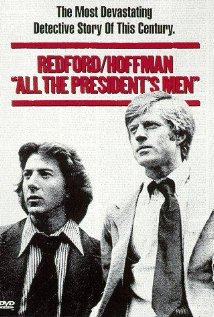
All the President’s Men (1976), directed by Alan J. Pakula

All the President's Men posterEvery day I pray that I will have a sense that God is always in front of me, that He is always in the room. It helps me control my thoughts, my actions, and my speech. When things irritate me, I think long and hard as to whether I want to respond to a provocation or to an unkind word. In general, I do not regret being silent, but I do regret a hurtful word that I may have uttered to someone, even when my intentions were noble.

I was reminded of the power of words as I watched the gripping political thriller All the President’s Men, which portrays in detail the intense investigative newspaper work of Bob Woodward and Carl Bernstein as they painstakingly researched the Watergate burglary, which eventually led to the resignation of President Richard Nixon.

Woodward and Bernstein seem like two Talmud study partners who continually probe each other to ascertain the truth. Each questions the other, and is unafraid of challenging or criticizing his friend. Their frank criticism of each other is not personal, but rather a sign that each one trusts the other to be honest and not to advance any personal agenda. Their shared mission, to discover what the Watergate burglary was all about, makes their egos subservient to the greater purpose of their work. It is this understanding of their common goal which is at the heart of their friendship and their search for truth.

They analyze and debate the significance of the words of everyone they interview. What do the words mean on a superficial level? What do the words imply? What does a response of silence indicate? There is a fascinating scene when Carl Bernstein needs to confirm the truth of an article that is about to appear in the morning newspaper. No one wants to be quoted, so Bernstein comes up with the following proposal as he talks to his contact on the phone: “if what I say is true, then I will count to ten, and if you do not hang up, I will assume my article is true. If it is not true, then you hang up before I reach the number ten, and I will assume that what I wrote is false.” Here, interestingly, everything hangs on what is not being said.

Ben Bradlee, editor of The Washington Post, the paper that employs Woodward and Bernstein, is also extremely sensitive about words and continually reminds the ambitious reporters that he cannot agree to print something in his paper unless they get confirmation of more of their facts. The paper cannot besmirch someone’s reputation based upon hearsay evidence or theorizing about what might have happened.

In the world of Jewish jurisprudence, the laws of slander and the gravity of hurting someone with words is the topic of many volumes written by sages of the past and present. These laws are carefully codified because of the essential concern that, as the Psalmist writes, “life and death are in the power of the tongue;” for one negative comment about a person might ruin his life professionally or personally. As a rabbi and school principal, I have been tested many times when people ask me for recommendations about people I know. It may be a recommendation for a job, for acceptance to an academic institution, or for a marriage partner. My general approach is to say what needs to be said without embellishment, for words are like arrows. Once uttered, they cannot be retrieved.

As we speak to the people around us, it is wise to weigh our words so that we do not hurt anyone inadvertently and to insure that our words will always be in the service of society and sanctity.

Purchase this movie fro Amazon.com.

The Batman Trilogy (2005-2012) directed by Christopher Nolan

dark knight rises posterWhen I was principal of Yeshiva High School of Atlanta, I had a conversation with a board member who was a Holocaust survivor about the Holocaust Museum that was being built in Washington, D.C. He shared with me his feeling that it was not a wise use of community funds which could be better utilized to support Jewish day school education. I empathized with him since part of my job was to raise money for the school and I, too, felt that more community money should be directed towards Jewish education.

A couple of years ago, I had the opportunity to speak to my friend again and he shared with me his change of heart about the Holocaust Museum. Now he felt glad that the Museum was here to teach many subsequent generations about the Holocaust. He never envisioned years ago that there would be Holocaust deniers and that anti-Semitism would be alive and well in the world after the atrocities of the Holocaust. Never could he have imagined leaders of so-called civilized nations calling for the annihilation of the Jewish state. The world had changed and it was not for the better. Evil was a potent force in the 21st century, and the Holocaust Museum was an important agent of moral education challenging the perpetrators of evil.

The conversation brought back memories of my own innocent childhood in Mt. Vernon, New York, when everyone thought, post World War II, post- Holocaust, that the world was now enlightened, that there would be war no more, and that our collective human future was bright. 9/11 brought all that optimistic thinking to an abrupt halt.

The Batman trilogy of films deals metaphorically with how we come to terms with this new world where evil is real and ubiquitous. The reality of evil in these narratives undercuts our assumptions about the basic goodness of man and leaves us on edge.

The Dark Knight and The Dark Knight Rises present two villains who are the personifications of evil: the Joker and Bane. The Joker represents the chaotic nature of evil; Bane represents the committed terrorist, for whom death and destruction are liberating events. Bruce Wayne, aka Batman, begins with a conventional understanding of the Joker’s criminal mind. He tells his butler, Alfred: “Criminals aren’t complicated. I just have to figure out what he’s after.” Alfred wisely responds: “You don’t fully understand. Some men aren’t looking for anything logical, like money. They can’t be bought, bullied, reasoned, or negotiated with. Some men just want to watch the world burn.” Bruce is ambivalent about how to deal with the Joker and Bane, and it takes him a long time to understand how vicious they are and how he must change his preconceptions about the nature of evil people.

This perhaps can give us some understanding about the Biblical approach to unfettered evil, such as we find in Amalek, the arch-enemy of the Jews who attacked the old and weak as they were leaving Egypt. The Bible tells us to eradicate this evil and for the compassionate Jew, this is a hard business. On Passover at the Seder, we are bidden to spill out drops of wine from our cup when we recount the ten plagues because our cup of joy is never full when others have suffered. Even when justice triumphs, we feel for the victim who suffers. The Ethics of the Fathers also cautions us not to rejoice over the fall of the wicked even though he is deserving of punishment. Moreover, the Talmud recounts the story of Beruriah, the wife of Rabbi Meir, who, when her husband wanted to harm bullies who were constantly harassing him, exhorted him to pray that these sinners repent, not to pray that they die.

The Batman trilogy is a brainy thriller. It asks us to leave our simplistic notions of good and evil at the door and to recognize that in our new and dangerous world, we cannot ignore evil. To be naïve in the face of absolute terror and evil places us at great risk.

Purchase these movies on Amazon.com.