 During the course of many years of serving as a school principal, there have been occasions when I had to publicize bad stuff within the school community. It was something I never liked to do; but when it came to matters of health and safety, I felt I had to go public if that is what it took to protect other students.
I recall one incident involving a student caught for drug usage in high school. It was grounds for expulsion, a grave infraction that might prevent the student from attending another Jewish school and thus not have the opportunity to learn more about his faith. It was a stressful time of decision-making, but I expelled the student to protect the rest of the students from potential harm and to reassure parents that the school’s “no tolerance” for drugs policy was taken seriously.
Discovering and publicizing someone for inappropriate behavior is at the core of Spotlight, a visceral narrative about a four-person cadre of Boston Globe reporters who decide to investigate charges of abuse by Catholic priests in Boston. The year is 2001, and the Boston Globe has a new editor, Marty Baron. At an early meeting between Baron and the staff, Baron brings up the case of a Catholic priest who molested many children over a period of 30 years. A lawyer for the victims, Mitch Garabedian, argues that Cardinal Law, the senior cleric in the city, knew about the molestations but did nothing about it. He even cites the existence of sealed documents that prove the Church’s negligence. Baron suggests taking the Church to court to compel the unsealing of the documents.
As the Spotlight team does more research, they discover that there is a three-year statute of limitations in molestation cases, which does not allow for a thorough investigation of abuse claims. Moreover, the children feel shame and guilt and do not want their peers to know of the abuse. Furthermore, the settlements for damage are capped at $20,000, a miniscule sum in light of the emotional and psychological damage done.
The Spotlight team is persistent and eventually they get access to victims, whom they interview. More investigation reveals that the problem is systemic and not limited to Boston clergy. Clergy who molested children did not lose their jobs. Instead, they were sent to other parishes where the same abusive behavior re-emerged. In the church employment directories, priests who moved from parish to parish were simply designated as on “sick leave” or “absent on leave.” There was no mention of the egregious, corrupt conduct, which prompted their relocation.
At the end of the day, many suffered because of this conspiracy of silence. Few people wanted to tarnish the image of the church, and so there were many victims. As Mitch Garabedian, one of the victim’s lawyers said, “if it takes a village to raise a child, it takes a village to abuse one.”
Jewish law has a clear approach to determining whether one can reveal confidential information. It is based on the passage “do not stand by while your brother’s blood is being shed (Leviticus 19:16).” This commandment obligates one to shield another person from harm. If revealing private information protects other people by securing their health and safety, then it is permitted.
Interestingly, this commandment comes directly after the prohibition against talebearing. The commentators explain that telling tales about other people is tantamount to shedding their blood since serious damage can be done by disclosing private information. Therefore, the spreading of confidential information is, for the most part, only permitted when the goal is to prevent harm to others.
Spotlight, a film that shines a light on abuses in the clergy, has a larger message; namely, that we have a responsibility to publicize wrongdoing that affects our community in order to protect its citizens from harm.
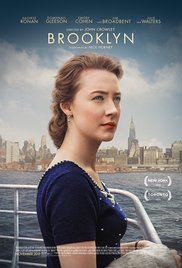 I was born in Mt. Vernon, New York, a small bedroom community bordering the Bronx and only 25 minutes by train to Grand Central Station. To me Mt. Vernon was home. My family lived there as did many of my aunts, uncles, and cousins.
 My sister Carol, of blessed memory, was six years older than me. She had Down’s syndrome, and as a kid I vividly remember going with Carol and my mother to Teen Town, a Thursday night social get-together where developmentally disabled teenagers could mingle socially, form friendships, and plan outings together. It was there that Carol met Sam Berniger, who also had Down’s syndrome.
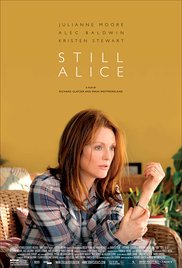 A friend of mine in his seventies was diagnosed with Alzheimer’s several years ago. At first it was indicated by minor forgetfulness; but over time, the symptoms became more severe. His wife confessed to me after a couple of years that her husband was no longer the person he once was. He barely recognized her or the rest of his family. Indeed it was a sad and disturbing reality that the family confronted.
 Relatives recently visited us in Israel. While here, we visited the celebrated Museum of the Blind, which is part of the Israel Children’s Museum in Holon. The exhibit is called Dialogue With the Blind, which offers an hour experiencing the world of the blind with a sightless guide.
 For many years I would listen to inspirational tapes on my way to and from work. Most of the tapes were transcriptions of lectures from Rabbi Avigdor Miller, a contemporary Jewish ethicist, and Zig Ziglar, an icon in the field of motivational speakers. I gleaned insights from both of them, but one insight of Zig’s, in particular, resonated within me as I watched Avatar, a science-fiction tale of an exploratory expedition to Pandora, an Earth-like moon on which live the Na’vi, a human-like species, together with an incredible feast of plant life.
 I recently was in Zimbabwe touring Victoria Falls, one of the world’s great natural wonders. Members of the group had the opportunity to take a helicopter ride to view the Falls. Such a ride was not on my bucket list, so I passed. But many members of my group took the trip, discounting any possible risk. When they returned from the flight, they all were exhilarated about taking the helicopter ride. It appealed to their sense of adventure and they felt that this was a once-in-a-lifetime experience that they wanted to enjoy.
 At my elementary school, a couple of kids in the school band thought my name was Herbert Coleman, not Herbert Cohen. They assumed I was not Jewish. Then one day they became aware that my name was Cohen and they knew I was a Jew. That realization gave them license to threaten and intimidate me. One told me not to show up for the school band parade in which I played drums. When I told my mother about the threat, she went to the principal and related the incident to him. Moreover, she told him that she expected me to be in the parade as planned, and I was. But the memory of the event is still with me. I was the same person whether my name was Coleman or Cohen, but for people who are prejudiced, the stereotype becomes the reality.
 Many years ago, I asked a lawyer whom I respected what was his specialty. His answer: money. It was an “aha” moment when I realized that law is not always synonymous with justice, and that what often determines a legal outcome is how much money is at stake in terms of potential gain for the attorneys working on the case.
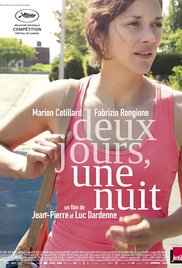 I do not know many people who will do something to benefit someone else if it means that they will suffer a negative consequence. I have read of such actions taking place in the cauldron of the Holocaust narrative or in a prison setting, but it is a rare occurrence in times of peace and prosperity. Yet that is exactly what is depicted in Two Days, One Night, a slice-of-life drama in which Sandra, a factory worker, goes around visiting her fellow employees asking them to forego their annual bonuses so that she can retain her job.
 Kosher Movies