Category Archives: Movie review

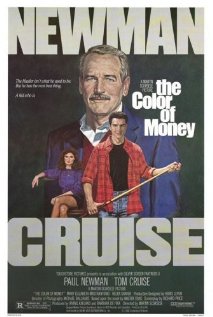
The Hustler (1961), directed by Robert Rossen and The Color of Money (1986), directed by Martin Scorsese

As a youth, I played basketball every Sunday at the local JCC on the Spartans, who were Spartans in name only. We had a mediocre record. Opposing us were much better teams, and one player outshined everyone. Robby regularly scored over 20 points a game, and when he reached high school, he was a superstar. Watching him was poetry in motion.

I expected to read about Robby in the newspapers, but it didn’t happen. Robby dropped out of college, never fulfilled his potential, and played basketball in local recreation leagues as an adult. The snapshot in time that I saw in high school was no predictor of future success. Only in retrospect do we possess clarity. That’s why I chose to review two movies which present the same character, “Fast Eddie” Felson, as a young charismatic pool hustler in The Hustler, and then as a successful liquor salesman 25 years later in The Color of Money. Watching both films gives us a rare opportunity to see the evolution of a character over a span of years. Has he changed and in what way?

There is a scene in The Hustler when Eddie, a pool playing virtuoso, is told that he has talent, but lacks character. Eddie, self-absorbed and arrogant, pursues money. To him, it indicates success; and he admires Bert, a wealthy gambler. When Sarah, Eddie’s girlfriend, asks Eddie how he knows that Bert is a winner, Eddie responds, “He has things.” It is a shallow perspective on life, and it takes a tragedy to remind Eddie that there are more important things than money and fame.

The Color of Money depicts “Fast Eddie” 25 years later, still a flawed character. He renews his passion for pool through a young protégé, Vincent; and offers to take Vincent on the road and teach him how to make money by playing pool in venues where he is unknown. Eddie still wants fame vicariously, and the temptation to hustle still motivates him.

Eddie, however, eventually begins to see in Vincent aspects of his younger self which repel him. Money is now irrelevant to Eddie; what is important to him is simply being the best and winning fairly. There is a moment where he sees his reflection in a pool ball and what he sees he does not like. Eddie’s newfound integrity reinvigorates his pool game, and his ultimate challenge is not winning a game of pool under dubious circumstances, but rather beating Vincent in a private game.

Ethics of the Fathers says that “every man has his hour” of prominence and success in life.  Eddie had his in The Hustler and now Vincent has his in The Color of Money. The question we all face is what happens after our hour in the sun. Do we allow old age and self-doubt to emotionally cripple us or do we redefine ourselves in light of our new reality? Abraham, our forefather, is a role model. The Bible tells us that “Abraham was coming in days,” an unusual way to inform us that he is old. The commentators tell us that this indicates that, in spite of his age, he was vigorous and productive on each day of his life into his senior years. He never retired until God retired him. Change for him was a constant.

Making changes is never easy, but in a moment of reflection, Eddie changes his perspective and desires integrity to crown his life. King Solomon instructs us: “a good name is better than precious oil.” Eddie Felson finally understands this time-honored maxim that integrity is better than wealth.

Purchase The Hustler and The Color of Money from Amazon.com.

The Hurt Locker (2008), directed by Kathryn Bigelow

As a rabbi, as an educator, and as a parent, I have been asked many times for advice when friends and loved ones are going through stressful times. Sometimes I can help them, and sometimes their situation is so complex that I do not have a suggestion or answer that works for them. I want to help, but there are situations where my counsel is inadequate. I see the oncoming train wreck and I am powerless to change things or to prevent the damage from occurring.

Watching The Hurt Locker gave me a visceral understanding of this feeling. It is a stomach-churning war movie filled with profanity, extreme tension, and violence that deals with soldiers trained to disarm improvised explosive devices such as roadside bombs. The film vividly details the enormous risk they take on a daily basis to do their job. In one particular scene, Sergeant William James is called to a public square where a man is strapped in an explosive vest. The vest was placed on him against his will, and the man desperately wants someone to save him by removing the vest. The problem is that the vest is attached to his body with numerous locks. The crisis is compounded by a timing device on the man, which indicates that the bomb will explode in a matter of minutes. What to do? Sergeant James does his best but he cannot remove the locks in time. We are left to watch the bomb detonate and the man disappear into dust.

The film drives home in a graphic way the dilemma we all face at one time or another. We do our best and yet it still is not enough to make things right. Judaism recognizes this human dilemma, and the Sages give us guidance. The Ethics of the Fathers tell us that we should not run away from a difficult task; rather, we should begin it, do our best, and pray for the help of Heaven. We are only responsible for input. God is in charge of the outcome.

There is another life lesson embedded in The Hurt Locker. James is part of a three-man team. When he places himself in danger, his cohorts Sanborn and Eldridge automatically are placed at risk as well. James decides on one mission to take off his radio communication device to enable him to diffuse a bomb while unencumbered. The inability of his team to communicate with him in a hostile setting creates extreme uncertainty, and their straightforward mission is in danger of aborting. James also decides to hunt down terrorists on his own and invites his team to join him on this non-authorized mission, again needlessly placing his men at risk.

This failure to consider the fate of others when one makes decisions that affect other people is irresponsible and selfish. Indeed, James’ pursuit of his own adrenaline rush creates havoc for his partners. This self-centeredness is contrary to the Judaic maxim that we are all responsible for another. As the famous poet Donne said: “No man is an island.” We are all connected and the death of one man diminishes every man. Therefore, we are bound to consider the welfare of all when we make decisions, not just what’s in it for us.

The implications for how we conduct our own lives are clear. When faced with a daunting task, don’t take a pass. Just do your best and leave the rest to God. Furthermore, when making important decisions in life, think about your loved ones and how they will be affected by your decisions. Our decisions create ripple effects in the lives of others.

Purchase this movie from Amazon.com.

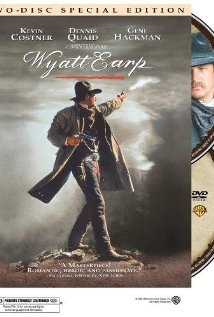
Wyatt Earp (1994), directed by Lawrence Kasdan

My father, of blessed memory, was not a frivolous person. He came to America as a young teen fleeing the pogroms of Russia in the early 1900s. He enlisted in the Navy and served honorably. He married relatively late and I wasn’t born until he was over 40. He worked hard as a painting contractor, breathing in lead-based paint before OSHA was around; and he did not have time to play basketball with me. He was busy trying to earn a living. In spite of his burdensome job, there was lots of love in my home. My father spent time with me, counseled me, and set a good example of upright living. Honest and charitable to the core, he devoted his free time to synagogue service and to rearing a growing family.

One of my favorite memories is going to the movies with him. My father rarely went, generally considering such pastimes a waste of time. But we did share an interest in westerns. Once in a very great while, I convinced him to come with me. I still remember the pleasure I had watching Gary Cooper in Springfield Rifle together with my Dad.

I was reminded of this as I watched Wyatt Earp, a 3-hour long epic revisionist western about that great Western hero. My Dad would not have liked the sordid parts of the narrative and the foul language, but he would have admired the beauty of the vast open spaces and the action sequences.

A subtext of the story is Wyatt’s relationship with his father, Nicholas Earp, who gives him critical pieces of advice along his life’s journey. It is notable that Nicholas Earp does not talk much; but when he does, people listen because they respect him and know that he loves them. Moreover, he gives advice to Wyatt at the right moment. Our Sages tell us we have an obligation to rebuke a child, but only when he is ready to listen. If he is not ready, then one should delay the rebuke.

When Wyatt is still a teenager, his father informs him that there are many vicious people who do not obey the law and “when you find yourself in a fight with such viciousness, hit first, and when you do hit, hit to kill.” He gives Wyatt a basic primer on how to deal with bad people who break the law and hurt other people. Show no mercy. To be affable is to be weak in the face of evil.

Later, when Wyatt’s beloved wife dies of typhoid, Wyatt, depressed and angry, immerses himself in drunkenness and theft. After landing in jail, his father comes to rescue him and pointedly tells him: “Do you think you are the first person to lose someone? That’s what life is all about. Loss. But we don’t use it as an excuse to destroy ourselves. We go on.” He imparts to Wyatt the life lesson that although life at times brings pain, life can still continue. Wyatt accepts these two pieces of advice, which guide him throughout his career as a successful lawman.

The task of a father in Jewish law is to teach his child Torah, to teach him a livelihood, and to teach him to swim, which many commentators take to mean to swim through life. Parents are repositories of wisdom and life experience, and too often we don’t take advantage of this. Advice from a person with much life experience who loves you, and who is invested in your successful living is a treasure. Wyatt Earp reminds us of the supreme value of a parent’s counsel.

Purchase this movie from Amazon.com.

The Curious Case of Benjamin Button (2008), directed by David Fincher

In the early 1970s, my late wife and I would regularly visit The Great Southeast Music Hall, an inexpensive music emporium that showcased up and coming artists. One night as we exited, I looked at the billboard announcing next week’s artist. He had a new album called “Cold Spring Harbor,” but I decided to pass on this unknown talent. And so it was that I missed an opportunity to hear Billy Joel at the beginning of his celebrated career.

Flash forward to today and The Curious Case of Benjamin Button, an unusual narrative about a person who is born as an old man and grows progressively younger, compelling the viewer to think about time in unconventional ways. The narrator, Benjamin Button, observes that “our lives are defined by opportunities, even the ones we missed.”

Missing the Billy Joel concert did not define my life, but Benjamin Button reminded me of the special opportunities that all of us have in our life’s journey. Our sages tell us: “When an opportunity for a good deed comes to us, we should do it with alacrity.” There are moments in life when time and circumstance meet, when we have an opportunity for greatness, for success, or to simply change our life’s direction, an opportunity that may not ever come again. How do we capture those moments?

Benjamin Button offers suggestions. When Benjamin is abandoned as a baby, a young married black couple finds him on their doorstep. Queenie, the wife, decides that she will take care of this child of God. Since the woman has been unable to bear children, she sees finding Benjamin as an opportunity to be a mother. It is an opportunity she will not let pass.

Benjamin, himself, takes advantage of opportunities. His changing body daily reminds him of the fickle nature of time and circumstance, and when a tugboat captain is looking for volunteers, Benjamin signs on immediately. This leads to a series of maritime adventures in World War II, and to a life-long interest in travel and discovery. It also broadens his view of the world. Having been born and raised in New Orleans, he now feels comfortable in foreign lands.

The film’s central story is the love between Benjamin and Daisy, a girl whom he first met at a retirement home when she was visiting her grandmother. She thought him an old man but connected to him because of his boyish ways. Their relationship evolves over the course of time as Benjamin gets younger looking as she gets older, until they reach an interlude in time when both are about the same age and can relate to one another romantically. It is a moment of opportunity and they marry and have a child.

Benjamin Button asks us to contemplate how we capitalize on the moments of opportunity that arise in our lives. When I was 12, my synagogue rabbi gave my parents an opportunity to send me to a religious camp. They said yes, and so my life was forever changed. At first, it was isolating, but I soon found new friends who were on my wavelength and life was good, fulfilling and purposeful. My parents were wise; they saw that, as a teenager, I was coming to the proverbial fork in the road and they gave me the opportunity to take the less traveled road.

As a rabbi and educator, I witness many people failing to take advantage of a particular moment in time, and this affects the rest of their lives. Having missed one opportunity, sadly they miss many others. Benjamin Button reminds us to be aware of precious moments of opportunity, and to take advantage of them to enrich our lives.

Purchase this movie from Amazon.com.

The Road Home (1999), directed by Zhang Yimou

Living in Israel has brought me in touch with many people whom I met earlier in my life. Let me explain. Firstly, many friends of my youth had a dream of ultimately living in the holiest place in the world and now many of them are actually living here. It is a retirement village in which no one is really retired. Everybody is redefining themselves in some way and connecting to the eternal past of the Jewish people, while at the same time living a vibrant present existence. Secondly, there are others whom I meet not because they are new immigrants in the land, but because they come to Israel to bury a loved one. It is a place for an ingathering of the exiles, those who are living and those who are not. When we come to Israel, we know we are coming home in a profound way. Watching The Road Home evokes comparisons to this Jewish sensibility but emerges from a Chinese tradition.

The title of the film The Road Home alludes to the journey of a man to his final resting place. Specifically it refers to the tradition of carrying the coffin to the grave so that the deceased “doesn’t lose his way.” This is a movie about deeply held traditions that both animate and connect people over the span of many generations, traditions that link them to the past and to the future.

The film opens as an urban man is returning to the rural village of his birth to bury his father, a revered teacher who brought wisdom to many generations of youngsters. Looking at the photo of his parents evokes a retrospective of the courtship of his father and mother many years ago. It is a romance based not so much on physical attraction, although there is that element, but mostly on a shared understanding of life and a common destiny.

After this poetically charged story of courtship, the film returns to the preparations for the funeral, which will require a march of several miles to the burial site in the midst of a blinding snow storm. Everybody in the village wants to participate in this tradition of escorting the dead, especially when it is a way to show respect for a beloved teacher. Their affection for him is palpable as we watch the villagers vie for the opportunity to carry the bier despite the inclement weather.

As a final mark of respect and tribute for his father, the son, on the day after the funeral, teaches a lesson in the village schoolhouse which is about to be demolished. He stands before the children, echoing the instruction of his father. The subtitles emblazoned on the screen reveal clearly the life lessons imparted by his father: “In everything there is a purpose. Know the past. Know respect for your elders.” By encouraging the students to appreciate and value the past, he assures them of a meaningful present and future. The teacher is the glue that binds the generations.

Torah values are ubiquitous in the movie. There is the value of respect for elders, the value of respect for tradition, the value of a loving relationship founded on common values, and the value of finding meaning in adversity. Ecclesiastes tells us that “it is better to visit a house of mourning than a house of feasting, for that is the end of all men and the living will lay it to his heart (7:2).” In the case of The Road Home, the loss of a loved one becomes the road to greater self-understanding.

Purchase this movie from Amazon.com.

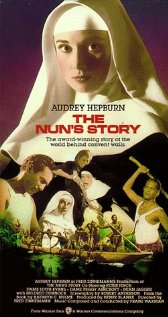
The Nun’s Story (1958), directed by Fred Zinneman

I was an average student in high school, so when I entered Yeshiva University as a freshman, I was overwhelmed with the many very bright students around me. It took me some time to feel I could compete academically; and for most of my undergraduate career, I did not participate much in class discussion.

I got mostly A’s in my courses, but did not offer my opinion in class until I took a course in Russian and Scandinavian literature in my senior year, which changed my perspective. I received an A on every test, yet received a B for the course. I went to my professor and asked him why I received a B. His response went something like this: “You do not participate in class discussion. You may know the material for the test, but I have no sense that you really understand the novels in a sophisticated way and can integrate them into some kind of thoughtful discussion.” I realized then that it was not good enough to know the subject; I had to show others that I knew it. Therein lay the conflict: self-effacement versus self-promotion.

For me, the conflict was not easily resolved. I was raised in a home of modesty and humility. My father was president of the local synagogue and my mother was president of its sisterhood and she worked countless hours for the Association for the Help of Retarded Children in Westchester County. They were selfless people, not at all interested in getting recognition. I never heard my parents utter a word about seeking honor for the good work they did, and I shared that perspective as I matured.

This approach towards doing good without receiving recognition resonated as I watched The Nun’s Story, a narrative of a young girl, Gabrielle van der Mal, who decides to become a nun. The daughter of a renowned physician, she has a solid understanding of tropical diseases and wants to devote her life to working in the Congo where she can alleviate the suffering of many. As we watch her move through the various stages of becoming a nun, she is continually challenged. Although far superior academically to her peers, she is always asked to submerge her ego, to overcome her desire for personal recognition, and to allow others to achieve their dreams at her expense. Her mentors encourage self-effacement even over self-esteem. Instead of sending her to work in the Congo with the indigenous population which she wants, she is sent there to work in a European hospital. There she contributes mightily but this does not satisfy her desire to work with the natives. The constant obstacles she faces are all designed to teach her humility and self-effacement.

In truth, humility is a value in Jewish tradition. Moses, the greatest of all prophets, was known as the most humble of all men. The commentators underscore this when the Bible reveals that Moses was 80 when he became the leader of the Jewish people, an age when one would expect him to seek a modicum of comfort and ease in life. Yet he is chosen by God at that age precisely to emphasize that he accepted the mantle of leadership not because of any desire for fame or recognition but solely to respond to the command of God. He is devoid of ego. All he wants is to do God’s will, and then he will disappear from the stage.

The Nun’s Story encourages a similar spirituality. As the Reverend Mother advises Gabriel: “Do good, then disappear.” Ideally, the desire to do good should not hinge on the approval or approbation of others. We should do good for God’s sake, not our own.

Purchase this movie from Amazon.com.

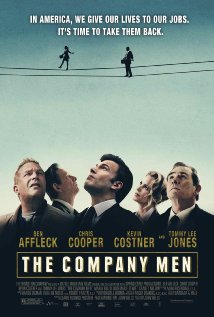
The Company Men (2010), directed by John Wells

As a person in the professional rabbinate, both pulpit and educational, for most of my life, I have developed many friendships over the years. It is part of the job that I befriend people, and people generally respond positively to a rabbinic presence. For that I am very grateful. But there is another side to the professional rabbinate: it is a lonely profession. At times of crisis, the rabbi is not at ease going to the layman for comfort and counsel. Therefore, the strength of the rabbi’s family relationships are key to weathering a storm. In truth, this is what happens when anyone goes through a trying time. When his relationship with his spouse and family are strong, it is likely that challenges of any type can be overcome. When they are not, things can deteriorate quickly. A case in point is what transpires in The Company Men, an engrossing look at what happens to men who suddenly are fired from their highly paid jobs and find themselves trying to reinvent themselves in a very competitive job market.

The film opens with panoramic views of beautiful suburban homes occupied by the company men. They are decorated tastefully and contain the latest technological innovations for the home. Expensive cars line the driveways, and prosperity is in the air. In the midst of this affluence, many of the company men are given their walking papers due to downsizing in a turbulent economy. The two case studies in the film are Bobby Walker, played by Ben Affleck, an aggressive and successful account executive, and Phil Woodward, played by Chris Cooper, a middle manager who has moved up from the shop floor to corporate office. Woodward, in his 50s, finds himself unemployable. It is sad to watch him as he faces many rejections. His malaise deepens because his wife is not present for him emotionally. She lives in her world of affluence and comfort, while he retreats into depression. Walker, in his late 30s, at first finds it difficult to give up the accoutrements of wealth and is especially upset with the loss of his country club membership, his expensive car, and eventually his home. However, his wife is a pragmatist who deeply loves him. She understands the reality that the family faces and takes charge, readily cutting expenses to preserve that which is important in their lives: love and family.

In a touching scene in which Walker reveals his darkest fears of failure and inadequacy, his wife embraces him and reminds him of the blessing they have in their children. She looks him straight in the eye and forcefully tells him: “You are going to find a job….You have your parents. You have me.” She, through her encouragement and love, enables her husband to refocus and understand what our Sages have said hundreds of years ago: “Who is wealthy? He who is content with his lot.” The aphorism reminds us that who we are is more important than what we possess. The Midrash (Kohelet Rabbah 5:20) speaks of man entering the world as a baby with fists clenched and leaving the world with open hands as emblematic of life’s arc. As young people, we want things. We identify ourselves with what we own. As we mature, we understand that things cannot come with us to the grave; therefore, our palms are open, no longer holding on but letting go.

The Company Men is a cautionary tale, which calls to mind that the most important things of life are not what we own but the intangible, loving relationships that give every day meaning.

Purchase this movie from Amazon.com.

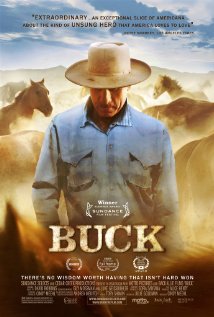
Buck (2011), directed by Cindy Meehl

When I was about ten years old, my father surprised me by taking me to a veterinarian’s office to pick up a dog. It was a “mutt,” a mixed breed, part collie and part something else. The visit was one of my “wow” moments growing up. I named the dog Shep, and we became fast friends. He would sleep at the foot of my bed, chew at the bedpost, and wake me up every morning with a happy look. My father taught the dog to go the newsstand a block away and to bring home the paper in its mouth. I thought that was really cool. When my day did not go well, Shep was always there to cheer me up. He was my dependable friend. But, like many kids, I was not diligent about walking the dog and taking care of all the stuff that goes with caring for a pet. Eventually my mother gave the dog away, and I spent that fateful day crying over my lost Shep.

The whole experience, in retrospect, gave me an appreciation for the value of pets in people’s lives. The presence of a pet, in a sense, is therapeutic for the owner. He is a reliable friend, never critical of you, lacking artifice, and always anxious to please.

These human qualities of animals form the subtext for Buck, an arresting documentary about Buck Brannaman, a horse whisperer with an uncanny ability to understand and train, not “break,” wild horses. As we watch him work with horses, he reveals how close his work is to child-rearing. The same principles are operative. Be gentle, be kind, be a good listener, show tough love when you have to, and don’t scare them. Interestingly, he describes the act of placing a saddle on a horse as a potentially frightening experience for the horse, which may see it as a lion attack. Therefore, the issue of trust between horse and rider is critical for training progress to be made. The same holds true in parenting children. The more trust between parent and child, the more communication and the more effective is the parental guidance.

It is noteworthy that the most prestigious Biblical figures who serve as role models for posterity began their careers as shepherds, people who care for animals. Their job of caring for sheep made them more adept at caring for human beings. Moses, Abraham, Jacob, King David—all had shepherd on their resumes. Similarly, Rebecca, one of the matriarchs of the Jewish people was selected as a wife for Isaac because of her kindness to animals. When Abraham’s servant asked for water, Rebecca brought water not only for him but for his camels as well. This was the litmus test of her character and Rebecca passed with flying colors.

In the Bible, God tells the Jewish people not to muzzle the ox when it is doing work in the field. Moreover, if we see an animal laboring under a heavy load, we are required to relieve the animal of its burden; and when we finish our day’s work, we should first feed our animal before we sit down to eat. Furthermore, if we come across a mother bird and want to take its eggs, we must first chase away the mother bird so that it does not suffer any psychological distress. All these sensitivities apply to the human realm as well. We permit workers to eat from the crops they are harvesting. We assist people who are struggling to support a heavy load, and we avoid causing psychological pain.

Buck reminds us of the many life lessons we can learn by being attuned to the needs of animals. Understanding their needs and their fears can make us more sensitive human beings.

Purchase this movie from Amazon.com.

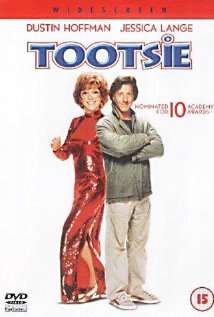
Tootsie (1982), directed by Sydney Pollack

I grew up in a home where my father had a great deal of respect for my mother. I never heard them argue although I am sure they had disagreements from time to time. My father appreciated the fact that my mother worked and helped out financially, but he always saw himself as the primary wage earner and never pushed my mother to enter the workplace. He not only loved her; he revered her. Furthermore, a hallmark of my home was the total absence of crude language. There was a certain sense of propriety that governed family behavior. All these things contributed towards my own attitude towards women as I grew up. I always took women seriously; and even when I was in ninth grade, I dated a girl thinking that she would be my wife one day. I never thought of women in a casual or demeaning way and didn’t fully realize that others did until many years later.

A cavalier attitude towards women is the subtext of Tootsie, a hilarious look at what happens when an out-of-work actor, Michael Dorsey played by Dustin Hoffman, assumes the role of a woman on a daytime soap opera. Callous towards women himself, Michael, for the first time in his life, observes how women are often treated in the workplace. The director calls him Tootsie instead of Dorothy and treats him as a cipher with no intellect, always presuming to know what’s best for her and the show. Moreover, the director treats other female cast members as familiar sex objects, not as independent people with brains and sensitivities. This discovery begins to affect Michael so much that his fictional counterpart, Dorothy Michaels, becomes a champion of women’s rights on the show. She is an assertive hospital administrator who will take no offense from any man. Dorothy veers from the script to be true to herself as a woman and the public idolizes her for it. She appears on magazine covers and becomes the talk of New York. In true comedic fashion, complications ensue when Dorothy’s contract is extended and when Dorothy/Michael falls in love with one of the actresses on the show.

Eventually, there is a day of reckoning and Michael’s hoax is revealed. In the last scene of the film, he confesses to Julie, his love, that he has become a better man by being a woman. Seeing things from the other side of the table has made him a more sensitive human being, better able to empathize and understand the perspective of a woman on love and life. This sensibility is hinted at in the Hebrew term for intimacy which is Yadah, to know. The Bible says that Adam knew Eve. He knew her intimately, say the Bible commentators, not only in a sexual sense but in an emotional sense. He understood her as a person and therefore the intimacy expressed a profound knowledge and understanding of the other. Sex was not exploitative but rather an expression of two souls comprehending one another in the deepest way possible.

Tootsie reaffirms the notion that for there to be true love, there must first be respect for the other. Romeo and Juliet are not the Jewish paradigms of love. Rather the paradigms are the patriarchs and matriarchs: Abraham and Sarah, Isaac and Rebecca, Jacob and Leah and Rachel. In all of these matches, what counts is character, not appearances. Proverbs tells us that outward beauty is false; what really counts is inner beauty, beauty of character and beauty of soul. It is this that enables relationships to blossom and endure, and this finally is what enables love to take root in Tootsie.

Purchase this movie from Amazon.com.

The King of Comedy (1983), directed by Martin Scorsese

When I was 11 or 12 years old, I visited a Times Square Army recruiting booth at which Audie Murphy, a celebrated war hero who won the Congressional Medal of Honor and a movie star in Grade B westerns, spoke and gave out autographs. He was an early role model and I left the recruiting station elated that I had in my hands the autograph of an American hero. Many years later, I introduced my sons to a sports celebrity. I ran a 2-week camp for a synagogue in Atlanta, and arranged for admittance to an Atlanta Hawks practice session where we could watch the great Pete Maravich in action. He was very accommodating to the campers and signed their scraps of paper with his name. It was a heady moment for many of the kids to be in the presence of a basketball legend.

Flash forward to the year 2012, and our adulation of celebrities is no longer so innocent. Just ask any parent or educator. Celebrities, actors, politicians often grab our attention due to their nefarious activities, including dishonesty of all types, illicit sex, drugs, and the list goes on. The King of Comedy, appearing in 1983, gave us a prophetic hint about the craziness surrounding celebrity that was to come.

In a brilliant opening scene, Jerry Langford, a late night TV host, is bombarded with fans as he exits the studio. One obsessed fan tries to get close to him, but Rupert Pupkin, ostensibly trying to protect him, slams the door in her face, and we are left with a freeze frame of hands pressing against the window of the limousine. It is an image representing the intense longing of an obsessed fan for access to a celebrity. Life is nothing unless there is connection with fame. It is sad and it is frightening when the entire thrust of one’s life is to live through others.

Rupert Pupkin is determined to become a TV celebrity like Jerry and the movie chronicles his fantastical and obsessive quest for fame. Rupert keeps cardboard figures of Jerry in his basement and has imaginary conversations with him and Jerry’s guests. His friend Masha, a celebrity stalker, will stop at nothing to get close to Jerry, her idol. She ultimately helps Rupert break the law in order to compel the studio to grant him a guest appearance on Jerry’s show.

Rupert receives a prison sentence of six years for his crime, but is freed after serving less than three years. He goes on to write his memoirs and becomes a celebrity in his own right, which echoes what happens so often today. The criminal is released, writes a book, and becomes a fixture of talk shows as he rehabilitates his public image.

The Torah view of celebrity is clear. The Ethics of the Fathers instructs us that fame is elusive. The more one chases it, the more it eludes him. Gaining celebrity is not a Jewish goal. Moreover, the object of Torah adulation is not the actor or the athlete. Rather it is the scholar or the doer of good deeds. In the end, we cannot live vicariously through others. Each of us is an image of the Divine, totally unique with our own respective missions. No one else can live our life for us because we are accountable for our own destinies. God only wants us to be ourselves, not an imitation of someone else. At the end of 120 years, God will not ask me if I was as great as Moses or Abraham; instead He will ask me if I was the best “me” I could possibly be.

Purchase this movie from Amazon.com.