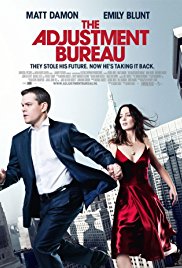
 As a rabbi, I have often been asked questions relating to destiny versus free will. Can we change our destiny by exercising our free will? It is a complicated question and, from a theological perspective, not easily answered. It seems, however, that Judaism has an approach to looking at the problem. Let me explain. I have been involved in cases where congregants have someone in their family facing death. One traditional response to such a dire situation is to change the name of the person in a life-threatening situation. By doing so, we create an alternative ending, namely, life instead of death. I asked one of my Torah teachers how this works, and this is what he told me.
In the divine scheme of things, John Doe is destined to die at a certain time. However, John and his friends and relatives want him to live. Therefore, they change his name to John Raphael (Raphael means “God heals” in Hebrew), to change his fate. No longer is he John Doe. He is now John Raphael Doe, a new man with a new name and, hence, a different destiny. Obviously, it is not a failsafe ritual. Only God is in charge of life and death matters, but there is a suggestion that free will can intervene to change one’s destiny. This is the premise of The Adjustment Bureau, a romantic thriller with a clever take on destiny versus free choice in the choice of a marriage partner.
Congressman David Norris, a Brooklyn Congressman running for the New York Senate in 2006, loses the race, but in the process meets Elise Sellas, who captures his attention and imagination. She gives him her phone number but he loses it, and for three years afterwards he tries to find her. Meanwhile, he launches his campaign for the 2010 Senate race. Then he serendipitously discovers her as she is walking along a downtown street, and emotion takes over.
But fate again intervenes through a group of men in suits known as the Adjustment Bureau. They confront David and inform him that his destiny to not to pursue a relationship with Elise according to the plans of the “chairman,” a person whose identity is ambiguous. They warn him that failure to abide by their suggestion or revealing the existence of the Adjustment Bureau will result in catastrophic consequences.
David resists their threats, deciding he has a right to choose his own destiny. He, therefore, continues pursuing Elise with whom he feels a natural rapport. The narrative details his attempts to connect with her in the face of obstacles placed in their way by the supernatural Adjustment Bureau, an entity which has the power to change the respective schedules of David and Elise, such as the time and places of their rendezvous, to prevent them from meeting.
Because of David’s erratic behavior and mysterious absences, Elise feels that the relationship is doomed and so she accepts a marriage proposal from an ex-boyfriend. When David hears of this, he is determined to intervene. Desperate to marry her, he frantically contacts her and reveals to her the intentions of the Adjustment Bureau. He begs her to trust him and follow him as he tries to elude the Bureau, which is pursuing him in light of his rejection of its pre-ordained plan.
Jewish wisdom clearly states that man has free will. Several times in the Bible, there is a reaffirmation of this notion. The Bible directly commands man to “choose life” because implicitly man has free choice. However, free choice does not mean that we can understand the divine intention or the divine plan. The Ethics of the Fathers openly remarks “Everything is forseen, yet freedom of choice is given.” The Adjustment Bureau reminds us that even though destiny plays a role in our lives, it is not the final arbiter.
 I remember hearing about the incident. I learned that two young boys were playing around with each other and one of them had a stick with a nail on the end of it. In the course of their “playing around,” the boy with the stick hit the other child in the eye. Blood gushed out and the boy was in great pain.
 I watched this film at a time when the US is in the midst of a major debate over its immigration program. One side views immigrants who came here illegally as potentially dangerous and argues for tighter border controls. The other side sees illegal immigrants as a positive force in the US who make important contributions to America and who simply want a better life for themselves and their children.
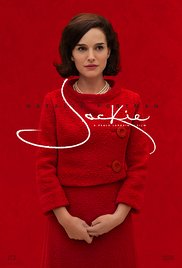 Everyone my age remembers where they were when we heard the news that President Kennedy was shot and killed. I was in Mt. Vernon, New York, driving in the center of the town with my mother. The radio program to which we were listening abruptly stopped and they announced the president’s death. All the cars, including mine, halted. No one could move. My mother began crying. No one ever imagined such a tragedy happening. That fateful day and the days following are portrayed in Jackie, a thoughtful and eerie film that imagines the tragedy through the eyes and emotions of Jackie, the first lady.
 A number of years ago, I engaged a contractor to build an addition onto my home. Over the course of several months, he would ask me for an advance on his fee because he needed to buy supplies and pay his workers. I had no experience dealing with contractors and assumed everyone was honest, so whenever he asked for money I gave it to him.
 When I was in fourth grade in elementary school, I encountered long division. Until then I never had a problem with mathematics, but I had a rude awakening. I had trouble mastering it, and my inability to attain instant success in the subject forever prejudiced my attitude towards math, so much so that when I entered college I chose my major field of study based upon the major not requiring any math courses. I realized as I went through high school that I had no gift for mathematics.
 My wife and I recently had dinner with a family that warmly welcomed us to Israel seven years ago when we moved to Beit Shemesh. My friend’s wife asked me why we joined the synagogue of which they were members. I responded: “Because your husband smiled at me.” It seemed a superficial answer, but it really was not. The answer highlighted the impact of a small gesture that made a big difference in our lives.
 Being a parent is challenging, but it often brings out one’s best self. Let me explain. One of my children once asked me a question of Jewish law. I felt it was a simple question and I responded quickly with an answer. Months later, I realized the answer I gave him was wrong. I apologized to my son and then I told him the correct answer.
 At the Sabbath table here in Israel, we often invite guests, some of whom do not speak English. When we run out of words, I find that music, Sabbath melodies even without words, can sustain the conversation. We do not have to understand one another in a conventional sense. The music and its harmonies bring us together and we are communicating on another level. Music becomes the universal language. Close Encounters o the Third Kind deals with a visit of aliens from another planet. Although they share no common language with earthlings, they are able to communicate with harmonic tones. Music brings them together.
 One of the many things I enjoyed during my years of serving as principal of a high school was working with a top notch staff, a group of teachers who were mission-driven, focused on doing the best for their students. They were not limited by their job descriptions. I recall that, on several occasions, we needed someone to drive a van to pick up kids to come to school for several weeks. Teachers eagerly volunteered. They understood my dilemma and just did what was needed to get the task done. They did not simply stand on the side, waiting for someone else to do the job.
 Kosher Movies